Crossrail Place Roof Garden: Canary Wharf's Unexpected Green Escape
Perched above one of London's most architecturally ambitious railway stations, the Crossrail Place Roof Garden is a free, publicly accessible garden designed by Foster + Partners. Its planting scheme, split by hemisphere to reflect the area's maritime trading past, offers a surprising counterpoint to the glass towers of Canary Wharf.
Quick Facts
- Location
- Crossrail Place, Canary Wharf, London E14 5AR
- Getting There
- Canary Wharf (Jubilee line, DLR, Elizabeth line) – 2 min walk; West India Quay (DLR) – 2 min walk
- Time Needed
- 30–60 minutes
- Cost
- Free – no ticket required
- Best for
- Architecture lovers, lunch-break escapes, photography, curious visitors between Docklands sights
- Official website
- canarywharf.com/open-spaces/crossrail-place-roof-garden
What Is the Crossrail Place Roof Garden?
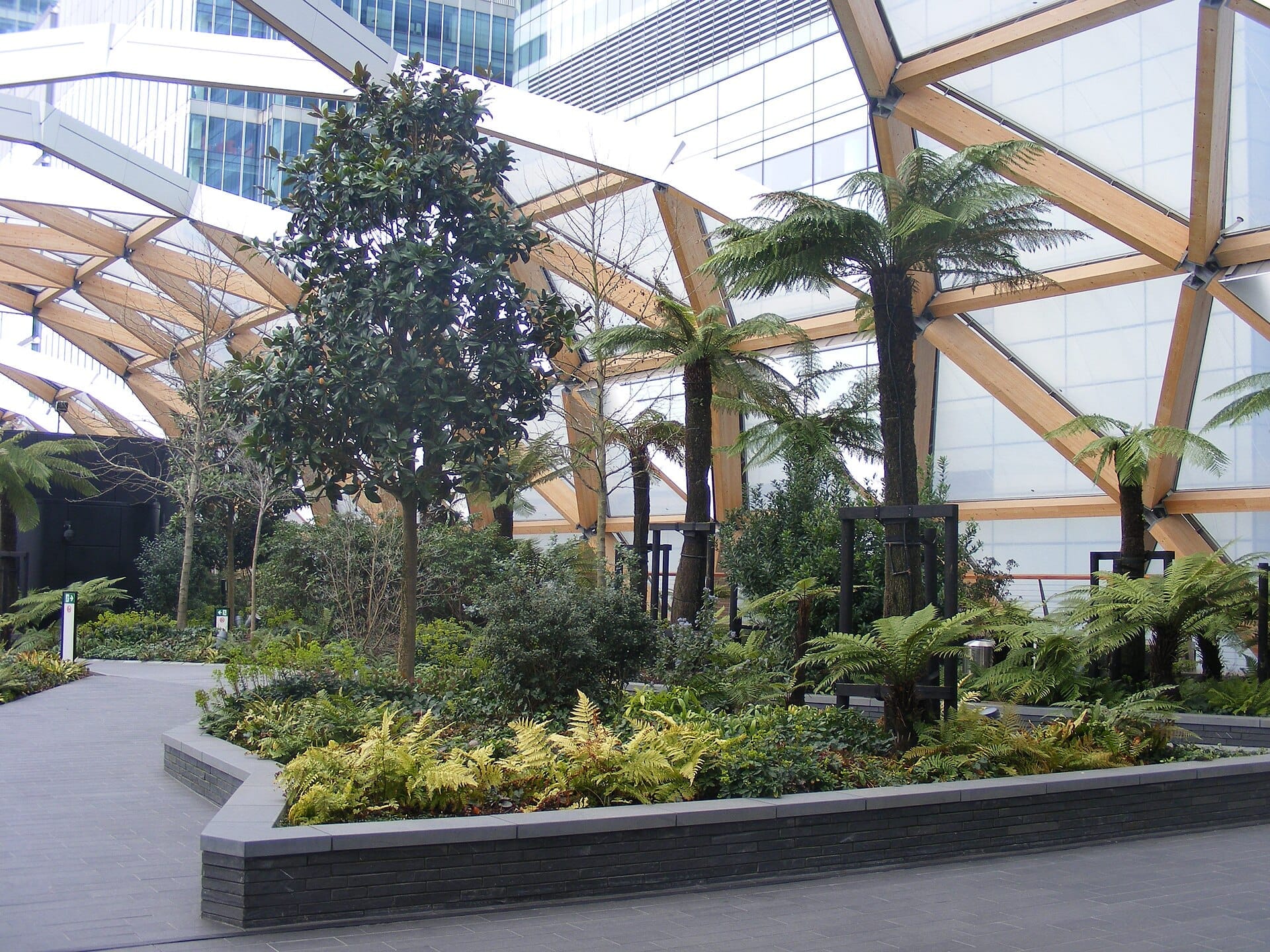
The Crossrail Place Roof Garden sits directly on top of the Canary Wharf Elizabeth line station, a building designed by Foster + Partners and engineered by Arup. Opened in May 2015, the garden is part of the same development that gave Canary Wharf its dramatic new station structure: a vast, timber-latticed, ship-like canopy that spans over the North Dock of the West India Docks. The garden occupies the full upper deck of that structure, suspended above dock water and surrounded on all sides by the sharp verticals of the financial district's skyline.
Entry is completely free and requires no booking. The garden is open daily, with hours typically from 09:00 to 21:00, or until sunset in summer, though the closing time in summer may adjust to match sunset. Verify current hours at the official Canary Wharf website before visiting.
💡 Local tip
The garden is accessed via lifts or stairs from street level near the Elizabeth line station entrance on Crossrail Place. Step-free access is available throughout, and assistance dogs are welcome.
The Architecture: A Garden Held Inside a Ship
The structure enclosing the garden is the real architectural statement. Foster + Partners designed the roof as a sweeping timber-and-ETFE canopy, referencing the hulls of the trading vessels that once unloaded cargo in the West India Docks directly below. Seen from the elevated walkways around Canary Wharf, the building looks unlike anything else in London: a low, curving form pressed between towers, its pale timber ribs visible through the translucent outer skin.
From inside the garden itself, the canopy creates a greenhouse-like microclimate that makes the space feel warmer and more sheltered than the open air outside. The latticed ceiling filters natural light in a way that shifts noticeably through the day, from sharp morning shafts to a soft, diffused glow in the afternoon. On grey London days, the effect is particularly dramatic: the plants below stay bright while the steel and glass of the surrounding towers disappear into cloud.
The station beneath the garden is itself worth pausing to appreciate. It is one of the showpiece stations of the Elizabeth line, which opened in stages between 2022 and 2023, and the Canary Wharf stop ranks among the most architecturally considered on the entire route.
Tickets & tours
Hand-picked options from our booking partner. Prices are indicative; availability and final rates are confirmed when you complete your booking.
London Sky Garden Music Night ticket with a glass of Champagne
From 31 €Instant confirmationKensington Gardens guided tour and high tea
From 114 €Instant confirmationWestminster Walking Tour with Visit to Kew Gardens
From 81 €Instant confirmationFree cancellationLondon food tour in Soho, Chinatown, and Covent Garden
From 105 €Instant confirmationFree cancellation
The Planting: Two Hemispheres, One Roof
The garden's most distinctive curatorial decision is its division by hemisphere. Eastern hemisphere species, predominantly from Asia, occupy the eastern half of the garden. Western hemisphere species, from the Americas, fill the western half. The concept is a direct reference to Canary Wharf's origin as one of London's busiest trading dock complexes: the West India Docks were built in the early nineteenth century specifically to handle goods arriving from the Caribbean and the Americas, and the surrounding area grew wealthy on transatlantic and global trade.
In practice, this means the planting feels varied rather than decorative. Tree ferns, bamboos, gingers, and shade-tolerant perennials from East Asia fill one side, while species from Central and South America, including plants with bold foliage forms rarely seen in English gardens, occupy the other. Some of the specimens are substantial in size, giving the space a lushness that makes it feel more like an indoor botanical collection than a typical corporate rooftop planting.
The protected environment under the canopy allows plants that would not survive a typical London winter to thrive year-round. This gives the garden a distinctly different texture in January than you would find in any outdoor park in the city, making it worth visiting specifically in the colder months when most of London's green spaces look bare.
ℹ️ Good to know
The garden is worth visiting in winter. The canopy keeps temperatures noticeably warmer than outside, the evergreen planting stays full and green, and visitor numbers drop significantly after October.
How the Visit Changes by Time of Day
Mornings, particularly on weekdays, bring the lightest crowds. By around 08:30, some Canary Wharf workers pass through on their way to offices nearby, but the garden itself is rarely busy before 10:00. This is the cleanest time for photography: the light comes in low and angled through the lattice roof, the air inside is cool and still, and the plant surfaces carry condensation that catches in the light.
Lunchtime between roughly 12:00 and 14:00 on weekdays sees the space fill with office workers eating sandwiches on the wooden benches. The atmosphere is calm rather than crowded, and the garden handles the numbers well given its linear layout. Weekends are noticeably quieter than weekdays in this part of Canary Wharf, which is the opposite of most London attractions.
The garden in the last hour before closing in summer, when the light through the ETFE panels turns amber, is arguably its most photogenic period. The contrast between the warm tones inside the canopy and the cooler blue of the dock water visible through the sides of the structure is particularly striking. This is also when foot traffic drops off again as the working day ends.
Getting There and Practical Logistics
The garden is about two minutes' walk from Canary Wharf station, which is served by the Jubilee line, DLR, and the Elizabeth line. West India Quay DLR station is equally close. The entrance to Crossrail Place is clearly signed from the main Canary Wharf shopping and transport interchange. Lifts serve all levels, making the garden fully accessible.
Canary Wharf itself is straightforward to reach from most parts of central London. From central London, the Jubilee line from stations such as Westminster or London Bridge takes around 15–20 minutes. For a broader picture of getting around the city, the London transport guide covers all the main options including Oyster and contactless payment.
There are no cafes or food vendors inside the garden itself, but the ground floors of Crossrail Place contain restaurants and a Waitrose supermarket. The wider Canary Wharf estate has extensive food options in the shopping malls directly below and around the station. Bring water, particularly in summer when the canopy can trap heat.
⚠️ What to skip
Do not confuse Crossrail Place with One Canada Square or other Canary Wharf buildings. The garden entrance is specifically on Crossrail Place, off the north side of the main Jubilee line station concourse. If you pass Waitrose, you are in the right building.
Photography Tips and What to Expect Visually
The timber lattice ceiling is the garden's most photographed element, and for good reason: looking straight up at it from the garden floor, with plants in the foreground and the geometric pattern overhead, produces images that read as immediately architectural. A wide-angle lens or smartphone ultra-wide mode works well here. The gaps in the canopy also frame the surrounding Canary Wharf towers in ways that emphasise the scale contrast between the garden and its context.
If skyline photography appeals more broadly, London's best viewpoints include several spots in and around Canary Wharf and the Docklands that pair well with a visit to the roof garden.
The botanical planting offers close-up texture: large-leaved aroids, feathery bamboo, and ground-cover plants with interesting forms reward macro photography. Early morning light is sharper and more directional; afternoon light is softer and more evenly distributed. Overcast days diffuse the light through the canopy in a way that eliminates harsh shadows, which can actually suit plant photography better than direct sunlight.
Worth Knowing: Is It Worth Your Time?
This is a interesting free attraction, but it works best when positioned as part of a broader Canary Wharf or Docklands itinerary rather than as a standalone destination. The garden takes 30 to 45 minutes to explore properly, and while the architecture and planting concept are thoughtful, visitors expecting a large-scale park or extensive green space may find it smaller than anticipated. The full circuit is roughly 300 metres end to end.
Combined with a walk around the docks, a visit to the Museum of London Docklands (which sits in an original Georgian warehouse a short walk away), or a trip to nearby Greenwich Park via the DLR, it makes for a satisfying half-day in east London.
Visitors who feel underwhelmed by corporate architecture and find Canary Wharf's financial district environment alienating may not warm to the garden regardless of the planting. The surroundings are inescapably commercial. But for anyone interested in how contemporary cities integrate green infrastructure into transport architecture, this is one of the better examples in London, and the price of admission makes the decision simple.
Insider Tips
- Visit on a weekday rather than a weekend: Canary Wharf is primarily a work destination, so weekend visitor numbers in the garden drop significantly while the rest of London's parks fill up.
- The garden is one of the few outdoor-style green spaces in London where a winter visit makes active sense. The canopy keeps temperatures noticeably higher than ambient, and the evergreen planting looks fuller in January than most outdoor gardens.
- Look down as well as up: the dock water is visible through gaps in the structure on the outer edges, and the relationship between the garden above and the historic quayside below is part of what makes the design coherent.
- The benches along the central path fill quickly at lunch on weekdays. If you want to sit quietly with a coffee from the ground-floor food outlets, aim for before 12:00 or after 14:00.
- The timber lattice ceiling reads very differently at different light levels. If you visit on a grey day and find it underwhelming, note that the same space in sharp morning or late-afternoon sun looks like a completely different place.
Who Is Crossrail Place Roof Garden For?
- Architecture and design enthusiasts interested in contemporary infrastructure projects
- Photographers looking for unusual structural and botanical compositions
- Visitors on a tight budget wanting free green space in east London
- Travelers combining a Docklands itinerary with the Museum of London Docklands or the Elizabeth line stations
- Anyone visiting Canary Wharf on a weekday who wants a quiet break from the commercial environment
Nearby Attractions
Other things to see while in Canary Wharf & Docklands:
- London Cable Car
The IFS Cloud Cable Car carries passengers 90 metres above the River Thames between Greenwich Peninsula and Royal Docks, offering unobstructed views of east London's skyline. The crossing takes up to 10 minutes each way and works as a scenic detour or a useful river crossing depending on where you're headed.
- Museum of London Docklands
Housed in a Grade I listed sugar warehouse built in 1802, London Museum Docklands tells the story of the River Thames, the Port of London, and the area's deep ties to the Atlantic slave trade. Entry is free, it opens daily 10:00–17:00, and the building alone is worth the trip.
- The O2 Arena
One of the world's highest-capacity indoor arenas, The O2 arena on Greenwich Peninsula draws millions of visitors a year for concerts, sports, comedy, and more. This guide covers how to get there, what the experience is actually like, and what to know before you arrive.