London Cable Car (IFS Cloud Cable Car): What to Expect, What It Costs, and Whether It's Worth It
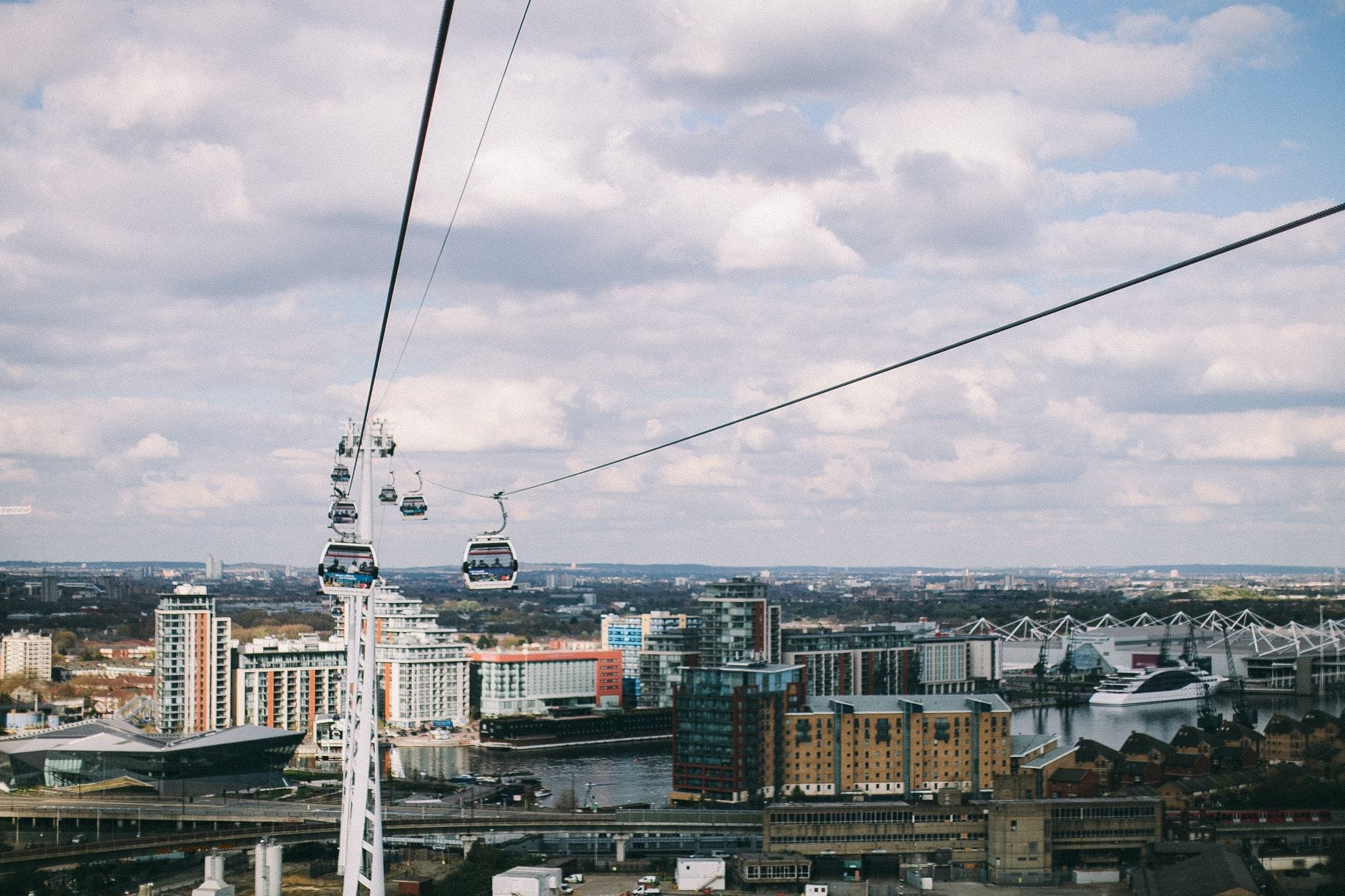
The IFS Cloud Cable Car carries passengers 90 metres above the River Thames between Greenwich Peninsula and Royal Docks, offering unobstructed views of east London's skyline. The crossing takes up to 10 minutes each way and works as a scenic detour or a useful river crossing depending on where you're headed.
Quick Facts
- Location
- Between Greenwich Peninsula (SE10) and Royal Docks (E16), east London
- Getting There
- North Greenwich (Jubilee line) or Royal Victoria (DLR)
- Time Needed
- around 20–30 minutes for a round trip, including both terminals
- Cost
- From £7 one-way (adult); round trip from £14; under-5s free. Pay by contactless, Oyster or cash at terminal.
- Best for
- Skyline photography, families with children, east London sightseeing loops
- Official website
- tfl.gov.uk/modes/london-cable-car
What the London Cable Car Actually Is
The IFS Cloud Cable Car, operated by Transport for London and commonly known as the London Cable Car, is a gondola-style aerial tramway that crosses the River Thames between Greenwich Peninsula and the Royal Docks. It spans roughly one kilometre and climbs to approximately 90 metres above the water at its highest point. A one-way crossing takes up to 10 minutes, though in busy periods the cabin moves at a pace that feels slower still, giving passengers a genuine window of time to take in the view rather than a fleeting glimpse.
Cabins hold up to 10 people and depart roughly every 30 seconds during normal operation. The ride is smooth and quiet, the glass-and-metal gondolas large enough that a family with a buggy or a traveller with a bicycle feels comfortable rather than squeezed. There is no narration, no theatrical lighting, and no theming. This is a functional transport crossing that happens to offer one of the more unusual vantage points available in east London.
ℹ️ Good to know
The cable car can close temporarily during high winds or lightning. If the weather looks changeable, check TfL service status before making a special journey. Closures rarely last more than a few hours.
The View: What You Can See from 90 Metres Up
On a clear day, the panorama from the cable car cabin is impressive. To the west, you look back along a wide bend in the Thames towards the towers of Canary Wharf, the glass-and-steel cluster of the financial district sitting hard against the sky. The O2 Arena dome fills the southern foreground on the Greenwich Peninsula side, its white tensile roof and yellow support masts unmistakable at this angle. Further east, the industrial geometry of the Royal Docks opens up, flanked by the lower skyline of Silvertown and Beckton.
The Shard is visible in the middle distance on clear days, and on exceptional visibility you can pick out landmarks much further west. What the cable car does not give you is a classic central London view. If you are hoping to see the Houses of Parliament or St Paul's Cathedral framed by the Thames, this is not the crossing for that. The views here are about east London's post-industrial transformation, and they are best appreciated with that context in mind.
For a more central perspective over London, The Shard offers a higher and more central vantage point, while the Sky Garden provides free elevated views from the City. Each suits a different part of the city and a different type of visit.
Tickets & tours
Hand-picked options from our booking partner. Prices are indicative; availability and final rates are confirmed when you complete your booking.
Hop-On Hop-Off Boat Tour with Cable Car Roundtrip for Two in London
From 35 €Instant confirmationFree cancellationIFS Cloud Cable Car Ride and Uber Boat Hop-on Hop-off 1 Day Ticket
From 38 €Instant confirmationFree cancellationThames River Cruise and IFS Cloud Cable Car Roundtrip Tickets
From 37 €Instant confirmationFree cancellationLondon highlights half day private car guided group tour
From 300 €Instant confirmationFree cancellation
Morning, Afternoon, or Evening: When to Go
The cable car behaves very differently depending on the time of day. On weekday mornings, it carries a small number of genuine commuters alongside early tourists, and the terminals feel orderly and calm. Cabin sharing with strangers is common but not crowded. By mid-morning on weekends, particularly in summer, queues begin to form at the North Greenwich terminal, which sits directly adjacent to the Jubilee line exit and feeds visitors coming from central London.
The most photogenic light falls in the late afternoon on the western crossing, when the sun is behind you and Canary Wharf's towers catch the light. On Saturdays, the cable car stays open until 21:00, and the night crossing offers something different altogether: the Royal Docks illuminated below, the Canary Wharf cluster lit in blue and white, and the Thames a dark ribbon reflecting the dock lights. For photography, the evening crossing in the golden hour window before dusk is the single best time to be in the gondola.
💡 Local tip
Board at Royal Victoria (DLR side) rather than North Greenwich for westward-facing views on the outbound crossing. You will face Canary Wharf and the City for most of the ride, which gives better photographic compositions in afternoon light.
Getting There: Both Terminals Explained
There are two boarding points. The Greenwich Peninsula terminal sits at Edmund Halley Way, SE10 0FR, a short walk from North Greenwich Underground station on the Jubilee line. This is the busiest terminal and the more convenient if you are travelling from central London or connecting with The O2. The Royal Docks terminal is at 27 Western Gateway, E16 1FA, directly served by Royal Victoria station on the DLR.
Both terminals have ticket offices and pay-by-card machines. You can use an Oyster card or contactless bank card to pay-as-you-go at standard fares, or buy a paper ticket at the terminal. A 10-journey multi-ticket is available for £17, which represents reasonable value if you are planning to use the cable car repeatedly or are visiting with a group over several days. The family ticket covering two adults and up to three children costs £30 for a round trip and is worth calculating against individual fares before you pay.
If you are building a day around this part of east London, consider combining the cable car with a visit to the Cutty Sark and the National Maritime Museum in Greenwich, or heading into the Canary Wharf and Docklands area from the Royal Victoria terminal.
Is It Worth the Ticket Price? An Worth Knowing
At £7 one-way or £13.50–£14 for a round trip per adult (TfL, March 2026), the London Cable Car is not cheap relative to other transport options in the city, and it is more expensive than a standard Tube or bus fare for a much shorter distance. Measured purely as a river crossing, it is poor value. Measured as a sightseeing experience with a genuine aerial perspective, it competes reasonably with other paid viewpoints in the city, particularly given how few visitors this part of east London attracts compared to the Shard queue or the London Eye.
The London Eye, by comparison, costs considerably more, involves a longer queue, and gives you a 30-minute rotation inside a sealed pod with a large number of other passengers. The cable car crossing, though shorter, feels more immediate: you move through the air rather than hovering in one place, the cabin is smaller and less enclosed, and the east London industrial landscape has a character that central London viewpoints lack. Whether that character appeals to you depends on what you are looking for.
The experience is not suitable for everyone. Those with a significant fear of heights may find the full 90-metre elevation and the sway of the cabin at higher winds uncomfortable. The cable car also does not connect to the parts of London that most first-time visitors prioritise, which means it works best as an add-on for travellers exploring east London rather than as a standalone attraction for visitors on a tight itinerary.
⚠️ What to skip
If you are visiting London for the first time with only 2-3 days, the cable car is easy to skip without missing anything essential. It rewards visitors who are already spending time in the Docklands or Greenwich rather than those making a dedicated journey from central London.
Accessibility, Photography, and Practical Details
The cable car is fully accessible to wheelchair users and those with prams or buggies. Cabins accept wheelchairs up to 700mm wide and 1200mm long, with a combined weight limit of 300kg per cabin. The terminals are step-free from the street, and staff at both ends are available to assist with boarding. Cyclists are also welcome, making the crossing a practical link on certain cycling routes through east London.
For photography, bring a wide-angle lens or use the ultra-wide setting on a smartphone. The cabin windows are made of toughened glass rather than open air, which means glare can be an issue in bright midday light. Pressing your lens or phone directly against the glass eliminates most reflections. The best compositional moments occur at the midpoint of the crossing, when both shorelines are equidistant and the full width of the Thames is visible below you.
If aerial and elevated photography is a particular interest, London has several strong options. The guide to the best views in London covers the full range of vantage points across the city with notes on access and cost.
Opening hours run Monday to Thursday 07:00 to 21:00, Friday 07:00 to 23:00, Saturday 08:00 to 23:00, and Sunday and bank holidays 09:00 to 20:00. Hours change over the festive period, with reduced operation on 24 and 31 December and full closure on 25 December. Always verify current hours on the TfL website before visiting, particularly around public holidays.
Insider Tips
- The quietest window on weekends is between 09:00 and 10:30, when the cable car has just opened and most visitors have not yet arrived from central London. You may have a cabin almost to yourself.
- The Saturday late-night opening until 23:00 is underused. A night crossing costs the same as a daytime one and the illuminated Docklands skyline from above is worth the fare on its own.
- If you are travelling with a contactless bank card, you do not need to buy a separate ticket. Just tap in at the barrier as you would on the Tube. The fare is deducted automatically and matches the pay-as-you-go rate.
- Royal Victoria DLR station is a short walk from the Royal Docks terminal. From Canary Wharf, take the DLR two stops east to Royal Victoria and you are at the terminal entrance within three minutes of leaving the train.
- Wind warnings and temporary closures are announced via TfL's live travel updates, accessible through the TfL Go app. If you see a delay or closure alert for the cable car, it is often weather-related and may lift within a few hours.
Who Is London Cable Car For?
- Families with young children who want a short aerial experience without the cost and queue of the London Eye
- Photographers interested in east London's industrial and financial architecture from an aerial angle
- Travellers combining a Greenwich day trip with the Docklands and wanting an unusual return route
- Cyclists and active travellers using the cable car as a genuine river crossing on a longer east London route
- Visitors on a second or third trip to London who have already covered the central highlights and want something off the standard itinerary
Nearby Attractions
Other things to see while in Canary Wharf & Docklands:
- Crossrail Place Roof Garden
Perched above one of London's most architecturally ambitious railway stations, the Crossrail Place Roof Garden is a free, publicly accessible garden designed by Foster + Partners. Its planting scheme, split by hemisphere to reflect the area's maritime trading past, offers a surprising counterpoint to the glass towers of Canary Wharf.
- Museum of London Docklands
Housed in a Grade I listed sugar warehouse built in 1802, London Museum Docklands tells the story of the River Thames, the Port of London, and the area's deep ties to the Atlantic slave trade. Entry is free, it opens daily 10:00–17:00, and the building alone is worth the trip.
- The O2 Arena
One of the world's highest-capacity indoor arenas, The O2 arena on Greenwich Peninsula draws millions of visitors a year for concerts, sports, comedy, and more. This guide covers how to get there, what the experience is actually like, and what to know before you arrive.