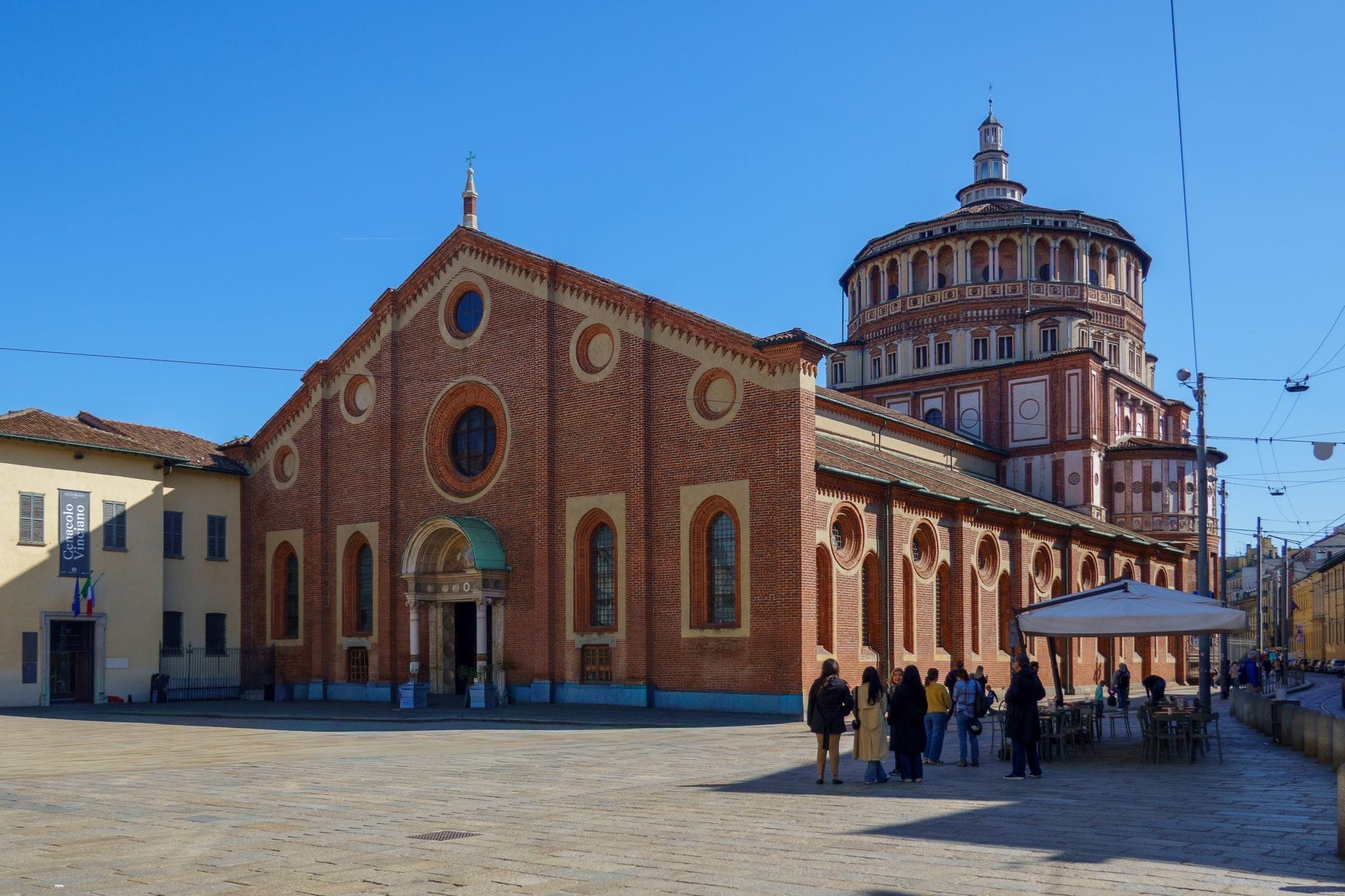
Ticinese and Sant'Ambrogio occupy the southwest flank of Milan's historic core, where Roman archaeology, medieval gates, early Christian basilicas, and a lively independent shopping street coexist within a few walkable blocks. The area splits neatly in two: the energetic Corso di Porta Ticinese corridor, which feeds into the Navigli canal district, and the quieter Sant'Ambrogio pocket around one of Italy's most important early medieval churches.
Ticinese and Sant'Ambrogio form one of Milan's most historically layered neighborhoods, stretching from the ancient Colonne di San Lorenzo in the east to the fourth-century Basilica di Sant'Ambrogio in the west. It's a district where Roman ruins share a pavement with independent boutiques, and where the same street that draws students and aperitivo-seekers at night is flanked by Lombard Romanesque architecture by morning.
Orientation: Where Ticinese and Sant'Ambrogio Sit in Milan
The neighborhood sits southwest of the Duomo, roughly 1.5 kilometres from Piazza del Duomo on foot. Its spine is Corso di Porta Ticinese, a long straight street that runs from the medieval Porta Ticinese gate at its northern end down to Piazza XXIV Maggio and the neoclassical arch at its southern tip, where the Navigli canal district begins. Most visitors discover Ticinese as the corridor between the Roman columns of San Lorenzo and the Navigli, but the area is considerably richer than that single axis suggests.
The boundaries fan out from Corso di Porta Ticinese in both directions. To the northeast, the Colonne di San Lorenzo and the Basilica di San Lorenzo Maggiore anchor the edge of the neighborhood toward the city centre. To the northwest, the streets around Università Cattolica del Sacro Cuore and the Basilica di Sant'Ambrogio form a distinct pocket with a quieter, more residential character. Via Edmondo de Amicis and Via Molino delle Armi mark the rough northern boundary, while Piazza XXIV Maggio defines the southern edge before the neighborhood gives way to Navigli.
Ticinese borders the Navigli canal district to the south and the Duomo district to the northeast, making it a natural stopping point on any walk that connects Milan's ancient centre with its most well-known waterfront. The Castello Sforzesco and Parco Sempione are about 20 minutes on foot to the northwest, placing Ticinese in a wider triangle of historically significant Milan.
Character and Atmosphere: What It Actually Feels Like
In the morning, Ticinese is unhurried. The stretch of Corso di Porta Ticinese between the medieval gate and the Colonne di San Lorenzo sees students from the nearby university, residents walking dogs past the Roman columns, and café owners setting out chairs on worn stone pavements. The light at this hour falls low across the ancient columns, and the street retains the feel of a working neighbourhood that hasn't been fully polished for tourists.
By midday the independent boutiques along Corso di Porta Ticinese are open in earnest. This is one of Milan's better streets for independent fashion and vintage clothing, not the luxury end of the market but the kind of creative, affordable retail that has been gradually squeezed out of more central districts. The street is genuinely enjoyable to walk: the scale is human-sized, the architecture has texture, and there's enough variety to hold your interest for the full length of the corso.
The contrast between the two sub-areas is striking. The Sant'Ambrogio end, reached by walking northwest along Via De Amicis or cutting through quieter residential streets, feels almost village-like. The piazza in front of the basilica is one of the calmer squares in inner Milan, with the Università Cattolica bringing academic foot traffic rather than tourist crowds. On weekday afternoons, the sound here is pigeons and bicycle bells, not aperitivo orders.
After dark, the Colonne di San Lorenzo become the social centre of the neighbourhood. On warm evenings the broad steps and surrounding pavement fill with people drinking from bottles bought at nearby shops, a long-established informal tradition. This is not organised nightlife in the bar-and-club sense, but a thoroughly local congregation point that's been functioning this way for decades. It gets loud and crowded, particularly in summer, and is worth knowing about before you book accommodation nearby.
⚠️ What to skip
The area around Colonne di San Lorenzo is popular with late-night crowds and can be noisy until 1am or later in summer. It's a perfectly safe and authentic experience, but light sleepers staying in this immediate zone should request rooms facing away from the piazza.
What to See and Do
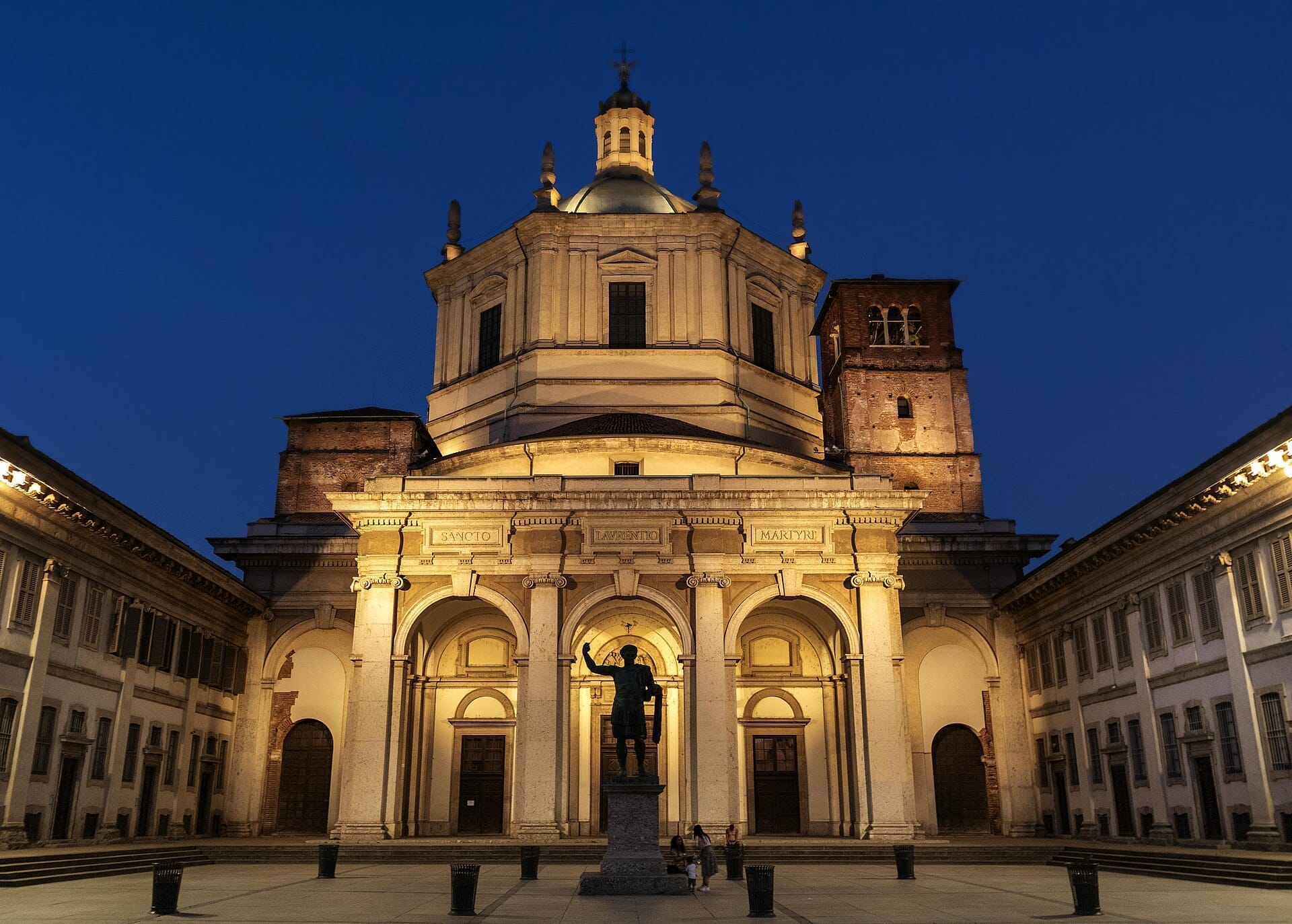
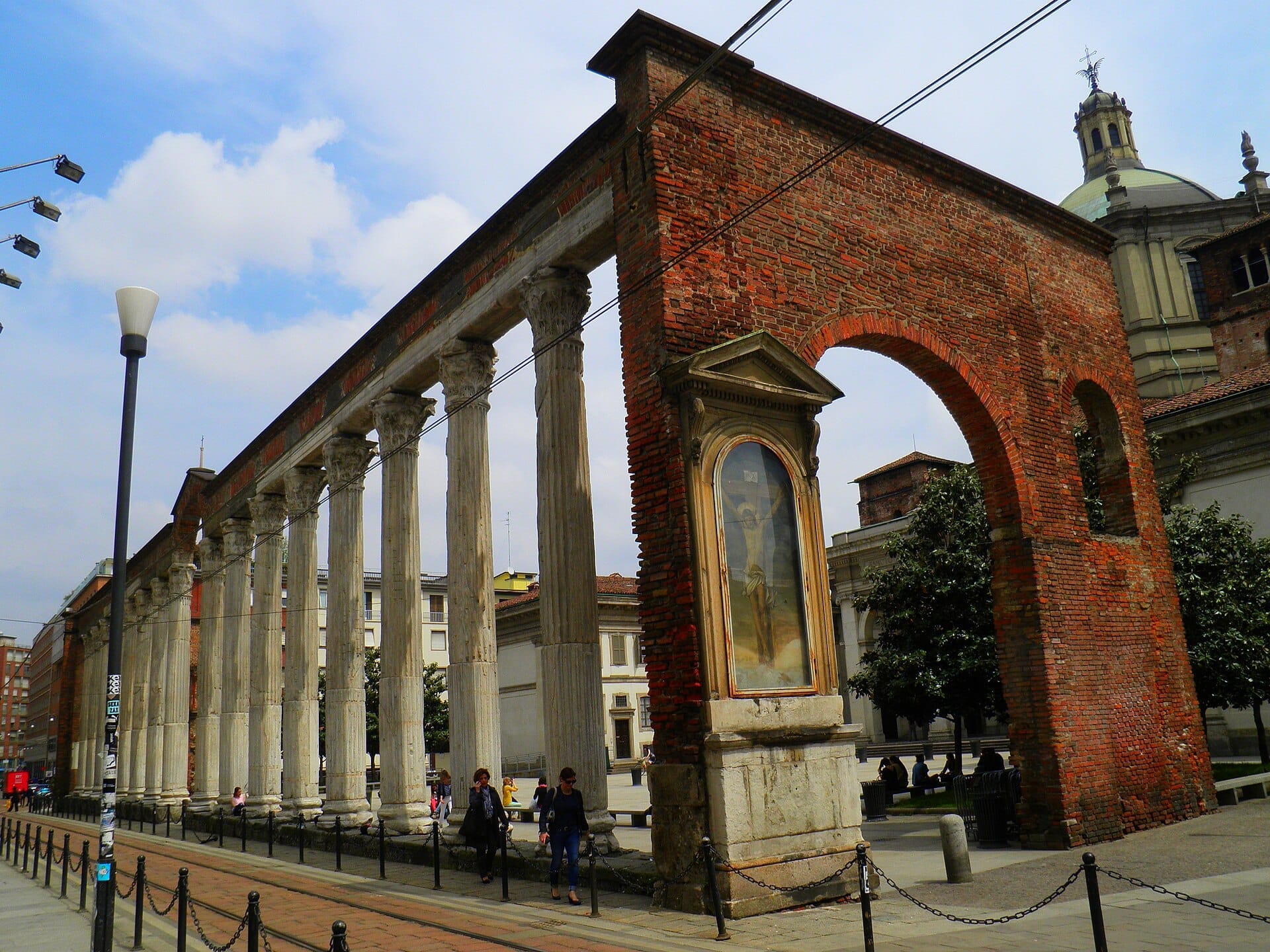
The Colonne di San Lorenzo are the most arresting sight in the neighbourhood and one of the most underrated in Milan. Sixteen ancient Roman columns, dating to the second or third century AD, stand in a semicircle in front of the basilica, connected by an entablature and framing a bronze copy of a Roman emperor. They were repurposed from an earlier structure and have stood here for over 1,600 years. Visiting in the early morning, before the crowds arrive, lets you appreciate their scale and longevity without distraction.
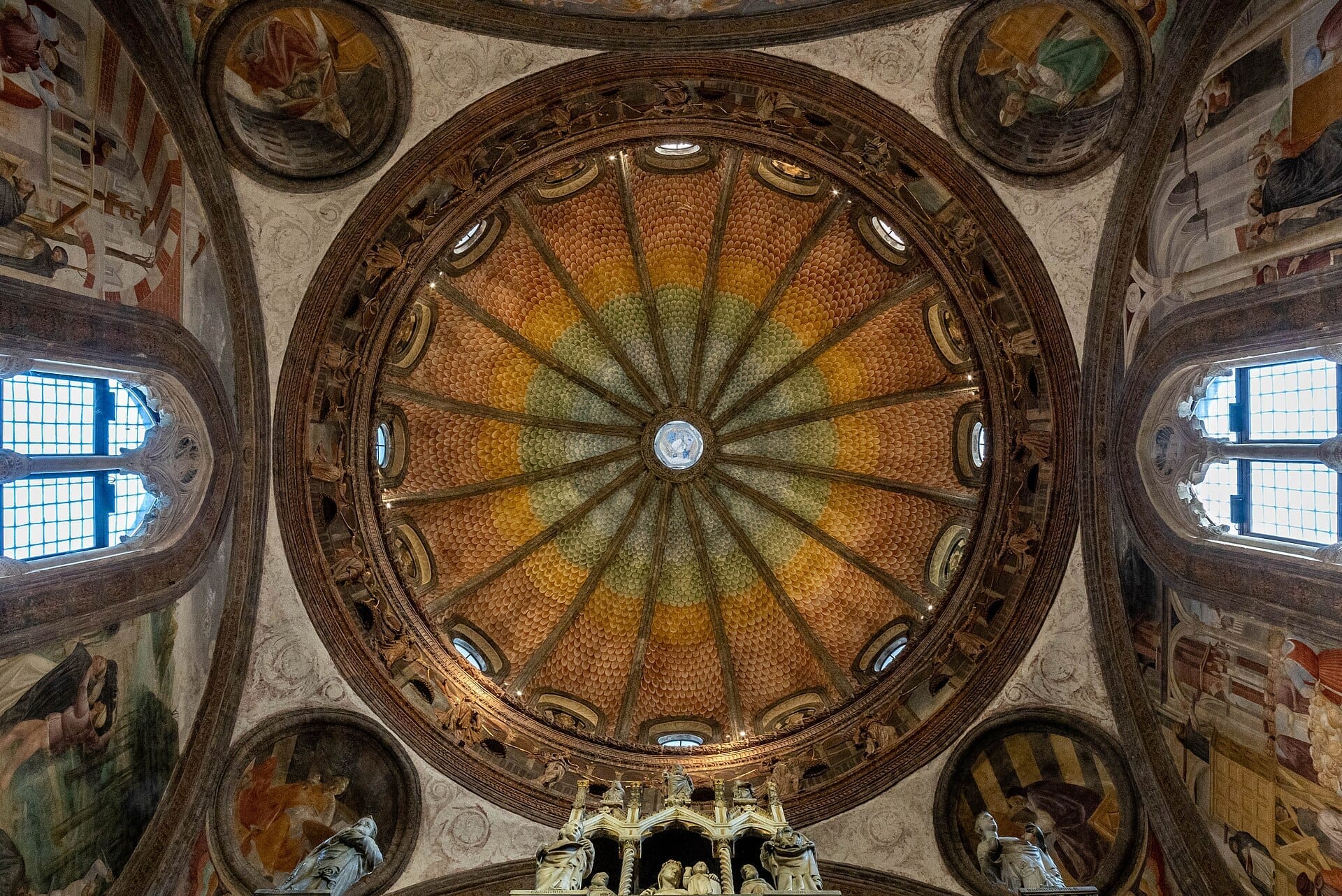
Behind the columns, the Basilica di San Lorenzo Maggiore is one of Milan's oldest and most architecturally complex churches. Founded in the fourth century, expanded and rebuilt across the following millennium, it retains a central-plan structure that is rare among Italian churches and contains the Cappella di Sant'Aquilino, a late antique chapel with fourth-century mosaics. The admission charge for the chapel is modest and well worth it.
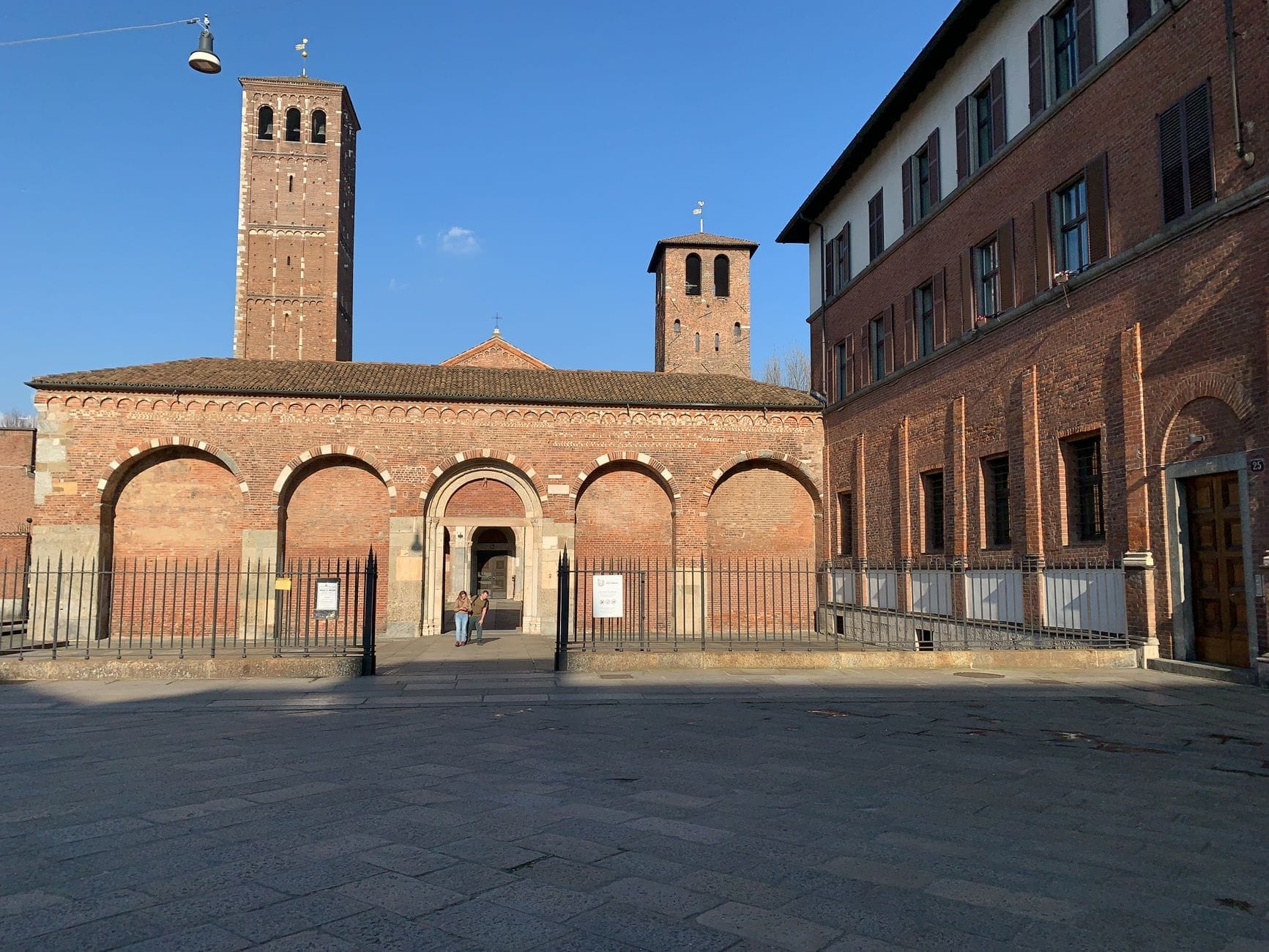
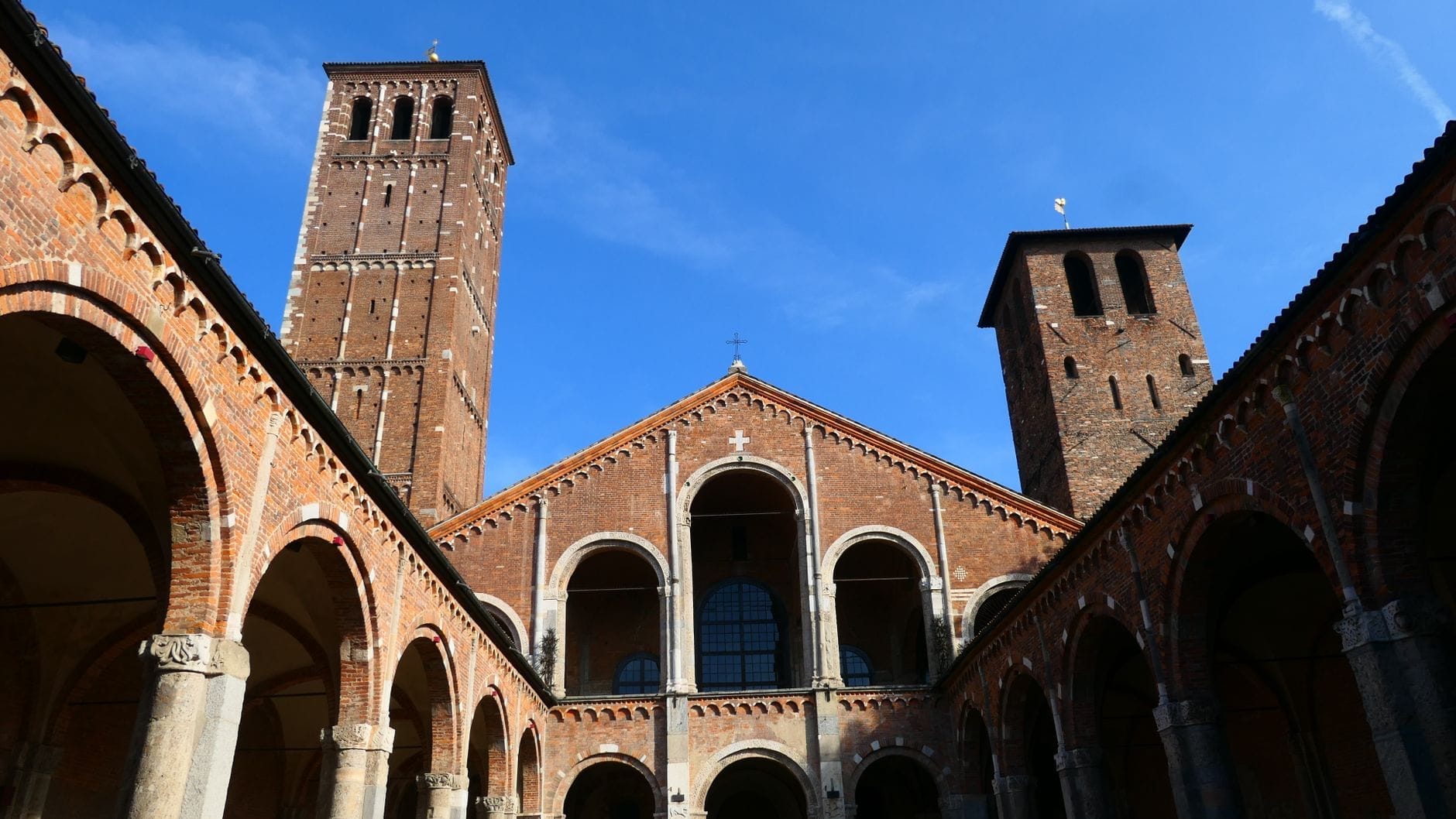
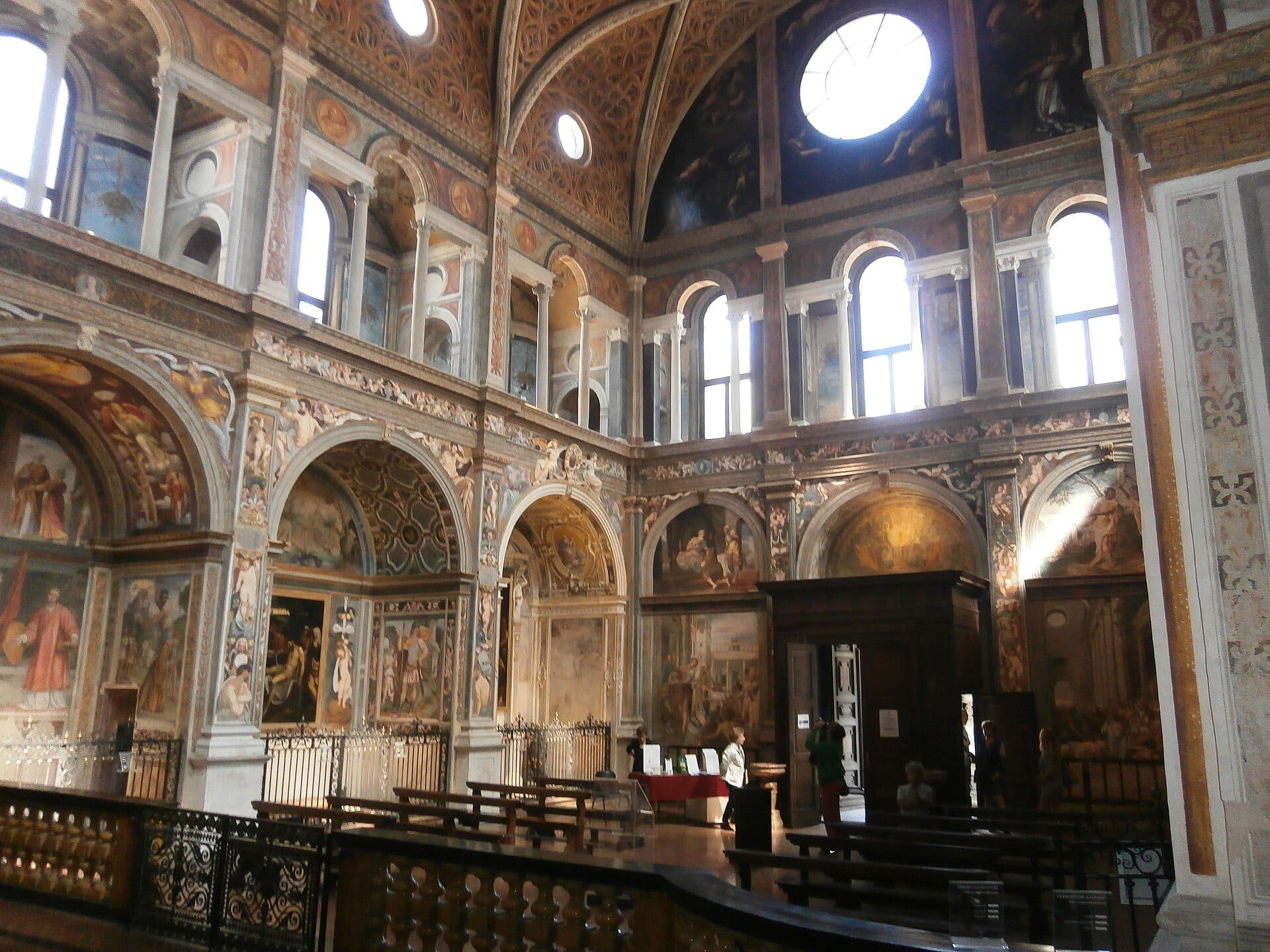
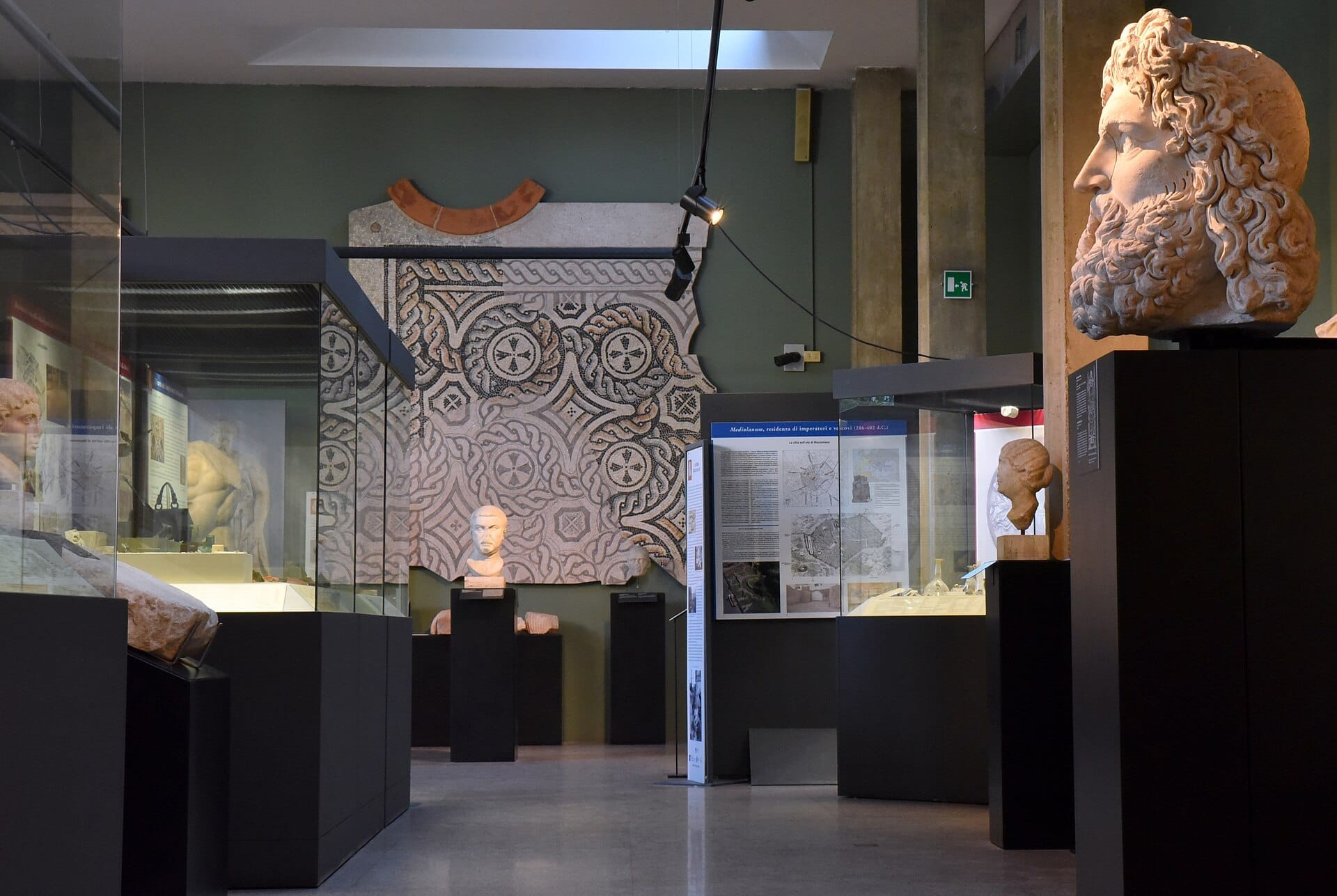
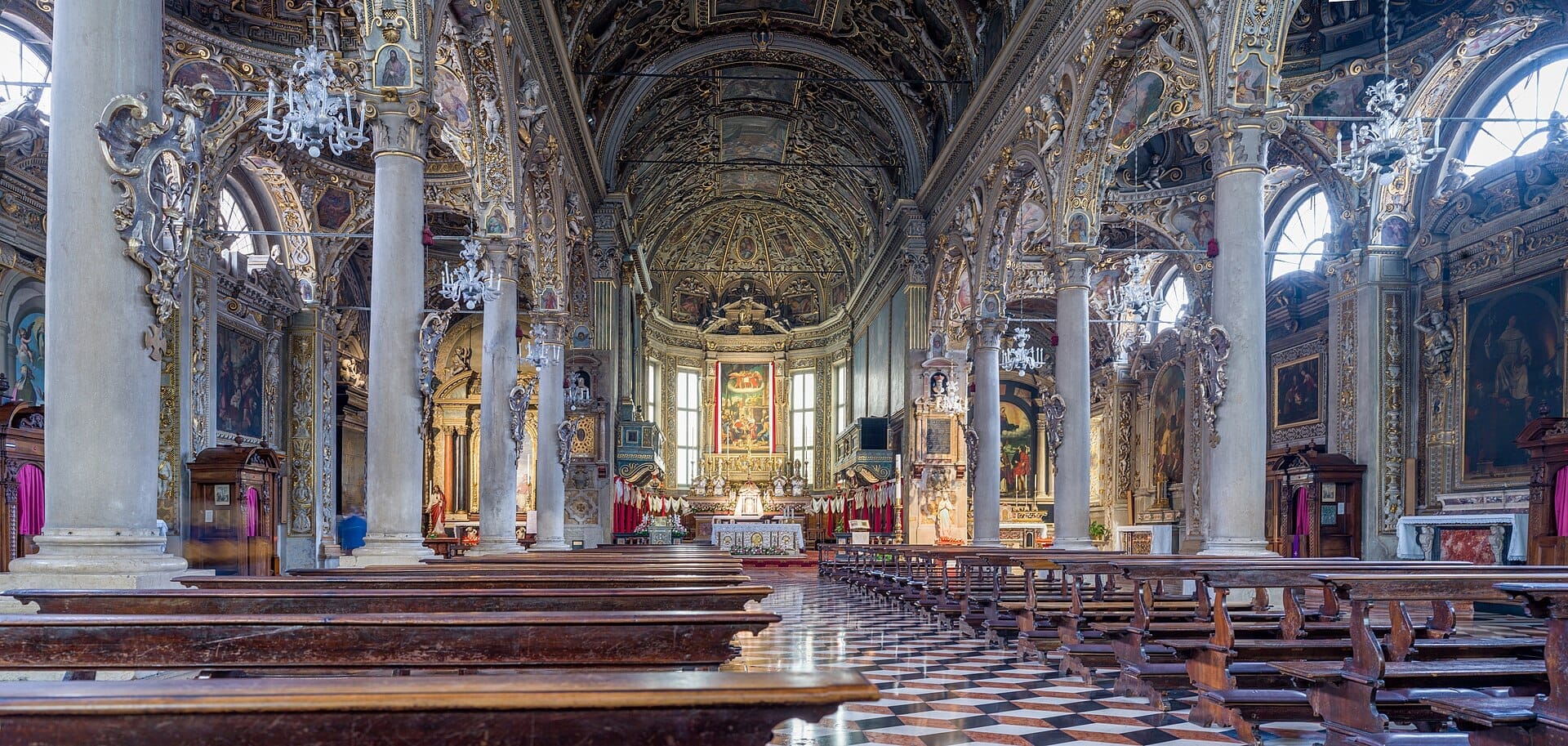
At the Sant'Ambrogio end of the neighbourhood, the Basilica di Sant'Ambrogio is one of the foundational monuments of Lombard Romanesque architecture. At the Sant'Ambrogio end of the neighbourhood, the Basilica di Sant'Ambrogio is one of the foundational monuments of Lombard Romanesque architecture. The present church was rebuilt in the 11th and 12th centuries on a site where Bishop Ambrose had built a church in 379 AD. Ambrose himself is buried here, alongside two early Christian martyrs. Ambrose himself is buried here, alongside two early Christian martyrs. The atrium, which you enter before reaching the church itself, is a particularly serene space. The Museo della Basilica, housed in adjacent rooms, adds useful context about the building's long and layered history.
Medieval Porta Ticinese: the best-preserved gate of Milan's 12th-century city walls, sitting astride Corso di Porta Ticinese
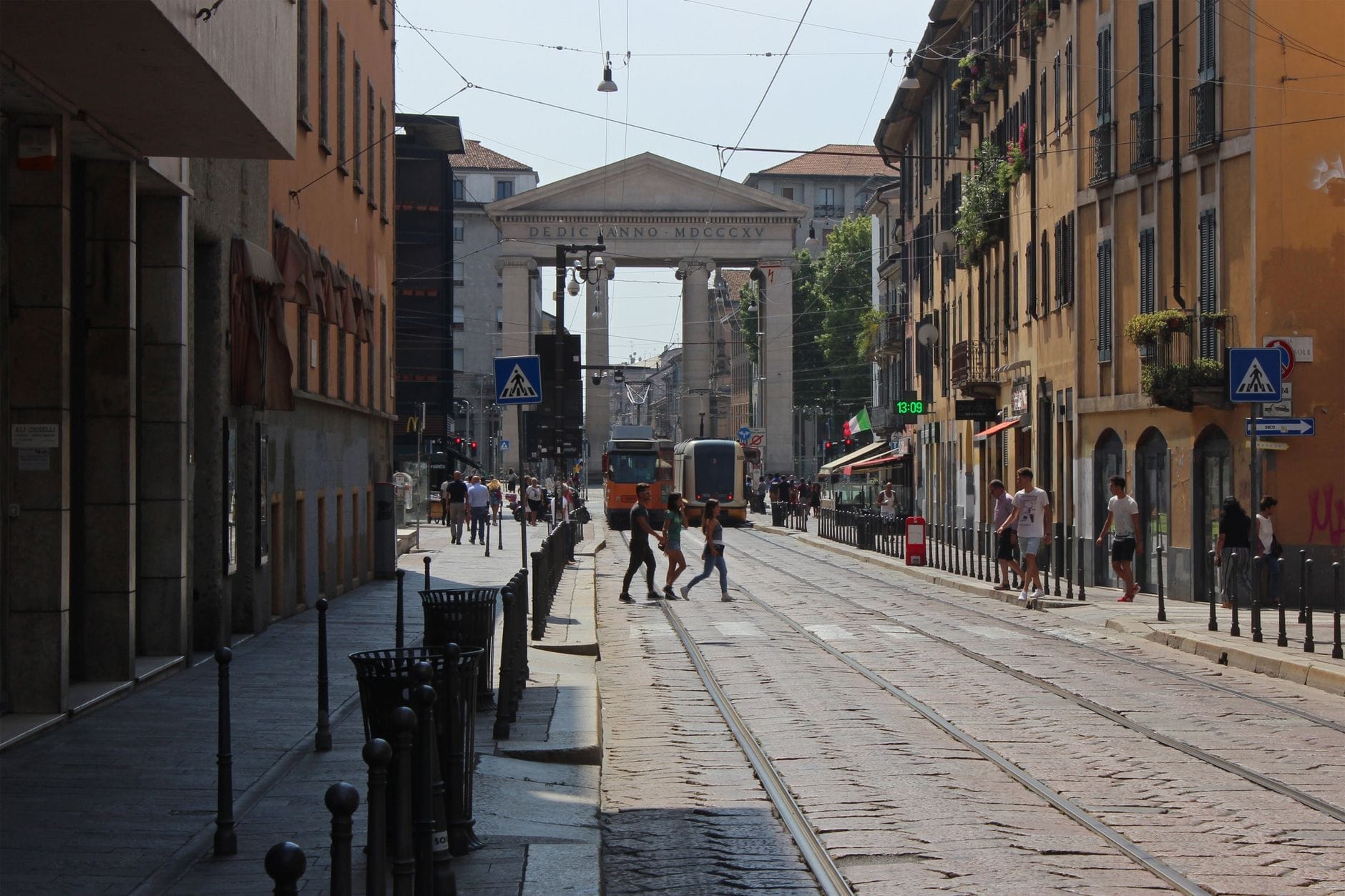
Neoclassical Porta Ticinese at Piazza XXIV Maggio: the monumental arch designed by Luigi Cagnola in the early 19th century, marking the transition from Ticinese into Navigli
Independent boutiques and vintage shops along the full length of Corso di Porta Ticinese
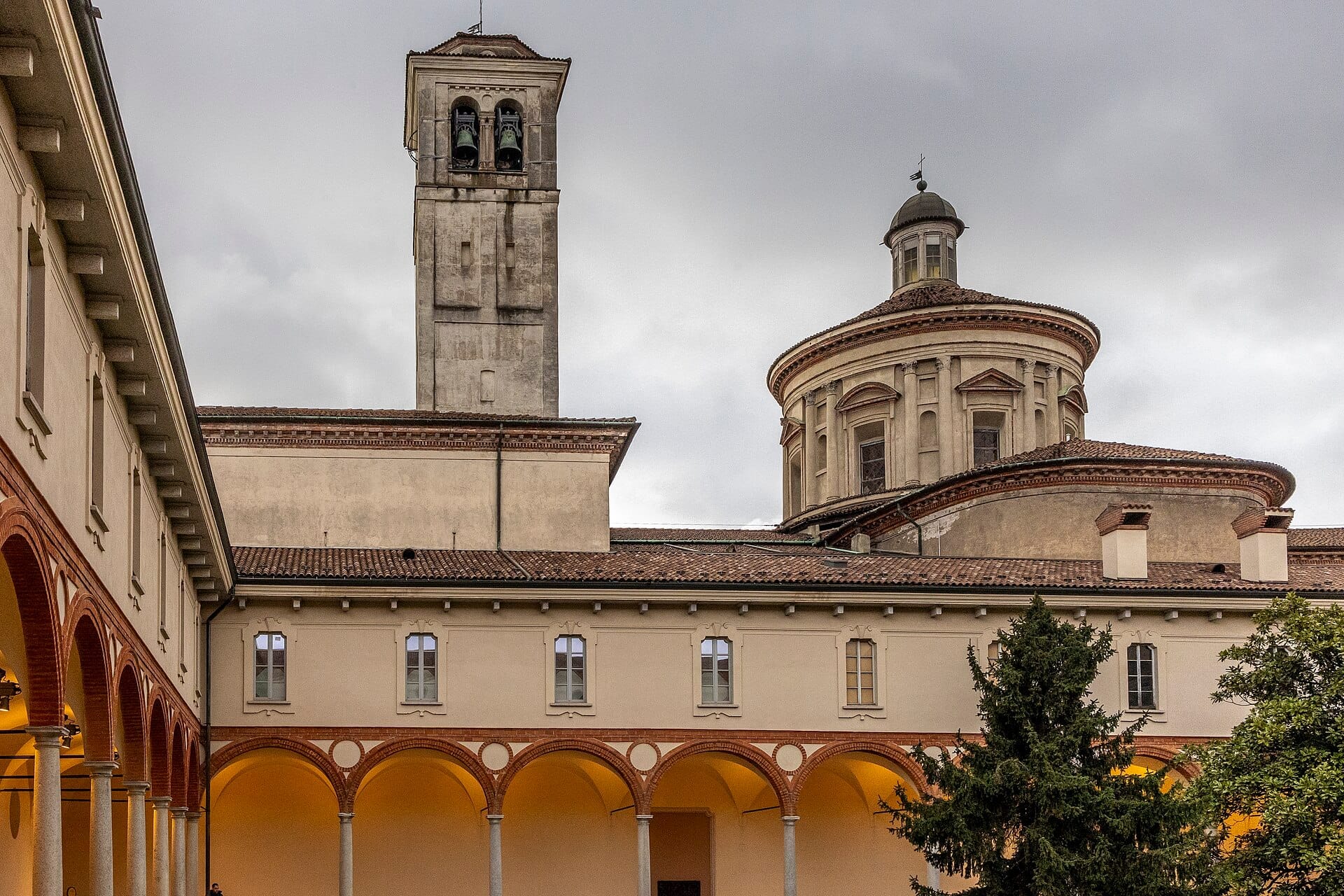
The Università Cattolica del Sacro Cuore campus, occupying a former monastery complex adjacent to Sant'Ambrogio
For visitors interested in the full sweep of Milan's religious architecture, Ticinese sits naturally alongside the city's most significant churches. The combination of San Lorenzo, Sant'Ambrogio, and the nearby Basilica di Sant'Eustorgio just a short walk south toward the Darsena, means this corner of Milan contains a greater concentration of early Christian and Romanesque architecture than anywhere else in the city.
💡 Local tip
Basilica di Sant'Ambrogio is a functioning church and closes during services. If your visit coincides with a Sunday or feast day, check the schedule posted at the entrance before expecting to explore freely. Dress modestly: shoulders and knees should be covered.
Eating and Drinking
The food and drink offer along Corso di Porta Ticinese skews toward casual dining, aperitivo bars, and independent cafés rather than formal restaurants. This is a student and young professional corridor, and the pricing reflects that. You'll find pizza by the slice, sandwich bars, and small trattorias alongside places that have leaned into the aperitivo ritual with proper cicchetti spreads.
The aperitivo hour, roughly 6pm to 9pm, is when Corso di Porta Ticinese and the streets around the Colonne di San Lorenzo come into their own. Several bars set out generous buffet spreads included in the price of a drink, a tradition that effectively substitutes as an early dinner for many Milanese. It's one of the better places in the city to participate in this ritual without feeling like you're in a venue designed specifically for tourists.
The Sant'Ambrogio pocket has a smaller selection, but what exists tends to be reliable, local-facing, and calmer. There are a handful of neighbourhood restaurants around the basilica that operate more on a lunch trade from university staff and local residents than on tourist footfall. These places don't necessarily appear in major travel guides, which is often a good sign.
For a wider overview of where to eat across the city and what Milanese cuisine actually looks like, the Milan food guide covers regional dishes, market culture, and the best neighbourhoods for specific types of eating. Ticinese connects naturally to Navigli for a continuation of the evening, with the Darsena and Naviglio Grande canal offering additional bar and restaurant options a few minutes' walk to the south.
Getting There and Around
The neighbourhood has good but not immediate metro access. The most practical approach from the city centre is by tram or on foot. The neighbourhood has good but not immediate metro access. The most practical approach from the city centre is by tram or on foot. Walking from Piazza del Duomo to the Colonne di San Lorenzo takes roughly 15 to 20 minutes.
The nearest metro station to the Porta Ticinese and San Lorenzo end of the neighbourhood is Missori on Line M3 (yellow line), approximately a 9-minute walk northeast. For Sant'Ambrogio, the dedicated metro stop is Sant'Ambrogio on Line M2 (green line), a short walk from the basilica and the university campus. Line M2 connects to Cadorna, Garibaldi, and Centrale, making it straightforward to reach from most accommodation zones in the city.
Several tram lines serve Corso di Porta Ticinese and the surrounding streets. Trams are often the most practical option for this part of the city because they run frequently and connect directly to the centro storico without requiring a metro transfer. The tram network in this zone links the neighbourhood to the Duomo district and further north. Bus lines also cover Via De Amicis and the streets around Sant'Ambrogio.
ℹ️ Good to know
If you're combining Ticinese with a visit to the Navigli canal district, the walk between Piazza XXIV Maggio and the Darsena takes under five minutes. It's easier and more atmospheric to do this stretch on foot than to navigate public transport for such a short distance.
For practical details on navigating Milan's metro, tram, and bus networks, including ticket types and day pass options, see the guide to getting around Milan.
Where to Stay
Ticinese and Sant'Ambrogio offer a genuine alternative to staying in the immediate Duomo area, with lower average prices and a more local atmosphere. The trade-off is that the choice of hotels is smaller, and some international chain options are absent. The accommodation that does exist leans toward boutique hotels, B&Bs, and apartment rentals.
The Sant'Ambrogio end is the better choice for anyone who values quiet: the streets around the basilica and the university are calm at night, and the metro connection at Sant'Ambrogio station makes the rest of the city easy to reach. This pocket suits couples, solo travellers who want to feel like they're staying in a real neighbourhood, and visitors primarily interested in the historical and architectural side of Milan.
Staying along or near Corso di Porta Ticinese puts you closer to the nightlife energy around the Colonne di San Lorenzo and within easy walking distance of the Navigli. This suits travellers who plan to spend evenings out in these areas and don't mind ambient noise. The Piazza XXIV Maggio end is particularly convenient if Navigli is your primary reason for being in this part of Milan.
For a broader comparison of Milan's accommodation zones and guidance on which neighbourhood suits your priorities, the where to stay in Milan guide covers all major areas with candid assessments of trade-offs.
Is Ticinese and Sant'Ambrogio Right for You?
The neighbourhood doesn't have a single dominant identity, which is part of what makes it interesting. It contains some of the most important early Christian and Roman sites in the city, a lively independent shopping street, a student-driven nightlife scene centred on an ancient monument, and one of Milan's calmest residential pockets, all within a manageable walking area. That range means it suits different types of visitor for different reasons.
What it is not is a neighbourhood built around international tourism. There are no major tourist infrastructure clusters here comparable to the Duomo district or Brera. The sights require a degree of self-direction to appreciate. Visitors who find the Duomo district overwhelming, or who are looking for the version of Milan that isn't primarily a shopping and fashion destination, will find Ticinese and Sant'Ambrogio considerably more rewarding.
TL;DR
Best for travellers interested in Roman, early Christian, and Romanesque architecture: the Colonne di San Lorenzo, Basilica di San Lorenzo, and Basilica di Sant'Ambrogio form one of Milan's most significant historic sequences.
The Corso di Porta Ticinese corridor is a good street for independent fashion and casual eating, with an aperitivo scene that feels distinctly local rather than staged for visitors.
The Sant'Ambrogio pocket is one of the quietest, most liveable parts of inner Milan and suits travellers who want residential calm with good metro access.
Not ideal for travellers who want luxury hotels, 24-hour convenience, or the full complement of international tourist infrastructure: the neighbourhood is lower-key and rewards initiative.
Noise is a real consideration near the Colonne di San Lorenzo at night, especially in summer. Book accommodation with this in mind if you're a light sleeper.
Milan has over 70 museums, from Renaissance masterpiece galleries to free contemporary art spaces. This guide cuts through the options and tells you exactly which ones are worth your time, what to expect inside, and how to plan your visit.
Milan rewards visitors who time their trip well. This guide covers every season in detail — temperatures, crowd levels, key events, and what to skip — so you can make the most informed decision about when to go.
Milan rewards those who look up and climb higher. This guide covers the city's best viewpoints, from the Duomo's Gothic spires and Palazzo Lombardia's 39th-floor panorama to canal-side sunset bridges and design-forward skyscrapers.
Milan sits at the center of one of Europe's most rewarding day-trip networks. Within two hours by train you can reach Alpine lakes, medieval hilltop towns, Roman amphitheaters, and UNESCO World Heritage canals. This guide covers the best destinations, how to get there, and what to prioritize once you arrive.
Milan has one of Italy's best urban transport networks, but knowing which ticket to buy, which metro line to take, and how to reach the city from three different airports saves real time and money. This guide covers everything from ATM fares and the RicaricaMi card to bike sharing and walking distances between key neighborhoods.
Milan is Italy's most demanding city for high-end travel, where fashion weeks and design fairs can triple hotel rates overnight. This guide covers where to stay, what to spend, when to go, and how to move around Milan like someone who has done it before.
Three days in Milan is enough time to cover the cathedral district, the great art museums, the canal neighbourhood, and still fit in a day trip to Lake Como. This itinerary is built around how the city actually works: metro-first logistics, realistic opening hours, and clear advice on what to skip.
Milan is served by three airports: Malpensa (MXP), Linate (LIN), and Bergamo Orio al Serio (BGY). Together the three airports form Italy's largest airport system by passenger volume, handling over 56 million passengers per year. This guide breaks down the key differences, transport links, costs, and which airport makes sense for your trip.
Milan's built environment is a genuine timeline in stone, steel, and glass. This guide walks you through every major architectural era, from the Gothic Duomo to Porta Nuova's skyscrapers, with practical routes, seasonal advice, and candid assessments of what's worth your time.
Milan's churches span seventeen centuries of history, from 4th-century basilicas built by the city's patron saint to Renaissance chapels covered floor-to-ceiling in frescoes. This guide covers the essential sacred sites, practical visiting tips, and the lesser-known churches that reward the curious traveler.
Milan Design Week is the world's largest design festival, combining the professional Salone del Mobile furniture fair at Rho Fiera with hundreds of free Fuorisalone events across the city's design districts. This guide covers dates, tickets, neighborhoods, transport, and practical planning advice.
Milan is one of the world's four fashion capitals, home to storied design houses, serious shopping districts, and four Fashion Weeks a year. This guide covers everything from navigating the Quadrilatero della Moda to understanding what tourists can actually access during Milan Fashion Week 2026.
Milanese food is not what most visitors expect. Rice trumps pasta, butter beats olive oil, and the city's signature dishes carry centuries of culinary history. This guide covers every essential dish, realistic price expectations, seasonal eating patterns, and practical advice for dining well in Milan.
Milan surprises most couples. Behind the fashion showrooms and financial towers lies a city with candlelit canals, world-class opera, cobblestone art districts, and Gothic cathedral rooftops built for golden-hour views. This guide covers the best romantic experiences in Milan, with practical details on pricing, timing, and what to skip.
Milan rewards those who look beyond the Duomo and The Last Supper. From a chapel lined with human skulls to a free panoramic skyscraper and a botanical garden tucked behind one of Italy's great art museums, these are the experiences that reveal the city locals actually love.
Spring transforms Milan from a grey winter city into one of Europe's most enjoyable urban destinations. This guide covers the real weather, the best events, crowd expectations, and everything you need to plan a smart April or May trip.
Milan transforms in winter into one of Italy's most atmospheric cold-weather destinations, with Christmas markets around the Duomo, centuries-old fairs near Castello Sforzesco, and a city that keeps its cultural calendar packed well past the holidays. This guide covers what to see, when to go, and how to get the most out of the season.
Leonardo da Vinci spent more than two decades in Milan, leaving behind some of the most extraordinary works in Western art and science. This guide covers every significant site, explains what you'll actually find there, and tells you exactly how to book before you arrive.
Milan's nightlife runs on a distinct rhythm: aperitivo first, dinner second, clubs last. This guide breaks down every major area, the best bars and clubs, what things cost, and how to get home at 3am.
Milan has a reputation for luxury fashion and fine dining, but the city is far more accessible than most travelers assume. This guide breaks down realistic daily costs, the smartest ways to use public transport, which world-class attractions are free, and how timing your visit can cut hotel prices by 25–40%.
Milan shopping covers far more than luxury fashion. This guide breaks down the city's best shopping districts, from the Quadrilatero d'Oro's flagship stores to Navigli's vintage markets, with practical advice on what to skip, what to budget, and when to go.
Lake Como sits less than an hour from Milan by direct train, making it one of the most rewarding day trips in northern Italy. This guide covers every transport option, the best villages to visit, ferry logistics, and how to avoid the most common mistakes first-time visitors make.
The journey from Milan to Rome covers roughly 565-570 km and can take anywhere from 3 hours to 6+ depending on how you go. This guide breaks down every realistic option, with clear price comparisons, booking strategies, and the city-center-to-city-center math that makes the train far more competitive than most people expect.
The Milan to Venice route is one of Italy's most popular corridors, served by frequent high-speed trains that cover the distance in around 2 hours 15 to 30 minutes. This guide breaks down every option, from Frecciarossa tickets to bus alternatives, with practical advice on what's worth it and what to skip.
Milan rewards families more than most people expect. From the interactive Leonardo da Vinci Science Museum to the free courtyards of Castello Sforzesco and the rooftop terraces of the Duomo, the city packs a serious amount of child-friendly content into a compact, walkable center. This guide cuts through the noise with specific venues, practical assessments, and logistics that actually help.
Milan rewards visitors who look beyond the fashion weeks and luxury boutiques. This guide covers the essential things to do in Milan Italy, from cathedral rooftops and Renaissance masterpieces to canal-side aperitivo and contemporary architecture, with practical advice on what to book in advance and what to skip.
Milan rewards travelers who choose their base carefully. This guide breaks down every major neighborhood, explains the price realities, and tells you exactly when to book to avoid paying peak-event rates.