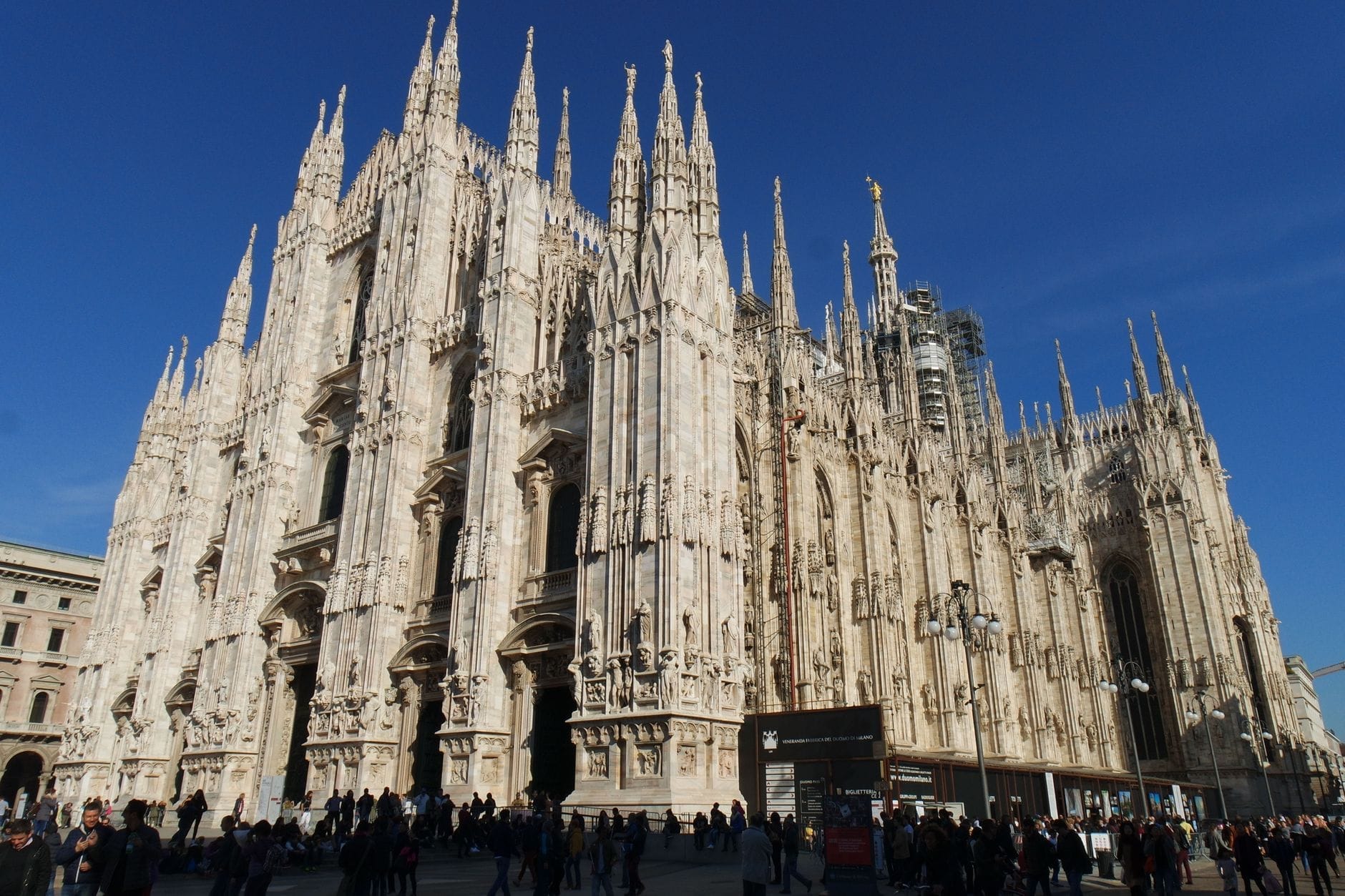
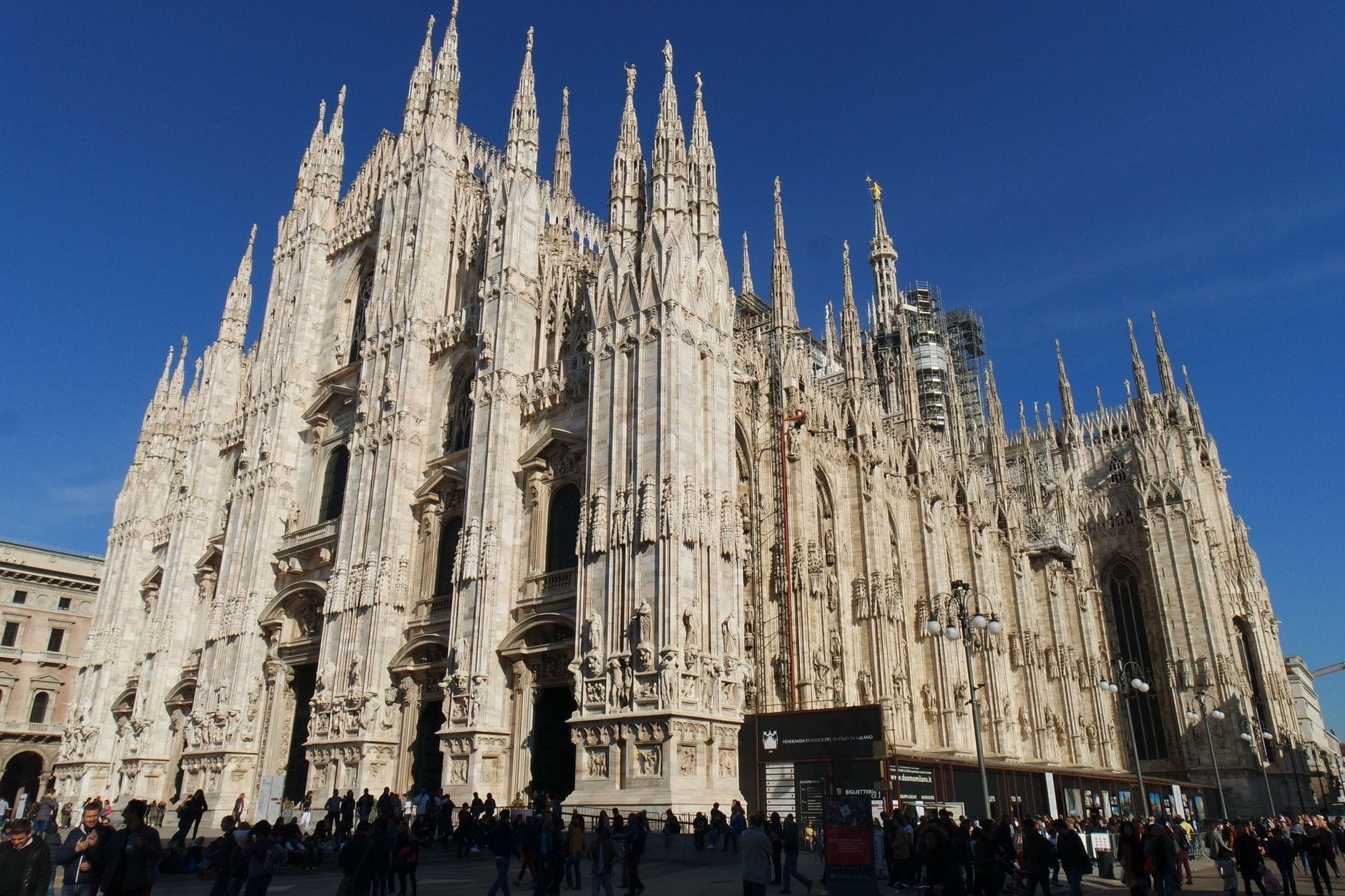
The Duomo District is Milan's geographic and civic center, built around the vast Piazza del Duomo and dominated by one of the world's great Gothic cathedrals. It is the city's densest concentration of history, architecture, and commerce, and the logical starting point for any visit to Milan.
Everything in Milan radiates outward from Piazza del Duomo. This is not just a tourist district but the actual geographic heart of the city, where Roman foundations underlie medieval streets, and a 14th-century cathedral shares the skyline with a 19th-century glass arcade that still functions as one of Italy's most prestigious shopping addresses.
Orientation
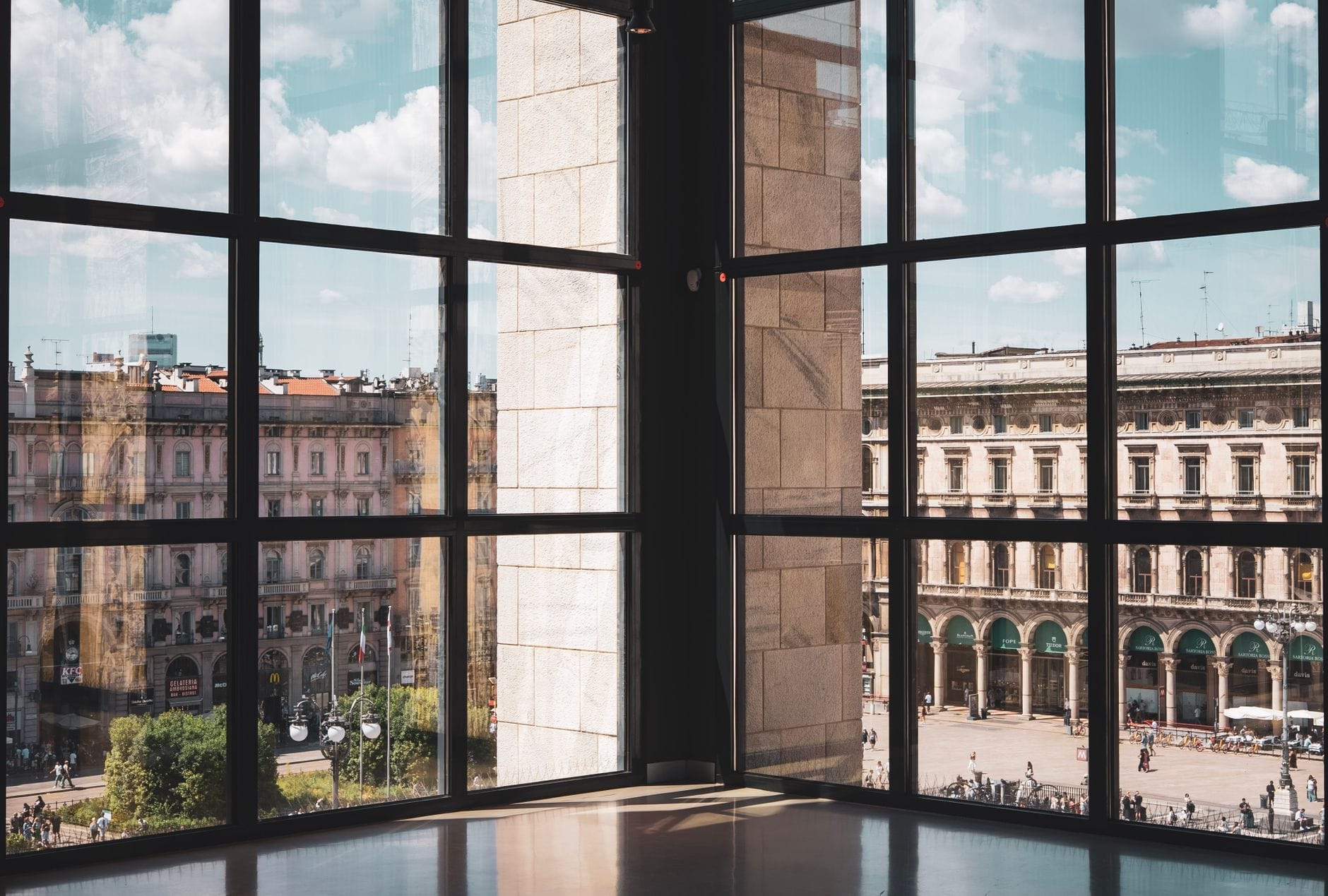
Piazza del Duomo sits at the absolute center of Milan, roughly equidistant from most of the city's major neighborhoods. The square itself covers around 17,000 square meters, with the cathedral anchoring its eastern edge and the Galleria Vittorio Emanuele II opening off its northeastern corner. The Palazzo Reale (Royal Palace) runs along the southern flank of the cathedral, and the rest of the square is framed by neoclassical and 19th-century buildings that house banks, retail flagships, and civic institutions.
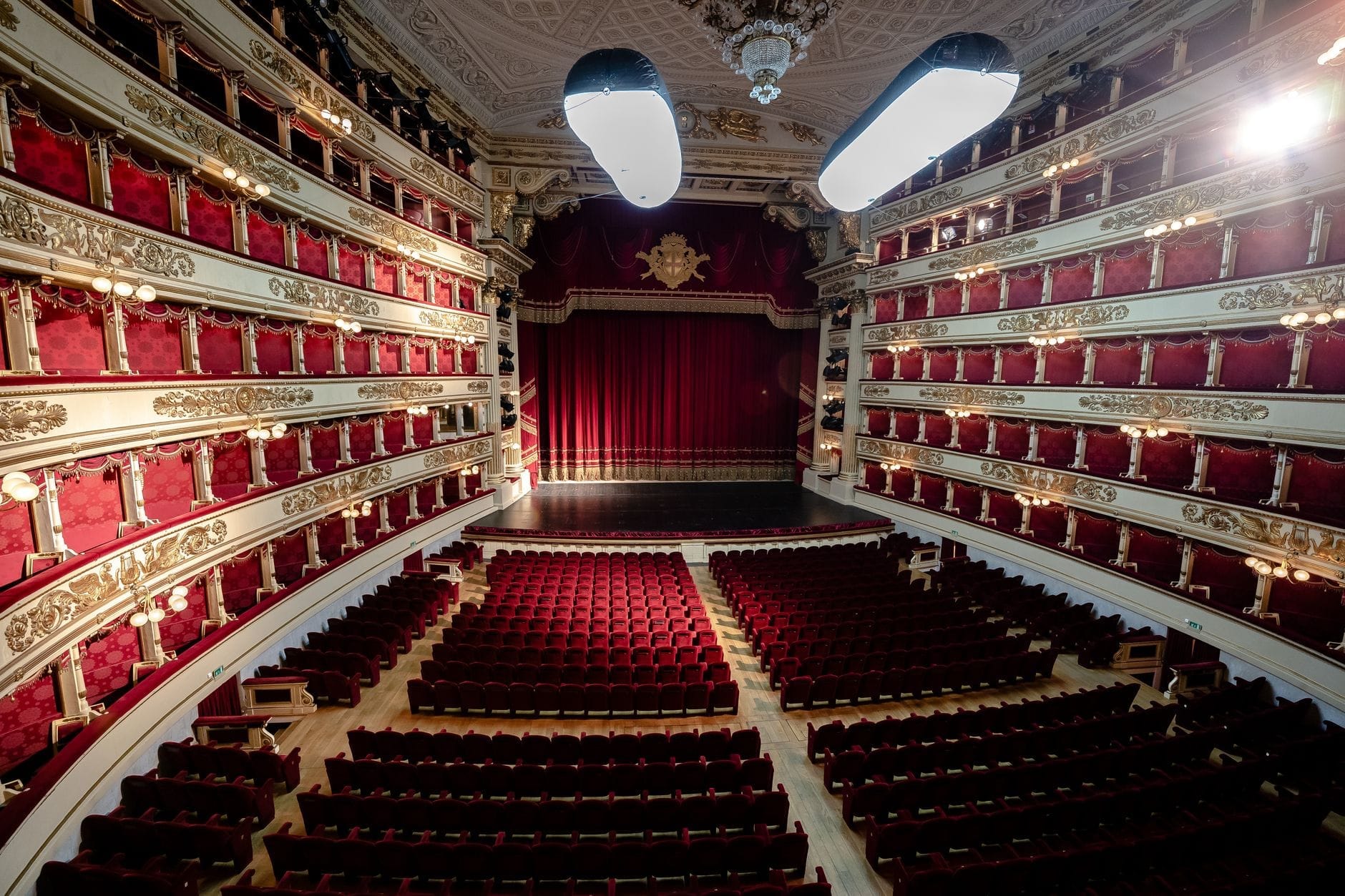
The wider Duomo District extends in all directions from the square. Walk north through the Galleria and you arrive in Piazza della Scala, home to the opera house. Continue northwest and you reach the Brera neighborhood. Head west along Via Dante and you are at Castello Sforzesco within ten minutes. Go southeast along Via Torino and the streets lead toward the Ticinese and Sant'Ambrogio quarter. East, Via Montenapoleone begins the grid of the fashion district. The Duomo is not merely a destination within Milan; it is the hub from which every other neighborhood is measured.
For a city-wide sense of how the neighborhoods connect, the where to stay in Milan guide explains how proximity to the Duomo affects your daily logistics in practical terms.
Character & Atmosphere
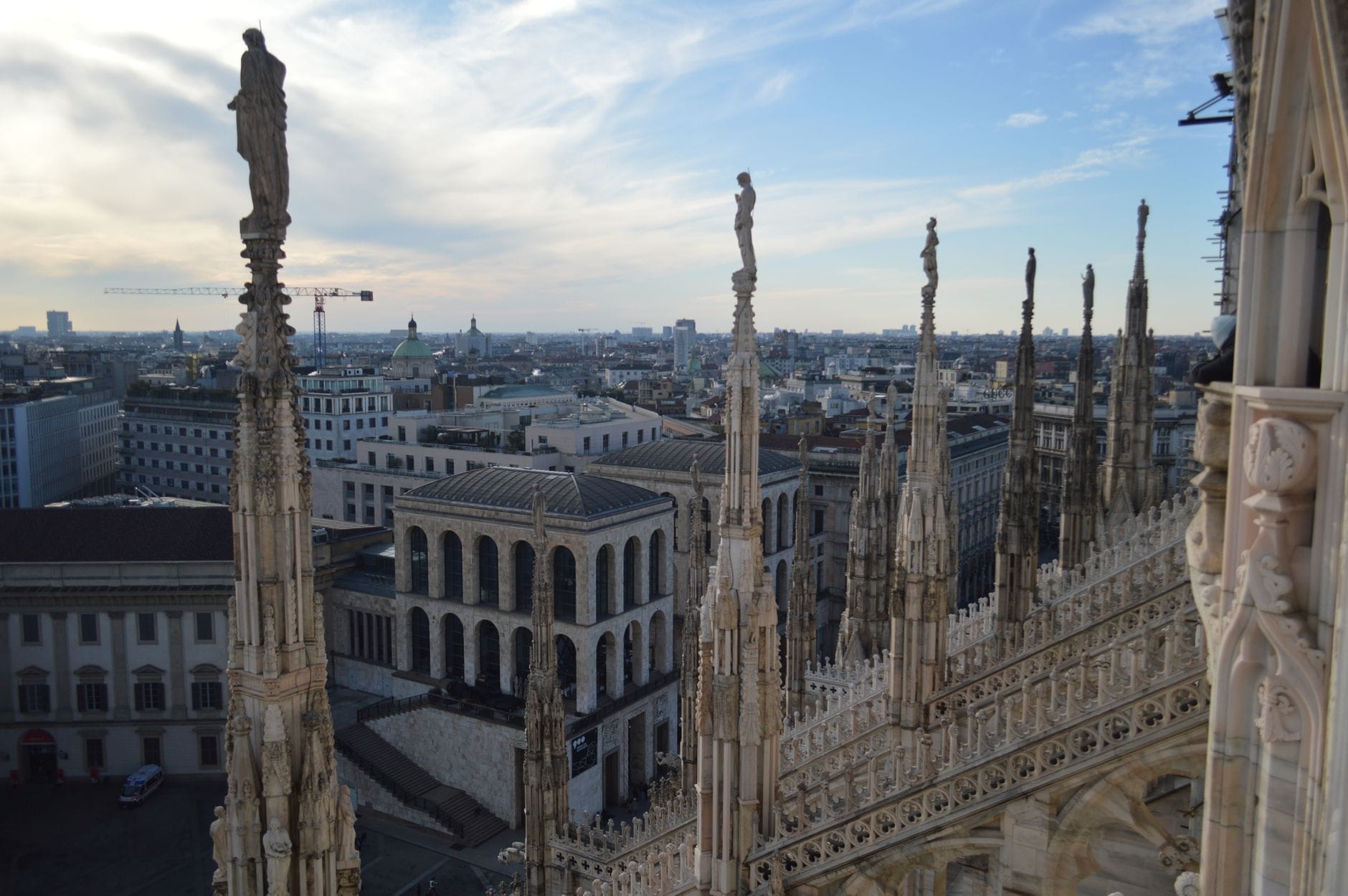
Early in the morning, before the tour groups arrive, Piazza del Duomo has a different quality entirely. The cathedral's white Candoglia marble changes color with the light: grey-pink at dawn, almost luminous by mid-morning. Street cleaners cross the square in diagonal lines, pigeons reassemble, and the first office workers cut through on their way to the metro. The scale of the space is easier to appreciate in that relative quiet, and the cathedral's forest of spires and pinnacles reads clearly against the sky.
By mid-morning the district is operating at full intensity. Tour buses unload along the surrounding streets, queues form at the cathedral entrance, and the Galleria fills with people moving between the Duomo piazza and Piazza della Scala. The streets immediately south and east of the square, including Via Mercanti and the network of pedestrian lanes running toward Corso Vittorio Emanuele II, become thick with foot traffic. This is not a district where you accidentally stumble into a quiet corner during the day.
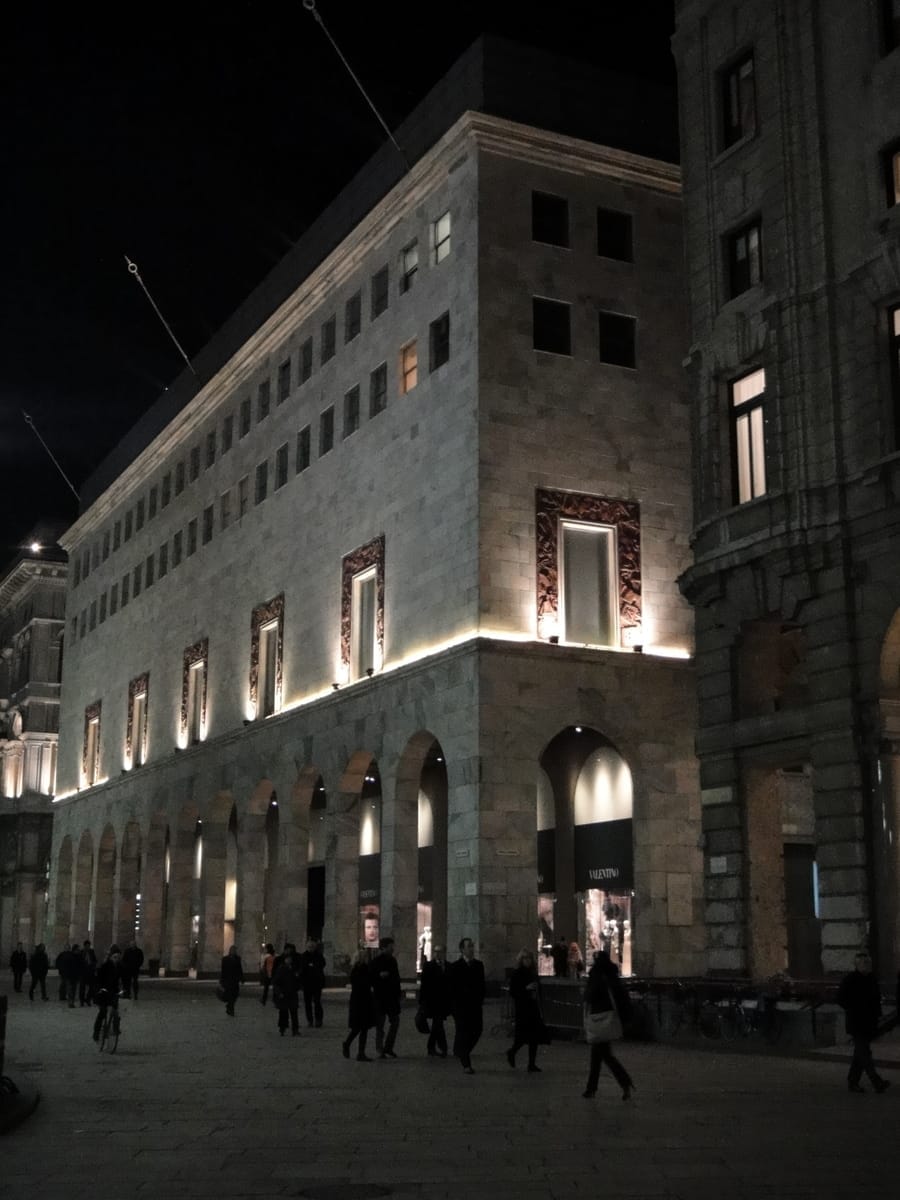
By late afternoon the energy shifts. The worst of the tourist crowds thin out, afternoon light falls at a low angle across the square, and the terrace bars and aperitivo spots in the surrounding streets begin to fill with Milanese finishing work. After dark, the cathedral and the Galleria are both illuminated, and the piazza takes on a theatrical quality that rewards a deliberate evening walk. The surrounding streets toward Corso Italia and Via Torino support a nocturnal economy of restaurants and bars without ever quite becoming a nightlife neighborhood.
⚠️ What to skip
Pickpocketing is a real concern in and around Piazza del Duomo, particularly in crowded conditions near the cathedral entrance, on trams, and inside the metro station. Keep bags in front of you and be especially alert in the hours when tourist density is highest, typically from mid-morning to mid-afternoon.
What to See & Do
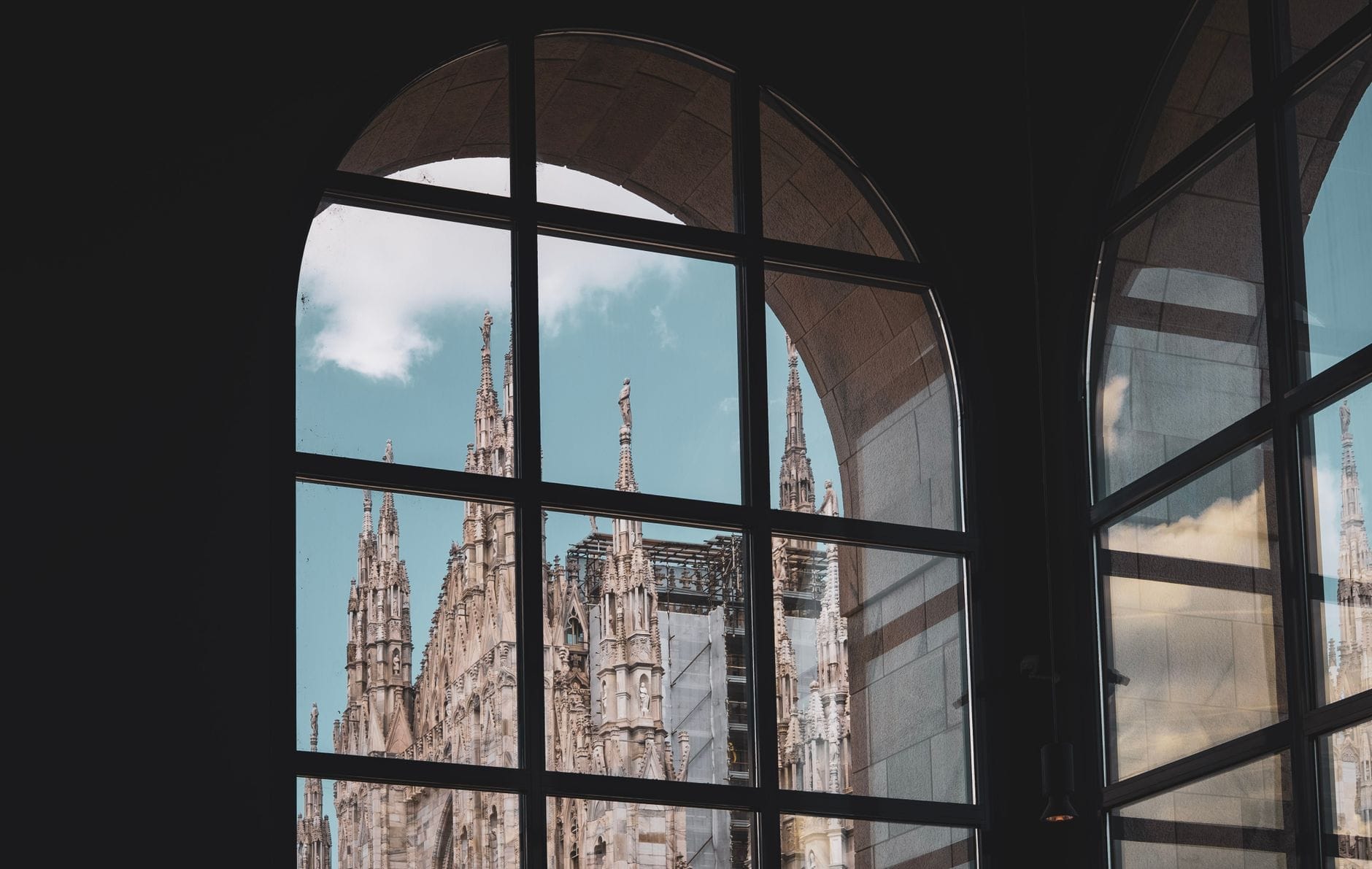
The Duomo di Milano is the unavoidable center of the district and, for most visitors, the primary reason for being here. Construction began in 1386 and continued across six centuries, producing a cathedral of extraordinary scale: the third largest in the world by floor area. The interior is dim and vast, lined with stained glass windows that cast colored light across the stone. Visiting the exterior takes far longer than most people expect — the full circuit of the building reveals hundreds of individual sculptural details, from gargoyles to the gilded Madonnina at the summit.
Access to the cathedral rooftop terraces is one of the most rewarding experiences in Milan. You can reach them by stairs or lift (the lift is significantly faster), and once up, you walk among the spires at close range, with the city spreading out in every direction below. On clear days the Alps are visible to the north. Book in advance, especially if you are visiting between April and October.
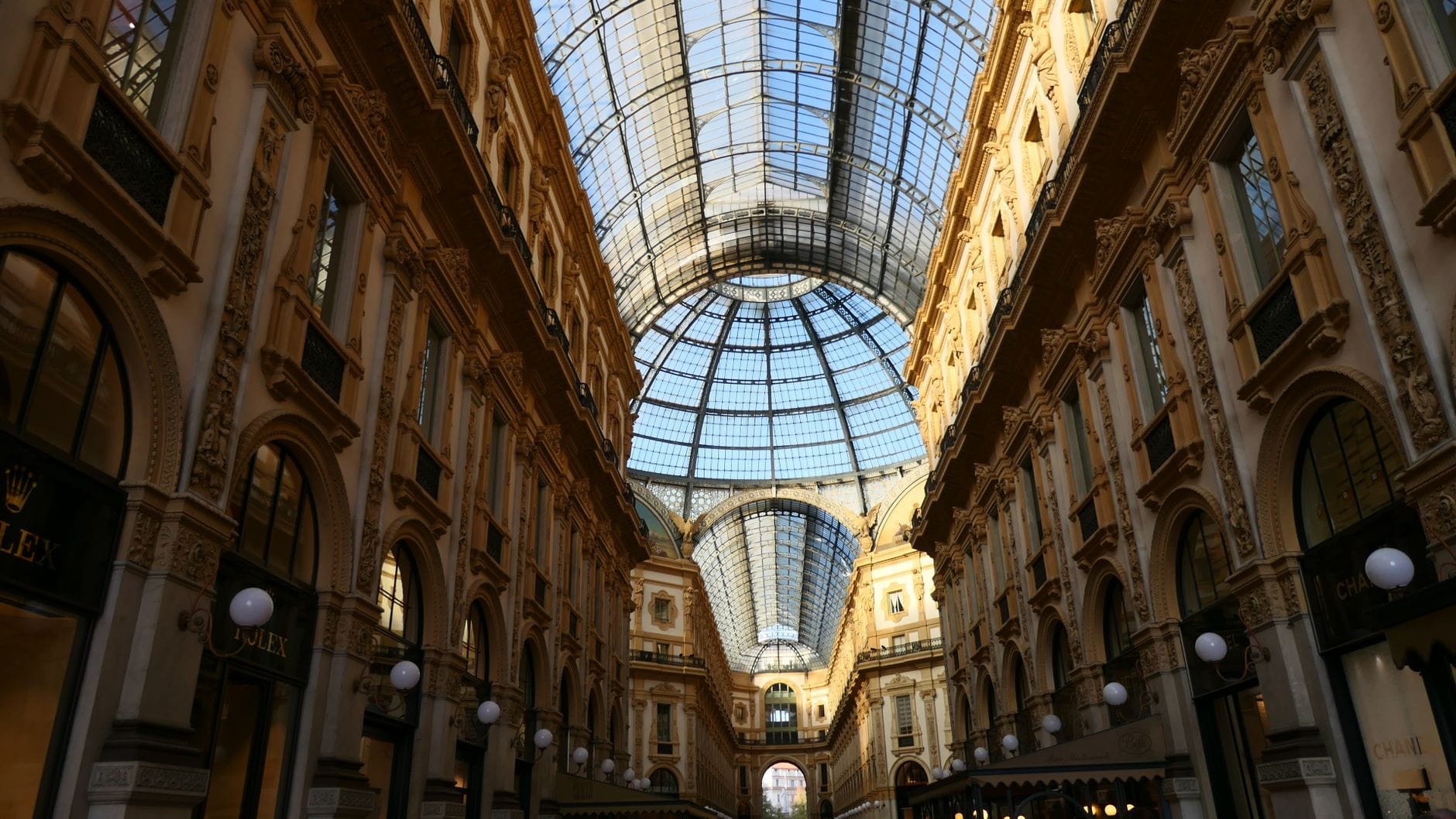
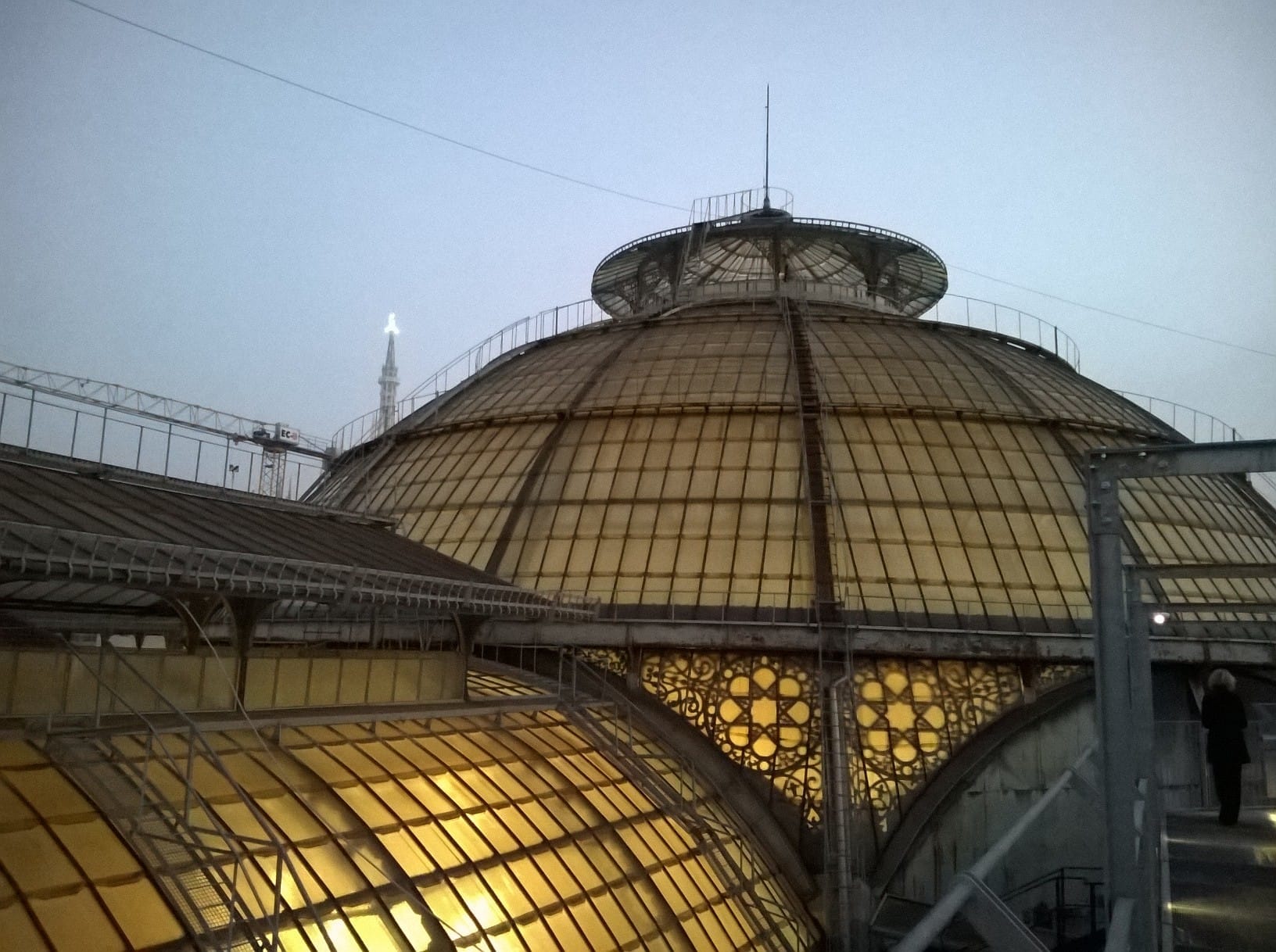
The Galleria Vittorio Emanuele II connects the Duomo piazza to Piazza della Scala via a cross-shaped arcade completed in 1877. Its iron-and-glass dome is a feat of 19th-century engineering, and the mosaic floor contains a famous bull's-eye symbol that visitors spin their heel on for luck. The Galleria's ground floor is occupied by luxury boutiques and historic cafés. Walk through it even if you are not buying anything — the architecture alone justifies the detour, and the Highline Galleria offers a ticketed rooftop walking circuit directly above the arcade.
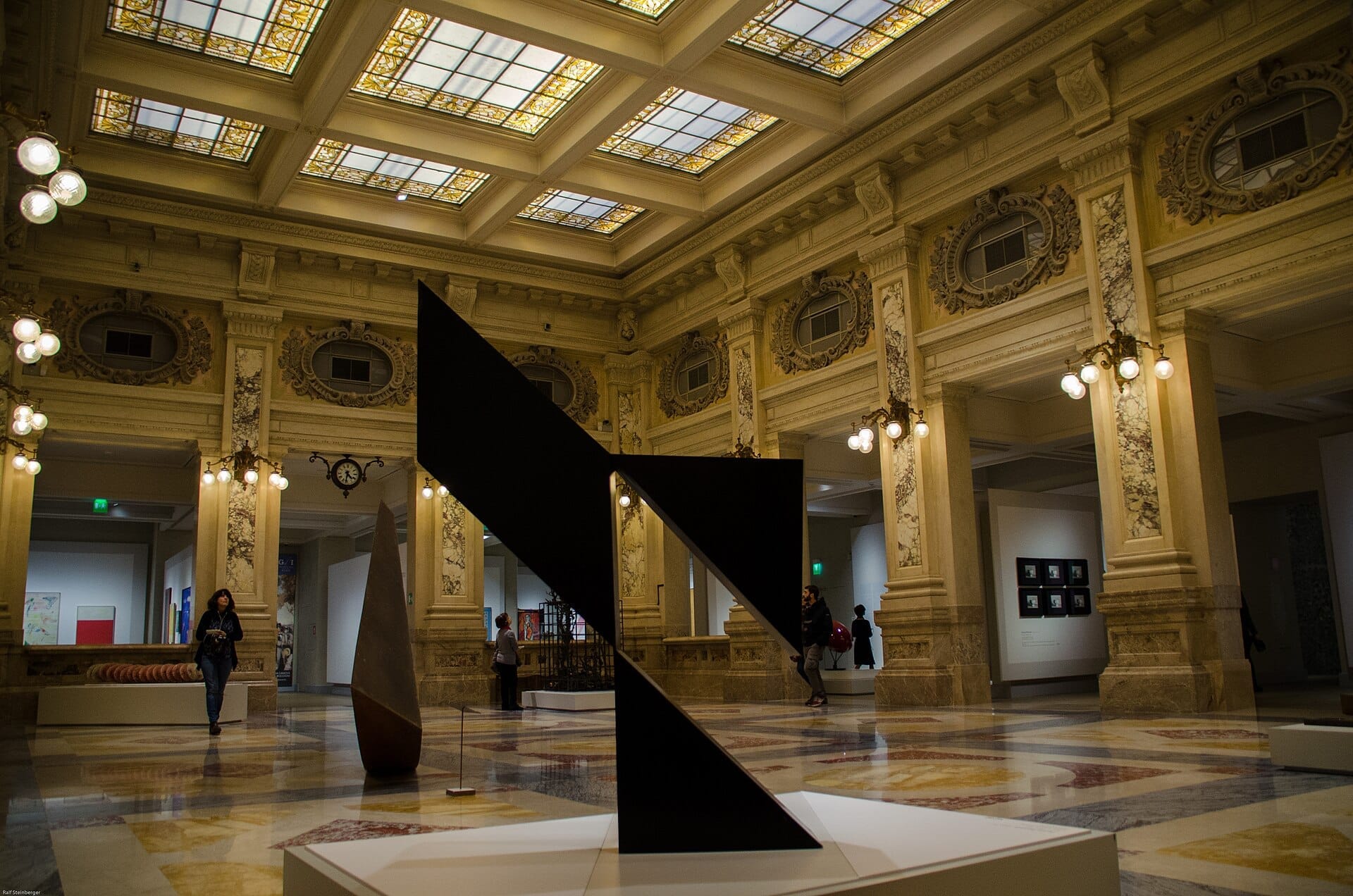
Palazzo Reale: the former royal palace on the south side of the cathedral, now Milan's primary temporary exhibition venue, hosting major international art shows throughout the year
Museo del Novecento: housed in the Arengario building at the western edge of the piazza, dedicated to 20th-century Italian art with particular strength in Futurism and Arte Povera
Pinacoteca Ambrosiana: a short walk west of the square on Piazza Pio XI, containing Leonardo da Vinci's Atlantic Codex and Raphael's cartoon for the School of Athens
Duomo Museum (Museo del Duomo): adjacent to the cathedral, tracing the building's construction history through original sculptures, stained glass, and architectural models
The Duomo Museum is often overlooked by visitors who spend all their time on the exterior and rooftop, but the collection of original stonework removed from the cathedral during conservation gives a sense of the building's construction on a human scale. For a broader picture of Milan's artistic heritage, the best museums in Milan guide places the Duomo-area institutions in context alongside the city's other major collections.
💡 Local tip
Book cathedral rooftop tickets online before you arrive. Walk-up queues for the lift can be long during peak season. The Duomo Pass bundles rooftop access, interior entry, and the museum at a discount — compare options on the official Duomo website before purchasing.
Eating & Drinking
The Duomo District is not Milan's best neighborhood for food. The streets immediately around the piazza support a predictable economy of tourist-facing bars and restaurants with mediocre food at above-average prices. The Galleria itself houses a handful of historic cafés that are worth visiting for the setting, but not particularly for the espresso. That said, the situation improves considerably as soon as you move one or two blocks away from the square.
Via Torino, running southwest from the cathedral toward the Ticinese area, becomes progressively more local as you walk. Lunch options improve, prices drop, and the cafés start to feel less like stage sets. The lanes between the Duomo and the Brera neighborhood, particularly around Via Cordusio and Via Orefici, have a mixed economy of office workers and tourists that tends to produce reasonable quality at more reasonable prices.
For aperitivo, the Milanese ritual of early-evening drinks often served with food, the streets east of the square toward San Babila have a cluster of bars that operate on standard Milanese terms. Campari was invented in Milan and remains the default bitter component in a Negroni or Americano. An Aperol Spritz is perfectly acceptable but marks you as a tourist in most Milanese bars.
Luini: a small counter near the Galleria serving panzerotti, deep-fried or baked dough pockets filled with tomato and mozzarella — one of Milan's most recognizable street snacks and reliably good
The area around Piazza Mercanti, just west of the cathedral, has a concentration of lunch spots used by nearby office workers and tends toward better value than anything directly on the piazza
For dinner, consider walking 10 minutes south toward Corso di Porta Ticinese for a much wider range of restaurants at non-tourist prices
ℹ️ Good to know
In Italy, sitting down at a café table rather than ordering at the bar almost always triggers a higher price. In tourist-dense areas like the Duomo District, the difference can be significant. If you are having a quick espresso, order and drink at the counter — it is the local custom and cheaper.
Getting There & Around
Duomo metro station sits directly beneath Piazza del Duomo and is served by two lines: M1 (red) and M3 (yellow). This makes it one of the most connected points in the entire city network. From Centrale station, the M3 takes roughly 10 minutes. From Cadorna, the M1 takes about 5 minutes. The station is busy at most hours, and the exits are clearly signed, bringing you up into the square itself.
Tram access is extensive: lines 2, 3, 12, 14, 15, 16, and 19 all serve stops in the immediate vicinity. Trams are slower than the metro but useful for reaching neighborhoods like Navigli to the south or Porta Venezia to the east without needing to go underground. Most of central Milan is within walking distance of the Duomo: the Castello Sforzesco is about 15 minutes on foot via Via Dante, the Brera neighborhood is around 10 minutes northeast, and the Ticinese area is 15 minutes south along Via Torino.
For a full breakdown of how to navigate Milan's public transport system, the getting around Milan guide covers metro lines, tram routes, and ticketing in detail. Day tickets are usually worth buying if you plan to make more than two journeys.
The entire district around Piazza del Duomo is pedestrianized or heavily restricted for private vehicles, which makes navigating on foot straightforward. Corso Vittorio Emanuele II, running east from the piazza toward San Babila, is a wide pedestrian street lined with shops and acts as the main walking artery connecting the Duomo to the eastern districts. Bicycle share stations and e-scooters are available throughout the area, though the heavy foot traffic on the main streets makes cycling impractical directly around the square.
Where to Stay
Staying in the Duomo District means waking up within walking distance of the most important single block in Milan. It is the most logical base for first-time visitors with limited time who want to see the cathedral, major museums, and the Galleria without spending time in transit. The area has a wide range of accommodation, from budget options on the streets south of the piazza to internationally branded luxury hotels occupying converted historic buildings directly adjacent to the square.
The trade-off is that the immediate area around Piazza del Duomo is noisy and crowded during the day, and hotel prices in this central location reflect the demand. The streets directly south and west of the cathedral, including those running toward Corso Magenta and Sant'Ambrogio, offer slightly quieter options while remaining an easy walk from the main attractions. Anyone prioritizing neighborhood atmosphere over central convenience might find Brera or the Ticinese area more rewarding as a base.
For a comparison of Milan's accommodation zones and which neighborhoods suit different types of trips, the where to stay in Milan guide covers the city's main options in detail. Those traveling in high season should book well in advance — the Duomo District sells out faster than anywhere else in the city.
Nearby Neighborhoods Worth Combining
The Duomo District is compact enough that a full exploration takes half a day at most, which makes it natural to combine with at least one adjacent area. Walking north through the Galleria leads directly into the Brera neighborhood, Milan's arts district, with the Pinacoteca di Brera and a concentration of galleries, cafés, and independent bookshops. The two areas complement each other well as a full-day itinerary.
Walking west along Via Dante for about 15 minutes brings you to Castello Sforzesco, the area around the Sforza Castle and Parco Sempione. This is where you go when the density of the Duomo District becomes exhausting and you want space, shade, and a different pace. Southwest of the Duomo, a 15-minute walk along Via Torino leads into the Ticinese and Sant'Ambrogio quarter, with the Basilica di Sant'Ambrogio, the Roman columns of San Lorenzo, and eventually the Navigli canal district.
The Milan 3-day itinerary maps out a logical sequence for combining the Duomo District with the city's other major areas without backtracking unnecessarily.
TL;DR
The Duomo District is Milan's most important historic concentration: the cathedral, the Galleria Vittorio Emanuele II, major museums, and the city's principal public square are all within a few hundred meters of each other.
Best for first-time visitors who want to cover Milan's iconic landmarks efficiently, and for anyone whose itinerary centers on the cathedral rooftops, Palazzo Reale exhibitions, or the Museo del Novecento.
Notable drawback: this is Milan's most crowded, most tourist-facing, and in many ways most expensive district — the food scene within the immediate area is weak, and the atmosphere during peak hours is closer to a theme park than a neighborhood.
Transit access is outstanding, with two metro lines converging at Duomo station and extensive tram connections; most of central Milan is reachable on foot from the piazza.
Skip staying here if you want neighborhood atmosphere — but no visit to Milan is complete without spending time in Piazza del Duomo, and the cathedral rooftop alone justifies the trip into the district.
Milan has over 70 museums, from Renaissance masterpiece galleries to free contemporary art spaces. This guide cuts through the options and tells you exactly which ones are worth your time, what to expect inside, and how to plan your visit.
Milan rewards visitors who time their trip well. This guide covers every season in detail — temperatures, crowd levels, key events, and what to skip — so you can make the most informed decision about when to go.
Milan rewards those who look up and climb higher. This guide covers the city's best viewpoints, from the Duomo's Gothic spires and Palazzo Lombardia's 39th-floor panorama to canal-side sunset bridges and design-forward skyscrapers.
Milan sits at the center of one of Europe's most rewarding day-trip networks. Within two hours by train you can reach Alpine lakes, medieval hilltop towns, Roman amphitheaters, and UNESCO World Heritage canals. This guide covers the best destinations, how to get there, and what to prioritize once you arrive.
Milan has one of Italy's best urban transport networks, but knowing which ticket to buy, which metro line to take, and how to reach the city from three different airports saves real time and money. This guide covers everything from ATM fares and the RicaricaMi card to bike sharing and walking distances between key neighborhoods.
Milan is Italy's most demanding city for high-end travel, where fashion weeks and design fairs can triple hotel rates overnight. This guide covers where to stay, what to spend, when to go, and how to move around Milan like someone who has done it before.
Three days in Milan is enough time to cover the cathedral district, the great art museums, the canal neighbourhood, and still fit in a day trip to Lake Como. This itinerary is built around how the city actually works: metro-first logistics, realistic opening hours, and clear advice on what to skip.
Milan is served by three airports: Malpensa (MXP), Linate (LIN), and Bergamo Orio al Serio (BGY). Together the three airports form Italy's largest airport system by passenger volume, handling over 56 million passengers per year. This guide breaks down the key differences, transport links, costs, and which airport makes sense for your trip.
Milan's built environment is a genuine timeline in stone, steel, and glass. This guide walks you through every major architectural era, from the Gothic Duomo to Porta Nuova's skyscrapers, with practical routes, seasonal advice, and candid assessments of what's worth your time.
Milan's churches span seventeen centuries of history, from 4th-century basilicas built by the city's patron saint to Renaissance chapels covered floor-to-ceiling in frescoes. This guide covers the essential sacred sites, practical visiting tips, and the lesser-known churches that reward the curious traveler.
Milan Design Week is the world's largest design festival, combining the professional Salone del Mobile furniture fair at Rho Fiera with hundreds of free Fuorisalone events across the city's design districts. This guide covers dates, tickets, neighborhoods, transport, and practical planning advice.
Milan is one of the world's four fashion capitals, home to storied design houses, serious shopping districts, and four Fashion Weeks a year. This guide covers everything from navigating the Quadrilatero della Moda to understanding what tourists can actually access during Milan Fashion Week 2026.
Milanese food is not what most visitors expect. Rice trumps pasta, butter beats olive oil, and the city's signature dishes carry centuries of culinary history. This guide covers every essential dish, realistic price expectations, seasonal eating patterns, and practical advice for dining well in Milan.
Milan surprises most couples. Behind the fashion showrooms and financial towers lies a city with candlelit canals, world-class opera, cobblestone art districts, and Gothic cathedral rooftops built for golden-hour views. This guide covers the best romantic experiences in Milan, with practical details on pricing, timing, and what to skip.
Milan rewards those who look beyond the Duomo and The Last Supper. From a chapel lined with human skulls to a free panoramic skyscraper and a botanical garden tucked behind one of Italy's great art museums, these are the experiences that reveal the city locals actually love.
Spring transforms Milan from a grey winter city into one of Europe's most enjoyable urban destinations. This guide covers the real weather, the best events, crowd expectations, and everything you need to plan a smart April or May trip.
Milan transforms in winter into one of Italy's most atmospheric cold-weather destinations, with Christmas markets around the Duomo, centuries-old fairs near Castello Sforzesco, and a city that keeps its cultural calendar packed well past the holidays. This guide covers what to see, when to go, and how to get the most out of the season.
Leonardo da Vinci spent more than two decades in Milan, leaving behind some of the most extraordinary works in Western art and science. This guide covers every significant site, explains what you'll actually find there, and tells you exactly how to book before you arrive.
Milan's nightlife runs on a distinct rhythm: aperitivo first, dinner second, clubs last. This guide breaks down every major area, the best bars and clubs, what things cost, and how to get home at 3am.
Milan has a reputation for luxury fashion and fine dining, but the city is far more accessible than most travelers assume. This guide breaks down realistic daily costs, the smartest ways to use public transport, which world-class attractions are free, and how timing your visit can cut hotel prices by 25–40%.
Milan shopping covers far more than luxury fashion. This guide breaks down the city's best shopping districts, from the Quadrilatero d'Oro's flagship stores to Navigli's vintage markets, with practical advice on what to skip, what to budget, and when to go.
Lake Como sits less than an hour from Milan by direct train, making it one of the most rewarding day trips in northern Italy. This guide covers every transport option, the best villages to visit, ferry logistics, and how to avoid the most common mistakes first-time visitors make.
The journey from Milan to Rome covers roughly 565-570 km and can take anywhere from 3 hours to 6+ depending on how you go. This guide breaks down every realistic option, with clear price comparisons, booking strategies, and the city-center-to-city-center math that makes the train far more competitive than most people expect.
The Milan to Venice route is one of Italy's most popular corridors, served by frequent high-speed trains that cover the distance in around 2 hours 15 to 30 minutes. This guide breaks down every option, from Frecciarossa tickets to bus alternatives, with practical advice on what's worth it and what to skip.
Milan rewards families more than most people expect. From the interactive Leonardo da Vinci Science Museum to the free courtyards of Castello Sforzesco and the rooftop terraces of the Duomo, the city packs a serious amount of child-friendly content into a compact, walkable center. This guide cuts through the noise with specific venues, practical assessments, and logistics that actually help.
Milan rewards visitors who look beyond the fashion weeks and luxury boutiques. This guide covers the essential things to do in Milan Italy, from cathedral rooftops and Renaissance masterpieces to canal-side aperitivo and contemporary architecture, with practical advice on what to book in advance and what to skip.
Milan rewards travelers who choose their base carefully. This guide breaks down every major neighborhood, explains the price realities, and tells you exactly when to book to avoid paying peak-event rates.