Getting Around Milan: Metro, Trams, Buses and Airport Transfers Explained
Milan has one of Italy's best urban transport networks, but knowing which ticket to buy, which metro line to take, and how to reach the city from three different airports saves real time and money. This guide covers everything from ATM fares and the RicaricaMi card to bike sharing and walking distances between key neighborhoods.
Plan and book this trip
Tools from our partner Travelpayouts help you compare flights and hotels. If you book through them, we may earn a commission at no extra cost to you.
Flights
Hotels map
TL;DR
- Milan's public transport (metro, trams, buses) is run by ATM and uses a unified ticket system: a single 90-minute ticket costs €2.20 and works across all modes.
- Five metro lines cover all major districts; the M4 blue line connects Linate Airport directly to the city centre.
- The central neighborhoods, from the Duomo district to Brera, are compact enough to walk between, so you won't always need a ticket.
- Children under 14 travel free; contactless bank cards and mobile wallets are accepted on metro turnstiles.
- Three airports serve Milan: Linate (7 km, metro accessible), Malpensa (50 km, express train), and Bergamo Orio al Serio (50 km, coach only).
Understanding the Milan Map: Neighborhoods and How They Connect
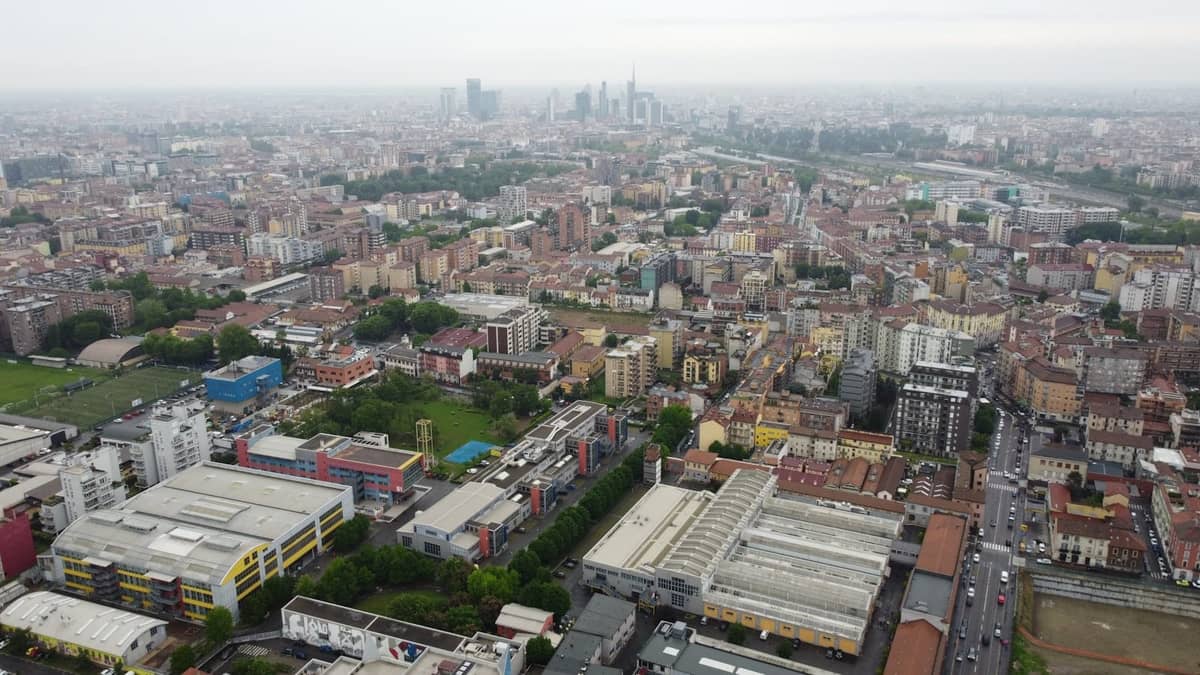
Before choosing how to get around Milan, it helps to understand the city's shape. Milan spreads outward from a historic centre anchored by the Duomo di Milano in a series of concentric rings. The municipality covers 181 km², but most attractions that visitors care about sit within a 4–5 km radius of the cathedral. That compact core is the good news: a lot of sightseeing can be done on foot.
The districts that generate the most foot traffic are the historic centre, Brera to the north, Navigli to the south, Porta Nuova and Isola further north, and CityLife to the west. Each sits within 3–4 km of the Duomo, which means 20–40 minutes on foot or a single metro stop on most routes. Taxis and rideshares are rarely necessary for inter-district movement if you're comfortable walking or hopping on a tram.
💡 Local tip
Download the ATM Milano Official App before you arrive. It includes a real-time route planner, live service alerts, and the option to buy and validate tickets digitally — useful when metro machines have queues.
The Milan Metro: Lines, Hours, and What to Expect
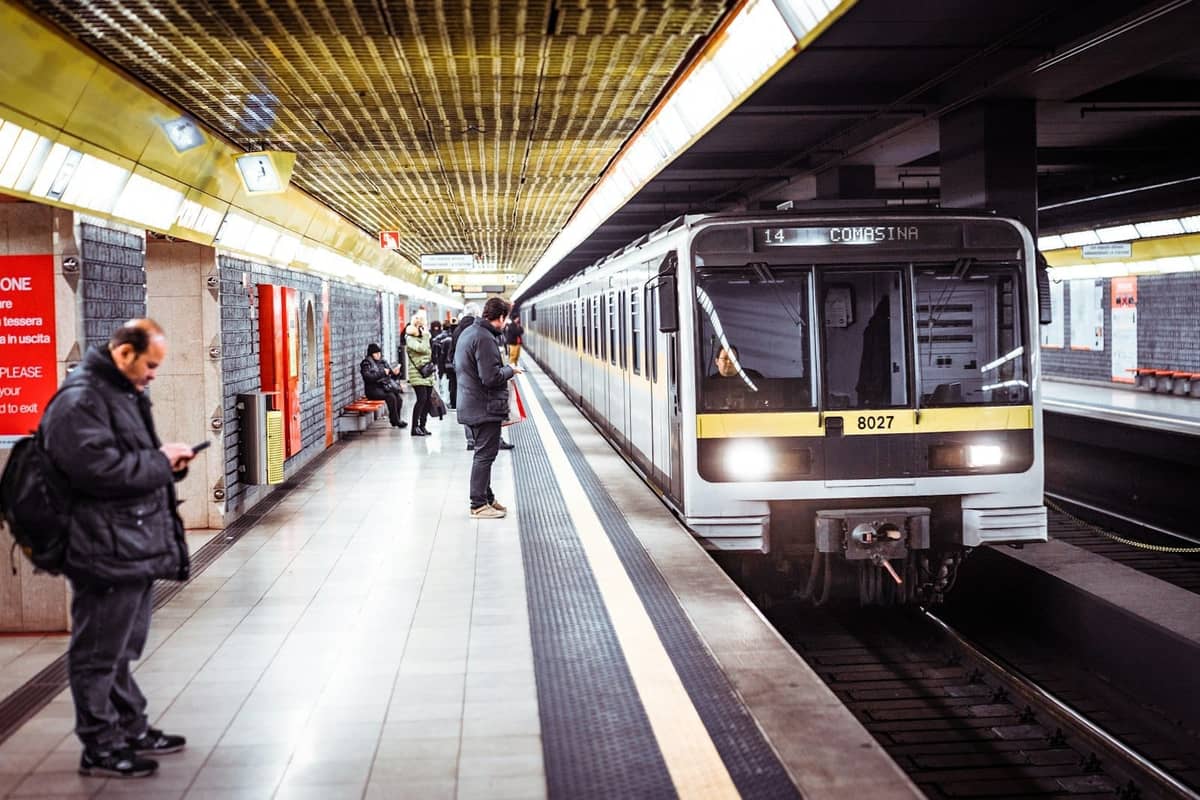
Milan's metro (Metropolitana di Milano) runs five lines, each colour-coded and numbered. It is fast, frequent, and generally reliable — more so than trams, which can get snarled in city traffic during peak hours.
- M1 Red Line Runs east-west, connecting Sesto to Rho Fiera. Stops include Duomo, Cadorna, Pagano, Loreto and Centrale FS. Operating hours approximately 05:30–00:30.
- M2 Green Line A Y-shaped line covering the north and northwest of the city. Key stops: Garibaldi, Cadorna, Centrale FS, Lambrate. Operating hours approximately 05:30–00:30.
- M3 Yellow Line North-south spine through the city centre. Stops include Duomo, Missori, Repubblica, Centrale FS, and Stazione Porta Romana. Operating hours approximately 05:30–00:30.
- M4 Blue Line The newest line, connecting Linate Airport to San Babila and onward to Dateo and Forlanini. Hours: Mon–Thu 06:00–22:00; Fri–Sun 06:00–00:30. Useful for airport transfers.
- M5 Purple Line Fully automated, running from Bignami in the north to San Siro in the west. Serves Garibaldi, Isola, and the stadium area. Operating hours approximately 05:40–00:00.
During peak hours (roughly 07:30–09:30 and 17:30–19:30), trains on busy lines run every 3–6 minutes. Off-peak intervals stretch to 8–10 minutes. On weekends and in August, some lines operate on reduced schedules, so check the ATM website or app before planning early-morning or late-night travel.
⚠️ What to skip
The M4 blue line has different operating hours than the other four metro lines and closes earlier on weekdays (22:00). If you're returning to Linate Airport on an early evening flight, check the last departure from your nearest M4 stop. Missing it means a taxi — typically €15–20 from the centre to Linate.
Tickets, Passes, and the RicaricaMi Card: What to Buy
All ATM services — metro, tram, bus, trolleybus — use a unified ticket system divided into zones (Mi1 to Mi3). Most visitors stay within Mi1, which covers the urban core. A single 90-minute ticket at €2.20 allows unlimited transfers between metro lines, trams, and buses within its validity window; you can re-enter the metro on the same ticket within Mi1–Mi3 as long as it remains valid. Prices listed here reflect published ATM tariffs and should be verified before travel, as fares are subject to change.
- Single ticket (90 minutes) €2.20. Valid for metro, tram, bus and some suburban rail within included zones. Cannot be used for airport shuttle buses.
- 24-hour pass €7.60. Best value if you plan four or more journeys in a day. Starts from first validation.
- 3-day pass €15.50. Valid until end of service on the third calendar day. Good for stays of 3–4 days with moderate transport use.
- 10-trip carnet €19.50. Non-transferable: one person per journey. Cannot be used simultaneously by multiple people.
- Children under 14 Free on all ATM services. ID may be requested by inspectors.
Paper tickets are being phased out in favour of the rechargeable RicaricaMi card, a contactless smart card loaded at metro machines, authorised tobacco shops, newsstands, or ATM Points. If you'd rather not carry a physical card, tap your contactless bank card or mobile wallet directly at metro turnstiles and tram validators. The system calculates the fare automatically. For short stays, contactless is the simplest option; for longer visits, the RicaricaMi card with a multi-day pass is more economical.
✨ Pro tip
The 10-trip carnet at €19.50 works out to €1.95 per journey — a saving over single tickets if you'll use public transport consistently. Just remember it's strictly non-transferable. Inspectors do check, and fines for invalid travel start at €50.
Trams, Buses, and Cycling: Surface Transport Options
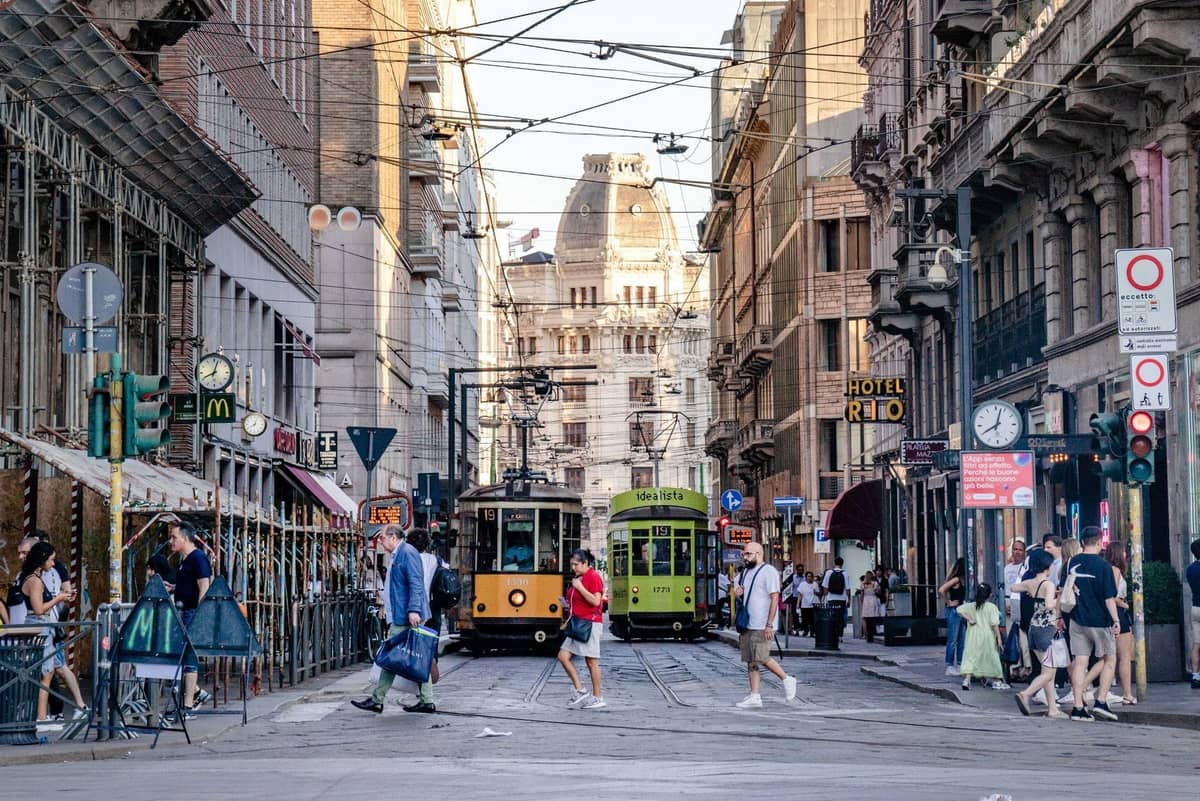
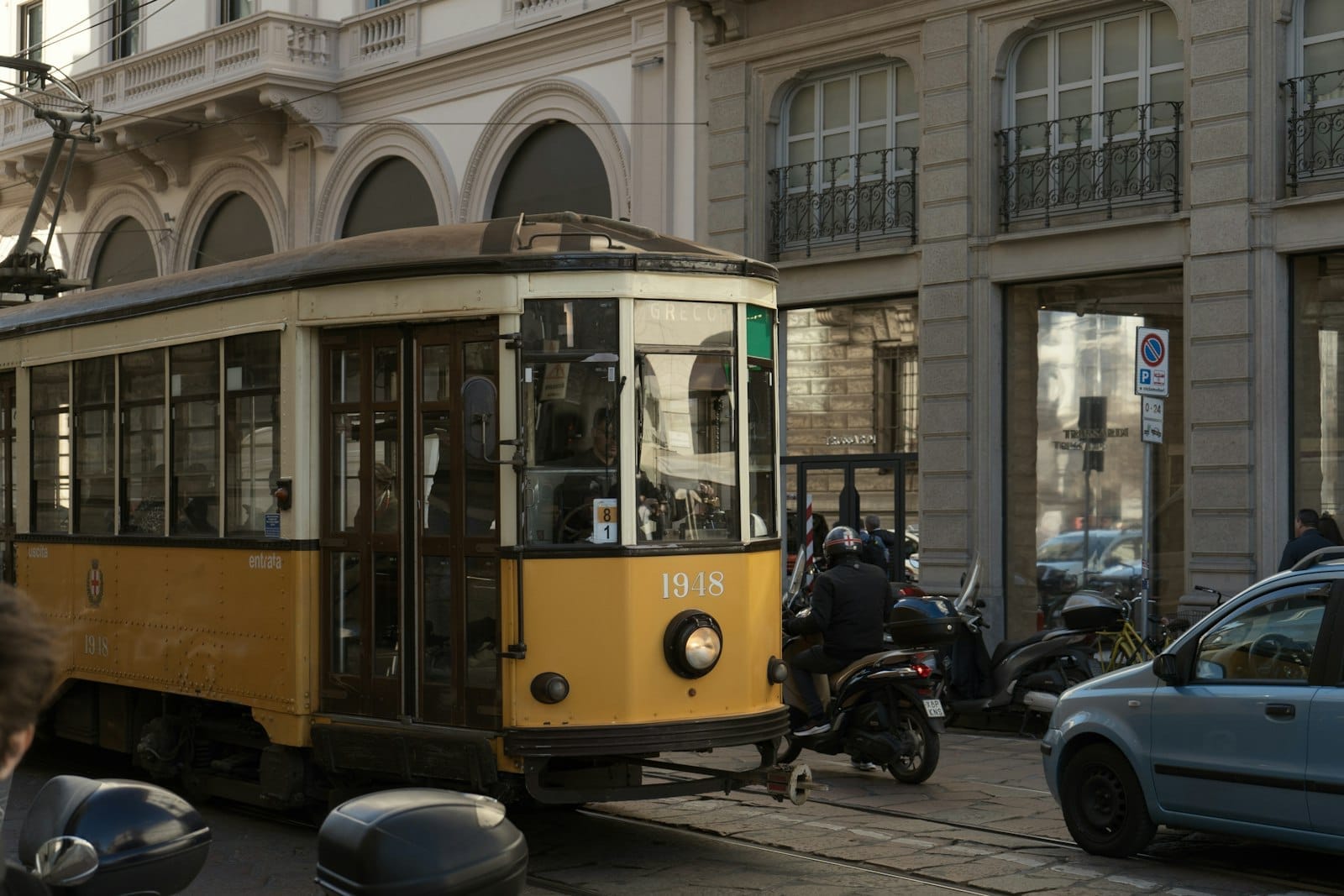
Milan's tram network is one of the oldest continuously operating in Europe, and several routes use historic orange rolling stock from the mid-20th century. They're slow by metro standards but genuinely useful for reaching neighbourhoods like Navigli or Ticinese without changing lines. Most tram and bus services run approximately 06:00–00:00. Night buses cover selected routes after midnight for those out late in the canal district.
The BikeMi bike-sharing scheme offers a dense network of stations concentrated in the centre and inner districts. Subscription options include daily (around €4.50), weekly (around €9), and annual (around €36) passes. These figures are indicative; check the BikeMi website for current tariffs. The bikes are practical for flat inner-city routes, but Milan traffic is not particularly bike-friendly outside dedicated lanes, so exercise caution on major roads. Electric BikeMi bikes are also available at select stations, which makes the slight gradients around Porta Venezia and Castello far less tiring.
Getting to Milan from Three Airports: A Practical Comparison
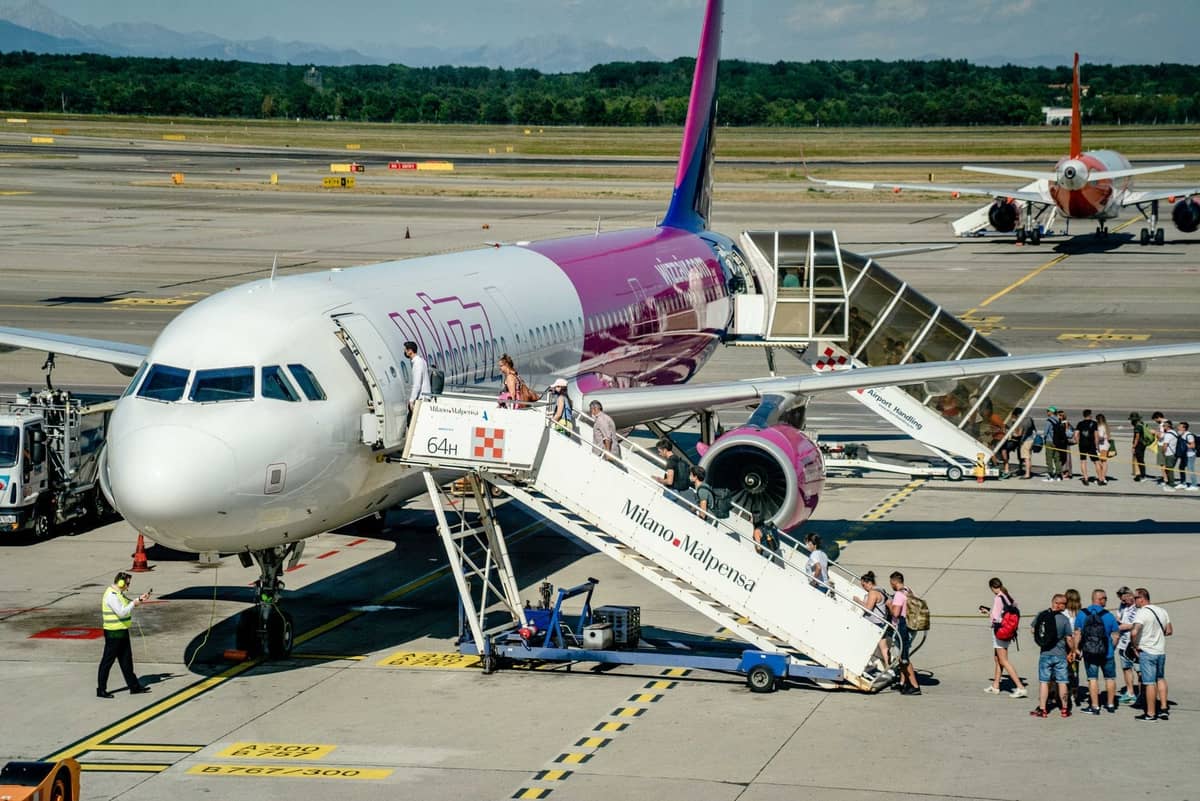
Milan has three airports, and the one you arrive at significantly affects your transfer experience. For full details on all airport options, the Milan airports guide covers each in depth. Here is a practical breakdown of the main options.
- Linate Airport (LIN) — 7–8 km from centre The most convenient airport for the city. The M4 blue metro line now connects Linate directly to San Babila (Duomo area) in approximately 12 minutes. Bus services also operate to Centrale. A taxi from Linate to the centre typically costs €15–20 on the meter.
- Malpensa Airport (MXP) — approx. 50 km northwest The Malpensa Express train connects Terminal 1 to Milano Centrale and Cadorna. Journey time is roughly 50–60 minutes. Coach services (operated by multiple companies) also run to Centrale bus terminal, taking slightly longer depending on traffic. Taxis are available but the fixed fare to central Milan is considerably higher; verify current rates before booking. Allow 75–90 minutes total for the airport-to-hotel journey.
- Bergamo Orio al Serio (BGY) — approx. 50 km east Popular with low-cost carriers (Ryanair in particular). Coach shuttles run regularly to Milano Centrale; journey time is approximately 50–60 minutes in normal traffic but can stretch significantly during rush hour. There is no direct train from the airport to Milan, though regional trains connect Bergamo city centre to Milan — this requires a separate bus from the airport to Bergamo station.
ℹ️ Good to know
All airport transfer prices, journey times, and operator details are time-sensitive. Verify current fares and schedules on the official ATM, Malpensa Express, and operator websites before you travel. Train and coach prices fluctuate seasonally.
Walking, Taxis, and Knowing When to Skip Public Transport
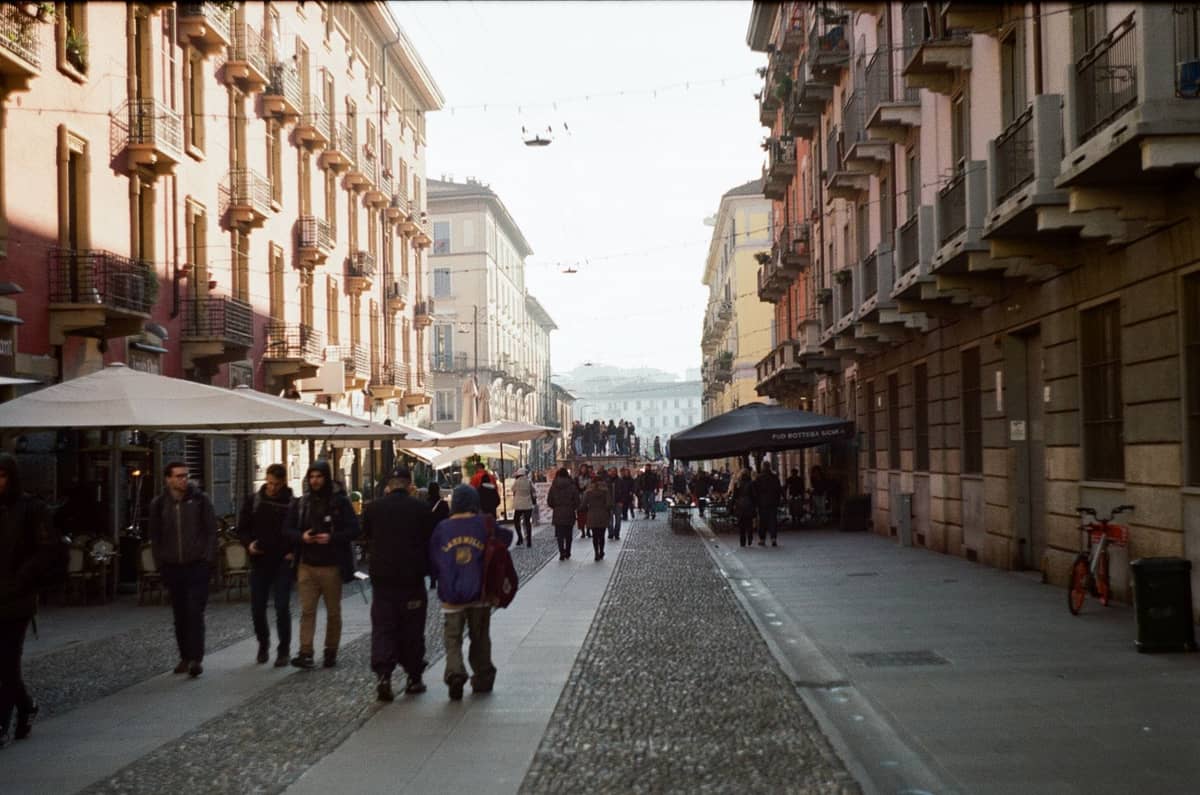
The stretch from Galleria Vittorio Emanuele II to Pinacoteca di Brera is around 15 minutes on foot. From Brera to Castello Sforzesco is another 10 minutes. Many visitors over-rely on the metro for distances that are easily walkable, especially in spring and autumn when temperatures sit between 15–22°C. The Duomo district, Brera, and Porta Venezia form a triangle you can cover entirely on foot in a morning.
Licensed taxis in Milan are white and metered. They can be hailed on the street, booked via the official iTaxi or Wetaxi apps, or found at designated taxi ranks near Centrale, Duomo, Cadorna, and the main hotels. Rideshare apps operate in Milan but regulatory status and availability shift; confirm current options locally. For late-night returns from Navigli or after-dinner trips across town, taxis are the most straightforward option. Expect to pay €7–12 for a typical central journey.
Driving in Milan is not recommended for visitors. The city operates an Area C low-emission zone covering the historic centre, requiring a paid permit on weekdays during daytime hours. Parking is expensive and scarce. If you're planning day trips from Milan to Lake Como or the Lombardy countryside, renting a car is sensible for those excursions specifically, but leave it outside the centre or use the rail network instead.
FAQ
What is the best way to get around Milan?
For most visitors, a combination of walking and the metro covers everything efficiently. The five metro lines reach all major districts, single tickets cost €2.20, and the historic centre is compact enough to walk across in 30–40 minutes. Trams are useful for surface routes in Navigli and Ticinese. Taxis fill gaps for late nights or awkward cross-city routes.
How do I get from Malpensa Airport to central Milan?
The Malpensa Express train is the standard option: it runs from Malpensa Terminal 1 to Milano Centrale and Cadorna, taking approximately 50–60 minutes. Coach services are slightly cheaper but slower. Taxis exist but the journey at 50 km makes them expensive; verify the current fixed fare before committing.
Is the Milan metro map easy to navigate?
Yes. The milan metro map uses five colour-coded lines (red M1, green M2, yellow M3, blue M4, purple M5) and is available on the ATM website and app in English. Most stations have signage in Italian and English. The key interchange points to know are Duomo (M1/M3), Centrale FS (M2/M3), and Cadorna (M1/M2).
How much does public transport in Milan cost for a 3-day visit?
A 3-day pass costs €15.50 and is valid until the end of service on the third day. If you'll make four or more journeys per day, this is better value than single tickets at €2.20 each. Alternatively, a 24-hour pass at €7.60 makes sense for heavy single-day use. Children under 14 travel free.
Can I use a contactless card on Milan public transport?
Yes. Contactless bank cards and mobile wallets (Apple Pay, Google Pay) are accepted on metro turnstiles and surface vehicle validators across the ATM network. The system reads and charges the standard single-journey fare. This is the simplest option for short-stay visitors who don't want to buy a separate transport card.