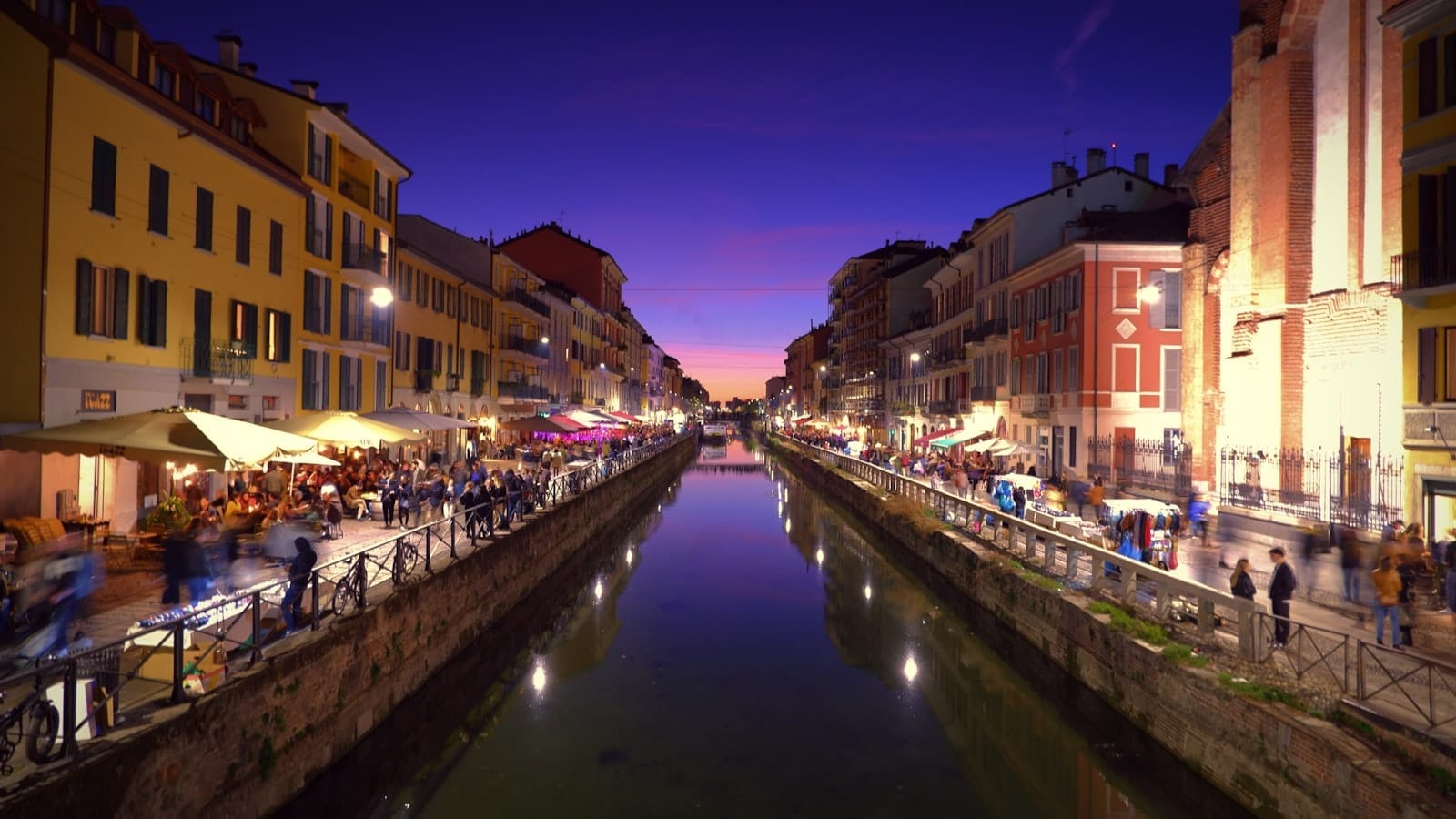
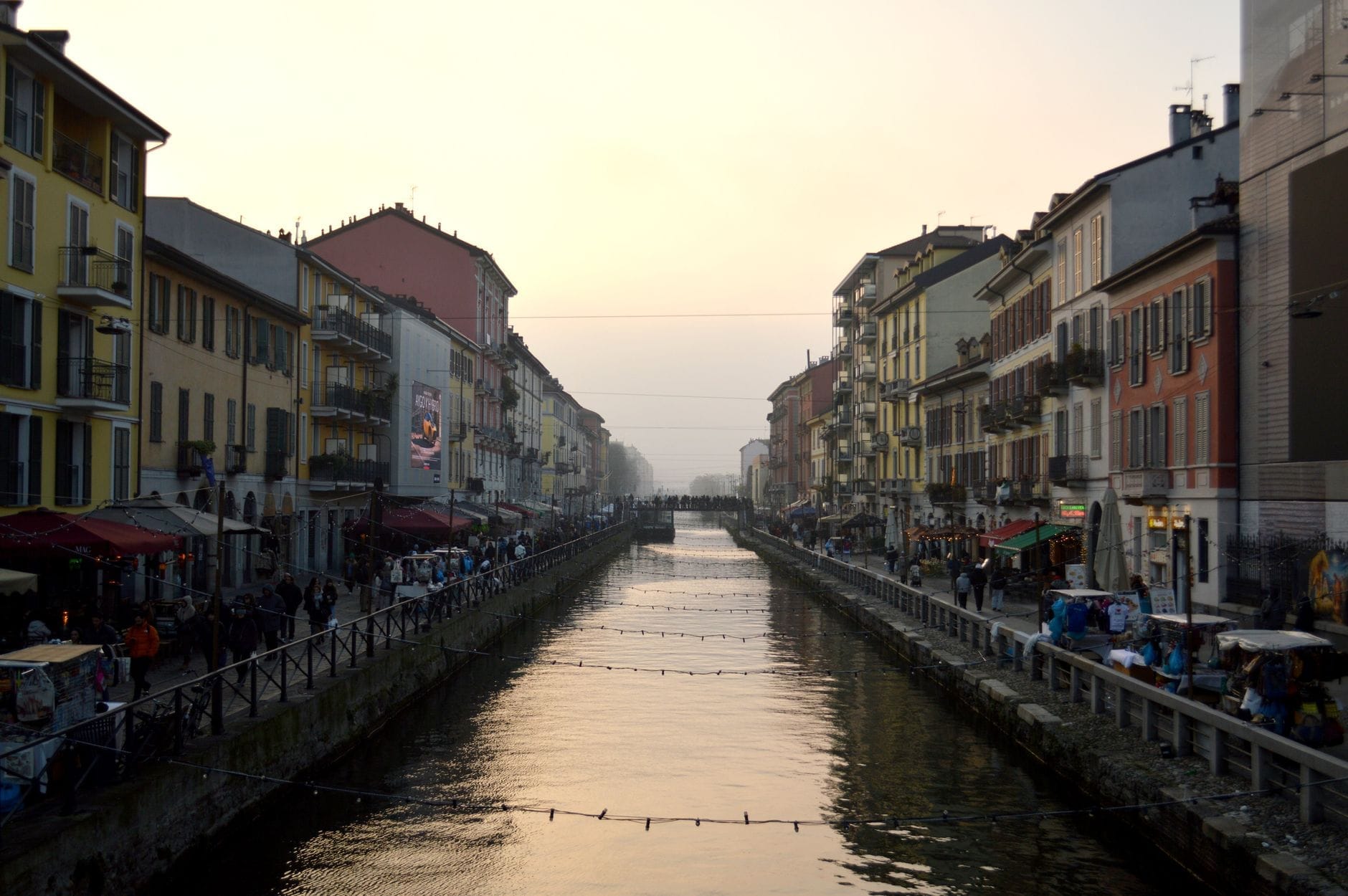
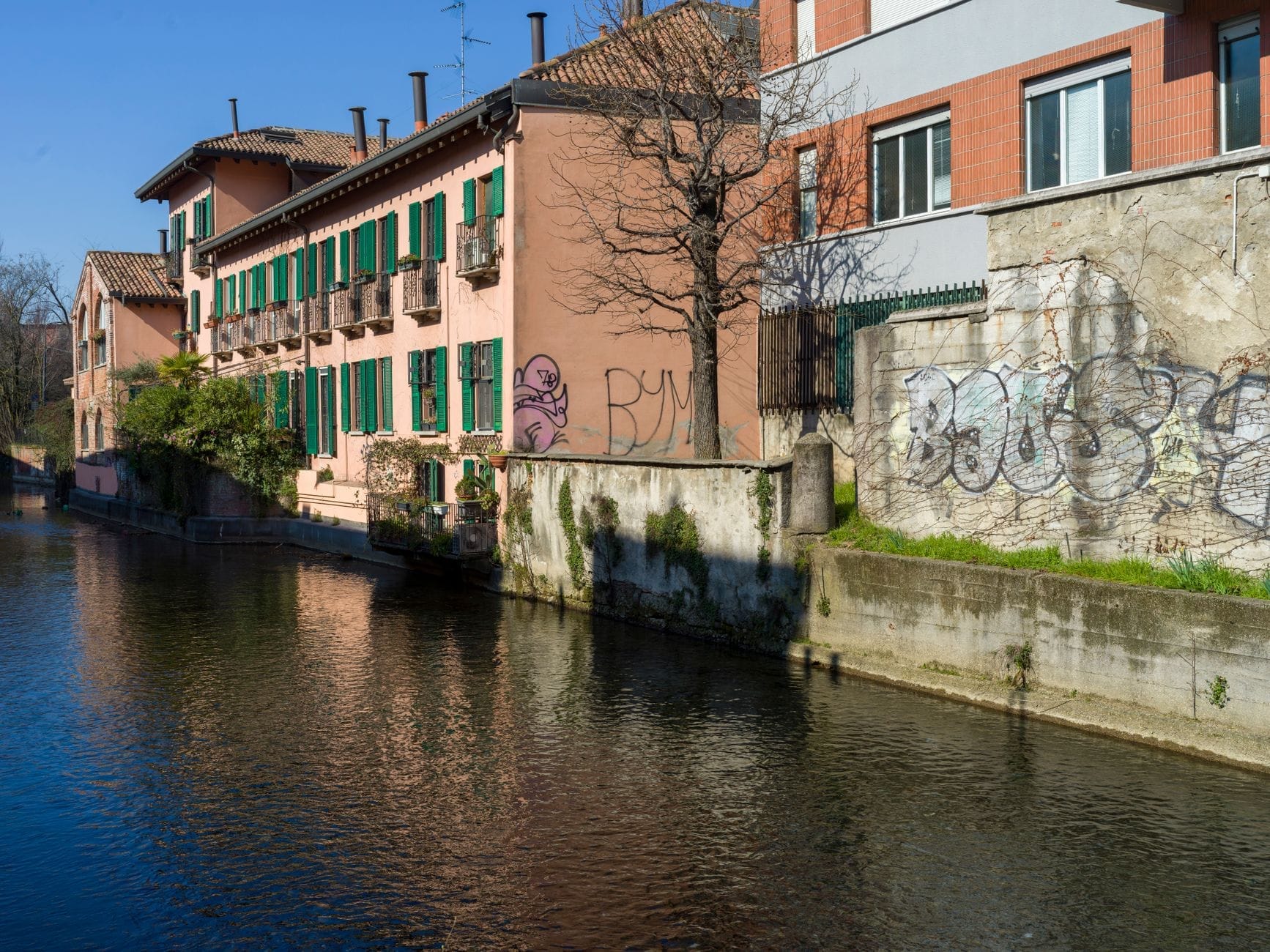
Navigli is Milan's canal district, stretching along the Naviglio Grande and Naviglio Pavese south of the city centre. By day it's a neighbourhood of artists' studios, vintage shops, and outdoor laundries frozen in time. By night it becomes the most animated stretch of the city, with canal-side bars filling from early evening until well past midnight.
Navigli is the canal district that proves Milan has a soft, unhurried side beneath its financial sheen. Anchored by the Darsena basin at Piazza XXIV Maggio, two historic waterways fan out southwest from the city, their banks lined with bars, trattorias, independent boutiques, and the kind of peeling plaster that photographers love. It is the neighbourhood Milanese residents head to on a Friday evening and visitors tend to discover only midway through their trip, wishing they had come sooner.
Orientation
Navigli sits in the southwestern arc of central Milan, roughly one and a half kilometres from the Duomo, just outside the former Spanish walls of the city. The focal point is the Darsena di Milano, a wide triangular basin at Porta Ticinese that once served as Milan's principal river port. From here, two canals branch outward: the Naviglio Grande runs west-southwest toward the Ticino river, while the Naviglio Pavese heads due south toward Pavia. The neighbourhood that takes its name from these waterways occupies the banks of both canals, centred on Alzaia Naviglio Grande and Alzaia Naviglio Pavese, with the main activity concentrated between Piazza XXIV Maggio and the Porta Genova railway station about 750 metres to the west.
The district's administrative boundary is part of Municipio 6, but in practical terms most visitors and locals define Navigli by what you can see and reach on foot from the canal banks. To the north, the neighbourhood blends into the Ticinese corridor along Corso di Porta Ticinese, where Roman-era columns and early Christian basilicas mark the transition toward the historic centre. To the east it touches the emerging Fondazione Prada zone and the quieter streets of Porta Romana. To the west, beyond Porta Genova station, it shades into the more residential and industrial fringe of the city.
Understanding the relationship between Navigli and the broader Ticinese and Sant'Ambrogio district is useful before you visit. The two areas share a border and a similar bohemian energy, and many visitors walk the full length from the Colonne di San Lorenzo down Corso di Porta Ticinese to the Darsena in a single afternoon. The Navigli canals proper, however, begin at the Darsena and extend outward: everything north of Piazza XXIV Maggio belongs more correctly to the Ticinese corridor.
Character & Atmosphere
Navigli operates on a split personality that most Milan neighbourhoods do not have. In the morning, before 10am, the canal banks are quiet enough to hear the water lapping against the stone edges. A few regulars sit outside cafés with their espresso, bicycle delivery workers weave along the towpaths, and the light falls at a low angle across the ochre and terracotta facades of the canal-side buildings. The streets smell of fresh bread and mild damp from the water. It is the kind of morning that makes the area feel genuinely residential rather than performatively charming.
By midday the tempo changes. Lunch crowds fill the trattorias along Alzaia Naviglio Grande. Vintage and antique shops open their shutters, and the street-art covered walls of the side streets become busy with people photographing them. Sunday mornings bring the Mercatone dell'Antiquariato, a large antiques and collectibles market that lines the full length of Naviglio Grande's towpath and draws serious collectors alongside casual browsers. The last Sunday of every month sees this market swell to one of the largest in northern Italy.
After 6pm, Navigli becomes the place Milanese residents go to begin their evening. The aperitivo culture here is particularly embedded. Bars along both canals set out boards of finger food, olives, and small plates to accompany spritz or Negroni orders from around 6:30pm, and the custom of making a drink last through a meal's worth of complimentary food is practiced here more generously than in most parts of the city. By 9pm the towpaths are crowded, the noise level rises considerably, and the energy is close to festival-like on warm evenings. This continues late into the night, particularly on weekends.
⚠️ What to skip
Navigli on Friday and Saturday nights is very loud. If you are staying in a canal-side hotel or apartment, expect noise from bars and pedestrian crowds until 2am or later. The area is safe by normal city standards, but standard precautions apply in large crowds: keep bags secured and be aware of your surroundings on the narrower side streets late at night.
The neighbourhood has an arts and crafts identity that predates the nightlife reputation. Navigli developed as a working-class and artisan area through the 19th and early 20th centuries, when the canals carried raw materials to and from the city's factories and workshops. Painters, sculptors, and printmakers colonised the old workshops as industry moved out in the latter half of the 20th century. That creative legacy survives in the cluster of galleries, studios, and independent design spaces along Alzaia Naviglio Grande and in the narrower vicoli between the canal and Via Corsico. The neighbourhood still feels more like a working creative district than a heritage theme park.
What to See & Do
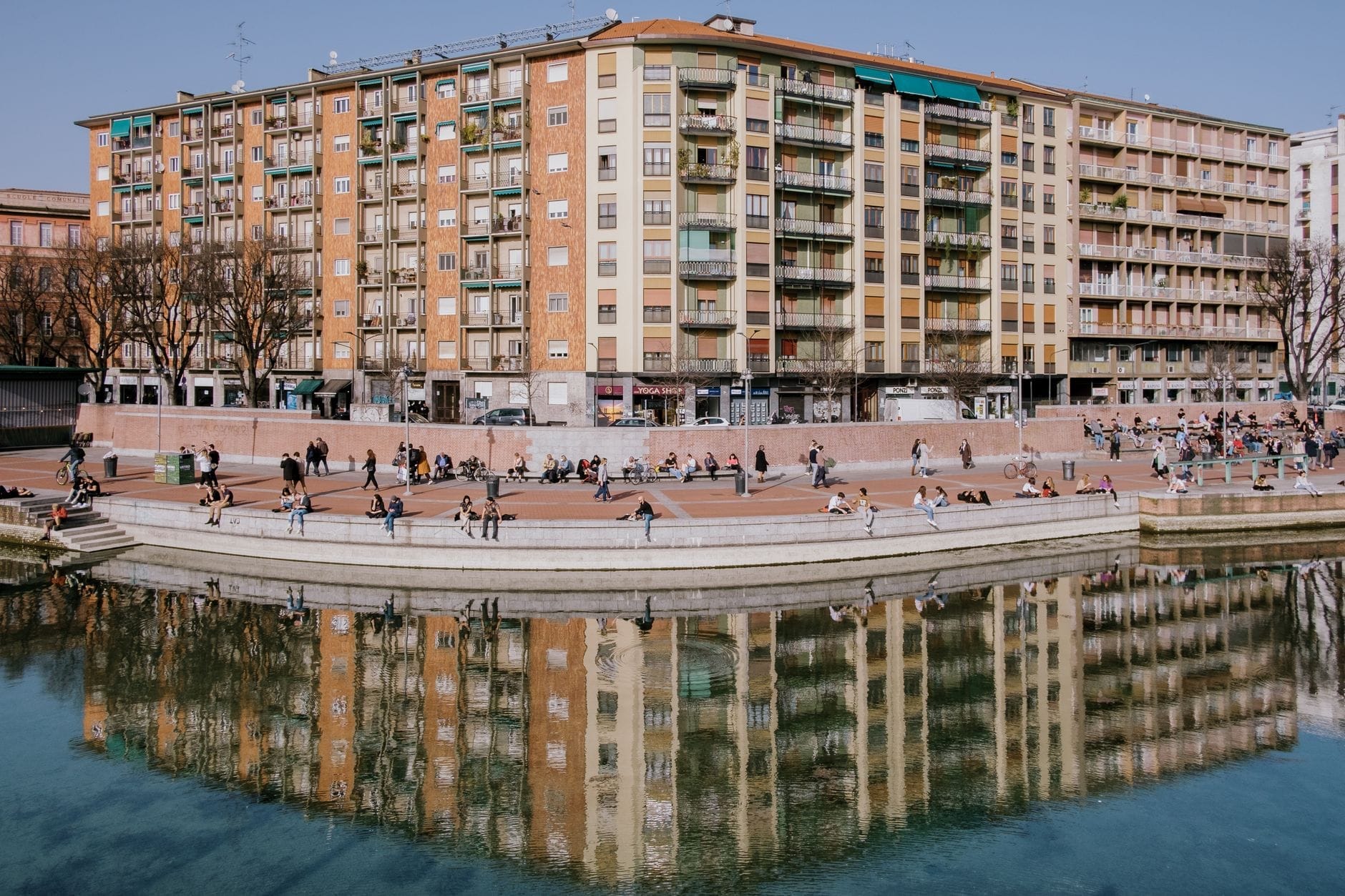
The Darsena di Milano is the natural starting point for any visit. Restored and reopened in 2015, the basin is flanked by a wide promenade with benches, food kiosks, and views across the water toward the Porta Ticinese arch. Early morning joggers use the perimeter path, families gather on summer afternoons, and the basin itself occasionally hosts small sailing and rowing events. It provides a calm, spacious introduction to the canal district before the narrower towpaths of the canals themselves begin.
Vicolo dei Lavandai, tucked off Alzaia Naviglio Grande roughly 300 metres from the Darsena, is one of the more atmospheric spots in the district. A covered outdoor laundry built into the canal bank, it preserves the original stone washing basins and wooden roof where laundresses worked until the mid-20th century. It takes less than ten minutes to walk through, but it connects the contemporary bar-lined towpath to the working history of the neighbourhood more directly than any museum could.
Walking north from the Darsena along Corso di Porta Ticinese brings you quickly to two significant early Christian sites. The Basilica di Sant'Eustorgio dates to the 4th century and contains a remarkable Renaissance funerary chapel, the Cappella Portinari, decorated by Vincenzo Foppa. Further along the same street, the Colonne di San Lorenzo present sixteen Roman columns standing in a row outside a 4th-century basilica, one of the most striking pieces of ancient architecture visible anywhere in Milan. Both are free to approach and worth building into any Navigli afternoon.
Walk the full length of Alzaia Naviglio Grande from the Darsena to Piazza Cantore for the most complete picture of the canal and its architecture
Visit Vicolo dei Lavandai for the best preserved historic detail in the district
Check the calendar for the last-Sunday antiques market on Naviglio Grande, which runs year-round
Browse the galleries and printmaking studios along the canal-side courtyards on Alzaia Naviglio Grande
Explore the Naviglio Pavese towpath, which is quieter and more residential than the Grande side
ℹ️ Good to know
The Naviglio Grande originally connected Milan to the Ticino river and was built primarily in the 12th century, making it one of Europe's oldest working canals. At its height, it was part of a wider network of navigable waterways that Leonardo da Vinci helped to improve. Most of the original canal network within central Milan was filled in during the 1930s; the Naviglio Grande and Naviglio Pavese are the two main channels that survive.
Eating & Drinking
The food scene in Navigli covers a wider range than the canal-side bar terraces suggest. For a broader picture of what Milan's food culture looks like across the city, the Milan food guide provides useful context. Within the neighbourhood, the options run from quick standing-bar lunches to serious trattoria dinners. Along Alzaia Naviglio Grande, you will find Milanese cucina povera alongside more recent arrivals: Japanese izakayas, Neapolitan pizza spots, and contemporary Italian kitchens sharing the same stretch of canal.
Aperitivo is where Navigli truly excels. The ritual of an early evening drink with complimentary food is practiced across Milan, but the canal-side version tends to be more relaxed and generous than what you find in the Duomo area or Brera. Spritz, Aperol, and Campari-based drinks dominate the order boards, accompanied by boards of cold cuts, bruschette, and rice dishes. Several bars compete directly on the quality and quantity of their aperitivo buffet, which keeps standards unusually high for the price point. Budget roughly 8 to 12 euros for a drink that effectively functions as a light meal.
For sit-down dinners, the streets one block back from the towpaths, particularly Via Corsico and the streets radiating from Piazza Arcole, tend to offer better value and a more local clientele than the canal-front establishments. Osterie and small trattorie in these streets serve classic Milanese dishes including risotto alla milanese, ossobuco, and cotoletta, typically at mid-range prices. Reservations are advisable on Thursday through Saturday evenings, when the neighbourhood fills quickly.
Coffee in Navigli follows Milanese rules: standing at the bar is cheaper than sitting, and ordering a macchiato or espresso between noon and 3pm marks you as less of a tourist than asking for a cappuccino. Several neighbourhood bars have been operating in the same location for decades and are worth seeking out over the newer venues with canal-view terraces and higher markups.
Getting There & Around
The nearest metro station is Porta Genova FS on Line 2 (the green line). From Porta Genova, the Naviglio Grande towpath is a five-minute walk east along Via Vigevano. The station also connects to regional rail services, making it straightforward to reach from Milano Centrale or Cadorna if you are arriving from elsewhere in the city. Journey time from the Duomo area by metro is around 10 to 15 minutes including the walk from the Duomo to the nearest M2 stop.
Tram lines provide useful surface connections. Line 3 runs along Corso di Porta Ticinese and stops at Piazza XXIV Maggio, placing you at the Darsena end of the district. Lines 9 and 19 also serve the broader Navigli area. For visitors coming from the Brera or Duomo district, the tram is often the more convenient option as it avoids the underground transfer at Cadorna or Duomo stations. The walk from the Duomo to Piazza XXIV Maggio takes approximately 25 to 30 minutes through Corso di Porta Ticinese, passing the Roman columns and Sant'Eustorgio along the way, making it a worthwhile route rather than just a transit option.
Cycling is a practical way to move through and beyond Navigli. The canal towpaths are largely flat and navigable by bicycle, and the Naviglio Pavese in particular offers a long, mostly uninterrupted cycling route heading south from the Darsena. Milan's bike-share system (BikeMi) has docking stations near Porta Genova and along Piazza XXIV Maggio. If you plan to continue further along the canals toward the southern periphery of the city, a bicycle makes considerably more sense than public transport.
💡 Local tip
Navigli is compact enough to visit entirely on foot, but the two canals run in different directions from the Darsena. If time is limited, prioritise Alzaia Naviglio Grande to the west: it has more activity, more historic detail, and more concentrated eating and drinking options than the Pavese side. The Naviglio Pavese is worth taking if you want a quieter, more residential experience or plan to cycle further south.
Where to Stay
Navigli is a reasonable base for visitors who want to be close to the nightlife and the southern creative districts without paying the premium of the Duomo area or Brera. The accommodation offer is a mix of small boutique hotels, design-forward apartments, and B&Bs, concentrated along and just off Alzaia Naviglio Grande. For a broader comparison of Milan's neighbourhoods as bases, the where to stay in Milan guide covers the full range of options across the city.
Staying directly on the canal-side towpath gives you the most atmospheric address but comes with the noise caveat mentioned above: weekends are extremely loud until very late. For lighter sleepers, properties on Via Vigevano, Via Corsico, or the streets one block back from the water offer a better night's rest while keeping you within a five-minute walk of everything. The neighbourhood is not well-served by five-star hotels, which tend to cluster further east toward the centre and Porta Nuova. The sweet spot here is three-star and four-star independent hotels and apartment rentals.
Navigli suits independent travellers, couples, and visitors who are comfortable with a lively urban environment and prioritise evening atmosphere over proximity to the main historic sights. Families with young children may find the nightlife density less convenient, particularly on weekends. Those focused primarily on fashion or design tourism will find the neighbourhood interesting but may prefer a base in the Quadrilatero or Porta Nuova for logistical reasons.
The Drawbacks
Navigli is not for visitors who want quiet evenings or a predominantly historic atmosphere. The canal-side bars are the dominant experience from Thursday through Sunday, and the area is heavily touristed, particularly in summer. The towpaths along Naviglio Grande are crowded enough on warm weekend nights that they can feel more like a theme park than a neighbourhood. The weekend antiques market, while quite good, also draws large crowds that make moving along the towpath slow and cramped.
The main historic and cultural sights of Milan, including the Duomo di Milano, the Last Supper, and the Pinacoteca di Brera, are all reachable within 20 to 30 minutes on foot or by tram, but Navigli itself is not particularly rich in major museums or monuments. If your primary reason for visiting Milan is art or architecture, the neighbourhood works better as an evening destination than a base.
Pricing along the canal-front has crept upward as the area's popularity has grown. Canal-side bars charge noticeably more than equivalent venues one street back, and some tourist-facing restaurants have adjusted their menus accordingly. The value is still good by major European city standards, but it is worth walking off the main towpath to find places where locals actually eat.
TL;DR
Navigli is the best neighbourhood in Milan for canal-side aperitivo culture and late evening atmosphere, anchored by the Naviglio Grande and Naviglio Pavese waterways branching from the Darsena basin.
Daytime offers a more relaxed character: Vicolo dei Lavandai, independent galleries, the monthly antiques market, and excellent trattorie one street back from the towpath.
The nearby Colonne di San Lorenzo and Basilica di Sant'Eustorgio add genuine historic weight for visitors who walk the Corso di Porta Ticinese approach from the centre.
Best suited to independent travellers, couples, and nightlife-oriented visitors; less ideal for families with young children or light sleepers staying canal-side on weekends.
Reach it via Porta Genova FS (M2 green line) or tram lines 3, 9, and 19; the 25-minute walk from the Duomo through Ticinese is itself worth taking at least once.
Milan has over 70 museums, from Renaissance masterpiece galleries to free contemporary art spaces. This guide cuts through the options and tells you exactly which ones are worth your time, what to expect inside, and how to plan your visit.
Milan rewards visitors who time their trip well. This guide covers every season in detail — temperatures, crowd levels, key events, and what to skip — so you can make the most informed decision about when to go.
Milan rewards those who look up and climb higher. This guide covers the city's best viewpoints, from the Duomo's Gothic spires and Palazzo Lombardia's 39th-floor panorama to canal-side sunset bridges and design-forward skyscrapers.
Milan sits at the center of one of Europe's most rewarding day-trip networks. Within two hours by train you can reach Alpine lakes, medieval hilltop towns, Roman amphitheaters, and UNESCO World Heritage canals. This guide covers the best destinations, how to get there, and what to prioritize once you arrive.
Milan has one of Italy's best urban transport networks, but knowing which ticket to buy, which metro line to take, and how to reach the city from three different airports saves real time and money. This guide covers everything from ATM fares and the RicaricaMi card to bike sharing and walking distances between key neighborhoods.
Milan is Italy's most demanding city for high-end travel, where fashion weeks and design fairs can triple hotel rates overnight. This guide covers where to stay, what to spend, when to go, and how to move around Milan like someone who has done it before.
Three days in Milan is enough time to cover the cathedral district, the great art museums, the canal neighbourhood, and still fit in a day trip to Lake Como. This itinerary is built around how the city actually works: metro-first logistics, realistic opening hours, and clear advice on what to skip.
Milan is served by three airports: Malpensa (MXP), Linate (LIN), and Bergamo Orio al Serio (BGY). Together the three airports form Italy's largest airport system by passenger volume, handling over 56 million passengers per year. This guide breaks down the key differences, transport links, costs, and which airport makes sense for your trip.
Milan's built environment is a genuine timeline in stone, steel, and glass. This guide walks you through every major architectural era, from the Gothic Duomo to Porta Nuova's skyscrapers, with practical routes, seasonal advice, and candid assessments of what's worth your time.
Milan's churches span seventeen centuries of history, from 4th-century basilicas built by the city's patron saint to Renaissance chapels covered floor-to-ceiling in frescoes. This guide covers the essential sacred sites, practical visiting tips, and the lesser-known churches that reward the curious traveler.
Milan Design Week is the world's largest design festival, combining the professional Salone del Mobile furniture fair at Rho Fiera with hundreds of free Fuorisalone events across the city's design districts. This guide covers dates, tickets, neighborhoods, transport, and practical planning advice.
Milan is one of the world's four fashion capitals, home to storied design houses, serious shopping districts, and four Fashion Weeks a year. This guide covers everything from navigating the Quadrilatero della Moda to understanding what tourists can actually access during Milan Fashion Week 2026.
Milanese food is not what most visitors expect. Rice trumps pasta, butter beats olive oil, and the city's signature dishes carry centuries of culinary history. This guide covers every essential dish, realistic price expectations, seasonal eating patterns, and practical advice for dining well in Milan.
Milan surprises most couples. Behind the fashion showrooms and financial towers lies a city with candlelit canals, world-class opera, cobblestone art districts, and Gothic cathedral rooftops built for golden-hour views. This guide covers the best romantic experiences in Milan, with practical details on pricing, timing, and what to skip.
Milan rewards those who look beyond the Duomo and The Last Supper. From a chapel lined with human skulls to a free panoramic skyscraper and a botanical garden tucked behind one of Italy's great art museums, these are the experiences that reveal the city locals actually love.
Spring transforms Milan from a grey winter city into one of Europe's most enjoyable urban destinations. This guide covers the real weather, the best events, crowd expectations, and everything you need to plan a smart April or May trip.
Milan transforms in winter into one of Italy's most atmospheric cold-weather destinations, with Christmas markets around the Duomo, centuries-old fairs near Castello Sforzesco, and a city that keeps its cultural calendar packed well past the holidays. This guide covers what to see, when to go, and how to get the most out of the season.
Leonardo da Vinci spent more than two decades in Milan, leaving behind some of the most extraordinary works in Western art and science. This guide covers every significant site, explains what you'll actually find there, and tells you exactly how to book before you arrive.
Milan's nightlife runs on a distinct rhythm: aperitivo first, dinner second, clubs last. This guide breaks down every major area, the best bars and clubs, what things cost, and how to get home at 3am.
Milan has a reputation for luxury fashion and fine dining, but the city is far more accessible than most travelers assume. This guide breaks down realistic daily costs, the smartest ways to use public transport, which world-class attractions are free, and how timing your visit can cut hotel prices by 25–40%.
Milan shopping covers far more than luxury fashion. This guide breaks down the city's best shopping districts, from the Quadrilatero d'Oro's flagship stores to Navigli's vintage markets, with practical advice on what to skip, what to budget, and when to go.
Lake Como sits less than an hour from Milan by direct train, making it one of the most rewarding day trips in northern Italy. This guide covers every transport option, the best villages to visit, ferry logistics, and how to avoid the most common mistakes first-time visitors make.
The journey from Milan to Rome covers roughly 565-570 km and can take anywhere from 3 hours to 6+ depending on how you go. This guide breaks down every realistic option, with clear price comparisons, booking strategies, and the city-center-to-city-center math that makes the train far more competitive than most people expect.
The Milan to Venice route is one of Italy's most popular corridors, served by frequent high-speed trains that cover the distance in around 2 hours 15 to 30 minutes. This guide breaks down every option, from Frecciarossa tickets to bus alternatives, with practical advice on what's worth it and what to skip.
Milan rewards families more than most people expect. From the interactive Leonardo da Vinci Science Museum to the free courtyards of Castello Sforzesco and the rooftop terraces of the Duomo, the city packs a serious amount of child-friendly content into a compact, walkable center. This guide cuts through the noise with specific venues, practical assessments, and logistics that actually help.
Milan rewards visitors who look beyond the fashion weeks and luxury boutiques. This guide covers the essential things to do in Milan Italy, from cathedral rooftops and Renaissance masterpieces to canal-side aperitivo and contemporary architecture, with practical advice on what to book in advance and what to skip.
Milan rewards travelers who choose their base carefully. This guide breaks down every major neighborhood, explains the price realities, and tells you exactly when to book to avoid paying peak-event rates.