Naviglio Pavese: Milan's Quieter Canal and Its 660-Year History
Naviglio Pavese is a 33.1-kilometer canal stretching from Milan's Darsena dock to the River Ticino at Pavia. Free to access and open around the clock, it offers a slower, more local side of the Navigli district, away from the crowds that pack the more famous Naviglio Grande just across the water.
Quick Facts
- Location
- Alzaia Naviglio Pavese, 20143 Milano — Navigli district
- Getting There
- Porta Genova (Metro Line 2, green); Tram 3 to Piazza XXIV Maggio
- Time Needed
- 1–2 hours for the Milan stretch; full day for Pavia end-to-end
- Cost
- Free to walk; venue prices vary
- Best for
- Evening strolls, local aperitivo culture, photography, cycling
What Is Naviglio Pavese?
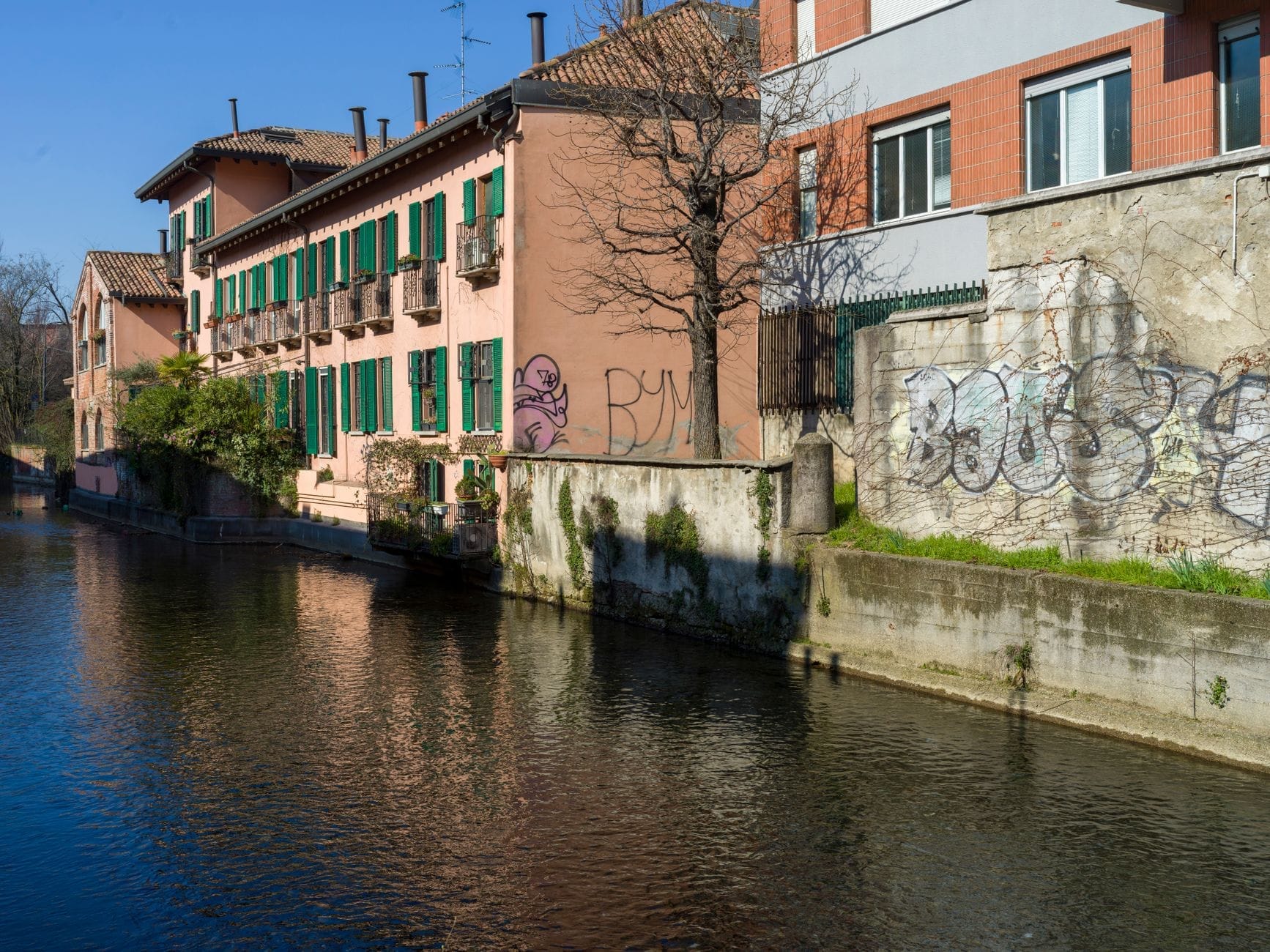
Naviglio Pavese is one of Milan's two main surviving historic canals, running 33.1 kilometers south from the Darsena dock in Milan to the River Ticino at Pavia. Unlike its neighbor to the west, it tends to draw fewer tourists and more residents, which gives its towpath a noticeably different atmosphere: quieter during the day, genuinely local in the evenings.
The canal sits at the southern edge of the Navigli neighborhood, and connects directly to the Darsena di Milano, the large dock basin that historically served as Milan's inland port. Walk south from the Darsena and you step onto the Alzaia Naviglio Pavese, the towpath that flanks the canal's western bank.
💡 Local tip
The most rewarding stretch for visitors is the first kilometer or so south of the Darsena, where restaurants, bars, and small shops line the water's edge. Beyond that, the canal becomes more residential and quieter — worth exploring if you have time, but not essential for a short visit.
A Canal Six Centuries in the Making
The history of Naviglio Pavese stretches back to 1359, when Galeazzo II Visconti commissioned the first excavation works, primarily to supply water to Pavia Castle and irrigate the surrounding agricultural land. It was a project of political ambition as much as practical engineering: controlling water routes meant controlling trade and food supply across Lombardy.
Actual navigability took far longer to achieve. Despite centuries of incremental works under the Visconti, Sforza, and later Spanish rulers, the canal was not completed and inaugurated as a fully navigable waterway until 16 August 1819, during the period of Austrian rule. By then it had taken roughly 460 years from first commission to finished infrastructure, making it one of the longest civil engineering projects in Lombardian history.
Commercial navigation flourished through the 19th century and into the early 20th, with barges transporting goods, building materials, and agricultural products between Milan and the Po Valley. The canal was closed to commercial navigation in the 1960s as road and rail freight made waterway transport economically unviable. Restoration proposals to reopen it to recreational boat traffic have been discussed periodically, but as of writing, the canal remains non-navigable.
For visitors who want deeper context on Milan's canal system, the Naviglio Grande — the older and more commercially significant of the two canals — offers a useful comparison point. Together they tell the story of how water infrastructure shaped this city's growth for half a millennium.
Tickets & tours
Hand-picked options from our booking partner. Prices are indicative; availability and final rates are confirmed when you complete your booking.
Navigli Canals of Milan private walking tour with a local guide
From 40 €Instant confirmationFree cancellationMilan Food and Drinks Guided Tour along the Navigli
From 76 €Instant confirmationFree cancellationMagic along the water, online exploration game in Milan Navigli
From 7 €Instant confirmationFree cancellationDuomo Cathedral private tour with a local guide
From 105 €Instant confirmationFree cancellation
What the Canal Looks Like at Different Times of Day
In the morning, Naviglio Pavese is quiet in a way that feels earned. The water is still, catching pale northern light. A few joggers and cyclists move along the towpath. Delivery vans park half on the pavement outside the bars, stacking crates. The smell is canal water — faintly mineral, sometimes earthy after rain — mixed with coffee from the cafes beginning to open. There are no crowds.
By midday the towpath fills gradually with local workers on lunch breaks, students from the nearby Università degli Studi di Milano, and a scattering of tourists who have wandered south from the Darsena. The light at this hour tends to wash out the canal's color; late afternoon, when the sun drops lower and angles across the water from the west, is when the canal photographs best.
Evenings transform the canal's character entirely. From around 6 PM, the bars on Alzaia Naviglio Pavese begin their aperitivo service. Tables appear on the towpath. The sound changes: conversation, glasses clinking, the occasional live music drifting from a window. The canal becomes a social space, not a scenic one. This is when Milanese residents actually use it, and it's worth arriving early enough to find a seat at one of the outdoor tables before they fill.
ℹ️ Good to know
Naviglio Pavese draws a noticeably younger, more local crowd than Naviglio Grande, particularly on weekday evenings. If you find the more touristy canal atmosphere slightly performative, this one tends to feel more genuine.
Walking the Towpath: A Practical Route
The natural starting point is the Darsena basin, which links directly to the canal's northern mouth. From Porta Genova metro station, follow Via Casale for roughly 100 meters until the canal comes into view. The towpath begins here, running south along the Alzaia Naviglio Pavese.
For most visitors, walking one to two kilometers south and then returning is sufficient to experience the canal's urban character. The buildings along this stretch are predominantly 19th and early 20th century, with ochre and terracotta facades typical of Milanese residential architecture from that period. Some have been converted into studios, ateliers, and small galleries, though there is no formal arts district here in the way Brera is organized around its institutions.
Beyond the immediate urban stretch, the canal passes through more peripheral neighborhoods before eventually leaving the city entirely. Cyclists can follow the towpath significantly further south, and some choose to ride the full distance to Pavia, a journey of roughly 33 kilometers. This requires good fitness and ideally a road or hybrid bicycle. Rental bikes are available in central Milan through the city's BikeMi sharing scheme and private hire operators.
💡 Local tip
Wear comfortable, flat shoes. The towpath surface is mostly paved but includes sections of stone and occasional uneven edges. High heels are impractical and common enough that locals will quietly notice.
Photography Along the Canal
The canal offers a different visual language from Milan's monumental centro storico. Reflections in the water, the repetition of arched bridges, laundry drying from upper-floor windows, and the geometry of the towpath running to a vanishing point all make for compelling images that feel less staged than the city's more famous sites.
The golden hour before sunset, roughly 5–7 PM in summer and earlier in winter, gives the canal its most photogenic light. For wider context on photographing Milan from elevated or distinctive vantage points, the best views in Milan guide covers complementary locations across the city.
On overcast days, the diffused light actually suits canal photography well — it eliminates the harsh shadows that can make the narrow towpath look cramped at midday. Winter fog, which is common in Milan's Po Valley climate from November through February, produces atmospheric conditions that can make the canal look almost cinematic. Just dress for it: damp cold along the water feels colder than the air temperature suggests.
Eating, Drinking, and the Aperitivo Ritual
The bars and restaurants along Alzaia Naviglio Pavese and the parallel Via Cardinale Ascanio Sforza represent a cross-section of Milan's canal-side food culture, from casual pizza places to more considered osterie serving Lombard dishes. Prices are generally moderate, and the aperitivo tradition here follows the standard Milanese format: pay for a drink (typically a Campari-based cocktail, a Spritz, or a glass of wine), and a spread of snacks is included or available at low cost.
If the canal's food scene sparks broader curiosity about Milanese eating culture, the Milan food guide covers the city's culinary landscape in detail, including other neighborhoods with strong aperitivo traditions.
One practical note: on weekend evenings, particularly in spring and early summer, the entire Navigli district becomes significantly more crowded. Finding a seat at a popular bar without waiting becomes difficult after 7:30 PM. Arriving at 6 PM gives you the best chance of a good table and the quieter, earlier atmosphere before the area reaches full capacity.
Who Might Want to Skip This
Naviglio Pavese rewards patience and the willingness to simply walk without a fixed agenda. Travelers on tight itineraries who want checked boxes might find it underwhelming compared to Milan's major monuments. There are no significant architectural set pieces, no museums, and no single moment of visual drama. The experience is cumulative: a neighborhood, a canal, time spent at a table with a drink.
If you are visiting in peak summer (July or August), be aware that Milan's heat and humidity are most pronounced in low-lying areas near water. The canal can feel airless on hot afternoons. Many Milanese residents leave the city in August, which makes the Navigli district quieter but also reduces the local atmosphere that makes it worth visiting in the first place. April through June and September through October are substantially better.
For a broader sense of when to plan your trip, the best time to visit Milan guide covers seasonal considerations across the city.
Insider Tips
- The southern bank of the canal (Via Cardinale Ascanio Sforza) tends to have slightly fewer tourists than the western Alzaia towpath — cross over at any bridge and you'll find smaller, less well-known bars with the same canal view.
- The canal's antique and flea market, held on the last Sunday of each month, draws serious collectors and casual browsers along the entire Navigli district. Arrive before 10 AM for the best selection; the crowds after midday make browsing difficult.
- Cyclists heading toward Pavia should note that the towpath quality varies considerably south of the city limits. Check current conditions before committing to the full 33 km route, particularly after heavy rain.
- In autumn, a low mist often sits on the canal surface in the early morning — typically between 7 and 9 AM. It clears quickly once the sun rises, so if you want that shot, set an early alarm.
- Several of the bars along Alzaia Naviglio Pavese include the aperitivo buffet in the price of the drink without advertising it prominently. Ask specifically when ordering if it is included, rather than assuming it is not.
Who Is Naviglio Pavese For?
- Travelers who want to experience Milan as residents actually live it, not just as tourists passing through landmark sites
- Cyclists planning a day trip toward Pavia along the historic towpath
- Evening visitors looking for a genuine aperitivo experience with fewer tourist crowds than Naviglio Grande
- Photographers interested in urban water landscapes, bridge geometry, and documentary-style street photography
- Visitors on a budget who want to spend time in an atmospheric Milan neighborhood without paying admission fees
Nearby Attractions
Other things to see while in Navigli:
- Armani Silos
Housed in a converted 1950s granary in Milan's Tortona district, Armani/Silos presents four decades of Giorgio Armani's work across around 4,500 square metres and four floors. It is one of the few fashion museums in the world conceived and curated by a living designer as a permanent retrospective of their own career.
- Darsena di Milano
Once the commercial heart of Milan's canal network, the Darsena di Milano is a vast open basin in Piazza XXIV Maggio where the Naviglio Grande and Naviglio Pavese converge. Renovated for Expo 2015, it is now the social and geographic anchor of the Navigli district, free to visit at any hour.
- Naviglio Grande
Stretching nearly 50 kilometres from the Ticino River to Milan's city edge, the Naviglio Grande is one of the oldest navigable canals in Europe. Free to visit at any hour, this historic waterway draws everyone from early-morning joggers to late-night aperitivo crowds, offering a side of Milan that feels genuinely distinct from its fashion-forward centre.