Armani/Silos Milan: Inside Giorgio Armani's Fashion Archive
Housed in a converted 1950s granary in Milan's Tortona district, Armani/Silos presents four decades of Giorgio Armani's work across around 4,500 square metres and four floors. It is one of the few fashion museums in the world conceived and curated by a living designer as a permanent retrospective of their own career.
Quick Facts
- Location
- Via Bergognone 40, 20144 Milano — Tortona district, near Navigli
- Getting There
- Porta Genova FS (Metro M2, Green Line) — approx. 5-minute walk
- Time Needed
- 1.5 to 2.5 hours
- Cost
- €12 full price; audio guide €3 extra. Open Wed, Fri & Sun 11:00–19:00 (last entry 18:00); Thu & Sat 11:00–21:00 (last entry 20:00).
- Best for
- Fashion enthusiasts, design lovers, architecture fans, photography
- Official website
- www.armanisilos.com
What Armani/Silos Actually Is
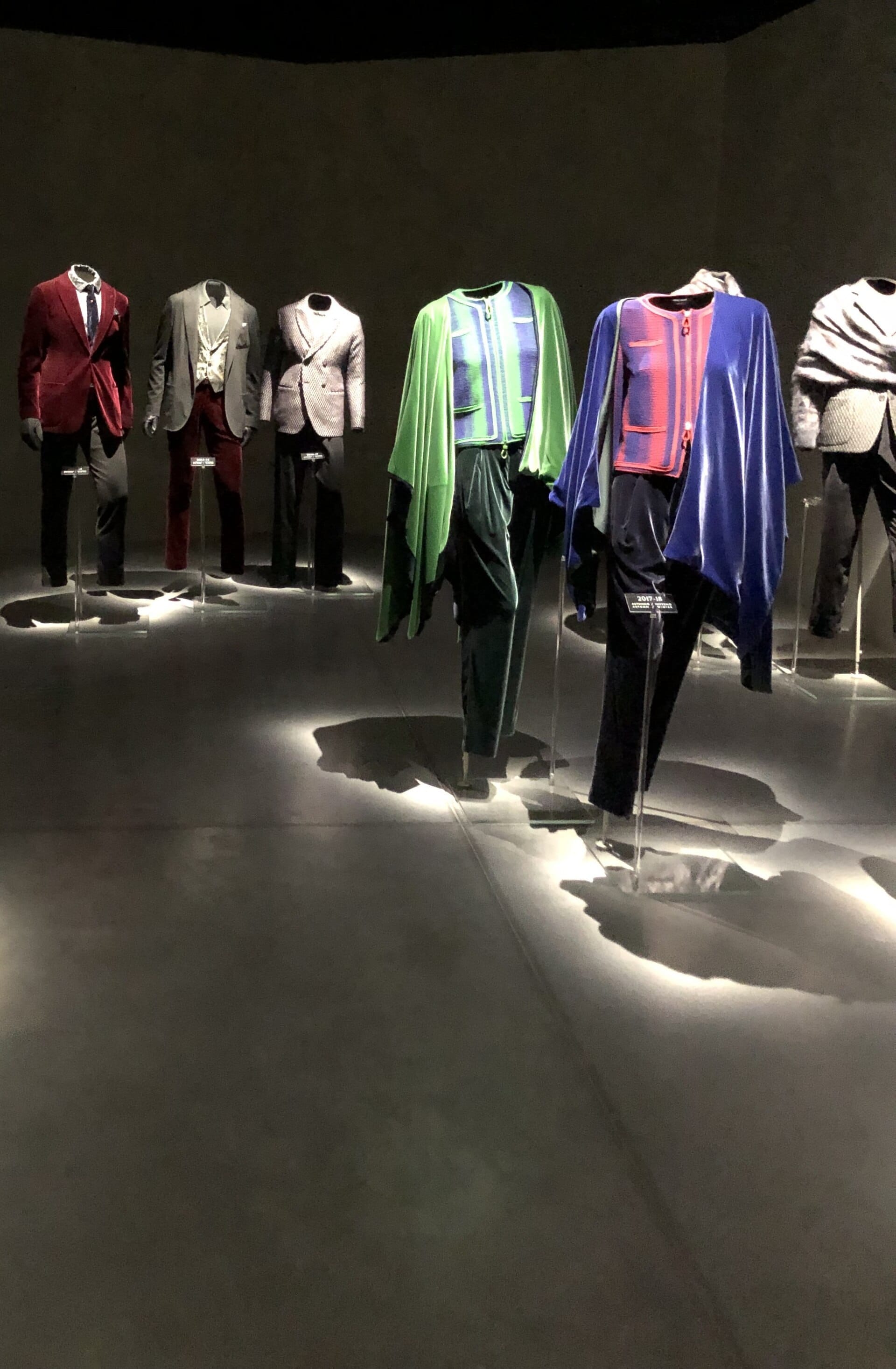
Armani/Silos is a permanent fashion museum at Via Bergognone 40 in Milan's Tortona quarter, inaugurated on 30 April 2015 to mark forty years of Giorgio Armani's career. The building, constructed in 1950 as a granary, was repurposed and redesigned to house around 200 garments and 200 accessories drawn primarily from Armani's collections spanning from 1980 to the present. Across around 4,500 square metres on four levels, the exhibition is not a chronological biography but a thematic journey through Armani's recurring aesthetic principles: silhouette, material, colour, and the way clothes interact with identity.
This is one of the few fashion museums in the world conceived and curated by a living designer as an ongoing self-portrait. Unlike temporary fashion exhibitions that travel and dissolve, Armani/Silos is a fixed institution with a permanent collection. That distinction matters: you are not visiting an event, you are visiting a considered space that Armani designed to outlast any single season.
💡 Local tip
Book tickets online in advance via the official website, especially on weekends and during Milan's fashion weeks (typically February/March and September/October), when the museum sees noticeably higher foot traffic.
The Building: A Granary Transformed
The Armani/Silos building is a study in deliberate restraint. From Via Bergognone, it reads as an austere industrial block — concrete, repetitive windows, a monolithic presence on a street that is otherwise quiet and residential. There are no banners, no neon signs. The only exterior indication of what lies inside is modest signage and the occasional queue at the door.
Internally, the conversion is careful. The granary's structural bones — load-bearing columns, wide-span ceilings, raw surfaces — have been preserved and worked with rather than concealed. The industrial atmosphere is not accidental: it creates a neutral, almost gallery-like environment in which the clothing becomes the sole source of visual information. Lighting is controlled and directional. Display cases are minimal and dark. The overall effect leans closer to a contemporary art museum than a fashion retail archive.
If you are already interested in how Milan has reconciled its industrial past with its design identity, the building itself is worth reading alongside the Milan architecture guide, which places Armani/Silos in the broader context of the city's adaptive reuse projects.
Tickets & tours
Hand-picked options from our booking partner. Prices are indicative; availability and final rates are confirmed when you complete your booking.
Duomo Cathedral private tour with a local guide
From 105 €Instant confirmationFree cancellationSforza Castle entry and self-guided tour
From 15 €Instant confirmationFree cancellationSkip-the-line Duomo tour in Milan
From 40 €Instant confirmationFree cancellationNavigli Canals of Milan private walking tour with a local guide
From 40 €Instant confirmationFree cancellation
What You See on Each Floor
The four levels are organised thematically rather than by decade. Each floor focuses on a different strand of Armani's visual vocabulary: the relationship between East and West in his aesthetic references, the deconstruction of tailoring, the role of colour (and its deliberate absence), and the way sportswear and eveningwear have cross-pollinated in his collections across forty years. The sequencing rewards visitors who slow down.
The garments themselves are displayed in large black cases with precisely positioned lighting. Many pieces have never been exhibited before, drawn directly from the Armani archive rather than from pieces that have been on public display. What you are seeing, in many cases, is genuinely rare. There are jackets from the 1980s that redefined how a man's shoulder should sit, and evening gowns that require extended looking before you understand the technical construction hidden behind their apparent simplicity.
The accessories floor tends to draw concentrated attention. Handbags, shoes, and jewellery pieces are displayed at close range, and the craft evident in individual objects becomes clear at that proximity in a way that runway photographs never convey. Visitors who have no particular interest in fashion often report that this floor changes their understanding of what the work actually involves.
ℹ️ Good to know
An audio guide is available for €3 and provides context for individual pieces and thematic sections. It is worth the addition, particularly if you are unfamiliar with the arc of Armani's career or want to understand the design decisions behind specific garments.
When to Visit and What the Experience Feels Like
Armani/Silos is open Wednesday, Friday and Sunday from 11:00 to 19:00, with last admission at 18:00, and on Thursdays and Saturdays from 11:00 to 21:00, with last admission at 20:00. The museum is closed on Mondays and Tuesdays. The café and terrace currently operate on the same schedule as the museum: Wednesdays, Fridays and Sundays from 11:00 to 19:00, and Thursdays and Saturdays from 11:00 to 20:00; you should verify current hours on the official website before planning around this.
Weekday mornings, particularly Wednesdays and Thursdays between 11:00 and 13:00, are the quietest windows. At these times the floors are calm enough that you can stand in front of a single display case for several minutes without crowd pressure. Weekend afternoons, and any day during Milan Fashion Week, shift the dynamic substantially: the museum fills with people in a way that makes extended looking harder and photography more chaotic.
The building stays cool even in summer, which makes it a particularly useful destination on a hot July or August afternoon. In winter the interiors are well heated. The Tortona district itself is at its best in spring and autumn, when the surrounding streets and nearby Navigli canals reward a longer walk before or after your visit.
The museum sits at the edge of the Navigli quarter. If you are combining it with a canal-side walk, the Naviglio Grande is about fifteen minutes on foot and forms a natural complement to a half-day in this part of the city.
Getting There
The most direct public transport route is Metro Line 2 (the green line) to Porta Genova FS. From the station, Via Bergognone is about a five-minute walk away. The street is straightforward to navigate; there is no risk of missing the building once you are on the right road.
Trams also stop near Porta Genova, and the area is accessible by bicycle via the city's BikeMi network, with docking stations close to the museum. If you are arriving from the centre of Milan, the metro is faster and more reliable than tram connections during peak hours.
⚠️ What to skip
There is no dedicated parking at the museum and street parking in Tortona is limited. If arriving by car, plan for a walk of several minutes from wherever you find a space. The metro is the clearly better option from most parts of the city.
Photography, Practicalities, and Accessibility
Photography for personal use is generally permitted inside Armani/Silos, though flash photography and tripods are not allowed. The controlled, low-key lighting makes handheld shots with a phone entirely workable; the dark display cases do require patience with focus. The building's industrial interiors photograph well as architectural subjects in their own right.
The museum has lift access between floors, making it navigable for visitors with mobility limitations. For detailed accessibility provisions, including wheelchair access specifics or services for visitors with particular needs, the museum advises contacting them directly through the official website before your visit, as these details can change.
Bags larger than cabin luggage size are typically required to be left at the cloakroom, in line with standard Italian museum regulations. There is a café on site with terrace access, which works well as a stopping point mid-visit or at the end.
Armani/Silos sits in the broader Tortona design district. During Milan Design Week in April, the entire area around Via Bergognone becomes one of the most active exhibition zones in the city, and the museum itself typically has special programming.
Is This Museum Worth Your Time?
The answer depends on what you are bringing to it. If you have any interest in fashion history, the mechanics of design, or Italian cultural institutions of the post-1970s period, this is a serious museum that will reward your attention. The collection is curated with the kind of care that distinguishes a permanent archive from a promotional exercise.
If you are visiting Milan with no particular interest in fashion and are working through a list of landmarks, this is probably not where your limited time is best spent. The museum makes no concessions to visitors who want spectacle or novelty: it is quiet, it requires sustained looking, and its pleasures are cumulative rather than immediate. Visitors expecting something closer to a retail experience or a pop-up installation may find it underwhelming.
For first-time visitors to Milan trying to build a coherent itinerary, the Milan 3-day itinerary places Armani/Silos within a logical sequence that also accounts for the Navigli area and the design districts south of the centre.
If broader museum coverage is your goal, the best museums in Milan guide gives a comparative overview of what the city's major collections offer across different categories.
Insider Tips
- Arrive when the museum opens at 11:00 on a Wednesday or Thursday. The first hour is noticeably less crowded than any weekend slot, and you can take your time with the ground floor without managing around other visitors.
- The top floor tends to be less visited than the lower levels because many people spend longer than expected on floors two and three. If you want to see it without company, go there first rather than last.
- The Tortona district surrounding the museum has several good coffee bars and restaurants on Via Tortona and Via Savona. A meal or coffee here before or after the museum makes for a more complete experience of the neighbourhood than heading straight back to the metro.
- During Milan Fashion Week (February/March and September/October), the museum often hosts complementary programming or temporary exhibitions. Check the official website in the weeks before your visit if your trip overlaps with these periods.
- The audio guide (€3) is worth adding at the point of purchase rather than deciding after you enter. The thematic structure of the museum is not always self-explanatory from the displays alone, and the guide provides the framing that makes individual pieces more legible.
Who Is Armani Silos For?
- Fashion and textile enthusiasts who want serious engagement with a curated archive rather than a commercial display
- Architecture and design visitors interested in adaptive reuse of industrial buildings
- Photographers looking for controlled, dramatic interior settings
- Travellers spending a half-day in the Navigli and Tortona area who want a structured cultural anchor to their itinerary
- Anyone with a specific interest in the development of Italian fashion from the 1980s to the present
Nearby Attractions
Other things to see while in Navigli:
- Darsena di Milano
Once the commercial heart of Milan's canal network, the Darsena di Milano is a vast open basin in Piazza XXIV Maggio where the Naviglio Grande and Naviglio Pavese converge. Renovated for Expo 2015, it is now the social and geographic anchor of the Navigli district, free to visit at any hour.
- Naviglio Grande
Stretching nearly 50 kilometres from the Ticino River to Milan's city edge, the Naviglio Grande is one of the oldest navigable canals in Europe. Free to visit at any hour, this historic waterway draws everyone from early-morning joggers to late-night aperitivo crowds, offering a side of Milan that feels genuinely distinct from its fashion-forward centre.
- Naviglio Pavese
Naviglio Pavese is a 33.1-kilometer canal stretching from Milan's Darsena dock to the River Ticino at Pavia. Free to access and open around the clock, it offers a slower, more local side of the Navigli district, away from the crowds that pack the more famous Naviglio Grande just across the water.