Milan Architecture Guide: From Gothic to Contemporary
Milan's built environment is a genuine timeline in stone, steel, and glass. This guide walks you through every major architectural era, from the Gothic Duomo to Porta Nuova's skyscrapers, with practical routes, seasonal advice, and candid assessments of what's worth your time.
Plan and book this trip
Tools from our partner Travelpayouts help you compare flights and hotels. If you book through them, we may earn a commission at no extra cost to you.
Flights
Hotels map
TL;DR
- Milan's architecture spans Gothic, Renaissance, Neoclassical, Rationalist, and contemporary eras, all within a compact urban core.
- The Duomo di Milano took nearly 600 years to complete and remains the defining reference point for Gothic architecture in northern Italy.
- Contemporary Milan is anchored in the Porta Nuova and Isola districts, where the Bosco Verticale and UniCredit Tower set the tone for 21st-century urban design.
- A focused one-day architecture route can cover five centuries of building history on foot, with short metro hops between eras.
- April, during Milan Design Week, is the best time to combine architecture tourism with exclusive access to studios, showrooms, and temporary installations.
Why Milan Reads Like an Architecture Textbook
Most European cities have a dominant architectural identity. Paris is Haussmann. Prague is Baroque. Milan is something more complicated: a city that never erased its previous selves. Roman foundations survive beneath medieval churches. Renaissance cloisters share walls with Art Nouveau apartment facades. A rationalist train station built for Mussolini stands minutes from a pair of residential towers wrapped in 20,000 trees. This layering is not accidental. Milan was prosperous enough in every era to build ambitiously, and pragmatic enough to keep what worked rather than demolish it.
The common assumption is that Milan's architectural identity begins and ends with design-week modernism. That reading misses roughly 1,600 years of building history. The city's Latin name, Mediolanum, meaning 'in the middle of the plain', captures its geography but not its ambition. Milan has been a Roman capital, an archbishopric, a Visconti duchy, a Habsburg territory, and a unified Italian industrial engine. Each of those phases left buildings, and most of them are still standing.
ℹ️ Good to know
Milan sits in the Po Valley at around 120 metres above sea level, meaning no dramatic topography shapes its layout, though the city does have gentle elevation changes rather than being perfectly flat. The city grew in concentric rings from the Roman forum outward, which is why its architectural eras are literally mapped by distance from the Duomo.
Gothic Milan: The Duomo and Its World
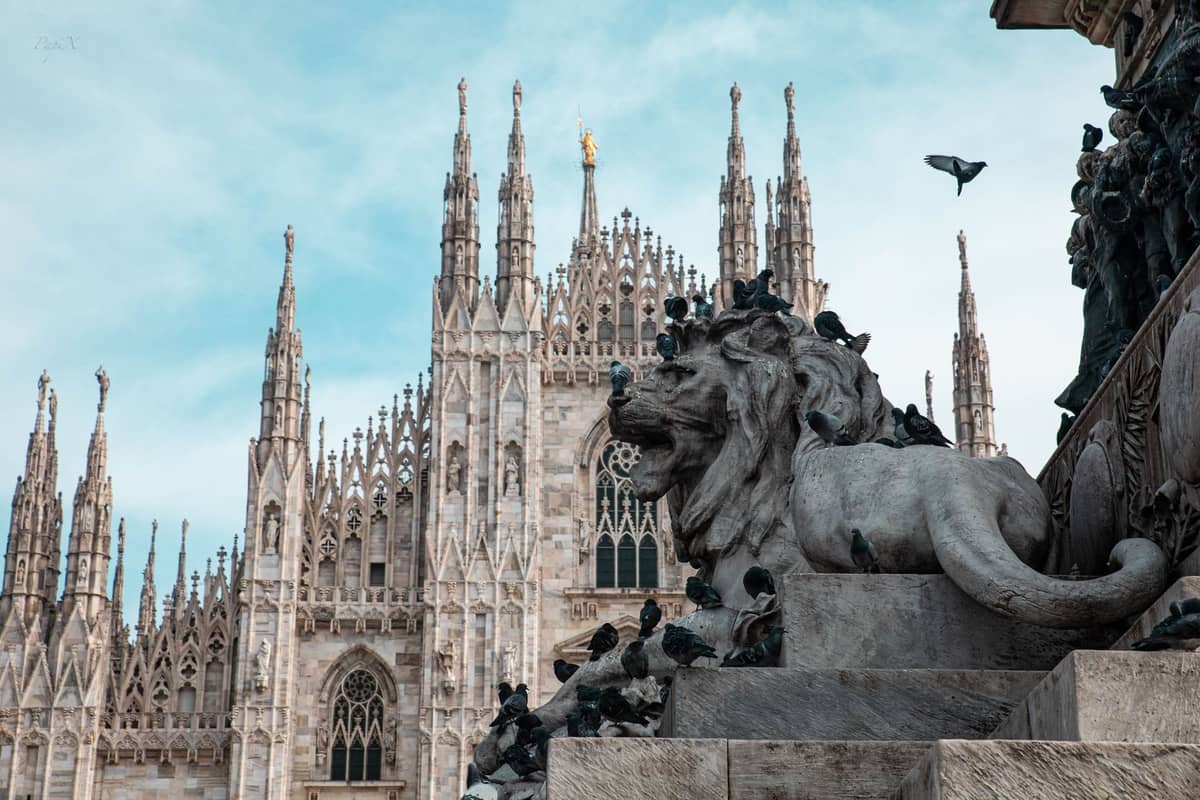
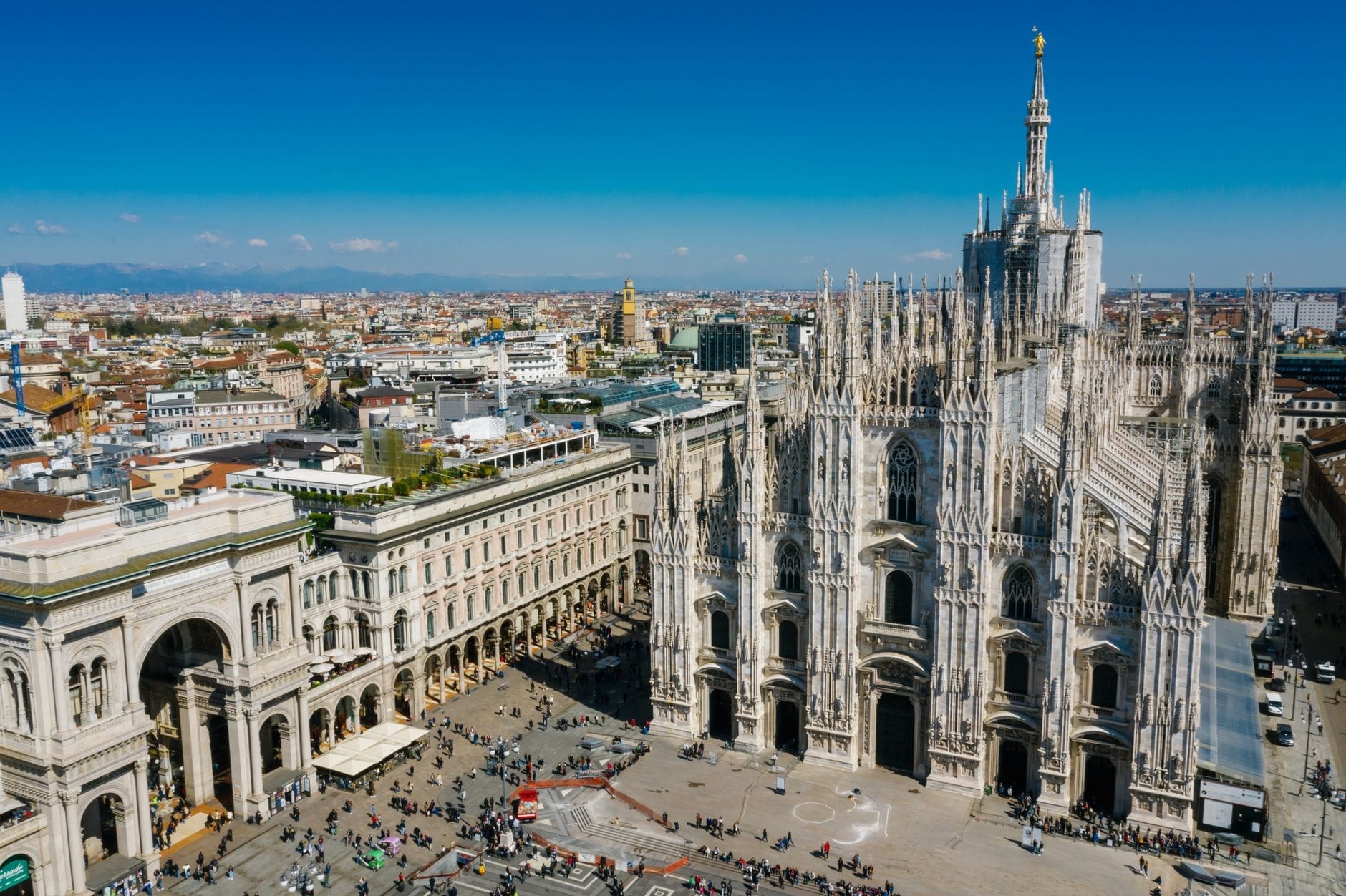
The Duomo di Milano is one of the largest Gothic cathedrals in the world, and it is also one of the most misunderstood. Construction began in 1386 under Gian Galeazzo Visconti, but the facade was not completed until 1965 when the final bronze doors were installed. That 579-year construction timeline means what you see is not purely medieval: it includes later Gothic additions, Baroque interventions, and Napoleonic-era finishing touches. The result is a building that argues with itself and wins. Its 135 spires and approximately 3,400 statues represent the accumulated ambition of dozens of architects across six centuries.
For the best architectural reading of the Duomo, go to the rooftop terraces. At street level, the scale is overwhelming and the detail blurs. From above, you can read the logic of the flying buttresses, trace the progression of spire heights toward the central pinnacle topped by the gilded Madonnina (4.16 metres tall, placed in 1774 at about 108.5 metres above ground), and understand how the building manages its own weight. The cathedral rooftop terraces are accessible via stairs or elevator, with the paid ticket also covering the Duomo Museum where original sculptural works are preserved in controlled conditions.
Gothic architecture in Milan extends beyond the Duomo. The Basilica di Sant'Eustorgio, in the Ticinese district, predates it by centuries and contains one of the finest Gothic funerary monuments in Italy: the Portinari Chapel, completed around 1468, which also qualifies as an early Renaissance work. The coexistence of styles within a single building is characteristic of how Milan's ecclesiastical architecture evolved.
Renaissance and Baroque: Bramante, Leonardo, and the Sforzas
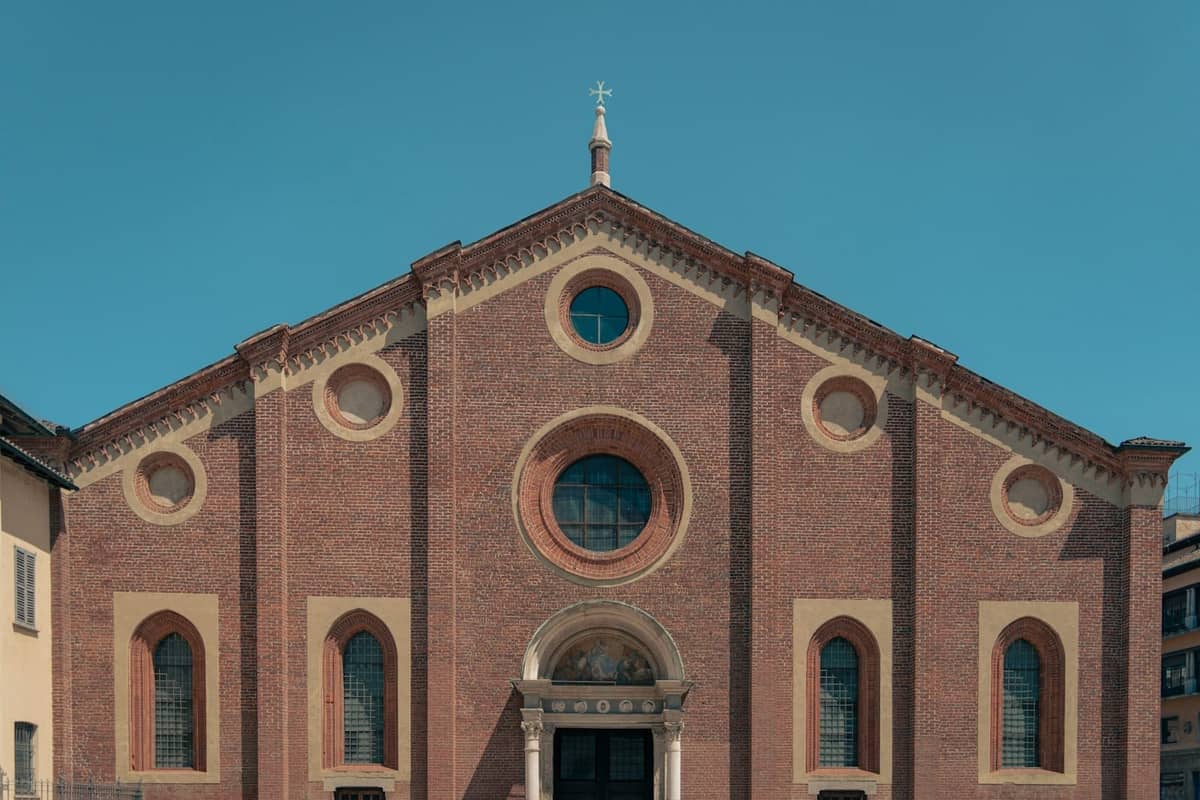
Milan's Renaissance moment was concentrated and brilliant. The Sforza court in the late 15th century attracted both Donato Bramante and Leonardo da Vinci, and the buildings they shaped are still the city's most architecturally refined. The church of Santa Maria delle Grazie is the centrepiece of this period. Bramante designed the apse, tribune, and cloister, creating one of the purest expressions of High Renaissance spatial thinking in Italy. The interior is calm, geometric, and luminous in a way that feels deliberately opposed to Gothic drama. Leonardo's Last Supper, painted on the refectory wall between 1495 and 1498, is technically not part of the church building, but the two works together make this the most architecturally and artistically significant site in the city.
The Castello Sforzesco predates the Renaissance flourishing but was transformed under the Sforzas into a court complex with towers, courtyards, and decorative schemes that reflect the transition from medieval fortification to Renaissance residence. Bramante is credited with the Torre della Carità within the complex. The castle's Filarete Tower, rebuilt after a gunpowder explosion in 1521, is the version visitors see today: a 19th-century reconstruction that accurately references the original. This distinction matters if you're evaluating architectural authenticity.
⚠️ What to skip
Booking to see Leonardo's Last Supper (Cenacolo Vinciano) is non-negotiable. Access is limited to around 30 visitors per 15-minute slot, and tickets sell out weeks or months in advance. Turning up without a reservation means you will not get in, regardless of queue length.
The church of San Maurizio al Monastero Maggiore is frequently cited by architects and art historians as Milan's most underrated interior. The frescoed walls, largely by Bernardino Luini, cover every surface in a 16th-century devotional programme that takes time to read properly. The building divides into a public nave and a nun's choir separated by a wall: an unusual typology that reflects the convent's function. Admission is free, opening hours vary, and the contrast with the Duomo's Gothic theatricality is stark and instructive.
Neoclassical and 19th-Century Milan: Opera, Arcades, and Urban Order
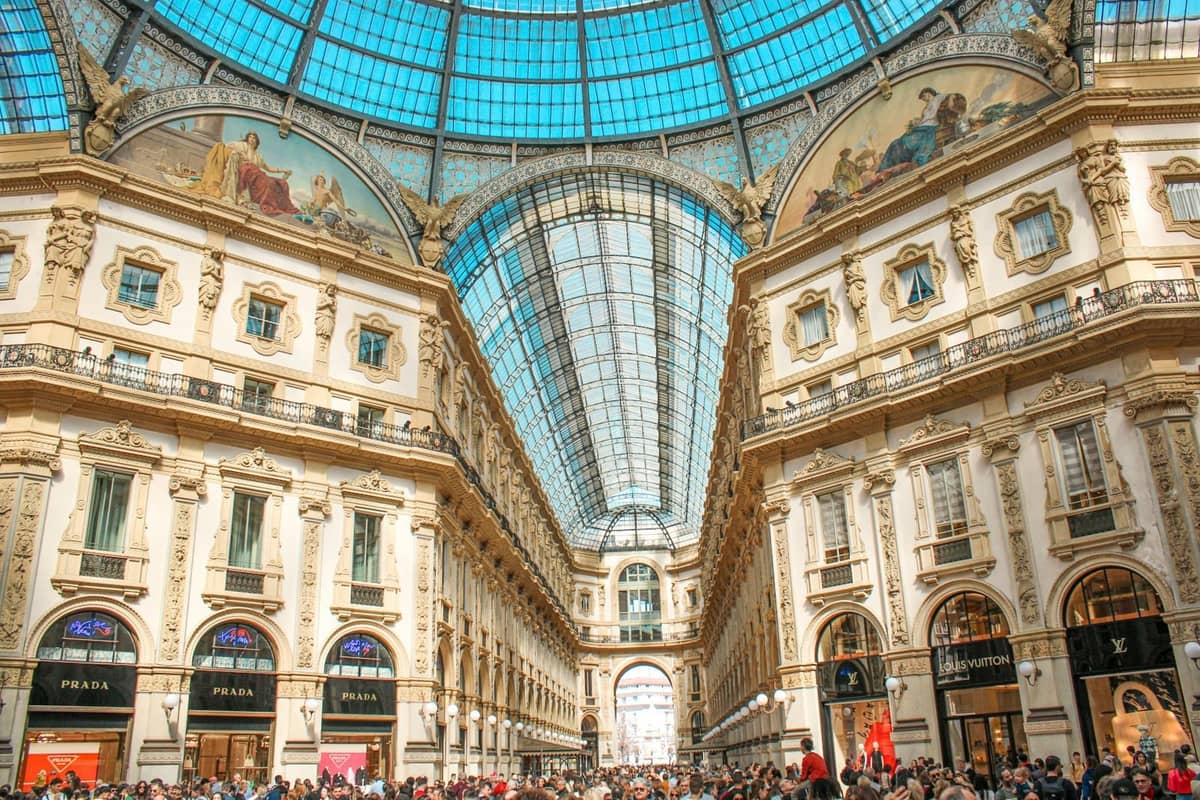
The 19th century gave Milan its two most photogenic public spaces. The Galleria Vittorio Emanuele II was designed by Giuseppe Mengoni and inaugurated in 1867. Its cast-iron and glass barrel vault, with the central octagonal dome reaching about 47 metres high, was technically audacious for its time and remains in excellent structural condition. The floor mosaics representing the coats of arms of Turin, Florence, Rome, and Milan date from the original construction. The ritual of spinning your heel on the Torino bull for luck is a 20th-century tourist invention, but it has ground through the original mosaic enough that the city now periodically restores it.
The Teatro alla Scala was designed by Giuseppe Piermarini and opened in 1778. The neoclassical facade on Piazza della Scala is deliberately restrained: Piermarini wanted the building to defer to its surroundings. The interior, seating around 2,030, is horseshoe-shaped in the Italian tradition, with six tiers of boxes and acoustics that remain respected internationally. Visitors who cannot secure opera tickets can access the theatre through the La Scala Museum, which includes a view into the auditorium from the royal box gallery, weather and programming permitting.
- Galleria Vittorio Emanuele II Operational shopping arcade since 1877. Free to walk through at any hour, though the luxury tenants set their own opening times. Best experienced early morning when the light through the glass vault is cleanest and the crowds have not arrived.
- Teatro alla Scala Main opera season runs October to July. Cheapest seats (upper gallery, restricted sightlines) start around €10-15 for some performances. The museum is a separate ticket and worth the hour.
- Palazzo Reale Adjacent to the Duomo, this former royal residence now operates as a rotating exhibition space. The neoclassical interiors are visible through the temporary shows and occasionally in their own right. Check the programme before visiting.
Rationalism and Modernism: Mussolini's Milan and the Industrial Era
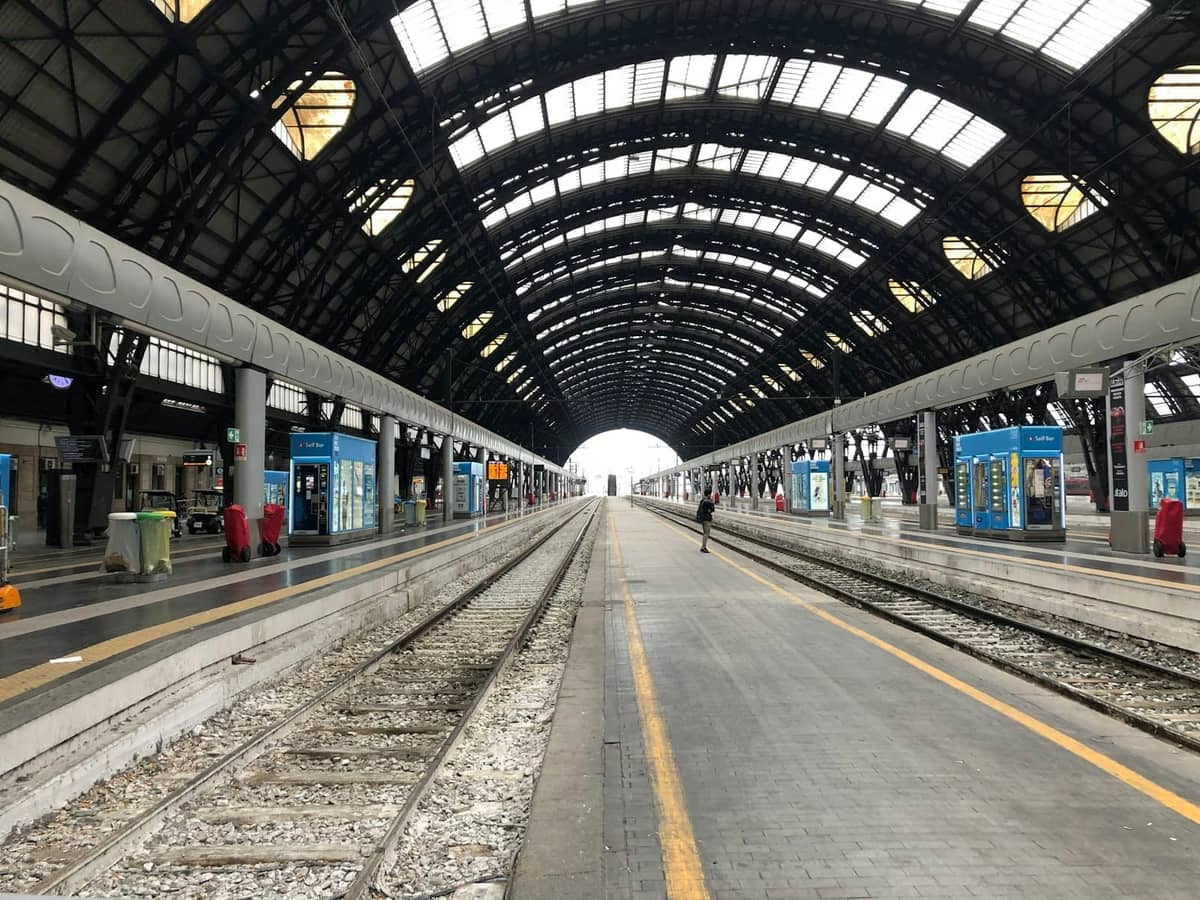
The Stazione Centrale is the building that most visitors pass through without properly looking at. Designed by Ulisse Stacchini and opened in 1931, it is a statement of fascist-era monumentalism: roughly 200 metres wide, with a main hall about 72 metres high, combining eclectic historicism with rationalist ambition. The exterior mixes Lombard Gothic, Art Nouveau, and ancient Roman references in a way that should not cohere but somehow does. If you arrive or depart from Centrale, give yourself 20 minutes to walk the full length of the concourse and look up.
Interwar Milan also produced a significant body of rationalist residential and civic architecture, much of it in the areas around Porta Venezia and the inner ring roads. The Casa Galimberti on Via Malpighi is a notable Liberty (Italian Art Nouveau) facade from 1905 by Giovanni Battista Bossi, with ceramic decoration covering virtually every surface. The building is privately owned and residential, but the exterior is fully visible from the street and represents a strand of Milanese decorative architecture that sits apart from both the Gothic tradition and rationalist modernism.
✨ Pro tip
Milan's rationalist-era apartment buildings are concentrated in the areas between the historic centre and the outer ring. Walking the streets around Porta Venezia, Via Tadino, and Viale Tunisia in the late afternoon reveals a consistent early 20th-century streetscape that does not feature in most itineraries but rewards the architectural visitor significantly.
Contemporary Milan: Porta Nuova, CityLife, and the Vertical Forest
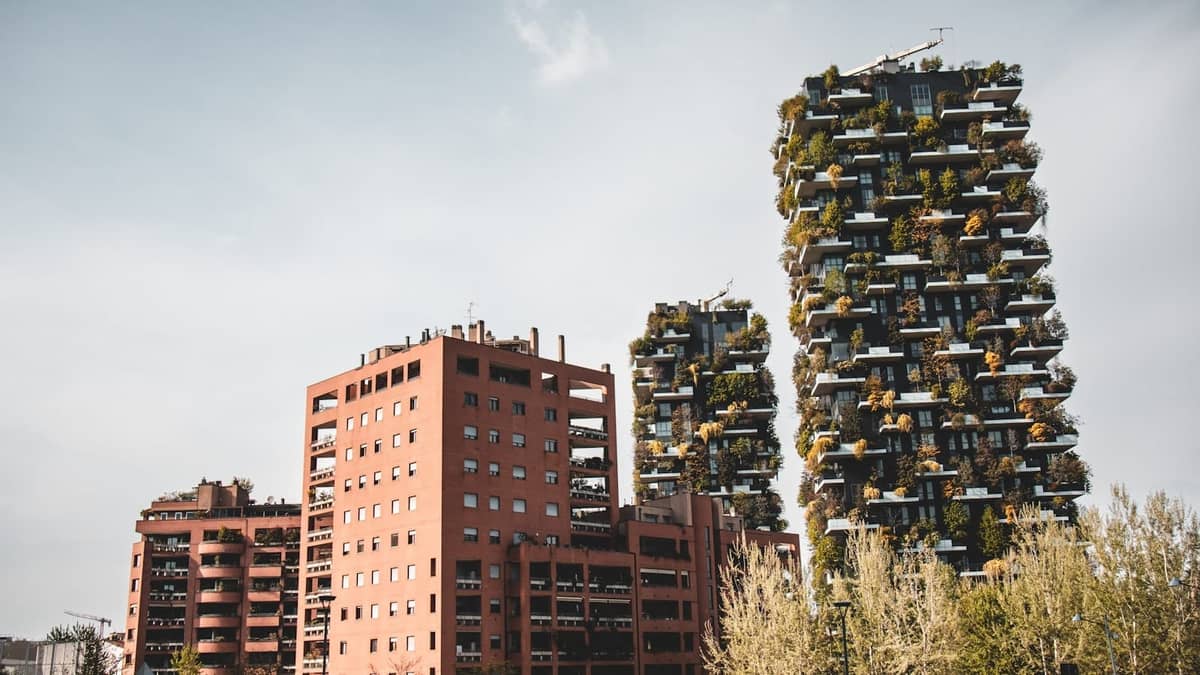
The most discussed contemporary building in Milan is the Bosco Verticale, a pair of residential towers in the Porta Nuova district designed by Stefano Boeri Architetti and completed in 2014. The taller tower reaches 111 metres, the shorter 76 metres, and together they support roughly 900 trees, 5,000 shrubs, and 11,000 perennial plants. The project has been both widely praised as an innovative model for urban greening and critiqued for its exclusivity: the apartments are among the most expensive in Milan, and maintenance of the planted terraces requires specialist arborists. Both points are valid. The building is best viewed from the Biblioteca degli Alberi park at ground level.
The broader Porta Nuova redevelopment includes the UniCredit Tower by Cesar Pelli (opened 2012, 231 metres including the spire, Milan's tallest building) and a cluster of office and residential towers around Piazza Gae Aulenti, a raised public square named after the Milanese architect. The square is artificial: it sits above a transport interchange and retail level. This multi-layered urbanism, stacking public, commercial, and transit functions vertically, is the defining spatial strategy of the district.
West of the historic centre, the CityLife district represents a different approach to contemporary development. Three towers by three different architects were commissioned for the former fairgrounds site: the Torre Generali by Zaha Hadid Architects (completed 2017, the 'twisted' tower), the Torre Allianz by Arata Isozaki (completed 2015, the 'straight' tower), and the Torre PricewaterhouseCoopers by Daniel Libeskind (the 'curved' tower, completed 2020). The three towers are legible as a group from the CityLife shopping centre and park, and the formal contrast between Hadid's organic geometry and Isozaki's restrained rationalism is a useful conversation about architectural intention.
A Practical One-Day Architecture Route
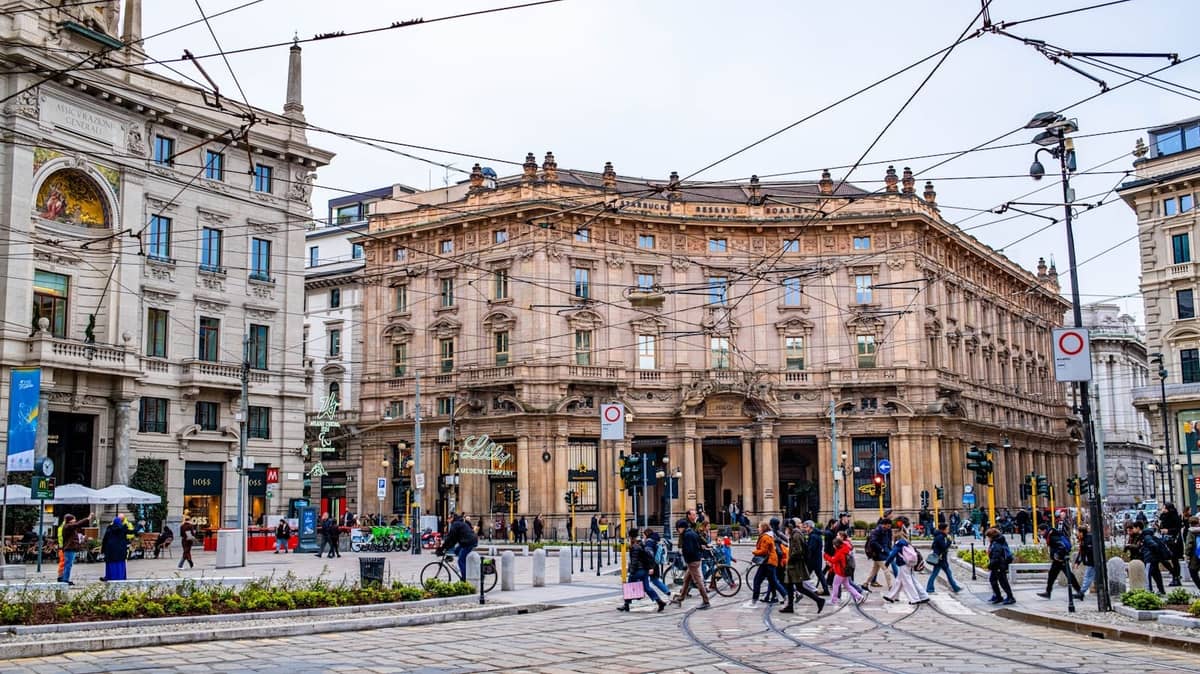
Milan's architectural timeline can be walked in rough chronological order across a single day. The route below covers the main eras without requiring a car or excessive metro use. Allow 6-8 hours at a comfortable pace.
- Morning: Gothic and Renaissance core (3-4 hours) Start at Piazza del Duomo by 9:00 when the square is quieter. Buy combined Duomo + rooftop tickets. After the rooftop, cross through the Galleria to Piazza della Scala for the theatre exterior, then walk to Santa Maria delle Grazie (20 minutes on foot). If you have a Last Supper booking, this is where it fits. The Castello Sforzesco is a 10-minute walk from the church.
- Lunch break: Brera or Parco Sempione The Parco Sempione, behind the Castello, is a good place to pause. The Torre Branca, a 1933 iron observation tower by Gio Ponti, is worth noting if open. Lunch options are better in Brera to the east.
- Afternoon: Neoclassical to contemporary (3 hours) Take Metro Line 2 from Cadorna to Garibaldi, 3 stops, around 5 minutes. Walk through Piazza Gae Aulenti for the Porta Nuova towers, then south to the Bosco Verticale and the Biblioteca degli Alberi park. For CityLife, take Metro Line 5 from Garibaldi to Tre Torri, 4 stops, around 8 minutes.
- Optional addition: Stazione Centrale If you arrive or depart by train, Centrale adds essentially zero extra time and is one of the most architecturally significant interiors in the city. Metro Line 2 connects it to the rest of the route.
💡 Local tip
April is the optimal month for architectural touring in Milan. Temperatures are mild (around 15-20°C), the light is good for photography, and Design Week typically falls in the third week of April, when studios, showrooms, and private courtyards open to the public across the city. Some venues not normally accessible become temporarily available. Check the Fuorisalone programme for the full list.
For those with more time, the outlying architectural sites reward the extra journey. The Fondazione Prada campus in the southern part of the city, designed by Rem Koolhaas's OMA and opened in 2015, occupies a converted 1910 distillery complex. The intervention layered new volumes, including a gold-leafed tower called the Haunted House, against the industrial originals. It is one of the most architecturally coherent contemporary art institutions in Europe. The Pirelli HangarBicocca in the north of the city, a former locomotive factory converted into an exhibition space, represents a different model of industrial reuse.
FAQ
What architectural style is Milan best known for?
Milan does not have a single dominant style. The city is better understood as a layered sequence of eras: Gothic (the Duomo, begun 1386), Renaissance (Santa Maria delle Grazie, 1490s), Neoclassical (La Scala, 1778; Galleria Vittorio Emanuele II, 1867), fascist-era rationalism (Stazione Centrale, 1931), and contemporary (Bosco Verticale, 2014; CityLife towers, 2015-2020). Each layer is concentrated in a different part of the city, which makes architectural touring unusually logical.
Is it possible to see Milan's main architectural landmarks in one day?
Yes, with planning. A focused itinerary starting at the Duomo, moving through the Galleria and La Scala area, continuing to the Castello Sforzesco and Santa Maria delle Grazie, then finishing in the Porta Nuova or CityLife districts covers the main eras in 6-8 hours. Metro connections between zones are fast (5-10 minutes). The Last Supper requires a separate timed booking and should be arranged weeks in advance.
When is the best time to visit Milan for architecture?
April and May offer the best combination of mild weather, good light, and manageable crowds. April specifically coincides with Milan Design Week (Salone del Mobile and Fuorisalone), when additional architectural venues open to the public. September and October are also strong months. Summer (July-August) is hot, humid, and crowded; many Milanese leave the city in August, which reduces some queues but also closes some local businesses.
Are there free architectural sights in Milan?
Several major architectural experiences are free or very low cost. Walking through the Galleria Vittorio Emanuele II costs nothing. The exteriors of the Castello Sforzesco, the CityLife towers, and the Bosco Verticale are all viewable from public spaces. The Biblioteca degli Alberi park is free. San Maurizio al Monastero Maggiore has free entry. The Fondazione Prada and Pirelli HangarBicocca charge admission for their exhibition programmes but the architectural fabric is part of the visit.
What is the Bosco Verticale and is it worth visiting?
The Bosco Verticale ('Vertical Forest') is a pair of residential towers in the Porta Nuova district, completed in 2014 and designed by Stefano Boeri Architetti. The towers support around 900 trees and thousands of shrubs on residential terraces. The interiors are private apartments and not open to visitors, but the exterior is easily viewed from the Biblioteca degli Alberi park directly below. It is worth the visit as part of a broader Porta Nuova itinerary; as a standalone destination, the experience lasts around 20-30 minutes.