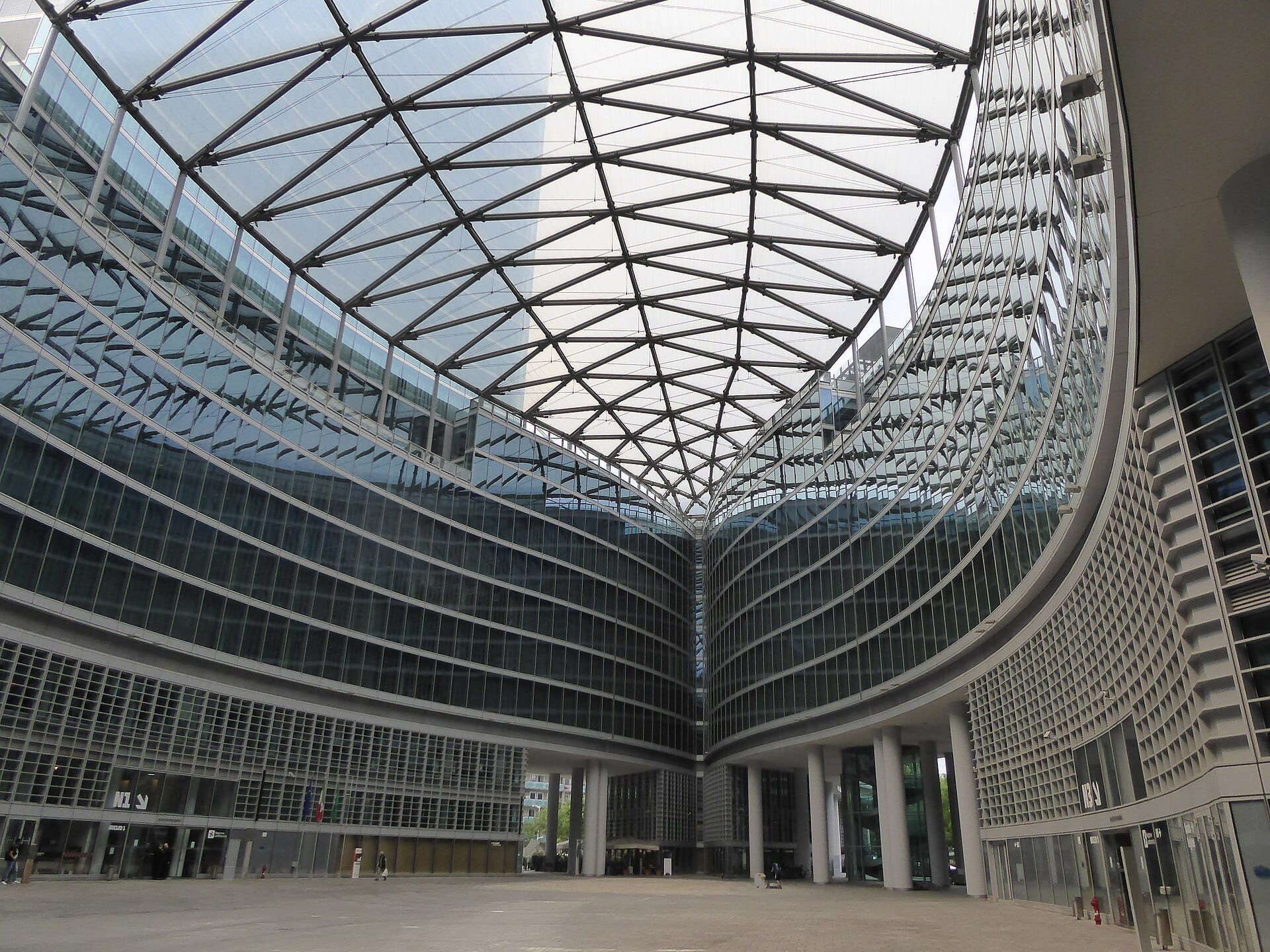
Porta Nuova and Isola form Milan's most architecturally dramatic pairing: a gleaming business district built around Piazza Gae Aulenti and the Bosco Verticale towers, pressed directly against Isola's older grid of Liberty-style buildings, artisan workshops, and street markets. Together they show two versions of the same city occupying the same postcode.
Porta Nuova is Milan's skyline reinvented, a district of glass towers, raised public squares, and a botanical park that opened where a rail yard used to be. Cross the tracks north and Isola pulls you back into an older Milan of terracotta courtyards, independent boutiques, and a Tuesday market that has been running since long before the architects arrived.
Orientation
Porta Nuova and Isola sit in Milan's central-north band, roughly halfway between the Duomo and the outer ring road. The axis that holds everything together is Milano Porta Garibaldi station, a major rail hub, which marks the southern boundary of Isola and the northern edge of the Porta Nuova redevelopment.
The Porta Nuova district itself is a planned extension that links three formerly separate zones: Garibaldi to the southwest, Varesine in the middle, and the beginning of Isola to the north. Its organizing spine runs from Piazza Gae Aulenti southward through Via Melchiorre Gioia toward the older Corso Como. The Biblioteca degli Alberi park (known as BAM) stitches Piazza Gae Aulenti to the Isola neighborhood with a generous strip of green that makes the transition from tower district to residential streets feel deliberate rather than abrupt.
Isola proper sits north of the railway infrastructure that once physically isolated it from surrounding neighborhoods, which is how it got its name: the island. Its streets run roughly between the railway tracks and Corso Como to the south, Viale Stelvio and Via Volturno to the east, and the area around Piazzale Segrino toward Via Farini to the north. The area is compact enough to walk end to end in twenty minutes, but dense enough that each block rewards slowing down.
Immediately to the south, Porta Nuova connects to the Brera district via Corso Garibaldi, placing this entire northern cluster within easy walking distance of some of Milan's most visited streets. To the west, across Viale Coni Zugna, lies the Corso Como retail strip, which acts as a social and commercial bridge between the two worlds.
Character & Atmosphere
Early mornings in Porta Nuova belong to commuters. By 8am the raised plaza around Piazza Gae Aulenti fills with people cutting through on their way to the towers above Via Melchiorre Gioia: finance workers, tech employees, architects with rolled drawings under their arms. The fountains are already running. The espresso bars around the base of the UniCredit Tower are doing serious volume. It feels like a city district that takes itself seriously, which it does.
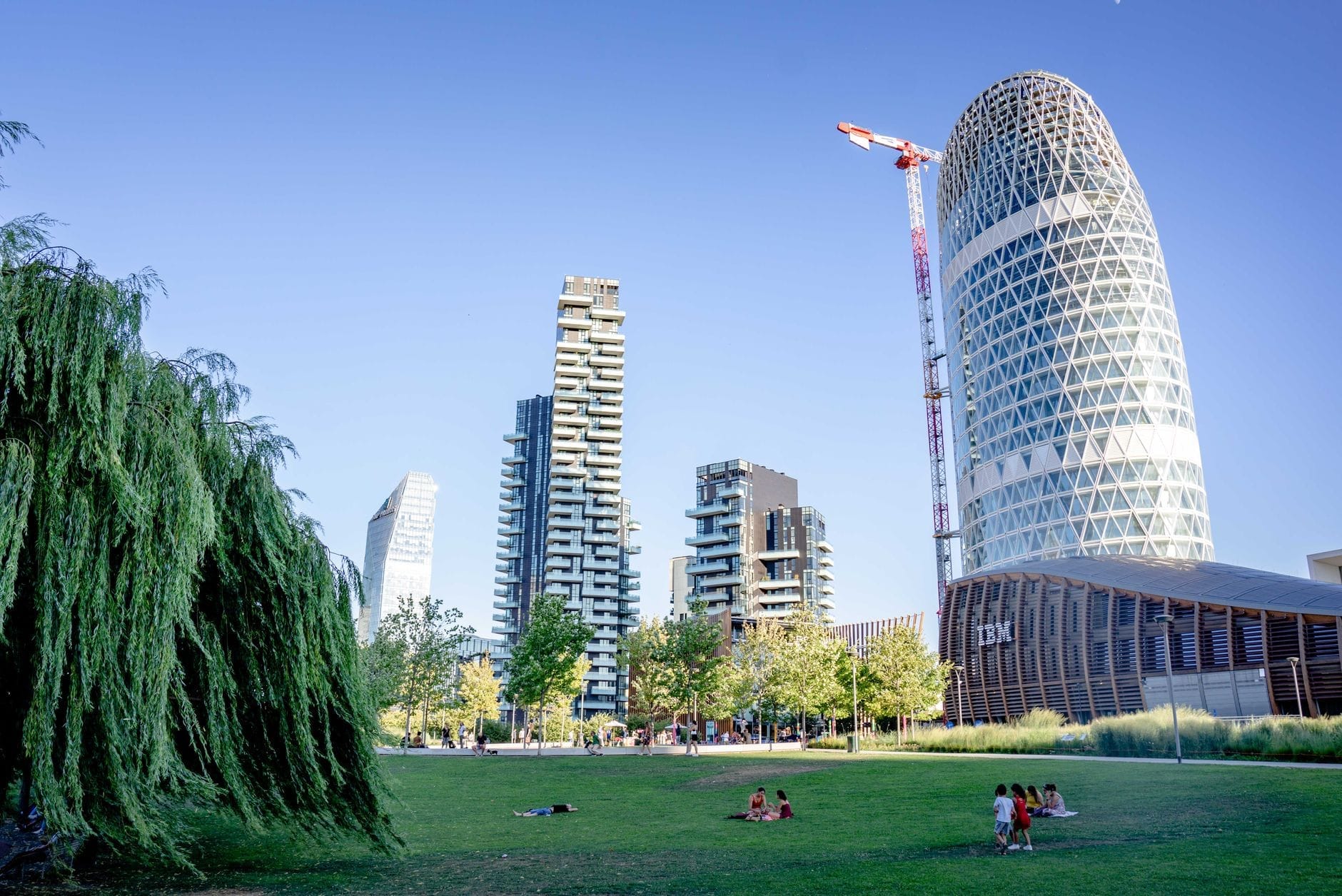
By midday the Biblioteca degli Alberi shifts character. Office workers eat lunch on the grass between the botanical garden's circular planting beds. Joggers loop the park paths. On clear days the Bosco Verticale towers catch afternoon light in a way that makes the balcony vegetation look almost theatrical, a wall of green and terracotta against a steel and glass backdrop. This is the view that ends up on Instagram, and it earns the attention.
Cross into Isola and the rhythm changes immediately. The streets narrow. The buildings drop from thirty floors to four. The sounds shift from construction and taxi traffic to the particular low hum of a neighborhood that has been here a while and plans to stay: a hardware store radio, someone watering a window box, a group of retired men at the same bar table they probably occupy every morning. Isola still has the bones of its working-class history, and its Liberty-era buildings, with their decorative facades and enclosed courtyards, give the district a texture that no amount of redevelopment has smoothed away.
After dark, the two areas diverge again. Porta Nuova's restaurants and bars fill with an international crowd: this is where you find expense-account dinners and hotel lobby cocktails. Isola turns local. The aperitivo scene along the streets radiating from the central pedestrian grid is genuinely residential. You drink next to people who live upstairs, not people who flew in that morning.
ℹ️ Good to know
Isola hosts one of the neighborhood's larger open-air markets on Tuesdays and Saturdays in Via Garigliano. It runs through the morning and covers food, clothing, household goods, and fresh produce. Arrive before 11am for the best selection.
What to See & Do
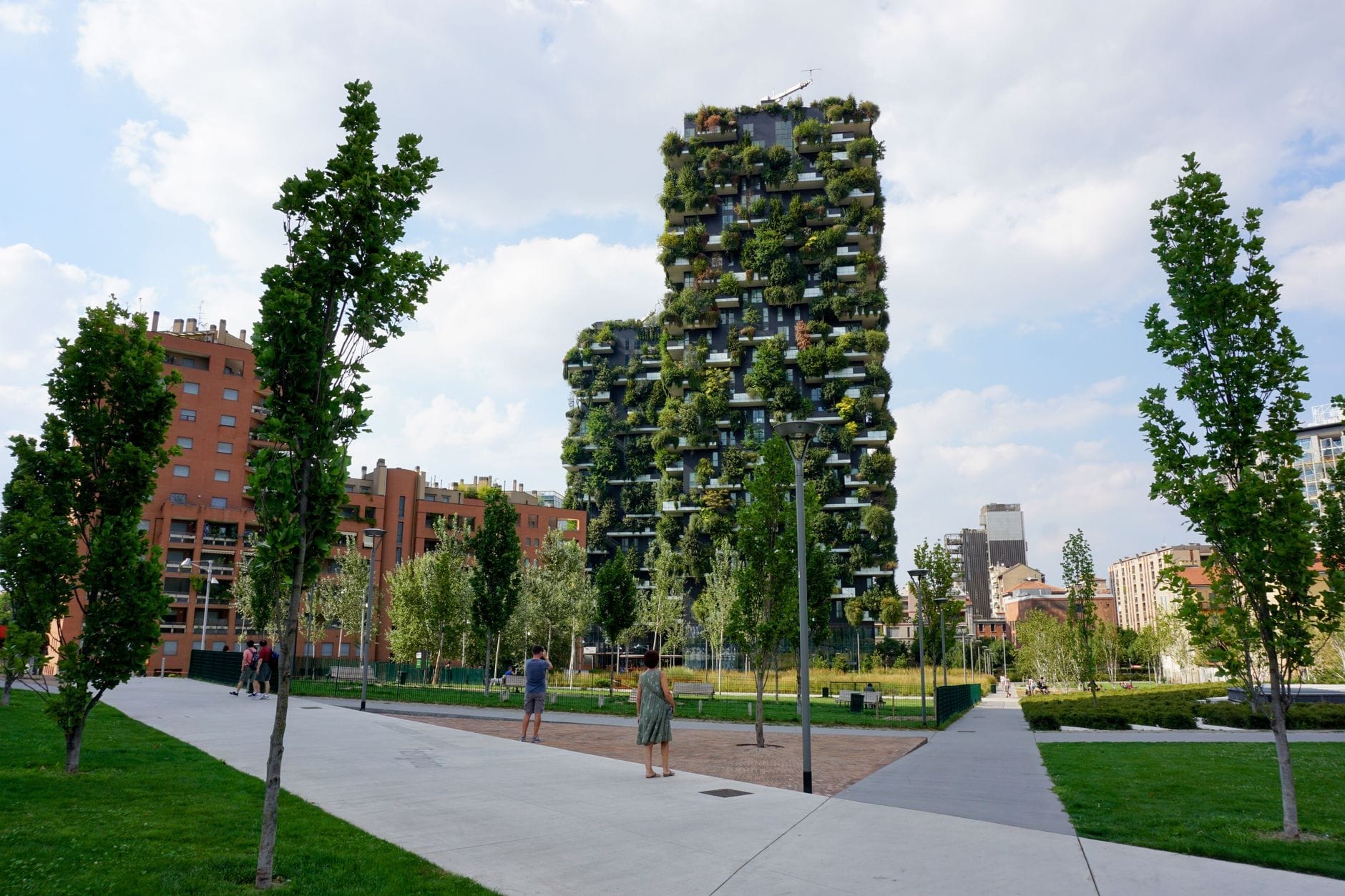
The Bosco Verticale towers are the neighborhood's defining image: two residential skyscrapers wrapped in over 900 trees and 20,000 plants, designed by Stefano Boeri Architetti and completed in 2014. You cannot enter unless you live there, but the view from street level, especially from the park side at dusk, is one of Milan's more visually striking pieces of contemporary architecture. The towers have become a symbol of the city's ambition to build green at scale.
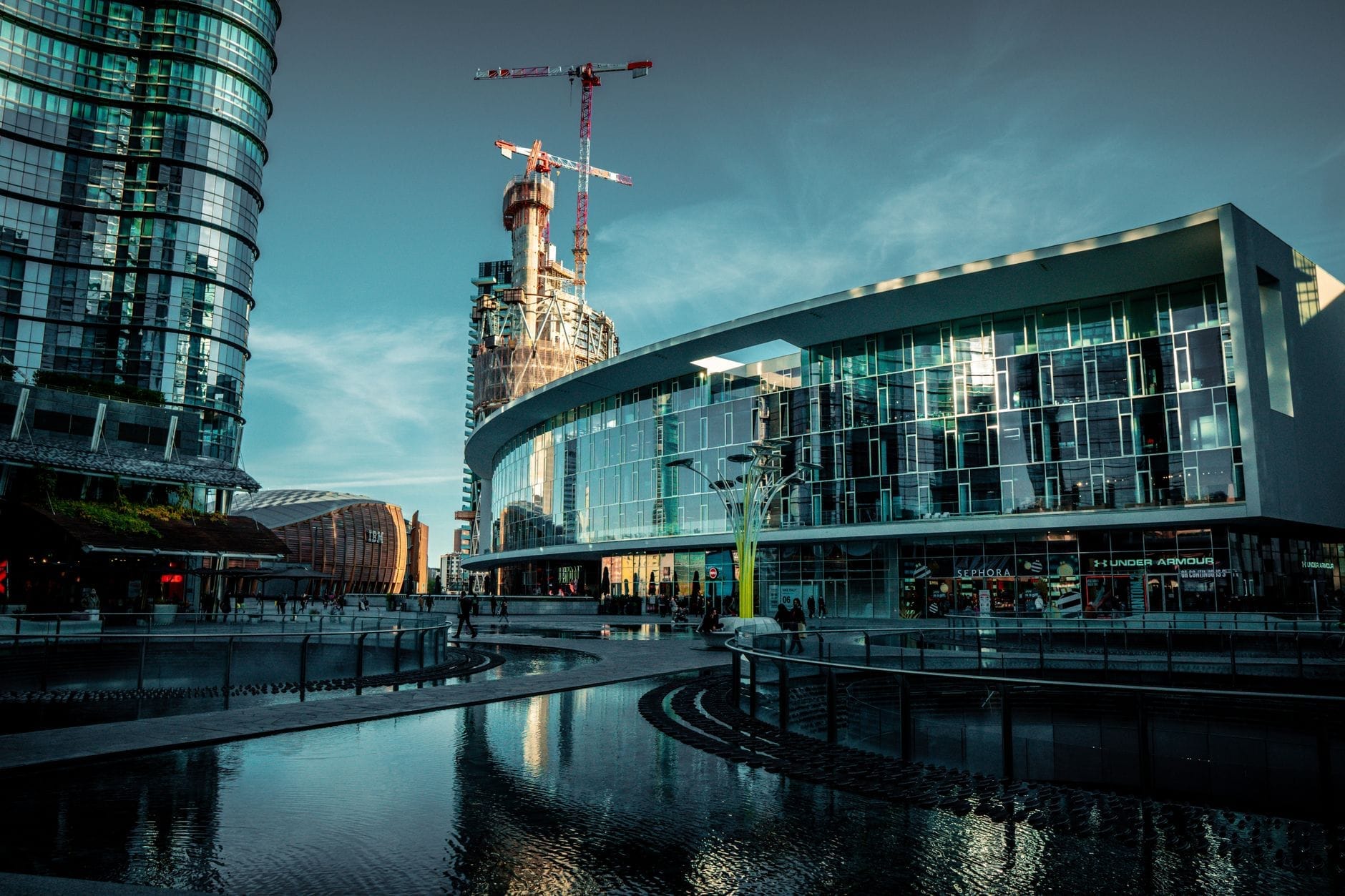
Piazza Gae Aulenti, the elevated public square at the heart of Porta Nuova, is worth spending time in rather than just crossing through. Named after the Italian architect who redesigned the Gare d'Orsay in Paris, the square is ringed by towers and anchored by a fountain installation that becomes a gathering point on warm evenings. From its edges you get the clearest sense of the district's scale. Pair it with a walk through the Biblioteca degli Alberi, the botanical garden and park designed by Inside Outside that opened in 2018. BAM's circular planting beds, each dedicated to a different plant family, make it one of the more thoughtfully designed public parks in northern Italy.
In Isola, the community cultural space known as Stecca3 hosts rotating exhibitions, film screenings, and local events in a low-key setting that reflects the neighborhood's independent character. The church of Santa Maria alla Fontana, on the piazza of the same name, is older than almost everything else in the area and worth a few minutes of quiet attention. Its Renaissance-era loggia stands in sharp contrast to the towers visible to the south.
Corso Como, the street connecting Porta Garibaldi to the Brera side of the city, functions as both a shopping destination and a social artery. The 10 Corso Como concept store has been here since the early 1990s, and the stretch remains a good place to understand Milan's relationship between fashion, design, and public space. For a wider view of Milan's contemporary architecture, Porta Nuova gives you more concentrated modern building per square kilometer than anywhere else in the city.
Bosco Verticale towers: best viewed from the BAM park side, especially late afternoon
Piazza Gae Aulenti: the social and architectural center of the new district
Biblioteca degli Alberi (BAM): botanical garden and park, free entry, generally open daily
Stecca3: community cultural space in Isola for local exhibitions and events
Santa Maria alla Fontana: Renaissance church and loggia at Isola's historical core
Via Garigliano market: Tuesday and Saturday mornings, one of Milan's larger street markets
Corso Como: design shops, galleries, and restaurants on the Porta Nuova-Brera boundary
Eating & Drinking
The food landscape across Porta Nuova and Isola covers a wide range, from quick espresso at a standing bar to polished tasting menus inside tower-level restaurants. The two areas each have their own logic.
In Porta Nuova, restaurants cluster around Piazza Gae Aulenti and along the pedestrian corridors between towers. These skew toward the international and upscale: Japanese, Nordic-influenced Italian, all-day brunch concepts that cater to the business-district crowd. Prices here reflect the setting. Lunch at a café around the square runs higher than the city average, but the al fresco seating and architecture make it justifiable once. Several hotel restaurants in the tower buildings offer rooftop or high-floor dining with views that are hard to find elsewhere in this part of the city.
Isola's eating scene is more layered and more local. The streets around the market area and along the neighborhood's main pedestrian axis have a mix of Milanese trattorie doing traditional risotto and ossobuco, alongside newer spots run by younger chefs cooking modern Italian. Aperitivo in Isola truly lives up to the ritual: most bars set out a reasonable spread of food with a drink order, and the atmosphere from around 6:30pm until 9pm has the easy warmth of a neighborhood that actually uses its bars as a second living room.
For coffee, Isola has several independent cafés that take quality seriously without the performative ceremony of some of the more design-forward spots in Brera. Early morning at a neighborhood bar in Isola, with a cornetto and a short macchiato, is one of the more authentic ways to start a day in Milan.
💡 Local tip
If you want aperitivo without paying Porta Nuova prices, head two or three blocks into Isola's residential streets. The quality of the drink is similar, the food spread is often better, and you will share the bar with actual residents rather than the hotel-district crowd.
Getting There & Around
Milano Porta Garibaldi is the main transit hub for the entire area. It handles regional and intercity trains, including high-speed services to other Italian cities, as well as suburban Trenord lines. For metro access, the M2 (green line) and M5 (lilac line) both serve Garibaldi station, making this one of the best-connected points in the city. The M5 is particularly useful for reaching Isola's northern edges via the Isola stop, which puts you directly into the residential grid without walking through the tower district. Check the getting around Milan guide for current fare and line information.
The M2 also connects Porta Garibaldi southward to the Duomo area in about ten minutes, which means the historical center is very close. Gioia station on the M2 provides an alternative entrance point for the eastern side of the Porta Nuova development, useful if you are approaching from the Stazione Centrale direction.
The entire Porta Nuova redevelopment was designed around pedestrian movement, with elevated walkways, dedicated cycle paths, and vehicle-free zones connecting Piazza Gae Aulenti to the park and beyond. Within Isola, the streets are narrow enough that walking is simply the best option. Hire a BikeMi bike-share bicycle from one of the docking stations around Garibaldi if you want to cover more ground quickly or link up with the wider cycle network.
From the Duomo district, Porta Nuova is roughly a 20-minute walk north through Brera, or around 8 minutes on the M2. From Stazione Centrale, the M2 to Garibaldi takes two stops. Trams also run along Via Melchiorre Gioia and the streets flanking the district, connecting it to further-flung neighborhoods.
💡 Local tip
The pedestrian routes through the Biblioteca degli Alberi park connect Piazza Gae Aulenti to the Isola neighborhood without touching a car road. It is the most pleasant way to move between the two districts and takes about 8 minutes on foot.
Where to Stay
Porta Nuova has become one of Milan's better areas for design-forward hotels and business accommodation. The tower cluster around Piazza Gae Aulenti hosts several international hotel brands with modern rooms, strong transport links, and easy access to both the northern residential neighborhoods and the historic center. Guests who prioritize connectivity and contemporary settings over historic atmosphere will find this area well-suited to them. For a fuller picture of options across the city, the where to stay in Milan guide covers the full range of neighborhoods.
Isola itself has fewer hotels but a growing number of apartment rentals and boutique guesthouses tucked into its residential buildings. Staying in Isola means waking up to a neighborhood that functions as a neighborhood: the bar on the corner is a real bar, the market is two streets away, and the morning has the quality of ordinary Milanese life rather than a curated tourist experience.
The tradeoff is that Isola is slightly less immediate for reaching the Duomo and historic-center sights than staying in Brera or the Duomo district. The metro makes the journey manageable, but travelers whose itinerary is heavily weighted toward the medieval and Renaissance south of the city may prefer to base themselves closer. For anyone whose interests include contemporary architecture, design, and a mix of business-district and local-residential life, this area is one of Milan's most rewarding places to stay.
⚠️ What to skip
The streets immediately around Porta Garibaldi station can feel impersonal and a little exposed at night, particularly the Via Melchiorre Gioia side. This is not a safety issue so much as a comfort one: the tower district empties out after business hours. If you want evening atmosphere within walking distance of your accommodation, choose the Isola side or the Corso Como end of the district rather than the eastern tower blocks.
What Works and What Doesn't
Porta Nuova is a undeniably impressive piece of city-making. The architecture is coherent, the public spaces work, and the connection to the wider city through transit and pedestrian routes is well-executed. It belongs on any itinerary focused on Milan's design culture or contemporary urbanism. During Design Week in April, the district is at its most energized, with installations and events filling the park and towers alike.
What Porta Nuova is not is a place with much historical character or the kind of layered complexity that older Milanese neighborhoods offer. The streets have been built, not grown, and that shows. There are no centuries-old churches around unexpected corners, no palazzi with half-legible inscriptions above the door. If your version of Milan is the city of Leonardo, Borromeo, and the Visconti, you will find more of it in Brera or the Duomo district.
Isola compensates for some of this. It brings the human texture that a brand-new district cannot manufacture, and the combination of the two, particularly if you spend an afternoon moving between the market streets and the Bosco Verticale esplanade, gives you a remarkably useful picture of how Milan thinks about itself today. Pair it with a visit to Brera to the south for the historical counterpoint, and you have covered a significant arc of the city's personality in a single long day on foot.
TL;DR
Best suited to travelers interested in contemporary architecture, design culture, and modern urban planning alongside local neighborhood life.
The Bosco Verticale and Biblioteca degli Alberi are two of Milan's most significant recent landmarks and worth seeing even on a short visit.
Isola provides the local texture that Porta Nuova's tower district lacks: a working market, independent restaurants, and residential aperitivo culture.
Transit access is excellent via M2 and M5 at Garibaldi and the Isola metro stop, making the district easy to reach from anywhere in the city.
Less suited to travelers whose priority is historic and Renaissance Milan; the Duomo district, Brera, and Ticinese neighborhoods serve that itinerary better.
Milan has over 70 museums, from Renaissance masterpiece galleries to free contemporary art spaces. This guide cuts through the options and tells you exactly which ones are worth your time, what to expect inside, and how to plan your visit.
Milan rewards visitors who time their trip well. This guide covers every season in detail — temperatures, crowd levels, key events, and what to skip — so you can make the most informed decision about when to go.
Milan rewards those who look up and climb higher. This guide covers the city's best viewpoints, from the Duomo's Gothic spires and Palazzo Lombardia's 39th-floor panorama to canal-side sunset bridges and design-forward skyscrapers.
Milan sits at the center of one of Europe's most rewarding day-trip networks. Within two hours by train you can reach Alpine lakes, medieval hilltop towns, Roman amphitheaters, and UNESCO World Heritage canals. This guide covers the best destinations, how to get there, and what to prioritize once you arrive.
Milan has one of Italy's best urban transport networks, but knowing which ticket to buy, which metro line to take, and how to reach the city from three different airports saves real time and money. This guide covers everything from ATM fares and the RicaricaMi card to bike sharing and walking distances between key neighborhoods.
Milan is Italy's most demanding city for high-end travel, where fashion weeks and design fairs can triple hotel rates overnight. This guide covers where to stay, what to spend, when to go, and how to move around Milan like someone who has done it before.
Three days in Milan is enough time to cover the cathedral district, the great art museums, the canal neighbourhood, and still fit in a day trip to Lake Como. This itinerary is built around how the city actually works: metro-first logistics, realistic opening hours, and clear advice on what to skip.
Milan is served by three airports: Malpensa (MXP), Linate (LIN), and Bergamo Orio al Serio (BGY). Together the three airports form Italy's largest airport system by passenger volume, handling over 56 million passengers per year. This guide breaks down the key differences, transport links, costs, and which airport makes sense for your trip.
Milan's built environment is a genuine timeline in stone, steel, and glass. This guide walks you through every major architectural era, from the Gothic Duomo to Porta Nuova's skyscrapers, with practical routes, seasonal advice, and candid assessments of what's worth your time.
Milan's churches span seventeen centuries of history, from 4th-century basilicas built by the city's patron saint to Renaissance chapels covered floor-to-ceiling in frescoes. This guide covers the essential sacred sites, practical visiting tips, and the lesser-known churches that reward the curious traveler.
Milan Design Week is the world's largest design festival, combining the professional Salone del Mobile furniture fair at Rho Fiera with hundreds of free Fuorisalone events across the city's design districts. This guide covers dates, tickets, neighborhoods, transport, and practical planning advice.
Milan is one of the world's four fashion capitals, home to storied design houses, serious shopping districts, and four Fashion Weeks a year. This guide covers everything from navigating the Quadrilatero della Moda to understanding what tourists can actually access during Milan Fashion Week 2026.
Milanese food is not what most visitors expect. Rice trumps pasta, butter beats olive oil, and the city's signature dishes carry centuries of culinary history. This guide covers every essential dish, realistic price expectations, seasonal eating patterns, and practical advice for dining well in Milan.
Milan surprises most couples. Behind the fashion showrooms and financial towers lies a city with candlelit canals, world-class opera, cobblestone art districts, and Gothic cathedral rooftops built for golden-hour views. This guide covers the best romantic experiences in Milan, with practical details on pricing, timing, and what to skip.
Milan rewards those who look beyond the Duomo and The Last Supper. From a chapel lined with human skulls to a free panoramic skyscraper and a botanical garden tucked behind one of Italy's great art museums, these are the experiences that reveal the city locals actually love.
Spring transforms Milan from a grey winter city into one of Europe's most enjoyable urban destinations. This guide covers the real weather, the best events, crowd expectations, and everything you need to plan a smart April or May trip.
Milan transforms in winter into one of Italy's most atmospheric cold-weather destinations, with Christmas markets around the Duomo, centuries-old fairs near Castello Sforzesco, and a city that keeps its cultural calendar packed well past the holidays. This guide covers what to see, when to go, and how to get the most out of the season.
Leonardo da Vinci spent more than two decades in Milan, leaving behind some of the most extraordinary works in Western art and science. This guide covers every significant site, explains what you'll actually find there, and tells you exactly how to book before you arrive.
Milan's nightlife runs on a distinct rhythm: aperitivo first, dinner second, clubs last. This guide breaks down every major area, the best bars and clubs, what things cost, and how to get home at 3am.
Milan has a reputation for luxury fashion and fine dining, but the city is far more accessible than most travelers assume. This guide breaks down realistic daily costs, the smartest ways to use public transport, which world-class attractions are free, and how timing your visit can cut hotel prices by 25–40%.
Milan shopping covers far more than luxury fashion. This guide breaks down the city's best shopping districts, from the Quadrilatero d'Oro's flagship stores to Navigli's vintage markets, with practical advice on what to skip, what to budget, and when to go.
Lake Como sits less than an hour from Milan by direct train, making it one of the most rewarding day trips in northern Italy. This guide covers every transport option, the best villages to visit, ferry logistics, and how to avoid the most common mistakes first-time visitors make.
The journey from Milan to Rome covers roughly 565-570 km and can take anywhere from 3 hours to 6+ depending on how you go. This guide breaks down every realistic option, with clear price comparisons, booking strategies, and the city-center-to-city-center math that makes the train far more competitive than most people expect.
The Milan to Venice route is one of Italy's most popular corridors, served by frequent high-speed trains that cover the distance in around 2 hours 15 to 30 minutes. This guide breaks down every option, from Frecciarossa tickets to bus alternatives, with practical advice on what's worth it and what to skip.
Milan rewards families more than most people expect. From the interactive Leonardo da Vinci Science Museum to the free courtyards of Castello Sforzesco and the rooftop terraces of the Duomo, the city packs a serious amount of child-friendly content into a compact, walkable center. This guide cuts through the noise with specific venues, practical assessments, and logistics that actually help.
Milan rewards visitors who look beyond the fashion weeks and luxury boutiques. This guide covers the essential things to do in Milan Italy, from cathedral rooftops and Renaissance masterpieces to canal-side aperitivo and contemporary architecture, with practical advice on what to book in advance and what to skip.
Milan rewards travelers who choose their base carefully. This guide breaks down every major neighborhood, explains the price realities, and tells you exactly when to book to avoid paying peak-event rates.