Palazzo Lombardia: Milan's Government Tower and Its Panoramic Belvedere
Palazzo Lombardia is the headquarters of the Lombardy Regional Government and one of the tallest buildings in Milan. Rising 161 metres over Milan's Porta Nuova district, its glassy curves and open public piazza make it a landmark of contemporary Italian architecture, while the rooftop Belvedere offers one of the most rewarding elevated views in the city.
Quick Facts
- Location
- Piazza Città di Lombardia 1, 20124 Milan (Porta Nuova / Isola area)
- Getting There
- Milan Metro Line M2 (Green Line) to Gioia or Garibaldi FS stations in the Porta Nuova business district; short walk to the piazza
- Time Needed
- 45 minutes to 1.5 hours depending on whether you access the Belvedere
- Cost
- Belvedere access is currently described by Regione Lombardia as totally free during scheduled opening periods; verify current conditions with Regione Lombardia before visiting
- Best for
- Architecture lovers, city panoramas, photography, contemporary Milan
- Official website
- www.regione.lombardia.it
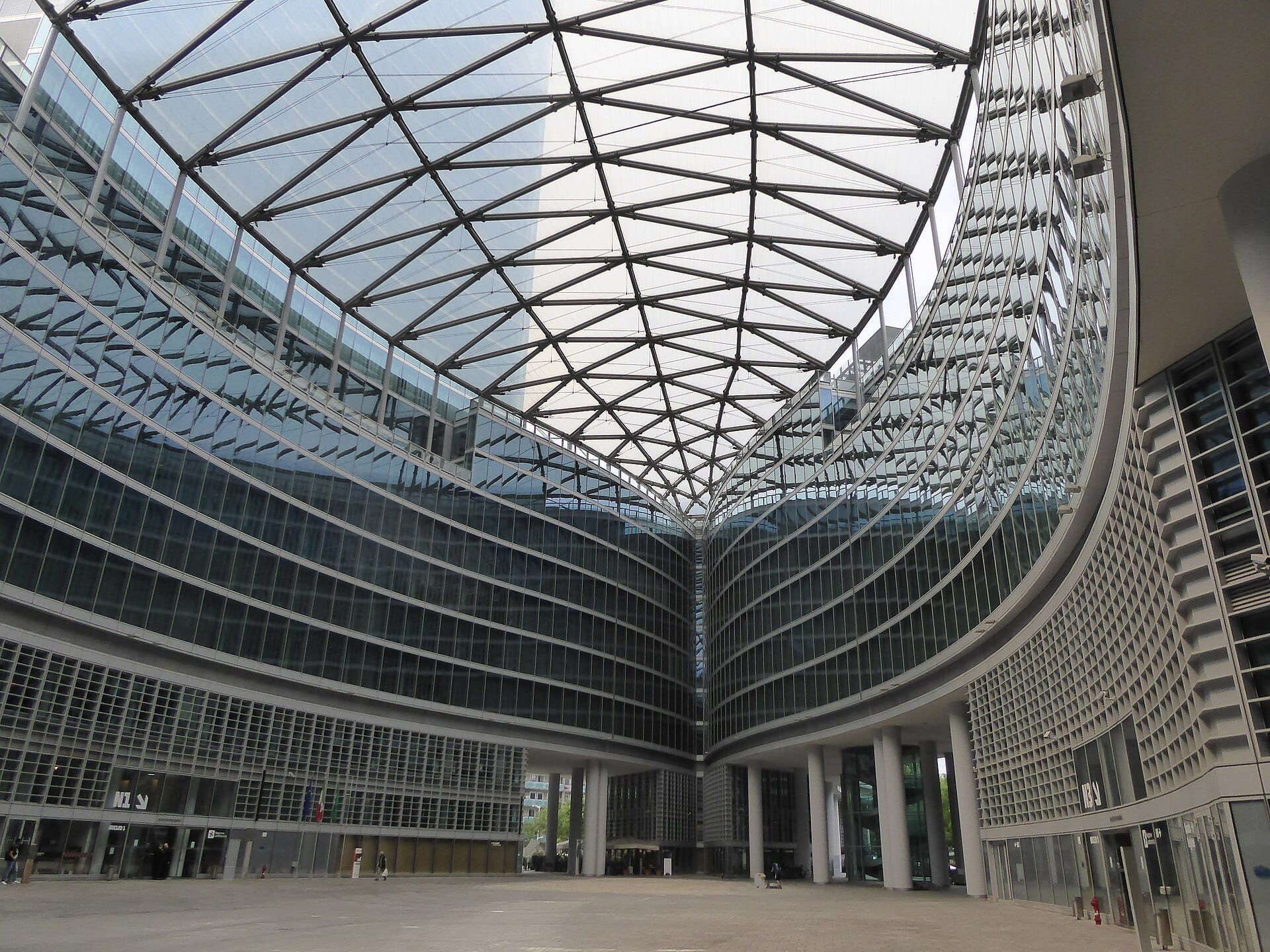
What Is Palazzo Lombardia?
Palazzo Lombardia is the official seat of the Lombardy Regional Government and Regional Council, completed and inaugurated on 27 March 2011 after construction between 2006 and 2010. The complex anchors the northern edge of Milan's modern business corridor, rising as a 161-metre, 39-storey central tower flanked by four lower office buildings arranged around a sweeping covered piazza. In 2012, the Council on Tall Buildings and Urban Habitat named it Best European Skyscraper, recognizing not only its height but the sophistication of its urban design in Milan.
The project emerged from a 2004 international design competition won by American firm Pei Cobb Freed and Partners in collaboration with Italian practices Caputo Partnership and Sistema Duemila. The result is a structure that curves rather than cuts, its glass and steel facade rippling in a way that catches light differently depending on the time of day and season. The total built-up area spans approximately 140,500 square metres, including 26,000 square metres of underground parking.
For context, Palazzo Lombardia sits at the northern edge of the Porta Nuova and Isola district, a zone that has transformed more dramatically over the past two decades than almost anywhere else in Milan. The tower is the institutional counterweight to the commercial UniCredit Tower a few hundred metres away, together forming a skyline that signals Italy's second city at work.
The Architecture Up Close
Standing at the base of Palazzo Lombardia, the scale takes a moment to register. The lower podium buildings frame an elliptical public piazza that is partially covered by a glass canopy, shielding the space from rain while flooding it with diffused natural light. The floor surface is smooth stone, and the covered piazza functions as a transitional space between the street and the government offices, open enough to feel civic rather than corporate.
The central tower's curtain-wall facade is not a flat grid but a series of curved vertical fins that create a gentle rotation effect as you walk around the perimeter. The glass is not uniformly reflective; different panels catch the sky at slightly different angles, giving the surface a textured quality that photographs often fail to convey. Early morning and late afternoon are the best times to appreciate this, when low-angle light hits the southwest face and the building seems to shift from grey-blue to gold.
One detail worth seeking out is the small gilded statue of the Madonnina installed on the building on 22 January 2010. It is a direct reference to the tradition established by the Duomo, where a Madonnina figure crowns the cathedral's highest spire. By Milanese convention, no secular building was historically permitted to exceed the Madonnina's height on the Duomo. Palazzo Lombardia exceeds it by a considerable margin, but the placement of its own Madonnina is a nod to the city's identity, an act of architectural diplomacy rather than defiance.
ℹ️ Good to know
The Madonnina on Palazzo Lombardia is positioned high on the tower and not visible to the naked eye from street level. Binoculars or a zoom lens are useful if you specifically want to spot it.
Tickets & tours
Hand-picked options from our booking partner. Prices are indicative; availability and final rates are confirmed when you complete your booking.
Duomo Cathedral private tour with a local guide
From 105 €Instant confirmationFree cancellationSforza Castle entry and self-guided tour
From 15 €Instant confirmationFree cancellationSkip-the-line Duomo tour in Milan
From 40 €Instant confirmationFree cancellationNavigli Canals of Milan private walking tour with a local guide
From 40 €Instant confirmationFree cancellation
The Belvedere: Views from the Top
The primary reason most visitors make the trip to Palazzo Lombardia is the Belvedere, the panoramic observation level near the top of the tower. From this height, the view north toward the Alps is the one that rewards patience: on clear days, particularly after autumn rain clears the haze, the snow-capped peaks become visible above the urban sprawl. The Po Valley is flat for miles in every direction, and the tower's height makes that flatness legible in a way that is surprisingly dramatic.
Looking south, the Duomo's spires are visible in the middle distance, providing a compelling juxtaposition of medieval Gothic and 21st-century glass. The nearby Bosco Verticale apartment towers appear just below to the east, their tree-covered balconies an unexpected flash of green against the grey residential fabric.
The Belvedere is reported to be open on Sundays, though this schedule can vary. Confirm current opening details directly with the Lombardy Region before planning your visit. For a comparison of Milan's high-level viewpoints, the best views in Milan guide covers the full range of options, from the Duomo rooftop terraces to Torre Branca in Parco Sempione.
⚠️ What to skip
The Belvedere operates limited public hours and may be closed for institutional events or on public holidays. Always check current access conditions before making a special trip.
The Piazza and Public Space
Even if you do not access the tower interior, the ground-level public space around Palazzo Lombardia is worth exploring. The covered piazza functions as a meeting point for office workers on weekdays, particularly around midday when the area fills with people eating lunch on the stone benches and steps. On weekday mornings, the atmosphere is purposeful and brisk. On weekends, it quiets considerably, making it easier to appreciate the architecture without the crowd dynamics.
The piazza occasionally hosts public exhibitions, cultural events, and temporary installations organized by the Lombardy Region. These are not advertised far in advance and tend to be community-facing rather than tourist-oriented, but stumbling onto one of them gives the visit an extra dimension.
The surrounding streets connect directly to the wider Porta Nuova redevelopment zone. A short walk brings you to the Biblioteca degli Alberi, Milan's botanical park laid out between the Porta Nuova towers, which provides a useful decompression from the hard surfaces of the business district. From there, the Bosco Verticale residential towers are visible and worth viewing at close range.
Practical Walkthrough: Getting There and When to Go
Palazzo Lombardia is reachable via the Milan Metro Line M2, the green line. The stops that put you closest to Piazza Città di Lombardia are Gioia and Garibaldi FS in the Garibaldi/Porta Nuova zone; from either it is a straightforward walk north through the business district. The surrounding streets are well-signposted, and the tower itself is visible from several blocks away.
If you are coming from the city centre on foot, the walk from the Duomo takes approximately 25 to 30 minutes and passes through the Via Montenapoleone fashion corridor and the emerging Porta Nuova precinct, which makes it a worthwhile route in its own right. Trams also serve the area and can reduce the walk significantly from different starting points.
Weather affects the experience substantially. Milan's Po Valley location means autumn and winter mornings frequently begin with low fog that clears by mid-morning. If Alps visibility is important to you, arriving at the Belvedere between 10:00 and 13:00 on a crisp autumn or early winter day after rain tends to produce the clearest sightlines. Summer visits are feasible but haze and heat shimmer reduce distant views. Spring, particularly April and May, offers a reasonable balance of clear air and comfortable temperatures.
💡 Local tip
For alpine views from the Belvedere, plan a Sunday visit in October or November following a day of rain. The air clears dramatically and the snow line on the Alps drops, making the northern panorama its most photogenic.
The broader Milan architecture guide provides useful context for understanding how Palazzo Lombardia fits into the city's layered urban history, from Roman foundations through Fascist-era building programs to the current wave of contemporary construction.
Photography Notes
The exterior of Palazzo Lombardia photographs well in almost any light, but the building's curved facade rewards late afternoon shooting when the western face picks up warm direct light. The covered piazza offers interesting compression shots using the four lower buildings as framing elements. A wide-angle lens is almost essential for capturing the full tower from street level; standard focal lengths tend to miss the upper third.
From the Belvedere, a 24-70mm equivalent range handles most scenarios. For the Alps shot, a longer focal length (70-200mm equivalent) isolates the mountain peaks above the city fabric effectively. Morning visits on clear days tend to have cleaner, colder light with stronger contrast than afternoon sessions, which can be hazy.
Who Will Not Enjoy This
Visitors primarily interested in historic Milan will find Palazzo Lombardia peripheral to their itinerary. The building has no medieval or Renaissance significance, and the surrounding district is entirely modern. If your time is limited and your priority is the Duomo, the Brera, or the historic churches of the Ticinese quarter, this stop may not compete effectively for a half-day slot.
The Belvedere's restricted, event-based public access also limits spontaneity. Anyone arriving on a weekday outside scheduled opening periods expecting tower access will find the building functions as a closed government office. The piazza and exterior remain accessible at all times, but that is a substantially different visit from reaching the panoramic level.
Insider Tips
- The Belvedere is currently described by Regione Lombardia as free during the periods when it opens, but access schedules change without broad publicity. Call the Regione Lombardia offices or check their official website in the week before your visit rather than relying on third-party information.
- The best exterior photograph of the full tower is taken from the south side of Piazza Città di Lombardia, with enough distance to fit all 39 storeys in frame and the lower buildings providing foreground context. Arrive before 09:00 on a weekday to have the piazza largely to yourself.
- The Madonnina on the tower is an easy detail to miss entirely. If you want to spot it, bring a zoom lens or binoculars and look toward the upper section of the south-facing facade.
- Combine a Palazzo Lombardia visit with the nearby Biblioteca degli Alberi park, which takes about 20 minutes to walk through and gives you a ground-level counterpoint to the tower experience: greenery, low horizontal space, and the Bosco Verticale framed against the sky.
- On weekdays around 12:30 to 14:00, the covered piazza fills with Lombardy Region employees on lunch breaks. If you want a quieter architectural experience, aim for late morning before noon or arrive on a Sunday.
Who Is Palazzo Lombardia For?
- Architecture enthusiasts interested in 21st-century Italian building
- Photographers seeking Milan's modern skyline and alpine panoramas
- Travelers who have already covered historic Milan and want to understand the city's contemporary layer
- Anyone connecting to a broader Porta Nuova / Isola neighborhood walk
- Visitors looking for a free viewpoint alternative to the ticketed Duomo rooftop
Nearby Attractions
Other things to see while in Porta Nuova & Isola:
- Biblioteca degli Alberi
The Biblioteca degli Alberi Milano, or BAM Library of Trees, is a 10-hectare public park in the Porta Nuova district, framed by contemporary towers and designed around circular forests of over 500 trees. Entry is free every day of the year, making it one of the most accessible and architecturally significant green spaces in the city.
- Bosco Verticale
Bosco Verticale, or Vertical Forest, is a pair of residential towers in Milan's Porta Nuova district clad in over 800 trees and thousands of plants. Visitors cannot enter the towers, but the surrounding public spaces offer striking views of one of the most photographed buildings in contemporary architecture.
- Cimitero Monumentale di Milano
Opened in 1866, the Cimitero Monumentale di Milano is one of Europe's most architecturally ambitious cemeteries. Spanning 25 hectares, it functions as a permanent exhibition of Italian funerary art, with sculptures, mausoleums, and monuments that rival any city museum. Admission is free.