Cimitero Monumentale di Milano: Milan's Most Extraordinary Open-Air Gallery
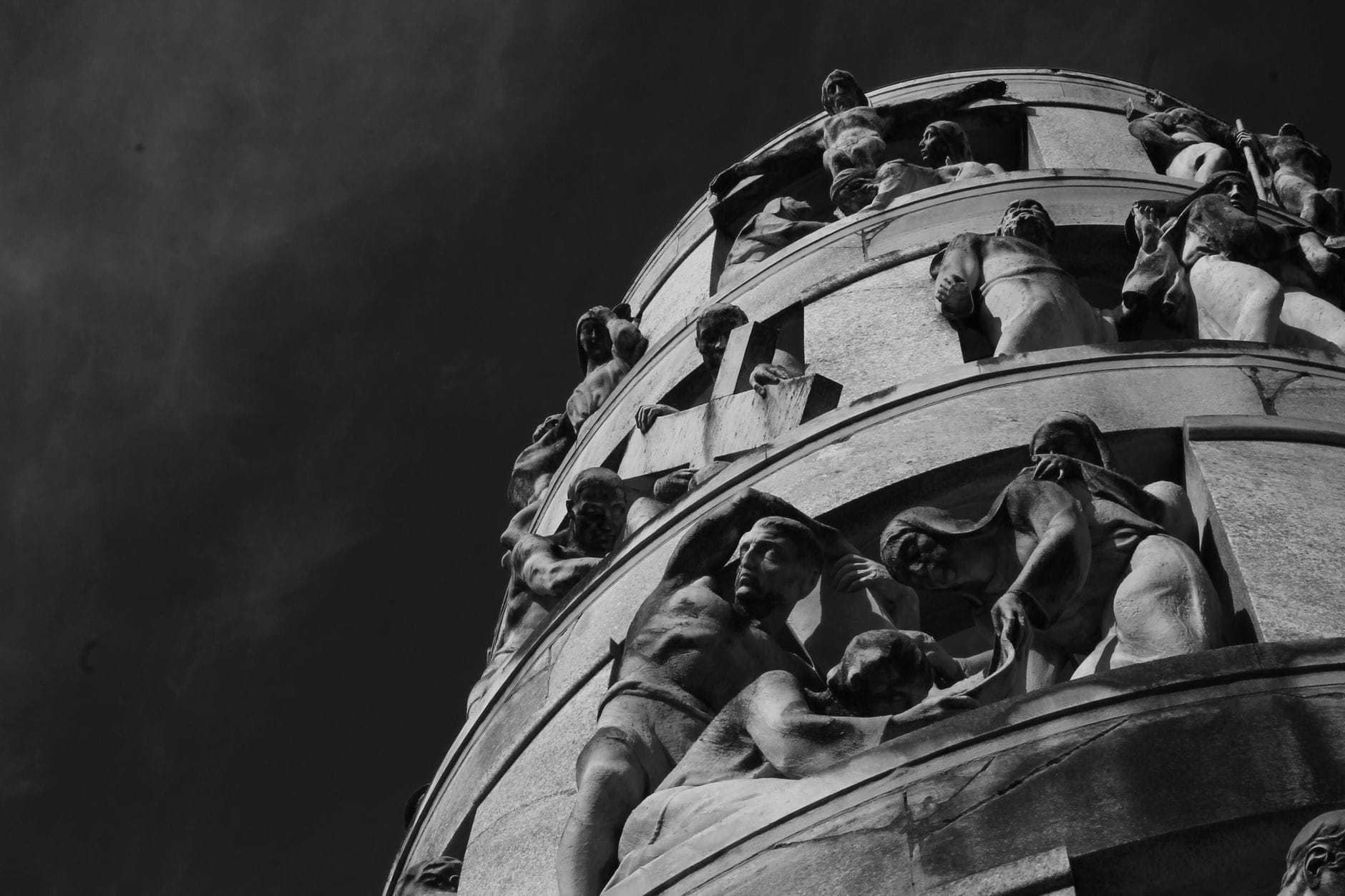
Opened in 1866, the Cimitero Monumentale di Milano is one of Europe's most architecturally ambitious cemeteries. Spanning 25 hectares, it functions as a permanent exhibition of Italian funerary art, with sculptures, mausoleums, and monuments that rival any city museum. Admission is free.
Quick Facts
- Location
- Via Ceresio area, Porta Nuova / Isola district, Milan
- Getting There
- Metro M5 – Monumentale stop (direct access); trams also serve the area
- Time Needed
- 1.5 to 3 hours depending on your pace
- Cost
- Free entry; private guided tours available at separate cost
- Best for
- Architecture lovers, history enthusiasts, photography, quiet walks
- Official website
- www.cimiteromonumentale.it
What the Cimitero Monumentale Actually Is
Most visitors come expecting a graveyard and leave having experienced something closer to a sculpture park. The Cimitero Monumentale di Milano, inaugurated in 1866, is a 25-hectare outdoor collection of funerary art commissioned by some of the wealthiest and most influential families in 19th and 20th century Italy. There are no velvet ropes, no audio guides required, and no admission fee. What you find instead are bronze figures frozen mid-gesture, marble family mausoleums the size of small chapels, and Art Nouveau canopies that drip with detail.
The cemetery was designed by architect Carlo Maciachini, who oversaw its construction between 1863 and 1866 and shaped the layout around a central Famedio, a Hall of Fame-style mausoleum at the entrance reserved for Milan's most distinguished citizens. The Famedio alone rewards close attention: its facade blends neo-Gothic, Lombard Romanesque, and Byzantine elements in a way that reflects the eclectic ambitions of unified Italy's early decades.
ℹ️ Good to know
Opening hours are generally Tuesday to Sunday, 08:00–18:00, with closure on Mondays and reduced hours on certain public holidays; admission is always free.
The Architecture: Maciachini's Vision and What Came After
Carlo Maciachini's master plan established a processional grammar that still defines the space today. You enter through the Famedio, whose interior holds the memorial to Alessandro Manzoni (author of 'The Betrothed', Italy's defining 19th-century novel) and other Milanese luminaries. The walls are inscribed with names the city decided deserved permanence. It is a formal, slightly solemn beginning, and it sets an appropriate tone.
Beyond the Famedio, the cemetery opens into a grid of avenues lined with private family monuments. This is where the real architectural variety begins. The styles range from neo-classical colonnades to raw Art Nouveau sculpture, from austere modernist slabs to ornate Egyptian Revival obelisks. Milan's industrial and merchant aristocracy of the late 1800s and early 1900s competed through stone and bronze, and the results form an unintentional survey of Italian architectural taste across more than a century.
For context on how this fits into Milan's broader architectural tradition, the Milan architecture guide covers the city's key movements from Gothic to contemporary design.
Tickets & tours
Hand-picked options from our booking partner. Prices are indicative; availability and final rates are confirmed when you complete your booking.
Milano highlights 2 hours private tour by vintage car
From 300 €Instant confirmationFree cancellationMilano highlights 3 hours private tour by vintage car
From 400 €Instant confirmationFree cancellationMilano highlights 30 minutes private tour by vintage car
From 80 €Instant confirmationFree cancellationMilano highlights 1 hour private tour by vintage car
From 200 €Instant confirmationFree cancellation
How the Experience Changes Through the Day
Arrive early, ideally within the first hour after opening. On weekday mornings, the cemetery is almost entirely quiet. The light at this hour falls at a low angle that throws the faces of bronze sculptures into sharp relief, revealing details that afternoon light flattens. The gravel paths are damp and cool, the air smells faintly of cut grass and stone, and the main avenues feel genuinely peaceful rather than performatively solemn.
By late morning, small groups of visitors begin arriving, and weekend afternoons draw larger numbers, particularly in spring and autumn when the weather makes outdoor exploration comfortable. Even then, the 25 hectares absorb crowds surprisingly well. The cemetery rarely feels overcrowded; the scale works in your favor.
In winter, the reduced hours (closing at 17:00) and shorter days create a different atmosphere entirely. Mist occasionally settles between the monuments in December and January, which changes the visual character of the place considerably. The bare trees that line the central avenues make certain sight lines longer and more austere. It is worth visiting in any season, but the sensory experience shifts significantly with the calendar.
💡 Local tip
Photography tip: Early morning on weekdays offers the best light and the fewest people. A wide-angle lens handles the mausoleums well, but a short telephoto (85–135mm equivalent) lets you isolate individual sculptural details from a respectful distance.
Key Monuments and What to Look For
The Famedio is essential, but do not linger only at the entrance. The avenues branching off the central axis hold the densest concentration of remarkable work. Look for the Campari family monument, which features a striking figurative bronze, and the monument to Salvatore Quasimodo, the Nobel Prize-winning Sicilian poet who spent much of his career in Milan. The Toscanini family plot draws music lovers.
The Art Nouveau section, concentrated toward the western portions of the cemetery, is particularly strong. Italian Liberty-style funerary sculpture reached a kind of apex here between roughly 1900 and 1915, and several monuments show a level of craft that would be considered exhibition-worthy in any European museum of decorative arts. Faces emerge from stone columns, draped figures seem to move against their own weight, and organic forms compete with architectural geometry in ways that reward slow looking.
Pick up a printed map at the entrance gate if one is available. The cemetery is logically laid out, but the avenues are numerous and some of the most significant monuments sit off the main processional routes. Without a map, it is easy to cover the central axis and miss the quieter peripheral sections where some of the finest sculpture clusters.
- Famedio: the central entrance mausoleum, burial site of Alessandro Manzoni and other notable Milanese figures
- Art Nouveau / Liberty-style monuments: concentrated in western sections, roughly 1900–1915 period
- Campari family monument: notable figurative bronze work
- Toscanini and Quasimodo plots: draws visitors with cultural interests in music and literature
- Egyptian Revival obelisks and neo-classical colonnades: scattered throughout the main avenues
Getting There and Practical Logistics
The cemetery sits in the northern part of the city near Chinatown and the Zona Farini area, northwest of the city center. The most straightforward public transport option is the Metro M5 (the lilac line), which has a stop called Monumentale adjacent to the cemetery; the walk from the metro exit to the cemetery entrance takes roughly three to five minutes.
The surrounding Isola neighborhood is one of Milan's more interesting areas for a post-visit walk, with independent cafes and a street-level character that contrasts sharply with the adjacent Bosco Verticale towers visible on the skyline to the south.
Accessibility within the cemetery is reported to be good, with facilitated routes available and staff assistance provided. The main avenues are wide and predominantly flat. Some of the peripheral sections have uneven gravel surfaces, so visitors using wheelchairs or pushchairs should plan the route with that in mind and consider asking staff at the entrance for guidance on which paths work best.
There is no on-site cafe or food concession. Bring water, particularly in summer when the open spaces offer limited shade. Wear comfortable shoes; you will cover significant ground on gravel and stone paths. Despite being an outdoor space, it is an active cemetery, and visitors are expected to behave accordingly: subdued voices, no running, no drones.
⚠️ What to skip
Drones are not permitted. This is an active place of mourning as well as a heritage site. Keep voices low and treat any monuments you photograph with the same consideration you would give to a working church.
Before You Go: What to Know
If you are visiting Milan primarily for fashion, shopping, or the Duomo circuit, the Cimitero Monumentale may not make your shortlist. It sits outside the historic center, requires a deliberate journey, and does not offer the kind of immediately legible experience that major landmarks provide. You do not leave with a famous selfie location.
For anyone with genuine interest in architecture, sculpture, 19th-century Italian history, or simply the experience of somewhere that feels well off the main tourist path, it is one of the most rewarding free attractions in the city. Combined with a visit to the Biblioteca degli Alberi park or a walk through Isola, it makes for a strong half-day itinerary in the northern part of the city.
Visitors who specifically want to explore Milan's cultural and artistic heritage beyond the headline sites should also consider checking the Milan hidden gems guide for similar under-visited destinations across the city.
The attraction is not for everyone, and that is part of its value. On a weekday morning, it is possible to spend two hours here without encountering more than a dozen other tourists. That kind of quiet is rare in a city of 1.3 million people.
Insider Tips
- The map available at the entrance gate identifies the locations of notable tombs by name. Take one before you begin; the signage within the cemetery itself is limited and many of the most significant monuments are not obviously labeled.
- Private guided tours are offered by third-party operators and can add significant depth to the visit, particularly for those interested in the specific families and historical figures interred here. Book in advance, especially on weekends in spring and autumn.
- If you visit in late October or early November, the cemetery takes on particular significance around All Saints' Day (1 November) and All Souls' Day (2 November), when Milanese families visit in greater numbers to leave flowers. The atmosphere is quiet but notably different from a typical weekday.
- The Famedio interior is not always open to the public during the same hours as the broader cemetery. Check at the entrance gate whether access is available on the day you visit.
- Combine the visit with the Isola neighborhood to the south, which has independent cafes and a distinct urban character. Via Pastrengo and the streets around it offer good coffee options within a ten-minute walk of the cemetery entrance.
Who Is Cimitero Monumentale di Milano For?
- Architecture and design enthusiasts drawn to neo-Gothic, Art Nouveau, and eclectic 19th-century styles
- History-focused travelers interested in Milan's industrial and cultural elite from the unification era onward
- Photographers seeking dramatic sculptural subjects in natural light without crowds
- Travelers who want a meaningful, unhurried experience away from the Duomo-district circuit
- Those visiting Milan in shoulder season (spring or autumn) with time to explore beyond the central landmarks
Nearby Attractions
Other things to see while in Porta Nuova & Isola:
- Biblioteca degli Alberi
The Biblioteca degli Alberi Milano, or BAM Library of Trees, is a 10-hectare public park in the Porta Nuova district, framed by contemporary towers and designed around circular forests of over 500 trees. Entry is free every day of the year, making it one of the most accessible and architecturally significant green spaces in the city.
- Bosco Verticale
Bosco Verticale, or Vertical Forest, is a pair of residential towers in Milan's Porta Nuova district clad in over 800 trees and thousands of plants. Visitors cannot enter the towers, but the surrounding public spaces offer striking views of one of the most photographed buildings in contemporary architecture.
- Palazzo Lombardia
Palazzo Lombardia is the headquarters of the Lombardy Regional Government and one of the tallest buildings in Milan. Rising 161 metres over Milan's Porta Nuova district, its glassy curves and open public piazza make it a landmark of contemporary Italian architecture, while the rooftop Belvedere offers one of the most rewarding elevated views in the city.