Romantic Milan: The Best Things to Do for Couples
Milan surprises most couples. Behind the fashion showrooms and financial towers lies a city with candlelit canals, world-class opera, cobblestone art districts, and Gothic cathedral rooftops built for golden-hour views. This guide covers the best romantic experiences in Milan, with practical details on pricing, timing, and what to skip.
Plan and book this trip
Tools from our partner Travelpayouts help you compare flights and hotels. If you book through them, we may earn a commission at no extra cost to you.
Flights
Hotels map
TL;DR
- The Duomo rooftop at sunset is Milan's single best romantic experience — book tickets online in advance (around €25–€30 per person) or you will queue for hours.
- The Navigli canal district is perfect for an evening aperitivo — drinks plus buffet run €8–€15 per person at most canalside bars.
- Brera's cobbled streets and the Pinacoteca di Brera (home to Hayez's famous painting Il Bacio) make for an effortlessly romantic afternoon.
- Spring (April–June) and early autumn (September–October) offer the best weather for outdoor activities; winter works well for opera, museums, and candlelit concerts.
- Milan is not just about shopping — it has serious art, working canals, free parks, and one of the world's great opera houses. Budget-conscious couples can have a full romantic day for well under €50 each.
Why Milan Works for Couples
Milan sits at the heart of Lombardy, roughly halfway between the Po River and the foothills of the Alps. It is Italy's second-most populous city, home to around 1.36 million people in the city proper and over 6.5 million in the wider metropolitan area. That scale means serious infrastructure: an efficient metro system, walkable historic districts, and a density of world-class attractions that rewards couples who plan even loosely.
The common perception that Milan is purely a business and shopping destination does couples a disservice. The city has historic canals that predate Leonardo da Vinci's engineering projects, a Gothic cathedral that took six centuries to complete, and an art gallery containing one of the most reproduced images of romantic love in Italian painting. Add a world-famous opera house, a string of free parks, and a food culture built around long, sociable meals, and the case for Milan as a romantic destination becomes compelling.
ℹ️ Good to know
Milan follows Central European Time (CET, UTC+1) and Central European Summer Time (CEST, UTC+2). The city uses the Euro (EUR). English is widely spoken in tourist areas, hotels, and restaurants in the centro storico and Brera.
The Duomo and Surrounding Centro Storico
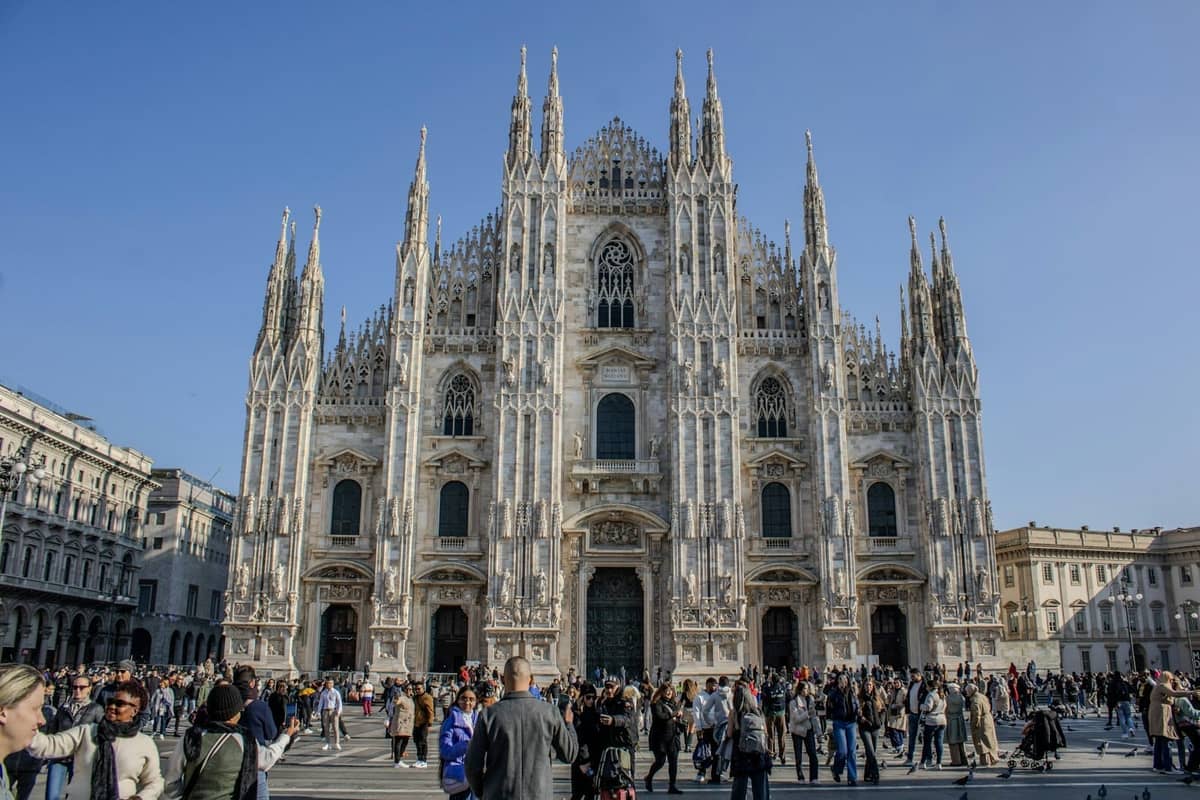
The Duomo di Milano is the anchor of any romantic visit to Milan. Construction began in 1386 and the cathedral was not fully completed until the 19th century — which means what you see is a layering of Gothic ambition across six hundred years. The exterior alone, studded with over 3,400 statues, demands time.
The real romantic payoff is the rooftop terrace. At sunset, the spires turn amber, the Alps appear on clear days to the north, and the scale of the city spreads below you. Standard combo tickets (cathedral entry plus roof via stairs) run around €25–€30 per adult; the lift option costs more. Book online through the official Duomo website — walk-up queues can stretch well over an hour during peak periods, and sunset slots sell out days in advance in spring and early autumn.
Immediately adjacent, the Galleria Vittorio Emanuele II is a 19th-century iron-and-glass arcade connecting Piazza del Duomo to Piazza della Scala. It is free to walk through at any hour — the passage never closes. The mosaics underfoot, the soaring octagonal dome, and the quiet grandeur of the architecture reward slow walking. Stop at Camparino in Galleria for a Campari aperitivo with a view over the piazza; it is priced at a premium but the setting justifies the splurge on occasion.
⚠️ What to skip
Skip the restaurants immediately on Piazza del Duomo — they charge tourist prices for mediocre food. Walk five minutes into the streets north or east of the cathedral for significantly better quality at lower prices.
Brera: Art, Architecture, and Slow Afternoons
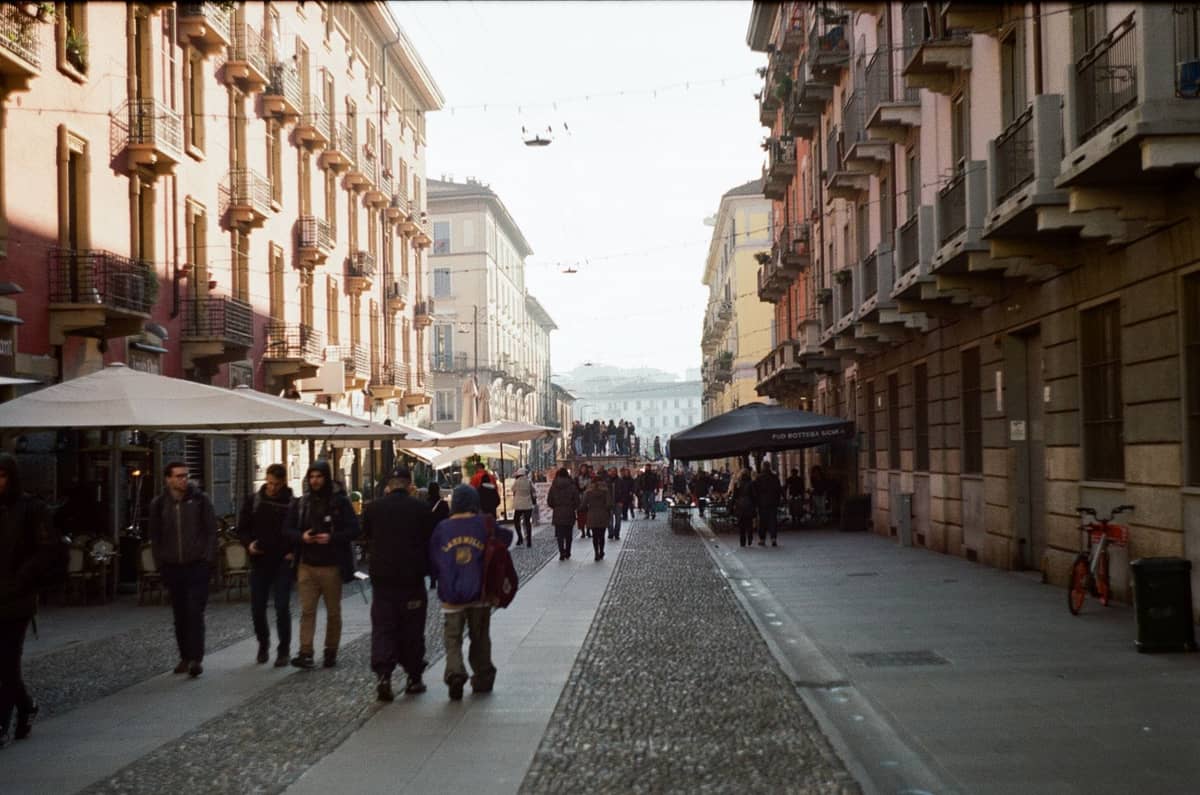
The Brera district is Milan's most consistently romantic neighborhood for daytime exploration. Its streets are narrow, many are cobbled, and the mix of independent bookshops, small galleries, flower stalls, and caffè makes it easy to spend two or three hours simply wandering without any fixed agenda.
At the center of the district is the Pinacoteca di Brera, one of Italy's great painting collections. The highlight for most couples is Francesco Hayez's Il Bacio (The Kiss), painted in 1859 and still widely regarded as the defining image of romantic love in Italian art. Standard adult tickets run around €15. The Orto Botanico di Brera, a small botanical garden tucked behind the Palazzo di Brera, is free and often overlooked — wonderfully peaceful on a weekday afternoon.
- When to visit Brera Weekday afternoons are quietest. Saturday mornings have a street market on Via Fiori Chiari that adds atmosphere without overwhelming crowds. Avoid Sunday evenings when most independent shops are closed.
- What to skip The most photographed café terraces on Via Madonnina fill up fast and run slow service. Walk one street further for identical coffee at a third of the wait time.
- Practical tip on the Pinacoteca First Sunday of the month offers reduced or free entry for Italian state museums — check the official Pinacoteca di Brera website for current terms, as conditions change.
Navigli: Canal Walks and the Classic Aperitivo
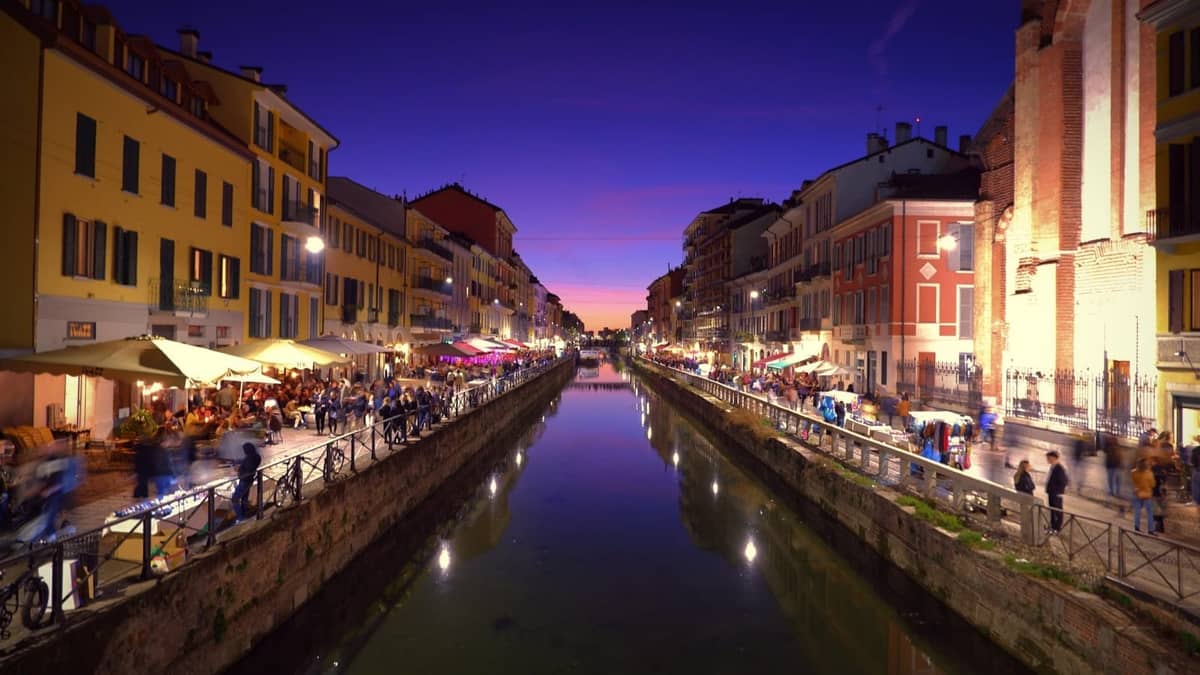
Milan's canal system is older than most visitors expect. Leonardo da Vinci worked on engineering improvements to it in the late 15th century. Today, the two main navigable canals open to the public are the Naviglio Grande and the Naviglio Pavese. Together they form the core of the Navigli district, roughly 3 km southwest of the Duomo.
Daytime on the canals is underrated. A walk along the towpath in the morning, when the light sits low on the water and the delivery boats are still moving, has a texture that the evening crowds erase completely. Lunch at one of the trattorie set back from the canal costs around €15–€25 per person including wine — far less than comparable spots in the centro storico.
From about 6pm onward, the Navigli becomes the natural backdrop for the Milanese aperitivo ritual. Most bars along the canal offer a drink (typically €8–€15) that includes access to a buffet spread of cicchetti, bruschette, and small plates. This is not a gimmick — it is a genuine local custom, and for couples on a budget it functions as an informal early dinner. Weekends are considerably more crowded; if you prefer atmosphere without chaos, Tuesday and Wednesday evenings in September or October hit the sweet spot.
✨ Pro tip
The last Sunday of each month (except July and August) the Naviglio Grande hosts the Mercatone dell'Antiquariato, a large antiques market running along the canal towpath. Arriving early in the morning before the crowds build makes for an excellent couple's activity — browsing stalls of vintage prints, jewelry, and curiosities with coffee in hand.
Opera, Trams, and After-Dark Experiences
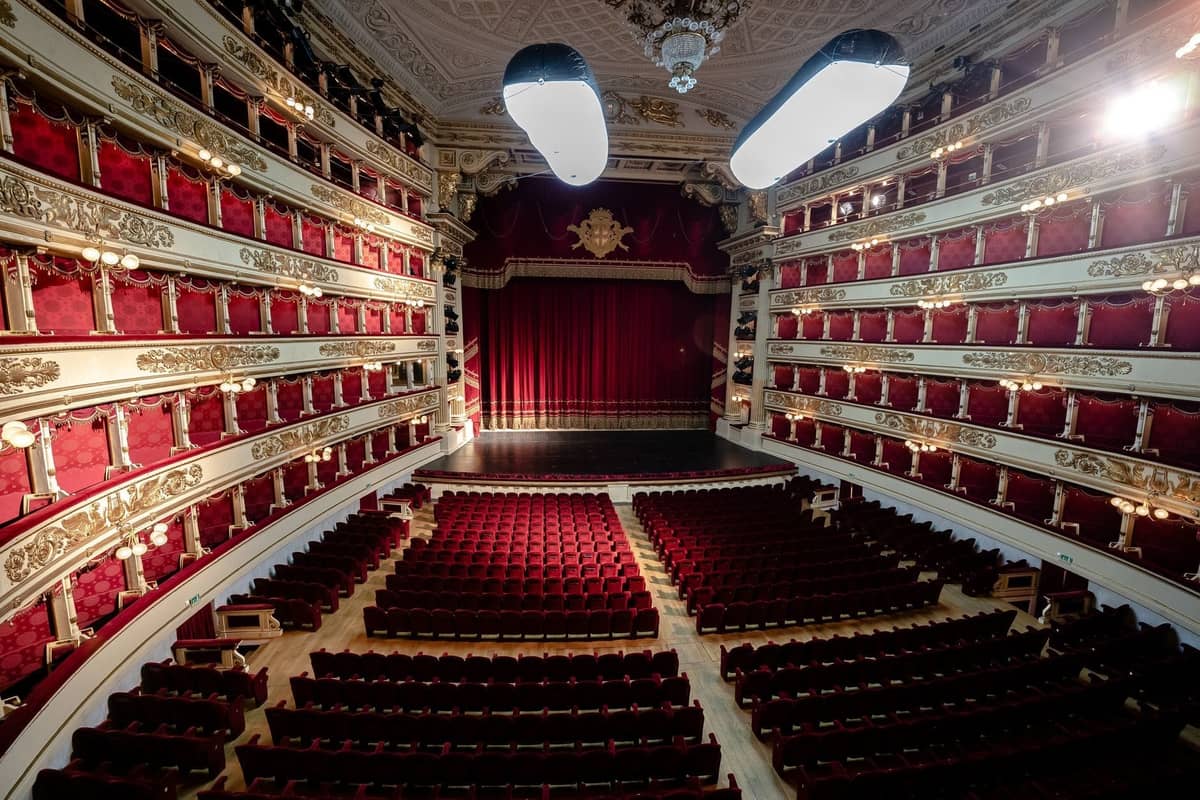
Attending a performance at Teatro alla Scala is one of those experiences that sounds intimidating but is more accessible than most people assume. The opera season runs from December through July; ballet and concert seasons extend further. Museum visits (covering the history of La Scala) cost around €12–€15 and include access to the auditorium when rehearsals are not running. Performance tickets range from under €30 for upper gallery seats to several hundred euros for prime stalls positions — book through the official Teatro alla Scala website, ideally several months in advance for major productions.
For a more unconventional evening, ATMosfera is a historic tram converted into a moving restaurant. It runs a fixed-menu dinner route through central Milan, passing major landmarks as you eat. Reservations are required and fill up weeks in advance; check availability and pricing on the official ATM Milano website. It is not fine dining — the food is competent rather than exceptional — but the experience of eating at a candlelit table while the city scrolls past the windows is genuinely memorable.
In winter, the city's program of candlelit classical concerts in historic churches and palaces adds another option. These are typically chamber music events held in venues like San Maurizio al Monastero Maggiore — a church whose interior frescoes make it one of the most beautiful rooms in the city. Check local listings via YesMilano (the official city tourism bureau) for current schedules.
Parks, Castles, and Free Romantic Spaces
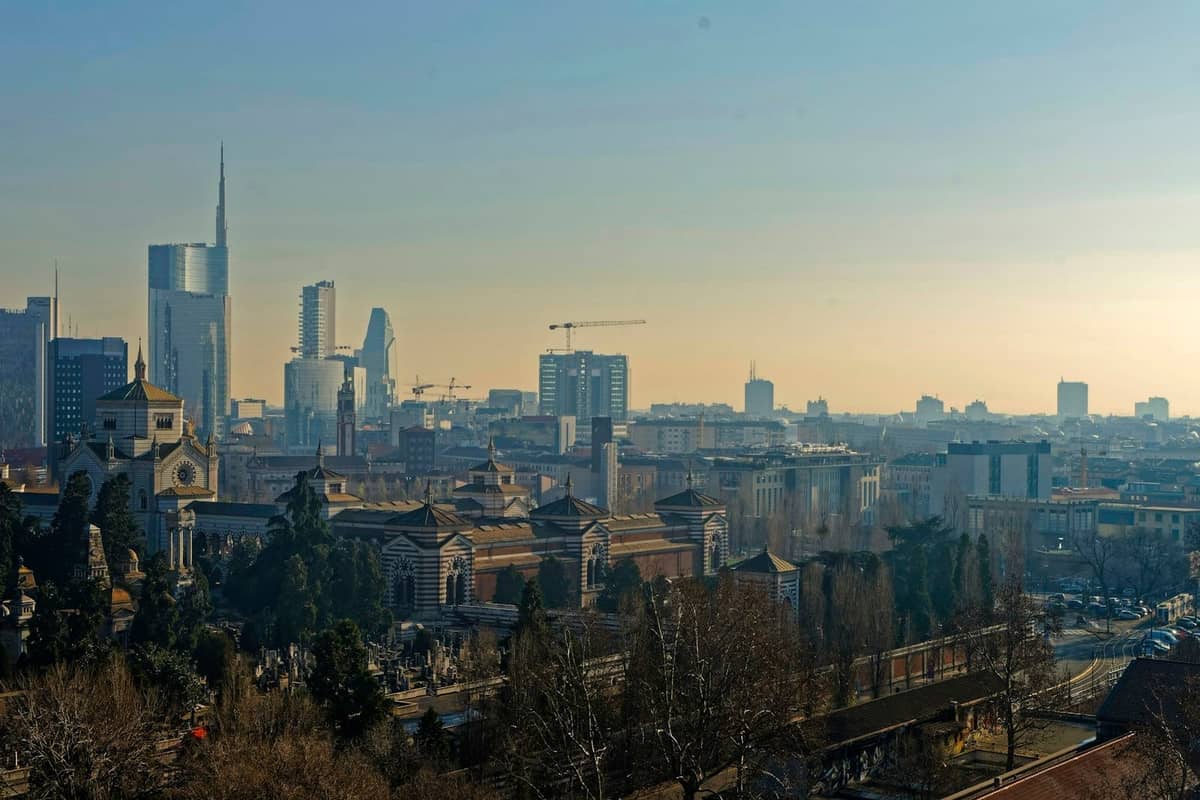
Not everything romantic in Milan costs money. Parco Sempione is a 47-hectare public park immediately behind the Castello Sforzesco, open daily with no entry fee. Its paths, ponds, and tree-lined lawns work for a slow afternoon walk, a picnic, or simply sitting somewhere green after a morning of art and architecture.
The Castello Sforzesco itself is free to enter the main courtyards. Museum admission for the collections inside runs around €5–€10 per adult, with combination tickets available. The castle's scale is impressive — it was the seat of the Sforza dynasty and one of the largest citadels in Europe during the 15th century. The Torre Branca, a slender steel tower in Parco Sempione designed by Gio Ponti in 1933, offers panoramic views over the park and city when open — worth checking schedules for.
- Spring and early autumn are the best seasons for park visits — mild temperatures, lower humidity than summer, and the light quality in April and October is exceptional for photography.
- Summer midday heat (July and August regularly reaches 30°C or above) makes extended outdoor activity uncomfortable; shift outdoor plans to early morning or after 6pm.
- Winter offers a different kind of charm: fog rolling across Parco Sempione on a quiet December morning is atmospheric in a way that postcards rarely capture.
- Bring a blanket and food from the Mercato Comunale or a local deli for a proper picnic — supermarkets near the park stock good Lombard charcuterie and local cheeses at reasonable prices.
Practical Notes for Couples Visiting Milan
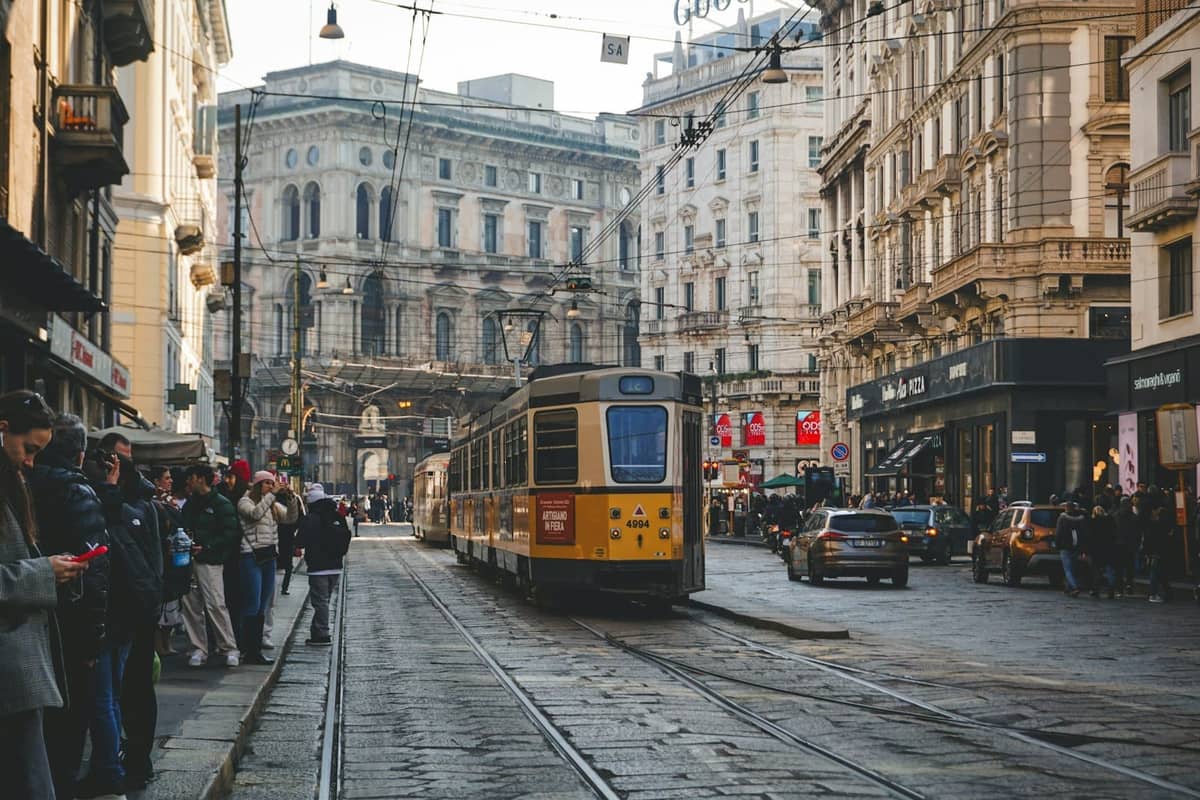
Getting around is straightforward. The Milan Metro (Metropolitana di Milano) covers most major attractions on Lines M1, M2, and M3; the Duomo stop on M1 and M3 puts you at the center of the historic area. Getting around Milan by tram is also practical and more scenic than the metro for short hops — Line 2 and Line 9 pass through areas useful for couples. Taxis are metered and reliable; ride-hailing apps also operate in the city.
For accommodation, the Brera and Navigli districts offer the most atmospheric bases for a romantic stay. Where to stay in Milan covers the full range from budget options to luxury hotels. On dress codes: most restaurants and all churches require shoulders and knees covered; La Scala's evening performances have a smart-casual to formal expectation for good seats. The emergency number across Italy is 112.
💡 Local tip
Many of Milan's state museums offer free or discounted entry on the first Sunday of each month. If your visit coincides, plan to hit paid museum priorities then — but arrive early, as queues build quickly on free days.
FAQ
What is the most romantic thing to do in Milan?
The Duomo rooftop at sunset stands out consistently. The combination of Gothic architecture at close range, the Alpine horizon on clear days, and the scale of the city below is hard to match. Book tickets online in advance — sunset slots sell out, especially in spring and autumn.
Is Milan good for a romantic weekend break?
Yes, particularly in April–June and September–October when temperatures are mild (roughly 15–26°C) and the city is not overwhelmed by summer tourists. Two full days is enough to cover the Duomo, Brera, Navigli, and an evening experience like La Scala or the ATMosfera dinner tram, without feeling rushed.
How much should a couple budget per day in Milan?
A comfortable mid-range day — Duomo rooftop tickets, lunch in Brera, Pinacoteca di Brera entry, and an aperitivo in Navigli — comes to roughly €80–€120 for two people. A budget-focused day using free parks, castle courtyards, canal walks, and a supermarket picnic can be done for under €40 for two. Opera tickets and fine dining push the upper range significantly higher.
What neighborhoods in Milan are best for couples?
Brera for daytime wandering and art; Navigli for evening aperitivo and canal atmosphere; the Duomo district for iconic sightseeing; and Parco Sempione for relaxed outdoor time. Each district is distinct enough that spending a half-day in each gives a good picture of the city's range.
When should couples avoid visiting Milan?
July and August are the least comfortable months — hot, humid, and with many locals on holiday meaning some restaurants and shops close. Milan Design Week (usually April) and major fashion weeks bring significant crowds and higher hotel prices; romantic atmosphere takes a hit during those periods unless you are specifically interested in attending events.