Orto Botanico di Brera: Milan's Quiet Garden Hidden in Plain Sight
Founded in 1774 by order of Empress Maria Theresa of Austria, the Orto Botanico di Brera occupies a compact but remarkably serene courtyard within the Palazzo Brera complex. Free to enter during opening hours and easy to miss, it offers a genuine pause from the pace of central Milan — surrounded by centuries of botanical and academic history.
Quick Facts
- Location
- Via Brera 28, 20121 Milan (also Via privata F.lli Gabba 10 entrance/exit)
- Getting There
- Montenapoleone (M3, ~4 min walk); Lanza (M2, ~7 min walk); Cairoli (M1, nearby)
- Time Needed
- 30–60 minutes
- Cost
- Free admission
- Best for
- Quiet breaks, botanical interest, architecture lovers, slow travelers
- Official website
- ortibotanici.unimi.it/home/orto-botanico-di-brera
What the Orto Botanico di Brera Actually Is
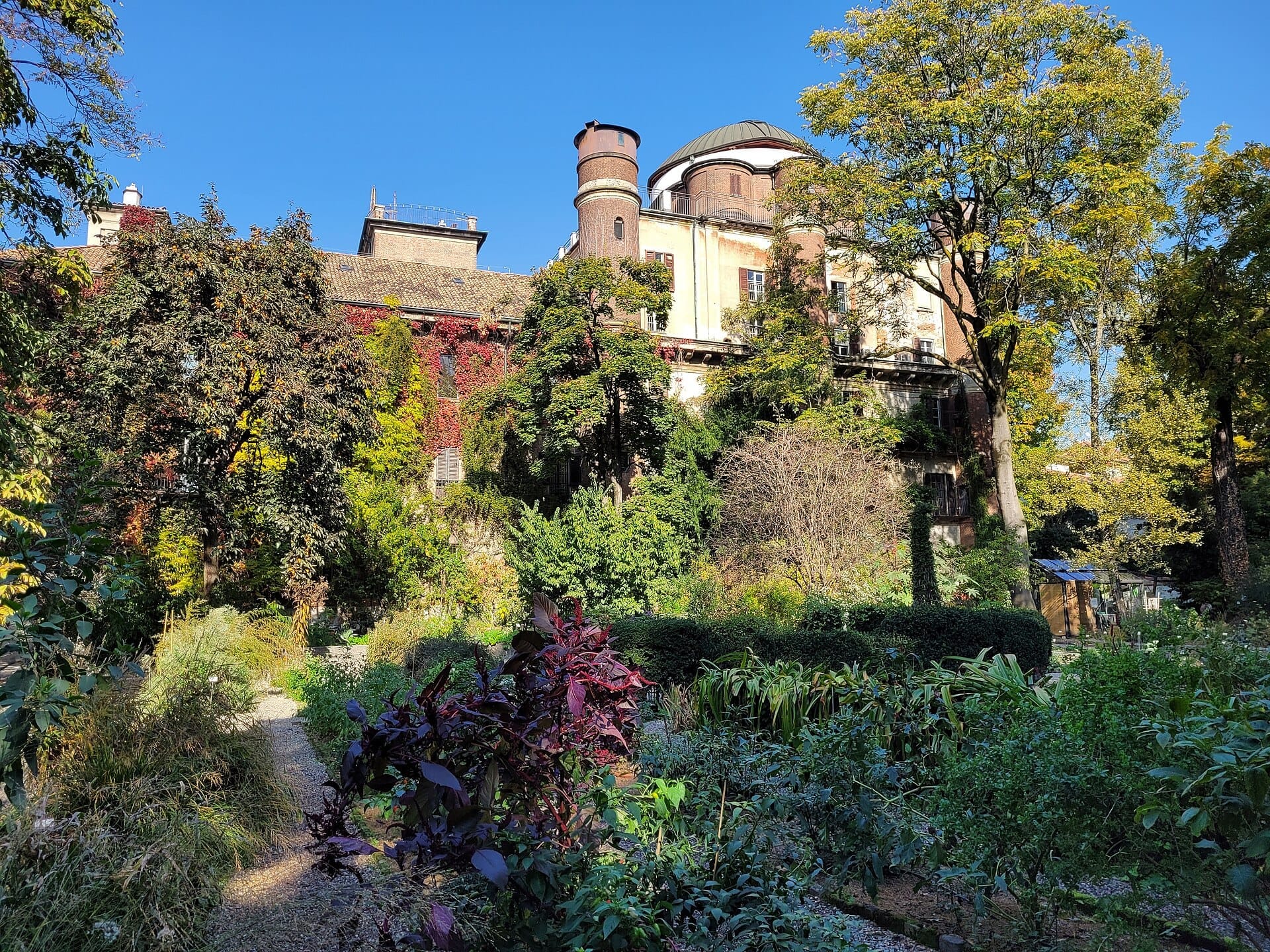
The Orto Botanico di Brera — also known by its Latin name Hortus botanicus Braidensis — is a historic botanical garden set within the inner courtyard of the Palazzo Brera, one of Milan's most important cultural complexes. At approximately 5,000 square metres, it is compact by any botanical garden standard. But that compactness is part of what makes it so unusual: you are standing in a living scientific collection that dates to 1774, tucked behind one of the city's most visited art galleries, and most people walking through the main entrance to the Pinacoteca di Brera never even notice it exists.
The garden belongs to the Università degli Studi di Milano, which has managed it since 1935. In 2017, Regione Lombardia formally recognised it as a museum — giving it an institutional status that reflects its role as both a research facility and a public cultural site. It holds around 300 species, including medicinal plants, rare botanical specimens, and a small arboretum that was restored in 2001 and substantially redeveloped in 2018–2019.
💡 Local tip
Access is through the courtyard of Palazzo Brera at Via Brera 28. There is no separate ticket booth — entry is free. Hours are 10:00–18:00 Monday to Saturday from 1 April through 31 October, and 9:30–16:30 Monday to Saturday from 1 November through 31 March, but seasonal closures apply. Confirm current hours at ortibotanici.unimi.it before visiting.
The History Behind the Garden
The garden was established in 1774 on the orders of Empress Maria Theresa of Austria, during a period of Enlightenment-era reform across the Habsburg territories. At the time, Palazzo Brera housed the Accademia di Belle Arti, the Biblioteca Nazionale Braidense, and various scientific institutions — and the botanical garden was conceived as part of this broader programme of learning, supplying the local medical and pharmaceutical sciences with a living reference collection.
That 18th-century origin is still legible in the garden's physical layout. The long, narrow planting beds follow a rational, geometric plan characteristic of Enlightenment botanical gardens — methodical rather than decorative, designed for observation and classification. Two elliptical basins punctuate the space, adding a formal architectural rhythm that reflects the neoclassical sensibility of the period. Walking through it today, you get a tangible sense of how the age of reason organized its relationship with the natural world: not as wilderness to be appreciated, but as a system to be studied.
The Palazzo Brera complex itself is worth understanding as a whole. The building — originally a Jesuit college, later repurposed under Austrian rule — is home to the Pinacoteca di Brera, one of Italy's foremost art galleries. The botanical garden occupies what was once a service courtyard of that institution, which goes some way to explaining why it remains so overlooked.
Tickets & tours
Hand-picked options from our booking partner. Prices are indicative; availability and final rates are confirmed when you complete your booking.
Brera district and Pinacoteca guided experience
From 60 €Instant confirmationFree cancellationGenova and Portofino day trip from Milan
From 119 €Instant confirmationFree cancellationThe art thief online exploration game in Milan Brera
From 7 €Instant confirmationFree cancellationEntrance ticket to Pinacoteca di Brera
From 18 €Instant confirmation
What the Visit Feels Like
Entering from Via Brera 28, you pass through the Palazzo's arcade and into the courtyard. The transition is immediate and slightly disorienting: the ambient noise of the street drops, the temperature shifts a few degrees on warm days, and you find yourself facing a long, ordered green space framed by the building's neoclassical facade. The garden smells of damp soil and leaf matter in the morning, with something more floral rising in the heat of a spring afternoon.
The planting beds are narrow and labelled — this is a scientific collection, not a landscape park — so there is a quiet, studious quality to the space even when other visitors are present. Benches are positioned near the elliptical basins, which on calm days hold a still reflection of the surrounding architecture. On weekday mornings before noon, you may find yourself entirely alone here, or sharing the space with a handful of university students, some of whom are clearly there to study rather than sightsee.
Midday on a warm weekend brings more foot traffic, typically from visitors who have come to the Pinacoteca and then wandered through. Even then, the garden never feels crowded in the way that outdoor spaces near the Duomo do. The relative obscurity is a feature. This is not a place that competes for your attention.
ℹ️ Good to know
Photography is best in the morning when the light falls across the long planting beds from the eastern side of the courtyard. Architectural detail — the arcade, the formal symmetry of the layout — photographs well in all conditions. A wide-angle lens captures the relationship between the garden and the palazzo better than a telephoto.
When to Visit and What Changes by Season
Spring is the most rewarding season. From late March through May, the planting beds fill with flowering medicinal and ornamental species, and the arboretum canopy begins to close overhead, softening the courtyard's formality. April mornings are especially good: the light is clear, the air is cool without being cold, and the Pinacoteca crowds have not yet built.
Summer visits are comfortable earlier in the day. By early afternoon in July and August, the courtyard retains heat and the garden loses some of its freshness. If you are visiting in summer, pair the Orto Botanico with the nearby Pinacoteca di Brera in the morning and use the garden as a cool-down stop before or after. For broader seasonal context, the best time to visit Milan guide covers the city's climate patterns in detail.
Autumn brings a different kind of appeal. The arboretum changes colour from October onward, and the more sombre palette of November suits the garden's contemplative quality. Winter hours are shorter and some sections may be less actively maintained, but the geometric structure of the beds remains clearly readable and the space is usually open between November and March.
⚠️ What to skip
The garden does close for extraordinary maintenance and institutional events. It is always worth checking the official University of Milan botanical gardens website before a special trip, particularly in the autumn-to-winter transition period.
Getting There and Practical Logistics
The garden sits at Via Brera 28, in the heart of the Brera district. The closest metro stop is Montenapoleone on line M3 (yellow), approximately four minutes on foot. Lanza on line M2 (green) is about seven minutes away, and Cairoli on line M1 (red) is also nearby and is arguably the more atmospheric approach, taking you through the quieter back streets of the neighborhood.
Brera itself is one of Milan's most pleasant areas for walking — small galleries, independent bookshops, and a slower pace than the commercial districts to the south. A visit to the Orto Botanico fits naturally into a half-day exploring the neighbourhood. For ideas on structuring the wider area, the Brera neighbourhood guide covers the main sights and dining options nearby.
Admission is free. There are no timed entry slots and no advance booking is required. For accessibility queries — including step-free access information, which is not explicitly detailed on the official site — contact the garden directly at +39 02 50314683 or ortobotanicodibrera@unimi.it.
Is It Worth the Stop?
The Orto Botanico di Brera is not the most spectacular green space in Milan. Parco Sempione offers far more room to move, and the Giardini Pubblici Indro Montanelli provides a more conventional park experience. What the Orto Botanico offers instead is specificity: a 250-year-old scientific garden, a legible piece of Enlightenment thinking, and ten minutes of real quiet in a part of the city that does not often provide it.
Visitors who expect a lush, expansive botanical experience on the scale of, say, Kew Gardens or even the Orto Botanico di Padova, will find this garden modest. The beds are narrow, the space is contained, and the planting is disciplined rather than theatrical. That is not a failure — it is what the garden is. The question is whether that suits you.
For anyone with a genuine interest in botanical history, urban green spaces, or the Enlightenment-era institutions that shaped Italian academic life, it rewards attention. For travellers building a day around Brera's cultural sites, it is an easy and cost-free addition with no real downside. For someone on a tight two-day schedule who primarily wants major landmarks, the time is probably better spent elsewhere.
Combining the Garden with the Pinacoteca di Brera
The natural pairing is the Pinacoteca di Brera, which occupies the floors above and around the same Palazzo complex. Italy's greatest collection of Northern Italian painting — including Raphael's Sposalizio, Mantegna's Lamentation over the Dead Christ, and Caravaggio's Supper at Emmaus — is housed directly overhead. Spending 90 minutes to two hours in the Pinacoteca and then descending to the garden for a quiet close to the visit makes for a coherent half-day.
The Milan architecture guide also provides useful context for understanding the palazzo itself, whose neoclassical courtyard — with the bronze statue of Napoleon by Antonio Canova at its centre — frames the garden from the western end.
Insider Tips
- The garden entrance is easy to walk past. Once through the main gate at Via Brera 28, look for signage pointing through the portico toward the inner courtyard. Many visitors reach the Canova Napoleon statue and turn around without noticing the garden continues behind it.
- Weekday mornings between 10:00 and noon are consistently the quietest visiting window, particularly Tuesday through Thursday when Pinacoteca visitor numbers are lower.
- The labelled planting beds are genuinely informative if you read Italian — many specimens are medicinal plants with their historical pharmaceutical uses noted. Even without Italian, the Latin binomials make the collection accessible to anyone with botanical interest.
- The alternative access point at Via privata F.lli Gabba 10 is sometimes used for group visits. If the main Brera entrance feels confusing, it is worth knowing this secondary entry exists, though you should confirm it is open before relying on it.
- The garden occasionally hosts educational events and guided visits organized through the University of Milan. Checking the official site around the time of your visit can turn up free or low-cost programming that most independent tourists never find.
Who Is Orto Botanico di Brera For?
- Travelers who want a genuine pause between cultural sites in central Milan
- Botany and natural history enthusiasts interested in Enlightenment-era scientific gardens
- Architecture visitors exploring the Palazzo Brera complex as a whole
- Slow travelers and those building a half-day around the Brera arts neighborhood
- Anyone visiting the Pinacoteca di Brera who wants to extend the experience without extra cost
Nearby Attractions
Other things to see while in Brera:
- Museo Poldi Pezzoli
Tucked along Via Manzoni, a short walk from La Scala, the Museo Poldi Pezzoli transforms a nobleman's former home into one of Italy's most personal and rewarding art experiences. With over 5,000 objects spanning painting, armour, jewellery, and decorative arts, it rewards slow, attentive visitors far more than a rushed pass-through.
- Pinacoteca di Brera
The Pinacoteca di Brera holds one of Italy's most significant collections of Northern Italian Renaissance and Baroque painting, spread across 38 rooms inside the 17th-century Palazzo di Brera. Officially established in 1809, with roots in a teaching collection begun in 1776, it displays roughly 500 works including masterpieces by Mantegna, Raphael, Caravaggio, and Bellini. For anyone serious about Italian art, this is the destination in Milan.