Museo Poldi Pezzoli: Milan's Finest House Museum
Tucked along Via Manzoni, a short walk from La Scala, the Museo Poldi Pezzoli transforms a nobleman's former home into one of Italy's most personal and rewarding art experiences. With over 5,000 objects spanning painting, armour, jewellery, and decorative arts, it rewards slow, attentive visitors far more than a rushed pass-through.
Quick Facts
- Location
- Via Manzoni 12, 20121 Milano — Brera district, near La Scala
- Getting There
- Metro M3 Montenapoleone; Tram lines 1 & 2 (Via Manzoni–Montenapoleone stop)
- Time Needed
- 1.5 to 2.5 hours
- Cost
- Adults €14 / Under-26 €10 / Over-65 €12 (verify on official site before visiting)
- Best for
- Renaissance painting lovers, decorative arts enthusiasts, travellers wanting an unhurried alternative to larger museums
- Official website
- museopoldipezzoli.it/en
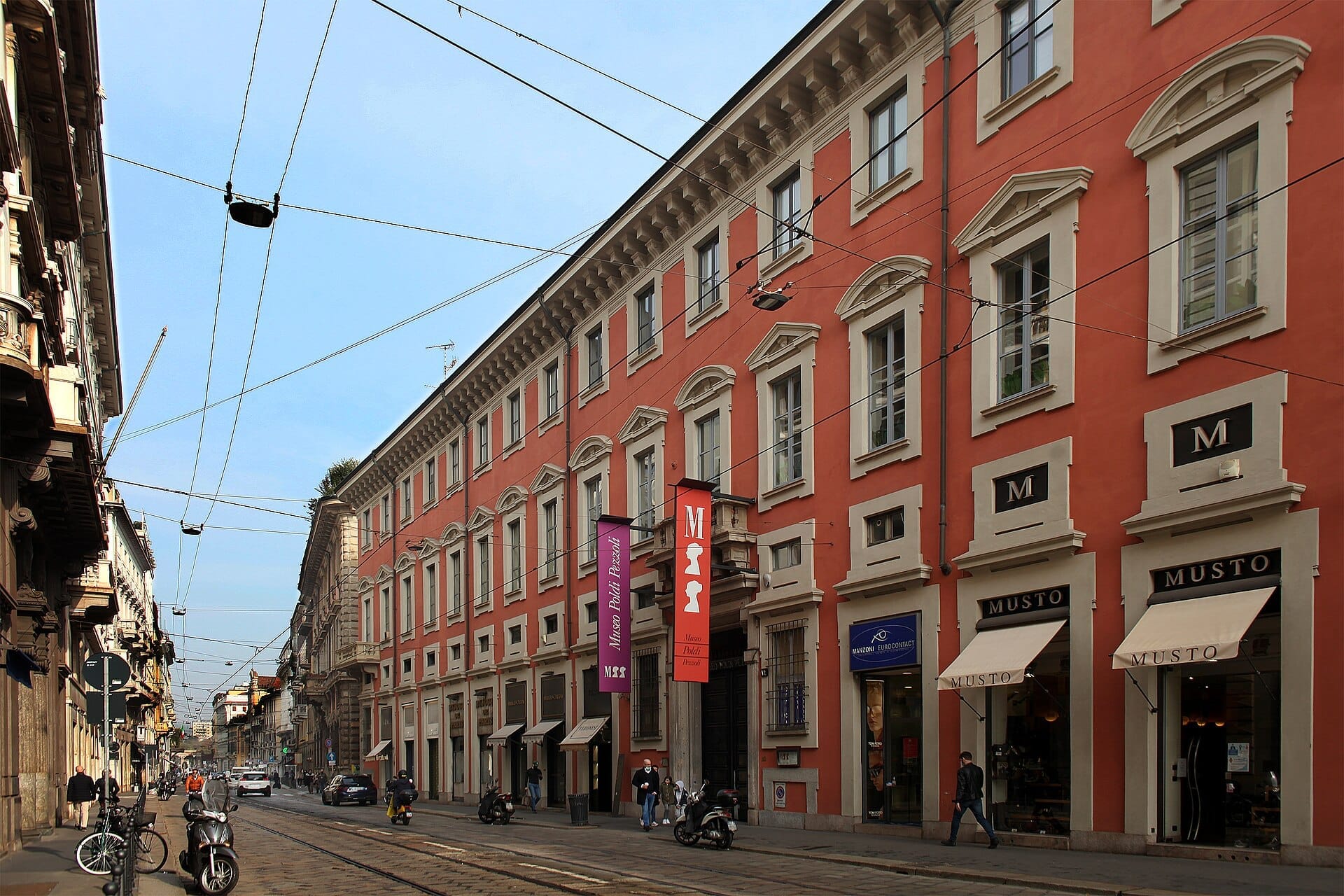
What the Museo Poldi Pezzoli Actually Is
The Museo Poldi Pezzoli is a house museum: the former private residence and collection of Milanese nobleman Gian Giacomo Poldi Pezzoli (1822–1879), preserved largely as he intended it and opened to the public in 1881. That origin matters, because it shapes everything about the experience. Unlike a civic or national museum built around encyclopedic acquisition, every object here was chosen by one person with very specific taste, and the rooms were designed to display art in the way a cultivated 19th-century collector lived with it.
The building was heavily damaged during World War II bombing raids. It was painstakingly rebuilt and reopened in 1951, and while some of the original decorative interiors were lost, the museum has worked to restore the atmosphere of each room. Today the collection spans more than 5,000 objects: Renaissance and Baroque paintings, arms and armour, Murano glass, Flemish tapestries, Persian carpets, clocks, jewellery, and an exceptional collection of antique lace. The breadth is the point. Poldi Pezzoli was not just a picture collector. He was interested in the full visual culture of the past.
💡 Local tip
Book tickets online before you visit if you prefer to secure a specific time slot, especially on weekends or during temporary exhibitions, when entry slots can fill up. Closed every Tuesday.
The Collection: What to Focus On
The Portrait of a Young Woman
The single most discussed work in the museum is the "Portrait of a Young Woman" by Antonio Pollaiuolo, painted around 1470. It hangs in the Golden Room (Salone Dorato) and has a quality that most portrait reproductions fail to convey: the figure seems genuinely present, her profile sharp against a blue ground that has faded to something almost atmospheric over five centuries. This is not a painting you should rush past. It is one of the canonical images of Florentine Renaissance portraiture, and seeing it at actual scale, in a room rather than a gallery hall, is a different experience from encountering it in art history books.
Paintings Beyond the Headlines
The painting collection is concentrated but serious. Works by Giovanni Bellini, Piero della Francesca, Andrea Mantegna, Canaletto, and Giovanni Battista Tiepolo are distributed across themed rooms. The armour collection in the ground-floor Sala delle Armi is one of the finest in any Italian civic museum, with pieces dating from the 14th to 17th centuries, including decorated tournament armour that reveals how much Renaissance Italians treated metalwork as a sculptural art form.
Visitors focused purely on major-name painting sometimes overlook the decorative arts rooms on the upper floor. The glass, ceramics, and textile collections require patience to appreciate, but they reward it. The antique clocks collection is particularly unusual: Poldi Pezzoli had a collector's obsession with timepieces, and the assembled examples, some with elaborate automata mechanisms, are among the rarest objects in the museum.
Tickets & tours
Hand-picked options from our booking partner. Prices are indicative; availability and final rates are confirmed when you complete your booking.
Milan Museo Del Novecento entry ticket with audio guide
From 14 €Instant confirmationFree cancellationMuseum of the 900 self-guided audio tour in Milan
From 4 €Instant confirmationNatural History Museum self-guided audio tour in Milan
From 4 €Instant confirmationMilan Natural History Museum entry ticket with audio guide
From 12 €Instant confirmationFree cancellation
How the Visit Actually Feels
You enter from Via Manzoni through a ground-floor entrance that does little to prepare you for the interiors above. The staircase leading to the piano nobile is where the atmosphere begins to shift. The rooms are noticeably residential in scale: ceilings are not cathedral-height, windows look onto a courtyard rather than an open piazza, and the density of objects on display evokes a home rather than an institution.
Visitor numbers rarely reach the pressure levels of the Pinacoteca di Brera or the Last Supper. On weekday mornings, particularly between opening at 10:00 and around midday, the rooms can be nearly empty. This changes on weekend afternoons and during special exhibitions, when the corridors become more congested and the intimate atmosphere is somewhat diluted. If the house-museum feeling is what draws you here, a Wednesday or Thursday morning visit is the most rewarding.
Natural light comes through the windows but is not always generous, particularly in winter months when Milan's characteristic grey overcast reduces the light entering the rooms. Some of the smaller decorative objects, particularly in the jewellery and lace collections, benefit from the museum's supplementary lighting. Carry reading glasses if you use them: the label text in some display cases is small.
ℹ️ Good to know
Opening hours: Monday and Wednesday through Sunday, 10:00–18:00, last admission at 17:30. Closed every Tuesday. Confirmed closed on some public holidays (including January 1, Easter, April 25, May 1, August 15, November 1, December 8 and December 25) — check the official website around national holidays before your visit.
The Neighbourhood Context: Brera and Via Manzoni
Via Manzoni is one of Milan's most elegant thoroughfares, running from Piazza della Scala northward through the Brera district toward Porta Nuova. The street is lined with palazzi, luxury boutiques, and institutional buildings. The museum sits at number 12, in a section of the street where 19th-century Milanese aristocratic culture is still legible in the architecture.
The location makes the museum easy to fold into a broader day in central Milan. The Teatro alla Scala is a five-minute walk south. The Pinacoteca di Brera is about ten minutes north on foot. The Duomo di Milano is roughly a fifteen-minute walk or two stops on the metro. This positioning means the Poldi Pezzoli is logistically convenient for almost any central Milan itinerary, which is one reason it tends to get paired with other visits rather than treated as a destination in itself.
After your visit, the blocks immediately surrounding the museum offer good options for lunch or a coffee break. The streets between Via Manzoni and Via della Spiga sit within the Quadrilatero della Moda, Milan's high-fashion district, if afternoon shopping is on the agenda.
Practical Details for Your Visit
Getting There
- Metro: Line M3 (yellow) to Montenapoleone, then a 3-minute walk south along Via Manzoni
- Tram: Lines 1 and 2, stop Via Manzoni–Montenapoleone (directly in front of the museum)
- Bus: Lines 61 and 94 serve the area
- On foot from the Duomo: approximately 15 minutes through the historic centre
Accessibility
The museum states an explicit commitment to inclusive access and publishes dedicated accessibility information on its visit page. The building is a historic palazzo, which inherently presents some architectural constraints. Visitors with specific mobility or sensory needs should consult the museum's official accessibility page before their visit to understand which spaces are fully accessible and whether any arrangements need to be made in advance.
Photography
Personal photography without flash is generally permitted in permanent collection areas, but always follow the instructions of museum staff, particularly in rooms with sensitive textile or paper-based objects. The Golden Room, where the Pollaiuolo portrait hangs, is a natural focal point for photography, though reflections from display glass can be challenging.
A Realistic Take
The Museo Poldi Pezzoli does not try to compete with the encyclopedic ambitions of the Pinacoteca di Brera or the civic scale of the Castello Sforzesco museums. That restraint is its strength. If you come expecting a major picture gallery with hundreds of masterpieces arranged chronologically, you may leave underwhelmed. If you come ready to engage with a personal collection in a domestic setting, where a Persian carpet can sit across from a Flemish tapestry and a Renaissance portrait hangs above an intarsia cabinet, you will find it deeply rewarding.
First-time visitors to Milan with very limited time should weigh the Poldi Pezzoli against their specific interests. For anyone with a focused interest in Renaissance painting or Italian decorative arts, it ranks among the top priorities in the city. For visitors primarily chasing architectural spectacle or contemporary culture, there are higher-priority stops. The strongest case for visiting is not that it has the most or the best, but that it offers a quality of attention that larger institutions rarely achieve.
⚠️ What to skip
Ticket prices and opening hours are subject to change. Always verify on the official museum website (museopoldipezzoli.it) before your visit, particularly around public holidays.
Insider Tips
- The museum runs temporary exhibitions alongside the permanent collection, and these sometimes include loans from international institutions. Check the exhibitions page before your visit — a special show can significantly change what is on display and how busy the museum will be.
- The arms and armour room on the ground floor is often overlooked by visitors heading straight to the paintings upstairs. It is one of the most complete displays of decorated Renaissance weaponry in northern Italy and deserves at least 20 minutes on its own.
- If you are visiting with a travel companion who has less interest in art, agree in advance to meet at the exit rather than moving through rooms together at the same pace. The museum's compact layout makes it easy to cover at different speeds without losing each other.
- The museum shop carries a selection of exhibition catalogues and art books that go beyond standard tourist merchandise. If you have specific interest in Italian Renaissance painting or decorative arts, it is worth a browse before leaving.
- Combined ticket options sometimes exist with other Milan museums. Check the museum website or ask at the ticket desk about any active partnership deals, particularly if you plan to visit the Pinacoteca di Brera on the same day.
Who Is Museo Poldi Pezzoli For?
- Travellers with a genuine interest in Renaissance and Baroque Italian painting who want something beyond the standard tourist circuit
- Decorative arts and design enthusiasts drawn to applied arts: textiles, ceramics, clocks, jewellery, and armour
- Visitors who find large museums overwhelming and prefer a focused collection in a human-scale setting
- Repeat visitors to Milan looking for depth rather than novelty
- Couples or solo travellers who want a two-hour cultural experience without the logistics of timed-entry queues at the major sites
Nearby Attractions
Other things to see while in Brera:
- Orto Botanico di Brera
Founded in 1774 by order of Empress Maria Theresa of Austria, the Orto Botanico di Brera occupies a compact but remarkably serene courtyard within the Palazzo Brera complex. Free to enter during opening hours and easy to miss, it offers a genuine pause from the pace of central Milan — surrounded by centuries of botanical and academic history.
- Pinacoteca di Brera
The Pinacoteca di Brera holds one of Italy's most significant collections of Northern Italian Renaissance and Baroque painting, spread across 38 rooms inside the 17th-century Palazzo di Brera. Officially established in 1809, with roots in a teaching collection begun in 1776, it displays roughly 500 works including masterpieces by Mantegna, Raphael, Caravaggio, and Bellini. For anyone serious about Italian art, this is the destination in Milan.