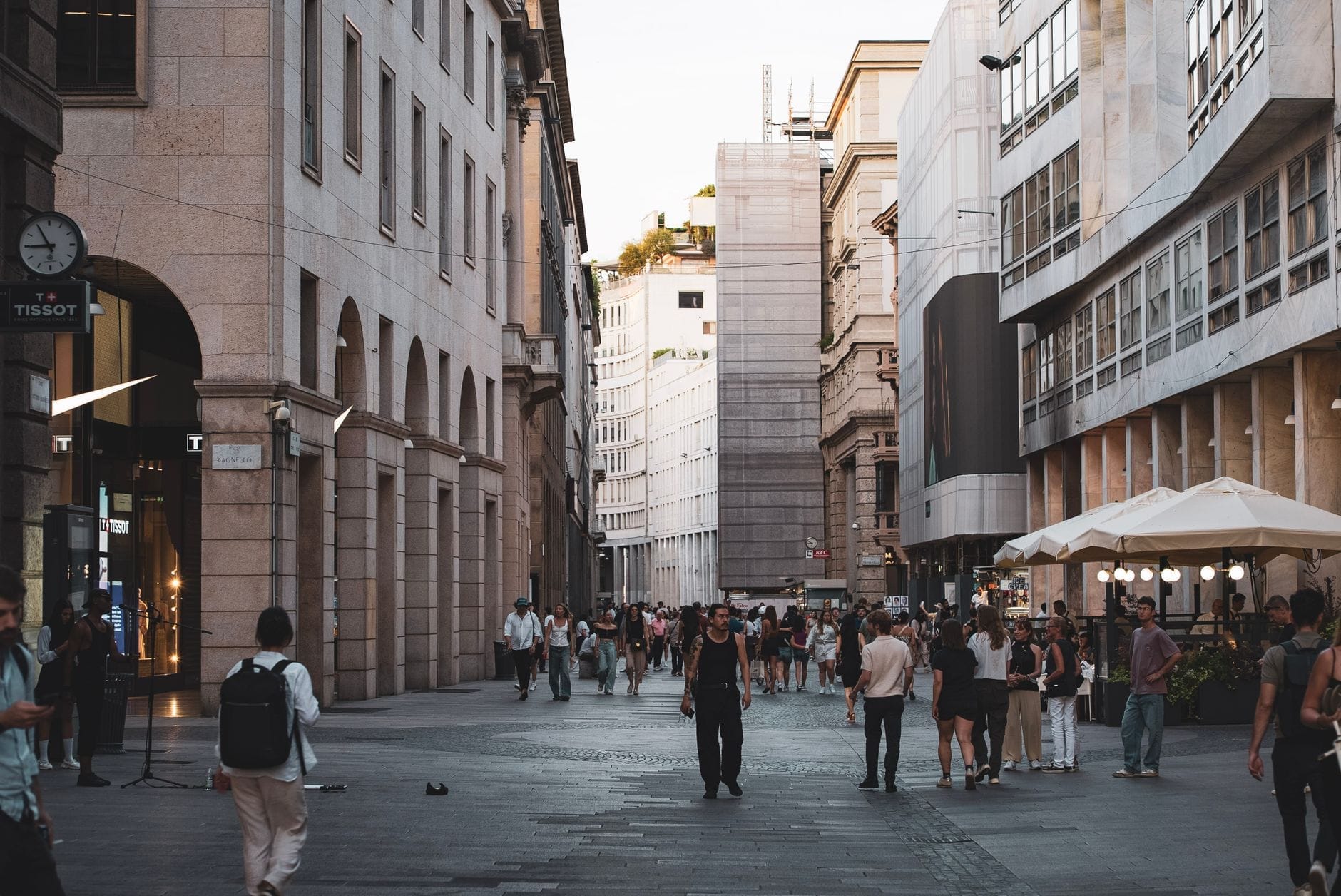
The Quadrilatero della Moda is Milan's internationally renowned luxury fashion district, defined by four historic streets in the city centre. Home to flagship boutiques from the world's top fashion houses, elegant side streets, and the pulse of Milan Fashion Week, it offers a concentrated experience of Italian style, architecture, and commercial power.
The Quadrilatero della Moda is where Milan's reputation as a global fashion capital becomes tangible. Bounded by Via Monte Napoleone, Via Alessandro Manzoni, Via della Spiga, and Corso Venezia, this compact grid of streets holds some of the most expensive retail real estate on earth, lined with flagship stores from Armani to Valentino and everything in between. It is polished, purposeful, and unapologetically exclusive.
Orientation: The Golden Quadrilateral
The Quadrilatero della Moda sits in the heart of central Milan, in Municipio 1, directly northeast of Piazza Duomo. It is defined by four streets that form its outer boundary: Via Monte Napoleone to the south-west, Via Alessandro Manzoni to the north-west, Via della Spiga to the north-east, and Corso Venezia to the south-east. Within this frame, the interior streets do most of the work. Via della Spiga, Via Sant'Andrea, Via Gesù, Via Borgospesso, Via Santo Spirito, Via Bagutta, and Via Verri create a refined internal grid where the pace slows, the storefronts narrow, and the atmosphere becomes noticeably more intimate than the broad avenues outside.
The district connects naturally to the wider city centre in every direction. Walking south down Via Monte Napoleone leads you toward the Duomo district within ten minutes. Heading west along Via Manzoni takes you toward Brera, Milan's arts quarter, which begins just across Via Pontaccio. To the east, Corso Venezia stretches toward Porta Venezia and the city's liberty-architecture boulevard. This positioning makes the Quadrilatero easy to combine with almost any central Milan itinerary, whether you are visiting for shopping, architecture, or simply to understand what makes this city tick.
The nearest major public squares are Piazza San Babila to the south and Piazza Cavour to the north-west. Both serve as orientation points and transit hubs. Visitors arriving from the Duomo district typically walk north up Via Monte Napoleone or cut through the Galleria Vittorio Emanuele II and then across Piazza della Scala, passing the opera house before reaching Via Manzoni.
Character and Atmosphere
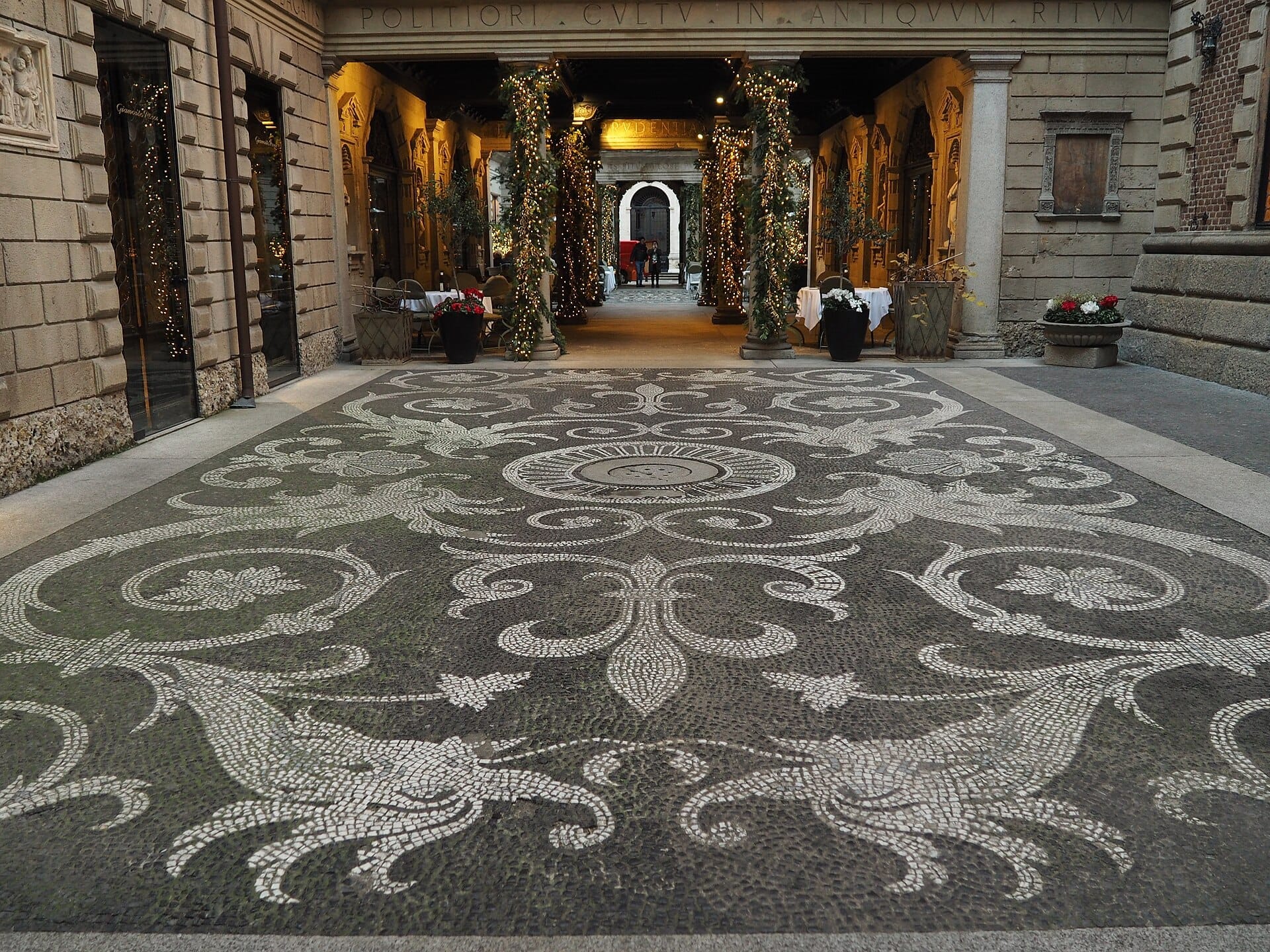
The Quadrilatero operates on its own rhythm, distinct from the rest of the city. In the early morning, the streets are almost serene. Shop staff arrive before opening, deliveries are completed in the time windows allowed under the ZTL, and a few local residents walk dogs along Via della Spiga as if the surrounding luxury is simply backdrop. The architecture from this hour is worth noting: many buildings date to the 18th and 19th centuries, with ornate facades, internal courtyards glimpsed through heavy wooden doors, and ironwork details on upper-floor balconies.
By mid-morning, the district is fully awake. The flagship stores open their doors and the foot traffic shifts: tourists with cameras and shopping bags mix with well-dressed locals on focused errands, and international buyers who treat these streets as a professional destination during Fashion Week. Via Monte Napoleone in particular has a quality of controlled theatre to it. The windows are curated with obsessive care, the doormen are immaculate, and the sound is muted, mostly footsteps and the occasional low conversation in any number of languages.
Afternoons in the Quadrilatero are the peak hour for visitors. The light falls at a low angle along the east-west side streets, catching the gold lettering on boutique facades and turning Via della Spiga into something that looks almost art-directed. This is also when the side streets earn their reputation over the main boulevard: Via Sant'Andrea and Via Gesù are quieter, more residential in feel, with a mix of design showrooms, private ateliers, and cafés whose outdoor seating is occupied by people who clearly intend to stay a while.
After dark, the district changes register. Most shops close by 7:30 pm, and the streets thin out considerably. The area is safe and well-maintained at night, but it is not a nightlife destination. A handful of bars and restaurants remain open, attracting a local professional crowd rather than late-night tourists. For evening energy, the nearby districts of Brera to the west and Porta Venezia to the east offer far more options.
ℹ️ Good to know
The Quadrilatero is not exclusively for shoppers. Even if a Prada purchase is not on the agenda, the architecture, window displays, and general atmosphere make it worth at least one afternoon walk. Via della Spiga in particular has a scale and quality of streetscape that justifies the detour.
What to See and Do
The primary experience here is the streets themselves. Via Monte Napoleone is frequently described as one of the most expensive retail addresses in the world, a claim backed by market data on commercial property values, and walking its length gives you a clear sense of why. The concentration of flagship stores from houses including Armani, Versace, Dolce and Gabbana, Prada, Fendi, Louis Vuitton, Chanel, Gucci, Bulgari, Cartier, and Valentino is unmatched in Italy and comparable only to a handful of streets globally. You do not need to buy anything for the window-shopping alone to feel significant.
The district sits within easy reach of several major cultural institutions. The Museo Poldi Pezzoli is on Via Manzoni, effectively within the Quadrilatero's western boundary, and is one of Milan's finest house museums: a 19th-century collector's apartment transformed into a public collection of Renaissance paintings, arms and armour, decorative arts, and timepieces. It is compact, manageable, and usually far less crowded than the major state museums.
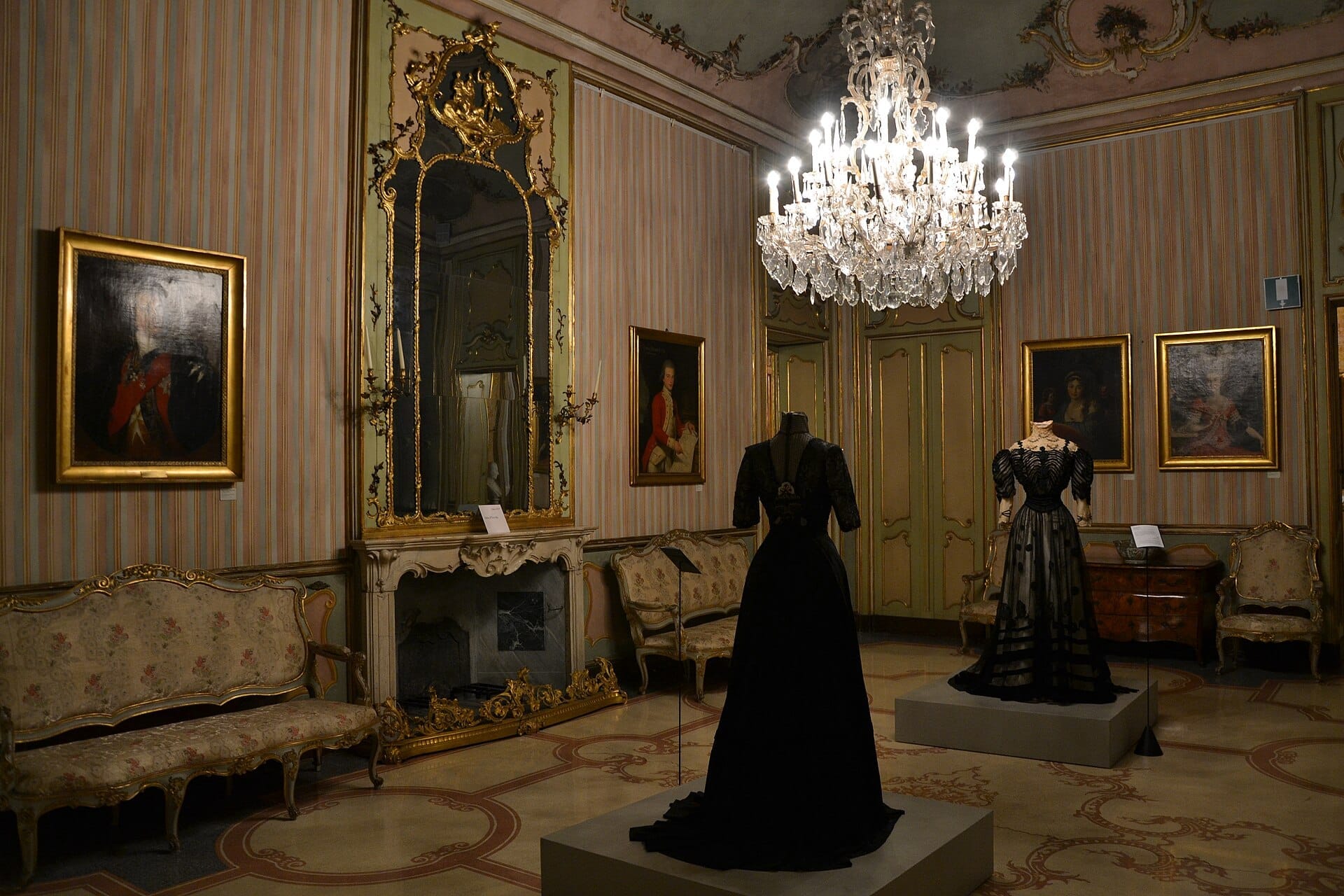
Walking north along Via Manzoni takes you to the Pinacoteca di Brera in about ten minutes once you cross into the Brera district, though that technically falls outside the Quadrilatero's boundary. Within the district itself, the Casa Museo Bagatti Valsecchi on Via Gesù is another standout option: a 19th-century neo-Renaissance palazzo preserved almost intact, offering a rare look into how Milan's aristocratic families actually lived.
Walk the full length of Via Monte Napoleone from Piazza San Babila north to Via Manzoni
Explore the quieter interior streets: Via della Spiga, Via Sant'Andrea, and Via Gesù
Visit the Museo Poldi Pezzoli for an hour of world-class painting without the queues of larger museums
Visit Casa Museo Bagatti Valsecchi for a rare glimpse into a preserved Milanese aristocratic interior
During Milan Fashion Week (February and September), watch the street become a runway in its own right
Look up: the building facades throughout the district contain 19th-century architectural detail that is easy to miss at eye level
The Quadrilatero also serves as one of the main stages during Milan Fashion Week, held twice a year in February and September. During those weeks, the streets take on a different energy entirely: street-style photographers cluster at intersections, guests move between shows in identifiable fashion-industry clusters, and the general theatricality of the district intensifies several degrees.
Eating and Drinking
The food and drink scene within the Quadrilatero is shaped by its clientele. This is not a neighbourhood for affordable aperitivo or casual trattoria dining. Cafés charge accordingly, and sit-down restaurants trend toward the formal end of the spectrum. That said, quality is generally high, and a coffee taken at one of the bars along Via della Spiga or Via Bagutta is a genuinely pleasant experience if you accept the price as part of the context.
Via Bagutta, one of the district's quieter east-west streets, has a particularly established reputation for restaurant dining. The street has hosted trattorias and literary cafés for decades and retains a slightly more old-fashioned Milanese character than the boutique-dominated main arteries. Lunch here, rather than dinner, is usually the more practical option for visitors: many restaurants offer fixed-price lunch menus that represent better value than the evening à la carte.
For a quick stop without sitting down, the bars and pasticcerie around Piazza San Babila at the southern entrance to the district offer espresso and pastry at prices closer to Milan's general average. Heading slightly west into Brera adds considerably more variety at lower price points, including aperitivo bars that represent better value if you are watching costs.
💡 Local tip
If budget is a concern, have your aperitivo in Brera and save the Quadrilatero for daytime exploration. A coffee and a moment at an outdoor table on Via della Spiga costs a few euros and gives you the atmosphere without a significant outlay.
Getting There and Around
The Quadrilatero is one of the most transit-accessible areas in Milan. The Montenapoleone metro station on Line 3 (yellow line) sits at the district's western side and San Babila on Line 1 (red line) at its southern entrance; both connect directly to Duomo in one stop, making the Quadrilatero reachable from virtually any part of the city with a single connection at most. The journey from Milano Centrale station, for example, takes around ten minutes by metro via Line 3 to Montenapoleone.
Walking is the primary way to navigate within the district itself. The total area is compact enough to cross on foot in under fifteen minutes, and the ZTL restrictions that have been in place since 15 September 2025 mean that the internal streets are free of through traffic, making pedestrian movement considerably more pleasant than it once was. This 24-hour ZTL, covering the entire Quadrilatero, prohibits private vehicle access without a permit, with exceptions for residents, certain hotels, and authorized service vehicles. If you are arriving by taxi or private car, you will need to be dropped at the perimeter streets and walk in.
Trams from the city network run along Via Alessandro Manzoni and Corso Venezia, providing surface-level connections to the broader city. For a fuller picture of how to navigate Milan's transit network, the getting around Milan guide covers metro lines, tram routes, and ticketing in detail.
⚠️ What to skip
Since 15 September 2025, the entire Quadrilatero della Moda operates under a 24-hour ZTL (Zona Traffico Limitato). Private vehicles without a permit cannot enter. If you are staying at a hotel within the zone, confirm with the hotel in advance how guest vehicle access is managed. Do not attempt to drive in without checking your authorization status.
Where to Stay
Staying within the Quadrilatero puts you within walking distance of the Duomo, Brera, the Teatro alla Scala, and the Galleria Vittorio Emanuele II. The trade-off is cost: accommodation here sits firmly at the upper end of Milan's already-elevated price range, and options cluster in the five-star and luxury boutique categories.
Hotels within the district tend to occupy historic palazzo buildings, often with internal courtyards and interiors that match the surrounding streetscape in terms of design investment. This is a excellent base for anyone prioritizing central location and the experience of staying in one of the most architecturally refined parts of the city. For visitors on moderate or tight budgets, the nearby Brera and Porta Venezia neighbourhoods offer more affordable options at a walkable distance.
For a full breakdown of accommodation options across different budgets and neighbourhoods, the where to stay in Milan guide covers each district with specific recommendations on location and traveller type. If you are considering a luxury-oriented visit, the luxury Milan guide provides additional context on high-end hotels and experiences across the city.
Nearby Neighbourhoods Worth Combining
The Quadrilatero does not need to be visited in isolation. Its position at the centre of Milan makes it a natural anchor for a day that also takes in the Brera neighbourhood to the west, with its art gallery, independent bookshops, and more casual dining scene. The contrast between the two is instructive: Brera has a lower-key elegance, while the Quadrilatero is deliberately spectacular.
To the east, Porta Venezia offers a significantly more diverse and everyday Milan experience, with Liberty-style architecture along Corso Venezia, a strong café and aperitivo culture, and a neighbourhood feel that is completely absent from the fashion district. Most visitors find the short walk between the two an effective palate cleanser after an afternoon among the flagship stores.
TL;DR
The Quadrilatero della Moda is Milan's premier luxury shopping district, bounded by Via Monte Napoleone, Via Manzoni, Via della Spiga, and Corso Venezia, with Via della Spiga and Via Sant'Andrea as its most atmospheric interior streets.
Best for: fashion industry visitors, luxury shoppers, architecture and streetscape enthusiasts, and anyone wanting to experience the concentrated elegance that defines central Milan.
Not ideal for: budget travellers looking for affordable eating or accommodation, or visitors seeking nightlife, since the district quiets down significantly after shop closing hours.
Key practical note: a 24-hour ZTL has been in operation since 15 September 2025, restricting all private vehicle access. Arrive by metro (Montenapoleone, Line 3, or San Babila, Line 1) or on foot from the Duomo.
Combine with Brera to the west for art and casual dining, or Porta Venezia to the east for Liberty architecture and a more local aperitivo scene.
Milan has over 70 museums, from Renaissance masterpiece galleries to free contemporary art spaces. This guide cuts through the options and tells you exactly which ones are worth your time, what to expect inside, and how to plan your visit.
Milan rewards visitors who time their trip well. This guide covers every season in detail — temperatures, crowd levels, key events, and what to skip — so you can make the most informed decision about when to go.
Milan rewards those who look up and climb higher. This guide covers the city's best viewpoints, from the Duomo's Gothic spires and Palazzo Lombardia's 39th-floor panorama to canal-side sunset bridges and design-forward skyscrapers.
Milan sits at the center of one of Europe's most rewarding day-trip networks. Within two hours by train you can reach Alpine lakes, medieval hilltop towns, Roman amphitheaters, and UNESCO World Heritage canals. This guide covers the best destinations, how to get there, and what to prioritize once you arrive.
Milan has one of Italy's best urban transport networks, but knowing which ticket to buy, which metro line to take, and how to reach the city from three different airports saves real time and money. This guide covers everything from ATM fares and the RicaricaMi card to bike sharing and walking distances between key neighborhoods.
Milan is Italy's most demanding city for high-end travel, where fashion weeks and design fairs can triple hotel rates overnight. This guide covers where to stay, what to spend, when to go, and how to move around Milan like someone who has done it before.
Three days in Milan is enough time to cover the cathedral district, the great art museums, the canal neighbourhood, and still fit in a day trip to Lake Como. This itinerary is built around how the city actually works: metro-first logistics, realistic opening hours, and clear advice on what to skip.
Milan is served by three airports: Malpensa (MXP), Linate (LIN), and Bergamo Orio al Serio (BGY). Together the three airports form Italy's largest airport system by passenger volume, handling over 56 million passengers per year. This guide breaks down the key differences, transport links, costs, and which airport makes sense for your trip.
Milan's built environment is a genuine timeline in stone, steel, and glass. This guide walks you through every major architectural era, from the Gothic Duomo to Porta Nuova's skyscrapers, with practical routes, seasonal advice, and candid assessments of what's worth your time.
Milan's churches span seventeen centuries of history, from 4th-century basilicas built by the city's patron saint to Renaissance chapels covered floor-to-ceiling in frescoes. This guide covers the essential sacred sites, practical visiting tips, and the lesser-known churches that reward the curious traveler.
Milan Design Week is the world's largest design festival, combining the professional Salone del Mobile furniture fair at Rho Fiera with hundreds of free Fuorisalone events across the city's design districts. This guide covers dates, tickets, neighborhoods, transport, and practical planning advice.
Milan is one of the world's four fashion capitals, home to storied design houses, serious shopping districts, and four Fashion Weeks a year. This guide covers everything from navigating the Quadrilatero della Moda to understanding what tourists can actually access during Milan Fashion Week 2026.
Milanese food is not what most visitors expect. Rice trumps pasta, butter beats olive oil, and the city's signature dishes carry centuries of culinary history. This guide covers every essential dish, realistic price expectations, seasonal eating patterns, and practical advice for dining well in Milan.
Milan surprises most couples. Behind the fashion showrooms and financial towers lies a city with candlelit canals, world-class opera, cobblestone art districts, and Gothic cathedral rooftops built for golden-hour views. This guide covers the best romantic experiences in Milan, with practical details on pricing, timing, and what to skip.
Milan rewards those who look beyond the Duomo and The Last Supper. From a chapel lined with human skulls to a free panoramic skyscraper and a botanical garden tucked behind one of Italy's great art museums, these are the experiences that reveal the city locals actually love.
Spring transforms Milan from a grey winter city into one of Europe's most enjoyable urban destinations. This guide covers the real weather, the best events, crowd expectations, and everything you need to plan a smart April or May trip.
Milan transforms in winter into one of Italy's most atmospheric cold-weather destinations, with Christmas markets around the Duomo, centuries-old fairs near Castello Sforzesco, and a city that keeps its cultural calendar packed well past the holidays. This guide covers what to see, when to go, and how to get the most out of the season.
Leonardo da Vinci spent more than two decades in Milan, leaving behind some of the most extraordinary works in Western art and science. This guide covers every significant site, explains what you'll actually find there, and tells you exactly how to book before you arrive.
Milan's nightlife runs on a distinct rhythm: aperitivo first, dinner second, clubs last. This guide breaks down every major area, the best bars and clubs, what things cost, and how to get home at 3am.
Milan has a reputation for luxury fashion and fine dining, but the city is far more accessible than most travelers assume. This guide breaks down realistic daily costs, the smartest ways to use public transport, which world-class attractions are free, and how timing your visit can cut hotel prices by 25–40%.
Milan shopping covers far more than luxury fashion. This guide breaks down the city's best shopping districts, from the Quadrilatero d'Oro's flagship stores to Navigli's vintage markets, with practical advice on what to skip, what to budget, and when to go.
Lake Como sits less than an hour from Milan by direct train, making it one of the most rewarding day trips in northern Italy. This guide covers every transport option, the best villages to visit, ferry logistics, and how to avoid the most common mistakes first-time visitors make.
The journey from Milan to Rome covers roughly 565-570 km and can take anywhere from 3 hours to 6+ depending on how you go. This guide breaks down every realistic option, with clear price comparisons, booking strategies, and the city-center-to-city-center math that makes the train far more competitive than most people expect.
The Milan to Venice route is one of Italy's most popular corridors, served by frequent high-speed trains that cover the distance in around 2 hours 15 to 30 minutes. This guide breaks down every option, from Frecciarossa tickets to bus alternatives, with practical advice on what's worth it and what to skip.
Milan rewards families more than most people expect. From the interactive Leonardo da Vinci Science Museum to the free courtyards of Castello Sforzesco and the rooftop terraces of the Duomo, the city packs a serious amount of child-friendly content into a compact, walkable center. This guide cuts through the noise with specific venues, practical assessments, and logistics that actually help.
Milan rewards visitors who look beyond the fashion weeks and luxury boutiques. This guide covers the essential things to do in Milan Italy, from cathedral rooftops and Renaissance masterpieces to canal-side aperitivo and contemporary architecture, with practical advice on what to book in advance and what to skip.
Milan rewards travelers who choose their base carefully. This guide breaks down every major neighborhood, explains the price realities, and tells you exactly when to book to avoid paying peak-event rates.