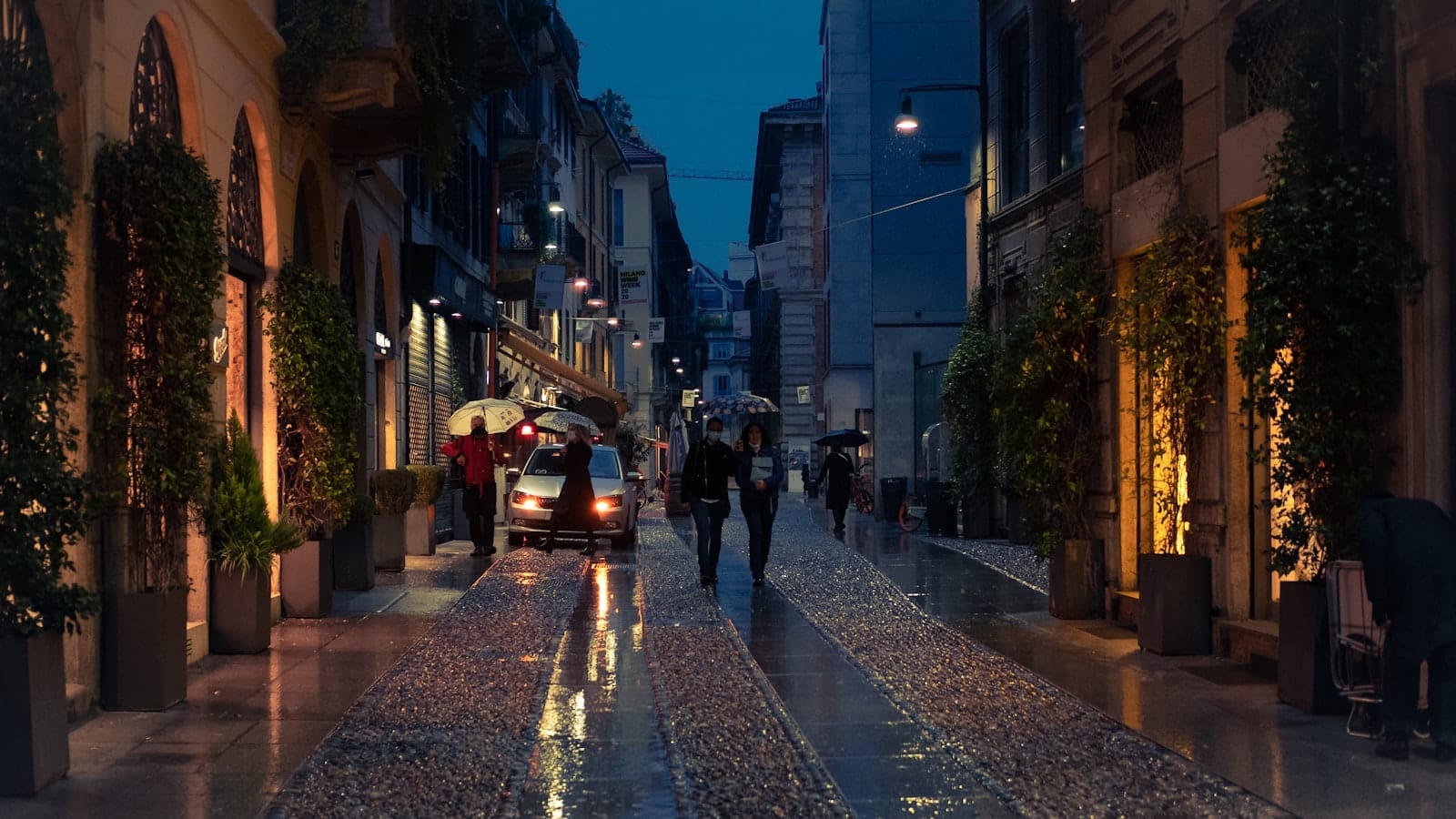
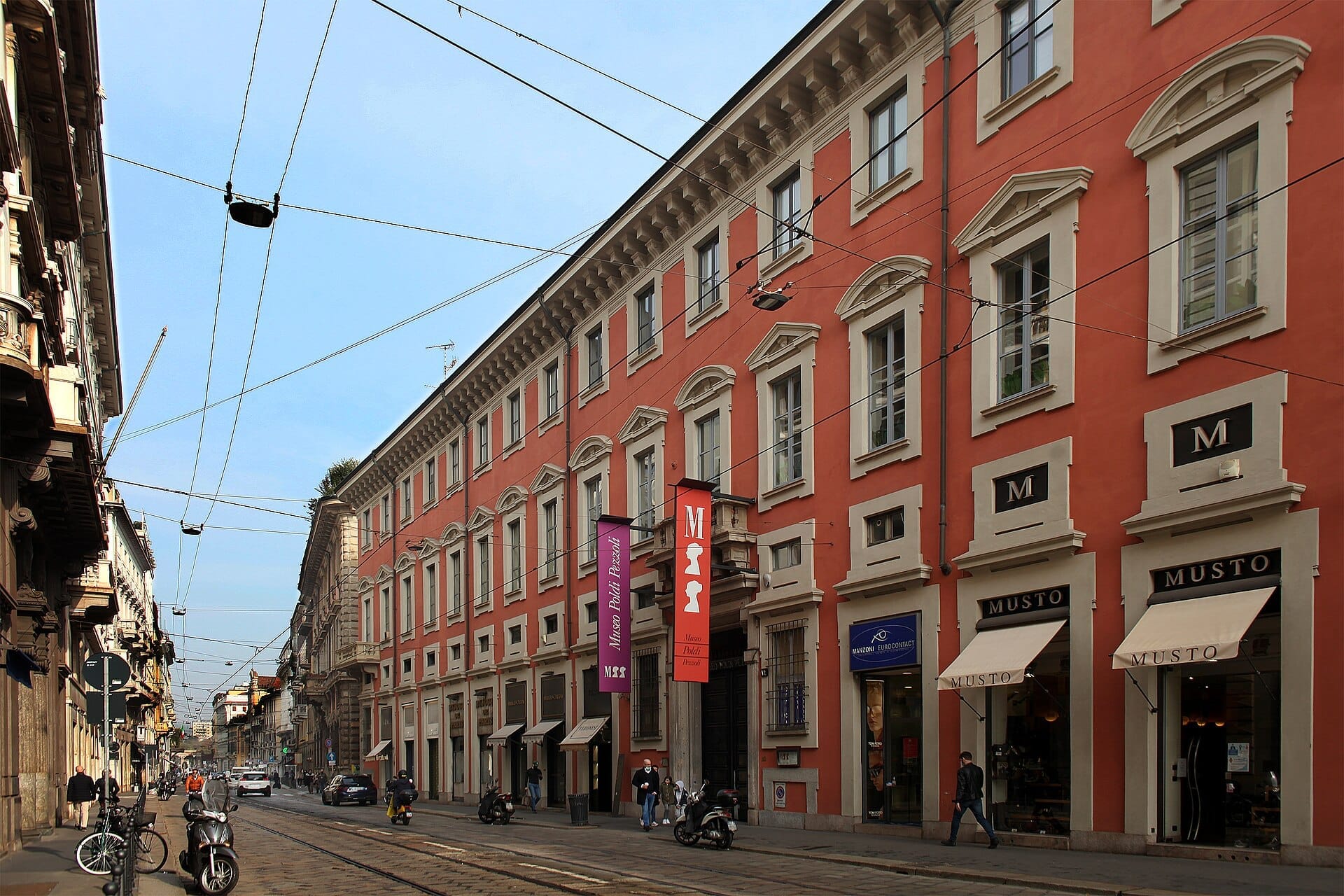
Brera is Milan's historic art quarter, centred on Via Brera and the grand Palazzo Brera complex. Cobbled lanes lined with independent boutiques, gallery spaces, and candlelit restaurants give the district a character unlike anywhere else in the city. It sits squarely in Zone 1, close enough to walk to the Duomo yet feeling like a separate world.
Brera is the district that made Milan's reputation as a city of culture rather than just commerce. Its narrow cobbled streets, the towering Palazzo Brera housing one of Italy's great art collections, and a neighbourhood shaped for centuries by artists and academics give it a density of atmosphere that even its considerable tourist traffic cannot dilute.
Orientation
Brera sits in the northern part of Milan's Zone 1, the historic centre. To the east lies Montenapoleone and the fashion quadrilateral; to the west, Castello Sforzesco and Parco Sempione. The district's spine is Via Brera itself, running roughly north from the broad commercial artery of Via Alessandro Manzoni toward Piazza del Carmine and Piazza San Marco. To the east lies Montenapoleone and the fashion quadrilateral; to the west, Castello Sforzesco and Parco Sempione. The district's spine is Via Brera itself, running roughly north from the broad commercial artery of Via Alessandro Manzoni toward Piazza del Carmine and Piazza San Marco.
The neighbourhood has soft boundaries, which is part of its character. Moving north along Via Fiori Chiari and Via Fiori Oscuri, you are clearly inside Brera's orbit: the streets narrow, the paving changes to cobblestones, and the pace of the city visibly slows. Walk another five minutes north and you begin to reach the wider area around Corso Garibaldi. To the south, Brera dissolves into the grid of the historic centre where Via Manzoni connects to the Duomo area, about a 15-minute walk away.
Brera's position makes it an excellent base for connecting to adjacent areas on foot.The Quadrilatero della Modais a 10-minute walk southeast, andPorta Nuova and Isolalie 15 to 20 minutes north, making Brera a practical anchor between Milan's historic and contemporary faces.
Character & Atmosphere
Early morning in Brera belongs to the neighbourhood itself. Before 9am, the cobblestones of Via Fiori Chiari are quiet enough that you can hear the clatter of a café owner arranging chairs. The smell of espresso drifts from the few bars already open, and the pale light from the north, diffused by the narrow street canyons, gives the stone facades a quality that photographers and painters have been responding to for over two centuries.
By mid-morning, the district shifts register. The Pinacoteca di Brera draws visitors from across the city and beyond, and the streets around Palazzo Brera begin to fill with a mix of art students from the Accademia, tourists consulting maps, and the gallery owners and antique dealers who define the commercial tone of the area. The boutiques on Via Fiori Chiari and the surrounding lanes stock a range running from serious contemporary art to well-made leather goods and design objects that you won't find in the department stores.
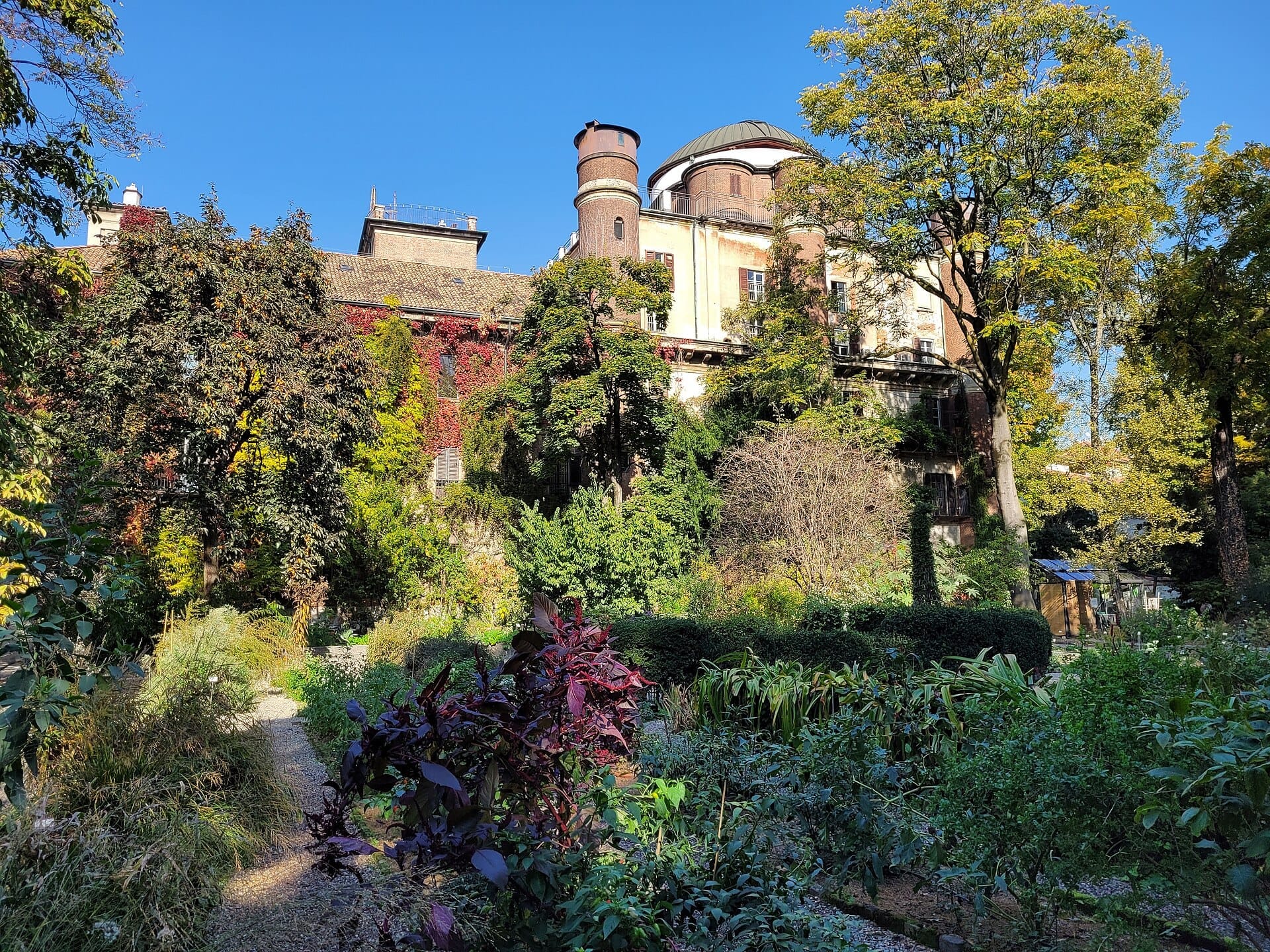
Afternoons, particularly in summer, bring the heat down onto the paving stones and the light becomes flat and bright. This is when the narrow lanes offer genuine relief: Brera's irregular medieval street pattern creates pockets of shade that the wider boulevards of the centre do not. The Orto Botanico di Brera, the small botanical garden tucked inside Palazzo Brera, is a particularly quiet escape at this hour.
After dark, the neighbourhood transforms again. The restaurants and bars along Via Fiori Chiari and the small piazzas around Piazza del Carmine fill steadily from 7pm. Brera has a well-established aperitivo culture, and this is arguably where it's practised most self-consciously in Milan: the bars are stylish, the crowds well-dressed, the noise level a continuous low roar that intensifies toward midnight. On weekend nights the lanes become uncomfortably crowded. This is not a neighbourhood that falls quiet early.
ℹ️ Good to know
Brera's reputation as Milan's 'bohemian' quarter is historically earned but now somewhat stratified. The genuine artists and low-rent studios that gave the district its edge largely shifted out during the 1990s and 2000s as rents rose. What remains is a high-quality cultural and commercial neighbourhood with a strong aesthetic identity, rather than a working artists' community.
What to See & Do
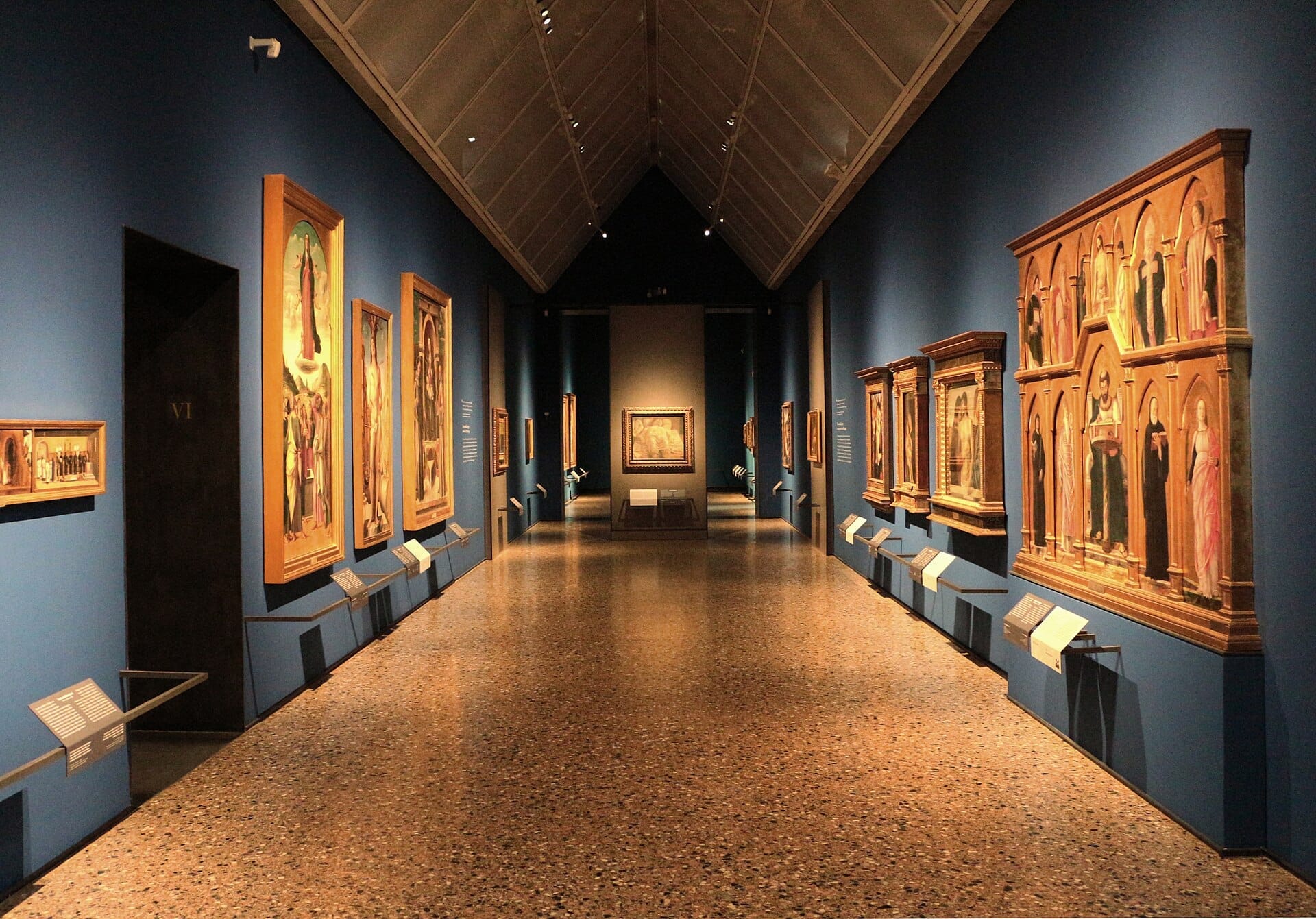
The anchor institution is thePinacoteca di Brera, The anchor institution is the Pinacoteca di Brera, one of Italy's most important art galleries, housed in the grand Palazzo Brera at Via Brera 28. The collection covers Italian painting from the 13th century to the 20th, with particular strengths in major works by Italian masters. Raphael's Sposalizio della Vergine and Andrea Mantegna's Cristo Morto are among the paintings that draw serious art travellers to Milan specifically for this collection. Allocate at least two hours; the building itself, a 17th-century former Jesuit college built around a central courtyard, is worth exploring independently of the galleries., housed in the grand Palazzo Brera at Via Brera 28. The collection covers Italian painting from the 13th century to the 20th, with particular strength in works from Venice, Lombardy, and the Marche. Raphael's Sposalizio della Vergine and Andrea Mantegna's Cristo Morto are among the paintings that draw serious art travellers to Milan specifically for this collection. Allocate at least two hours; the building itself, a 17th-century former Jesuit college built around a central courtyard, is worth exploring independently of the galleries.
The same palazzo complex contains the Accademia di Belle Arti di Brera, the Biblioteca Nazionale Braidense, the Osservatorio Astronomico di Brera, and theOrto Botanico di Brera, a small but historically significant botanical garden that has been cultivated on this site since 1782. The garden is easy to miss but makes for a genuinely calm interlude between the busy lanes outside.
Beyond Palazzo Brera, the neighbourhood rewards slow exploration on foot. The Church of Santa Maria del Carmine, at the northwestern edge of the district on Piazza del Carmine, is a 15th-century Gothic structure with a 19th-century facade that anchors the northern end of the neighbourhood's most characteristic streets.
Pinacoteca di Brera: Italy's foremost gallery of Northern Italian painting, Via Brera 28
Orto Botanico di Brera: a small 18th-century botanical garden inside Palazzo Brera
Santa Maria del Carmine: Gothic church on Piazza del Carmine
Via Fiori Chiari and Via Fiori Oscuri: the neighbourhood's most atmospheric cobbled lanes
Antique market on Via Fiori Chiari: third Saturday of each month
Independent contemporary art galleries scattered throughout the surrounding streets
💡 Local tip
The Pinacoteca di Brera is closed on Mondays. If you're planning your visit around the gallery, Tuesday through Sunday are your options. Booking in advance online is advisable in peak season, particularly in spring and during Milan Design Week in April.
Eating & Drinking
Brera sits at the higher end of Milan's dining price spectrum. This is not the neighbourhood to find cheap lunch spots or no-frills trattorie aimed at locals on a budget; those exist in other parts of the city. What Brera does well is well-executed Italian and international cooking in settings that match the visual quality of the surroundings: clean lines, good lighting, considered wine lists.
The aperitivo hour, roughly 6pm to 9pm, is the neighbourhood's social peak. Many bars around Piazza del Carmine and along Via Fiori Chiari offer aperitivo service with food included in the price of a drink, a Milanese tradition that Brera performs with particular style. Campari Soda and Aperol Spritz are ubiquitous, but the better bars in this area also carry a serious range of amari and vermouth, reflecting the Lombard tradition.
For coffee, the distinction in Brera is between the bars oriented toward the tourist trade, where service can be slow and prices elevated, and the smaller neighbourhood bars on the periphery of the district that serve a more local clientele. The further you walk from the core of Via Brera toward Piazza San Marco or Corso Garibaldi, the more the prices and the crowd shift toward everyday Milanese life.
For a broader overview of where to eat across the city, theMilan food guidecovers everything from street food to fine dining, with neighbourhood-by-neighbourhood breakdowns.
⚠️ What to skip
Restaurants directly on Via Fiori Chiari and the most photographed lanes of Brera tend to price their menus to the tourist trade. You will eat better value by walking two or three streets back from the main tourist corridor, toward the quieter residential edges of the district.
Getting There & Around
Brera has no metro station directly inside it, which contributes to the sense of separation from the rest of the city's transit grid. The two most practical stops are Lanza on the M2 (green line), Brera has no metro station directly inside it, which contributes to the sense of separation from the rest of the city's transit grid. The two most practical stops are Lanza on the M2 (green line), a short walk northwest of Palazzo Brera, and Montenapoleone on the M3 (yellow line), a short walk to the southeast. Both connect into Milan's wider metro network, including routes toward Centrale and the Duomo area.
Tram lines run along the outer edges of the district, particularly on Corso Garibaldi to the northwest, which connects toward the Cairoli stop nearCastello Sforzescoand Parco Sempione. If you're arriving from the Duomo area, the walk north along Via Alessandro Manzoni and then Via Brera takes about 15 minutes and passes through progressively quieter streets as you go.
Once inside the neighbourhood, everything is on foot. The cobbled lanes are too narrow for regular traffic and several are pedestrianised. Bicycles from the BikeMi city hire scheme are available at docking stations on the edges of the district, useful for connecting onward to Porta Nuova or the Navigli area. Taxis and ride-hailing services can pick up and drop off on the broader streets that frame the neighbourhood.
For a full breakdown of how to move around Milan by metro, tram, and on foot, thegetting around Milan guidecovers ticketing, line maps, and practical advice for each area of the city.
Where to Stay
Staying in Brera places you in one of the most central and atmospheric parts of Milan, with genuine walking access to the Pinacoteca, the Duomo district, the fashion quarter, and Castello Sforzesco. The tradeoff is cost: accommodation in this neighbourhood runs toward the upper end of the city's price range, and noise on weekend evenings can be significant in the lanes closest to the main bar and restaurant strips.
The quieter, more residential streets to the north of Piazza del Carmine and toward Piazza San Marco offer a better balance between character and livability. Here you are still within easy walking distance of everything Brera offers, but far enough from the Via Fiori Chiari bar strip to sleep comfortably on a Friday night. Boutique hotels and design-oriented B&Bs dominate the accommodation offer in this part of Milan, reflecting the neighbourhood's aesthetic priorities.
Brera is particularly well-suited to travellers interested in art, design, and fashion who want to be within walking distance of the Pinacoteca and the Quadrilatero. For a broader look at where to base yourself across the city, thewhere to stay in Milan guideprovides comparisons across all the main neighbourhoods. Couples and design-focused visitors may also find theluxury Milan guiderelevant, given Brera's concentration of high-end hotels and restaurants.
North, the walk through Corso Garibaldi into Isola takes about 20 minutes and brings you into a completely different register: a neighbourhood of street art, independent cafés, and a younger crowd. For the evening,the Navigli canal districtis about a 25-minute walk south, or a short tram or metro ride, and offers a lower-priced and more informal version of the aperitivo and nightlife culture that Brera itself represents at a premium.
During April's Milan Design Week, Brera becomes one of the city's focal points, with galleries, showrooms, and temporary installations throughout the district. TheMilan Design Week guideexplains how to navigate the event, which transforms the neighbourhood's already lively streets into an intense five-day programme.
TL;DR
Brera is Milan's historic art quarter: home to the Pinacoteca di Brera, the Accademia di Belle Arti, and some of the city's most atmospheric cobbled streets.
Best suited to travellers interested in art, design, fashion, and Italian urban culture who want walkability to the city's main attractions.
Evenings and weekends are lively and can be noisy: the aperitivo and nightlife scene is central to the neighbourhood's character, for better or worse.
Accommodation and restaurants trend expensive; walking a few streets away from the main tourist lanes improves both value and authenticity significantly.
Metro access is indirect (Lanza M2 or Montenapoleone M3, both about 6 minutes on foot), but central location makes most of Milan's highlights walkable.
Milan has over 70 museums, from Renaissance masterpiece galleries to free contemporary art spaces. This guide cuts through the options and tells you exactly which ones are worth your time, what to expect inside, and how to plan your visit.
Milan rewards visitors who time their trip well. This guide covers every season in detail — temperatures, crowd levels, key events, and what to skip — so you can make the most informed decision about when to go.
Milan rewards those who look up and climb higher. This guide covers the city's best viewpoints, from the Duomo's Gothic spires and Palazzo Lombardia's 39th-floor panorama to canal-side sunset bridges and design-forward skyscrapers.
Milan sits at the center of one of Europe's most rewarding day-trip networks. Within two hours by train you can reach Alpine lakes, medieval hilltop towns, Roman amphitheaters, and UNESCO World Heritage canals. This guide covers the best destinations, how to get there, and what to prioritize once you arrive.
Milan has one of Italy's best urban transport networks, but knowing which ticket to buy, which metro line to take, and how to reach the city from three different airports saves real time and money. This guide covers everything from ATM fares and the RicaricaMi card to bike sharing and walking distances between key neighborhoods.
Milan is Italy's most demanding city for high-end travel, where fashion weeks and design fairs can triple hotel rates overnight. This guide covers where to stay, what to spend, when to go, and how to move around Milan like someone who has done it before.
Three days in Milan is enough time to cover the cathedral district, the great art museums, the canal neighbourhood, and still fit in a day trip to Lake Como. This itinerary is built around how the city actually works: metro-first logistics, realistic opening hours, and clear advice on what to skip.
Milan is served by three airports: Malpensa (MXP), Linate (LIN), and Bergamo Orio al Serio (BGY). Together the three airports form Italy's largest airport system by passenger volume, handling over 56 million passengers per year. This guide breaks down the key differences, transport links, costs, and which airport makes sense for your trip.
Milan's built environment is a genuine timeline in stone, steel, and glass. This guide walks you through every major architectural era, from the Gothic Duomo to Porta Nuova's skyscrapers, with practical routes, seasonal advice, and candid assessments of what's worth your time.
Milan's churches span seventeen centuries of history, from 4th-century basilicas built by the city's patron saint to Renaissance chapels covered floor-to-ceiling in frescoes. This guide covers the essential sacred sites, practical visiting tips, and the lesser-known churches that reward the curious traveler.
Milan Design Week is the world's largest design festival, combining the professional Salone del Mobile furniture fair at Rho Fiera with hundreds of free Fuorisalone events across the city's design districts. This guide covers dates, tickets, neighborhoods, transport, and practical planning advice.
Milan is one of the world's four fashion capitals, home to storied design houses, serious shopping districts, and four Fashion Weeks a year. This guide covers everything from navigating the Quadrilatero della Moda to understanding what tourists can actually access during Milan Fashion Week 2026.
Milanese food is not what most visitors expect. Rice trumps pasta, butter beats olive oil, and the city's signature dishes carry centuries of culinary history. This guide covers every essential dish, realistic price expectations, seasonal eating patterns, and practical advice for dining well in Milan.
Milan surprises most couples. Behind the fashion showrooms and financial towers lies a city with candlelit canals, world-class opera, cobblestone art districts, and Gothic cathedral rooftops built for golden-hour views. This guide covers the best romantic experiences in Milan, with practical details on pricing, timing, and what to skip.
Milan rewards those who look beyond the Duomo and The Last Supper. From a chapel lined with human skulls to a free panoramic skyscraper and a botanical garden tucked behind one of Italy's great art museums, these are the experiences that reveal the city locals actually love.
Spring transforms Milan from a grey winter city into one of Europe's most enjoyable urban destinations. This guide covers the real weather, the best events, crowd expectations, and everything you need to plan a smart April or May trip.
Milan transforms in winter into one of Italy's most atmospheric cold-weather destinations, with Christmas markets around the Duomo, centuries-old fairs near Castello Sforzesco, and a city that keeps its cultural calendar packed well past the holidays. This guide covers what to see, when to go, and how to get the most out of the season.
Leonardo da Vinci spent more than two decades in Milan, leaving behind some of the most extraordinary works in Western art and science. This guide covers every significant site, explains what you'll actually find there, and tells you exactly how to book before you arrive.
Milan's nightlife runs on a distinct rhythm: aperitivo first, dinner second, clubs last. This guide breaks down every major area, the best bars and clubs, what things cost, and how to get home at 3am.
Milan has a reputation for luxury fashion and fine dining, but the city is far more accessible than most travelers assume. This guide breaks down realistic daily costs, the smartest ways to use public transport, which world-class attractions are free, and how timing your visit can cut hotel prices by 25–40%.
Milan shopping covers far more than luxury fashion. This guide breaks down the city's best shopping districts, from the Quadrilatero d'Oro's flagship stores to Navigli's vintage markets, with practical advice on what to skip, what to budget, and when to go.
Lake Como sits less than an hour from Milan by direct train, making it one of the most rewarding day trips in northern Italy. This guide covers every transport option, the best villages to visit, ferry logistics, and how to avoid the most common mistakes first-time visitors make.
The journey from Milan to Rome covers roughly 565-570 km and can take anywhere from 3 hours to 6+ depending on how you go. This guide breaks down every realistic option, with clear price comparisons, booking strategies, and the city-center-to-city-center math that makes the train far more competitive than most people expect.
The Milan to Venice route is one of Italy's most popular corridors, served by frequent high-speed trains that cover the distance in around 2 hours 15 to 30 minutes. This guide breaks down every option, from Frecciarossa tickets to bus alternatives, with practical advice on what's worth it and what to skip.
Milan rewards families more than most people expect. From the interactive Leonardo da Vinci Science Museum to the free courtyards of Castello Sforzesco and the rooftop terraces of the Duomo, the city packs a serious amount of child-friendly content into a compact, walkable center. This guide cuts through the noise with specific venues, practical assessments, and logistics that actually help.
Milan rewards visitors who look beyond the fashion weeks and luxury boutiques. This guide covers the essential things to do in Milan Italy, from cathedral rooftops and Renaissance masterpieces to canal-side aperitivo and contemporary architecture, with practical advice on what to book in advance and what to skip.
Milan rewards travelers who choose their base carefully. This guide breaks down every major neighborhood, explains the price realities, and tells you exactly when to book to avoid paying peak-event rates.