Leonardo da Vinci in Milan: A Complete Guide to His Legacy
Leonardo da Vinci spent more than two decades in Milan, leaving behind some of the most extraordinary works in Western art and science. This guide covers every significant site, explains what you'll actually find there, and tells you exactly how to book before you arrive.
Plan and book this trip
Tools from our partner Travelpayouts help you compare flights and hotels. If you book through them, we may earn a commission at no extra cost to you.
Flights
Hotels map
TL;DR
- Leonardo da Vinci lived in Milan for nearly two decades, working for the Sforza court as painter, engineer, architect, and inventor.
- Book The Last Supper months in advance — timed slots sell out fast and walk-ins are not possible.
- The Museo Nazionale della Scienza e Tecnologia holds one of the largest permanent Leonardo exhibitions, with around 170 works and machine models.
- Most key sites cluster around Corso Magenta, making a half-day walking route practical.
- For a broader picture of what to do in the city, see our full Milan guide.
Why Milan? Leonardo's Two Decades at the Sforza Court
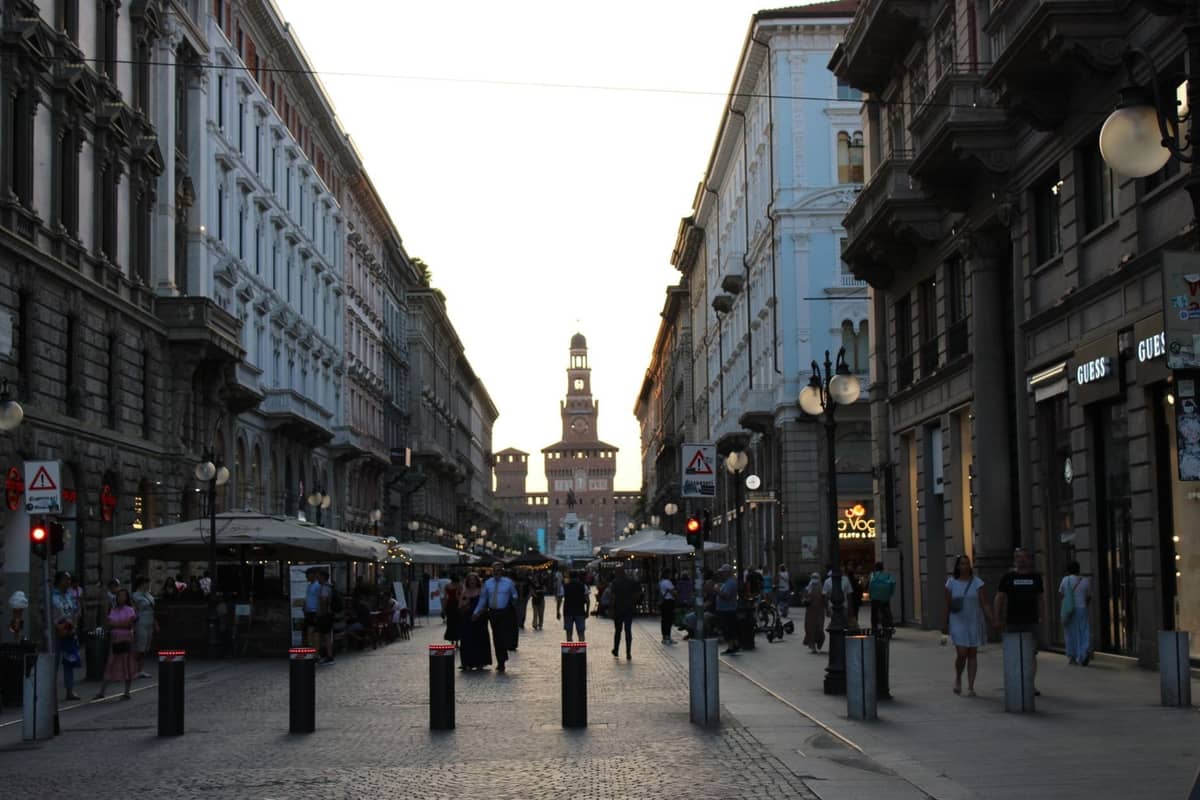
Leonardo arrived in Milan around 1482, reportedly bearing a letter to Ludovico Sforza describing himself primarily as a military engineer, not a painter. He stayed, with some interruptions, until 1499, when the French invasion of Lombardy ended Sforza rule and scattered the court. A second, shorter period in Milan followed from around 1506 to 1513. In total, more years of Leonardo's adult life were spent in Milan than anywhere else, including Florence.
The relationship with Ludovico il Moro was the engine of Leonardo's most productive period. He designed court festivals, worked on canal engineering in the Navigli system, drew up plans for an ideal city after plague swept Milan in the 1480s, painted The Last Supper and the Portrait of a Musician, and filled thousands of notebook pages with anatomical studies, hydraulic machines, and flying devices. The idea that Leonardo was simply a court painter undersells how broadly he operated.
ℹ️ Good to know
Leonardo's notebooks from the Milan period include the Codex Atlanticus — a large collection of drawings and writings covering anatomy, optics, cartography, and engineering. It has been in Milan since the late 16th century.
The Last Supper: The Non-Negotiable Stop
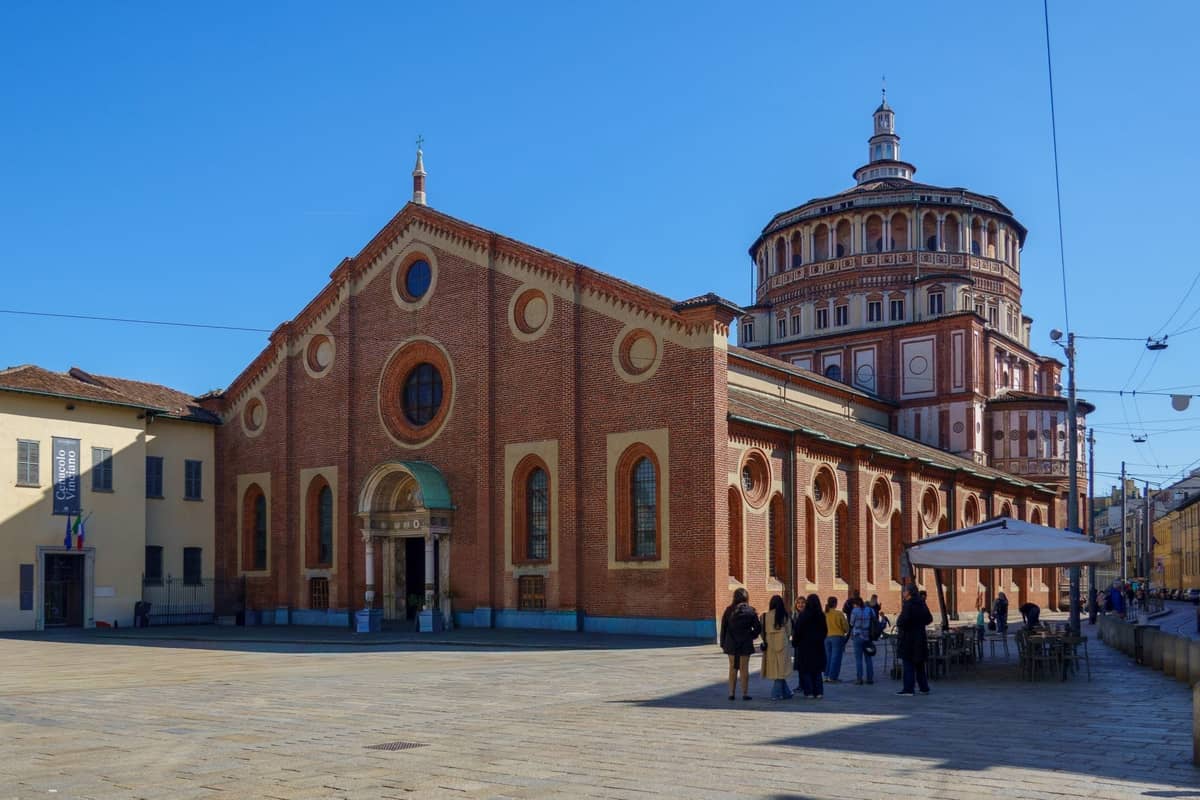
The Cenacolo Vinciano — the refectory wall of the Dominican convent of Santa Maria delle Grazie — houses what is arguably the most studied single painting in the world. Leonardo completed it around 1498 using an experimental tempera and oil technique directly on a dry plaster wall, which began to deteriorate almost immediately. What you see today is partly the result of centuries of restoration, but the composition and emotional charge of the original remain intact.
Entry is managed in timed groups of around 25–30 people, with each visit lasting 15 minutes inside the refectory. The entrance fee is currently around 15 € including the booking fee, though prices are subject to change — verify on the official site before you plan. Book through the official Musei del Cenacolo Vinciano platform as early as possible, ideally two to three months ahead for spring and summer visits. The convent also includes Santa Maria delle Grazie church itself, a UNESCO World Heritage Site, which you can visit separately without a reservation.
⚠️ What to skip
There is no walk-in access to The Last Supper. Always book through the official Musei del Cenacolo Vinciano website to get the correct price and a valid time slot.
Museo Nazionale della Scienza e Tecnologia: The Leonardo Galleries
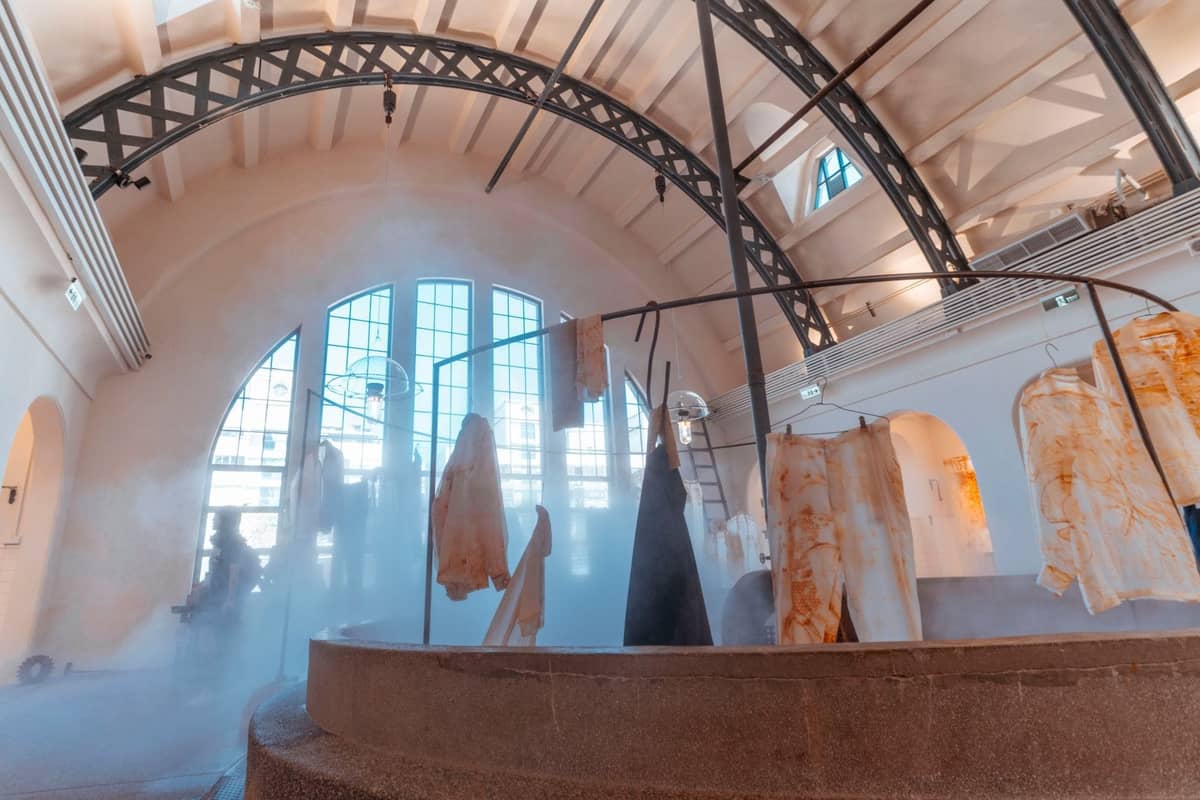
The Museo Nazionale della Scienza e Tecnologia on Via San Vittore 21 occupies a former 16th-century Olivetan monastery. Its Leonardo Galleries form the world's largest permanent exhibition dedicated to the man, with roughly 170 works: facsimiles of notebook pages, scale models of his machines built from the original drawings, and detailed interpretive panels that trace his thinking across multiple disciplines.
The machine models are the main draw here, particularly the flying devices and the hydraulic screw designs. These are not original objects — they are reconstructions made by engineers interpreting Leonardo's sketches — but they are genuinely illuminating. Seeing the ornithopter frame or the revolving bridge model in three dimensions changes how you read the notebooks. Budget at least two hours for the Leonardo section alone; the full museum (which covers transport, energy, and communication history) could easily take a full day.
The museum is reachable by Metro Line M2, stop Sant'Ambrogio, and is a short walk from the Corso Magenta cluster of Leonardo sites. It is open daily except certain holidays — confirm current hours on the official site (museoscienza.org). Ticket prices should be confirmed on the official site before you go.
💡 Local tip
The museum has a strong program of temporary exhibitions and workshops. If you are visiting with children, the interactive elements in the Leonardo Galleries are some of the best science-focused museum content in Italy for younger visitors.
Castello Sforzesco and the Sala delle Asse
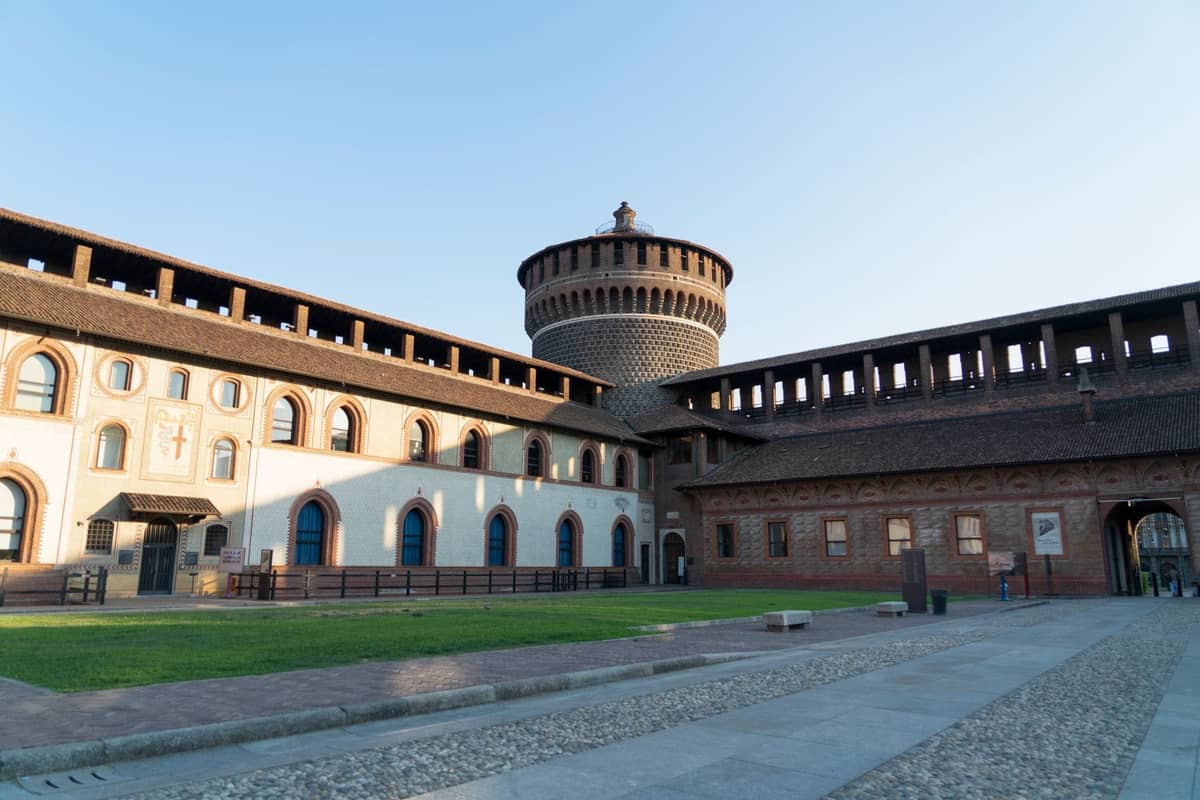
Leonardo worked at Castello Sforzesco for years as a court engineer and artist. His most visible surviving contribution is the Sala delle Asse, a large room on the ground floor of the Torre Falconiera wing, where he painted an elaborate ceiling fresco between 1497 and 1498. The design depicts an intricate geometric lattice of mulberry branches and ropes, interwoven across the vaulted ceiling to create the illusion of a pergola or arbor.
The Sala delle Asse has undergone significant restoration work in recent years, which has revealed previously hidden monochrome drawings at the base of the walls — root systems that formed the underpinning of the canopy design. These discoveries have considerably deepened the scholarly understanding of the room. Confirm the current access status of the Sala before visiting, as restoration phases have occasionally limited visitor access to parts of it.
The castle's broader museums include the Musei del Castello Sforzesco, which house Michelangelo's unfinished Rondanini Pietà alongside Egyptian, prehistoric, and decorative arts collections. Museum entry costs around 10 € for adults. The castle grounds and courtyards are free to enter and are worth a visit in their own right — they connect directly to Parco Sempione, Milan's main public park.
Pinacoteca Ambrosiana and the Codex Atlanticus
The Pinacoteca Ambrosiana houses the Codex Atlanticus, the largest single collection of Leonardo's writings and drawings. The codex contains 1,119 sheets compiled by sculptor Pompeo Leoni in the late 16th century from Leonardo's notebooks and loose papers. The range of subjects covered is staggering: siege weapons, hydraulic pumps, geometric puzzles, anatomical cross-sections, town planning, and musical instruments.
Not all pages of the Codex Atlanticus are on display at once — rotating selections are shown in the museum's dedicated rooms. The Ambrosiana also holds Leonardo's Portrait of a Musician, one of the very few surviving portraits attributable to him and the only one from his first Milan period. The museum's permanent collection goes well beyond Leonardo and includes Raphael's cartoon for the School of Athens. Ticket prices and opening hours should be confirmed on the official Ambrosiana website before your visit.
Leonardo's Vineyard and the Corso Magenta Circuit
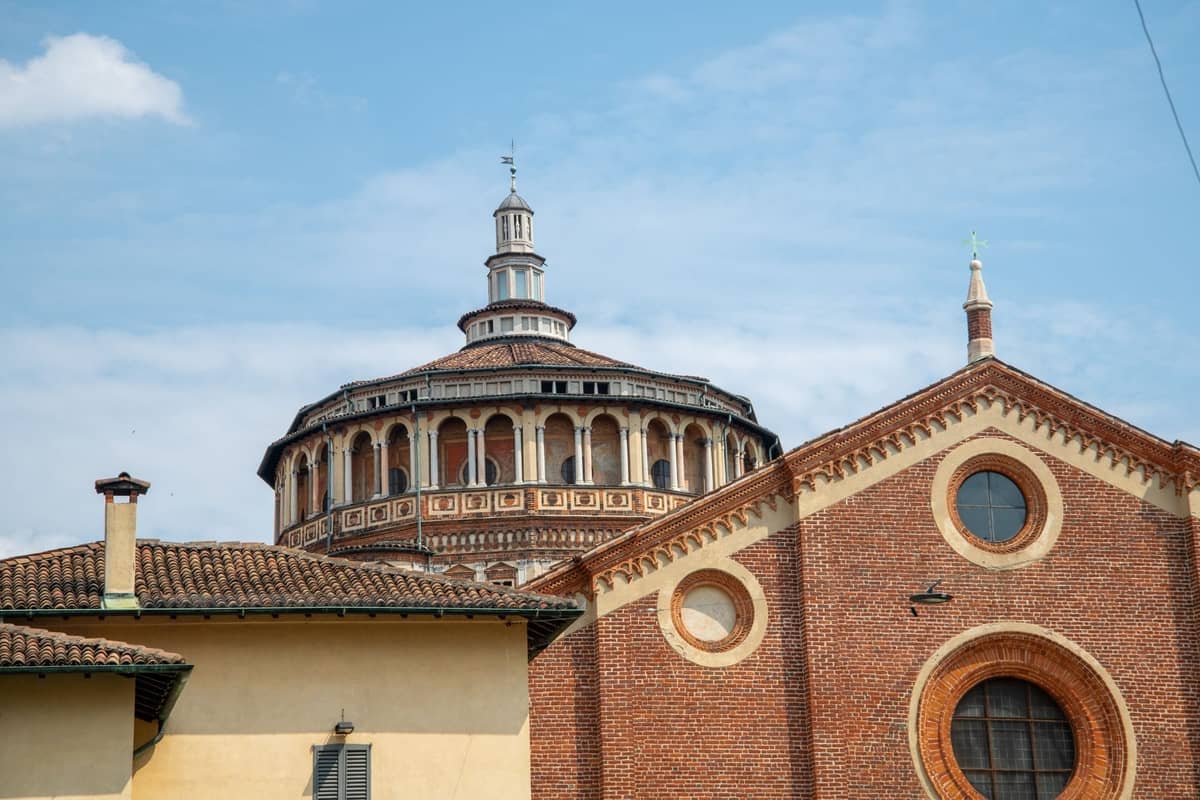
In 1498, Ludovico Sforza granted Leonardo a vineyard on the grounds of what is now the Casa degli Atellani on Corso Magenta. Leonardo tended the vineyard during his time in Milan and referenced it in his will. After centuries of neglect and wartime damage, the vineyard was reconstructed using historical and scientific research. The result is a small, historically grounded vineyard garden that also produces wine.
The vineyard is accessible via guided visit through the Casa degli Atellani. However, it has been subject to periodic closures for restoration work. Check the official La Vigna di Leonardo website (vignadileonardo.com) well in advance. The property sits on Corso Magenta, less than 200 meters from Santa Maria delle Grazie, making it an easy addition to the same visit.
The Corso Magenta area is the natural anchor for a Leonardo-focused day in Milan. Santa Maria delle Grazie and The Last Supper, the vineyard, and the Museo Nazionale della Scienza e Tecnologia are all within easy walking distance of each other. From the museum, it is about a 15-minute walk to the Castello Sforzesco, and another 15 minutes from there to the Pinacoteca Ambrosiana. The full circuit is manageable on foot.
- Cenacolo Vinciano (The Last Supper) Corso Magenta area, Santa Maria delle Grazie. Book months ahead. 15-minute timed visits. Around 15 €.
- Museo Nazionale della Scienza e Tecnologia Via San Vittore 21. Metro M2, Sant'Ambrogio stop. World's largest Leonardo exhibition. Around 10–15 €.
- Castello Sforzesco, Sala delle Asse Piazza Castello. Check restoration access status before visiting. Around 10 € for museums.
- Pinacoteca Ambrosiana Piazza Pio XI. Houses Portrait of a Musician and the Codex Atlanticus. Check official site for hours.
- La Vigna di Leonardo, Casa degli Atellani Corso Magenta. Reconstructed vineyard from Leonardo's era. Check availability — can close for works.
Practical Tips for Visiting Leonardo Sites
- Book The Last Supper as your first priority, before any other planning — slots go fast, especially March through October.
- The Museo Nazionale della Scienza e Tecnologia requires no advance booking in most seasons, but weekends can be crowded. Arrive when doors open.
- The Ambrosiana tends to be quieter than the other major Leonardo sites. It is a good option for afternoons when larger attractions are at peak capacity.
- Monday closures: most Milan museums close on Mondays, including the Leonardo museum and the Ambrosiana. Plan accordingly.
- Guided tours covering multiple Leonardo sites in a single route operate most days except Monday, typically with groups capped at around 30 people.
- Dress code applies at Santa Maria delle Grazie church: shoulders and knees should be covered.
✨ Pro tip
If you want context before visiting the physical sites, the Museo Nazionale della Scienza e Tecnologia is the best first stop. Seeing the machine models and notebook facsimiles early makes The Last Supper and the Sala delle Asse more meaningful when you see them.
Beyond the Famous Sites: Leonardo's Less-Visited Traces
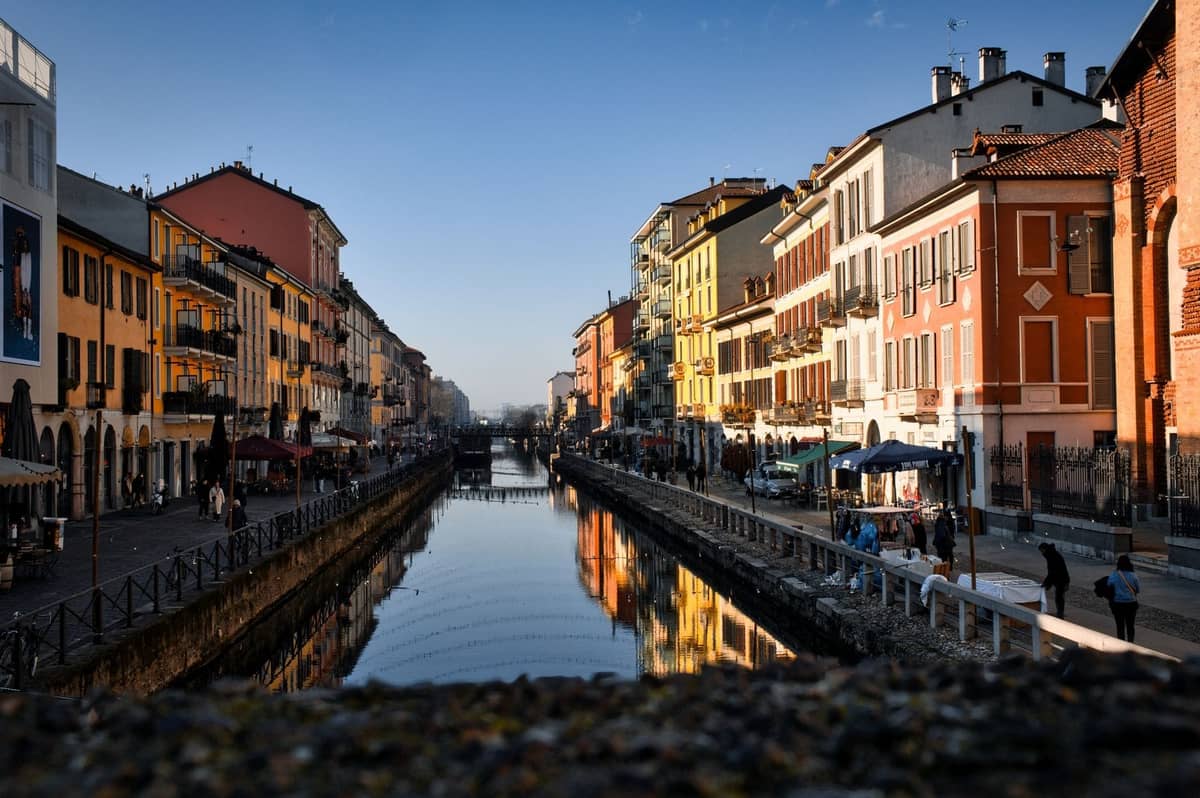
Leonardo's involvement with Milan's canal system — the Navigli — is often overlooked. He contributed designs for canal locks and water management infrastructure, and the Navigli canals remain one of the most atmospherically interesting parts of the city today. The Naviglio Grande and the Navigli district are worth an evening visit, and knowing that Leonardo spent time on these waterways as an engineer adds a layer of meaning to what is now primarily a social neighborhood.
The Brera district is close to the Ambrosiana and the Pinacoteca di Brera, and while the latter does not hold major Leonardo works, it provides important context for Renaissance Milan — the Lombard painters who worked alongside and after Leonardo form a direct visual conversation with his legacy.
FAQ
How far in advance should I book The Last Supper tickets?
At minimum, book two to three months ahead for visits between March and October. For the Christmas and Easter periods, book even earlier. Slots are strictly limited — the refectory holds only around 40 visitors per 15-minute session, and the demand far exceeds supply. Always book through the official Musei del Cenacolo Vinciano site to avoid overpriced reseller tickets.
Can I see all the main Leonardo sites in one day?
You can cover The Last Supper, the Castello Sforzesco Sala delle Asse, and the Museo Nazionale della Scienza e Tecnologia in a full day, assuming your Last Supper slot is in the morning. Adding the Pinacoteca Ambrosiana would make for a very long day. Most visitors spread the sites across two days to allow enough time at each location.
Is the Codex Atlanticus fully on display at the Ambrosiana?
No. The Codex Atlanticus contains 1,119 sheets, and a rotating selection is shown at any given time. The museum displays a curated group of pages in its dedicated Leonardo rooms. If there is a specific sheet or subject you want to see, check with the Ambrosiana in advance to find out what is currently exhibited.
What is the best area to base yourself to visit Leonardo sites?
The Corso Magenta and Ticinese area puts you closest to the highest concentration of Leonardo sites — Santa Maria delle Grazie, the vineyard, and the Science and Technology Museum. The Duomo district is also convenient and keeps you central for everything else Milan offers. Check our guide on where to stay in Milan for neighborhood breakdowns.
Are Leonardo da Vinci guided tours worth it in Milan?
For The Last Supper in particular, a guided tour adds significant value — the 15-minute visit passes very quickly, and a knowledgeable guide ensures you leave with more than a visual impression. For the Science and Technology Museum, the exhibits are self-explanatory enough that audio guides and independent visits work well. Combined Leonardo itinerary tours run most days except Monday.