Santa Maria delle Grazie: Milan's UNESCO Church and the Home of Leonardo's Last Supper
Santa Maria delle Grazie is a 15th-century Dominican church and convent in Milan, inscribed as a UNESCO World Heritage Site and famous worldwide as the location of Leonardo da Vinci's Last Supper. The basilica itself is free to enter, while the refectory painting requires a separate timed ticket booked well in advance.
Quick Facts
- Location
- Piazza Santa Maria delle Grazie 2, 20123 Milan (Centro Storico / Sant'Ambrogio)
- Getting There
- Metro M1/M2 Cadorna (8-min walk); Tram 16, stop 'Santa Maria delle Grazie' (direct)
- Time Needed
- 30–45 min for the church; allow 2–3 hours if combining with the Last Supper
- Cost
- Church: free. Last Supper (Cenacolo): paid timed ticket — check cenacolovinciano.org for current prices
- Best for
- Art history enthusiasts, Renaissance architecture lovers, Leonardo da Vinci pilgrims
- Official website
- legraziemilano.it
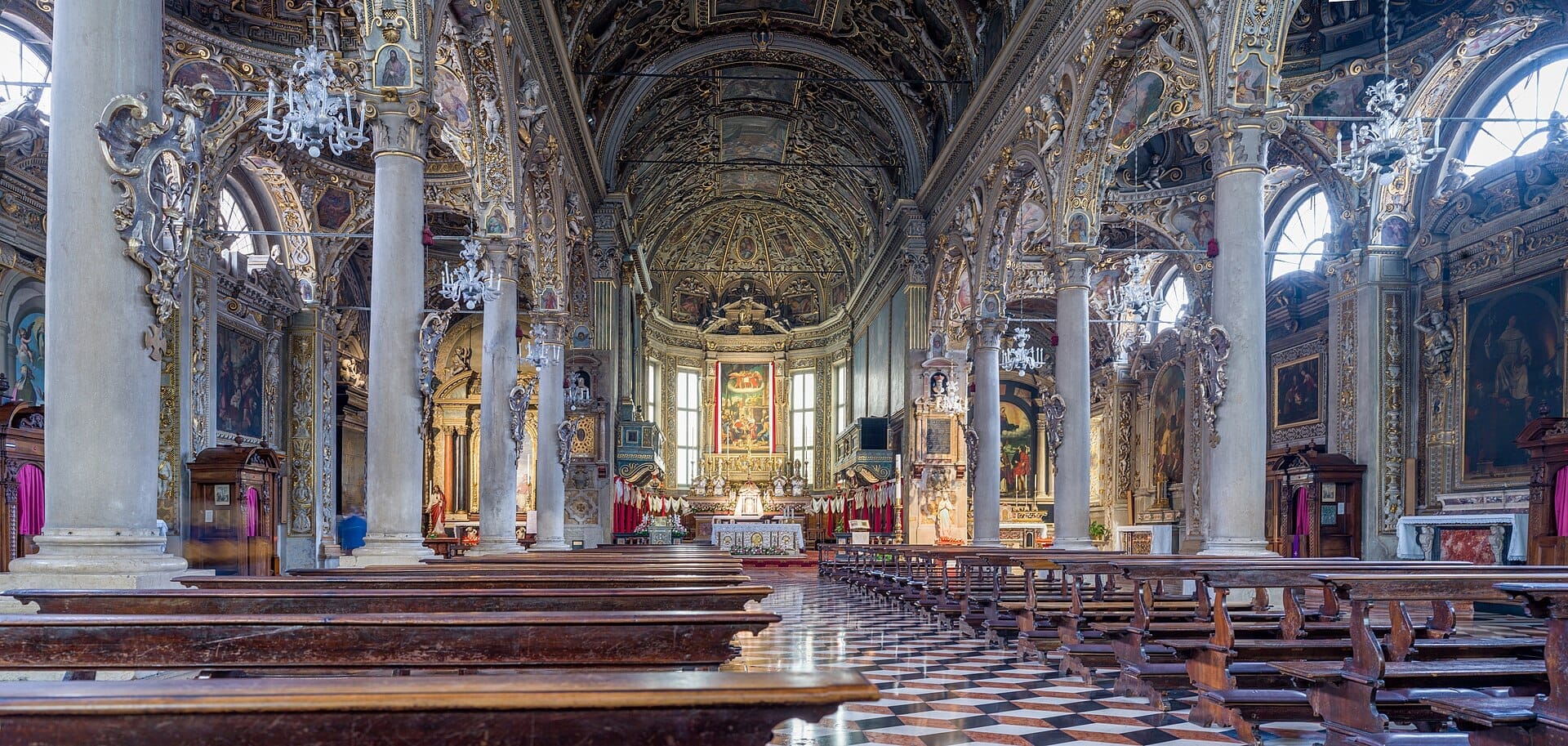
What Santa Maria delle Grazie Actually Is
The Chiesa di Santa Maria delle Grazie is a Dominican church and convent complex in Milan's Ticinese district, best known internationally as the building next door to Leonardo da Vinci's Last Supper. That reputation is both deserved and slightly unfair. Yes, the adjacent refectory houses one of the most analyzed paintings in human history. But the basilica itself — its nave, its soaring Renaissance tribune, its cloisters — is an architectural achievement that would draw serious attention in any other city.
The complex was begun in 1463 under architect Guiniforte Solari, with the convent largely complete by 1469 and the church by 1482. The pivotal moment came in the early 1490s, when Duke Ludovico il Moro — ruler of Milan and Leonardo's most powerful patron — commissioned Donato Bramante to redesign the eastern end of the church as a dynastic mausoleum. The result was a Renaissance tribune, built between 1492 and 1493, that stands in striking contrast to the Gothic nave Solari had built a decade earlier. It is this collision of styles that gives the church its peculiar architectural tension.
Leonardo painted The Last Supper on the north wall of the refectory between approximately 1495 and 1497–1498, working under commission from Ludovico. The entire complex was inscribed as a UNESCO World Heritage Site in 1980, recognized for the exceptional universal value of both the architecture and the painting it contains.
⚠️ What to skip
The Last Supper and the church are separate experiences with separate entry systems. The church is free and open to walk-in visitors during visiting hours. The Cenacolo Vinciano (Last Supper museum) requires a paid timed ticket booked in advance at cenacolovinciano.org — slots routinely sell out weeks or months ahead.
The Church: What to Look for Inside
Entering from Piazza Santa Maria delle Grazie, the first impression is spatial contrast. The nave is Gothic in structure: relatively narrow, dim, with ribbed vaulting and brick walls painted in warm earth tones. The fresco cycles covering these walls — depicting saints, biblical scenes, and Dominican devotional imagery — accumulate quietly as your eyes adjust to the interior light. It takes a few minutes before the full decorative program becomes legible.
Walk toward the altar and you cross an invisible threshold. Bramante's tribune opens up with an abruptness that still surprises visitors who know it is coming. The space shifts from Gothic compression to Renaissance clarity: a large circular drum topped by a dome, articulated with pilasters, arched windows, and geometric ornamentation in terracotta and stone. The proportions are cool and precise, modeled on Bramante's study of Roman antiquity. The contrast with the nave is not a flaw — it was deliberate, a visual statement about the Sforza dynasty's ambitions.
The sacristy and cloister areas are accessible depending on the time of visit. The small cloister, sometimes called Bramante's cloister, is worth seeking out: a quiet arcaded courtyard with a geometric simplicity that feels more domestic than monumental. Visiting on a weekday morning, before tourist groups arrive for Last Supper slots, you may find it nearly empty.
💡 Local tip
Dress code is enforced: shoulders and knees must be covered to enter the church. Keep a light scarf or layer in your bag, especially in summer.
Tickets & tours
Hand-picked options from our booking partner. Prices are indicative; availability and final rates are confirmed when you complete your booking.
Audio guide for the Last Supper in Santa Maria delle Grazie
From 4 €Instant confirmationDuomo Cathedral private tour with a local guide
From 105 €Instant confirmationFree cancellationSforza Castle entry and self-guided tour
From 15 €Instant confirmationFree cancellationSkip-the-line Duomo tour in Milan
From 40 €Instant confirmationFree cancellation
How the Visit Changes by Time of Day
Morning, particularly between 9:00 and 11:00, is when the church sees its quietest foot traffic. The light entering through the tribune's windows at this hour is lateral and warm, picking out the texture of the terracotta ornamentation in a way that photographs well and reads clearly to the eye. The air carries a faint smell of stone and candle wax that is common to active places of worship — this is not a deconsecrated museum but a functioning basilica, with regular Masses.
Midday and early afternoon bring a second wave of visitors, many of them arriving for Last Supper timed entry slots between 10:00 and 12:30. The piazza becomes noticeably more crowded during these windows, with guided tour groups assembling outside. If you want to visit the church itself at a relaxed pace, arriving before 10:00 or after the 15:00 reopening is advisable.
Late afternoon, in the final hour before the church closes, offers a different atmosphere. Sunlight no longer enters directly; the interior becomes softer and more shadowed. The frescoes recede slightly into the walls. For those interested in the architecture of the tribune, the morning light is more instructive. For a mood-driven, contemplative experience, the late afternoon suits better.
The Last Supper: A Separate Visit That Needs Planning
The Cenacolo Vinciano — the refectory where Leonardo's mural covers the north wall — is physically part of the same complex but managed as an entirely separate museum. Entry is through a dedicated entrance on Via Caradosso, not through the church. Visitors are admitted in small groups for fixed 15-minute viewing sessions, a system designed to control humidity and protect the fragile paint layer.
The painting itself is larger than most visitors expect: roughly 8.8 by 4.6 meters, covering almost the entire upper section of the refectory's far wall. Leonardo used an experimental technique — tempera and oil applied to a dry plaster surface rather than traditional fresco — which allowed him to rework and layer the image with a painter's precision. The trade-off was durability: deterioration began within decades of completion, and the mural has required multiple restoration campaigns, the most recent concluding in 1999 after 21 years of work.
Tickets sell out weeks and often months in advance. Book directly through the official Cenacolo Vinciano website for current prices and availability. Third-party booking services exist but typically add a surcharge. If you arrive in Milan without a booking, checking the official site early in the morning for last-minute cancellations occasionally yields a slot, but this should not be relied upon.
ℹ️ Good to know
The 15-minute viewing limit is strictly observed. Photography inside the Cenacolo is not permitted. Bags must be deposited in lockers before entry.
Getting There and the Surrounding Area
The most direct public transport option is Tram 16, which stops at 'Santa Maria delle Grazie' directly in front of the complex. Metro lines M1 and M2 serve Cadorna station, from which the walk takes approximately 8 minutes heading west along Corso Magenta. The M1 stop at Conciliazione is also usable at a similar walking distance. The surrounding Ticinese and Sant'Ambrogio district repays time spent exploring on foot.
The neighborhood around the church is one of the most architecturally layered in Milan. Within a 10-minute walk, you reach the Basilica di Sant'Ambrogio, one of the oldest Christian basilicas in the city, and the Museo Nazionale della Scienza e della Tecnologia Leonardo da Vinci, which holds the largest collection of Leonardo-related models and technical drawings in the world. If the Leonardo connection draws you to Santa Maria delle Grazie, the science museum deepens that same thread considerably.
Corso Magenta, the main street leading toward the city center from the church, is lined with cafes and pasticcerie where you can decompress after the intensity of the Cenacolo visit. The street also contains several significant palazzo facades worth a glance if you read the city through its architecture.
The Practical Reality
For the church itself, expectations are often miscalibrated by the Leonardo reputation. First-time visitors who come primarily for the Last Supper sometimes find the basilica itself a brief stop between logistics — booking confirmation, bag lockers, security queue. That is a mistake. The Bramante tribune is one of the most significant pieces of Renaissance architecture in Lombardy, and it deserves unhurried attention.
The 15-minute viewing window for the Last Supper is the aspect visitors most frequently underestimate in impact. The mural's condition — layers of deterioration, centuries of overpainting, a 20th-century restoration that recovered the original surface rather than an idealized version of it — means what you see is unmistakably ancient, visibly fragile, and strikingly different from the sharp reproductions printed in books. Some visitors find this confrontation with the work's material reality moving. Others find the brevity and the controlled conditions frustrating. For context on Milan's broader art landscape, the best museums in Milan guide places the Cenacolo within the full range of the city's cultural offerings.
Who should skip the church visit: travelers with no interest in architecture or religious art who are purely managing the logistics of a Last Supper booking can treat the church as optional. But there is no compelling reason to be outside on the piazza for 40 minutes when the interior is free, accessible, and architecturally exceptional. The combination is genuinely worth your time.
Insider Tips
- Book Last Supper tickets the moment your travel dates are confirmed — slots open roughly three months in advance and fill quickly. Set a calendar reminder for the exact release date on cenacolovinciano.org.
- If you want to photograph Bramante's tribune without other visitors in the frame, arrive at church opening on a Tuesday or Wednesday morning. Weekend mornings are significantly busier.
- The small Bramante cloister is sometimes overlooked by visitors focused on moving through to the Cenacolo queue. Ask at the entrance whether it is accessible on the day — it is one of the calmest corners in this part of Milan.
- Tram 16 drops you directly at the church door at the 'Santa Maria delle Grazie' stop, while the metro walk from Cadorna adds about 8 minutes.
- The science and technology museum on Via San Vittore, a 5-minute walk away, dedicates an entire wing to Leonardo's machines and technical studies. Combining both visits makes for a coherent Leonardo-focused afternoon without crossing the city.
Who Is Santa Maria delle Grazie For?
- Art historians and Renaissance architecture enthusiasts who want to study Bramante and Solari in the same building
- Leonardo da Vinci pilgrims making the Last Supper the centerpiece of a Milan visit
- Travelers combining the Ticinese district's major churches in a single morning walk
- Anyone wanting a free, crowd-manageable alternative to Milan's paid major attractions
- Photographers drawn to early-morning interior church light and terracotta detailing
Nearby Attractions
Other things to see while in Ticinese & Sant'Ambrogio:
- Basilica di San Lorenzo Maggiore
The Basilica di San Lorenzo Maggiore is one of the earliest Christian churches in Milan, dating to the late 4th–early 5th century CE. Fronted by 16 ancient Roman columns and housing 4th-century mosaics in the Cappella di Sant'Aquilino, it sits at the heart of the Ticinese neighborhood, a short walk from the Navigli canals.
- Basilica di Sant'Ambrogio
Founded by Saint Ambrose himself in 379 AD and rebuilt in the 11th century as a masterpiece of Lombard Romanesque architecture, the Basilica di Sant'Ambrogio is the spiritual and historical anchor of Milan. Entry to the church is free, and the complex rewards slow, attentive visitors far more than a quick stop.
- Basilica di Sant'Eustorgio
The Basilica di Sant'Eustorgio is one of Milan's most historically layered sacred sites, combining a paleochristian necropolis, a Renaissance chapel of rare refinement, and a 12th-century Romanesque nave into a single compact complex. Located on Piazza Sant'Eustorgio in the Ticinese quarter, it rewards visitors who look past the plain brick facade to discover what lies beneath and behind it.
- Cenacolo Vinciano (The Last Supper)
Leonardo da Vinci's Last Supper survives on the refectory wall of Santa Maria delle Grazie, a 460 x 880 cm tempera mural painted between 1495 and 1498. Visits are strictly limited to 15 minutes per group of 40, and tickets require advance reservation. This guide covers everything you need to know before you go.