Musei del Castello Sforzesco: Nine Museum Collections Inside a Renaissance Fortress
The Musei del Castello Sforzesco pack nine civic museum collections into one of northern Italy's most striking 15th-century fortresses. From Michelangelo's unfinished final sculpture to Egyptian mummies and Renaissance tapestries, this is Milan's most underrated museum complex — and one of its best-value cultural experiences.
Quick Facts
- Location
- Piazza Castello 3, 20121 Milan — Castello-Sempione district
- Getting There
- Metro M1 (red) to Cairoli Castello or Cadorna; also M2 (green) to Cadorna. 10-minute walk from Duomo.
- Time Needed
- 2–4 hours for a thorough visit; 90 minutes if focusing on highlights
- Cost
- Combined museum ticket €10 (standard); €5 reduced (65+ or ages 18–25); under 18 free. Castle courtyards free. Free entry on the first and third Tuesdays of the month from 14:00 and on the first Sunday of the month.
- Best for
- Art lovers, history enthusiasts, budget travelers, families
- Official website
- www.milanocastello.it/en
What the Musei del Castello Sforzesco Actually Is
The Musei del Castello Sforzesco is not a single museum but a constellation of nine civic collections housed inside the Castello Sforzesco, the massive brick fortress that anchors the northwestern edge of Milan's historic centre. The castle itself was originally built in the 15th century by Francesco Sforza, Duke of Milan, on the foundations of an earlier 14th-century fortification. It was extensively reconstructed between 1891 and 1905 by Milanese architect Luca Beltrami, who gave it the neo-medieval profile it wears today. The transformation from military stronghold to public museum complex was a deliberate civic project, turning a symbol of dynastic power into a repository of the city's cultural heritage. For context on how it fits into Milan's broader architecture story, see the Milan architecture guide.
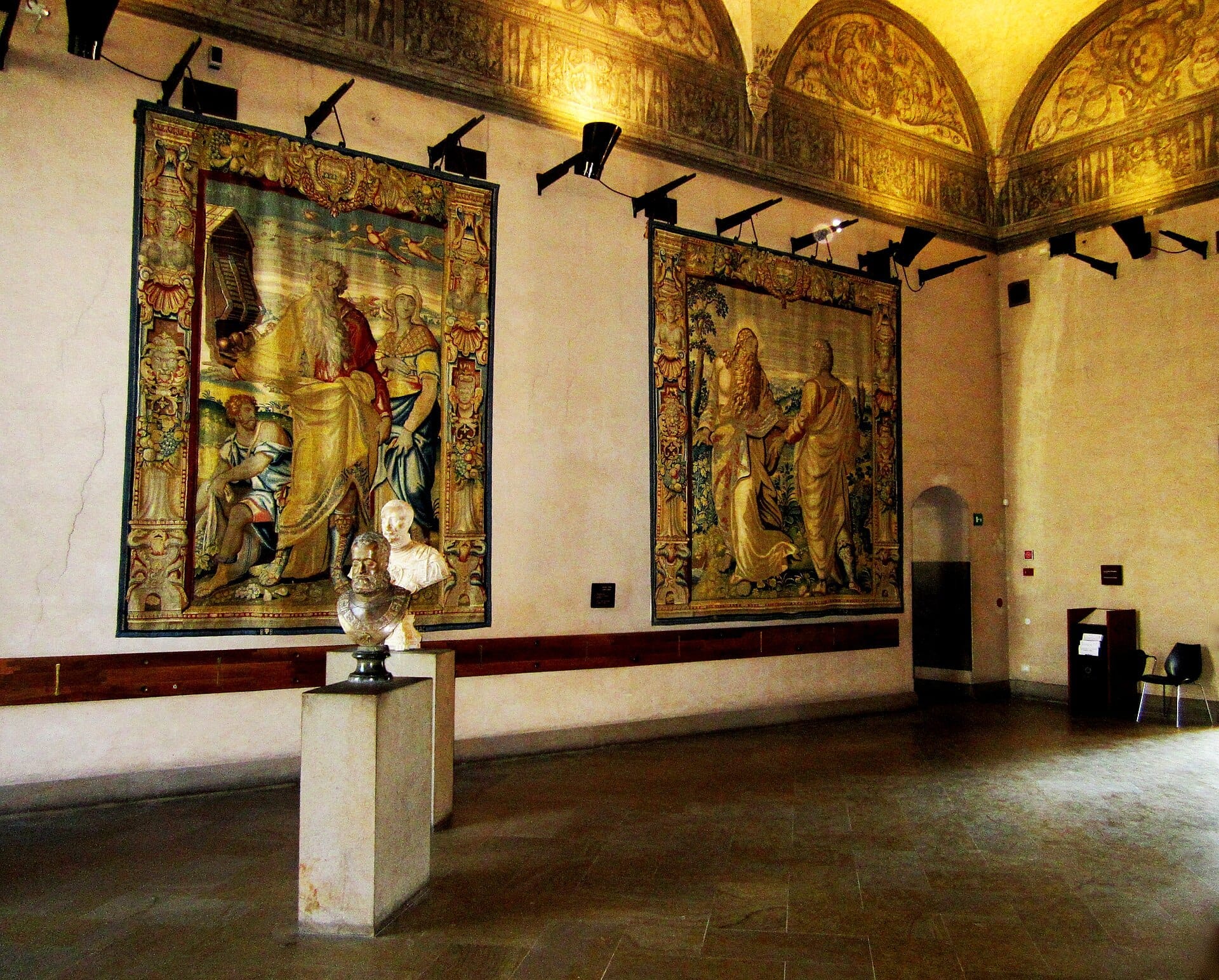
The principal collections span an enormous range: the Museum of Ancient Art, the Museum of Furniture and Wooden Sculpture, the Pinacoteca del Castello (painting gallery), the Museum of Decorative Arts, the Prehistoric and Egyptian sections, the Museum of Musical Instruments, and the Museum of the Rondanini Pietà. Each occupies a different wing or room of the castle, so a visit involves wandering through frescoed halls, arched courtyards, and narrow interior passages. The physical experience of moving through the building is inseparable from the art inside it.
💡 Local tip
The castle courtyards (open daily 07:00–19:30) are free to enter at any time, even when the museums are closed. Arrive early on a weekday morning and you may have them almost to yourself — a rare kind of quiet in the middle of a city of around 1.4 million people.
The Collections: What to Prioritize
The Rondanini Pietà: Michelangelo's Final Work
The single most significant object in the castle is Michelangelo's Rondanini Pietà, housed in its own dedicated museum space in the Rocchetta. Nearby, the Sala delle Asse has a vaulted ceiling retaining traces of frescoes attributed to Leonardo da Vinci. The Rondanini Pietà is Michelangelo's last sculpture, worked on until just days before his death in 1564. Unlike his earlier polished masterpieces, this is raw and unresolved: the figures of Christ and the Virgin are fused together in a way that looks deliberately unfinished, though scholars debate how much of that is intention and how much is the result of Michelangelo reworking the stone over decades.
Standing in front of it is a genuinely unsettling experience. The scale is intimate, the stone is pale and worn, and the two figures seem to be dissolving into each other rather than being carved out of marble. The dedicated room keeps lighting controlled and visitor numbers manageable, which means you rarely have to compete for space. This alone is worth the €10 admission.
Museum of Ancient Art and the Pinacoteca
The Museum of Ancient Art fills the ground floor of the Corte Ducale wing with medieval stonework, armor, weapons, and Lombard-era funerary monuments. The collection moves chronologically from pre-Roman pieces through late medieval carved reliefs, and the sheer density of material rewards slow looking. The room containing the equestrian monument to Bernabò Visconti — a 14th-century ruler of Milan — gives a precise sense of how power was visualized in northern Italy before the Sforzas arrived.
The Pinacoteca del Castello holds works by Mantegna, Bellini, Lippi, Bergognone, and others from the 15th to 18th centuries. It is smaller and less celebrated than the Pinacoteca di Brera nearby, but it is also far less crowded. If you want to spend real time with a Mantegna without another visitor's elbow in your face, this is where to do it.
Egyptian and Prehistoric Collections
The Egyptian collection is one of the more surprising things in the castle. It contains mummies, sarcophagi, papyri, and funerary objects assembled over centuries of Milanese collecting and donation, and it is considerably larger than most visitors expect. The prehistoric section, covering Neolithic through Bronze and Iron Age material from the Po Valley and Lombardy, is primarily of specialist interest but provides useful context for understanding what was happening in this part of northern Italy long before Rome arrived.
Tickets & tours
Hand-picked options from our booking partner. Prices are indicative; availability and final rates are confirmed when you complete your booking.
Milan Museo Del Novecento entry ticket with audio guide
From 14 €Instant confirmationFree cancellationAudio guide for the Last Supper in Santa Maria delle Grazie
From 4 €Instant confirmationMuseum of the 900 self-guided audio tour in Milan
From 4 €Instant confirmationNatural History Museum self-guided audio tour in Milan
From 4 €Instant confirmation
The Castle Itself: Architecture Worth Reading
Before entering any museum, spend time outside. Castello Sforzesco is one of the largest citadels in Europe, occupying a vast footprint in central Milan. The main tower, the Torre del Filarete, rises about 70 meters over the southern entrance and was rebuilt by Beltrami after an explosion destroyed the original in 1521. Walking through the Piazza d'Armi — the enormous central courtyard — gives you a physical sense of the castle's scale that photographs cannot convey.
The castle leads directly into Parco Sempione through the rear gate, and combining both in a single visit is one of the more satisfying half-days in Milan. The park stretches out behind the fortress with a naturalness that contrasts sharply with the castle's severe geometry, and in spring especially, the transition from stone to green is striking.
How the Experience Changes by Time of Day
Morning visits, especially on weekdays, are quieter in the museum rooms. The light inside the castle interiors does not change dramatically with the time of day since most rooms rely on artificial lighting, but the courtyards are at their best in morning and late afternoon when the angle of the sun catches the brick in warm tones. Midday in summer turns the Piazza d'Armi into a heat trap — the pale gravel reflects light upward and there is no shade in the center, so plan your courtyard time accordingly.
Tuesday afternoons from 14:00 bring a noticeable uptick in visitors due to the free entry policy on specific Tuesdays, and the last hour before closing on other days also sees an increase in traffic. If free admission matters to you, go on a Tuesday morning, pay the €10, and enjoy the relative quiet before the afternoon rush. The museums close at 17:30 (with last entry around 16:30), which is early enough that afternoon arrivals after 16:00 leave little time to do the collections justice.
⚠️ What to skip
The museums are closed on Mondays. This is a common point of frustration for visitors who arrive expecting access — the castle grounds remain open, but all museum collections are off-limits. Plan accordingly.
Practical Walkthrough: Getting There and Getting Around
The most direct metro connection is Line M1 (red) to Cairoli Castello, which deposits you directly in front of the castle's main southern facade on Piazza Castello. Line M2 (green) and M1 both stop at Cadorna, a slightly longer walk of about five to eight minutes. If you are coming from the Duomo area on foot, the walk along Via Dante takes roughly ten minutes and passes through pleasant pedestrian streets — a reasonable way to arrive.
Inside the castle, navigation is not always intuitive. The complex is divided into two main sections: the Corte Ducale (ducal court) on the eastern side, which houses most of the civic museums, and the Rocchetta on the western side, which contains the Rondanini Pietà museum. Signage is present but not always clear at junctions between courtyards. Pick up a free floor plan at the ticket desk. The combined museum ticket covers all all collections, so there is no need to make choices at the door. For accessibility, several sections have been fitted with ramps and lifts as part of Milan's museo per tutti (museum for everyone) initiative, though specific step-free routes should be confirmed with the official site before visiting.
The castle sits within walking distance of several other significant sites in the Castello-Sempione neighborhood. The Triennale Design Museum is directly opposite in Parco Sempione, and the Arco della Pace is a short walk northwest along Corso Sempione.
Worth the Visit?
For anyone with a genuine interest in art, medieval history, or Italian Renaissance culture, yes, without reservation. The Rondanini Pietà alone justifies the visit, and the ticket price of €10 is one of the better deals in Milan's museum landscape. The breadth of the collections means you can spend two hours or four depending on your appetite, and the castle building itself adds a layer that purely white-cube museums cannot offer.
For visitors with very limited time in Milan who have already committed to the Last Supper and the Duomo, the Castello museums require a deliberate half-day allocation and should not be attempted as a quick add-on after 15:00. Travelers who are primarily interested in fashion, shopping, or contemporary design might find the ancient and medieval focus of most collections less compelling — though the castle exterior and courtyard remain worthwhile even for a twenty-minute stop.
If you are building a broader Milan itinerary, the castle fits naturally into a morning that continues into Parco Sempione and the Brera district for lunch. See how it connects in a 3-day Milan itinerary.
Insider Tips
- The combined ticket covers all nine museum collections — there is no need to choose between them at the door. However, if your time is limited, go straight to the Rondanini Pietà first while you have the most energy, then work through the Museum of Ancient Art on the way out.
- Photography without flash is permitted throughout most of the museum spaces, including in front of the Rondanini Pietà. The controlled lighting in that room makes for clean, even shots — come in the morning when fewer visitors are present.
- The Sala delle Asse, near the route to the Rondanini Pietà museum, has fragments of a ceiling fresco attributed to Leonardo da Vinci. Look up — most visitors walk in focused on the sculpture nearby and miss the ceiling entirely.
- On Tuesday afternoons (free entry from 14:00), the Rondanini Pietà room fills up noticeably. If you want that contemplative experience without crowds, pay the €10 on a Tuesday morning instead.
- The rear gate of the castle opens directly into Parco Sempione. If you exit that way rather than the main front entrance, you can continue into the park immediately — ideal for families who want to let children run after two or three hours of museum rooms.
Who Is Musei del Castello Sforzesco For?
- Art lovers wanting to see Michelangelo's last, least-known masterpiece
- History enthusiasts interested in medieval Milan and the Sforza dynasty
- Budget travelers: €10 combined ticket covers all collections, with free entry on the first and third Tuesday afternoons and the first Sunday of the month
- Families with children, given the castle's dramatic exterior, free courtyards, and direct access to Parco Sempione
- Visitors who want a major cultural experience without the booking pressure and crowds of the Last Supper
Nearby Attractions
Other things to see while in Castello & Sempione:
- Acquario Civico di Milano
Opened in 1906 for Milan's International Expo, the Acquario Civico di Milano is one of the oldest aquariums in Europe, housed in a Liberty-style building inside Parco Sempione. At €8 entry, it offers a quiet, unhurried contrast to the city's blockbuster attractions.
- Arco della Pace
The Arco della Pace stands at the northwestern edge of the city, marking the historic entrance to Milan via Corso Sempione. Built over five decades, started under Napoleon and finished under Austrian rule, it tells the story of a city pulled between empires — and looks striking doing it. Entry is free, the surrounding square is open daily, and the arch connects directly to Parco Sempione.
- Castello Sforzesco
Castello Sforzesco is a major castle complex in Milan, housing nine civic museums within its Renaissance walls, including Michelangelo's unfinished Pietà Rondanini. The castle grounds are free to enter daily, making it one of Milan's most rewarding and accessible attractions.
- Parco Sempione
Parco Sempione is Milan's answer to a proper city park: 386,000 square metres of English-garden landscape tucked directly behind Castello Sforzesco, free to enter, and open late in the evening. From morning joggers to aperitivo crowds, it shows a different side of the city entirely.