Palazzo Morando – Costume Moda Immagine: Milan's Fashion History Hidden in Plain Sight
Set inside an 18th-century aristocratic residence on Via Sant'Andrea, Palazzo Morando – Costume Moda Immagine is one of Milan's civic museums dedicated to the history of fashion, costume, and the visual image of the city. Entry is free, the collections are genuinely absorbing, and the location, deep inside the Quadrilatero della Moda, could not be more fitting.
Quick Facts
- Location
- Via Sant'Andrea 6, Quadrilatero della Moda, Milan
- Getting There
- Metro M3 Montenapoleone (5-min walk) or M1 San Babila (4-min walk)
- Time Needed
- 1 to 1.5 hours
- Cost
- Free (permanent collection); temporary exhibitions may vary
- Best for
- Fashion history, Milan portraiture, quiet cultural break between boutiques
- Official website
- www.costumemodaimmagine.mi.it
What Palazzo Morando Actually Is
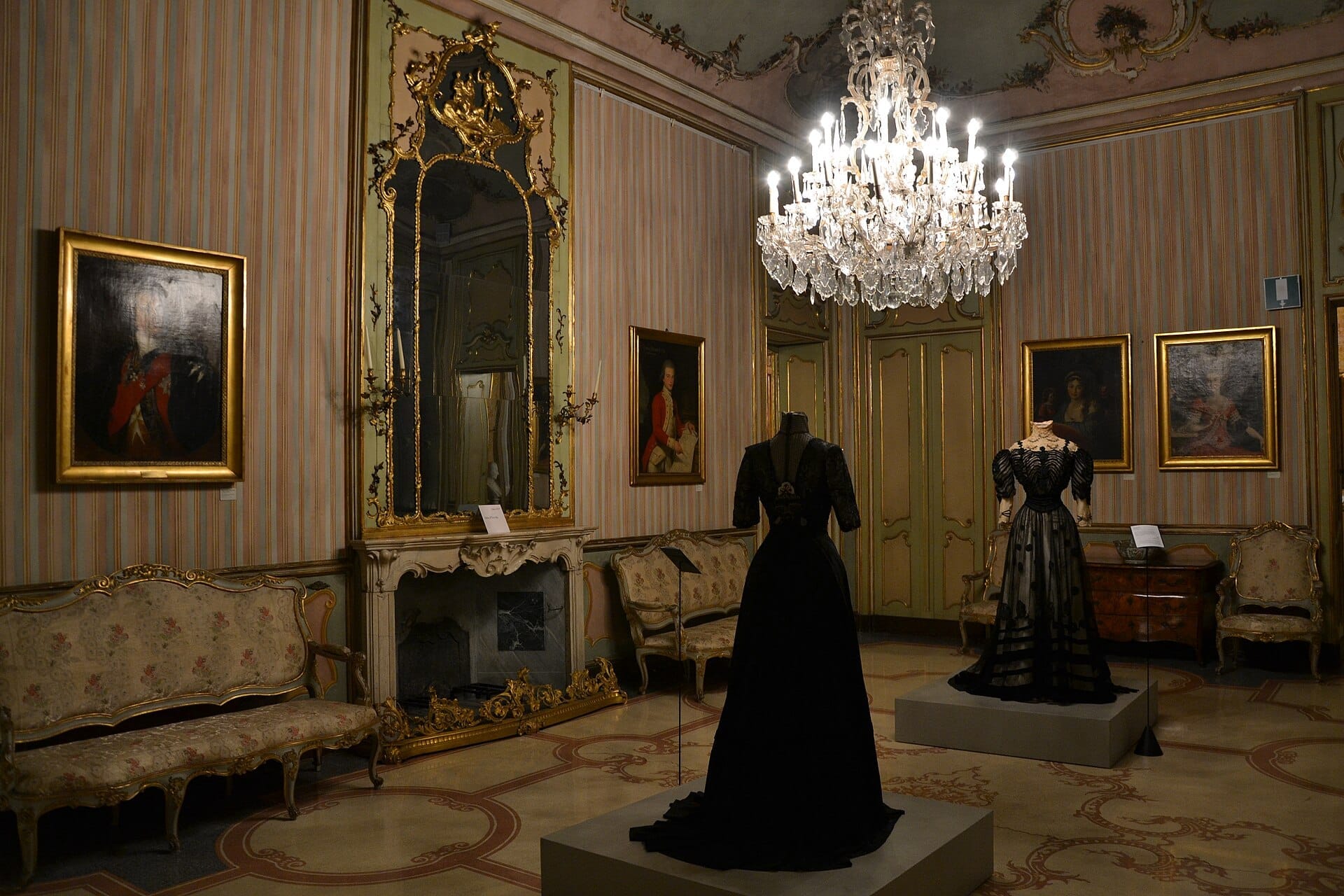
Palazzo Morando – Costume Moda Immagine is a civic museum of the City of Milan, housed in a patrician residence built in the 16th century and substantially rebuilt in the 18th. It sits at Via Sant'Andrea 6, a street better known today for its luxury boutiques than its cultural institutions. The fashion project as visitors know it was launched in January 2010, giving the palazzo a focused curatorial identity: the history of Milanese costume and dress, supplemented by a remarkable collection of paintings, prints, and photographs documenting the city's appearance across centuries.
The museum occupies three distinct areas: period rooms furnished in 18th and 19th-century style, galleries dedicated to historic garments and accessories, and rotating exhibition spaces for photography and contemporary fashion image. For a free entry attraction in one of Europe's most expensive shopping streets, the depth of content is quietly surprising.
ℹ️ Good to know
Entry to the permanent collection is free. Groups and school visits should be pre-booked through the CoopCulture reservation system or via contacts indicated on the museum’s official channels.
The Building: Aristocratic Milan in Miniature
Stepping through the entrance on Via Sant'Andrea, the transition from fashion-district street noise to the palazzo's interior courtyard is almost theatrical. The building's 18th-century reconstruction left it with the measured proportions and restrained ornamentation typical of Lombard aristocratic architecture: high ceilings, formal room sequences, floor surfaces that register each footstep with a faint resonance. The scale is domestic rather than monumental, which actually suits the collections well.
The period rooms on the upper floors are furnished with original pieces and decorated in styles spanning roughly 1750 to 1900. For visitors already exploring Casa Museo Bagatti Valsecchi nearby, the contrast is instructive: where Bagatti Valsecchi leans into Renaissance revival drama, Palazzo Morando presents a quieter, more everyday image of how Milan's wealthy classes actually lived and dressed.
Tickets & tours
Hand-picked options from our booking partner. Prices are indicative; availability and final rates are confirmed when you complete your booking.
Duomo Cathedral private tour with a local guide
From 105 €Instant confirmationFree cancellationSforza Castle entry and self-guided tour
From 15 €Instant confirmationFree cancellationSkip-the-line Duomo tour in Milan
From 40 €Instant confirmationFree cancellationNavigli Canals of Milan private walking tour with a local guide
From 40 €Instant confirmationFree cancellation
The Collections: Costume, Fashion, and the City's Self-Image
Historic Costume and Accessories
The costume holdings span from the 17th century through the 20th, with particular strength in the 18th and 19th centuries. The garments are displayed with attention to their construction: you can see the structure of a court dress, the logic of a 19th-century riding habit, the way silhouettes shifted decade by decade in response to changing social codes. Labels are informative without being dense, and the overall arrangement rewards slow looking rather than quick browsing.
Accessories, including fans, gloves, shoes, and jewellery, are integrated into the displays rather than isolated in cases as afterthoughts. This curatorial choice matters: it contextualises individual objects within the full grammar of dress, showing how a complete outfit was assembled and what it communicated about its wearer's status, taste, and moment in history.
Paintings and Prints: Milan's Visual Memory
The second major strand of the permanent collection is iconographic: paintings, prints, and drawings documenting how Milan looked, from the late medieval period through to the 19th century. Street scenes, civic ceremonies, views of canals and piazzas that have long since been altered or demolished — this material is remarkably rare in being gathered in one accessible, free-entry venue. For anyone interested in how the city has changed physically, these rooms are worth the visit alone.
Seen alongside the Museo del Novecento, which picks up the story of Milanese visual culture in the 20th century, Palazzo Morando's collection offers a complementary long view across nearly four centuries of how this city understood and represented itself.
Photography and Fashion Image
The Immagine component of the museum's name refers to its holdings in fashion photography and the broader visual culture of dress. Rotating temporary exhibitions have drawn on both archival material and contemporary commissions, making the ground-floor exhibition spaces worth checking even on a return visit. The photography displays tend to attract a younger crowd, particularly during Milan Fashion Week periods, when the museum can feel directly relevant to what is happening on the streets outside.
💡 Local tip
Check the museum's official website before visiting to see whether a temporary exhibition is running. The permanent collection alone justifies the visit, but a well-chosen photography show can turn this into one of the better cultural stops in the district.
How the Visit Feels at Different Times of Day
Morning visits, particularly on weekdays, tend to be notably quiet. The palazzo admits relatively few visitors at any one time, and in the first hour after opening the period rooms can feel almost private. Light enters the upper-floor galleries at a low angle in winter mornings, which is flattering for the paintings and for photography of architectural details. The silence in these rooms, set against the knowledge that Via Sant'Andrea is one of the city's most commercially active streets, creates an odd and rather pleasant cognitive dissonance.
By midday on weekends, visitor numbers increase, particularly if a popular temporary exhibition is running. The rooms are not large, and a single school group can fill a gallery quickly. Published sources sometimes report extended evening openings, but current official information indicates regular hours only until late afternoon; verify directly with the museum before planning any evening visit.
⚠️ What to skip
Opening hours for Palazzo Morando are inconsistently reported across booking platforms. The official website at costumemodaimmagine.mi.it and CoopCulture are the only reliable sources. At minimum, Tuesday through Sunday from 10:00 to 17:30 appears consistent across most sources, with Monday closed.
Location and Getting There
Via Sant'Andrea 6 sits in the heart of the Quadrilatero della Moda, Milan's luxury fashion district, within a compact rectangle formed by Via Montenapoleone, Via della Spiga, Corso Venezia, and Corso Matteotti. The nearest metro stops are Montenapoleone on Line M3 (yellow) and San Babila on Line M1 (red), each roughly a five-minute walk. From the Duomo, the museum is reachable on foot in about 15 minutes through the Galleria or along Corso Vittorio Emanuele II.
The surrounding streets are, of course, lined with flagship stores for major fashion houses. Arriving from the metro, the walk itself is part of the experience: you pass windows displaying current collections before entering a building that holds the historical precedents for much of what fashion culture in this city has become.
Photography, Practicalities, and What to Bring
Photography of the permanent collection is generally permitted for personal use; check signage in temporary exhibition spaces, as restrictions sometimes apply to loaned works. Natural light in the upper galleries is good in the morning. The rooms are moderately sized, so a compact camera or smartphone is more practical than a wide-angle setup. Tripods are typically not permitted.
The museum has no dedicated café on site. Via Sant'Andrea and the surrounding streets have no shortage of coffee options, though pricing reflects the neighbourhood. For a more considered break, the bar at the corner of Via della Spiga or a short walk to the Corso Venezia side of the district offers choices at varying price points.
Dress code: the palazzo is a civic museum, not a place of worship, so no specific dress requirements apply. That said, arriving in the Quadrilatero della Moda in extremely casual dress can feel slightly out of step with the surroundings — which is, depending on your perspective, either irrelevant or worth noting. The fashion culture of Milan tends to seep into its institutions as much as its streets.
Is This Attraction Worth Your Time?
For visitors with any interest in the history of fashion, dress, or urban visual culture, the answer is straightforwardly yes, particularly given free entry. The collections are not exhaustive in the way a major national institution would be, but they are well-curated and contextually intelligent. Being in the Quadrilatero makes the experience coherent: this is a museum that makes sense exactly where it is.
Visitors primarily chasing blockbuster art should note that Palazzo Morando is a specialist institution with a focused scope. If your priority is major painting collections, the Pinacoteca di Brera or Pinacoteca Ambrosiana will serve you better. But if you are already in the fashion district, the palazzo is a well worthwhile 75 minutes, and the price of admission makes the calculation simple.
Those with mobility limitations should verify accessibility details directly with the museum before visiting. The source record does not confirm step-free access throughout the building, and the palazzo's 18th-century structure may present challenges on upper floors. Contact the museum directly or check the official website for current accessibility information.
Insider Tips
- The first Sunday of the month may be busier due to free-admission city initiatives. Arrive shortly after opening to avoid any queues.
- If you are visiting during Milan Fashion Week (February and September), temporary exhibitions at Palazzo Morando are sometimes coordinated with broader city programming. Check the official website in the weeks before your visit.
- The courtyard of the palazzo, visible from the entrance, is worth pausing in before heading upstairs. The architectural proportions read more clearly from here than from the street.
- Combine this visit with Casa Museo Bagatti Valsecchi, a short walk away on Via Gesù, for a fuller picture of how Milan's 19th-century patrician class lived, dressed, and decorated. Both are free or low-cost, and together they fill a morning intelligently.
- Groups of more than a handful of people will find the period rooms feel crowded quickly. If you are visiting with a larger party, contact the museum in advance to arrange a structured group booking rather than arriving together.
Who Is Palazzo Morando – Costume Moda Immagine For?
- Fashion history enthusiasts wanting context for Milan's contemporary industry
- Travellers combining museum visits with the Quadrilatero della Moda boutiques
- Budget-conscious visitors seeking free, high-quality cultural content
- Photographers interested in historic Italian costume and applied arts
- Architecture and interiors admirers who enjoy 18th-century Lombard residential spaces
Nearby Attractions
Other things to see while in Quadrilatero della Moda:
- Casa Museo Bagatti Valsecchi
Tucked behind the designer boutiques of Via Montenapoleone, Casa Museo Bagatti Valsecchi preserves the personal residence of two aristocratic brothers who spent decades filling their home with Renaissance art and furnishings. Open since 1994, it offers an unusually intimate window into 19th-century Milanese patrician life.