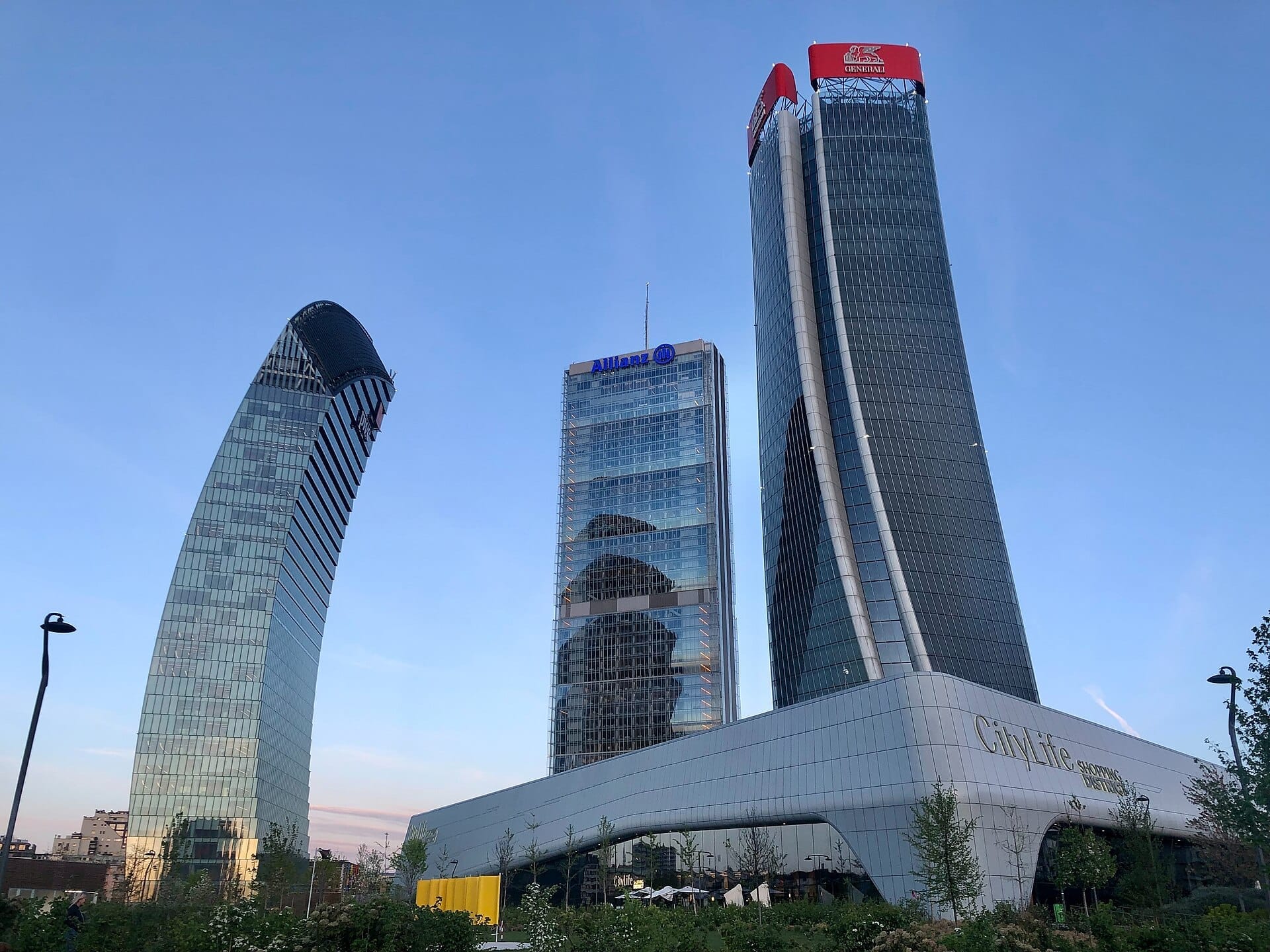
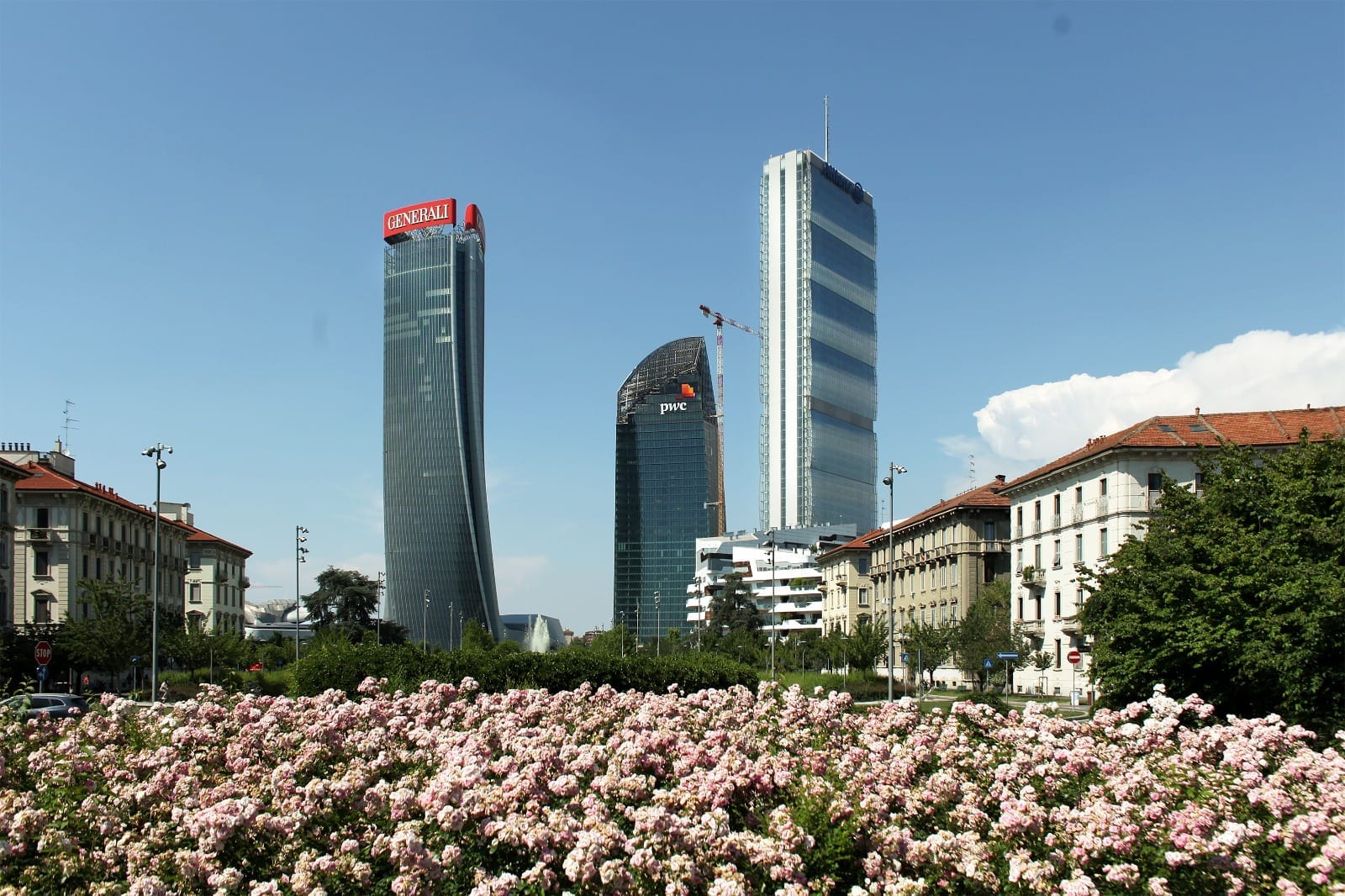
CityLife is Milan's most ambitious urban reinvention: a 36-hectare car-free district built on the former Fiera Milano fairgrounds, defined by three landmark towers, a sprawling park, and a sleek shopping complex. It sits in the city's northwest, connected to the centre by the M5 metro, and represents a deliberately modern counterpoint to Milan's historic core.
CityLife is where Milan put its architectural ambitions on full display. Three towers by Zaha Hadid, Arata Isozaki, and Daniel Libeskind define its skyline, while nearly 17 hectares of car-free parkland spread beneath them. The result is a district unlike anywhere else in the city: ordered, contemporary, and built entirely from scratch on the footprint of the old trade fairgrounds.
Orientation
CityLife occupies Zone 8 in Milan's northwest, roughly 3.5 kilometres from the Duomo as the crow flies. The district sits between the older residential streets around Piazzale Giulio Cesare to the south and the Portello commercial area to the north. To the east, it borders the Fiera Milano City complex at Amendola; to the west, the neighbourhood transitions into quieter residential blocks toward San Siro.
The whole area covers approximately 36.6 hectares and is arranged around two focal points: Piazza Tre Torri, the central plaza dominated by the three skyscrapers, and the CityLife Park, which radiates outward from the tower base. The main surface access roads are Viale Boezio to the south and Via Spinola to the north, but within the district itself, all traffic is buried underground. What you experience at street level is entirely pedestrian: wide paved promenades, cycle paths, and open green space.
CityLife is not isolated. It connects naturally to the broader northwest corridor that includes Castello Sforzesco and Parco Sempione a short metro ride or a 25-minute walk to the east. The Domodossola M5 station, just one stop from Tre Torri, also connects to regional rail services, giving easy access toward the Duomo district and Porta Venezia. Understanding this link is key: CityLife is peripheral but not isolated.
Character & Atmosphere
Walking into CityLife from Tre Torri station produces a distinct shift in register. The narrow, slightly chaotic street grids of central Milan give way to open plazas, wide sightlines, and an almost cinematic scale. The towers dominate the view from the moment you exit the metro: Zaha Hadid's Generali Tower curves and tapers as it rises, Isozaki's Allianz Tower leans at a deliberate angle, and Libeskind's PwC Tower twists skyward with angular, fractured geometry. Together they read as a manifesto of contemporary architecture rather than a skyline that evolved organically.
Early mornings in CityLife belong to residents and joggers. The park paths are quiet, damp with dew, and the towers cast long shadows across the lawns. This is a proper residential neighbourhood for a significant portion of the population living in the low-rise apartment blocks that frame the park's perimeter. By mid-morning, the shopping district begins to fill, and the covered mall along the park's southern edge becomes the social centre of the area.
Afternoons bring a different crowd. Families use the park extensively, particularly the themed garden sections including the Giardino delle Prealpi (a planted landscape referencing Alpine foothills) and the Bosco di Faggi (a beech wood grove). The park's design, by landscape firm Gustafson Porter + Bowman, gives different areas distinct characters, so the experience changes as you move through it. On weekends and warm evenings, the area around the shopping complex becomes genuinely lively, though the word is relative: CityLife operates at a different pitch than the Navigli or Porta Venezia. It is curated rather than spontaneous.
After dark, the towers illuminate dramatically and the piazza takes on a more architectural quality. The restaurant terraces stay open late in summer, and the multiplex cinema draws evening crowds. But this is not a late-night neighbourhood in the way that Milan's canal districts are. By 23:00, the park is quiet and the streets around it follow suit.
ℹ️ Good to know
CityLife is certified Platinum LEED for Cities and Communities, WELL for Community, and SITES for Existing Landscape, making it the first district in the world to hold all three certifications simultaneously. The sustainability credentials are visible in the water management, native planting, and building energy systems.
What to See & Do
The primary reason to come to CityLife is the architecture. The Tre Torri skyscrapers are best appreciated by walking through Piazza Tre Torri at different times of day. In the morning, light falls on the facades at oblique angles that reveal their surface textures. At dusk, the towers catch the last warm light while the lower park level slips into shadow. There are no formal tours of the towers themselves (they are active office and residential buildings), but the exteriors and the public plaza are freely accessible.
The park is the neighbourhood's main leisure infrastructure. At roughly 17 hectares, it is one of the largest parks created through urban regeneration in Milan. The paths are well-maintained, clearly signed, and busy with cyclists during the week. The themed garden areas reward slower exploration: the planted groves and water features feel deliberately calming against the angular backdrop of the towers.
The CityLife Shopping District comprises over 80 retail units across a covered and partially open-air complex on the park's southern side. Beyond shopping, there is a multiplex cinema, which makes CityLife a practical option for an evening if you want a film in comfortable surroundings without navigating the central city. The architecture of the shopping complex itself, with its glazed roofs and gallery-style layout, is worth noting as a piece of contemporary urban design.
Walk Piazza Tre Torri at golden hour for the best architectural photography
Explore all three themed garden zones in CityLife Park: they are distinct enough to justify the full circuit
Check the CityLife Shopping District calendar for temporary exhibitions and design events, which run especially during Milan Design Week
Walk south from the park to Piazzale Giulio Cesare to see the historic fountain that predates the redevelopment and provides context for what the area once looked like
Combine a CityLife visit with a walk east toward Parco Sempione for a half-day itinerary connecting old and new Milan
💡 Local tip
During Milan Design Week in April, CityLife hosts installations and events tied to the Fuorisalone programme. The towers and public spaces become exhibition venues, and the area is significantly more animated than at any other time of year. Check the official Fuorisalone map before visiting.
Eating & Drinking
The food scene in CityLife is concentrated almost entirely within the shopping complex and the immediate plaza around it. This is not a neighbourhood where you wander into a family trattoria that has been serving the same pasta for forty years. The offer is modern, commercial, and consistent with what you would expect from a high-end mall environment: international chains, Italian fast-casual concepts, and a handful of sit-down restaurants with terrace seating looking onto the park.
Quality is generally reliable without being memorable. Price points in the restaurants are mid-range to slightly above, reflecting the neighbourhood demographic of professionals and well-heeled residents. The bar culture is straightforward: aperitivo in the early evening at the covered terraces, with a predictable spread of Aperol Spritz, Negroni, and standard Italian cicchetti. It works, but it does not compete with the depth of the Navigli or Porta Venezia drinking scenes.
For a more varied food experience, the surrounding streets in Zone 8 have local bars and neighbourhood restaurants that cater to the resident population rather than visitors. Alternatively, the Domodossola area, one metro stop east, has a more established local dining scene. If dining is a priority on your Milan visit, consider basing your evening in Navigli or Brera and treating CityLife as a daytime destination.
Getting There & Around
The M5 (Lilac) line serves CityLife directly at Tre Torri station, which sits at the edge of the shopping complex. Journey time from Centrale F.S. is around 20 minutes with the M2-to-M5 interchange at Garibaldi. From the Duomo, the fastest route is M1 to Domodossola (one stop on M5 from Tre Torri) or M1 to Amendola, which places you at the eastern edge of the CityLife footprint.
Within the district, navigation is simple because the area is entirely pedestrianised at surface level. Car access is via underground roads leading to the basement parking garages below the shopping complex and the residential blocks. Cyclists are well accommodated: dedicated paths cross the park and connect to the wider city cycle network. Bike-sharing stations serve the area.
From the Duomo district on foot, CityLife is roughly 50 minutes walking northwest along Corso Magenta, passing Santa Maria delle Grazie along the way. This makes for a logical route if you are visiting the Last Supper and want to continue into the modern city afterward. The reverse journey works equally well as a morning walk from CityLife toward the historic centre.
💡 Local tip
The M5 Lilac line is one of Milan's newest and most comfortable metro lines, running fully automated and with step-free access throughout. It offers straightforward connections between CityLife and the Porta Venezia and Centrale areas via interchanges with other lines.
Where to Stay
CityLife has a growing residential accommodation offer, including serviced apartments and short-stay units in the new residential blocks surrounding the park. These suit longer stays and visitors who prefer modern, spacious accommodation with good transport connections over the atmosphere of a central neighbourhood. The tradeoff is that you are 15-20 minutes by metro from the historic centre and surrounded by a district that quiets down considerably in the evenings.
There are no major international hotel chains within the CityLife perimeter itself at the time of writing, though the surrounding Zone 8 streets have mid-range hotels. For visitors whose priority is a central location with easy access to the Duomo, Brera, and the main museums, the Duomo district or Porta Nuova will serve better. CityLife makes most sense as a base for those attending events at the shopping complex, visiting on business in the northwest office district, or specifically seeking a modern, car-free residential environment.
For a fuller picture of where to base yourself across the city, the where to stay in Milan guide compares all the main neighbourhoods by traveller type and budget.
Who CityLife Is For
CityLife is a genuine achievement in urban planning and one of the most coherent examples of 21st-century city-making in Italy. It is clean, well-organized, impressively green, and architecturally significant. For anyone interested in contemporary urban design, it is worth at least a half-day visit, and the park alone justifies the metro ride from the centre.
But it is worth being clear about what CityLife is not. It lacks the layered character, the historical density, and the unpredictable street life that makes central Milan so rewarding to explore. The food scene is functional rather than distinctive. The neighbourhood operates on a corporate register, even at weekends. Visitors who want to spend their days in Milan absorbing architecture, café culture, and city life will find it more rewarding to use CityLife as a destination within a day's itinerary rather than a base.
If architecture is a primary interest during your visit, consider pairing CityLife with the Milan architecture guide, which covers everything from the Duomo's Gothic spires to the Rationalist buildings of the Fascist period and the postwar reconstruction projects that shaped the modern city.
⚠️ What to skip
CityLife can feel underwhelming if you arrive expecting a neighbourhood with authentic street life and spontaneity. It is a planned district in the fullest sense, and that planning is both its greatest strength and its clearest limitation. Adjust expectations accordingly.
TL;DR
CityLife is Milan's largest car-free pedestrian district, built on the 36.6-hectare former Fiera Milano fairgrounds in the city's northwest.
The Tre Torri skyscrapers by Zaha Hadid, Arata Isozaki, and Daniel Libeskind make it one of the most architecturally significant contemporary districts in Italy.
The 17-hectare park and cycling infrastructure make it an excellent daytime destination, particularly for families and those interested in landscape design.
The food and nightlife offer is modern and reliable but lacks the depth and character of central Milan's dining and drinking scenes.
Best for: architecture enthusiasts, design-week visitors, families wanting green space, and travellers seeking a half-day excursion from the historic centre rather than a base for a full trip.
Milan has over 70 museums, from Renaissance masterpiece galleries to free contemporary art spaces. This guide cuts through the options and tells you exactly which ones are worth your time, what to expect inside, and how to plan your visit.
Milan rewards visitors who time their trip well. This guide covers every season in detail — temperatures, crowd levels, key events, and what to skip — so you can make the most informed decision about when to go.
Milan rewards those who look up and climb higher. This guide covers the city's best viewpoints, from the Duomo's Gothic spires and Palazzo Lombardia's 39th-floor panorama to canal-side sunset bridges and design-forward skyscrapers.
Milan sits at the center of one of Europe's most rewarding day-trip networks. Within two hours by train you can reach Alpine lakes, medieval hilltop towns, Roman amphitheaters, and UNESCO World Heritage canals. This guide covers the best destinations, how to get there, and what to prioritize once you arrive.
Milan has one of Italy's best urban transport networks, but knowing which ticket to buy, which metro line to take, and how to reach the city from three different airports saves real time and money. This guide covers everything from ATM fares and the RicaricaMi card to bike sharing and walking distances between key neighborhoods.
Milan is Italy's most demanding city for high-end travel, where fashion weeks and design fairs can triple hotel rates overnight. This guide covers where to stay, what to spend, when to go, and how to move around Milan like someone who has done it before.
Three days in Milan is enough time to cover the cathedral district, the great art museums, the canal neighbourhood, and still fit in a day trip to Lake Como. This itinerary is built around how the city actually works: metro-first logistics, realistic opening hours, and clear advice on what to skip.
Milan is served by three airports: Malpensa (MXP), Linate (LIN), and Bergamo Orio al Serio (BGY). Together the three airports form Italy's largest airport system by passenger volume, handling over 56 million passengers per year. This guide breaks down the key differences, transport links, costs, and which airport makes sense for your trip.
Milan's built environment is a genuine timeline in stone, steel, and glass. This guide walks you through every major architectural era, from the Gothic Duomo to Porta Nuova's skyscrapers, with practical routes, seasonal advice, and candid assessments of what's worth your time.
Milan's churches span seventeen centuries of history, from 4th-century basilicas built by the city's patron saint to Renaissance chapels covered floor-to-ceiling in frescoes. This guide covers the essential sacred sites, practical visiting tips, and the lesser-known churches that reward the curious traveler.
Milan Design Week is the world's largest design festival, combining the professional Salone del Mobile furniture fair at Rho Fiera with hundreds of free Fuorisalone events across the city's design districts. This guide covers dates, tickets, neighborhoods, transport, and practical planning advice.
Milan is one of the world's four fashion capitals, home to storied design houses, serious shopping districts, and four Fashion Weeks a year. This guide covers everything from navigating the Quadrilatero della Moda to understanding what tourists can actually access during Milan Fashion Week 2026.
Milanese food is not what most visitors expect. Rice trumps pasta, butter beats olive oil, and the city's signature dishes carry centuries of culinary history. This guide covers every essential dish, realistic price expectations, seasonal eating patterns, and practical advice for dining well in Milan.
Milan surprises most couples. Behind the fashion showrooms and financial towers lies a city with candlelit canals, world-class opera, cobblestone art districts, and Gothic cathedral rooftops built for golden-hour views. This guide covers the best romantic experiences in Milan, with practical details on pricing, timing, and what to skip.
Milan rewards those who look beyond the Duomo and The Last Supper. From a chapel lined with human skulls to a free panoramic skyscraper and a botanical garden tucked behind one of Italy's great art museums, these are the experiences that reveal the city locals actually love.
Spring transforms Milan from a grey winter city into one of Europe's most enjoyable urban destinations. This guide covers the real weather, the best events, crowd expectations, and everything you need to plan a smart April or May trip.
Milan transforms in winter into one of Italy's most atmospheric cold-weather destinations, with Christmas markets around the Duomo, centuries-old fairs near Castello Sforzesco, and a city that keeps its cultural calendar packed well past the holidays. This guide covers what to see, when to go, and how to get the most out of the season.
Leonardo da Vinci spent more than two decades in Milan, leaving behind some of the most extraordinary works in Western art and science. This guide covers every significant site, explains what you'll actually find there, and tells you exactly how to book before you arrive.
Milan's nightlife runs on a distinct rhythm: aperitivo first, dinner second, clubs last. This guide breaks down every major area, the best bars and clubs, what things cost, and how to get home at 3am.
Milan has a reputation for luxury fashion and fine dining, but the city is far more accessible than most travelers assume. This guide breaks down realistic daily costs, the smartest ways to use public transport, which world-class attractions are free, and how timing your visit can cut hotel prices by 25–40%.
Milan shopping covers far more than luxury fashion. This guide breaks down the city's best shopping districts, from the Quadrilatero d'Oro's flagship stores to Navigli's vintage markets, with practical advice on what to skip, what to budget, and when to go.
Lake Como sits less than an hour from Milan by direct train, making it one of the most rewarding day trips in northern Italy. This guide covers every transport option, the best villages to visit, ferry logistics, and how to avoid the most common mistakes first-time visitors make.
The journey from Milan to Rome covers roughly 565-570 km and can take anywhere from 3 hours to 6+ depending on how you go. This guide breaks down every realistic option, with clear price comparisons, booking strategies, and the city-center-to-city-center math that makes the train far more competitive than most people expect.
The Milan to Venice route is one of Italy's most popular corridors, served by frequent high-speed trains that cover the distance in around 2 hours 15 to 30 minutes. This guide breaks down every option, from Frecciarossa tickets to bus alternatives, with practical advice on what's worth it and what to skip.
Milan rewards families more than most people expect. From the interactive Leonardo da Vinci Science Museum to the free courtyards of Castello Sforzesco and the rooftop terraces of the Duomo, the city packs a serious amount of child-friendly content into a compact, walkable center. This guide cuts through the noise with specific venues, practical assessments, and logistics that actually help.
Milan rewards visitors who look beyond the fashion weeks and luxury boutiques. This guide covers the essential things to do in Milan Italy, from cathedral rooftops and Renaissance masterpieces to canal-side aperitivo and contemporary architecture, with practical advice on what to book in advance and what to skip.
Milan rewards travelers who choose their base carefully. This guide breaks down every major neighborhood, explains the price realities, and tells you exactly when to book to avoid paying peak-event rates.