Museo Teatrale alla Scala: Inside Milan's Most Famous Opera House
The Museo Teatrale alla Scala occupies the foyer and galleries of one of the world's great opera houses, offering a close look at 250 years of operatic history through costumes, instruments, portraits, and a gallery overlooking the auditorium itself. It is compact, quietly absorbing, and genuinely rewarding for anyone with even a passing interest in music or theatrical history.
Quick Facts
- Location
- Largo Antonio Ghiringhelli 1, Piazza della Scala, 20121 Milano
- Getting There
- Metro Duomo (M1/M3); Tram lines 1 & 2 (Teatro alla Scala stop)
- Time Needed
- 45–90 minutes for the museum; longer if attending an auditorium visit
- Cost
- €12 full price; €8 reduced (ages 6–18, students, 65+); free under 6 and disabled visitors. Open Ticket (fast-track, flexible date): €15. Prices valid until 31/12/2026.
- Best for
- Opera lovers, history enthusiasts, design-minded visitors, rainy-day culture seekers
What the Museo Teatrale alla Scala Actually Is
The Museo Teatrale alla Scala is the permanent collection housed within the building of Teatro alla Scala, Milan's celebrated opera house on Piazza della Scala. It is not a replica or a visitor-centre approximation. You are walking through the real building, past objects that belonged to the real performers, in the institution that premiered Verdi's Otello, Puccini's Turandot, and dozens of other works that still fill opera houses worldwide.
The theatre itself was inaugurated on 3 August 1778, constructed between 1776 and 1778 on the former site of the Church of Santa Maria della Scala. For more than two centuries, this has been the most prestigious stage in Italian opera, and the museum treats that history with appropriate seriousness. Galleries display paintings, costumes, set designs, musical instruments, busts, and archival documents spanning operatic history from the 18th century to the present.
What sets the museum apart from a general performing arts collection is direct access to a box overlooking the auditorium itself. Standing in that gallery, with the five tiers of gilded boxes arrayed below and the vast stage visible across the stalls, is the kind of moment that earns a museum its reputation. For context on Milan's broader cultural landscape, the best museums in Milan guide covers the full range of options across the city.
💡 Local tip
The auditorium-view gallery is only accessible when rehearsals or performances are not scheduled. On days with afternoon rehearsals, access may be restricted or unavailable. Call ahead or check the museum website if the auditorium view is your primary reason for visiting.
The Collection: What You Will See
Portraits and Historical Objects
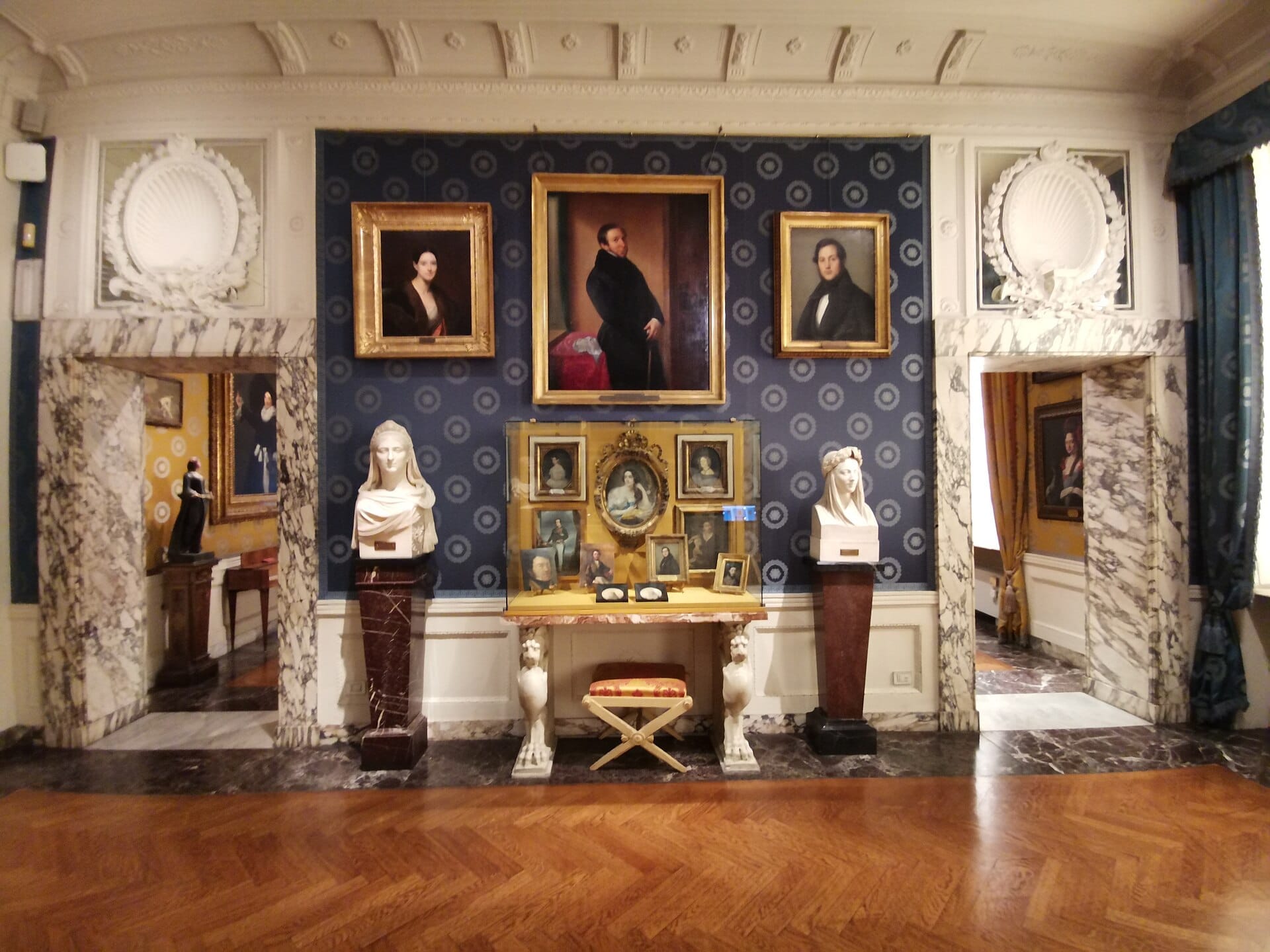
The permanent collection moves through centuries of operatic and theatrical history in a sequence of rooms that feel appropriately intimate rather than overwhelming. Portrait paintings of composers, singers, and conductors hang alongside busts and personal objects. You will encounter likenesses of Verdi, Rossini, and other figures whose names appear on plaques throughout European concert halls, here rendered in paint or marble in the institution that shaped their reputations.
Among the most striking objects are the instruments, some of which belonged to specific performers. There are also printed scores, letters, and contract documents that give a surprisingly human quality to the grand history on display. A letter negotiating a singer's fee, or a conductor's annotated score, brings the archival material closer than a display case might suggest.
Costumes and Stage Design
Original stage costumes are displayed in dedicated sections, some dating back well over a century. The craftsmanship is exceptional: heavily embroidered fabrics, hand-painted details, elaborate headdresses. These are working garments designed to read from 30 metres away under stage lighting, and seeing them at arm's length reveals both their theatricality and the skill behind them.
Set and costume design sketches appear throughout the galleries. If you have any interest in the visual arts or design history, these are worth slowing down for. The collaboration between painters, architects, and theatre directors that produced La Scala's productions over the centuries reads clearly in these drawings.
The Auditorium Gallery
The highlight for most visitors is the gallery box overlooking the main auditorium. The hall seats approximately 2,000 people and the architecture is of the classic Italian horseshoe form, with five tiers of boxes rising toward a ceiling of remarkable decorative complexity. When empty and lit for daytime visits, the space has a particular quality of suspended ceremony, as though the audience has just departed and the atmosphere is still settling.
Photography is generally permitted in the museum and from the auditorium gallery. The light inside the house is warm and even, making this one of the better interior photography opportunities in Milan's historic buildings.
Tickets & tours
Hand-picked options from our booking partner. Prices are indicative; availability and final rates are confirmed when you complete your booking.
Milan Leonardo da Vinci Exploration Game and Tour
From 12 €Instant confirmationFree cancellationThe Milan Pass
From 0 €Instant confirmationThe Milan Pass
From 0 €Instant confirmationThe Milan Pass
From 0 €Instant confirmation
How a Visit Unfolds: Timing and Atmosphere
The museum opens at 9:30 am daily and closes at 5:30 pm, with last admission at 5:00 pm. On 24 and 31 December the hours are shortened: open 9:30 am to 3:00 pm only, with last admission at 2:30 pm. The museum is closed on 7, 25, and 26 December; 1 January; Easter Sunday; 1 May; and 15 August. Verify the calendar on the official site before visiting on or around public holidays.
Morning visits, particularly between 9:30 and 11:00 am, tend to be quieter. The museum attracts significant foot traffic from midday onward, especially between late spring and early autumn when tourist numbers in the Duomo district peak. Arriving at opening gives you the galleries largely to yourself and, crucially, a better chance of undisturbed time in the auditorium viewing box.
The museum itself requires between 45 minutes and an hour and a half depending on how closely you read the labels and how long you linger in the auditorium gallery. It is not an exhausting visit. The rooms are of a manageable scale and the collection does not sprawl into the territory of over-ambitious encyclopedic museums.
⚠️ What to skip
If you plan to attend a performance at Teatro alla Scala, book tickets months in advance. The opera and ballet season runs from December through July, and sought-after productions sell out quickly. Museum admission does not include any performance access.
Getting There and the Surrounding Area
The museum is located at Largo Antonio Ghiringhelli 1, directly on Piazza della Scala, in the heart of the Duomo district. The most straightforward approach is the Duomo metro station, served by lines M1 (red) and M3 (yellow). From the station it is a four-minute walk northwest along Via Silvio Pellico or Via degli Orefici toward Piazza della Scala. Tram lines 1 and 2 also stop at the Manzoni Scala stop, which deposits you directly adjacent to the theatre.
The Piazza della Scala itself is compact, anchored by a statue of Leonardo da Vinci and flanked by the theatre on one side and the Palazzo Marino (Milan's town hall) on the other. The Galleria Vittorio Emanuele II opens off the adjacent Piazza del Duomo less than five minutes away, making it natural to combine both on the same visit.
The neighbourhood rewards slow walking. The Duomo district concentrates an unusual density of significant buildings within a small radius, and the streets between Piazza della Scala and Piazza del Duomo are among the most architecturally layered in the city.
Tickets, Reductions, and Free Entry
Standard adult admission is €12. A reduced rate of €8 applies to visitors aged 6 to 18, students, adults aged 65 and over, and certain partner-ticket holders. An Open Ticket costs €15 and functions as a flexible-date fast-track entry valid until 31 December 2026. Family tickets cover specific groupings: €20 for two adults with one or two children up to age 5; €25 for two adults with one or two children aged 6 to 14.
Free entry is available for children aged 5 and under, disabled visitors (no online booking required; obtain free ticket directly at the ticket office), ICOM members, Teatro alla Scala subscribers, guides accompanying groups, soldiers in uniform, and holders of the Abbonamento Musei Lombardia or YesMilano City Pass. Group rates of €8 per person apply for parties of 15 or more paying participants, with reservations recommended.
ℹ️ Good to know
Holders of the YesMilano City Pass or Abbonamento Musei Lombardia enter free. If you are visiting multiple museums during your time in Milan, both passes can represent significant savings across several institutions.
Who This Is For (and Who It Isn't)
The Museo Teatrale alla Scala is relatively compact and highly specialized. Visitors who come with no prior interest in opera, theatre history, or decorative arts of the 18th and 19th centuries may find the experience thin. The collection is strong but not vast, and without context, objects like printed librettos or portrait busts can pass without much impression.
Conversely, for anyone who has attended an opera performance, studied music or theatre history, has an interest in Italian cultural history, or simply responds to fine craft objects at close range, this museum punches well above its admission price. The auditorium view alone delivers something that no exterior photograph of the building can replicate: the actual scale and beauty of the interior, encountered in silence.
Visitors with children should know the museum is quiet and object-focused, without significant interactive or audiovisual elements. It can work well with older children who have some engagement with music or history, but it is unlikely to hold the attention of young children for long. For family-focused itinerary ideas across the city, the Milan with kids guide offers more appropriate alternatives.
If your interest extends to the broader arc of Milan's architectural and artistic heritage, the museum pairs naturally with nearby institutions. The Pinacoteca Ambrosiana is a short walk south and represents the city's significant Renaissance and Baroque holdings. For a complementary musical and historical angle, the Museo Nazionale della Scienza e Tecnologia Leonardo da Vinci holds collections on Italian ingenuity across centuries, including connections to the Leonardian tradition that Milan takes seriously.
Insider Tips
- Arrive at 9:30 am when doors open. The auditorium viewing box gets crowded by midday, and early-morning light in the empty hall is visually distinctive in a way that afternoon visits rarely replicate.
- The ticket office usually has short queues even when the museum is moderately busy. The Open Ticket (€15) is worth considering if your schedule is uncertain, as it allows entry on any day of your choice without rebooking.
- Look closely at the stage costume embroidery. Many pieces are not reproductions but garments worn in actual productions going back generations. The level of handwork is remarkable and easy to miss if you walk through quickly.
- Piazza della Scala is a good place to pause before or after your museum visit. The square is less trafficked than the adjacent Piazza del Duomo, and the view of the theatre facade from the Leonardo statue gives you a sense of the building's restrained neoclassical proportions.
- If you are in Milan during the opera season (December through July), check the Teatro alla Scala performance calendar. Even standing-room tickets, when available, offer an experience of the auditorium that no museum visit fully replaces.
Who Is La Scala Museum (Museo Teatrale alla Scala) For?
- Opera and classical music enthusiasts wanting direct access to one of the world's historic stages
- Design and fashion-oriented visitors drawn to the historical costumes and theatrical craftsmanship
- Architecture and interiors lovers who want to see the 18th-century horseshoe auditorium from the inside
- Travelers combining the Duomo district's major sites into a half-day cultural itinerary
- Rainy-day visits: compact, covered, and substantive without requiring hours
Nearby Attractions
Other things to see while in Duomo District:
- Chiesa di San Bernardino alle Ossa
Tucked into Piazza Santo Stefano a short walk east of the Duomo, the Chiesa di San Bernardino alle Ossa is one of Milan's most arresting and least-crowded historic interiors. Its 17th-century ossuary chapel is lined floor to ceiling with human skulls and bones, crowned by a luminous baroque fresco. Entry is free.
- Duomo di Milano
The Duomo di Milano is one of the largest Gothic cathedrals in the world, nearly six centuries in the making and still the physical and symbolic heart of the city. This guide covers what to expect inside, how to reach the rooftops, when to visit, and the practical details that make the difference between a rushed stop and a memorable experience.
- Museo del Duomo
The Museo del Duomo di Milano, housed inside Palazzo Reale on Piazza del Duomo, holds six centuries of sculpture, stained glass, and architectural models that the cathedral itself can no longer display. It is quieter than the church next door, considerably less crowded than the rooftop terraces, and far more revealing about how one of the world's most complex Gothic buildings actually came to be.
- Galleria Vittorio Emanuele II
Built between 1865 and 1877 and inaugurated in 1867, the Galleria Vittorio Emanuele II connects Piazza del Duomo to Piazza della Scala beneath a soaring 47-metre glass dome. Entry is free and the arcade never closes, making it one of the most accessible landmarks in northern Italy. Whether you stop for an espresso at a historic café or simply pass through on foot, the architecture alone rewards the detour.