Museo del Duomo di Milano: The Cathedral's Hidden Story in 26 Rooms
The Museo del Duomo di Milano, housed inside Palazzo Reale on Piazza del Duomo, holds six centuries of sculpture, stained glass, and architectural models that the cathedral itself can no longer display. It is quieter than the church next door, considerably less crowded than the rooftop terraces, and far more revealing about how one of the world's most complex Gothic buildings actually came to be.
Quick Facts
- Location
- Piazza del Duomo 12, Palazzo Reale, Milan 20122
- Getting There
- Duomo metro station (Lines M1 red, M3 yellow) — 2-minute walk
- Time Needed
- 1.5 to 2 hours
- Cost
- Included in combined Duomo tickets: Combo Stairs (Cathedral + Terraces on foot + Museum) €22; Combo Lift €26. Cathedral + Museum only: €10. Verify current prices at duomomilano.it
- Best for
- Art and architecture lovers, medieval history enthusiasts, travelers who want depth beyond the main cathedral visit
- Official website
- www.duomomilano.it/en/art-and-culture/duomo-museum
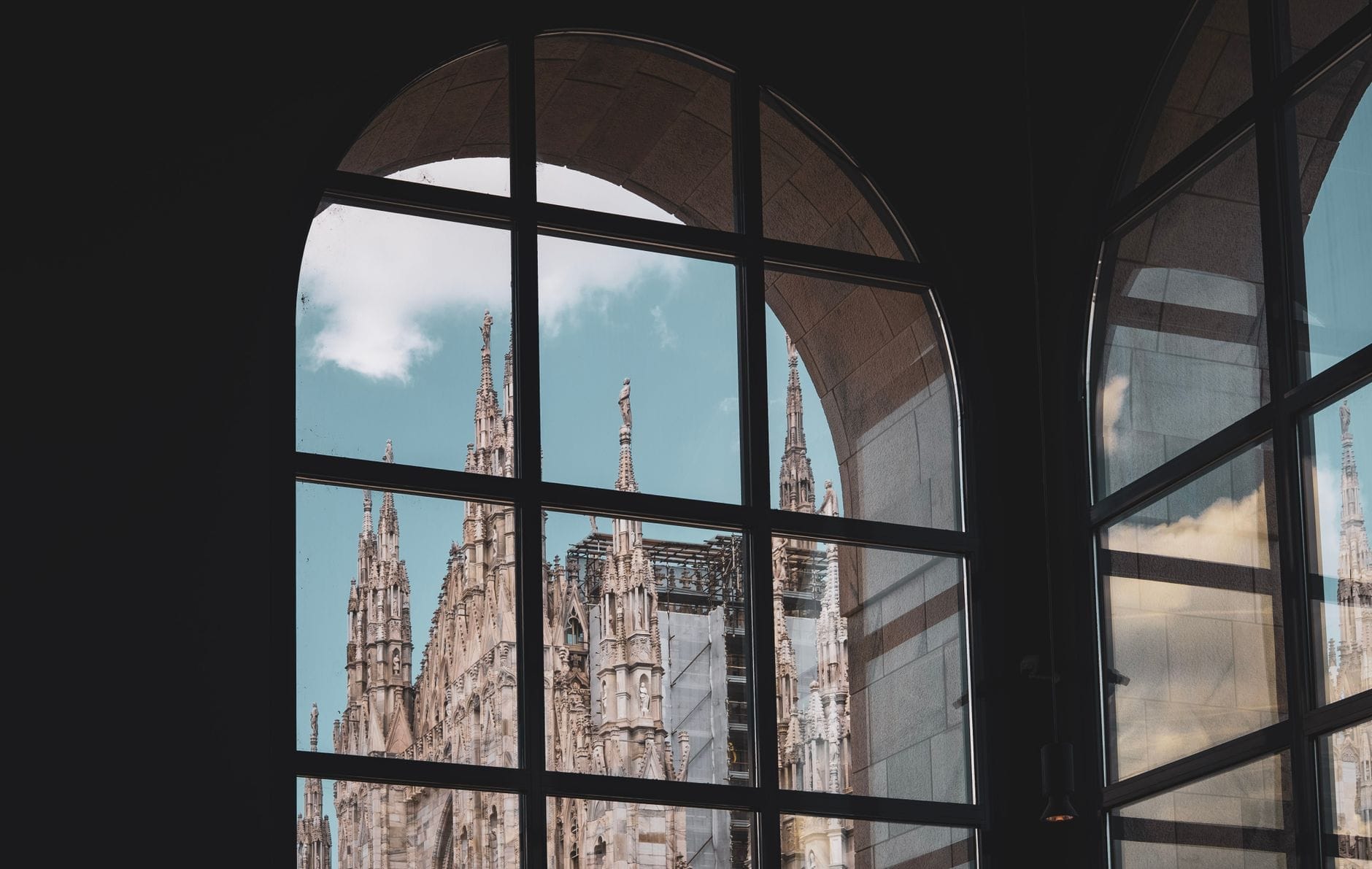
What the Museo del Duomo Actually Is
The Museo del Duomo di Milano is the official museum of Milan Cathedral, spread across 26 rooms inside the adjacent Palazzo Reale on Piazza del Duomo, the former Royal Palace that shares the cathedral's south flank. The museum opened in 1953 with an installation by Ugo Nebbia, was re-curated in 1974 by Ernesto Brivio, and completely rehung in 2013 under architect Guido Canali. What you see today is that 2013 version: a thoughtfully sequenced collection tracing the Duomo's construction from its foundation in 1386 through the twentieth century.
The collection exists because the Duomo itself has never stopped being a construction site. Statues weather and get replaced. Stained-glass windows break and are remade. Spires fall. The collection exists because the Duomo itself has never stopped being a construction site. Statues weather and get replaced. Stained-glass windows break and are remade. Spires fall. Many removed originals end up here rather than in storage, which means the museum contains a remarkable density of Gothic and Renaissance stonework that, in most cities, would have been lost. You are looking at the actual medieval originals, not casts., which means the museum contains a remarkable density of Gothic and Renaissance stonework that, in most cities, would have been lost. You are looking at the actual medieval originals, not casts.
The museum is operated by the Veneranda Fabbrica del Duomo, The museum is operated by the Veneranda Fabbrica del Duomo, the institution that has long managed the cathedral's construction and maintenance, one of the oldest continuously operating building organizations in Europe. The broader complex, including the church interior, rooftop terraces, and the underground archaeological area, is sold as a combined ticket, and the museum is part of that package., one of the oldest continuously operating building organizations in Europe. The broader Duomo di Milano complex, including the church interior, rooftop terraces, and the underground archaeological area, is sold as a combined ticket, and the museum is part of that package.
ℹ️ Good to know
Opening hours: every day except Wednesday, 10:00–19:00. Opening hours: every day except Wednesday, 10:00–19:00. Last ticket issued at 17:50, last admission at 18:10. Always confirm current hours at duomomilano.it before visiting, as these can change for special events. Always confirm current hours at duomomilano.it before visiting, as these can change for special events.
The Experience: Walking Through Six Centuries of a Building
The entry sequence takes you through the Palazzo Reale's ground-floor galleries, rooms that are generously proportioned but not overwhelming. Lighting is controlled and focused on the objects, so the ambient temperature stays cooler than the summer heat outside, and the stone sculptures seem almost to glow under directed spots. The floors are polished marble; the sound is a low murmur from other visitors and the occasional audio guide narration drifting across the room.
The earliest rooms deal with the cathedral's founding period, the late fourteenth century, when Gian Galeazzo Visconti ordered the construction of a building that would outscale everything in northern Italy. The scale models and architectural drawings here make the ambition legible in a way the finished building does not: you see the plans, the revisions, the competing proposals from local and foreign masters. The argument over whether to build in the Lombard Gothic or the German Gothic manner played out for decades, and the documentation of that argument is genuinely interesting.
The sculpture rooms contain some of the most compelling objects. Original statues from the cathedral's exterior, some of them standing two meters tall, occupy the central floors of several rooms while you walk among them at close range. Outdoors on the Duomo, these figures are 50 meters above you; here, you can read the chisel marks on a saint's robes or observe the damage a century of Milanese rain does to Candoglia marble. The contrast between weathered originals and the restored copies now installed on the building is instructive rather than depressing.
💡 Local tip
Arrive in the first hour after opening, around 10:00 to 11:00. The museum is routinely quieter than the cathedral next door at all hours, but early morning gives you the sculpture rooms almost to yourself, which is the right way to encounter a two-meter Gothic saint.
Tickets & tours
Hand-picked options from our booking partner. Prices are indicative; availability and final rates are confirmed when you complete your booking.
Duomo Cathedral private tour with a local guide
From 105 €Instant confirmationFree cancellationSkip-the-line Duomo tour in Milan
From 40 €Instant confirmationFree cancellationSkip-the-line Milan's Duomo rooftop tour
From 42 €Instant confirmationFree cancellationDuomo of Milan guided tour
From 65 €Instant confirmationFree cancellation
Highlights You Should Not Rush Past
The stained-glass panels are among the museum's most underrated holdings. Several original window sections from the fifteenth and sixteenth centuries are displayed flat, at waist height, backlit so you can see the leading and the brushwork on the grisaille details. Upright in the cathedral they read as color fields from a distance; horizontal and close, they reveal a sophistication of glass-painting that approaches manuscript illumination.
The Trivulzio Candelabrum, The Trivulzio Candelabrum, an early medieval bronze candlestick of extraordinary quality, is displayed in its own room. It arrived in the Duomo treasury in the medieval period, its exact origin still debated. The craftsmanship is so far above what surrounded it in the early medieval church that scholars still disagree about whether it was produced in a Byzantine, Rhenish, or Lombard workshop. Given its size and the detail of the figural decoration, it is worth slowing down considerably., is displayed in its own room. It arrived in the Duomo treasury in the medieval period, its exact origin still debated. The craftsmanship is so far above what surrounded it in the early medieval church that scholars still disagree about whether it was produced in a Byzantine, Rhenish, or Lombard workshop. Given its size and the detail of the figural decoration, it is worth slowing down considerably.
The room dedicated to the Fabbrica's twentieth-century work often gets bypassed by visitors focused on the medieval material, but it documents a fascinating problem: The room dedicated to the Fabbrica's twentieth-century work often gets bypassed by visitors focused on the medieval material, but it documents a fascinating problem: how do you finish a Gothic building using modern construction techniques? The photographs, tools, and engineering drawings from the final decades of active work show craftsmen in post-war Milan carving stone in techniques unchanged since the 1400s, in workshops that looked like they belonged to a different century entirely. The photographs, tools, and engineering drawings from the final decades of active construction show craftsmen in post-war Milan carving stone in techniques unchanged since the 1400s, in workshops that looked like they belonged to a different century entirely.
How Time of Day Changes the Visit
Morning visits, from 10:00 to 12:00, offer the calmest experience. The Piazza del Duomo outside fills steadily through the day, and the combined ticket entry queue at the cathedral can back up by early afternoon. Because the museum has its own separate entrance through Palazzo Reale, it remains largely shielded from that traffic.
Midday, roughly 12:30 to 14:30, is when tour groups tend to move through. The rooms are not large enough to absorb a dozen guided groups simultaneously, and the acoustics in the stone-floored galleries mean noise carries. If you arrive in this window, begin with the later rooms (twentieth-century section, architectural drawings) and work backward toward the medieval galleries as the groups exit.
Afternoon visits from 15:00 onward work well. Light through the street-side windows changes in the late afternoon, and several of the textile and drawing displays look better in diffuse afternoon light than under the morning artificial lighting. The museum is least crowded in its final hour before the 18:00 last admission, though that also means some staff begin consolidating rooms.
Fitting the Museum Into Your Duomo Day
Most visitors to the Duomo come for the church interior and the terraces and treat the museum as an afterthought. That ordering makes sense physically but often means arriving at the museum tired, having already spent two hours on the rooftop in the sun. If you are buying the comprehensive ticket, consider reversing the sequence: start in the cool, quiet museum rooms, orient yourself with the building's history, then go into the cathedral interior, and finish on the rooftop terraces when the light is better in the afternoon.
The underground archaeological area, accessible on the same combined ticket, is beneath the cathedral piazza and documents pre-Christian and early Christian remains on the site. The underground archaeological area, accessible on the same combined ticket, is beneath the cathedral piazza and documents pre-Christian and early Christian remains on the site. It connects naturally with the museum's early rooms on the site's history before 1386. If you plan to visit both, allow a full half-day for the complete Duomo complex. connects naturally with the museum's early rooms on the site's history before 1386. If you plan to visit both, allow a full half-day for the complete Duomo complex.
The museum is 50 meters from the Galleria Vittorio Emanuele II entrance and a 10-minute walk from the Pinacoteca Ambrosiana, which holds Leonardo's Atlantic Codex and one of Italy's great painting collections. The Duomo district can absorb a full day if you pace it carefully.
Practical Information for Your Visit
The entrance to the museum is on Piazza del Duomo 12, through the Palazzo Reale ground floor. The Duomo metro station, served by the red M1 and yellow M3 lines, exits directly onto Piazza del Duomo and places you in front of the building within a short walk. Trams running along Corso Vittorio Emanuele II also stop nearby.
The museum is located on the ground floor of the Palazzo Reale, which is the most accessible part of the broader Duomo complex. The terraces and upper sections of the cathedral involve stairs or lifts that require advance coordination; the museum itself does not. For specific accessibility requirements, including step-free routing and assistance services, contact the Veneranda Fabbrica del Duomo directly via the official website before your visit.
Photography is generally permitted without flash in most rooms, though individual display cases with fragile textiles or manuscripts may be restricted. Signage will indicate where photography is not allowed. No large bags or backpacks can be carried through the gallery rooms; a cloakroom is available at the entrance.
⚠️ What to skip
The museum is closed on Wednesday. If your Milan itinerary falls midweek, plan accordingly. The cathedral church itself and the terraces operate on different schedules, so check each component of the Duomo complex separately at duomomilano.it.
Ticket prices for the combined Duomo packages are €22 for the Combo Stairs (Cathedral + Terraces on foot + Museum) and €26 for the Combo Lift (Cathedral + Terraces by elevator + Museum). The Cathedral + Museum only ticket is €10. Buy tickets through the official duomomilano.it website or at the on-site ticket offices rather than third-party resellers, both to get current pricing and to avoid queues.
Who This Museum Suits and Who Might Skip It
Travelers with a serious interest in medieval architecture, Gothic sculpture, or ecclesiastical art will find this one of the more rewarding hours they spend in Milan. The collection is extensive, the objects are well-labeled in Italian and English, and the curatorial logic is clear. You leave understanding the Duomo better than you entered, which is not something that can be said of every museum visit.
Children vary widely here. The large-scale Gothic statues tend to hold attention, and the scale models appeal to spatially curious kids. The rooms focused on drawings, documents, and decorative arts fragments are harder to make compelling for anyone under ten. If you are traveling with young children and have limited time in the Duomo complex, prioritize the cathedral interior and terraces, and treat the museum as an add-on if energy allows.
Visitors who are primarily interested in the broader sweep of Milanese art history, rather than specifically the Duomo, might allocate their museum hours differently. The Pinacoteca di Brera covers Renaissance painting far more broadly, and the Museo del Novecento handles twentieth-century Italian art with greater range. The Duomo Museum is specific: it is about one building, in depth. If that focus appeals to you, it delivers completely.
Insider Tips
- Buy your combined Duomo ticket online in advance, even if you are already in Milan. The ticket office queue on Piazza del Duomo can run 30 to 45 minutes on busy days, and pre-purchased tickets let you enter the museum directly.
- The Trivulzio Candelabrum room is often passed quickly by visitors unfamiliar with the object. Ask a staff member which room it is in before you start, and budget time for it specifically. It is one of the most significant pieces of early medieval metalwork on display anywhere in northern Italy.
- The 2013 Guido Canali reinstallation placed many objects at deliberately varied heights, including some very low to the floor. Bring reading glasses if you use them: label text on low-mounted objects is small and can be hard to read in the controlled lighting.
- If you visit during Milan Design Week in April, check the Palazzo Reale events calendar. The Palazzo sometimes hosts design installations in its upper floors during this period, which can be combined with the museum visit on the same trip to the building.
- The museum shop at the exit carries publications from the Veneranda Fabbrica, including detailed architectural studies of the Duomo that are not available in general bookshops. If you want to go deeper into the building's history, browse before leaving.
Who Is Museo del Duomo For?
- Architecture and art history enthusiasts who want context beyond the cathedral's exterior
- Travelers revisiting Milan who have already done the terraces and want something new
- Anyone with an interest in medieval stone carving or Gothic ecclesiastical art
- Visitors looking for a cool, uncrowded respite from the summer heat of Piazza del Duomo
- Travelers following a Leonardo da Vinci or Renaissance Milan itinerary, as the Duomo's construction overlaps directly with that period
Nearby Attractions
Other things to see while in Duomo District:
- Chiesa di San Bernardino alle Ossa
Tucked into Piazza Santo Stefano a short walk east of the Duomo, the Chiesa di San Bernardino alle Ossa is one of Milan's most arresting and least-crowded historic interiors. Its 17th-century ossuary chapel is lined floor to ceiling with human skulls and bones, crowned by a luminous baroque fresco. Entry is free.
- Duomo di Milano
The Duomo di Milano is one of the largest Gothic cathedrals in the world, nearly six centuries in the making and still the physical and symbolic heart of the city. This guide covers what to expect inside, how to reach the rooftops, when to visit, and the practical details that make the difference between a rushed stop and a memorable experience.
- Galleria Vittorio Emanuele II
Built between 1865 and 1877 and inaugurated in 1867, the Galleria Vittorio Emanuele II connects Piazza del Duomo to Piazza della Scala beneath a soaring 47-metre glass dome. Entry is free and the arcade never closes, making it one of the most accessible landmarks in northern Italy. Whether you stop for an espresso at a historic café or simply pass through on foot, the architecture alone rewards the detour.
- Gallerie d'Italia – Piazza Scala
Spread across three interconnected 19th-century palazzi steps from La Scala opera house, Gallerie d'Italia – Piazza Scala offers approximately 8,300 square metres of art ranging from Neoclassical painting to 20th-century Italian masters. The buildings themselves are as compelling as what hangs on their walls.