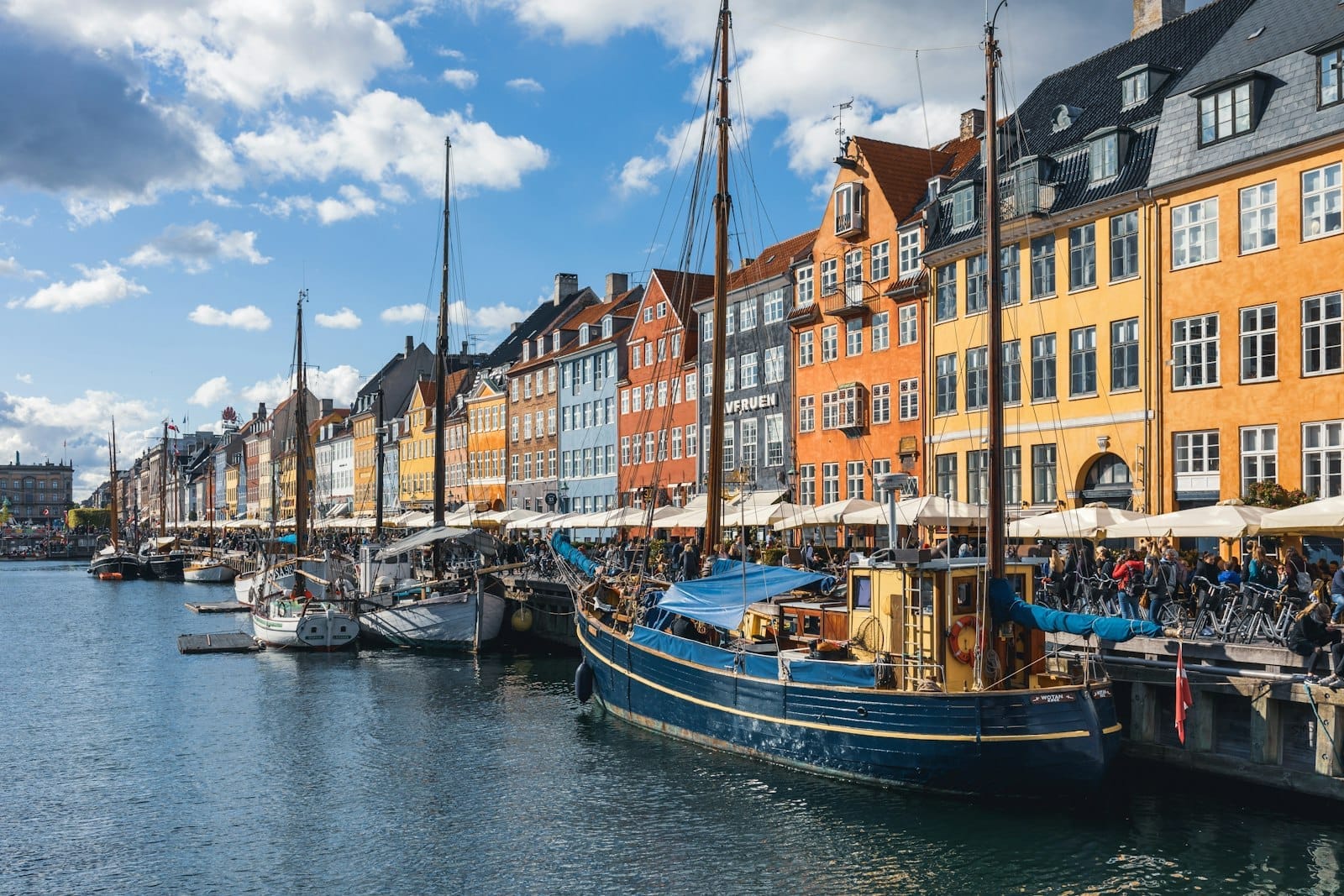
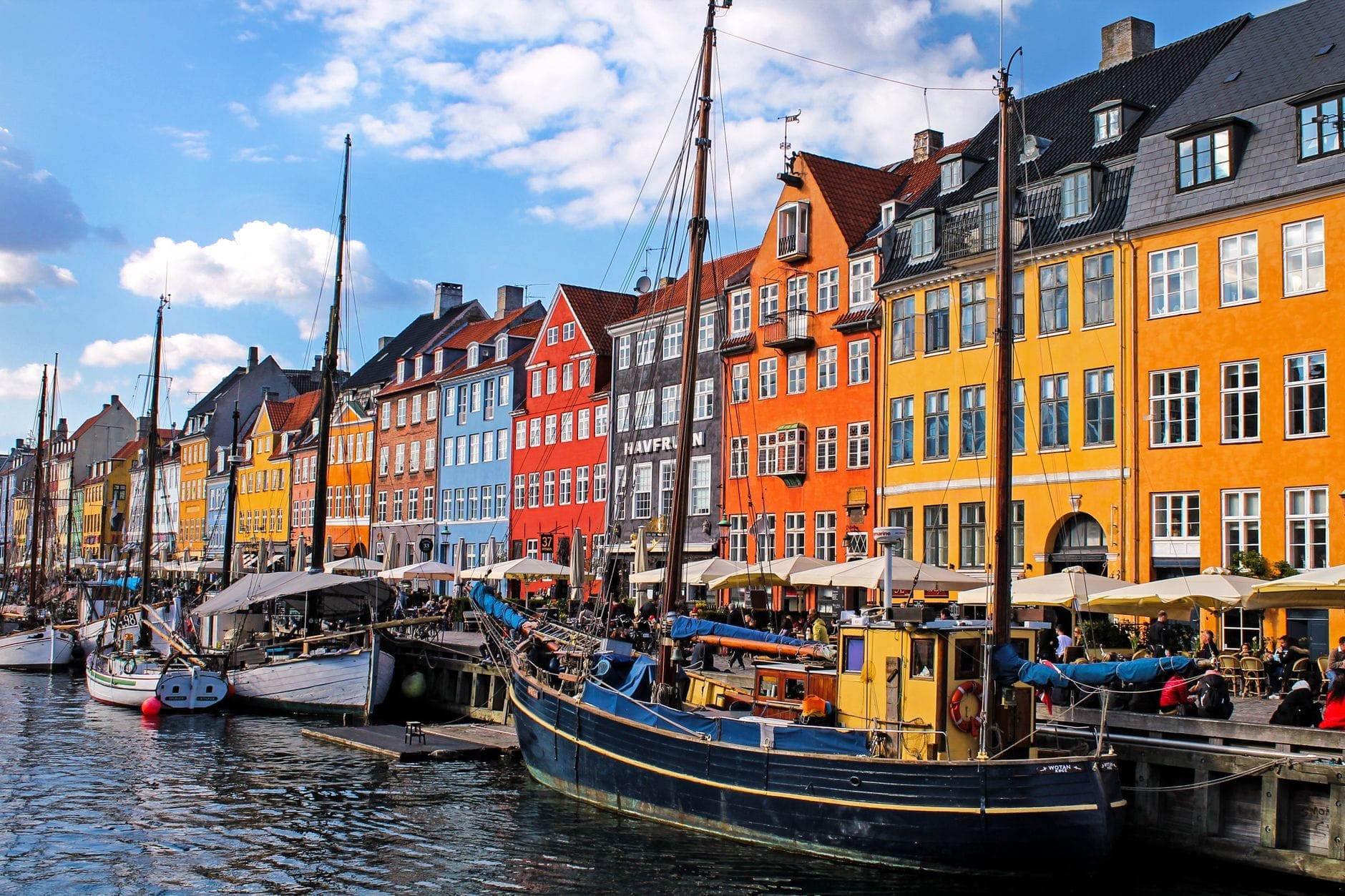
Nyhavn is Copenhagen's most recognizable waterfront district: a 450-meter canal lined with 17th-century townhouses painted in reds, yellows, and blues, with old wooden ships moored at the quay. Once a working port for sailors and merchants, it is now the city's most photographed stretch and the departure point for canal tours, with restaurants and bars filling every ground floor.
Nyhavn is the postcard image of Copenhagen made real: a narrow canal flanked by tall, colorful townhouses, their reflections broken by moored wooden ships and the wash of passing tour boats. It is simultaneously one of the city's most tourist-heavy corridors and one of its most genuinely beautiful ones, and knowing when and how to experience it makes all the difference.
Orientation
Nyhavn runs roughly east-west for about 450 meters, from Kongens Nytorv at its western end to the Inner Harbour near the Royal Danish Playhouse at its eastern end. It is technically part of Indre By, Copenhagen's historic core, and sits at the point where the old city meets the open harbor.
The canal divides into two distinct sides: the south quay, closest to Kongens Nytorv, catches the afternoon sun and holds most of the restaurants and bars with outdoor seating; the north quay tends to be quieter, shadier, and is where the historic ships are moored. Most first-time visitors plant themselves on the sunny south side without realizing the north side offers a better view of the famous facades.
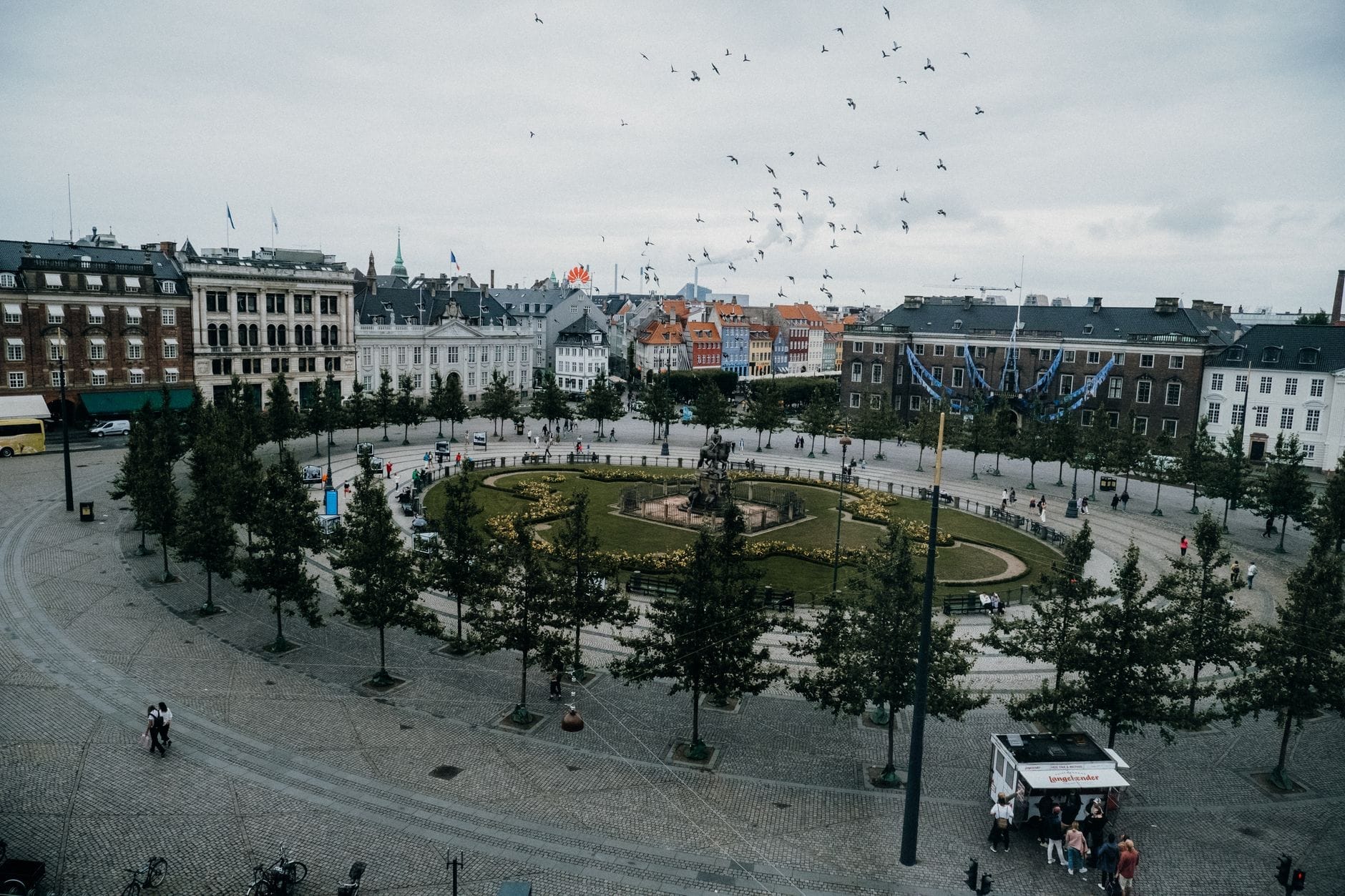
Geographically, Nyhavn is surrounded by some of Copenhagen's most significant areas. To the west is Kongens Nytorv, one of the city's largest squares and a transport interchange. To the north lies the Frederiksstaden district, home to Amalienborg Palace and the Marble Church. Cross the harbor to the south and you are in Christianshavn, accessible by foot via the Knippelsbro bridge or by water bus directly from the Nyhavn harbor stop.
Character & Atmosphere
Early morning in Nyhavn belongs almost entirely to locals and the service workers setting up for the day. The canal is still, the light is soft and low, and the facades reflect cleanly in the water. Delivery bikes squeeze down the quays, café chairs are unfolded, and the wooden ships creak quietly against their moorings. This is the version of Nyhavn that photographs remember but most tourists never see.
By mid-morning the tour groups arrive, canal boats begin their circuits, and the south quay fills steadily. By midday in summer it is densely packed: selfie sticks, tour guides with colored umbrellas, and every outdoor table occupied. This is not the place to come for a quiet lunch on a Saturday in July. It is, however, a genuinely spectacular piece of urban scenery, and spending even twenty minutes walking its length gives you an understanding of Copenhagen's relationship with water and trade that no amount of reading can replicate.
Evenings shift the atmosphere again. The light turns golden over the rooftops, the tour boats thin out, and the canal fills instead with the sound of glasses clinking and conversation spilling out from bars. In summer, Danes and tourists sit together on the quay edge with beers, feet dangling toward the water. It is one of Copenhagen's most convivial outdoor spaces at this hour, and it works whether you are a visitor or a regular.
In winter, Nyhavn transforms entirely. The Christmas market on the north quay, the masted ships strung with lights, and the bare trees wrapped in fairy lights give it a theatrical quality that the summer crowds actually obscure. Fewer visitors means you can walk the full length of the canal slowly, look up at the building details, and see the neighborhood closer to how it actually functions as a piece of the city.
💡 Local tip
Visit before 9am or after 7pm for the most photogenic and least crowded experience. The south quay catches direct sun in the afternoon, making it the warmer spot for a drink; the north quay gives you the classic view looking back at the colored facades.
What to See & Do
The canal itself is the main attraction, but understanding its history adds considerable depth to a visit. Nyhavn, meaning 'New Harbor,' was constructed in the 1670s under King Christian V, primarily as a commercial canal to connect Kongens Nytorv to the sea. It functioned as a working port for roughly 300 years: sailors, merchants, tattoo parlors, and taverns dominated its quays well into the 20th century. The gentrification into a tourist and restaurant district began in earnest in the 1970s and 1980s.
Hans Christian Andersen lived in Nyhavn at three different addresses over the course of his life: at number 20, number 67, and number 18. A commemorative plaque marks number 67, where he lived for nearly two decades and wrote some of his most celebrated fairy tales including The Tinderbox, Little Claus and Big Claus, and The Princess and the Pea. The building is privately owned and not open to visitors, but the plaque is visible from the street.
The wooden ships moored along the north quay are part of the city's museum harbor. Several of the vessels are historic and have been maintained as floating exhibits; they are best appreciated from the quay edge rather than rushing past. At the harbor end of the canal, near the Royal Danish Playhouse, stands the Memorial Anchor, a large ship's anchor dedicated to Danish sailors lost at sea. The Copenhagen Opera House is visible directly across the harbor from this point.
Immediately adjacent to Nyhavn at Kongens Nytorv is Kunsthal Charlottenborg, a major contemporary art exhibition space housed in a Baroque palace from 1672. It is consistently one of Copenhagen's better contemporary art venues and almost entirely overlooked by visitors focused on the canal. Also within easy reach are the canal boat tours that depart from the Nyhavn quay, which offer one of the most efficient ways to see Christiansborg Palace, the Black Diamond library, and the broader harbor in under an hour.
Walk the full length of the north quay to read the historic ship plaques and see the facades from the correct angle
Find the Hans Christian Andersen plaque at number 67
Book a canal tour from the Nyhavn departure point for harbor views
Visit Kunsthal Charlottenborg for contemporary Danish and international art
Walk north along the harbor toward Langelinie for the Little Mermaid statue (about 20 minutes on foot)
ℹ️ Good to know
Canal boat tours depart from the Nyhavn quay regularly in season and are one of the most popular activities in Copenhagen. Booking in advance in summer is advisable. The tours typically cover the inner harbor, Christianshavn, and the main waterfront landmarks.
Eating & Drinking
Honesty first: the restaurants directly on the Nyhavn canal are, with very few exceptions, priced for tourists and not representative of the quality you can find a few minutes' walk away. The outdoor setting is exceptional, the menus are reliable, and the service is experienced at handling large volumes. But if a meal matters more than a view, you will eat better and spend less money in the streets behind the canal or in the Indre By neighborhood to the west.
That said, the canal-side experience of sitting with a beer or a glass of wine on the south quay on a warm afternoon is genuinely one of Copenhagen's pleasures, and the price premium can be understood in that context. Most restaurants along the south quay serve open-faced sandwiches (smørrebrød), fresh seafood, and Danish classics alongside international options. Prices for a main course run noticeably higher than the city average, and a beer on a sunny table will cost accordingly.
For a more considered food experience, the area around Kongens Nytorv and the streets running west toward Strøget offer considerably more range. Torvehallerne, Copenhagen's covered food market near Nørreport Station, is about 15 minutes on foot and provides a far better overview of the city's food culture at reasonable prices.
The bar scene on the canal is straightforward and sociable: several venues stay open late, particularly in summer, and the quayside itself functions as an informal gathering space with takeaway drinks. For a broader sense of Copenhagen's nightlife and drinking culture, the neighborhoods of Vesterbro and Nørrebro are more genuinely local and significantly more varied.
⚠️ What to skip
Pickpocketing is the main safety concern in Nyhavn. The canal is one of Copenhagen's most crowded tourist corridors, and busy outdoor tables and queues for boats create ideal conditions for opportunistic theft. Keep bags closed and phones in pockets when the canal is at its most crowded.
Getting There & Around
The easiest way to reach Nyhavn is via Kongens Nytorv Metro Station, served by Metro lines M1, M2, M3, and M4. From Central Station (København H), take the M2 toward the Airport and exit at Kongens Nytorv: it is a single stop and takes about two minutes. From the station exit on the Nyhavn side, the canal entrance is a two-minute walk east across the square.
Several bus routes serve Kongens Nytorv as well, and the harbor bus (Havnebus) stops at Nyhavn, connecting the canal directly to Islands Brygge to the south and to the Nordre Toldbod stop near the Little Mermaid to the north. The harbor bus is a practical and scenic alternative to metro travel for moving along the waterfront.
On foot, Nyhavn is within comfortable walking distance of many central Copenhagen attractions. Rosenborg Castle is roughly 15 minutes north-west through the Frederiksstaden streets. Strøget, Copenhagen's main pedestrian shopping street, begins at Kongens Nytorv and runs west through the old city. The Little Mermaid statue at Langelinie is about 20 minutes walking north along the harbor promenade.
Cycling is practical for reaching Nyhavn and for moving on from it. Copenhagen's cycling infrastructure is extensive, and the harbor promenade routes are pleasant. For a full overview of getting around the city by bike and transit, the getting around Copenhagen guide covers routes, bike rentals, and transit ticketing in detail.
Where to Stay
Nyhavn itself has very limited accommodation, and what exists is premium-priced. The more practical strategy is to stay in the adjacent Indre By district or near Kongens Nytorv, where several well-located hotels put you within five minutes' walk of the canal while giving you better access to the rest of the city. The Copenhagen neighborhood accommodation guide compares all the main areas across price points.
Staying in or immediately around Nyhavn suits travelers who want maximum walkability to the harbor, the canal tours, and the historic city center, and who prioritize convenience over local atmosphere. It is a strong base for first-time visitors to Copenhagen who want to cover the major landmarks on foot. It is a less obvious choice for travelers looking for a residential, less touristy experience: for that, Nørrebro, Vesterbro, or Østerbro are more rewarding bases.
For families, the Nyhavn area works well: the canal is immediately interesting for children, the distances to major attractions like Tivoli Gardens and Rosenborg Castle are manageable on foot or by a single metro stop, and the general safety and pedestrian-friendliness of the area is high.
Practical Notes
Nyhavn is active year-round, though the experience varies considerably by season. Summer (June to August) brings the largest crowds, the warmest quayside drinking weather, and the highest restaurant prices. Shoulder season, particularly May and September, offers pleasant temperatures, longer daylight, and noticeably fewer people. The winter Christmas market period, typically running through December, creates one of the more atmospheric versions of Nyhavn, with the lit ships and market stalls giving the canal a different character entirely.
The Copenhagen Card covers most major museum admissions and unlimited public transit including the metro to Kongens Nytorv, and is worth calculating for stays that include multiple museum visits. The Copenhagen Card guide explains how to assess whether it makes financial sense for different trip lengths and itineraries.
TL;DR
Nyhavn is Copenhagen's most iconic waterfront district: a 450-meter canal of 17th-century colored townhouses, moored ships, and constant canal-tour traffic.
Best experienced early morning or evening; midday in summer is genuinely crowded and the canal-side restaurants are priced for that audience.
The north quay gives the best view of the famous facades; the south quay catches more sun and holds most of the bars and restaurant terraces.
Ideal base for first-time visitors who want walkable access to the historic city center; less suited to travelers seeking a local, non-tourist atmosphere.
Kongens Nytorv Metro Station (M1/M2) is the main transit hub, two minutes' walk from the canal entrance, making the rest of Copenhagen very accessible.
Two days in København is genuinely enough to cover the city's royal palaces, canal district, world-class food markets, and Freetown Christiania without feeling rushed. This itinerary sequences the sights logically, cuts the walking time, and flags what is actually worth your limited hours.
Copenhagen has an unusually strong museum scene for a city its size, with world-class collections spanning ancient history, modern art, design, and Nordic heritage. This guide covers the best museums in Copenhagen, from the grand institutions in Indre By to extraordinary day-trip destinations just outside the city.
Copenhagen rewards visitors year-round, but the right month depends entirely on what you want from the trip. This guide breaks down weather, crowds, pricing, and seasonal events so you can match your travel style to the right window.
Copenhagen Airport (CPH) sits just 8 km from the city centre, and your airport transfer takes as little as 13 minutes by metro or train. This guide breaks down every option — public transport, taxi, and private transfer — with real fares, journey times, and honest advice on what to skip.
The Copenhagen Card promises free entry to 80+ attractions and unlimited public transport across the Danish capital. But is it actually worth the price? This guide breaks down the numbers, the fine print, and who genuinely benefits.
Copenhagen transforms in winter. From the ticketed spectacle of Tivoli Gardens to free canal-side markets and steaming mugs of gløgg, this guide covers everything you need to plan a Christmas visit to København with confidence.
Copenhagen is one of the world's most architecturally ambitious cities, named UNESCO/UIA World Capital of Architecture in 2023. This guide covers the essential museums, landmark buildings, contemporary projects, and practical routes for anyone serious about design and architecture in København.
Copenhagen food culture runs deeper than Noma's legacy. This guide covers the essential dishes, best markets, smartest restaurant picks, and seasonal foods that define eating in the Danish capital — across every budget.
October in Copenhagen (København) is one of the most underrated times to visit. Tivoli transforms into a Halloween wonderland with over 20,000 pumpkins, the crowds thin out compared to summer, and the city's museums and food scene hit their stride. This guide covers the weather, the best events, what to prioritize, and what to skip.
Summer is Copenhagen's peak season, with up to 17 hours of daylight, open-air festivals, free harbour swimming, and parks packed with locals. This guide covers the weather, major events, best activities, and practical tips for visiting in June, July, and August.
The Copenhagen Jazz Festival runs for 10 days every July, filling the Danish capital with around 1,200 concerts across 120 venues. This guide covers dates, tickets, free events, the best neighborhoods to explore, and everything you need to plan your visit.
Copenhagen's after-dark scene is disproportionately strong for a city its size. From precision cocktail bars in the Latin Quarter to techno clubs in the Meatpacking District, this guide cuts through the noise and tells you exactly where to go, when to arrive, and what to expect — including what costs more than it should.
Copenhagen (København) has a reputation as one of Europe's priciest capitals, and that reputation is not entirely unfair. But with the right passes, free attractions, and a few local habits, you can experience the city fully without a sky-high bill. This guide breaks down exactly where your money goes and where you can save it.
Copenhagen rewards shoppers at every level, from international flagships on Strøget to vintage finds on Jægersborggade. This guide breaks down where to shop by neighborhood, what to buy, how much to spend, and which spots to skip.
Smørrebrød is Denmark's defining lunch tradition, and Copenhagen is the best place in the world to eat it. This guide covers the top restaurants, what to order, how much to pay, and the customs first-timers always get wrong.
Copenhagen (København) is one of Europe's most walkable capitals. This guide covers the classic self-guided walking tour route from Tivoli Gardens to Nyhavn and beyond, with practical details on distances, free stops, seasonal timing, and digital tools to make your day on foot count.
Copenhagen is one of Europe's most genuinely child-friendly capitals, with discounted museum entry, excellent playgrounds, and a compact city center that makes logistics manageable. This guide covers the best family activities in Copenhagen, from Tivoli Gardens to canal cruises, plus honest advice on passes, costs, and seasonal planning.
Copenhagen has roughly 350 km of segregated cycle tracks, and Copenhagen has roughly 350 km of segregated cycle tracks, and nearly half of all people who work or study in the city bike to work or school every day. This guide covers everything a visitor needs to cycle the city confidently: where to rent, which routes to ride, what the unwritten rules are, and when to go.
Copenhagen sits at the centre of an extraordinary region. Within two hours, you can reach UNESCO-listed castles, world-class art museums on clifftops, a remarkably preserved fishing village, and an entirely different country. These are the best day trips from Copenhagen, whether you have a full day or just an afternoon.
Copenhagen is one of Europe's most rewarding cities to explore on a tight budget. From free museum days and royal palaces to harbour swims and world-class parks, here are 20 genuinely free experiences that capture the best of the Danish capital.
Copenhagen's integrated transport network is one of Europe's most efficient. This guide covers the metro, S-trains, buses, cycling, taxis, and airport connections — with 2026 fares, zone logic, and practical advice on what's worth the money.
Copenhagen holds the key to understanding Hans Christian Andersen's life and work. From his former apartments along Nyhavn canal to his grave in Nørrebro, this guide maps every significant stop on the city's literary trail, with practical logistics for each.
Copenhagen rewards curious travellers who look beyond Nyhavn and Tivoli. This guide uncovers the city's overlooked neighbourhoods, underrated museums, and unexpected green spaces that locals actually love.
Copenhagen didn't accidentally become one of Europe's great food cities. The New Nordic movement, formalized in 2004, rewired how chefs here think about ingredients, technique, and season. This guide covers the key restaurants, price realities, seasonal logic, and how to experience the movement beyond fine dining.
Copenhagen rewards visitors with a rare combination of world-class history, cutting-edge design, and outdoor culture. This guide covers the best things to do in Copenhagen across every interest and budget, with honest assessments and practical logistics to help you plan confidently.
Choosing where to stay in Copenhagen shapes your entire trip. This guide breaks down every major neighborhood by budget, transport links, atmosphere, and traveler type — so you can book with confidence, not guesswork.