Cycling in Copenhagen: How to Explore the City by Bike
Copenhagen has roughly 350 km of segregated cycle tracks, and Copenhagen has roughly 350 km of segregated cycle tracks, and nearly half of all people who work or study in the city bike to work or school every day. This guide covers everything a visitor needs to cycle the city confidently: where to rent, which routes to ride, what the unwritten rules are, and when to go.
Plan and book this trip
Tools from our partner Travelpayouts help you compare flights and hotels. If you book through them, we may earn a commission at no extra cost to you.
Flights
Hotels map
TL;DR
- Copenhagen has around 350 km of physically separated cycle tracks, making it one of the world's most developed cycling cities.
- Bycyklen is the official electric bike-share system, but it is not free. Rental shops often give better value for longer stays.
- The city's flat terrain and wide cycle tracks make it accessible to most riders. See getting around Copenhagen for how cycling fits into the broader transport picture.
- Traffic rules apply to cyclists just as they do to drivers. Locals take cycling etiquette seriously.
- May through September is the best window for visitor cycling, though the infrastructure supports year-round riding with prioritized snow clearance in winter.
Why Copenhagen Is Built for Cycling
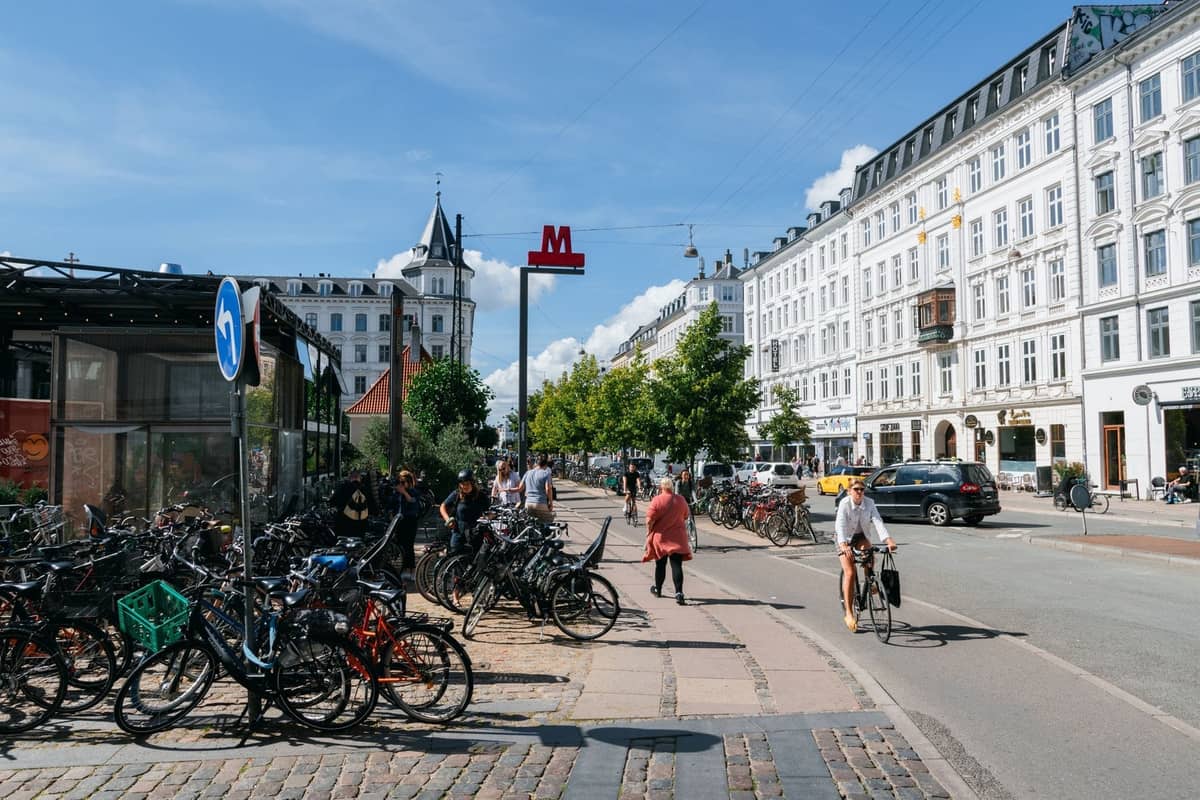
Cycling in Copenhagen is not a lifestyle trend or a tourist gimmick. Cycling in Copenhagen is not a lifestyle trend or a tourist gimmick. It is the dominant form of transport for getting around the city for people who work or study there, with roughly 45% cycling to work or study on a typical day. The infrastructure reflects this: most of the city's cycle tracks are physically separated from motor traffic by raised curbs or barriers, not just painted lines on the road. That distinction matters enormously for anyone nervous about urban cycling. You are not sharing a lane with cars on a busy street. You are riding on a dedicated track designed specifically for bikes. The infrastructure reflects this: most of the city's cycle tracks are physically separated from motor traffic by raised curbs or barriers, not just painted lines on the road. That distinction matters enormously for anyone nervous about urban cycling. You are not sharing a lane with cars on a busy street. You are riding on a dedicated track designed specifically for bikes.
The city itself is almost perfectly flat and compact. Copenhagen municipality covers about 86 square kilometres, which means many tourist attractions are reachable in 15 to 25 minutes by bike from central neighbourhoods. The canal district of Christianshavn, the palace at Amalienborg, the gardens at Rosenborg, Nørrebro's independent cafés, the harbour baths at Islands Brygge: all of these sit within comfortable cycling distance of each other. Compared to cycling in most European capitals, Copenhagen is a low-stress place to ride.
ℹ️ Good to know
Copenhagen's cycle network is not limited to the city itself. The regional Super Cycle Highways form a 500 km network of 26 named and signposted routes connecting Copenhagen to surrounding suburbs and municipalities. Copenhagen's cycle network is not limited to the city itself. The regional Super Cycle Highways form a 500 km network of 26 named and signposted routes connecting Copenhagen to surrounding suburbs and municipalities.
How to Get a Bike: Rentals, Bycyklen, and Buying
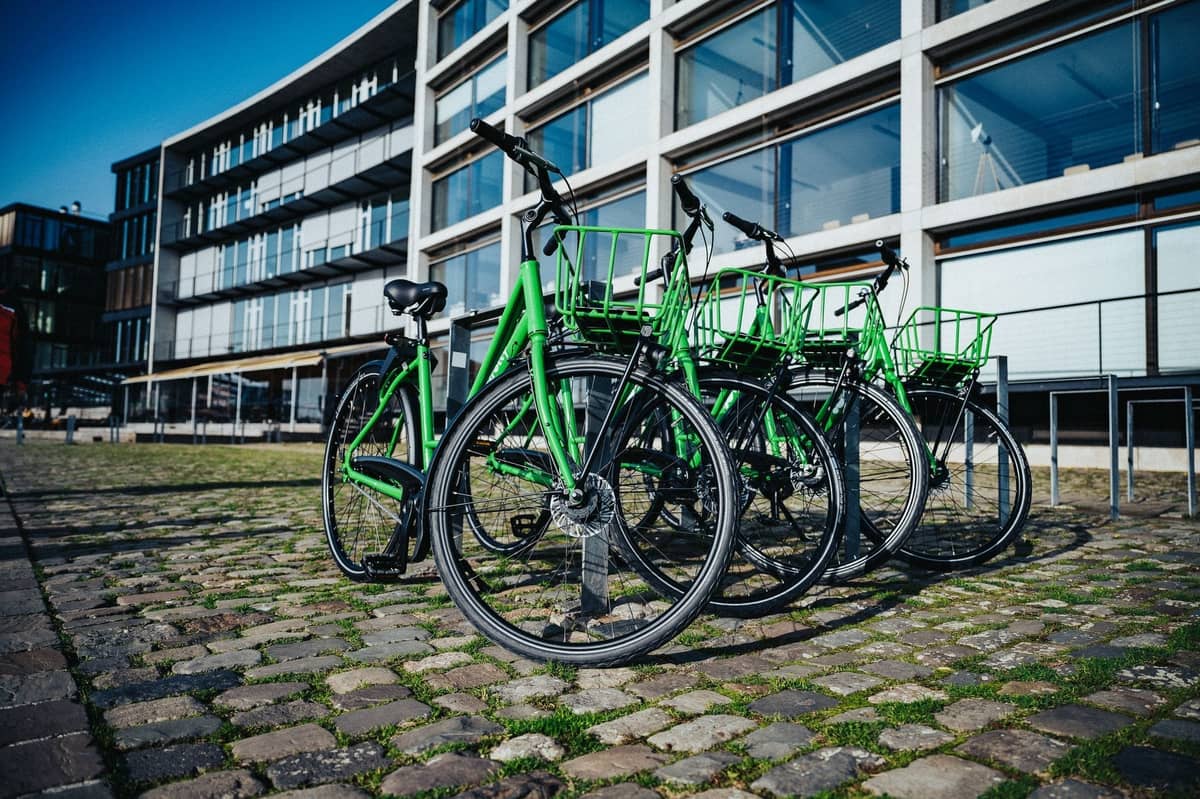
Bycyklen is Copenhagen's official bike-share scheme and is the option most commonly mentioned in tourist guides. It uses GPS-equipped electric bikes, docked at stations around the city, Bycyklen is Copenhagen's official bike-share scheme and is the option most commonly mentioned in tourist guides. It uses GPS-equipped electric bikes, docked at stations around the city. The electric assist is useful if you are carrying bags or cycling against the wind across the harbour bridges. However, Bycyklen is not cheap for sustained use, and the electric bikes are heavier than standard city bikes, which can feel unwieldy on narrower cycle tracks. For a single short trip, it works well. For a full day of sightseeing by bike, the cost adds up. The electric assist is useful if you are carrying bags or cycling against the wind across the harbour bridges. However, Bycyklen is not cheap for sustained use, and the electric bikes are heavier than standard city bikes, which can feel unwieldy on narrower cycle tracks. For a single short trip, it works well. For a full day of sightseeing by bike, the cost adds up.
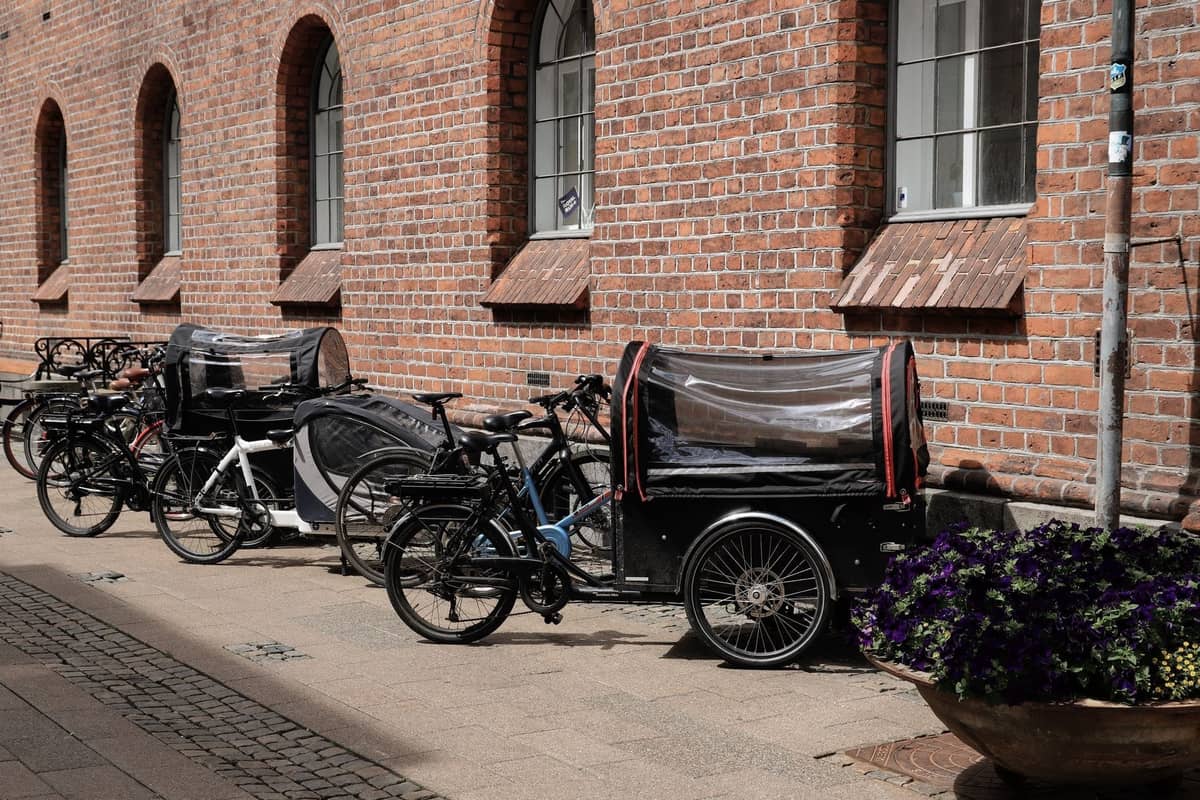
Private rental shops scattered across Indre By and near major hotels generally offer standard city bikes, cargo bikes, and children's bikes by the day or week. Prices vary, but expect to pay roughly 100 to 200 DKK per day for a standard bike, with discounts for multi-day rentals. Many shops also offer helmets, locks, and baskets as add-ons. If you are staying for more than four or five days, it is worth comparing rental costs against the Bycyklen hourly rate. For families, cargo bikes (called 'Christiania bikes' after the district where they were popularised) can carry two or three children in a front box, and several shops in the city specialise in them.
- Bycyklen (electric bike-share) Best for spontaneous short rides or arriving without a plan. Not the cheapest for full-day use. Requires app setup and a payment card.
- Private rental shops Better value for day trips or multi-day use. Standard city bikes are lighter and easier to handle than Bycyklen's electric models. Ask about insurance and the lock policy.
- Cargo bikes (Christiania bikes) A practical option for families or those carrying significant luggage. Available from specialist shops. Requires a bit of adjustment to the wider turning radius.
- Buying a used bike If you are staying three weeks or more, buying a used bike from a second-hand shop or online marketplace and reselling before departure can work out cheaper than renting. Quality varies significantly.
⚠️ What to skip
Bike theft is a real problem in Copenhagen, even with good locks. Always use a quality D-lock through the frame and lock to a fixed structure. Many rental bikes come with built-in wheel locks, but these alone are not sufficient. Lock the frame, not just the wheel.
The Rules of the Road (and the Unwritten Ones)
Danish road law applies to cyclists in the same way it applies to drivers. Red lights mean stop. You must signal turns using your arm. Danish road law applies to cyclists in the same way it applies to drivers. Red lights mean stop. You must signal turns using your arm. Cycling under the influence of alcohol can carry fines and other penalties. These are not optional guidelines. Copenhagen police do issue fines to cyclists, and ignorance of the rules is not a valid defence. These are not optional guidelines. Copenhagen police do issue fines to cyclists, and ignorance of the rules is not a valid defence.
Beyond the legal requirements, there is a set of unwritten rules that Copenhageners follow instinctively and that visitors often violate accidentally. Keep to the right on cycle tracks. Overtake on the left, and signal before you do. Do not stop abruptly in the middle of a track to check your phone or take a photo. If you need to stop, pull off to the side. When turning left at a major intersection, the standard approach is to cross to the far side, stop, then wait for the light to change before crossing in the new direction. This avoids cutting across fast-moving traffic and is the local norm.
💡 Local tip
Always check your right shoulder before turning right. Always check your right shoulder before turning right. In Copenhagen, cyclists approaching from behind on the cycle track may be very close. Turning right without checking is a common cause of tourist-on-cyclist incidents. Locals do this instinctively; visitors frequently do not. Turning right without checking is the most common cause of tourist-on-cyclist incidents. Locals do this instinctively; visitors frequently do not.
Helmets are not legally required in Denmark for adults, though they are recommended, especially for children. Most rental shops offer helmets for a small additional fee. Whether you wear one is your choice, but do not be surprised if you see the vast majority of Copenhageners cycling without one, especially on short urban trips.
Best Routes for Visitors: From Sightseeing Loops to Longer Rides
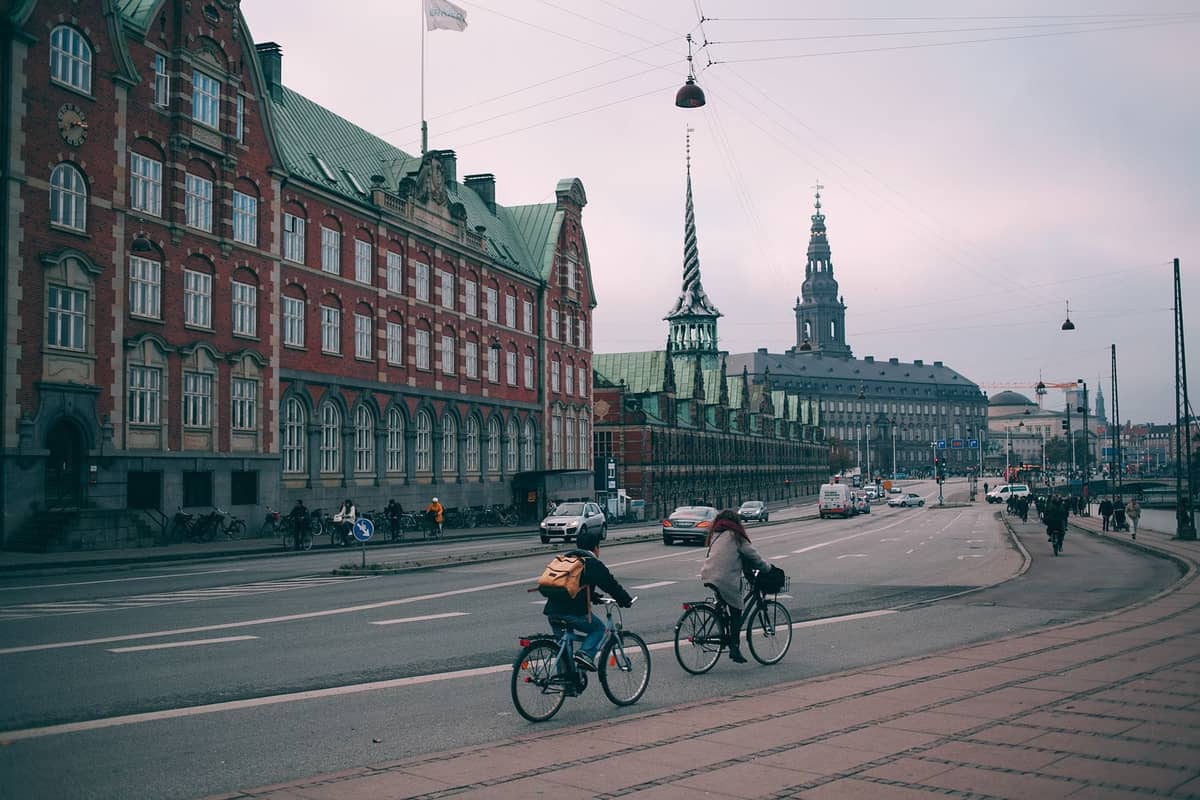
The most practical starting point for visitor cycling is the route between Nyhavn canal and The Little Mermaid along Langelinie. This stretch follows the harbour edge through Kastellet and gives a clean sense of Copenhagen's scale and waterfront character. The route is about 3 to 4 km one way, almost entirely flat, and connects several of the city's most recognisable landmarks within a single ride.
For a more immersive urban loop, cycling from the city centre through Nørrebro and back through Østerbro covers two of the city's most distinct residential characters in around 10 to 12 km. Nørrebro is denser, more multicultural, with independent food spots and the surprisingly serene Assistens Cemetery, where Hans Christian Andersen is buried. Østerbro is broader, quieter, with generous park space at Fælledparken. This loop works well on a weekday morning when traffic is lighter.
The 13 km Copenhagen Tour de France Route, signposted by the city, takes in major landmarks and is designed specifically for visitors who want a structured sightseeing loop. It passes through Christianshavn, along the harbour front, and through the inner city. For those who want to extend further, the harbour bridge at Cykelslangen offers a direct crossing to Vesterbro, where the former meatpacking district has become one of the city's most interesting dining and bar areas.
- Nyhavn to The Little Mermaid via Langelinie: 3-4 km, fully flat, harbour views, family-friendly
- City centre to Nørrebro and back through Østerbro: 10-12 km, residential character, parks, cemetery
- Copenhagen Tour de France Route: 13 km, signposted, major landmarks, ideal for first-timers
- Harbour bridge circuit (Cykelslangen to Vesterbro and Christianshavn): 8-10 km, modern infrastructure, harbour crossings
- Amager Strandpark: 15-20 km return from the centre, follows the coast to a beach park on the island's eastern edge
Seasonal Cycling: When to Go and What to Expect
May through September is the sweet spot for visitor cycling. Daylight hours are long, temperatures range from around 13°C in May to 22°C at the peak of July and August, and the city's outdoor culture is fully in effect. The summer months bring the most cyclists onto the tracks, which means the infrastructure can feel busy around rush hour but is generally well-managed. Shoulder months like May and September offer comfortable temperatures with slightly fewer people.
Winter cycling is not a myth in Copenhagen. The city actively maintains cycle tracks through winter, with prioritised snow and ice clearance on the busiest routes. Temperatures typically sit between 0°C and 4°C from December through February. That is cold but workable with appropriate layers. The honest caveat for visitors is that short daylight hours and wet conditions make winter riding less enjoyable as a sightseeing activity, even if it is perfectly functional as transport. If you are visiting primarily in winter, cycling is still an option but probably not the centrepiece of your sightseeing strategy.
✨ Pro tip
October can be one of the best months for cycling in Copenhagen if you catch a dry spell. Crowds are lower than summer, autumn light on the canals and parks is excellent for photography, and temperatures of 7-13°C are very manageable with a light jacket. Check the Copenhagen in October forecast before you go, as weather varies significantly year to year.
Cycling and Sightseeing: Combining Bike Rides with Attractions
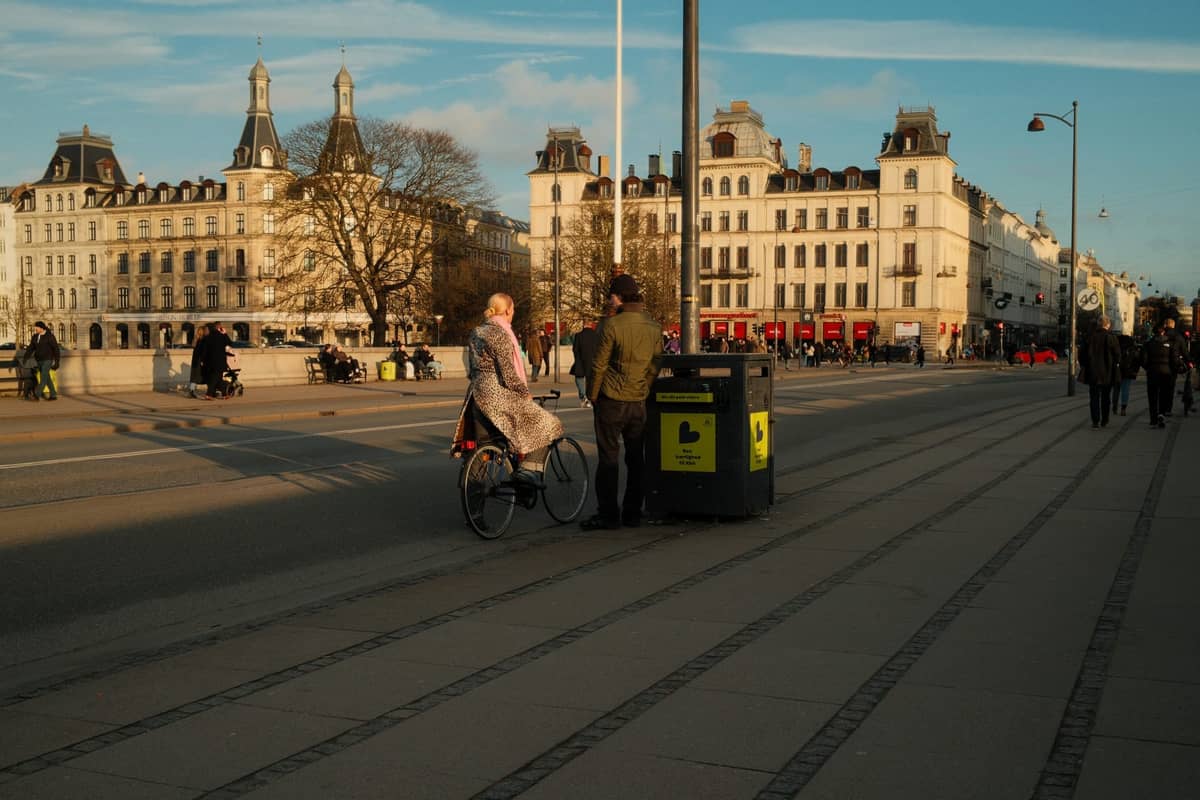
One of the most efficient uses of cycling in Copenhagen is combining it with attractions that are spread across the city rather than clustered in one place. Rosenborg Castle and the surrounding King's Garden sit a short ride from the city centre and make a natural mid-ride stop. From there, cycling north through Østerbro to the harbour at Langelinie, then looping back through the old town, creates a full morning of sightseeing with minimal backtracking.
For visitors with more time, cycling to Freetown Christiania in Christianshavn is a natural extension of any harbour-area ride. The area has its own internal no-car culture, so arriving by bike fits the environment naturally. Further afield, the Amager Strandpark beach park is reachable in around 30 to 40 minutes from the centre by bike and makes a worthwhile destination on a warm summer afternoon.
If you plan to use cycling as your primary transport method across several days, the Copenhagen Card may be less relevant for you than it would be for someone relying on public transport. Factor in rental costs against the card's public transit value before committing to either approach.
FAQ
Is cycling in Copenhagen safe for tourists who are not experienced urban cyclists?
Generally yes, provided you follow the basic rules. The physically separated cycle tracks mean you are rarely mixing with fast-moving car traffic. The main risks are collisions with other cyclists, particularly if you stop unpredictably or drift into the wrong part of the track. Stick to the right, signal your movements, and avoid using your phone while riding. Most visitors adapt within half a day.
How much does it cost to rent a bike in Copenhagen?
Private rental shops typically charge around 100 to 200 DKK per day for a standard city bike, with lower daily rates for multi-day rentals. Bycyklen electric bike-share charges by the hour through an app. For a full day of use, private rental is generally better value than Bycyklen. Always verify current prices directly with the rental provider, as rates change.
Do I need a helmet to cycle in Copenhagen?
Helmets are not legally required for adults in Denmark. You will see the majority of local cyclists riding without one. That said, wearing a helmet remains sensible, especially for children or anyone planning longer rides. Most rental shops offer helmets for a small additional fee.
Can I take a rental bike on the Copenhagen Metro or S-train?
Bicycles are generally allowed on S-trains outside of peak hours, subject to space and specific rules. They are typically not permitted on the Metro. Check the current rules with Rejseplanen or the transport operator before your trip, as rules and restrictions can vary by time of day and route.
What is the best cycling route for first-time visitors to Copenhagen?
The route from Nyhavn along the harbour front to The Little Mermaid at Langelinie is the easiest starting point: flat, well-marked, and passes several key landmarks in 3 to 4 km. The city's signposted 13 km Tour de France Route is the best option if you want a structured full-city loop that takes in a broad range of neighbourhoods and sights.