Vesterbro sits immediately west of Copenhagen Central Station and Tivoli Gardens, making it one of the city's most centrally located neighborhoods. Once a working-class district with a reputation tied to its red-light streets, it has reinvented itself into a destination for serious food, late-night drinking, and creative culture centered on the old Meatpacking District.
Vesterbro is the neighborhood that tells you the most about how Copenhagen actually works: rough edges sanded down by decades of urban renewal, a former red-light district now lined with some of the city's best restaurants and bars, and a mix of working-class heritage and creative energy that no other part of the city quite replicates. It is central, walkable, and rarely boring at any hour.
Orientation
Vesterbro occupies the wedge of city directly west of the historic core, with Copenhagen Central Station (København H) forming its eastern anchor point. If you walk out of the station's main entrance and turn left, away from Tivoli Gardens, you are already at the edge of Vesterbro. The neighborhood extends westward along Vesterbrogade, the long arterial street that serves as its spine, all the way to the Carlsberg brewery complex and Vestre Kirkegård, the city's large West Cemetery.
The northern boundary roughly follows the line toward Frederiksberg, Copenhagen's independent municipality, which begins where the character of the streets shifts from densely urban to more residential and ordered. To the south, the railway lines running into Central Station cut Vesterbro off from the harbor district. The neighborhood's southwestern corner is where you find Kødbyen, the old Meatpacking District, sitting between the rail tracks and Vesterbrogade.
Within Vesterbro itself, three streets define different slices of local life. Vesterbrogade is the commercial main drag. Istedgade runs parallel to it and carries the neighborhood's grittier, more lived-in quality. Værnedamsvej, cutting diagonally toward Frederiksberg, is the closest thing Vesterbro has to a Parisian side street: small wine bars, independent food shops, and flower stalls. For a broader sense of where Vesterbro fits among Copenhagen's other districts, the Copenhagen neighborhood overview guide explains the full city layout.
Character & Atmosphere
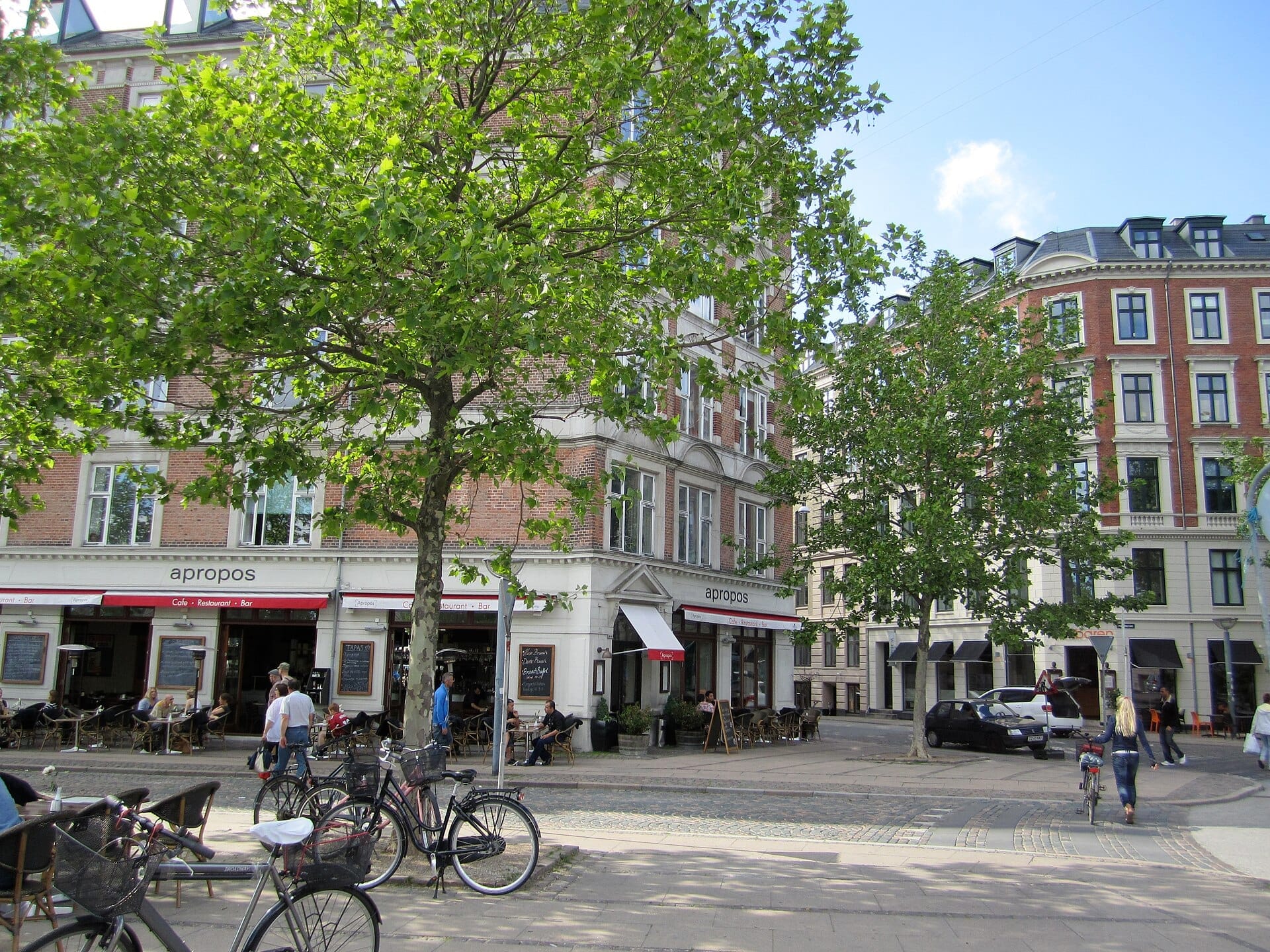
Vesterbro has a layered quality that takes a day or two to fully read. Early mornings on Istedgade are quieter than you might expect, with bakeries opening their shutters, cyclists cutting through to the city centre, and the faint smell of last night still hanging around the corners near Halmtorvet. The buildings are dense, late-19th-century Copenhagen: five and six-story brick apartment blocks with deep courtyards, the kind built for the working poor who flooded the city during industrialization.
By mid-morning, the neighborhood opens up. Sønder Boulevard, a wide tree-lined street with a raised park strip running down its centre, fills with people walking dogs and reading on benches. Enghave Park a little further west serves as the neighborhood's living room, especially on warm afternoons when local families, students, and office workers converge on the grass. The light in Vesterbro in summer is long and soft, particularly along Vesterbrogade in late afternoon when the sun angles down from the west.
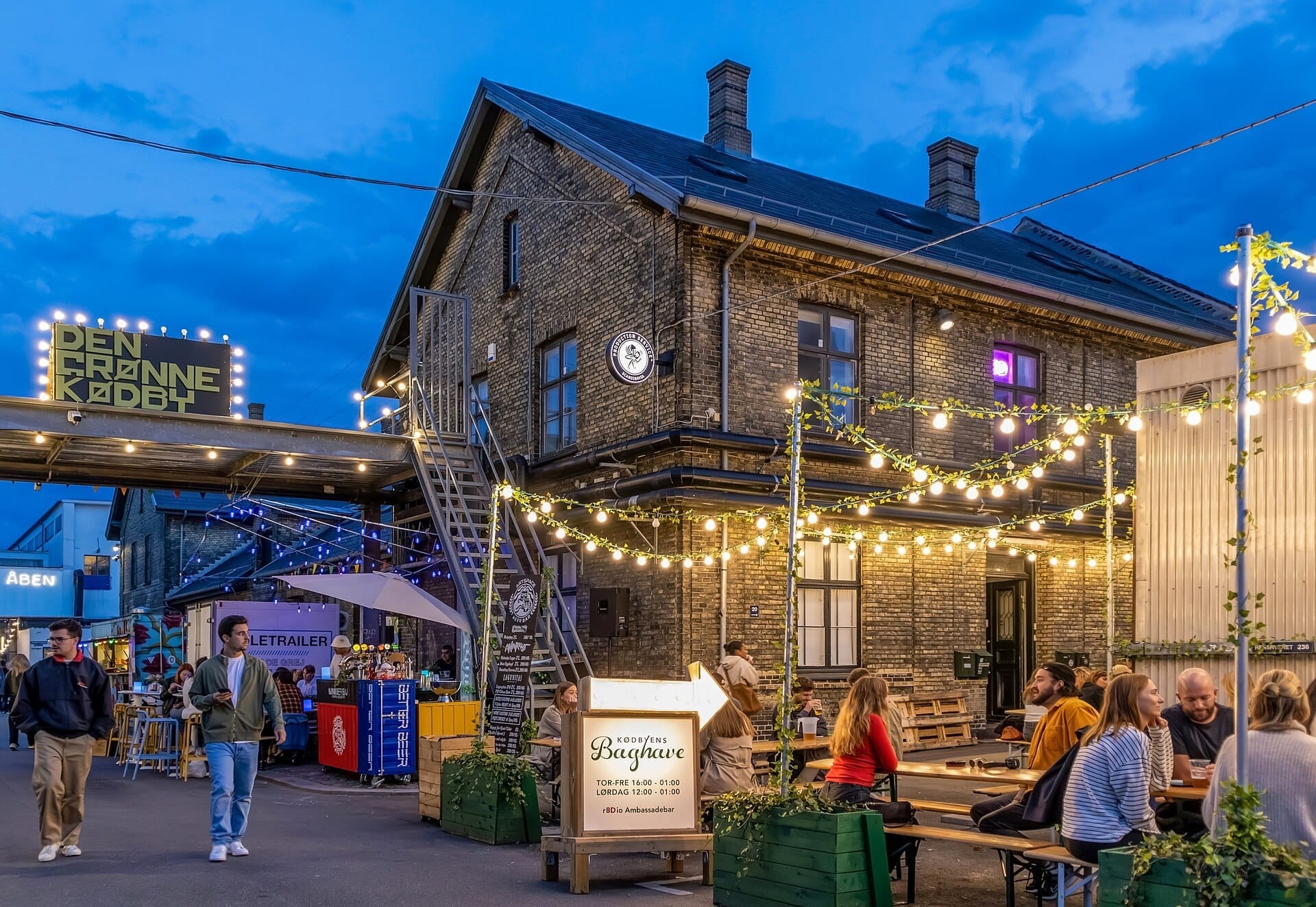
After dark is when Vesterbro is most distinctly itself. Kødbyen transforms from a quiet cluster of white-tiled industrial buildings into a concentration of restaurant terraces and bar queues. The crowd is young and local on weekdays, and mixed with visitors on weekends. Istedgade still has its sex shops and the occasional rough patch near the station end, but further west it becomes simply a street of bars and late-night spots. The neighborhood does not go quiet until the early hours.
ℹ️ Good to know
Vesterbro is genuinely central: Copenhagen Central Station is on its eastern doorstep, which means you are never more than a short walk or one bus stop from connections to the rest of the city. This makes it one of the most practical neighborhoods to base yourself in.
Tourists are present in Vesterbro but rarely overwhelming outside of Kødbyen on weekend nights. The neighborhood attracts visitors who are specifically interested in food and nightlife, rather than sightseers ticking off monuments. This gives it a different energy from Nyhavn or Strøget: less performative, more functional, occasionally indifferent to outsiders in the way that lived-in city neighborhoods tend to be.
What to See & Do
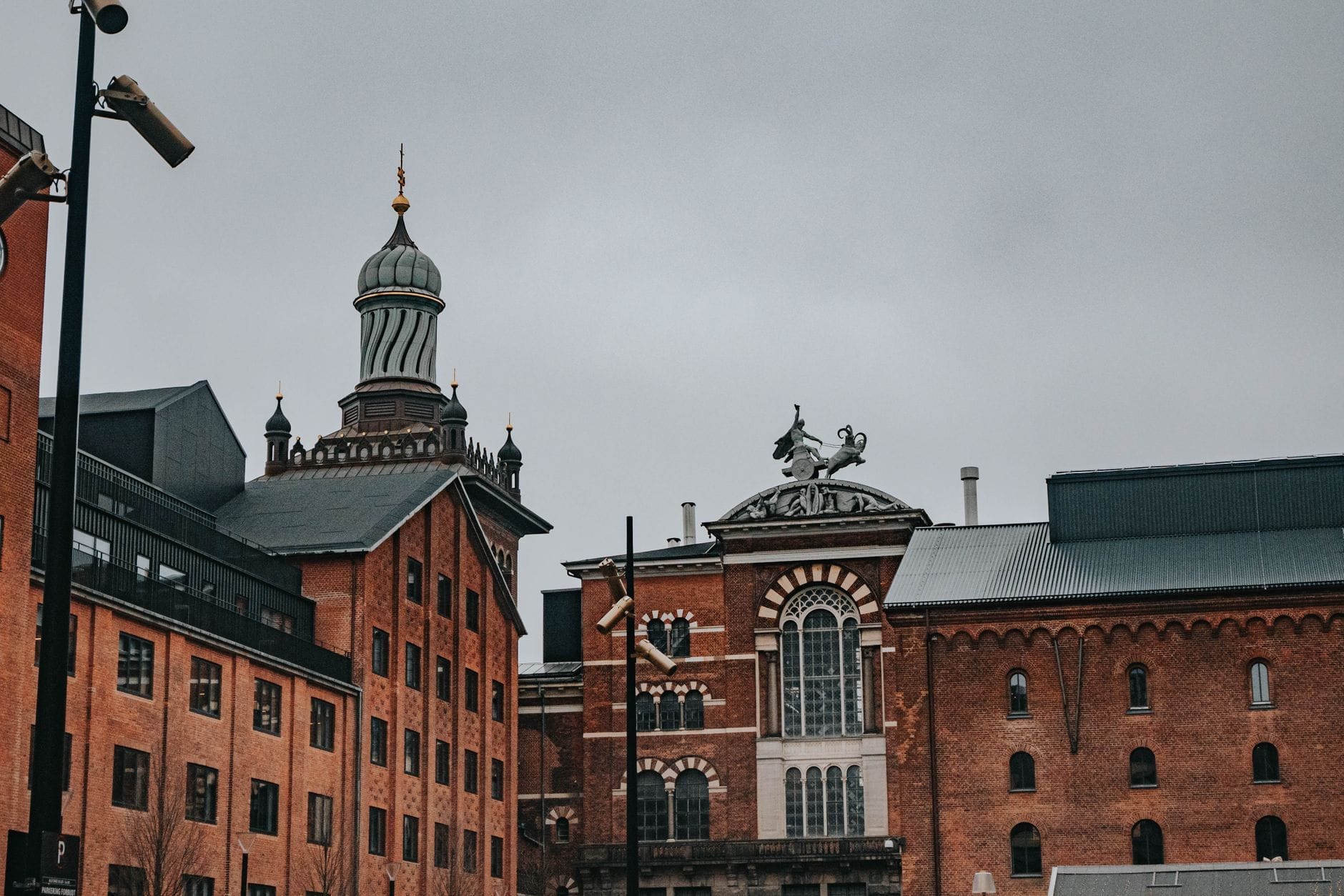
The Meatpacking District (Kødbyen) is the neighborhood's most architecturally striking area and the one most worth exploring even if you are not eating or drinking. The complex dates from the 1880s through the 1930s and was designed as a functional wholesale meat market, with white-tiled interiors, wide industrial doors, and a grid of low buildings organized around a central square. Much of the original structure is intact. Today it houses galleries, creative studios, and some of the city's most notable restaurants and bars, but the bones of the place still tell you exactly what it was.
Walking west along Vesterbrogade brings you eventually to the Carlsberg District, the historic brewery complex that the Carlsberg company has been gradually redeveloping into a mixed-use neighborhood since the early 2010s. The original brewery architecture, including the iconic Elephant Gate, is preserved and worth seeing. The area is still evolving, with new housing, cultural venues, and commercial spaces opening in phases.
Vesterbro also serves as a natural launch point for Tivoli Gardens, which sits right at the neighborhood's eastern edge. It is one of the world's oldest amusement parks and an entirely different experience at night, when the lanterns are lit and the crowds thin. From the same point, the main cultural institutions of Indre By are a short walk across Vesterbrogade.
Kødbyen (Meatpacking District): industrial architecture, galleries, food, and nightlife
Carlsberg District: brewery heritage and ongoing urban redevelopment
Sønder Boulevard: the neighborhood's best public space for a long, aimless walk
Enghave Park: local park that shows the neighborhood at its most everyday
Værnedamsvej: the best street in Vesterbro for daytime browsing and coffee
💡 Local tip
Værnedamsvej is short enough to walk end-to-end in ten minutes but rewards a slow hour. The street has a concentration of independent wine and cheese shops, a strong local café culture, and almost no tourist infrastructure. It is a genuinely different pace from the rest of the neighborhood.
Eating & Drinking
Vesterbro has one of the strongest food concentrations in Copenhagen, across a wider range of price points than you might expect from its reputation. The neighborhood sits comfortably within Copenhagen's broader food scene, but it has its own personality: less formal than the Michelin-starred corridors of Indre By, more focused on the kind of cooking that works at ten in the evening after a couple of drinks.
Kødbyen is where the most concentrated restaurant action happens. The district has a mix of established names and newer openings, ranging from natural wine bars and Nordic small-plates restaurants to burger counters and late-night spots that stay open until the early hours. The format is generally informal: long communal tables, open kitchens, menus that change with the market. Prices are mid-to-high by international standards, though moderate by Copenhagen ones.
Istedgade and the streets around it offer a lower price tier: pizza places, Turkish and Middle Eastern spots, Vietnamese restaurants, and cafés that do solid lunch plates. This is where the neighborhood's working-class history still shows through in the food culture. For traditional Danish open-faced sandwiches, the smørrebrød tradition is well represented at a handful of lunch spots in the area.
The bar scene in Vesterbro runs from early-evening wine bars on Værnedamsvej to late-night clubs and live music venues near Halmtorvet. The neighborhood also has a strong café culture throughout the day, with plenty of places to sit for two hours over a flat white without anyone hovering. Coffee quality in Vesterbro is high: the neighborhood attracted several of Copenhagen's specialty roasters early, and the standard has stayed up.
💡 Local tip
For nightlife that goes properly late, Kødbyen and the streets around Halmtorvet are the right area. Most venues in this cluster do not hit their stride until midnight on weekends. Check specific venue hours before heading out, as schedules vary by season.
Getting There & Around
Copenhagen Central Station (København H) is the single most useful transit hub in the city and sits directly on Vesterbro's eastern boundary. From the station, S-trains connect to the northern suburbs, the airport via the regional train network, and points across the metropolitan area. The airport transfer options are all accessible from here, making Vesterbro one of the easiest neighborhoods to reach directly from the airport.
Vesterport Station, a short walk north from Copenhagen Central Station along the edge of the Inner City, provides additional S-train access and is useful for reaching the lakes area and northern parts of the city. Multiple bus routes run along Vesterbrogade from Central Station westward, stopping at intervals through the neighborhood. Given Vesterbro's compact footprint, most people find that the neighborhood is easier to navigate on foot than by any transit.
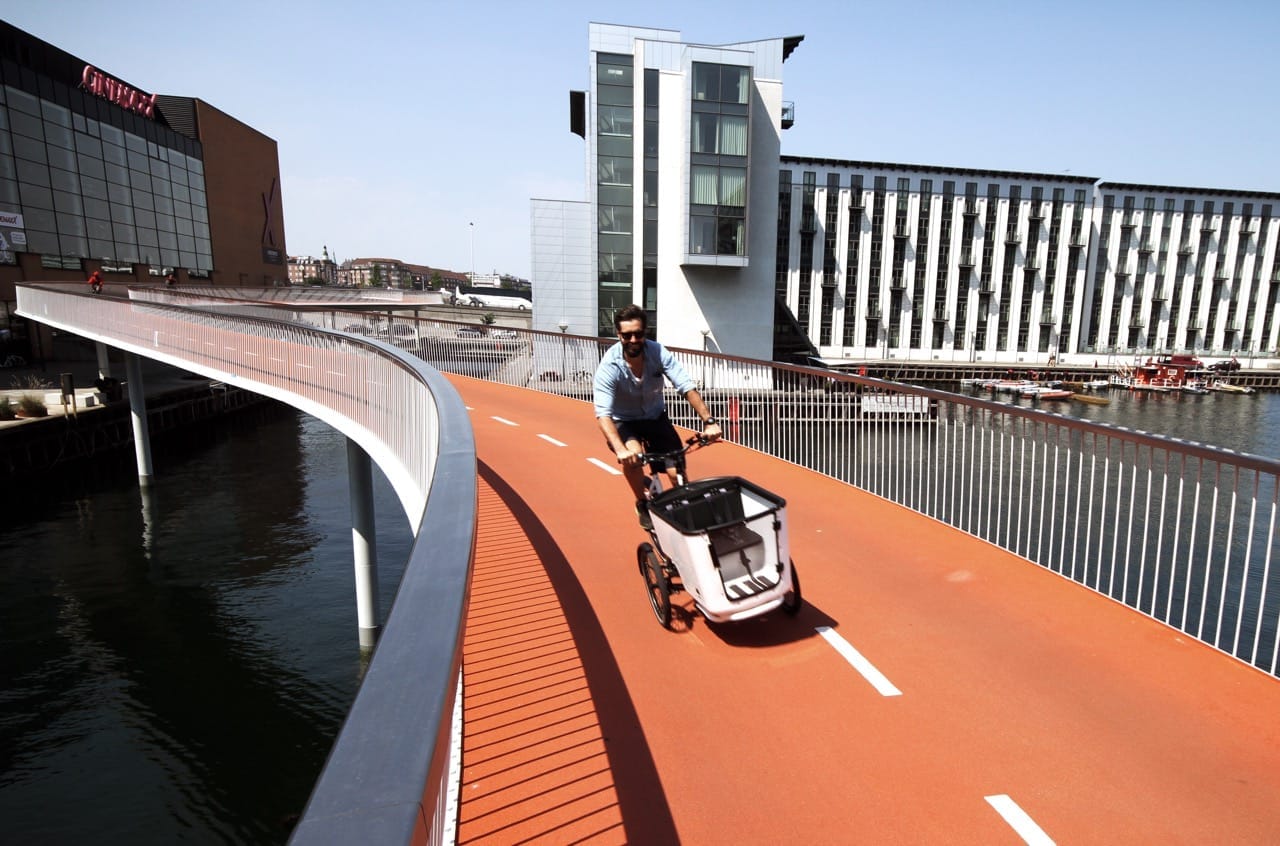
Cycling is the natural mode of movement in Vesterbro, as it is across Copenhagen. The neighborhood has good cycle infrastructure, and the flat terrain makes it easy to reach most of the city by bike within 15-20 minutes. The Copenhagen cycling guide covers bike rental and route options in detail. Walking from Vesterbro to Indre By or Nyhavn takes about 15-20 minutes from most points in the neighborhood.
Where to Stay
Vesterbro has a strong hotel offering, ranging from design-forward boutique properties to budget options that take advantage of the neighborhood's central location. The area around Copenhagen Central Station is where the concentration of larger hotels sits, including several international chains that cater to travelers passing through. These are convenient for early departures and late arrivals but tend to sit closer to the grittier western end of Istedgade.
Further into the neighborhood, toward Kødbyen and Sønder Boulevard, the accommodation options are smaller and more characterful: converted apartment buildings, independent hotels with a local aesthetic, and serviced apartments that attract longer-stay visitors. This part of Vesterbro gives you a better sense of the neighborhood's actual texture without being far from the transit connections at the station.
Vesterbro suits travelers who want to be close to Copenhagen's food and nightlife scene without paying the premium of staying in Indre By or the canal-front areas. It is less suitable for families with young children looking for a quiet base, though it is not an inappropriate choice either. For a full comparison of Copenhagen's neighborhoods as places to stay, the where to stay in Copenhagen guide maps out the trade-offs clearly.
⚠️ What to skip
If you are sensitive to noise, avoid hotels on Istedgade between Copenhagen Central Station and Halmtorvet, particularly on the lower floors. This stretch can be lively until late and has a lingering presence of street activity near the station end. Streets further west in the neighborhood, or facing inner courtyards, are significantly quieter.
Honest Assessment: Who Vesterbro Is For
Vesterbro is a neighborhood that rewards travelers who are interested in a city as a functioning place rather than as a set of monuments. Its attractions are experiential: a meal in a converted meatpacking hall, a long afternoon on a café terrace on Værnedamsvej, a night that starts in a wine bar and ends somewhere in Kødbyen. It is not the neighborhood for those who want quiet mornings and early bedtimes.
Its proximity to Central Station makes it one of the easiest neighborhoods to use as a base, and the density of good food and drink means you will rarely need to travel far for an excellent meal. The neighborhood's history is visible if you know to look for it: the architecture of Kødbyen, the social mix on Istedgade, the contrast between the gentrified café strip on Værnedamsvej and the rougher blocks just a few streets over. For travelers who want to understand Copenhagen beyond the postcard version, a day spent properly walking Vesterbro is time well used. The Copenhagen walking tour guide includes routes that pass through the neighborhood.
TL;DR
Vesterbro is Copenhagen's most transformed neighborhood: a former red-light and working-class district that is now the city's leading food and nightlife destination, centered on the Meatpacking District (Kødbyen).
Copenhagen Central Station sits on its eastern edge, making it one of the most transit-connected neighborhoods in the city and a logical base for travelers arriving by train or airport rail.
Best for: food-focused travelers, nightlife seekers, design-minded visitors, and anyone who wants a central but non-touristy base.
Not ideal for: travelers wanting a quiet, monument-heavy experience, or families looking for a serene environment with early-closing streets.
The streets around Istedgade near the station retain some rough edges and occasional street activity, particularly at night, though the overall safety profile is in line with any central European city neighborhood of this density.
Two days in København is genuinely enough to cover the city's royal palaces, canal district, world-class food markets, and Freetown Christiania without feeling rushed. This itinerary sequences the sights logically, cuts the walking time, and flags what is actually worth your limited hours.
Copenhagen has an unusually strong museum scene for a city its size, with world-class collections spanning ancient history, modern art, design, and Nordic heritage. This guide covers the best museums in Copenhagen, from the grand institutions in Indre By to extraordinary day-trip destinations just outside the city.
Copenhagen rewards visitors year-round, but the right month depends entirely on what you want from the trip. This guide breaks down weather, crowds, pricing, and seasonal events so you can match your travel style to the right window.
Copenhagen Airport (CPH) sits just 8 km from the city centre, and your airport transfer takes as little as 13 minutes by metro or train. This guide breaks down every option — public transport, taxi, and private transfer — with real fares, journey times, and honest advice on what to skip.
The Copenhagen Card promises free entry to 80+ attractions and unlimited public transport across the Danish capital. But is it actually worth the price? This guide breaks down the numbers, the fine print, and who genuinely benefits.
Copenhagen transforms in winter. From the ticketed spectacle of Tivoli Gardens to free canal-side markets and steaming mugs of gløgg, this guide covers everything you need to plan a Christmas visit to København with confidence.
Copenhagen is one of the world's most architecturally ambitious cities, named UNESCO/UIA World Capital of Architecture in 2023. This guide covers the essential museums, landmark buildings, contemporary projects, and practical routes for anyone serious about design and architecture in København.
Copenhagen food culture runs deeper than Noma's legacy. This guide covers the essential dishes, best markets, smartest restaurant picks, and seasonal foods that define eating in the Danish capital — across every budget.
October in Copenhagen (København) is one of the most underrated times to visit. Tivoli transforms into a Halloween wonderland with over 20,000 pumpkins, the crowds thin out compared to summer, and the city's museums and food scene hit their stride. This guide covers the weather, the best events, what to prioritize, and what to skip.
Summer is Copenhagen's peak season, with up to 17 hours of daylight, open-air festivals, free harbour swimming, and parks packed with locals. This guide covers the weather, major events, best activities, and practical tips for visiting in June, July, and August.
The Copenhagen Jazz Festival runs for 10 days every July, filling the Danish capital with around 1,200 concerts across 120 venues. This guide covers dates, tickets, free events, the best neighborhoods to explore, and everything you need to plan your visit.
Copenhagen's after-dark scene is disproportionately strong for a city its size. From precision cocktail bars in the Latin Quarter to techno clubs in the Meatpacking District, this guide cuts through the noise and tells you exactly where to go, when to arrive, and what to expect — including what costs more than it should.
Copenhagen (København) has a reputation as one of Europe's priciest capitals, and that reputation is not entirely unfair. But with the right passes, free attractions, and a few local habits, you can experience the city fully without a sky-high bill. This guide breaks down exactly where your money goes and where you can save it.
Copenhagen rewards shoppers at every level, from international flagships on Strøget to vintage finds on Jægersborggade. This guide breaks down where to shop by neighborhood, what to buy, how much to spend, and which spots to skip.
Smørrebrød is Denmark's defining lunch tradition, and Copenhagen is the best place in the world to eat it. This guide covers the top restaurants, what to order, how much to pay, and the customs first-timers always get wrong.
Copenhagen (København) is one of Europe's most walkable capitals. This guide covers the classic self-guided walking tour route from Tivoli Gardens to Nyhavn and beyond, with practical details on distances, free stops, seasonal timing, and digital tools to make your day on foot count.
Copenhagen is one of Europe's most genuinely child-friendly capitals, with discounted museum entry, excellent playgrounds, and a compact city center that makes logistics manageable. This guide covers the best family activities in Copenhagen, from Tivoli Gardens to canal cruises, plus honest advice on passes, costs, and seasonal planning.
Copenhagen has roughly 350 km of segregated cycle tracks, and Copenhagen has roughly 350 km of segregated cycle tracks, and nearly half of all people who work or study in the city bike to work or school every day. This guide covers everything a visitor needs to cycle the city confidently: where to rent, which routes to ride, what the unwritten rules are, and when to go.
Copenhagen sits at the centre of an extraordinary region. Within two hours, you can reach UNESCO-listed castles, world-class art museums on clifftops, a remarkably preserved fishing village, and an entirely different country. These are the best day trips from Copenhagen, whether you have a full day or just an afternoon.
Copenhagen is one of Europe's most rewarding cities to explore on a tight budget. From free museum days and royal palaces to harbour swims and world-class parks, here are 20 genuinely free experiences that capture the best of the Danish capital.
Copenhagen's integrated transport network is one of Europe's most efficient. This guide covers the metro, S-trains, buses, cycling, taxis, and airport connections — with 2026 fares, zone logic, and practical advice on what's worth the money.
Copenhagen holds the key to understanding Hans Christian Andersen's life and work. From his former apartments along Nyhavn canal to his grave in Nørrebro, this guide maps every significant stop on the city's literary trail, with practical logistics for each.
Copenhagen rewards curious travellers who look beyond Nyhavn and Tivoli. This guide uncovers the city's overlooked neighbourhoods, underrated museums, and unexpected green spaces that locals actually love.
Copenhagen didn't accidentally become one of Europe's great food cities. The New Nordic movement, formalized in 2004, rewired how chefs here think about ingredients, technique, and season. This guide covers the key restaurants, price realities, seasonal logic, and how to experience the movement beyond fine dining.
Copenhagen rewards visitors with a rare combination of world-class history, cutting-edge design, and outdoor culture. This guide covers the best things to do in Copenhagen across every interest and budget, with honest assessments and practical logistics to help you plan confidently.
Choosing where to stay in Copenhagen shapes your entire trip. This guide breaks down every major neighborhood by budget, transport links, atmosphere, and traveler type — so you can book with confidence, not guesswork.