New Nordic Cuisine in Copenhagen: Restaurants, Dishes & the Food Revolution
Copenhagen didn't accidentally become one of Europe's great food cities. The New Nordic movement, formalized in 2004, rewired how chefs here think about ingredients, technique, and season. This guide covers the key restaurants, price realities, seasonal logic, and how to experience the movement beyond fine dining.

Plan and book this trip
Tools from our partner Travelpayouts help you compare flights and hotels. If you book through them, we may earn a commission at no extra cost to you.
Flights
Hotels map
TL;DR
- New Nordic cuisine was defined by a 12-chef manifesto in 2004, built around purity, seasonality, local Nordic ingredients, and traditional preservation techniques like fermentation and smoking.
- Copenhagen holds 19 Michelin stars, with flagship restaurants like Geranium and Kadeau leading the movement globally — but the philosophy filters down to mid-range restaurants too. See our Copenhagen food guide for broader dining context.
- Top tasting menus run 1,500–4,000 DKK per person (roughly €200–550); mid-range New Nordic menus start around 600–800 DKK.
- Menus change continuously with the seasons — what you eat in March will differ sharply from what you eat in August.
- Booking ahead is essential for flagship venues, often weeks or months in advance, with prepayment now standard at the top tier.
What New Nordic Cuisine Actually Means
New Nordic cuisine is not a cooking style in the way that French classical cooking is a style. It is a philosophy, and a fairly specific one. In 2004, twelve Nordic chefs — including René Redzepi and Claus Meyer — signed a manifesto that set out ten principles: purity, simplicity, freshness, seasonality, use of produce native to the Nordic region, and a commitment to promoting regional diversity and animal welfare. That document, signed in Copenhagen, effectively launched a food movement that would change how the world thought about Scandinavian cooking.
In practice, this means foraging for wild herbs and berries, building dishes around ingredients that peak at a particular moment in the Nordic calendar, and using preservation techniques — fermentation, pickling, drying, smoking — that were standard in pre-refrigeration Scandinavia. The results are intensely seasonal menus where a dish that exists in June simply will not exist in November, because the ingredient does not.
ℹ️ Good to know
New Nordic is not the same as traditional Danish cuisine. It draws on the entire Nordic region — Denmark, Sweden, Norway, Finland, Iceland, the Faroe Islands, and Greenland — and prioritises innovation as much as heritage. You will find Icelandic skyr, Norwegian sea urchin, and Faroese lamb alongside Danish rye bread and Bornholm herrings on the same tasting menu.
The movement has made Copenhagen one of Europe's most seriously discussed food cities. The broader Copenhagen food scene now encompasses everything from smørrebrød institutions to natural wine bars, but New Nordic fine dining remains the city's most internationally recognised export. Geranium holds three Michelin stars. Kadeau holds two. The city collectively holds 19, placing it alongside cities three or four times its size.
The Key Restaurants: From Michelin to Mid-Range
The restaurants below are not an exhaustive list, but they represent different tiers and approaches within the New Nordic framework. Prices are in DKK unless otherwise stated and reflect tasting menu costs without wine pairing.
- Noma (Refshaleøen — closed late 2024) The restaurant that made Copenhagen a global food destination. Co-founded by René Redzepi and Claus Meyer, Noma operated from Refshaleøen in seasonal iterations — seafood season, vegetable season, game and forest season — each with a distinct menu. It completed its final service in its current restaurant format in late 2024. The team has announced future projects, but there is no active Noma restaurant to book. Treat references to reservations as historical context only.
- Geranium (Østerbro) Three Michelin stars, located on the eighth floor of the Fælledparken football stadium with views over the park. Chef Rasmus Kofoed's approach is precise and refined, with menus that feel architectural in their construction. Around 3,500–4,000 DKK per person before wine. Bookings via geranium.dk, typically needing two to three months lead time.
- Kadeau (Christianshavn) Two Michelin stars and a distinct identity rooted in Bornholm, the Danish island in the Baltic. The kitchen's obsession with preservation — lacto-fermentation, cold-smoking, drying — produces dishes with unusual depth and texture. Around 2,000–2,500 DKK for the tasting menu. Bookings via kadeau.dk.
- Barr (Christianshavn) Run by the Noma team, Barr occupies a more accessible register: a Nordic take on the Germanic beer hall tradition, with dishes built around grains, seafood, and cured meats. A la carte is available alongside set menus, and prices are considerably lower than the top tier — expect 300–600 DKK for a substantial meal without wine.
- Høst and Vækst (Cofoco group) Two mid-range restaurants offering multi-course New Nordic menus at prices that won't require significant financial planning. Høst leans into hygge aesthetics with birch wood interiors and foraged garnishes. Vækst, in a greenhouse space in the city centre, focuses on vegetables and herbs. Menus typically run 500–800 DKK. Bookings via cofoco.dk.
⚠️ What to skip
Nyhavn is not where you find serious New Nordic cooking. The canal-front restaurants there cater almost entirely to tourists and serve generic Danish dishes at elevated prices. If you want the genuine experience of Copenhagen food culture, look to Vesterbro, Christianshavn, and Nørrebro instead.
For those interested in a more structured introduction to the restaurant scene, Copenhagen's broader food landscape also includes excellent smørrebrød spots, street food markets like Reffen, and the covered market at Torvehallerne. The New Nordic philosophy informs many of these at different price points.
Signature Ingredients and Techniques
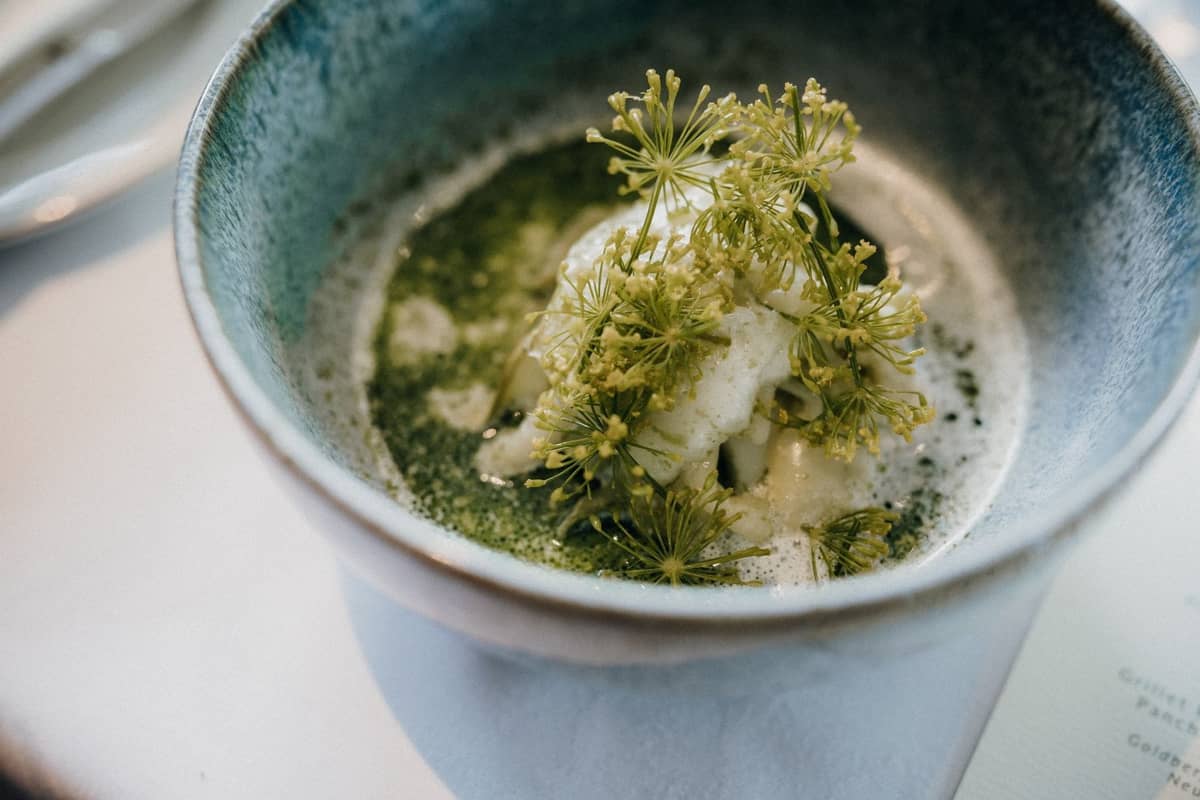
Understanding what goes into New Nordic cooking makes the menus more legible when you sit down. Several ingredients and techniques appear consistently across restaurants, though each kitchen puts them to different use.
- Fermentation: Lacto-fermented vegetables, koji-aged proteins, and house-made vinegars feature at nearly every serious New Nordic restaurant. The technique adds acidity and complexity without imported citrus.
- Foraged elements: Wild garlic in spring, elderflower in early summer, sea buckthorn berries in autumn, and pine shoots year-round. These are sourced from forests and coastlines, often by the chefs themselves.
- Nordic dairy: Skyr, cultured butter, and aged Nordic cheeses appear as standalone courses or as textural elements in savoury dishes.
- Seafood: Danish coastal waters produce excellent langoustines, mussels, oysters, and various flatfish. Herring, often pickled or smoked, is a recurring element that bridges New Nordic with traditional Danish food.
- Ancient grains: Emmer, spelt, and barley appear in bread, porridge, and as side components — replacing the wheat-forward approach of most European fine dining.
- Smoking and drying: Cold-smoking over hay or wood chips, and air-drying meats and fish, produce flavours that are distinctly northern and unlike anything in Mediterranean or Asian food traditions.
If you want to explore these flavours in a market context before committing to a restaurant, Torvehallerne has stalls selling Nordic produce, smoked fish, and fermented goods. It is a practical way to orient your palate before a tasting menu dinner.
Seasonal Logic: When You Visit Shapes What You Eat
At serious New Nordic restaurants, menus are not designed months in advance and then executed on schedule. They are built around what is available, which means the kitchen's actual sourcing determines the menu. A restaurant like Kadeau will change specific dishes every few weeks as particular ferments mature or a foraged ingredient peaks.
Spring (April to June) is widely considered the most exciting time to eat in Copenhagen. Wild garlic, wood sorrel, elderflower, green strawberries, and early-season shellfish all appear in a concentrated window. Summer menus lean into berries, fresh herbs, and vegetables at peak ripeness. Autumn brings game, mushrooms, root vegetables, and the first preserved elements of the year. Winter menus are dominated by fermented and dried produce — less visually spectacular but technically demanding, and often more interesting to experienced diners.
✨ Pro tip
If you are visiting specifically for fine dining, late May through June offers the widest ingredient diversity. Winter visits (December to February) can be equally compelling if you are interested in preservation techniques, but expect menus built around stored produce rather than fresh produce. Either season works — the experience is just different.
Summer also brings more competition for reservations, particularly in June and July when Copenhagen sees its peak tourist season. Book as far in advance as possible for top-tier restaurants during these months — six to eight weeks minimum for mid-range venues, two to three months for Michelin-starred restaurants.
Practical Booking Advice and Realistic Costs
Copenhagen dining is expensive relative to most European capitals, and New Nordic fine dining sits at the upper end of that scale. A tasting menu at Geranium or Kadeau without wine pairing costs roughly 2,000–4,000 DKK per person (approximately €270–540 at current exchange rates). With wine pairing, add 50–100% to that figure. This is not a casual spend for most travellers.
The mid-range New Nordic tier — Høst, Vækst, Barr, and similar restaurants — offers genuinely good cooking at 500–1,000 DKK per person including a few drinks. This is still a significant dinner by most international standards, but it is a reasonable way to experience the philosophy without the full fine-dining commitment.
- Book Michelin-starred restaurants directly through their official websites — third-party booking platforms rarely carry accurate availability.
- Prepayment or credit card guarantees are now standard at top venues. Cancellation policies are strict, often requiring 48–72 hours notice to avoid charges.
- Lunch services, where available, are generally 30–40% cheaper than dinner for equivalent courses. Geranium offers a lunch service that represents better value than the dinner menu.
- Dietary requirements should be communicated at the time of booking, not on arrival. New Nordic kitchens can usually accommodate serious allergies but need advance notice to adjust fermented and preserved components.
- Tipping is not expected in Denmark — service is included in the price and rounding up is optional, not obligatory.
Beyond Fine Dining: New Nordic at Street Level
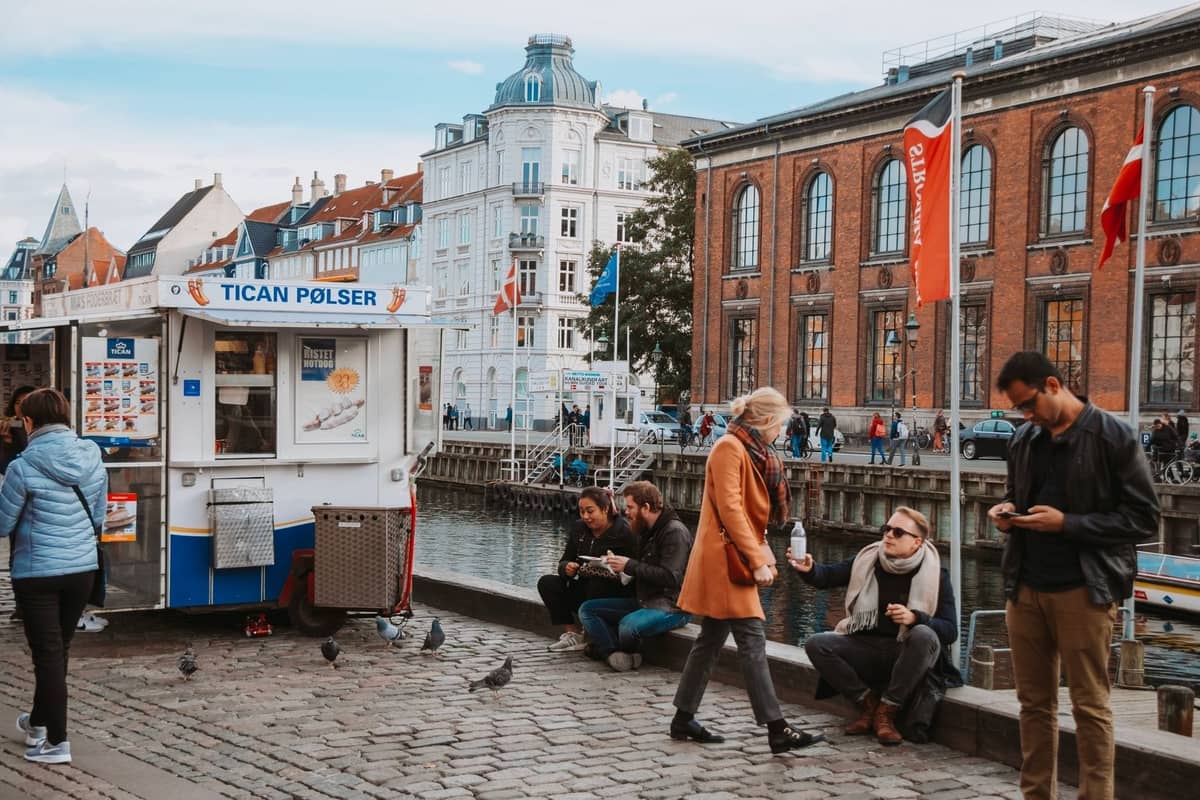
The most important misconception about New Nordic cuisine is that it exists only in formal tasting-menu restaurants. The philosophy has permeated Copenhagen food culture at every level. The emphasis on local sourcing, fermentation, and seasonal thinking appears in casual wine bars, lunch spots, and even food markets.
Reffen, the street food market on Refshaleøen, includes several stalls applying New Nordic thinking to informal formats: smoked fish with pickled vegetables, fermented hot sauces, and seasonal tasting plates. It is a more relaxed and considerably cheaper entry point than a restaurant booking.
The smørrebrød tradition — open-faced rye bread sandwiches — has also been significantly influenced by New Nordic thinking. Several Copenhagen lunch restaurants now apply seasonal and foraged toppings to the classic format, bridging traditional Danish food culture with the newer movement. It is worth noting that smørrebrød itself predates the 2004 manifesto by centuries; the New Nordic influence has updated the toppings, not the concept.
💡 Local tip
If your budget does not stretch to a full tasting menu, consider a New Nordic lunch at Barr on Strandgade in Christianshavn or a Nordic-influenced smørrebrød at one of Indre By's better lunch restaurants. You will encounter the same sourcing philosophy and many of the same ingredients at roughly a quarter of the dinner cost.
For travellers managing a tighter budget across the whole trip, the Copenhagen on a budget guide covers how to navigate the city's food scene without spending at fine-dining rates for every meal. Pairing one serious restaurant dinner with cheaper lunches and market visits is a realistic strategy.
Is New Nordic Cuisine Worth the Hype?
Honestly: at the top tier, yes, but with caveats. Restaurants like Geranium and Kadeau offer cooking of genuine technical sophistication and flavour depth. The best dishes are surprising in ways that stay with you. The problem is that the format — a 15-20 course tasting menu lasting three to four hours — is not inherently enjoyable for everyone. Some diners find the precision and formality exhausting rather than exhilarating.
The movement has also spawned a number of imitators that use the aesthetic without the substance: birch wood interiors, foraged garnishes on otherwise ordinary dishes, and "seasonal" menus that rotate quarterly rather than weekly. These restaurants charge New Nordic prices for cooking that does not justify them. The clearest way to identify serious New Nordic cooking versus the aesthetic version is to look at how frequently menus change and whether the kitchen actually names its suppliers.
If you are building a broader Copenhagen itinerary, combining a fine-dining dinner with a food-focused walking tour is a practical way to understand the full spectrum. Our Copenhagen walking tour guide covers several routes that pass through the food districts of Vesterbro and Nørrebro, where casual New Nordic-influenced spots are concentrated.
FAQ
What is New Nordic cuisine and how is it different from traditional Danish food?
New Nordic cuisine is a movement formalised in 2004 by a manifesto signed by twelve chefs, built around Nordic ingredients, strict seasonality, and traditional preservation techniques like fermentation and smoking. Traditional Danish food — smørrebrød, frikadeller, pickled herring — predates the movement and was not developed under the same philosophy. New Nordic draws on the entire Nordic region, not just Denmark, and prioritises constant innovation alongside ingredient purity.
How far in advance do I need to book restaurants like Geranium or Kadeau?
For three-Michelin-star restaurants like Geranium, two to three months advance booking is realistic for most dates. Noma's restaurant closed in late 2024, so it is no longer bookable. For two-star restaurants like Kadeau, four to six weeks is usually sufficient outside of peak summer. Always book directly through the restaurant's official website.
What does a New Nordic tasting menu cost in Copenhagen?
At Michelin-starred venues, tasting menus without wine pairing typically run from around 2,000 DKK to over 4,000 DKK per person (roughly €270–540). Wine pairings add significantly to this. Mid-range New Nordic restaurants like Høst or Barr offer multi-course menus for 500–1,000 DKK per person including drinks, making them a more accessible entry point.
What is the best time of year to experience New Nordic cuisine in Copenhagen?
Late spring, particularly May and June, offers the widest ingredient diversity: wild herbs, early berries, elderflower, and fresh shellfish all peak simultaneously. Summer menus are produce-forward. Winter menus focus on fermented, dried, and preserved ingredients — less visually dramatic but technically sophisticated. There is no bad season for serious New Nordic cooking; the experience just shifts.
Can I experience New Nordic cuisine without spending on a fine-dining tasting menu?
Yes. The philosophy appears across price points in Copenhagen. Barr offers a la carte Nordic cooking at moderate prices. The Cofoco group restaurants (Høst, Vækst) offer set menus at mid-range prices. Reffen street food market and Torvehallerne have stalls applying New Nordic ideas informally. Smørrebrød lunch restaurants influenced by the movement are another low-cost option. You do not need to spend tasting-menu prices to understand what the movement is about.