Assistens Cemetery: Nørrebro's Living Green Space and Historic Burial Ground
Assistens Kirkegård is simultaneously an active cemetery, a neighbourhood park, and one of Copenhagen's most atmospheric places to walk quietly among history. Free to enter and open year-round, it holds the graves of Hans Christian Andersen, Søren Kierkegaard, and Niels Bohr in the Nørrebro district.
Quick Facts
- Location
- Kapelvej 2, 2200 Copenhagen N — Nørrebro district
- Getting There
- Bus 5C to Kapelvej stop; or walk ~25 min from Nørreport Station via Dronning Louises Bro
- Time Needed
- 45 minutes to 2 hours depending on interest
- Cost
- Free — no tickets, no booking required
- Best for
- History enthusiasts, literary travellers, quiet walkers, and those seeking calm away from tourist crowds
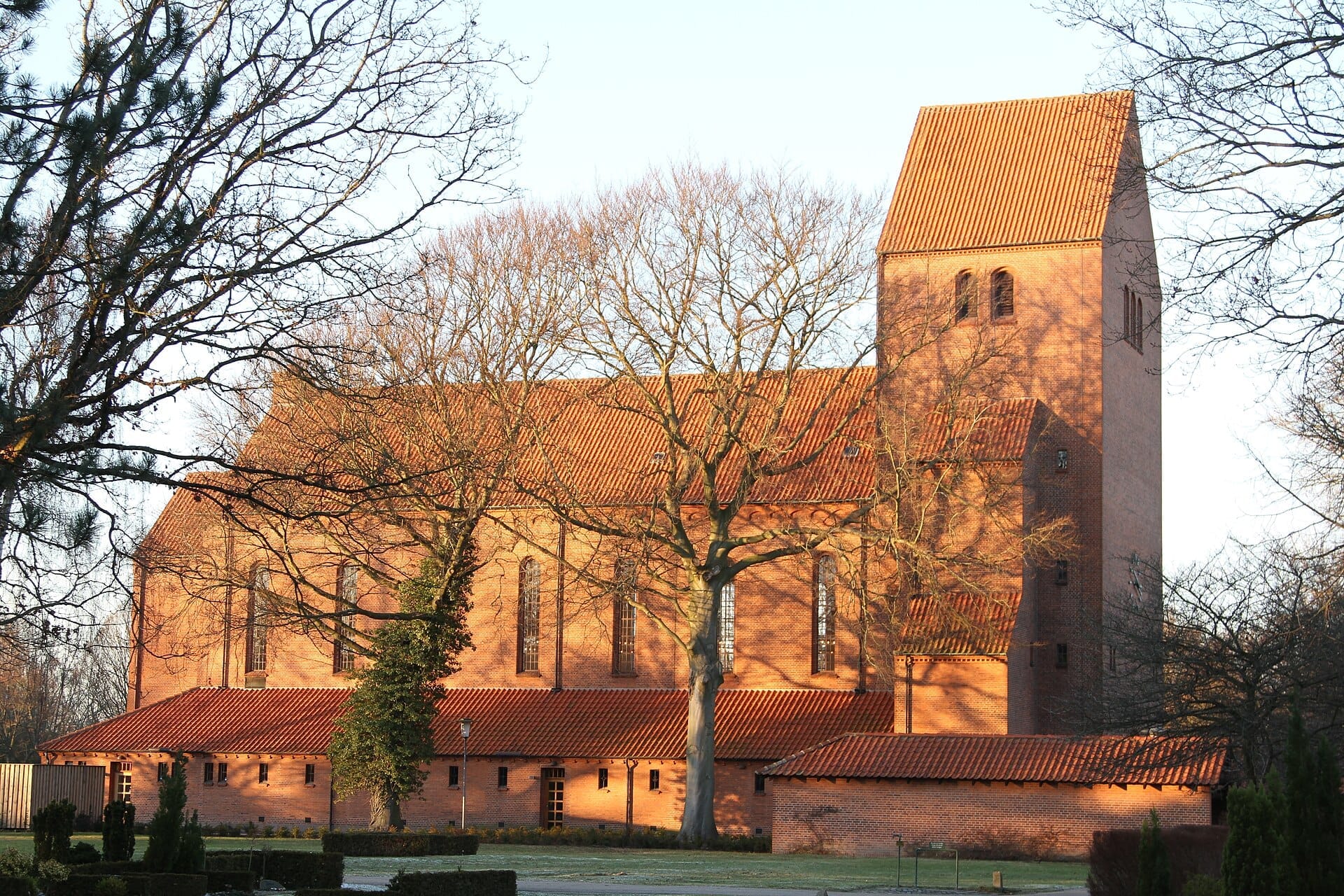
What Is Assistens Cemetery?
Assistens Kirkegård is not a museum, not a monument, and not a conventional park. It is all three at once. Founded in 1760 as a burial site outside the old city walls, initially used mainly for commoners when Copenhagen's inner-city churchyards were increasingly crowded, the cemetery gradually became the most prestigious address in Danish funeral history. Today it serves Nørrebro residents as a genuine green space, where locals read on benches, cyclists cut through on daily commutes, and the graves of some of Denmark's most consequential thinkers sit largely unlabelled and unfenced, often discovered by accident.
The cemetery covers a substantial area of the inner Nørrebro neighbourhood, and is generally regarded as the largest green space in this part of the city. That scale matters. This is not a tightly curated attraction where everything is in one place. It rewards slow walking, and it requires a little patience if you are searching for specific graves.
💡 Local tip
A printed or downloaded map is genuinely useful here. The cemetery does not have consistent signage for notable graves, and some sections are easier to navigate with a reference point.
Opening Hours and Getting There
The cemetery is open every day of the year. From April through September the gates are typically open from 07:00 to 22:00, giving you long evening light in summer. From October through March, hours shorten to 07:00 to 19:00. There is no admission fee and no booking system. You walk in.
The most direct public transport option is bus line 5C, which runs frequently along Nørrebrogade and stops at Kapelvej, a short walk from the main entrance. If you are coming from Nørreport Station on foot, the walk takes around 25 minutes: cross Dronning Louises Bro — itself worth pausing on for views across the lakes — then follow Nørrebrogade northwest before turning left onto Kapelvej. The walk through Nørrebro gives you a useful sense of the neighbourhood before you arrive.
The paths inside the cemetery are flat and mostly gravel or packed earth. Wheelchair users should note that the surface is uneven in places typical of a historic site, so it may not be consistently accessible throughout, particularly in older sections.
Tickets & tours
Hand-picked options from our booking partner. Prices are indicative; availability and final rates are confirmed when you complete your booking.
1-hour boat harbour tour in Copenhagen
From 26 €Instant confirmationFree cancellationSmall group 3-hour walking tour in Copenhagen
From 45 €Instant confirmationFree cancellationCopenhagen to Malmo one-day tour
From 56 €Instant confirmationFree cancellationFull-day tour to Forest Tower and Forgotten Giants from Copenhagen
From 110 €Instant confirmationFree cancellation
The Famous Graves: Who Is Buried Here
The two names that draw most visitors are Hans Christian Andersen's and Søren Kierkegaard's, and it is worth saying upfront: neither grave is particularly grand. Andersen's headstone is a solid, simple block of stone, modest for a man whose stories reached every corner of the world. Kierkegaard's grave in the family plot is similarly understated, marked with a clean stone that gives little indication you are standing beside the father of existentialist philosophy. That restraint is part of what makes visiting them quietly moving.
The painter Christoffer Wilhelm Eckersberg and his student Christen Købke are also buried here, as is Niels Bohr, the physicist whose model of atomic structure transformed 20th-century science. Bohr died in 1962 and is buried here. Between the graves of a fairy-tale writer, a philosopher, two of Denmark's most celebrated Golden Age painters, and a Nobel Prize-winning physicist, the cemetery reads like a compressed survey of Danish intellectual and cultural life across three centuries.
The cemetery remains active, meaning recent burials exist alongside historical ones. There is no clear separation between the famous and the ordinary, which is partly the point. The graves of celebrated Danes sit among hundreds of unremarkable headstones, weathered and green with lichen, belonging to people whose names no longer appear in any history book.
How the Experience Changes Through the Day
Early mornings, particularly on weekdays, are close to silent. The only sounds are birdsong, the occasional cyclist, and the soft gravel underfoot. The light is low and cool, filtering through the mature trees that line the paths. In spring and early summer this is particularly striking, when the canopy is at full green and the cemetery smells of cut grass and damp earth.
By late morning the character shifts. Locals begin arriving with dogs, pushchairs, and occasionally a book. This is the everyday park function of the space reasserting itself. It does not feel disrespectful; Copenhageners have treated Assistens as a neighbourhood green space for generations, and the coexistence of grief, memory, and daily life is quite natural here.
Summer evenings are the most atmospheric for a visitor. Light in Copenhagen in June and July lasts well past 21:00, and the long, slanted golden hour fills the cemetery with warm tones that photograph exceptionally well against the older, darker stone. The crowds are lighter than midday, the temperature is comfortable, and the extended hours mean there is no rush.
⚠️ What to skip
Barbecues and alcohol consumption are not permitted within the cemetery, and visitors are expected to avoid loud picnics or party-like gatherings. The rules are posted at the entrance and are generally respected by visitors and locals alike. Keep noise levels low throughout.
The Cemetery as a Piece of Copenhagen History
Assistens was established in 1760 outside the old city walls and was initially used mainly for commoners, at a time when Copenhagen's inner-city burial grounds were becoming overcrowded. For its first several decades it carried a certain stigma; being buried at Assistens was not a mark of distinction. That changed gradually as the city expanded outward and the cemetery's grounds matured into something genuinely beautiful. By the 19th century, during Denmark's cultural Golden Age, it had become a fashionable and even desirable location, and notable families began choosing it. For context on how Copenhagen developed around cultural institutions during this period, the Copenhagen design and architecture guide provides useful background on the city's aesthetic evolution.
The mature tree cover that now defines the space took well over a century to develop. The tall linden, ash, and plane trees are structural features as much as the headstones, and their scale communicates that this is a place shaped by time rather than design intervention.
Photography and Practical Walking Tips
For photography, the overcast light typical of Copenhagen for much of the year is actually an advantage here. Flat light brings out the texture in old stone, the greens of the moss, and the fine detail in iron fencing and carved lettering without harsh shadows. Bring a wide lens if you want to capture the canopy and path perspective. A macro lens or close-focus setting rewards detail shots of lichen, weathered inscriptions, and stone textures.
Comfortable, flat shoes are adequate for most of the cemetery. Specific sections have softer or less even ground, particularly after rain, so waterproof footwear is worth considering between October and April. The cemetery is large enough that exploring it at a relaxed pace typically takes 1 to 2 hours. If you only have 45 minutes, focus on the main Kapelvej entrance axis and the sections immediately to the east, which contain most of the notable graves.
Assistens sits in Nørrebro, which is one of Copenhagen's most interesting neighbourhoods for food and independent retail. The street along Nørrebrogade and the surrounding streets have good cafés and lunch options. Combining a visit to the cemetery with time in the wider neighbourhood makes for a satisfying half-day. If you are building a broader Copenhagen itinerary, the Copenhagen walking tour guide includes routes through Nørrebro that pair well with this visit.
Is This Attraction Overhyped or Genuinely Worth It?
There is a caveat worth stating. If your interest in Assistens is purely about visiting famous graves and you have no broader connection to Hans Christian Andersen, Kierkegaard, or Danish cultural history, the experience may feel thin. The graves themselves are not spectacular. There is no interpretive centre, no audio guide, and limited on-site context. Visitors who arrive expecting something like Paris's Père Lachaise, with its elaborate monuments and clear celebrity trail, will find Assistens quieter and more understated by comparison.
Conversely, if you have read the fairy tales, engaged with existentialism, or are following a broader interest in Danish culture and history, standing at these graves has a particular weight. The same applies if you are travelling with an interest in landscape, photography, or simply finding calm in a city. For families with children who are engaged with Andersen's stories, the connection can be meaningful. More ideas on travelling Copenhagen with younger visitors are covered in the Copenhagen with kids guide.
Travellers who should probably skip Assistens: those on a very short itinerary who have not yet seen the main historical attractions, and those who find cemeteries uncomfortable regardless of cultural content. This is a place that asks something of you intellectually and temperamentally. When it works, it works well. When it does not match the visitor's interest, it is just a pleasant green space in a neighbourhood that has plenty of other things to offer.
Insider Tips
- The Kierkegaard family plot is in Section B; if you enter from Kapelvej, bear right after the main chapel building and follow the older section of graves. Hans Christian Andersen's grave is well to the left of the main axis and slightly harder to locate without a reference.
- Visit on a Tuesday or Wednesday morning to experience the space at its quietest. Weekends, particularly in summer, bring noticeably more visitors, and the contemplative quality of the place is harder to find.
- The light just before sunset in June and July is exceptional for photography. The cemetery's mature tree canopy creates long, raking shadows across the paths that you will not get at midday.
- Nørrebrogade has several good bakeries and cafés within five minutes of the main entrance. Combining the visit with breakfast or lunch on the way back makes the trip feel like a genuine neighbourhood experience rather than a single-stop excursion.
- Check whether the small chapel building near the entrance is open; occasionally it is accessible to visitors and provides a moment of architectural contrast to the open grounds.
Who Is Assistens Cemetery For?
- Literary and philosophical travellers following the lives of Hans Christian Andersen or Søren Kierkegaard
- Photographers seeking atmospheric, uncrowded material with strong natural light and texture
- Visitors wanting a slow, quiet hour away from the density of central Copenhagen's tourist sites
- Architecture and landscape enthusiasts interested in 18th and 19th-century Danish burial culture
- Travellers exploring Nørrebro as a neighbourhood and wanting a meaningful anchor point for the walk
Nearby Attractions
Other things to see while in Nørrebro:
- Superkilen
Superkilen is a 750-metre public park stretching through Nørrebro, Copenhagen's most diverse neighbourhood. Designed by BIG, Topotek1, and SUPERFLEX and opened in 2012, it collects urban objects from over 60 countries into three colour-coded zones. Entry is free, and it is open around the clock.