Nørrebro is Copenhagen's most densely populated and culturally diverse district, sitting just northwest of the city centre across the lakes. Known for Nørrebrogade's independent shops and cafés, the design landmark Superkilen, and Assistens Cemetery, it offers a grittier, more lived-in counterpoint to the polished historic core.
Nørrebro is where Copenhagen drops the tourist script and gets on with real life. A dense, multicultural district of over 55 nationalities, it runs northwest from the lakes along the great artery of Nørrebrogade, mixing corner cafés and late-night bars with one of Europe's most inventive urban parks and a cemetery where Hans Christian Andersen is buried.
Orientation
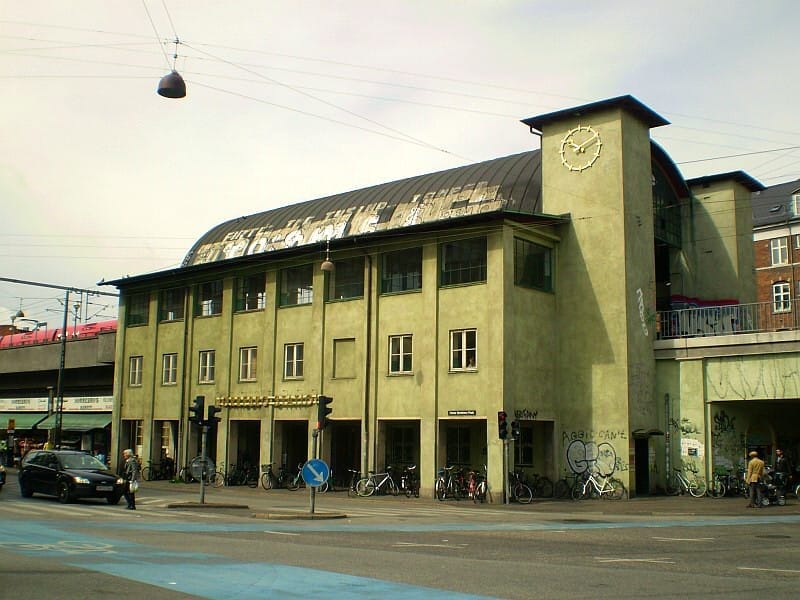
Nørrebro covers 4.08 km² immediately northwest of Indre By, Copenhagen's historic centre. Its southeastern boundary is formed by the chain of lakes, Søerne, that arc around the inner city, and the district begins in earnest once you cross Queen Louise's Bridge, Dronning Louises Bro. From there, Nørrebrogade drives northwest through the heart of the district before reaching Nørrebros Runddel, the roundabout that functions as the neighbourhood's central node.
The district's other borders are less dramatic but worth understanding for navigation. Østerbro lies to the northeast, separated roughly by Tagensvej and the elevated rail corridor. Bispebjerg is to the northwest, where the neighbourhood gradually loses density and shifts into quieter residential streets. To the southwest, Frederiksberg Municipality begins without any obvious visual break, which catches many visitors off guard: you cross an invisible administrative line and you are technically in a separate municipality, though it feels continuous.
Within Nørrebro itself, the useful mental map has three zones. The lower stretch near the lakes and Queen Louise's Bridge is the most gentrified, with Sankt Hans Torv and Elmegade drawing a design-conscious, café-hopping crowd. Moving up Nørrebrogade toward Blågårds Plads, the character becomes more mixed and the pace more everyday. Further northwest, past Superkilen, the streets become denser and more residential, with fewer obvious tourist draws but more honest local texture.
Character & Atmosphere
Nørrebro in the morning is quieter than its reputation suggests. Before 9am, Nørrebrogade belongs to cyclists, delivery bikes, and locals picking up pastries. The light is flat and grey for much of the year, catching the worn brick facades of five-storey apartment blocks, and the air smells of coffee from the cafés that open early around Sankt Hans Torv. In summer, the same streets transform completely by midmorning: tables appear on pavements, and the stretch around Elmegade fills with a crowd that is simultaneously local and internationally aware.
Afternoons in Nørrebro are best spent away from the main drag. Assistens Cemetery, which doubles as a park, draws people with picnic blankets and paperbacks on warm days; the atmosphere is calm and surprisingly open, the gravel paths shaded by old trees. The squares, Blågårds Plads especially, shift from coffee culture to football and street conversation as the day progresses. This is not a neighbourhood of formal gardens and curated silence. It is dense, urban, and comfortable with its own noise.
After dark, Nørrebro becomes one of Copenhagen's most active nightlife destinations, but it concentrates around specific streets rather than spreading evenly. The bars around Ravnsborggade and Sankt Hans Torv fill from 9pm onward, and weekend nights on Nørrebrogade see groups moving between venues until well past midnight. Visitors who prefer quieter evenings should know this: lower Nørrebro, particularly near the lakes, is livelier at night than the standard city-centre tourist strip.
The multicultural dimension of Nørrebro is tangible rather than decorative. Arabic-script signs appear alongside Danish ones on Nørrebrogade. Greengrocers with Middle Eastern produce sit next to vintage clothing stores. The neighbourhood has been home to successive waves of immigration since the mid-20th century, and today over 55 nationalities are represented here. That history has also produced political energy: the 2007 Ungdomshuset evictions and subsequent riots are part of the neighbourhood's recent memory, and murals and community noticeboards still reflect an engaged, sometimes combative civic culture.
ℹ️ Good to know
Nørrebro has a long history of social activism and protest culture, which shapes the character of public spaces and community institutions. This is part of what makes it feel distinct from Copenhagen's more polished districts.
What to See & Do
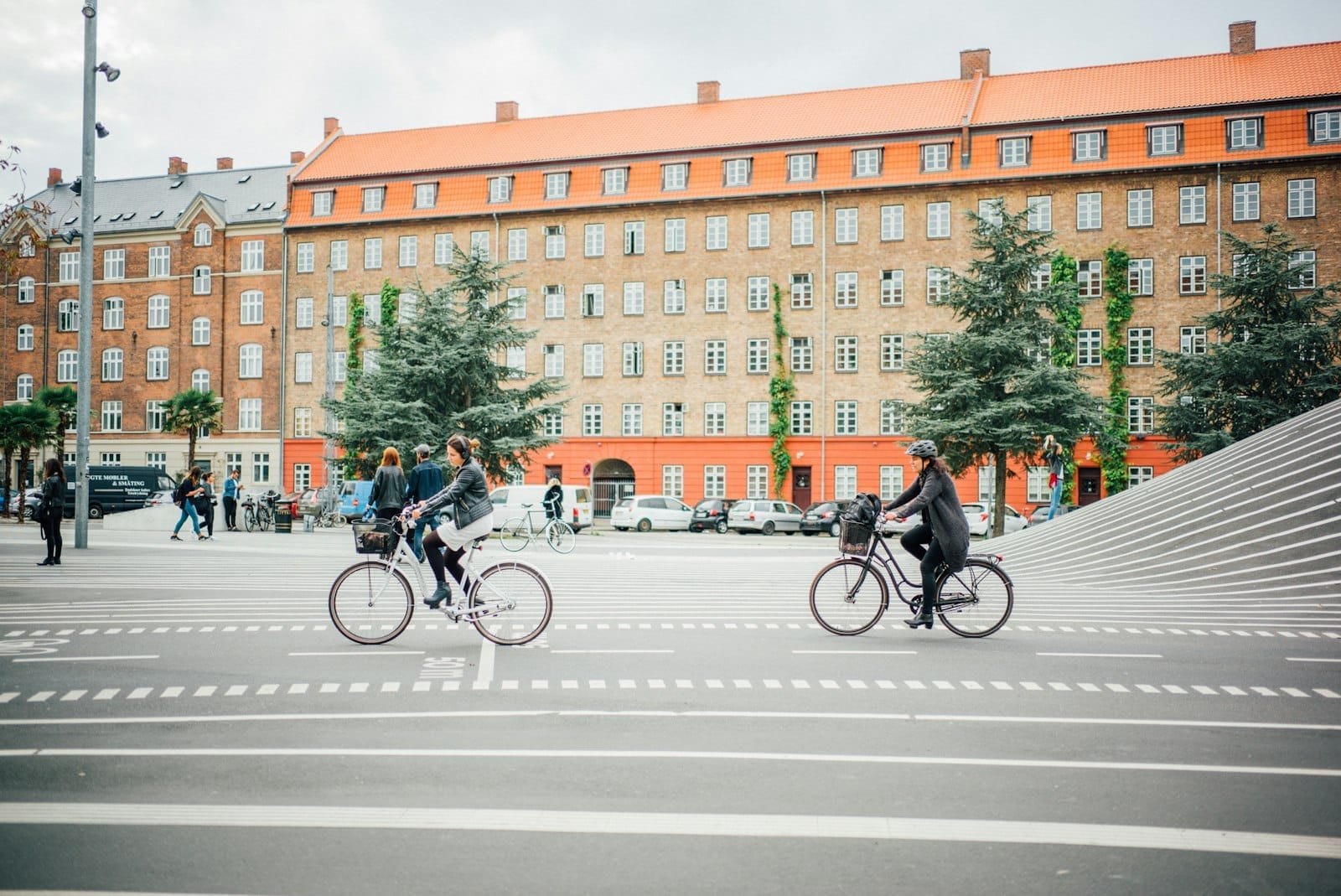
The single most discussed landmark in Nørrebro is Superkilen, a linear public park designed by Bjarke Ingels Group and the art collective Superflex, completed in 2012. Stretching along Tagensvej and the surrounding blocks near Nørrebrogade, it is divided into three colour-coded sections: the Red Square (a market and events space near the metro), the Black Market (a more urban zone further north), and the Green Park (a softer recreational area at the end). Each section incorporates objects and design elements sourced from countries represented in the local community: a Moroccan fountain, Thai boxing rings, an Icelandic lamp post. The result is somewhere between urban design project and open-air museum, and it works better in person than in photographs.
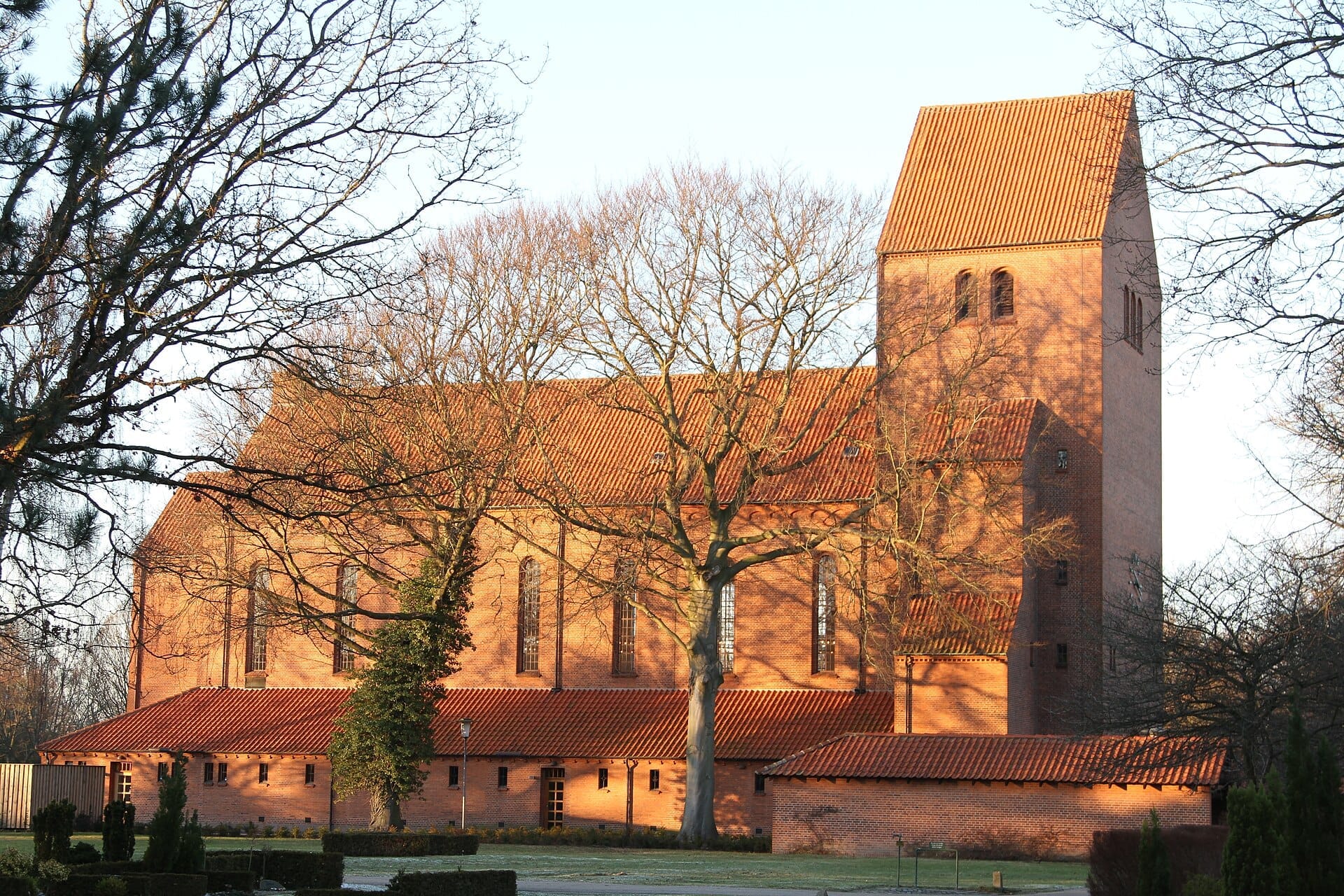
Assistens Cemetery (Assistens Kirkegård) is the other unmissable site, though it requires a different kind of attention. Established in 1711, originally as an overflow cemetery outside the city walls, it contains the graves of Hans Christian Andersen, philosopher Søren Kierkegaard, and physicist Niels Bohr. Today the cemetery is as much public park as burial ground: locals cycle through it, families sit on the grass between the gravestones, and the shaded lanes feel cooler than the surrounding streets on warm days. The combination of history and everyday use is distinctly Danish in character.
Queen Louise's Bridge, Dronning Louises Bro, deserves more than a quick crossing. Rebuilt in its current form in 1887, it is one of the city's great social gathering points on summer evenings, when the railings fill with cyclists, students and people watching boats on the lakes. The view southeast toward Indre By, with the Rundetårn and church spires visible in the distance, gives a useful sense of how compact Copenhagen's centre actually is.
Within the neighbourhood, the squares Blågårds Plads and Sankt Hans Torv function as outdoor living rooms. Blågårds Plads, in the middle section of the district, is surrounded by residential buildings and has a more neighbourhood-facing character: a playground, a basketball court, benches. Sankt Hans Torv, closer to the lakes, is more café-oriented and draws a young professional crowd, especially on warm evenings when bar terraces spread across the square.
Superkilen: the Red Square, Black Market, and Green Park sections along Nørrebrogade
Assistens Cemetery (Assistens Kirkegård): graves of Andersen, Kierkegaard, and Bohr
Queen Louise's Bridge (Dronning Louises Bro): best at dusk in summer
Blågårds Plads: everyday neighbourhood square with local atmosphere
Sankt Hans Torv: the district's most popular café and bar square
Ravnsborggade: antique and second-hand shops in a quieter side street
💡 Local tip
Assistens Cemetery is generally open to visitors daily and entry is free. Grab a map at the entrance gate on Kapelvej to locate the notable graves. The paths are wide enough for cycling, so watch for bikes if you are walking.
Eating & Drinking
Nørrebro's food scene is arguably the most varied in Copenhagen, ranging from sub-100 DKK falafel wraps on Nørrebrogade to considered New Nordic cooking in small neighbourhood restaurants. The district rewards slow exploration: the best options are rarely on the main street but one or two blocks off it. For a general sense of Copenhagen's food culture before diving into Nørrebro specifically, the Copenhagen food guide provides useful context.
The stretch of Nørrebrogade itself carries a strong Middle Eastern and North African food presence: shawarma spots, falafel counters, Turkish grocers and Lebanese bakeries are common, particularly in the mid and upper sections of the street. These are generally inexpensive and among the best-value eating options in Copenhagen, where restaurant prices across the city tend to be high.
The café culture is particularly well developed around Sankt Hans Torv and Elmegade. Cafés here typically serve specialty coffee, open from around 8am, and morph into wine bars by early evening. On warm days the outdoor seating fills quickly; arriving by 10am gets you a table without competition. The aesthetic tends toward salvaged furniture and exposed brick, but the quality of coffee is genuinely good rather than scenographic.
For evening dining, Nørrebro offers a growing number of independent restaurants in the mid-price range, where a two-course dinner with a glass of wine typically costs between 350 and 550 DKK per person. Cuisine ranges from natural-wine-focused Nordic bistros to Korean and Vietnamese kitchens. The neighbourhood also has several good bars for drinking without food, particularly along Ravnsborggade and the side streets off Sankt Hans Torv. Most bars open at 4pm and stay open until 2am on weekends.
💡 Local tip
For a quick and inexpensive lunch, the falafel and shawarma spots on Nørrebrogade represent some of the best value eating in central Copenhagen. Prices rarely exceed 80 DKK for a substantial wrap.
Getting There & Around
The most direct transit connection into Nørrebro from the city centre is walking: it takes around 15 minutes on foot from Nørreport Station across Queen Louise's Bridge to reach the lower end of Nørrebrogade. Nørreport is itself served by both the S-train and Metro systems and is one of Copenhagen's busiest interchange stations. For a broader overview of getting around the city, the getting around Copenhagen guide covers the full network.
By metro, the City Circle Line (M3) includes a stop at Nørrebros Runddel, which places you directly at the neighbourhood's central roundabout. This is the most efficient option if you are coming from the airport or from a part of the city not close to Nørreport. Nørrebro Station, in the western part of the district, handles S-trains and also connects to the M3, making it a second useful hub for those heading further northwest.
Bus 5C runs the full length of Nørrebrogade from the city centre, stopping frequently. It is useful for reaching the upper sections of the street or Superkilen without walking the full distance. Tickets are valid across buses, metro, and S-trains within the purchased zone and time window; the Copenhagen transit app (Rejseplanen) handles journey planning reliably.
Cycling is the fastest and most natural way to move through Nørrebro once you are there. The district has good cycle infrastructure, and rental bikes are available across the city. Nørrebrogade itself has separated cycle lanes. For visitors who want to explore Copenhagen by bike, the cycling in Copenhagen guide explains the practicalities of renting and riding.
Where to Stay
Nørrebro is not the most hotel-dense district in Copenhagen, but accommodation options are growing, particularly around the lower end of the district near the lakes. Staying here suits travelers who want to experience a working neighbourhood rather than a tourist zone, and who are comfortable with a 15 to 20 minute walk or short metro ride to the main historic sights. For a comparison of the city's accommodation areas, the where to stay in Copenhagen guide covers all the main districts.
The most convenient location within Nørrebro for first-time visitors is the lower section near Sankt Hans Torv and Dronning Louises Bro. From here you are within a short walk of the cafés and nightlife, and the city centre is easily reachable on foot or by metro. The upper sections of the district, toward Nørrebros Runddel and beyond, are better placed for the metro but feel further from the traditional Copenhagen sightseeing circuit.
Nørrebro is a reasonable base for travelers interested in nightlife, independent restaurants, and street-level Copenhagen. It is less suitable for families prioritising quick access to the main museums and royal sights, for whom Indre By or Vesterbro might be more practical. The district is generally safe, but weekend nights on the main strip are noisy until late, which matters if you are a light sleeper staying in a street-facing room.
⚠️ What to skip
Weekend nights on Nørrebrogade and around Sankt Hans Torv can be loud until 2am or later. If you are staying in the district and are a light sleeper, ask for a courtyard-facing room when booking.
History in Brief
Nørrebro developed primarily in the 19th century as Copenhagen expanded beyond its original fortifications. What had been farmland and the grounds of Assistens Cemetery became densely built working-class housing as the city industrialised. The apartment blocks that line Nørrebrogade and its side streets date largely from this era, five-storey brick buildings with internal courtyards that characterise the district to this day.
From the mid-20th century onward, Nørrebro became a destination for successive waves of labour migration, first from southern Europe and later from the Middle East, North Africa, and further afield. This produced the multilingual, multireligious character that distinguishes it from other Copenhagen districts. The neighbourhood has also been the site of significant political events, including the 1993 Nørrebro riots following a European Community referendum and, more recently, the controversies around Ungdomshuset in 2007. This history gives the area a civic weight that is different from the more straightforwardly touristic atmosphere of, say, Nyhavn or the royal district.
The Danish resistance during World War II also had roots in Nørrebro, where the dense urban fabric and tight-knit community networks made it a practical base for organising. Assistens Cemetery, already an established community space by that point, features in the broader story of how Copenhagen's residents navigated the occupation. This layer of history sits alongside the more recent cultural energy and makes Nørrebro one of the most historically layered parts of the city. Visitors interested in that wartime context can also explore the Museum of Danish Resistance, which covers the occupation period across the whole city.
TL;DR
Nørrebro is Copenhagen's most multicultural district, shaped by 19th-century working-class roots and decades of immigration from over 55 countries.
Key sites include Superkilen (an internationally sourced design park), Assistens Cemetery (where Andersen, Kierkegaard and Bohr are buried), and the social hub of Queen Louise's Bridge.
The food scene spans cheap falafel and shawarma on Nørrebrogade to independent Nordic bistros in the side streets, making it one of the city's best areas for varied, affordable eating.
Transit is straightforward: walkable from Nørreport Station via Dronning Louises Bro, served by the M3 metro at Nørrebros Runddel, and connected by Bus 5C along the main street.
Best suited to travelers who want local atmosphere, independent nightlife, and cultural depth rather than proximity to royal palaces and tourist landmarks; weekend nights are lively and loud, so come prepared.
Two days in København is genuinely enough to cover the city's royal palaces, canal district, world-class food markets, and Freetown Christiania without feeling rushed. This itinerary sequences the sights logically, cuts the walking time, and flags what is actually worth your limited hours.
Copenhagen has an unusually strong museum scene for a city its size, with world-class collections spanning ancient history, modern art, design, and Nordic heritage. This guide covers the best museums in Copenhagen, from the grand institutions in Indre By to extraordinary day-trip destinations just outside the city.
Copenhagen rewards visitors year-round, but the right month depends entirely on what you want from the trip. This guide breaks down weather, crowds, pricing, and seasonal events so you can match your travel style to the right window.
Copenhagen Airport (CPH) sits just 8 km from the city centre, and your airport transfer takes as little as 13 minutes by metro or train. This guide breaks down every option — public transport, taxi, and private transfer — with real fares, journey times, and honest advice on what to skip.
The Copenhagen Card promises free entry to 80+ attractions and unlimited public transport across the Danish capital. But is it actually worth the price? This guide breaks down the numbers, the fine print, and who genuinely benefits.
Copenhagen transforms in winter. From the ticketed spectacle of Tivoli Gardens to free canal-side markets and steaming mugs of gløgg, this guide covers everything you need to plan a Christmas visit to København with confidence.
Copenhagen is one of the world's most architecturally ambitious cities, named UNESCO/UIA World Capital of Architecture in 2023. This guide covers the essential museums, landmark buildings, contemporary projects, and practical routes for anyone serious about design and architecture in København.
Copenhagen food culture runs deeper than Noma's legacy. This guide covers the essential dishes, best markets, smartest restaurant picks, and seasonal foods that define eating in the Danish capital — across every budget.
October in Copenhagen (København) is one of the most underrated times to visit. Tivoli transforms into a Halloween wonderland with over 20,000 pumpkins, the crowds thin out compared to summer, and the city's museums and food scene hit their stride. This guide covers the weather, the best events, what to prioritize, and what to skip.
Summer is Copenhagen's peak season, with up to 17 hours of daylight, open-air festivals, free harbour swimming, and parks packed with locals. This guide covers the weather, major events, best activities, and practical tips for visiting in June, July, and August.
The Copenhagen Jazz Festival runs for 10 days every July, filling the Danish capital with around 1,200 concerts across 120 venues. This guide covers dates, tickets, free events, the best neighborhoods to explore, and everything you need to plan your visit.
Copenhagen's after-dark scene is disproportionately strong for a city its size. From precision cocktail bars in the Latin Quarter to techno clubs in the Meatpacking District, this guide cuts through the noise and tells you exactly where to go, when to arrive, and what to expect — including what costs more than it should.
Copenhagen (København) has a reputation as one of Europe's priciest capitals, and that reputation is not entirely unfair. But with the right passes, free attractions, and a few local habits, you can experience the city fully without a sky-high bill. This guide breaks down exactly where your money goes and where you can save it.
Copenhagen rewards shoppers at every level, from international flagships on Strøget to vintage finds on Jægersborggade. This guide breaks down where to shop by neighborhood, what to buy, how much to spend, and which spots to skip.
Smørrebrød is Denmark's defining lunch tradition, and Copenhagen is the best place in the world to eat it. This guide covers the top restaurants, what to order, how much to pay, and the customs first-timers always get wrong.
Copenhagen (København) is one of Europe's most walkable capitals. This guide covers the classic self-guided walking tour route from Tivoli Gardens to Nyhavn and beyond, with practical details on distances, free stops, seasonal timing, and digital tools to make your day on foot count.
Copenhagen is one of Europe's most genuinely child-friendly capitals, with discounted museum entry, excellent playgrounds, and a compact city center that makes logistics manageable. This guide covers the best family activities in Copenhagen, from Tivoli Gardens to canal cruises, plus honest advice on passes, costs, and seasonal planning.
Copenhagen has roughly 350 km of segregated cycle tracks, and Copenhagen has roughly 350 km of segregated cycle tracks, and nearly half of all people who work or study in the city bike to work or school every day. This guide covers everything a visitor needs to cycle the city confidently: where to rent, which routes to ride, what the unwritten rules are, and when to go.
Copenhagen sits at the centre of an extraordinary region. Within two hours, you can reach UNESCO-listed castles, world-class art museums on clifftops, a remarkably preserved fishing village, and an entirely different country. These are the best day trips from Copenhagen, whether you have a full day or just an afternoon.
Copenhagen is one of Europe's most rewarding cities to explore on a tight budget. From free museum days and royal palaces to harbour swims and world-class parks, here are 20 genuinely free experiences that capture the best of the Danish capital.
Copenhagen's integrated transport network is one of Europe's most efficient. This guide covers the metro, S-trains, buses, cycling, taxis, and airport connections — with 2026 fares, zone logic, and practical advice on what's worth the money.
Copenhagen holds the key to understanding Hans Christian Andersen's life and work. From his former apartments along Nyhavn canal to his grave in Nørrebro, this guide maps every significant stop on the city's literary trail, with practical logistics for each.
Copenhagen rewards curious travellers who look beyond Nyhavn and Tivoli. This guide uncovers the city's overlooked neighbourhoods, underrated museums, and unexpected green spaces that locals actually love.
Copenhagen didn't accidentally become one of Europe's great food cities. The New Nordic movement, formalized in 2004, rewired how chefs here think about ingredients, technique, and season. This guide covers the key restaurants, price realities, seasonal logic, and how to experience the movement beyond fine dining.
Copenhagen rewards visitors with a rare combination of world-class history, cutting-edge design, and outdoor culture. This guide covers the best things to do in Copenhagen across every interest and budget, with honest assessments and practical logistics to help you plan confidently.
Choosing where to stay in Copenhagen shapes your entire trip. This guide breaks down every major neighborhood by budget, transport links, atmosphere, and traveler type — so you can book with confidence, not guesswork.