The Little Mermaid (Den lille Havfrue): What to Expect Before You Go
The Little Mermaid is Copenhagen's most photographed landmark: a modest bronze statue with a surprisingly rich cultural history. Free to visit at any hour, she sits on a rock along the Langelinie waterfront in Østerbro, gazing quietly out over the Øresund strait. Here is exactly what the visit looks like, and how to make it worthwhile.
Quick Facts
- Location
- Langelinie, 2100 København Ø, Østerbro
- Getting There
- Østerport Station (S-train/Metro), then 10–15 min walk; or Bus 23, 27, or 2A to Indiakaj
- Time Needed
- 15–30 minutes at the statue; 45–60 minutes with the Langelinie walk
- Cost
- Free — no ticket or booking required
- Best for
- Fairy-tale fans, photography, waterfront walks, first-time visitors to Copenhagen
What The Little Mermaid Actually Is
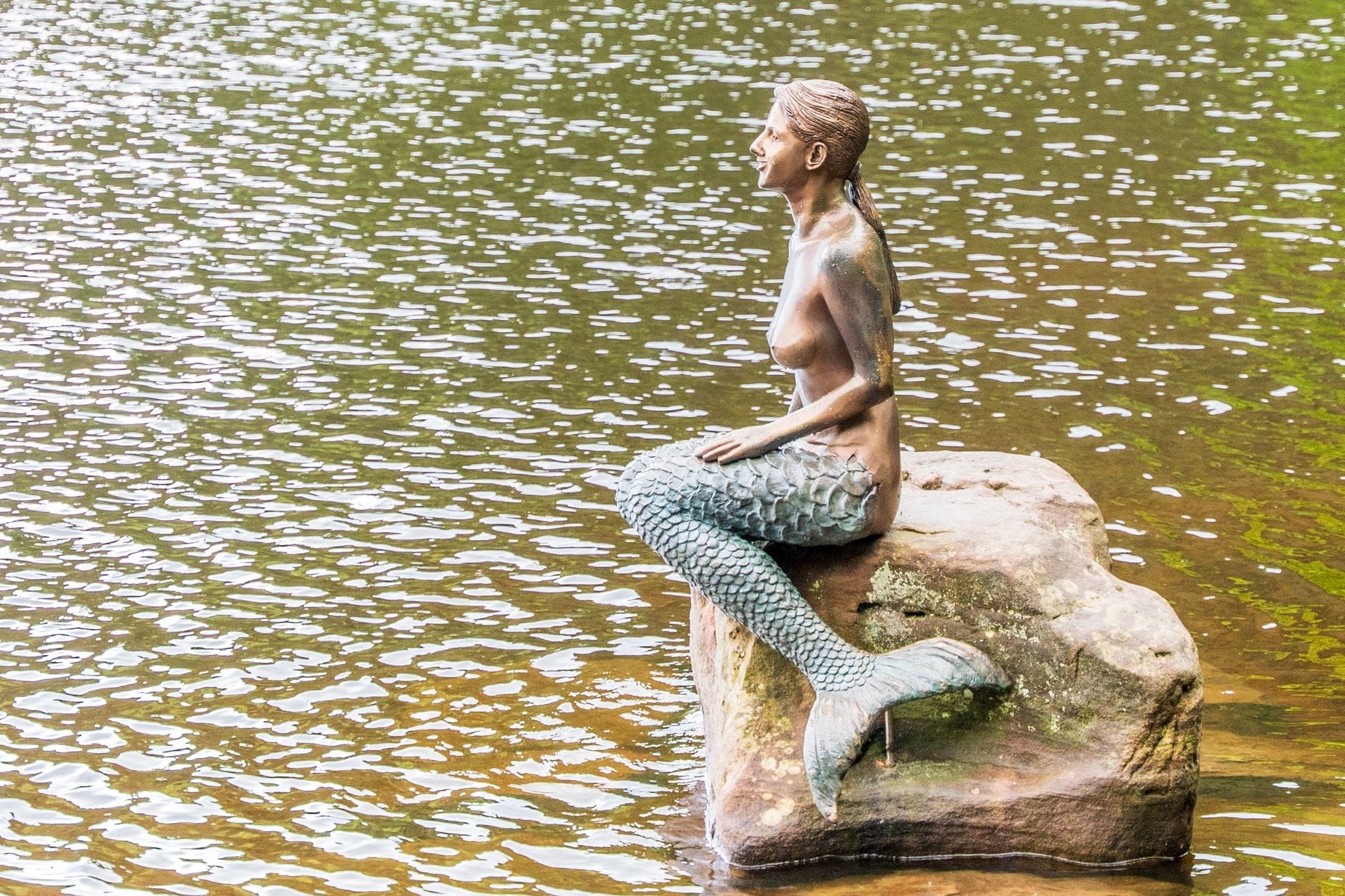
Den lille Havfrue, or The Little Mermaid, is a bronze sculpture seated on a small granite rock at the edge of Copenhagen's Langelinie waterfront. Sculpted by Edvard Eriksen and unveiled on 23 August 1913, she was commissioned by brewer Carl Jacobsen and gifted to the City of Copenhagen. At 1.25 metres tall and weighing 175 kilograms, she is, by most physical measures, a small statue. She does not gleam or dominate the skyline. The experience of visiting her is quiet, brief, and surprisingly intimate — which is either the point or the disappointment, depending on what you expect.
The statue draws its inspiration from Hans Christian Andersen's 1837 fairy tale, which is itself a darker, more melancholy story than most visitors realize. Andersen was born in Denmark in 1805, and his legacy is woven deep into Copenhagen's identity. If you want to understand the cultural weight behind this small bronze figure, the Hans Christian Andersen trail in Copenhagen provides useful context on where Andersen lived, worked, and what his stories meant to Danish culture.
ℹ️ Good to know
The statue is outdoors, on public land, and accessible 24 hours a day, year-round. There is no entrance fee, no booking system, and no closing time.
The Honest Reality: Managing Expectations
The Little Mermaid is routinely listed among the world's most disappointing tourist attractions — not because she lacks meaning, but because photographs compress distance and remove context. In photos, she appears to sit in a quiet bay. In person, during peak hours from roughly 10am to 4pm in summer, she is surrounded by tour groups, selfie poles, and a ring of people jostling to get a clear shot. The statue is accessible via a short walk out onto the rocks, but you cannot sit beside her or touch her without climbing into the water.
None of this means skipping her. It means adjusting your timeline. Early morning visits, particularly before 8am in summer, transform the experience entirely. The Langelinie promenade is used by local joggers at that hour, and the statue often stands with only a handful of people nearby. The harbor light in the early morning is cool and flat, which actually suits photography better than the harsh midday glare. In winter, even midday visits can be uncrowded, and the grey water behind her gives the scene a genuinely Nordic atmosphere.
💡 Local tip
Visit before 8am in summer or after 6pm for the best chance of a clear view. Midweek mornings in spring and autumn are consistently less crowded than weekends.
Tickets & tours
Hand-picked options from our booking partner. Prices are indicative; availability and final rates are confirmed when you complete your booking.
Admire Copenhagen from land and sea in a private tour
From 111 €Instant confirmationFree cancellationSelf guided tour with interactive city game of Copenhagen
From 5 €Instant confirmationFree cancellation48-hour Hop-on Hop-off Bus and Boat Sightseeing in Copenhagen
From 47 €Instant confirmationFree cancellationCopenhagen city game – the Little Mermaid and the Prince
From 10 €Instant confirmationFree cancellation
The Walk to Get There: Langelinie and Kastellet
Part of what makes this visit worthwhile is the route itself. From Østerport Station, a 10 to 15 minute walk takes you east through or alongside Kastellet, the 17th-century star-shaped fortress that remains one of the best-preserved military fortifications in Northern Europe. The grass embankments, moats, and working windmill inside Kastellet are genuinely worth a slow walk through before continuing to the waterfront.
Once you exit Kastellet toward the harbor, you are on Langelinie Promenade, a broad, flat walkway following the waterfront north toward the statue. Cruise ships dock at the Langelinie Pier to your right when large vessels are in port, which can bring substantial foot traffic. On quieter days, the promenade has a relaxed character: couples walking dogs, cyclists passing through, and the sound of water against the stone edge. The promenade connects naturally to Kastellet, which most visitors see as part of the same short tour.
The walk itself is entirely flat and paved, making it straightforward for wheelchairs and pushchairs. Bus 27 stops at Indiakaj for those who prefer not to walk from Østerport.
The Statue Up Close: What You See and Hear
Standing at the water's edge looking at the statue, you notice the texture of the bronze first: the surface has the green-grey patina of aged metal, worn smooth in places by over a century of weathering and, historically, by visitors who have climbed on her. The figure is seated on a low granite rock, her lower body shifting from a human form into a fish tail, her gaze directed out over the harbor toward the east-northeast. She does not look toward the city at all.
On still mornings, the water around the rock barely moves and reflects the pale Danish sky. When cruise ships are moored nearby, you can hear the low mechanical hum from the pier. On windy autumn days, the harbor chops up and the spray occasionally reaches the base of the rock. In winter, frost sometimes settles on the statue and the surrounding stones, and the absence of foliage along the promenade gives the scene a sparse, spare quality that reads as genuinely atmospheric.
The statue has been vandalized multiple times over the decades, including losing her head twice and her arm once. She has been repainted, pushed off her rock, and then reinstalled. The current figure is the original, repaired and maintained. The current figure is the original, repaired and maintained. A note about photography: the rock she sits on is surrounded by shallow water, and getting the cleanest angle requires walking along the small path to the right of the main viewing area. A slightly elevated position from the walkway edge gives the best framing with water behind her.
Getting There: Practical Details
The most direct route is to take the S-train or Metro to Østerport Station, which is well-connected from the city centre. From the station, walk east along the path that skirts Kastellet's northern rampart, then follow the Langelinie promenade south along the waterfront to the statue. The route is well-signposted. Bus 27 provides an alternative, stopping at Indiakaj and leaving a short walk to the waterfront.
Cycling is another practical option. Copenhagen's cycling infrastructure extends to this part of Østerbro, and locking a bike at the promenade and walking the final stretch is straightforward. For a full route combining the waterfront, Kastellet, and the adjacent green areas, the Copenhagen walking tour guide maps out a logical sequence that includes The Little Mermaid without making it the sole destination.
⚠️ What to skip
There is limited car parking near Langelinie, and driving into central Copenhagen can be slow and expensive. Public transit or cycling is strongly recommended.
Fitting The Little Mermaid Into a Broader Itinerary
The statue works best as part of a larger waterfront or Østerbro morning, not as an isolated destination. A logical pairing is to walk through Kastellet, continue to the statue, then double back along the promenade toward Langelinie park, which has rose gardens and harbor views, before heading south toward Nyhavn or the city centre.
If you are visiting Copenhagen for the first time and want to see major landmarks efficiently, the 2-day Copenhagen itinerary places The Little Mermaid in a morning route that also covers Amalienborg and the waterfront, keeping travel time low. The Copenhagen Card covers public transit and many paid attractions, though since the statue itself is free, it is mainly useful for transport to and from the area.
The surrounding Østerbro district is a residential area with a lower tourist density than Indre By or Nyhavn. There are cafés and bakeries in the streets behind Langelinie worth stopping at before or after the visit, particularly on Dag Hammarskjölds Allé.
Who Should Reconsider
Travelers who are tight on time and have not particularly strong interest in the Andersen fairy tale or Danish cultural history may find the 30 to 45 minutes spent on this visit less rewarding than alternatives. Copenhagen's paid museums, harbor districts, and food markets tend to generate more active engagement per hour. The statue is, objectively, small and static — what surrounds it (the harbor, the walk, the fortress) is what gives the visit texture. If you are unlikely to enjoy a waterfront walk on its own terms, this attraction is easy to skip without missing the core of what Copenhagen offers.
Insider Tips
- Arrive before 8am in summer — the promenade belongs to joggers and cyclists at that hour, and you can photograph the statue without any crowd in the frame.
- Walk the full loop through Kastellet rather than bypassing it. The star-shaped ramparts, the working windmill, and the quiet moat paths take about 20 minutes and are among the most underrated spaces in the city.
- The angle from the small path to the right of the main viewing area gives a cleaner shot with open water behind the statue. The frontal view from the main promenade usually has other visitors in it.
- In winter, arrive around midday for the best light. The low sun angle from the south creates a warm side-light on the statue that is more photogenic than the flat grey skies of early morning in December and January.
- Combine the visit with a walk south along the harbor toward Nyhavn to avoid doubling back — the route is roughly 25 minutes on foot and passes through several small waterfront parks.
Who Is The Little Mermaid For?
- First-time visitors to Copenhagen ticking off a landmark with genuine historical significance
- Photography enthusiasts who time the visit for early morning or off-season light
- Families with children familiar with the Andersen fairy tale looking to give the story a physical anchor
- Walkers building a full Østerbro morning route that includes Kastellet and the harbor
- Travelers interested in Danish cultural identity and the role of literature in shaping national symbols
Nearby Attractions
Other things to see while in Østerbro:
- Fælledparken
Fælledparken is a sprawling public park in Østerbro, Copenhagen. Free to wander for most visitors at all hours, it draws runners on its 3.5 km perimeter loop, families at the traffic playground, skaters at one of Scandinavia's best-equipped outdoor skateparks, and locals who simply want grass and sky. No ticket required, no crowds to fight.
- Kastellet
Kastellet, the Citadel Frederikshavn, is a five-bastion star fortress dating to 1664 that still functions as an active military base while welcoming visitors free of charge. Its moat-encircled ramparts, working windmill, and quiet interior streets make it one of the most unusual open spaces in Copenhagen.
- Langelinie Promenade
Langelinie is a free, open-air promenade stretching along Copenhagen's inner harbour in Østerbro. It links the Gefion Fountain, Kastellet fortress, and the iconic Little Mermaid statue in a single walkable route — making it one of the city's most visited outdoor spaces, especially on clear mornings and summer evenings.
- Museum of Danish Resistance
The Museum of Danish Resistance tells the story of Denmark's five-year German occupation through immersive reconstructed spaces, personal artifacts, and unflinching historical detail. Located in Churchillparken near Kastellet, it is one of Copenhagen's most thoughtfully designed museums and a genuine counterweight to the city's lighter attractions.