Langelinie Promenade: Copenhagen's Harbour Walk Explained
Langelinie is a free, open-air promenade stretching along Copenhagen's inner harbour in Østerbro. It links the Gefion Fountain, Kastellet fortress, and the iconic Little Mermaid statue in a single walkable route — making it one of the city's most visited outdoor spaces, especially on clear mornings and summer evenings.
Quick Facts
- Location
- Langeliniekaj 2, 2100 København Ø — waterfront area north of central Copenhagen
- Getting There
- Walk about 25–30 minutes from Kongens Nytorv Metro station via Nyhavn and the harbourfront; alternatively, combine Metro to Østerport with a short walk or use harbour bus 992 to Nordre Toldbod
- Time Needed
- 45 minutes to 2 hours depending on pace and stops
- Cost
- Free — no admission fee, open 24 hours
- Best for
- Harbour walks, photography, cruise arrivals, families, morning runners
- Official website
- www.visitcopenhagen.com/copenhagen/planning/langelinie-gdk414235
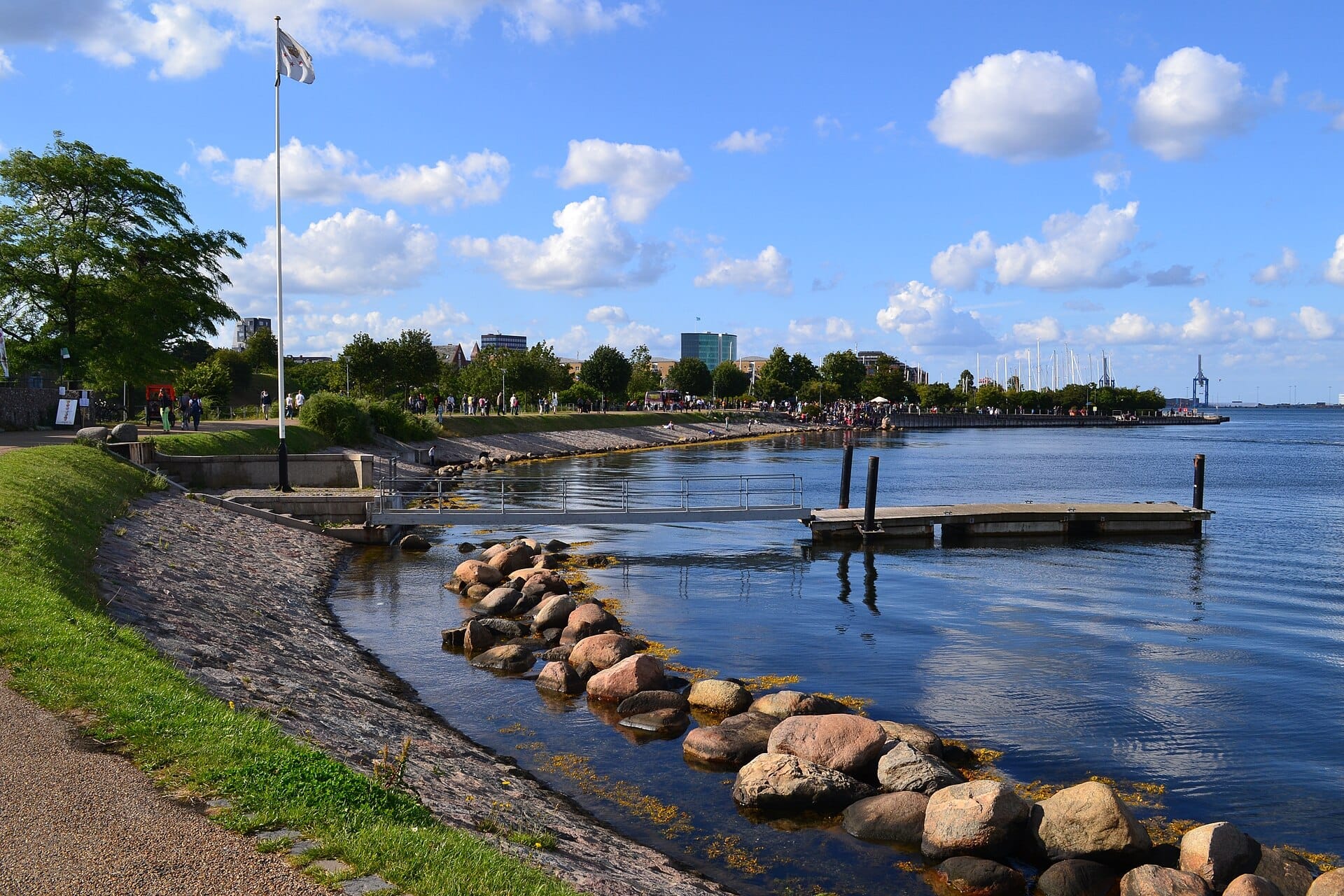
What Langelinie Actually Is
Langelinie — the name translates literally from Danish as 'Long Line' — is a pier, promenade, and green park running along the inner harbour of Copenhagen in central Copenhagen. The quay itself was erected in 1894 as part of a deliberate expansion of Copenhagen's harbour infrastructure, and the promenade that developed alongside it gradually became one of the city's most recognisable outdoor corridors. Today it functions simultaneously as a working cruise-ship berth, a leisure walkway, and the approach route to several of Copenhagen's most photographed landmarks.
The route is free, open at all hours, and requires no booking. That combination makes it unusual among Copenhagen's top-tier attractions. Most visitors encounter Langelinie as part of a cluster: you walk north from the Gefion Fountain, pass the medieval earthworks of Kastellet, and eventually arrive at the granite boulder on which The Little Mermaid sits. But reducing Langelinie to a path between Instagram stops misses what makes it worth an hour of genuine attention.
💡 Local tip
Tip: If a cruise ship is docked at Langelinie Pier, the area around The Little Mermaid will be significantly more crowded than usual. Arriving before 9 AM on any day, or after 5 PM when day-tour groups disperse, makes a noticeable difference to the experience.
How the Walk Actually Unfolds
Most visitors approach Langelinie from the south, entering near the Gefion Fountain — a large-scale bronze sculptural group depicting the Norse goddess Gefion ploughing Zealand from Sweden using her sons transformed into oxen. The fountain was unveiled in 1900 and is the largest fountain in Copenhagen. It sits directly below a small Anglican church, and the combination of the roaring water and the worn granite surrounds gives this end of the promenade a grounded, civic weight that the Little Mermaid end sometimes lacks.
From the fountain, the path curves along the waterfront past Kastellet, a remarkably well-preserved 17th-century star fortress that still houses some military facilities. The earthen ramparts, windmill, and red-painted barracks are visible from the promenade path. Most walkers simply pass the exterior, but the fortress interior is worth a short detour — it is open to the public daily and entry is free.
At the northern tip of the walk, the Little Mermaid statue sits on a rock a few metres offshore. She is smaller than many visitors expect — roughly 1.25 metres tall — and has been damaged, removed, and restored multiple times since sculptor Edvard Eriksen cast her in 1913. Manage your expectations accordingly: the statue itself is modest, but the harbour framing around her, particularly on a clear morning with the water still, is genuinely photogenic.
Tickets & tours
Live prices and dates from our booking partner. If you book, we may earn a commission at no extra cost to you.
1-hour boat harbour tour in Copenhagen
From 26 €Instant confirmationFree cancellationSmall group 3-hour walking tour in Copenhagen
From 45 €Instant confirmationFree cancellationCopenhagen to Malmo one-day tour
From 56 €Instant confirmationFree cancellationFull-day tour to Forest Tower and Forgotten Giants from Copenhagen
From 110 €Instant confirmationFree cancellation
Time of Day and Seasonal Differences
Early mornings between 7 and 9 AM are when Langelinie earns its reputation. The promenade is a regular running route for Østerbro residents, and the harbour light at that hour — low, cool, and slightly silver — is different from anything that appears at midday. The water smells faintly of salt and diesel, the cruise ships loom quietly at the pier if present, and the Little Mermaid can occasionally be photographed without a queue of people in the foreground. It is the version of Langelinie that most travel photos never show because most tourists are not yet awake to see it.
By late morning, and especially between 10 AM and 2 PM in summer, the atmosphere shifts considerably. Tour groups arrive, selfie sticks appear at the Mermaid rock, and the paths around the fountain fill with visitors moving between cruise ships and waiting coaches. The walk itself remains pleasant — the open harbour views are unchanged — but the contemplative quality disappears. Midday visits in June, July, and August should be treated as a social experience rather than a reflective one.
In winter, Langelinie takes on a completely different character. Between November and February, the promenade is largely empty outside weekend afternoons. The cold is genuine — wind off the harbour is colder than the air temperature suggests — but the stripped-down version of the walk, with the bare lime trees along the upper promenade and the grey water stretching toward Sweden, has a stark appeal that summer cannot replicate. Dress for it: a waterproof outer layer and warm mid-layer are necessary, not optional.
⚠️ What to skip
Weather note: Langelinie is fully exposed to harbour winds. In spring and autumn, temperatures can feel 4-6°C colder on the promenade than in the city centre. A windproof layer is worth carrying even on days that appear mild.
Historical and Cultural Context
The Langelinie quay was built in 1894 as Copenhagen expanded its port capacity during the late industrial era. The harbour here handled commercial and passenger shipping well into the 20th century, and the promenade that developed alongside the working quay was always partly civic in character — a place where Copenhagen residents could walk along the water that defined the city's identity and economic life.
The Little Mermaid statue, installed in 1913 on a commission from brewery magnate Carl Jacobsen, was inspired by a Hans Christian Andersen fairy tale and a Royal Danish Ballet performance. Andersen himself had strong connections to Copenhagen, and several of the city's most visited sites orbit his legacy. The nearby Kastellet fortress predates all of this by two centuries — construction began in 1626 under Christian IV, and the star-shaped earthwork design reflects Dutch military engineering principles that were state-of-the-art for the period.
For much of the 20th century, Langelinie Pier also served as Copenhagen's primary passenger ship terminal. That function now coexists with cruise tourism, and on busy summer days the pier handles vessels carrying thousands of day visitors. The infrastructure is industrial in scale — the mooring bollards and pier planking are functional rather than decorative — but it grounds the promenade in something real rather than purely ornamental.
Getting There and Getting Around
Langelinie does not have a Metro station directly adjacent to it. The most practical public transit option is Bus 26, which stops at Langelinie and runs from the city centre. From Kongens Nytorv — the main Metro interchange in the centre — the walk north through Nyhavn and along the harbour takes roughly 25 to 30 minutes on foot and is itself a pleasant route along the waterfront.
Copenhagen is a cycling city, and Langelinie is reachable by bike on dedicated cycle paths from most central neighbourhoods. If you are using the city's cycling infrastructure for the first time, the guide to cycling in Copenhagen covers route logic and rental options. Locking your bike near the Gefion Fountain and walking the promenade on foot is the most practical approach, as the area around the Little Mermaid has uneven stone surfaces that are awkward to navigate by bike.
The promenade is largely flat and paved, making it accessible for most mobility levels. The area immediately around the Little Mermaid involves some cobblestone and granite surfaces near the waterline that may present challenges for wheeled mobility aids; the main promenade path itself is smoother. No detailed official accessibility statement was available at the time of writing, so visitors with specific accessibility needs should confirm conditions directly with VisitCopenhagen before travelling.
Photography and Practical Details
For photography, the Little Mermaid photographs best in the first two hours after sunrise, when the light comes from the east across the water and the statue is not backlit. By midday in summer, the sun is high enough that the background becomes blown out and the rock is crowded. A small telephoto or standard lens is sufficient — wide angles tend to emphasise how small the statue is relative to expectations, which may or may not be the effect you want.
The Gefion Fountain is considerably easier to photograph well at any time of day. The bronze oxidation and the water spray together create strong textural contrast, and the fountain is large enough that even at midday it does not feel overwhelmed by tourists. The best angle is from slightly elevated ground to the south, looking down across the fountain toward the harbour.
If you are combining Langelinie with other northern Copenhagen sites, it pairs naturally with a visit to Rosenborg Castle or the King's Garden, both reachable on foot in about 20 minutes heading southwest. The full northern harbour walk, from Nyhavn through Langelinie and back via Kastellet, is a practical half-day itinerary that requires no entry fees at any point.
Who Should Skip Langelinie
Travellers whose primary interest is interior cultural experiences — museums, galleries, design spaces — will find Langelinie offers little that justifies significant time. The promenade is outdoor, unstructured, and the main landmark (the Little Mermaid) is a small bronze statue on a rock. If you have seen photographs of it and feel genuinely neutral, the reality is unlikely to change that.
Visitors with only one or two days in Copenhagen and a strong interest in cultural depth may find their time better spent at the SMK National Gallery or the National Museum of Denmark rather than allocating a full hour to the promenade. Langelinie rewards those who walk for pleasure, enjoy harbour atmospheres, or want Copenhagen's public outdoor life without paying for it. It is less rewarding for visitors who need a strong narrative or structured experience to feel engaged.
Insider Tips
- Walk the upper tree-lined path on the inland side of the promenade rather than the pier edge — it is quieter, shaded in summer, and gives a better sense of the park's older character.
- The benches facing the harbour near the midpoint of the promenade, between the Gefion Fountain and the Mermaid, are almost always empty even when both landmarks are crowded. They offer the same water views without the foot traffic.
- If a large cruise ship is docked at Langelinie Pier, the Little Mermaid area will peak in crowding around 10–11 AM as ship passengers arrive on organised tours. Wait until early afternoon and numbers drop sharply as tours move on.
- The Kastellet interior — the star fortress just inland from the promenade — is free to enter and almost always quieter than the promenade. The rampart walls give elevated views across the harbour and rooftops worth the five-minute detour.
- On summer evenings after 7 PM, the promenade empties out and the harbour light becomes warm and directional. This is when Langelinie feels least like a tourist corridor and most like a neighbourhood waterfront.
Who Is Langelinie Promenade For?
- Morning walkers and runners who want a flat harbour route with minimal crowds
- Families looking for a free, open outdoor space with enough distance to cover at an easy pace
- Photographers targeting the Little Mermaid or Gefion Fountain with good light and manageable crowds
- Cruise ship passengers wanting to explore independently from the pier on foot
- Visitors combining several northern Copenhagen sites into a single car-free half-day
Nearby Attractions
Other things to see while in Østerbro:
- Fælledparken
Fælledparken is a sprawling public park in Østerbro, Copenhagen. Free to wander for most visitors at all hours, it draws runners on its 3.5 km perimeter loop, families at the traffic playground, skaters at one of Scandinavia's best-equipped outdoor skateparks, and locals who simply want grass and sky. No ticket required, no crowds to fight.
- Kastellet
Kastellet, the Citadel Frederikshavn, is a five-bastion star fortress dating to 1664 that still functions as an active military base while welcoming visitors free of charge. Its moat-encircled ramparts, working windmill, and quiet interior streets make it one of the most unusual open spaces in Copenhagen.
- Museum of Danish Resistance
The Museum of Danish Resistance tells the story of Denmark's five-year German occupation through immersive reconstructed spaces, personal artifacts, and unflinching historical detail. Located in Churchillparken near Kastellet, it is one of Copenhagen's most thoughtfully designed museums and a genuine counterweight to the city's lighter attractions.
- The Little Mermaid
The Little Mermaid is Copenhagen's most photographed landmark: a modest bronze statue with a surprisingly rich cultural history. Free to visit at any hour, she sits on a rock along the Langelinie waterfront in Østerbro, gazing quietly out over the Øresund strait. Here is exactly what the visit looks like, and how to make it worthwhile.
Planning a trip? Discover personalized activities with the Nomado app.