SMK – National Gallery of Denmark: What to Expect Before You Go
The Statens Museum for Kunst (SMK) is Denmark's largest and most significant art museum, housing over 700 years of European and Danish art across two architecturally distinct buildings. From Rubens and Matisse to contemporary Danish painters, the collection rewards slow, deliberate visitors.
Quick Facts
- Location
- Sølvgade 48–50, 1307 København K, Copenhagen
- Getting There
- Nørreport Station (Metro/S-train), approx. 5-min walk
- Time Needed
- 2–3 hours for highlights; half-day for thorough exploration
- Cost
- Adults 140 DKK; under 27: 95 DKK; under 18: free
- Best for
- Art lovers, architecture enthusiasts, rainy-day culture seekers
- Official website
- www.smk.dk/en
What Is the SMK and Why Does It Matter?
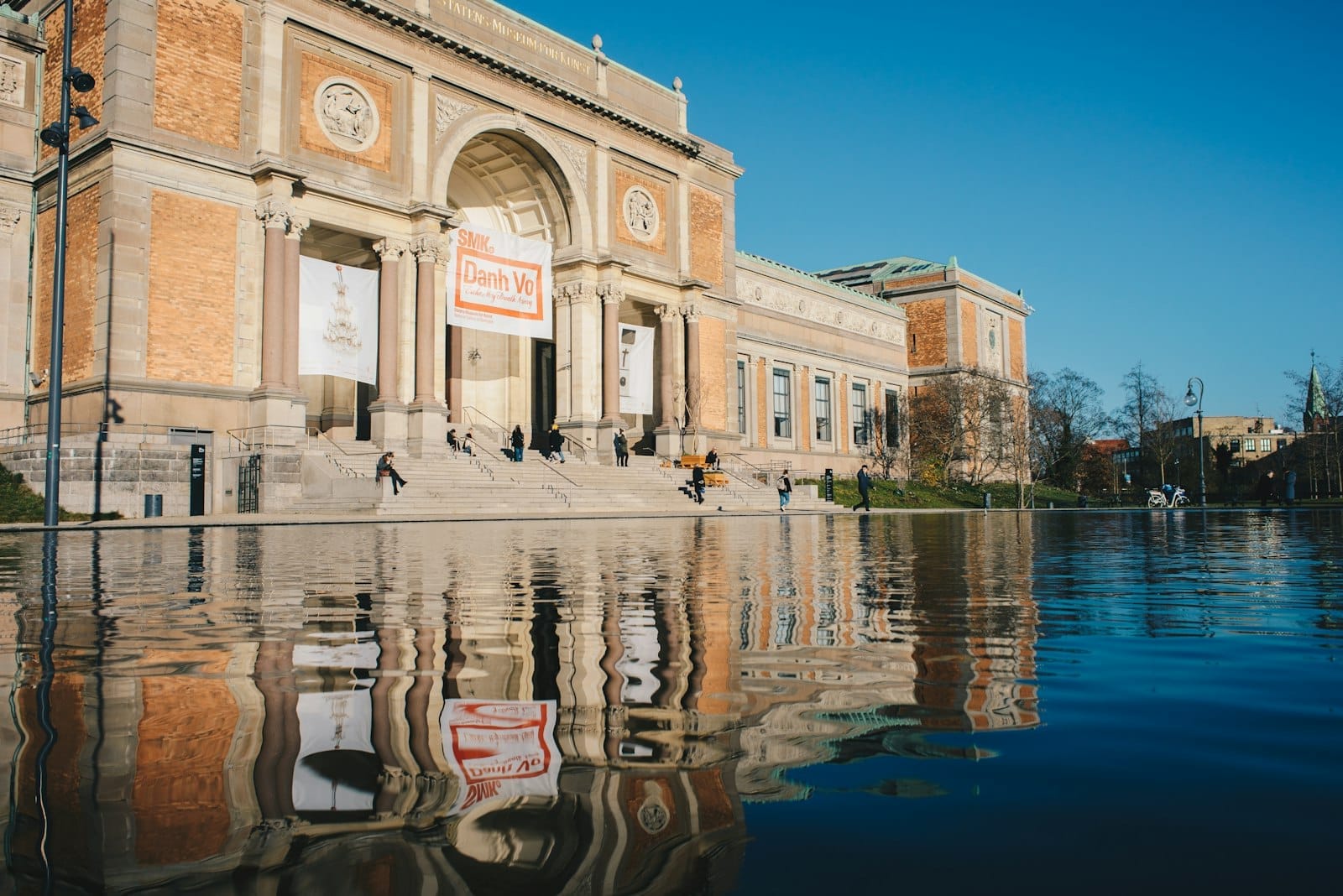
The Statens Museum for Kunst, universally referred to as SMK, is Denmark's national gallery and its largest single collection of visual art. Established in 1824, the museum occupies a position at the northern edge of the King's Garden — directly adjacent to Rosenborg Castle — making it both a cultural institution and a landmark embedded in one of Copenhagen's most historic green corridors. The original red-brick building, completed between 1889 and 1896, follows a neoclassical design that signals institutional gravity from across the park. A sweeping modern wing added in 1998 connects to the original structure via a glass-roofed sculpture hall, and the dialogue between those two buildings is one of the museum's underappreciated pleasures.
The collection spans roughly 700 years of European and Danish art, from medieval altarpieces to twentieth-century modernism and contemporary work. Danish Golden Age painters — C.W. Eckersberg, Christen Købke — share space with Rubens, Cranach, and Matisse. The depth of the French avant-garde holdings is genuinely surprising for a museum outside France, and the Danish modern section presents artists who rarely appear in international touring exhibitions. If your interest in Danish art goes no further than recognizing the name, this is the place to correct that.
💡 Local tip
Wednesday is the only day the museum stays open until 20:00. If you want quieter galleries with natural light fading through the skylights and fewer school groups, Wednesday afternoon is the most relaxed window of the week.
The Building Itself: Two Centuries, One Institution
Walking into the original 1896 wing feels different from entering the modern extension, and that contrast is worth paying attention to. The historic building has high ceilings, thick walls, and a deliberate gravitas — rooms feel sized for large-scale history paintings, which is exactly what they contain. Light comes in slowly, and the pace of the space encourages stopping rather than moving.
The 1998 extension shifts the register entirely. Clean lines, abundant natural light, and an open sculpture hall that functions almost like a covered courtyard create a very different atmosphere. The junction between the two wings — the glass-roofed corridor that connects them — is one of those architectural moments that travel photography rarely captures well. Standing in it on a grey Copenhagen morning, with diffuse northern light coming through the roof, is quietly memorable.
Visitors interested in Copenhagen's broader architectural story will find SMK is a useful reference point for understanding how the city treats heritage and modern intervention side by side. The Danish Architecture Center explores this theme in depth if architecture is a primary interest.
Tickets & tours
Hand-picked options from our booking partner. Prices are indicative; availability and final rates are confirmed when you complete your booking.
Entrance ticket to the National Museum of Denmark
From 18 €Instant confirmationFree cancellation1-hour boat harbour tour in Copenhagen
From 26 €Instant confirmationFree cancellationSmall group 3-hour walking tour in Copenhagen
From 45 €Instant confirmationFree cancellationCopenhagen to Malmo one-day tour
From 56 €Instant confirmationFree cancellation
Navigating the Collection: Where to Spend Your Time
The permanent collection is organized broadly by period and geography, with dedicated spaces for Danish art, European Old Masters, and 20th-century modernism. The Danish Golden Age rooms are the strongest argument for visiting if you have limited museum tolerance. Artists like Eckersberg and Købke were painting Copenhagen harbor scenes and domestic portraits in the early 1800s with a precision and light quality that prefigures photographic realism without losing warmth. These works are not well-known outside Scandinavia, and seeing them in their home institution gives a context that no traveling exhibition can replicate.
The French section — which includes work by Matisse, Picasso, and Braque — is substantial. The Matisse holdings in particular are worth seeking out. SMK holds one of the larger Matisse collections in Northern Europe, partly the result of early 20th-century patronage by Danish collectors who had direct contact with the Paris scene. The works are not always prominently signposted, so asking at the information desk before you start is practical.
Temporary exhibitions occupy dedicated galleries on the ground floor of the modern wing and tend to run for several months. These exhibitions often focus on single artists or thematic surveys, and they are usually accompanied by well-produced catalogues. Check the SMK website before visiting to assess whether the current temporary show aligns with your interests — on some visits it will be the highlight, on others it can be safely skipped.
ℹ️ Good to know
The SMK offers free admission to visitors under 18, making it a genuinely cost-free cultural experience for families. Companion admission for visitors with disabilities is also free. A Copenhagen Card covers entry for adults, which can make financial sense if you are visiting multiple museums in a short window.
How the Experience Changes Through the Day
The museum opens at 10:00 on most days, and the first hour tends to be the calmest. School groups typically arrive mid-morning and can fill the Danish art galleries with noise that disrupts concentration. If you arrive at opening and move to the Old Masters or the French modernism section first, you will likely have those rooms largely to yourself for the first forty-five minutes.
Midday brings the largest crowds, particularly on weekends and in the summer months of June through August when Copenhagen draws significant international tourism. The sculpture hall acts as a natural gathering point — it is well-lit, central, and easy to navigate — so midday here can feel genuinely crowded. The side galleries and period rooms on the upper floors of the historic wing stay noticeably quieter throughout the day.
Late afternoon on a weekday, particularly in the lower-visitor months of October through March, is when the museum reveals itself best. The light through the skylights changes as the afternoon progresses, and the galleries thin out. If you are visiting in the darker months, be aware that natural light in some of the historic wing rooms diminishes significantly after 15:00.
Getting There, Tickets, and Practical Details
Nørreport Station is the arrival point for most visitors. It is served by both the Metro and the S-train network, making it accessible from virtually every part of central Copenhagen without a transfer. From the station, SMK is a five-minute walk through a residential streetscape that becomes park-edged as you approach the museum. The route passes the northern boundary of the King's Garden, and in good weather this short walk is pleasant enough that rushing through it is a mistake.
The museum sits immediately south of Rosenborg Castle, meaning the two attractions are easily combined in a single morning or afternoon. Rosenborg and SMK represent different registers of Danish cultural history — the monarchy versus the art institution — and pairing them gives a rounded sense of how Indre By layers its heritage.
Admission is 140 DKK for adults, 95 DKK for visitors under 27, and free for children under 18. The museum is closed on Mondays. Opening hours are 10:00 to 18:00 Tuesday and Thursday through Sunday, with extended hours until 20:00 on Wednesdays. Tickets can be purchased at the door or online. The museum provides level-free access throughout, with accessible toilets available and free admission for one companion accompanying a visitor with disabilities.
💡 Local tip
The SMK café is located in the modern wing and offers a reasonable lunch option — more considered than a typical museum café, with open sandwiches and warm dishes. It fills up between 12:00 and 13:30, so eating before or after the main midday window makes the experience easier.
The Surrounding Area: Making a Longer Day of It
The immediate neighborhood around SMK is one of the more coherent cultural clusters in Copenhagen. Rosenborg Castle and its surrounding park are a two-minute walk. The Botanical Garden borders the museum to the west, providing a natural decompression space after several hours looking at paintings. On days when weather cooperates, a slow circuit through the glasshouses is a good counterpoint to the indoor intensity of the galleries.
For visitors with a deeper interest in Danish design and applied arts, the Designmuseum Danmark is roughly twenty minutes on foot to the northeast, in the Frederiksstaden district. The two museums cover different disciplines but share a commitment to Danish cultural identity, and a combined visit in a single day is achievable for visitors with sustained appetite.
If you are planning a broader sweep of Copenhagen's museum landscape, the best museums in Copenhagen guide gives a useful comparative framework for deciding how SMK fits into your overall itinerary.
Is It Worth Your Time? An Honest Assessment
For visitors with genuine interest in European art history or in Danish cultural production, SMK is one of the strongest museum experiences in Copenhagen and worth prioritizing over several more prominently marketed attractions. The collection has real depth, the building is architecturally interesting in its own right, and the experience avoids the performative spectacle of some larger European institutions.
For casual visitors — those who treat museum visits as obligatory check-boxes rather than genuine interests — the experience may feel long and the collection dense without enough immediately recognizable names to sustain engagement. There are no single works here with the cultural recognition of a Mona Lisa or Starry Night. The satisfaction of SMK comes from sustained attention, not from a single landmark moment. If you are traveling with children under ten, the museum is not unwelcoming, but it lacks the interactive programming of more family-oriented attractions.
Visitors looking specifically for contemporary work should also consider Louisiana Museum of Modern Art as a complement or alternative — Louisiana's combination of modern art, landscape, and architecture represents a different but equally strong proposition, roughly 35 kilometers north of the city.
Insider Tips
- The museum's study room and print collection are accessible by appointment and hold works that never appear in the main galleries — relevant if you are a researcher or a serious collector with a specific interest in graphic art or works on paper.
- Wednesday evenings after 18:00 are the quietest period of the week. The museum stays open until 20:00 but almost no one uses those final two hours, meaning you can have major galleries effectively to yourself.
- The sculpture hall connecting the old and new wings occasionally hosts free public events, including concerts and talks. Check the SMK events calendar before your visit — these events are often low-profile but genuinely good.
- If you are visiting with a Copenhagen Card, your admission is covered. The card also covers Rosenborg Castle next door, making the combination of both sites a financially sensible pairing on the same day.
- The museum shop carries one of the better selections of art books in Copenhagen, including Scandinavian art history titles that are difficult to find in English elsewhere in the city. It is worth browsing even if you do not buy.
Who Is SMK – National Gallery of Denmark For?
- Art history enthusiasts who want serious engagement with Danish and European painting across multiple centuries
- Architecture-minded visitors interested in how historic and contemporary buildings are joined in a single institution
- Travelers on a rainy day looking for a full half-day of indoor cultural depth
- Visitors under 27 and families with children under 18, who benefit from meaningfully reduced or free admission
- Anyone building a focused museum itinerary through Copenhagen who wants the anchor institution on their list
Nearby Attractions
Other things to see while in Indre By (Old Town):
- Amalienborg Palace
Amalienborg is the official home of the Danish royal family and one of Copenhagen's most architecturally coherent ensembles. Four near-identical Rococo palaces frame a grand octagonal square, with the Amalienborg Museum open to visitors inside Christian VIII's Palace. The daily changing of the guard at noon is a punctual, unhurried ceremony worth timing your visit around.
- The Black Diamond
The Black Diamond is the modern extension of the Royal Danish Library, clad in polished black granite and angled toward the harbour on Slotsholmen. Entry is free, the atrium is genuinely impressive, and the building rewards visitors who take time to understand what they are looking at.
- Botanical Garden of the University of Copenhagen
Tucked behind Nørreport Station in the heart of the city, the Copenhagen University Botanical Garden is a 10-hectare green sanctuary with a Victorian glasshouse complex, a tranquil lake, and around 8,000 plant species. Entry to the grounds is free, making it one of the most rewarding stops in central Copenhagen for any pace of traveler.
- Christiansborg Palace
Christiansborg Palace sits on the Slotsholmen islet in central Copenhagen, serving simultaneously as the home of the Danish Parliament, the Supreme Court, the Prime Minister's Office, and the Royal Reception Rooms. It is widely described as uniquely housing all three branches of Denmark’s national government under one roof, and its 106-metre tower offers one of the best free panoramic views in the city.