Christiansborg Palace: Denmark's Seat of Power (and Best Free View in Copenhagen)
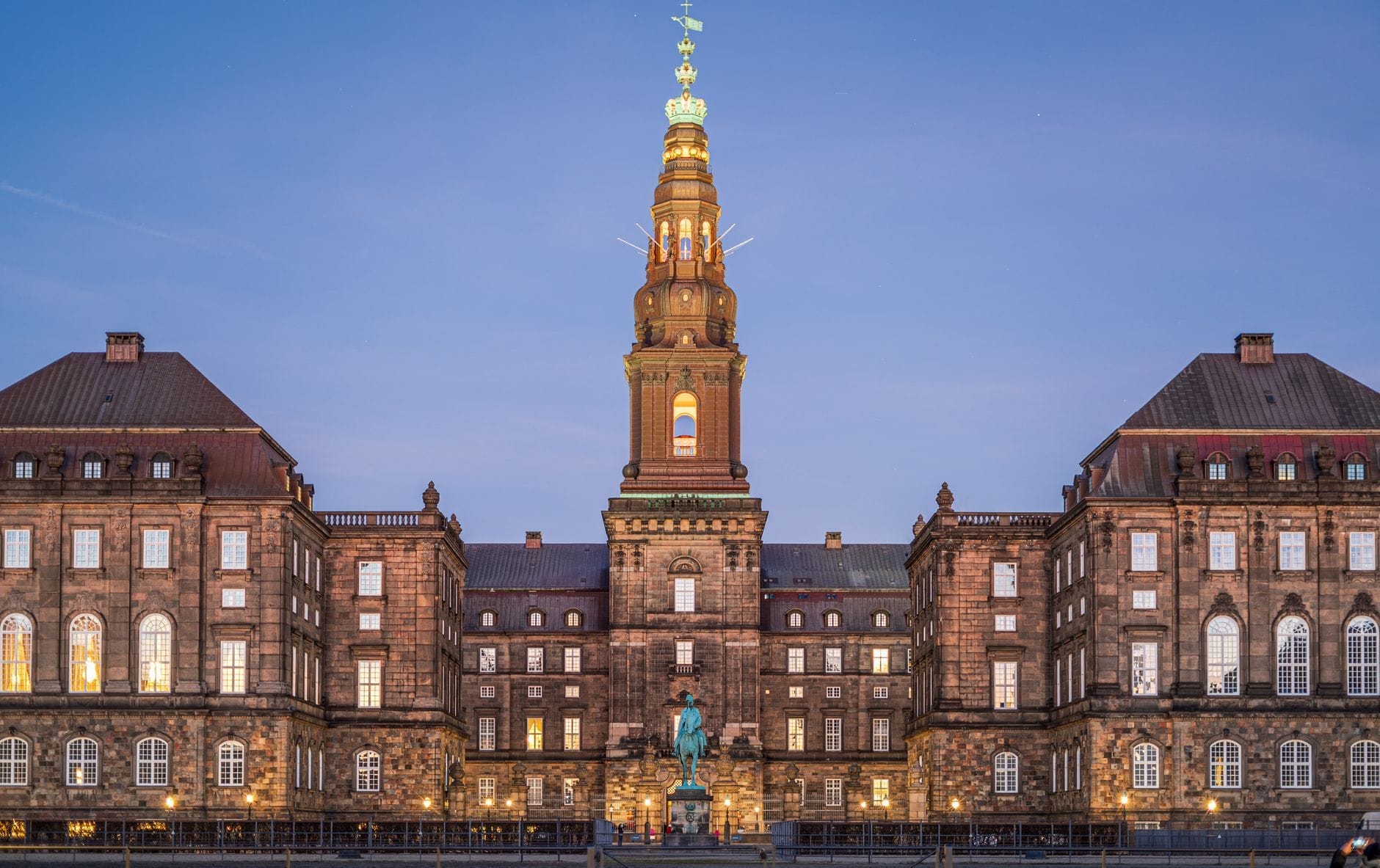
Christiansborg Palace sits on the Slotsholmen islet in central Copenhagen, serving simultaneously as the home of the Danish Parliament, the Supreme Court, the Prime Minister's Office, and the Royal Reception Rooms. It is widely described as uniquely housing all three branches of Denmark’s national government under one roof, and its 106-metre tower offers one of the best free panoramic views in the city.
Quick Facts
- Location
- Prins Jørgens Gård, Slotsholmen islet, Indre By, Copenhagen
- Getting There
- Walkable from central Copenhagen; served by central-city buses. Nearest metro: Gammel Strand (M3/M4), then ~5–7 min walk; Kongens Nytorv (M1/M2) is around a 10 min walk.
- Time Needed
- 1.5–3 hours for a thorough visit; 30 min if tower only
- Cost
- Tower: free. Combi ticket (Christiansborg Palace visitor areas, including Royal Reception Rooms, ruins, stables and more): 215 DKK adults; children under 18 free with paying adult. Prices subject to change — verify before visiting.
- Best for
- History lovers, architecture fans, first-time visitors wanting city views without paying for them
- Official website
- denkongeligesamling.dk/en/christiansborg-palace
What Christiansborg Palace Actually Is
Christiansborg Palace (Christiansborg Slot in Danish) is not a museum dressed up as a palace, nor a palace turned into a tourist attraction. It is a fully functioning seat of government. The Danish Parliament, the Folketing, meets here. The Supreme Court issues rulings here. The Prime Minister's Office occupies the south wing. And when the Danish monarch hosts heads of state, it happens in the Royal Reception Rooms on the piano nobile. Understanding this before you arrive completely changes how you read the building.
This combination — legislature, judiciary, executive, and royal ceremonial functions all in one address — is genuinely rare. It is widely cited as a unique building that houses all three branches of a national government simultaneously, alongside a royal residence. For a traveler with limited time, that functional density is part of the pitch: one building, one ticket, layers of Danish history going back over 800 years.
💡 Local tip
The tower is free and typically operates without paid timed-entry tickets — a significant value proposition in a city where most viewpoints charge admission. If your time is short, head straight to the tower first.
Eight Centuries on One Islet
The Slotsholmen islet has been the political and military nucleus of Copenhagen since Bishop Absalon built a fortress here in 1167. That fortress was demolished and replaced by Copenhagen Castle, which itself was cleared away when King Christian VI ordered the construction of the first Christiansborg Palace, built between 1733 and 1745. Fire destroyed it in 1794. A second palace rose in its place, completed in 1828 under Frederik VI, and burned again in 1884. The third and current structure was built between 1907 and 1928, its cornerstone laid by Frederik VIII and its inauguration presided over by Christian X.
The current palace is a heavyweight example of Neo-baroque architecture with earlier Baroque and Neoclassical influences, designed by Thorvald Jørgensen. The exterior is clad in grey granite from the island of Bornholm, giving it a solidity that reads as deliberate and serious rather than decorative. The 106-metre copper-topped tower is the tallest in Copenhagen, and visible from multiple points across the city centre and harbour.
What sits beneath the current building is equally compelling. Excavations have exposed the foundations of Bishop Absalon's original fortress and the medieval castle that followed it. These ruins are now a permanent exhibition below the palace, one of the most atmospheric archaeological spaces in Denmark, where raw stone foundations sit in dim light and interpretive panels walk visitors through the site's layered past.
Tickets & tours
Hand-picked options from our booking partner. Prices are indicative; availability and final rates are confirmed when you complete your booking.
Christiansborg Palace private walking tour
From 55 €Instant confirmationFree cancellation1-hour boat harbour tour in Copenhagen
From 26 €Instant confirmationFree cancellationSmall group 3-hour walking tour in Copenhagen
From 45 €Instant confirmationFree cancellationCopenhagen to Malmo one-day tour
From 56 €Instant confirmationFree cancellation
What You Can Actually Visit
The palace divides into several separately ticketed or free sections, and it helps to know which is which before you queue.
The Tower (Free)
Access is free and open to visitors during regular hours. The ascent involves a lift for most of the height, with a final spiral staircase to the open platform. At the top, the view takes in the copper rooflines of the old city, the spire of the Church of Our Saviour across the canal in Christianshavn, the harbour mouth, and on clear days, the Swedish coast beyond Øresund. The platform wraps around all four sides, so you get a full 360-degree read of the city's geography. Mornings tend to offer softer light and fewer visitors; late afternoons in summer see queues at the base.
The Royal Reception Rooms
These are the formal state rooms used by the Danish Royal Family for official ceremonies and diplomatic functions. Visiting them requires a ticket, and guided tours run in multiple languages. The rooms are furnished and decorated to a high ceremonial standard: Flemish tapestries commissioned in the 20th century, massive chandeliers, painted ceilings, and formal furniture arranged as it would be for use. The tapestry series depicting Danish history, completed in the 1990s, is particularly worth noting — it took decades to complete and is considered among the most significant textile commissions in Danish modern history.
The Ruins
The underground ruins exhibition is often the section that surprises visitors most. You descend below the current palace floor level to walk among the stone remains of Absalon's fortress and the medieval castle, with the original well and tower foundations clearly visible. The space is cool, quiet, and genuinely evocative, especially if you arrive just after opening when few people are present.
The Royal Stables and Coaches
The stables wing houses historical carriages and equestrian equipment used by the royal household. It is a niche interest but well-presented, and still an active facility — horses are stabled here for ceremonial use. The smell of a working stable is notably present, which either adds atmosphere or detracts from it depending on your perspective.
A combination ticket covering the Royal Reception Rooms, the ruins, and the stables costs 215 DKK per adult as of the most recently available pricing; children under 18 enter free with a paying adult. Prices are subject to change, so confirm on the official visitor page or at the palace box office before your visit. The Copenhagen Card covers entry to the Royal Reception Rooms and the ruins, which can represent a useful saving if you are already visiting multiple paid attractions.
How the Experience Changes Through the Day
Christiansborg opens at 10:00 (with closing generally at 17:00) and the early hour is genuinely the better choice. The Slotsholmen islet at 10:00 on a weekday morning is quiet enough that you can hear pigeons on the cobblestones and the low sound of canal water. The formal forecourt, framed by the palace's symmetrical granite wings, is largely empty of tourist groups at this hour, and the morning light on the grey stone is flatter and more photogenic than the harsh midday sun.
By midday the coach tours arrive, and the main entrance hall and tower queue fill considerably. The Royal Reception Rooms handle this better than the ruins, where the narrow passages become congested with guided groups. The stables are consistently quieter throughout the day and can serve as a useful escape if you want to slow down.
Late afternoon, particularly in summer, produces the best light from the tower. The sun angles from the northwest, illuminating the harbour and Christianshavn, and the city takes on a warmer colour. However, this is also when the tower queue is at its longest. In winter, the tower closes earlier on some days — check current hours before visiting.
⚠️ What to skip
Opening hours and specific section schedules can vary by season and date. Always check current times for each area (tower, Royal Reception Rooms, ruins, stables) before you go. The sections do not always share identical hours.
Practical Walkthrough and Getting There
Slotsholmen is an islet connected to the rest of Indre By by several short bridges. From Strøget, Copenhagen's main pedestrian axis, it is roughly a 10-minute walk southwest. From Kongens Nytorv metro station (M1 and M2 lines), the walk takes around 10 to 12 minutes along Holmens Kanal, while Gammel Strand station (M3 and M4) is slightly closer. Central-city buses also stop close by on the surrounding streets.
The palace sits within easy walking distance of several other major Indre By landmarks, making it natural to combine with a visit to Thorvaldsens Museum immediately adjacent on the islet, or with Ny Carlsberg Glyptotek a short walk to the southwest. The National Museum of Denmark is also within a five-minute walk, making the Slotsholmen area one of the densest concentrations of serious cultural institutions in the city.
For photography, the canal-facing south side of the palace offers reflections in calm morning conditions. The main forecourt, entered from the north through Rigsdagsgården, provides the formal symmetrical shot most associated with the building. A wider view of the tower can be captured from the Marmorbroen (Marble Bridge) to the west. Bring a wide-angle lens if the architecture is your primary interest.
Accessibility: the palace indicates lifts and adapted routes for visitors with mobility requirements. Wheelchair access to the tower and to the ruins requires specific route planning; the ruins in particular involve uneven surfaces. Contact the palace or check the official visitor website for current accessibility details before your visit.
ℹ️ Good to know
Cameras and phones are generally permitted in the public visitor areas, but photography rules may differ inside the Royal Reception Rooms when they are in active ceremonial preparation. Follow posted signage inside.
Who Should Temper Their Expectations
Visitors who come primarily for royal glamour may find Christiansborg underwhelming compared to, say, the smaller Rosenborg Castle, which holds the actual Crown Jewels and has more intimate room-by-room storytelling. Christiansborg's Royal Reception Rooms are formal and large-scale, calibrated for state ceremony rather than human-scale narrative. If your interest is in Danish royal life on a more personal level, Rosenborg or Amalienborg may resonate more.
If the tower is your only goal, it is free and worth the trip, but do not overestimate the experience: the platform is open but not especially wide, and the views, while excellent, are partially obstructed in some directions by the tower superstructure. For a different kind of elevated view in Copenhagen, the spire of Church of Our Saviour in Christianshavn offers an external corkscrew staircase that is a more physically dramatic experience.
Children who are not specifically interested in history or architecture will likely find the building itself less engaging than, say, the hands-on exhibits elsewhere in the city. That said, the ruins are often unexpectedly popular with children due to the underground setting and the visible medieval stonework.
Insider Tips
- The tower opens at 10:00 and early arrivals rarely wait more than a few minutes. By 12:00 on summer weekends, queues can stretch 30 minutes or more. Plan accordingly.
- The ruins are coolest — literally — in summer, making them a useful mid-afternoon refuge. They are also significantly quieter than the tower or the reception rooms.
- The Marble Bridge (Marmorbroen) on the west side of the palace is one of the least-photographed vantage points in the area. It offers an unobstructed side view of the tower and the granite facade without tour groups in the frame.
- Parliament is in session for most of the parliamentary year, typically from early October to early June. During session periods, the Folketing's public gallery is open to visitors for free — a genuinely unusual chance to observe a working Nordic legislature. Check the Folketing's website for current session schedules.
- The café inside the palace complex is a reasonable spot for a mid-visit break, but the canal-facing benches just outside on the Slotsholmen islet are a better option in good weather and cost nothing.
Who Is Christiansborg Palace For?
- First-time Copenhagen visitors wanting to understand the city's political and royal history in one place
- Architecture enthusiasts interested in Danish National Romantic granite construction
- Travelers on a budget seeking the city's best free panoramic view
- History-focused visitors drawn to the medieval ruins beneath the current building
- Anyone combining multiple Indre By cultural institutions in a single day
Nearby Attractions
Other things to see while in Indre By (Old Town):
- Amalienborg Palace
Amalienborg is the official home of the Danish royal family and one of Copenhagen's most architecturally coherent ensembles. Four near-identical Rococo palaces frame a grand octagonal square, with the Amalienborg Museum open to visitors inside Christian VIII's Palace. The daily changing of the guard at noon is a punctual, unhurried ceremony worth timing your visit around.
- The Black Diamond
The Black Diamond is the modern extension of the Royal Danish Library, clad in polished black granite and angled toward the harbour on Slotsholmen. Entry is free, the atrium is genuinely impressive, and the building rewards visitors who take time to understand what they are looking at.
- Botanical Garden of the University of Copenhagen
Tucked behind Nørreport Station in the heart of the city, the Copenhagen University Botanical Garden is a 10-hectare green sanctuary with a Victorian glasshouse complex, a tranquil lake, and around 8,000 plant species. Entry to the grounds is free, making it one of the most rewarding stops in central Copenhagen for any pace of traveler.
- City Hall Square (Rådhuspladsen)
Rådhuspladsen is the great open plaza at the centre of Copenhagen — free, open at all hours, and framed by one of Scandinavia's most photogenic town halls. Whether you arrive at rush hour or midnight, the square reads the mood of the city back to you.