Church of Our Saviour: Copenhagen's Spiral Spire Worth the Climb
Vor Frelsers Kirke in Christianshavn is one of Copenhagen's most recognizable landmarks, its black-and-gold helical spire rising high above the canal district (the whole tower reaches about 90 metres). The church interior is free to enter, while the tower climb rewards visitors with some of the finest rooftop views in the city.
Quick Facts
- Location
- Skt. Annæ Gade 29, Christianshavn, Copenhagen
- Getting There
- Christianshavn Metro Station (M1/M2), approx. 3-minute walk
- Time Needed
- 45–90 minutes (church + tower climb)
- Cost
- Church interior free; Tower: from 70 DKK adults, from 20 DKK under 15; free with Copenhagen Card
- Best for
- Panoramic city views, Baroque architecture, photography
What Makes This Church Worth Your Time
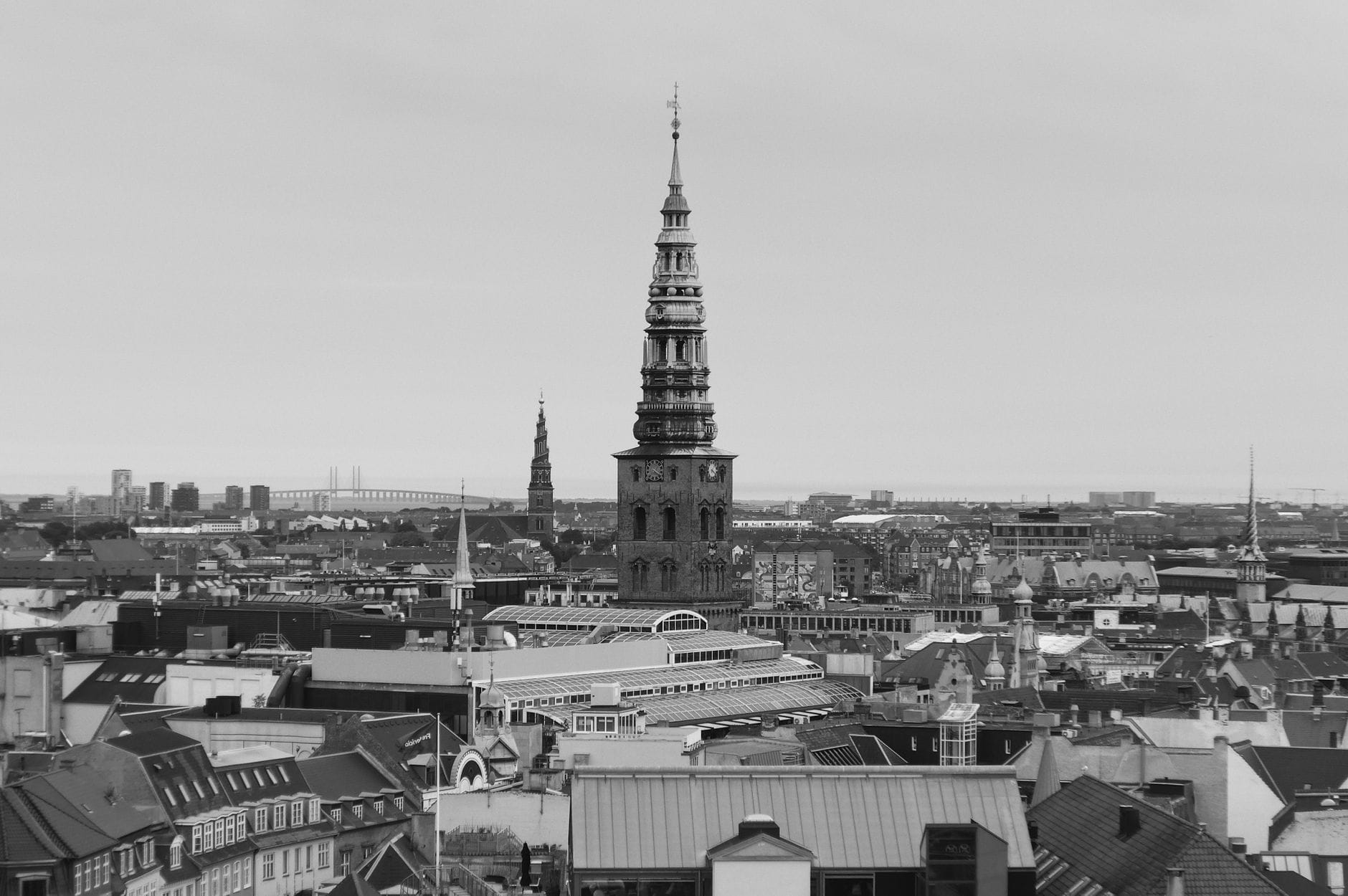
The Church of Our Saviour, known in Danish as Vor Frelsers Kirke, earns its place on Copenhagen's skyline through sheer architectural audacity. The helical spire that corkscrews counter-clockwise around the tower four times before terminating in a gilded globe is not a digital rendering or a modern flourish — it was completed in 1752 and has been turning heads ever since. At roughly 90 metres tall overall, the black-and-gold tower is visible from considerable distances across the low-lying city, and the view from its open external staircase looks back over Christianshavn's canals, the copper rooftops of the old city, and on clear days, the Swedish coast.
The church itself was consecrated on 19 April 1696 after 14 years of construction, built during the 1680s under the patronage of Christian V. What stands today is a Dutch Baroque building in red brick, a style that reflects the strong Dutch influence on Christianshavn's urban design — the entire district was, after all, modelled on Amsterdam's canal grid. The tower and its external spiral staircase were added decades later, in 1752, and represent a separate architectural statement entirely: theatrical, almost defiant, and completely unlike anything else in Denmark.
💡 Local tip
The tower is open daily 09:00–20:00 from 1 February to 23 December 2026, but closes temporarily in rain, snow, or strong wind for safety. Check conditions before making it your only morning plan.
Inside the Church: The Free Half That Most Visitors Rush Past
The interior of Vor Frelsers Kirke is open free of charge, typically from 11:00 to 15:30 daily, though it closes for sightseeing during services and special events. Most visitors sprint through on their way to the tower, which is a missed opportunity. The interior is a study in restrained Baroque drama: high white vaulting, clear windows that flood the nave with northern light, and a monumental pipe organ supported by two elephants — a reference to the Danish Order of the Elephant, the kingdom's highest order of chivalry. The church serves an active congregation, and you may catch the faint smell of candle wax near the altarpiece on busier mornings.
The ground floor is fully accessible and worth at least 15 minutes of genuine attention. Look up at the organ loft before heading to the tower queue — the craftsmanship is extraordinary. For more of Copenhagen's ecclesiastical architecture, the nearby Frederiks Church (the Marble Church) offers a contrasting experience in a very different scale and style.
Tickets & tours
Hand-picked options from our booking partner. Prices are indicative; availability and final rates are confirmed when you complete your booking.
1-hour boat harbour tour in Copenhagen
From 26 €Instant confirmationFree cancellationSmall group 3-hour walking tour in Copenhagen
From 45 €Instant confirmationFree cancellationCopenhagen to Malmo one-day tour
From 56 €Instant confirmationFree cancellationFull-day tour to Forest Tower and Forgotten Giants from Copenhagen
From 110 €Instant confirmationFree cancellation
The Tower Climb: What 400 Steps Actually Feels Like
The climb to the top of the Church of Our Saviour spire is not casual sightseeing. The ascent of about 400 steps begins inside the tower in a conventional spiral staircase that is dark, tight, and steep. As you rise, the staircase narrows and the wooden steps begin to creak in a way that reminds you this structure is nearly three centuries old. Around two-thirds of the way up, you exit through a small door onto the external staircase that winds up the outside of the spire itself.
This is where the experience becomes genuinely memorable — and where it becomes difficult for some visitors. The external steps are narrow, exposed, and wind upward at an increasingly steep angle as the spire tapers toward the top. There is a railing, but the staircase is open to the air on both sides. On calm, clear days, the exposure feels thrilling. In wind, it feels formidable. The steps also narrow toward the very top, and the final section to the golden globe requires a degree of nerve that not everyone will have. Visitors with a fear of heights should consider seriously whether the external section is for them — the internal viewing area offers a reasonable partial view for those who prefer to stop there.
⚠️ What to skip
The external spiral staircase is not suitable for visitors with significant mobility limitations, vertigo, or fear of heights. Children must be supervised closely. The steps are open to wind and weather; a jacket is sensible even in summer.
The descent uses the same staircase in reverse, which can create bottlenecks when traffic is heavy in both directions. Mid-morning on weekdays tends to see the lightest foot traffic. Weekends in July and August can create noticeable queues at the tower entrance, particularly between 11:00 and 14:00.
The View from the Top: What You Actually See
From the upper section of the external staircase and the platform near the globe, the panorama over Copenhagen is genuinely outstanding. To the north and west, the old city fans out across the water: Christiansborg Palace, the copper spires of the Cathedral, the roofline of the Royal Danish Theatre, and the green belt of the King's Garden are all identifiable with no specialist knowledge required. The Øresund strait is visible to the east, with the Swedish coastline apparent on clear days. Directly below, the canals of Christianshavn trace their neat grid, and you can pick out the green copper roof of the Copenhagen Opera House on Holmen.
For photography, midday light in summer can be harsh and flatten the cityscape. The most rewarding conditions are early morning (when the tower opens at 09:00 and crowds are thin) or late afternoon, when the low-angle light catches the canal water and the copper rooftops take on a warmer tone. The Christianshavn neighbourhood directly below is particularly photogenic from above, the canal geometry making immediately clear why it was modelled on Amsterdam.
Getting There and Timing Your Visit
Christianshavn Metro Station on the M1 and M2 lines is the most direct approach, approximately three minutes on foot from the church entrance. From the station, follow Torvegade east and turn right onto Skt. Annæ Gade — the spire will already be visible above the roofline. Cycling is also practical: Christianshavn has good cycling infrastructure, and the church is an easy ride from most of central Copenhagen.
The tower is open daily from 09:00 to 20:00 (1 February to 23 December 2026). Arriving at or shortly after 09:00 on a weekday gives you the best combination of light, minimal crowds, and the particular quiet of early-morning Christianshavn before the canal-side cafés fill up. If you hold a Copenhagen Card, tower entry is included free of charge with pre-booking — select the Copenhagen Card option when reserving. Standard adult tickets are 70 DKK; children under 15 pay 20 DKK.
The church interior is typically open 11:00 to 15:30, but closes during services. If you arrive before 11:00 to beat the tower crowds, the interior may not yet be accessible — check the official site before planning a combined visit.
Christianshavn as Context: The District Makes the Visit
Vor Frelsers Kirke does not stand in isolation. Christianshavn is one of Copenhagen's most walkable and architecturally coherent districts, and the church visit pairs naturally with an exploration of the surrounding canals and streets. A 10-minute walk south brings you to Freetown Christiania, the self-governing community that occupies the old military barracks and represents a completely different chapter of Copenhagen's social history. In the other direction, the waterfront walk north toward Knippelsbro offers views back toward the spire from below.
The neighbourhood also puts the church's Dutch Baroque architecture in sharp visual context. The canal grid, the brick warehouses converted to apartments, the drawbridges over narrow waterways — all of it reflects the 17th-century Dutch town-planning that shaped Christianshavn's original layout. This makes it one of the more architecturally coherent areas in Copenhagen for anyone interested in urban form. For a wider look at Copenhagen's design and architectural heritage, the Copenhagen design and architecture guide covers the broader context.
ℹ️ Good to know
The church is an active parish. Sightseeing is not permitted during services. If you arrive to find the interior closed, check the notice board at the entrance for the day's service schedule.
Insider Tips
- Arrive at tower opening (09:00) on a weekday for the lightest crowds and the clearest morning light over the canal district. By 10:30, tour groups from nearby cruise ships begin arriving.
- The descent is on the same staircase as the ascent, which creates traffic jams when the tower is busy. If you reach the top and find a backup forming, wait a few minutes at the top platform before starting down — it moves quickly.
- The external staircase narrows significantly near the gold globe at the very top. If you are hesitant about heights, the internal viewing level about two-thirds of the way up still offers a worthwhile view and avoids the most exposed section.
- Vor Frelsers Kirke is an active church, not just a tourist attraction — if you visit on a Sunday morning, you may be able to attend a service and hear the remarkable pipe organ, which is one of the finest in Denmark.
- Photography from the tower looks best when you shoot diagonally across the canal grid toward the city centre rather than straight down — this captures both the canal geometry of Christianshavn and the copper spires of the old city in a single frame.
Who Is Church of Our Saviour For?
- Travellers who want a genuinely elevated city perspective without the price of a commercial observation deck
- Architecture enthusiasts interested in Dutch Baroque and Copenhagen's 17th-century urban development
- Photographers seeking rooftop views with architectural interest rather than a glass-box platform
- Visitors combining a Christianshavn half-day with Freetown Christiania and the canal waterfront
- Copenhagen Card holders looking to maximise included attractions near the city centre
Nearby Attractions
Other things to see while in Christianshavn:
- Copenhagen Opera House
The Copenhagen Opera House is one of the most architecturally striking buildings in Denmark, a 41,000-square-meter landmark sitting directly on the Holmen waterfront. Whether you come for a performance, a guided tour, or simply to take in the exterior from across the harbor, it rewards a closer look.
- Freetown Christiania
Freetown Christiania is a car-free, self-governing community of roughly 900 residents occupying about 7.7 hectares of former military land in Christianshavn. Founded in 1971, it operates outside standard Danish norms — with its own rules, its own architecture, and an atmosphere unlike anything else in the city. Entry is free and open to visitors.