Copenhagen Opera House: Architecture, Performances, and How to Visit
The Copenhagen Opera House is one of the most architecturally striking buildings in Denmark, a 41,000-square-meter landmark sitting directly on the Holmen waterfront. Whether you come for a performance, a guided tour, or simply to take in the exterior from across the harbor, it rewards a closer look.
Quick Facts
- Location
- Ekvipagemestervej 10, Holmen, Copenhagen
- Getting There
- Bus lines to Holmen; ferry from Nyhavn (Inderhavnsbroen footbridge also walkable)
- Time Needed
- 1–2 hours for a guided tour; 3+ hours for an evening performance
- Cost
- Exterior free; guided tours and performance tickets vary — check kglteater.dk for current prices
- Best for
- Architecture lovers, opera and classical music fans, design-focused travelers
What the Copenhagen Opera House Actually Is
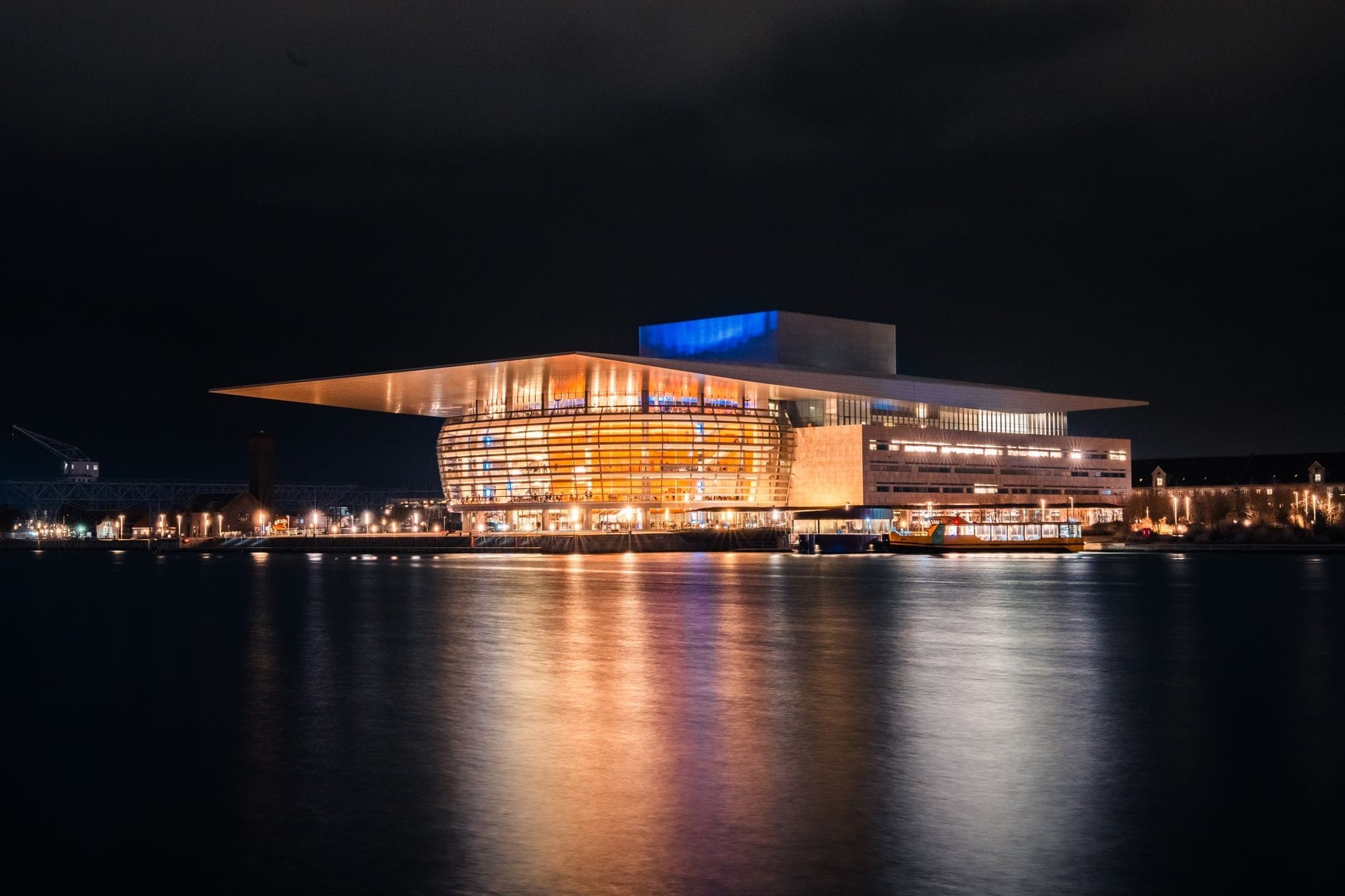
The Copenhagen Opera House, officially known in Danish as Operaen and part of Det Kongelige Teater (the Royal Danish Theatre), is Denmark's national opera venue. Designed by architect Henning Larsen and completed in 2004, it sits on the Holmen peninsula on the eastern harbor, directly across the water from Amalienborg Palace. The building totals 41,000 square meters across 14 stories, five of which are underground, and the main auditorium seats 1,400 people.
It is one of the most expensive opera houses ever built, funded in large part by the A.P. Møller and Chastine Mc-Kinney Møller Foundation, and it opened to considerable public debate about both the gift itself and the architectural choices. That tension is worth knowing before you visit: the building is simultaneously celebrated as a landmark and criticized for its relationship to the surrounding waterfront. Coming with that context makes the experience richer.
ℹ️ Good to know
The Opera House is part of the Royal Danish Theatre organization, which also operates the Old Stage and Playhouse elsewhere in the city. Booking for performances and guided tours is centralized at kglteater.dk.
The Architecture: What to Look For
Henning Larsen's design is best understood as a building in conversation with the water. The main hall is enclosed in a vast glazed facade, and the most distinctive feature from the outside is the enormous flat cantilevered roof that extends roughly 32 meters over the entrance. It reads differently depending on the light: in overcast Danish midwinter, the whole structure looks like brushed aluminum; on a clear summer evening, the glass reflects copper tones off the harbor.
The alignment of the building is intentional and worth paying attention to. The central axis runs directly from the entrance through the auditorium and across the water to the courtyard of Amalienborg Palace, creating a sightline between the two royal institutions. On the summer solstice, the sun sets precisely along this axis, flooding the foyer with light. Whether you consider this elegant or ceremonially overwrought probably determines your overall reaction to the building.
The interior, visible on a guided tour, continues the precision: oak paneling, hand-woven curtains, and a ceiling in the main auditorium made of 105,000 pieces of 24-carat gold leaf. For travelers interested in how Danish design thinking applies to public buildings at scale, this connects directly to the broader story told at the Danish Architecture Center just across the harbor on the Christianshavn side.
Tickets & tours
Hand-picked options from our booking partner. Prices are indicative; availability and final rates are confirmed when you complete your booking.
1-hour boat harbour tour in Copenhagen
From 26 €Instant confirmationFree cancellationSmall group 3-hour walking tour in Copenhagen
From 45 €Instant confirmationFree cancellationCopenhagen to Malmo one-day tour
From 56 €Instant confirmationFree cancellationFull-day tour to Forest Tower and Forgotten Giants from Copenhagen
From 110 €Instant confirmationFree cancellation
Visiting the Exterior: Free and Worth the Walk
You do not need a ticket to appreciate a significant part of what the Opera House offers. The building sits on a publicly accessible waterfront promenade, and the approach from the harbor, either by the Inderhavnsbroen footbridge from Nyhavn or by the passenger ferry that crosses the inner harbor, gives you a sequence of views that no photograph quite captures. The scale of the canopy only becomes apparent when you are standing beneath it.
Mornings on weekdays are quiet here. The plaza is largely empty, the light is low and horizontal in winter months, and you can walk the full width of the building without navigating crowds. Evenings before a performance are the opposite: taxis arrive, formally dressed audiences gather on the forecourt steps, and the glass facade glows from within. Both are worth experiencing if your schedule allows.
💡 Local tip
The harbor ferry (Havnebussen) stops at the Opera House. Current Movia harbor bus lines 901, 902, and 903 connect Nordre Toldbod near The Little Mermaid and Nyhavn with Holmen. It is the most atmospheric way to arrive, and the harbor approach shows you why the siting of the building was such a considered decision.
Guided Tours: What to Expect
Guided tours of the interior are available and give access to spaces that are otherwise closed unless you attend a performance: the main auditorium, backstage areas, rehearsal rooms, and technical facilities. The scale of the backstage operation is genuinely surprising even to visitors who have been to other major opera houses. The stage machinery alone extends several floors underground.
Tours are conducted in English and Danish and typically last around an hour. Tour availability follows the performance calendar, which means some dates are unavailable when the building is in full production mode. Check the Royal Danish Theatre website well in advance and book early if you are visiting during the main season, which generally runs from late summer through spring. Exact tour schedules and current prices are listed at kglteater.dk.
⚠️ What to skip
Tour availability is limited and can sell out weeks in advance, particularly on weekends and during school holidays. Do not assume you can turn up and join a tour on the day.
Attending a Performance
If you have any interest in opera or classical music, attending a performance here is worth planning around. The acoustics of the main hall are considered among the best in Europe for the form, and the sight lines from most seats are genuinely good. The Royal Danish Opera performs a full season of international and Danish works, and the programming typically includes both established repertoire and newer productions.
Dress code is relaxed by European opera house standards. You will see everything from formal evening wear to smart casual on any given night, and nobody will look at you sideways for wearing something between the two. Arrive at least 30 minutes before curtain: the foyer bars and the view across the harbor at dusk are part of the experience, not an afterthought.
Performance tickets range considerably in price depending on seat category and production. If budget is a factor, check the Royal Danish Theatre website for last-minute availability and discounted tickets. The Copenhagen Card does not cover Opera House performances, so this is a separate budget consideration when planning your trip.
Getting There and Getting Around
The Opera House is on Holmen, a former naval island that sits between Christianshavn and the open harbor. It is not directly served by the Metro, which is the most important practical note for first-time visitors who assume Copenhagen's otherwise excellent transit network reaches everywhere. The most direct options are the harbor ferry, bus services to Holmen, or a 20-minute walk from the Christianshavn Metro station via the Inderhavnsbroen footbridge.
The walk through Christianshavn is pleasant and passes several of the neighborhood's highlights on the way. If you are combining the Opera House with a visit to Church of Our Saviour or a walk along the Christianshavn canals, the route makes geographic sense and keeps the day coherent.
By bike, the approach along the harbor front from central Copenhagen is straightforward and takes around 15 minutes from Nyhavn. Copenhagen's cycle infrastructure handles this route comfortably. Parking for cars exists near the Opera House but is limited on performance evenings.
Honest Assessment: Is It Worth Your Time?
The Copenhagen Opera House is worth the effort for architecture enthusiasts, for anyone attending a performance, and for travelers who want to understand how contemporary Danish design thinking operates at civic scale. The building genuinely holds up to careful attention.
It is less compelling as a casual sightseeing stop if you are not taking a tour or attending a performance. The exterior can be seen in 20 minutes, and the plaza, while architecturally interesting, does not have the ambient energy of Copenhagen's more socially active public spaces. If your day is already full, the harbor views from Nyhavn or the Langelinie promenade give you a reasonable sense of the building's profile without a dedicated detour.
Travelers with children may find a guided tour engages older kids with an interest in theatre or engineering, but the building itself is not oriented toward families in the way that an attraction like the Experimentarium is. For a broader picture of Copenhagen's architectural highlights, the Copenhagen design and architecture guide places the Opera House in useful context alongside other landmarks.
Insider Tips
- Take the harbor ferry (Havnebussen) to the Opera House stop rather than walking from Christianshavn Metro. The approach across the water is the single best way to understand why the building's siting was so deliberate, and the ride takes under 10 minutes from Nyhavn.
- If you want photographs of the exterior without people cluttering the foreground, arrive before 9am on a weekday. The plaza is typically empty, and the morning light from the east catches the glass facade directly.
- The foyer is occasionally open to the public outside of performance and tour hours. It is worth checking — the views through the floor-to-ceiling glass across to Amalienborg are among the best harbor views in the city, and entry is free when the building is open.
- For the cheapest way into the building beyond a tour, look for lunchtime or early-evening concerts and recitals that are sometimes programmed at lower price points than full evening productions. The Royal Danish Theatre website lists the full program.
- The summer solstice alignment of the building's axis with the Amalienborg courtyard is a genuine architectural detail, not a myth. If you happen to be in Copenhagen around June 21, the sunset view from directly in front of the entrance is worth seeking out.
Who Is Copenhagen Opera House For?
- Architecture enthusiasts interested in contemporary Scandinavian public buildings
- Opera and classical music fans planning an evening performance
- Travelers on a design-focused itinerary who want to see Danish civic architecture at scale
- Photographers working on harbor and waterfront compositions
- Visitors who want a quieter, less tourist-dense Christianshavn experience away from the main canal
Nearby Attractions
Other things to see while in Christianshavn:
- Church of Our Saviour
Vor Frelsers Kirke in Christianshavn is one of Copenhagen's most recognizable landmarks, its black-and-gold helical spire rising high above the canal district (the whole tower reaches about 90 metres). The church interior is free to enter, while the tower climb rewards visitors with some of the finest rooftop views in the city.
- Freetown Christiania
Freetown Christiania is a car-free, self-governing community of roughly 900 residents occupying about 7.7 hectares of former military land in Christianshavn. Founded in 1971, it operates outside standard Danish norms — with its own rules, its own architecture, and an atmosphere unlike anything else in the city. Entry is free and open to visitors.