Experimentarium Copenhagen: What to Expect at Denmark's Leading Science Center
Located in Hellerup, about 6 km north of central Copenhagen, Experimentarium is a leading interactive science center. Spread across three indoor floors and an interactive rooftop, it draws families, school groups, and curious adults with hundreds of hands-on exhibits. Named one of TIME Magazine's 100 Greatest Places in 2018, it remains a popular draw for visitors of all ages.
Quick Facts
- Location
- Tuborg Havnevej 7, Hellerup (approx. 6 km north of central Copenhagen)
- Getting There
- S-train to Hellerup or Svanemøllen, then bus 1A; or Metro M3 to Poul Henningsens Plads, then bus 1A to Tuborg Boulevard (Strandvejen)
- Time Needed
- 3–5 hours; families with young children often stay a full day
- Cost
- Adults 255 DKK, children (3–11) 159 DKK, under-3 free; 10% discount for online bookings; Copenhagen Card accepted for standard admission
- Best for
- Families with children, science enthusiasts, rainy-day visits
- Official website
- www.experimentarium.dk/en
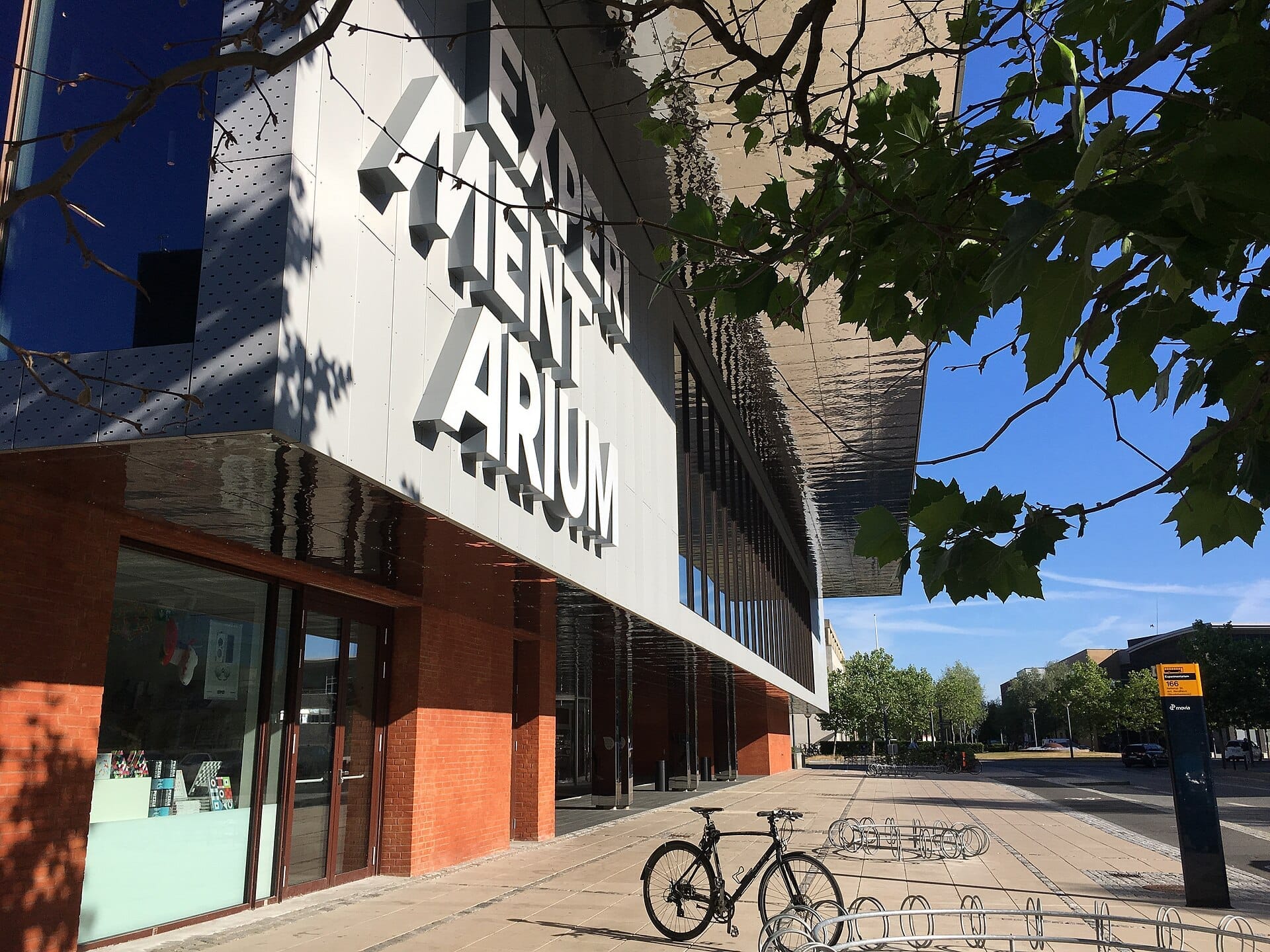
What Experimentarium Actually Is
Experimentarium is Denmark's flagship interactive science center, occupying a purpose-built facility at Tuborg Havnevej 7 in the Hellerup district of northern Copenhagen. The current building opened on 26 January 2017 following a complete redevelopment. The result is a striking waterfront structure with three indoor floors of hands-on exhibits and an interactive rooftop terrace, all oriented toward making science tangible rather than theoretical.
The center's focus is participation, not passive display. You won't find many cases of labeled objects behind glass. Instead, the exhibits ask visitors to blow giant soap bubbles, test reaction times, explore the physics of sound and light, and examine how the human body works. The philosophy is closer to a science playground than a conventional museum, which is both its greatest strength and a useful signal for the type of visitor who will get the most from it.
💡 Local tip
Book tickets online before you visit. The official site offers a 10% discount over door prices, and weekend queues at the ticket counter can add 15–20 minutes to your arrival.
The Exhibits: Three Floors and a Rooftop
The interior is organized thematically across floors, covering areas like the human body, ecology, technology, and physical science. The exhibits are designed to be manipulated: you adjust, press, push, and observe, then read a short explanation of what just happened. Text panels are available in both Danish and English, which matters for international visitors with school-age children.
The lower levels tend to attract younger children drawn to larger physical installations, water features, and body-sized interactive stations. Upper floors engage slightly older visitors with more conceptual experiments around energy, climate, and perception. The rooftop adds an outdoor dimension, with wind and weather-related exhibits that perform very differently on a breezy autumn afternoon than on a still summer morning. On clear days the views across the Øresund toward Sweden are a genuine bonus.
Some of the most consistently popular areas involve human biology: exhibits where you see your own skeleton, test your grip strength against age-group averages, or track how your balance works. These sections draw clusters of visitors throughout the day, so if you arrive around 10:30 on a weekday school trip day, expect noise and competition for the more popular stations. Arriving at 09:30 when the doors open gives you a noticeably quieter first hour.
ℹ️ Good to know
School group bookings are heavy on weekday mornings, particularly during term time in autumn and spring. If you're visiting without children and prefer a calmer pace, aim for weekday afternoons or weekend mornings.
Tickets & tours
Hand-picked options from our booking partner. Prices are indicative; availability and final rates are confirmed when you complete your booking.
1-hour boat harbour tour in Copenhagen
From 26 €Instant confirmationFree cancellationSmall group 3-hour walking tour in Copenhagen
From 45 €Instant confirmationFree cancellationCopenhagen to Malmo one-day tour
From 56 €Instant confirmationFree cancellationFull-day tour to Forest Tower and Forgotten Giants from Copenhagen
From 110 €Instant confirmationFree cancellation
Getting There from Central Copenhagen
Experimentarium sits in Hellerup, a residential coastal district that most tourists don't pass through on a standard Copenhagen itinerary, so the journey requires a small effort. The S-train is the most straightforward option: lines A, C, E, and F stop at Hellerup Station, from where bus 1A or 21 connects to Tuborg Boulevard. Alternatively, S-trains on lines A, B, C, E, and H stop at Svanemøllen Station, also within bus 1A range. Total travel time from central Copenhagen is typically 25–35 minutes door to door.
Metro users can take the M3 to Poul Henningsens Plads and connect to bus 1A. If you're planning a wider day in Copenhagen, the Copenhagen Card covers both public transport and free entry to Experimentarium, making it worth calculating against separate ticket costs, especially for families paying full price for multiple adults and children.
Cycling is a practical alternative if you're comfortable on Copenhagen's roads. Dedicated cycle lanes run north from Østerbro along the waterfront to Tuborg Havnevej, and the route is mostly flat and well-marked. The ride from the city centre takes around 20–25 minutes. Bike parking is available outside the entrance. Drivers can use underground parking beneath the building or the adjacent Waterfront shopping center, which offers the first two hours free.
Visiting Hours and Seasonal Considerations
Experimentarium is open daily from 09:30 to 17:00, including weekends and public holidays. Experimentarium is open daily from 09:30 to 17:00, with special holiday hours on 24 and 31 December, when closing time moves to 14:00.
For families visiting in summer, Experimentarium is particularly useful as a weather contingency. Copenhagen's summer weather is often pleasant but unpredictable, and a full indoor program that engages children for three to five hours is worth knowing about before a grey afternoon closes in. In October and through winter, when outdoor attractions lose their appeal, the center becomes one of the more reliable ways to spend half a day productively.
⚠️ What to skip
The rooftop exhibits are weather-dependent. On windy or rainy days they may be partially closed or less enjoyable. Plan your visit around the indoor floors as your primary experience.
Honest Assessment: Who This Works For
Experimentarium's design priority is children aged roughly 3 to 14, and it succeeds well within that range. The combination of physical interactivity, accessible explanations, and scale gives younger visitors a full program with very little standing around. Adults accompanying children will find enough to engage with between following their group, though adults visiting without children may find the pace and noise level less than ideal after about 90 minutes.
Visitors primarily interested in art, history, or the design traditions that define Copenhagen as a cultural destination are probably better served elsewhere first. The National Gallery of Denmark and the Designmuseum Danmark offer more historically grounded experiences for adults without accompanying children. Experimentarium is not attempting to be those places, and the comparison is worth making clearly so travelers can allocate limited time well.
The space is wheelchair accessible, with elevators connecting all floors. The layout is generally stroller-friendly, which matters practically given the demographic that uses it most. Staff on the floor are bilingual in Danish and English as standard, so language is not a barrier for international visitors.
Practical Details Worth Knowing Before You Go
On-site catering includes a café where you can get hot food, snacks, and drinks without leaving the building, which is relevant for families managing lunch around a long visit. Prices are consistent with Copenhagen café standards, meaning they are not cheap, but the alternative of packing food is also common and there are designated areas for eating your own food.
Photography of the exhibits is generally permitted for personal use. The building itself, particularly the rooftop with its harbor views, offers decent photography conditions on clear days. If you're thinking about how Experimentarium fits into a broader Copenhagen itinerary, it pairs well with a waterfront walk along the Hellerup coast or a short onward trip to Østerbro. For a city overview, the Copenhagen with kids guide covers Experimentarium alongside other family-oriented options and helps with sequencing across multiple days.
Ticket prices at the door: 255 DKK for adults (12+), 159 DKK for children aged 3–11, and free for children under 3. Booking online saves 10%. The Copenhagen Card includes free entry and is worth comparing against standard pricing if you're visiting multiple attractions across two or more days.
Insider Tips
- Arrive at 09:30 when the doors open. The first 45 minutes are significantly quieter before school groups fill the lower floors, and the most popular body-science exhibits are free of queues.
- The rooftop is genuinely worth visiting, but check the weather before you commit to making it a centerpiece of the trip. On windy days the outdoor exhibits are less functional and the space feels exposed rather than enjoyable.
- If you're driving, the underground parking beneath the adjacent Waterfront shopping center gives two hours free. That's enough time for a short visit, but most families with children will want longer, so factor in the 20 DKK per hour charge beyond that.
- The online ticket discount (10% off door price) is processed through the official site and doesn't require advance time selection in many cases. It's a straightforward saving worth making at booking.
- Weekday afternoons in term time are generally the calmest windows. School groups typically arrive in the morning and depart by early afternoon, leaving the second half of the day less crowded for independent visitors.
Who Is Experimentarium For?
- Families with children aged 3–14 looking for a full half-day or full-day program
- Rainy or cold-weather days when outdoor Copenhagen plans fall through
- Visitors using the Copenhagen Card who want to maximize included attractions
- Parents who want an intellectually engaging environment rather than a purely entertainment-focused one
- Travelers with extra time in the Hellerup or Østerbro area who want a structured indoor option
Nearby Attractions
Combine your visit with:
- Amager Strandpark
Amager Strandpark (Amager Beach Park) is Copenhagen's largest beach, offering a total of 4.6 km of sandy shoreline along the city's southeastern coast. Free to enter and easily reached by metro, it combines a natural shoreline with a 2 km artificial island and sheltered lagoon opened in 2005, making it a genuine summer destination for locals and a quiet surprise for visitors expecting a landlocked Scandinavian capital.
- Arken Museum of Modern Art
Located on the Ishøj coastline south of Copenhagen, ARKEN Museum of Modern Art combines a dramatically sculptural building with a serious contemporary art program. The journey out of the city is part of the experience, and the landscape setting changes everything about how you engage with the art.
- Bakken
Dyrehavsbakken, known simply as Bakken, has been drawing visitors to the forests north of Copenhagen since 1583, making it the oldest operating amusement park on earth. Unlike polished theme parks, it mixes rickety roller coasters, carnival stalls, and open-air restaurants inside a UNESCO-recognized deer park, with free entry to the grounds.
- The Blue Planet – National Aquarium Denmark
The Blue Planet, Denmark's National Aquarium, sits in Kastrup on the Øresund coast with 7 million liters of water, 450 species, and a striking spiral building that's worth examining before you even step inside. This guide covers what to expect from the exhibits, the best times to visit, and how to get there without confusion.