The Blue Planet: Copenhagen's National Aquarium Explained
The Blue Planet, Denmark's National Aquarium, sits in Kastrup on the Øresund coast with 7 million liters of water, 450 species, and a striking spiral building that's worth examining before you even step inside. This guide covers what to expect from the exhibits, the best times to visit, and how to get there without confusion.
Quick Facts
- Location
- Jacob Fortlingsvej 1, 2770 Kastrup, Copenhagen, Denmark
- Getting There
- Kastrup Metro station (approx. 8-minute walk)
- Time Needed
- 2–3 hours
- Cost
- Paid entry; prices vary by age. Check denblaaplanet.dk for current rates in DKK.
- Best for
- Families, marine life enthusiasts, rainy-day visits, architecture lovers
- Official website
- denblaaplanet.dk/en
What Is The Blue Planet?
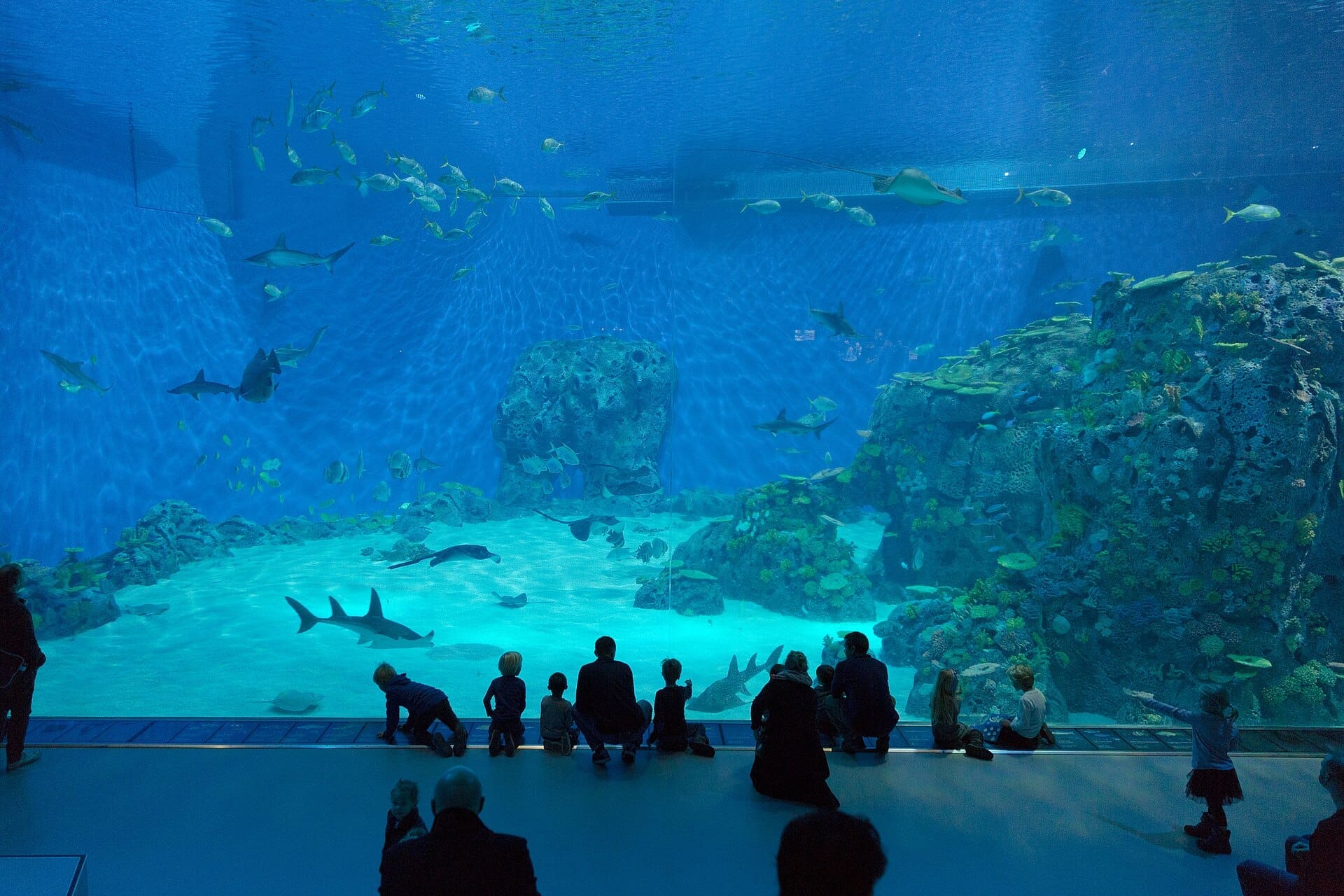
Den Blå Planet, officially the National Aquarium Denmark, is Scandinavia's largest aquarium. It opened in Kastrup in March 2013. The current building covers roughly 12,000 square meters and holds approximately 7 million liters of water spread across 53 individual exhibits. Inside, around 20,000 animals representing some 450 species are on display, from small freshwater fish to large sharks circling a large ocean tank.
The aquarium sits on the western shore of the Øresund Strait in Kastrup, the same district that contains Copenhagen Airport. The location is deliberate: the architects and curators wanted visitors to understand that the sea surrounding Denmark is not an abstract concept but a living, visible neighbor.
The Architecture: Worth Noticing Before You Go In
The building itself, designed by the Danish firm 3XN, was completed in 2013 and became an immediate reference point in Scandinavian architectural circles. Its form is based on a whirlpool or vortex, with five curved wings spiraling outward from a central hub. The facade is clad in aluminum shingles that overlap like fish scales, changing tone from silver-grey to near-white depending on light and cloud cover. On an overcast morning, it looks almost monochromatic. In low afternoon sun, the surface catches the light in small fragments.
If you arrive by the waterfront path from Kastrup Metro station, you approach the building from its most dramatic angle. Spend a few minutes walking the perimeter before entering. The structure is discussed further in our guide to Copenhagen's design and architecture, which places it in the broader context of the city's built environment.
💡 Local tip
Opening hours: check the official website for current times, as hours vary by season. The aquarium opens year-round, including public holidays, though hours are shortened on 24 and 31 December.
Tickets & tours
Hand-picked options from our booking partner. Prices are indicative; availability and final rates are confirmed when you complete your booking.
1-hour boat harbour tour in Copenhagen
From 26 €Instant confirmationFree cancellationSmall group 3-hour walking tour in Copenhagen
From 45 €Instant confirmationFree cancellationCopenhagen to Malmo one-day tour
From 56 €Instant confirmationFree cancellationFull-day tour to Forest Tower and Forgotten Giants from Copenhagen
From 110 €Instant confirmationFree cancellation
Inside the Aquarium: Moving Through the Exhibits
The interior circulation follows the building's spiral logic. You move from smaller freshwater environments toward progressively larger marine habitats, with the enormous ocean tank as the climax of the route. This progression works well: by the time you reach the main tank, your eyes have adjusted to the low ambient light that most exhibits require, and the spatial shift from intimate tunnel viewing to open two-story viewing panels feels genuinely striking.
The freshwater sections cover tropical rivers, cold Nordic streams, and rainforest zones where small fish and amphibians share carefully controlled microclimates. The humidity in the rainforest section is noticeable. Condensation forms on the viewing glass. The smell shifts between the zones in ways most aquariums avoid: earthy and warm in the freshwater tropics, cooler and faintly saline near the marine tanks.
The coral reef exhibits are among the more visually dense sections, with color contrasts that are difficult to photograph well in the dim light. The ocean tank, by contrast, is large enough to photograph effectively: sharks, rays, and large schooling fish move through a space with enough depth to create a sense of open water rather than confinement. A tunnel passes through the base of the tank, carrying visitors through slowly. Children tend to stop moving entirely here, which creates mild bottlenecks during peak hours.
What to Prioritize if Time Is Short
- The main ocean tank and its tunnel: this is the centerpiece and worth taking slowly.
- The feeding schedules posted at the entrance: timed feeds in certain tanks draw small crowds but offer unusual close-up views.
- The freshwater section if you have children: the interactive zones here are better calibrated for younger visitors than the larger marine halls.
- The exterior terrace near the waterfront: often overlooked, it offers a clear view across the Øresund and a place to decompress mid-visit.
When to Visit and What to Expect at Different Times
Weekday mornings between 10:00 and 12:00 are consistently quieter. School groups arrive frequently on weekday mornings from autumn through spring, so late morning can become unexpectedly crowded near the educational zones. Arriving right at opening on a Tuesday or Wednesday gives you the best chance of moving through the main tank tunnel without waiting.
Saturday and Sunday afternoons between 13:00 and 16:00 are the busiest windows. The central atrium fills quickly, and the tunnel walkway queues. If a weekend visit is your only option, arrive at opening and move immediately toward the ocean tank before the crowd catches up.
Monday evenings are a specific opportunity. The aquarium stays open later on Mondays during some periods, while hours vary by season on other days. By 18:00 on a Monday, visitor numbers can drop substantially. The lighting in the larger tanks takes on a different quality in the evening: the ambient darkness outside the building deepens the contrast with the illuminated water, and the overall atmosphere is calmer.
⚠️ What to skip
The aquarium is popular with families during Danish school holidays and on rainy weekends throughout the year. If you're visiting Copenhagen between mid-October and mid-November (autumn school break) or in February (winter break), expect higher-than-usual crowds on weekday mornings.
Getting There: Transit and Practical Logistics
The most straightforward route is the Metro to Kastrup station, followed by a short walk to the aquarium. The Metro M2 line connects the city centre directly to Kastrup, passing through Copenhagen Airport. From Kongens Nytorv, the journey takes roughly 20 minutes. Ticket prices for Metro travel are zone-based and should be verified before travel.
If you're using public transport across multiple attractions in a day, the Copenhagen Card covers Metro fares and includes free entry to the aquarium, which makes it financially straightforward if you're visiting several paid attractions. For more detail on navigating Copenhagen by transit, our transit guide covers routes, zones, and ticket options.
By car, the aquarium is accessible via the E20 motorway with parking available on site. The drive from central Copenhagen takes around 15 minutes without traffic. Note that parking fees apply and the lot fills quickly on peak days.
Photography, Accessibility, and What to Bring
Photography inside is permitted without flash. Most exhibits are kept intentionally dim to reduce stress on the animals and maintain natural light cycles. A smartphone with a reasonably good low-light camera will handle the majority of situations, but a dedicated camera with a wide aperture performs noticeably better in the tunnel and coral sections. Video is popular here: the slow movement of large pelagic fish through the ocean tank transfers well to short video clips.
The building is modern and designed to meet contemporary technical standards for public access. For specific accessibility details, including wheelchair routes, lift access, companion ticket policies, and disabled parking, check the visitor information section of the official website before your visit.
There is a cafe and restaurant inside, and lockers are available for bags. On busier days, the cafe lines are long by midday. Bringing a water bottle is practical. The building maintains a consistent internal temperature year-round, so outdoor clothing layers that can be removed are useful in summer.
Honest Assessment: Is It Worth the Trip to Kastrup?
The Blue Planet is further from central Copenhagen than most major attractions, and the admission fee is not trivial. For travelers with limited time in the city, the case for going depends on what you're comparing it against. If you're traveling with children, the scale, variety, and pacing of the exhibits make it one of the better half-day options in greater Copenhagen, better calibrated for younger visitors than, say, the collections at the National Museum or the SMK National Gallery.
For adults traveling without children, the aquarium is worth visiting if marine biology or Nordic architecture interests you, or if you have a Monday evening free. For travelers with only one or two days in Copenhagen focused on the historic centre, it is probably not a priority. The building is genuinely worth seeing, but it doesn't need to compete with Rosenborg or Christiansborg for your afternoon.
ℹ️ Good to know
The aquarium sits close to Copenhagen Airport. If you have a long layover or your flight departs in the evening, the aquarium offers a practical and comfortable way to use several hours, with the Metro connecting you directly back to the airport terminal.
Insider Tips
- Monday evenings after 18:00 are the single best time slot for adult visitors. The extended Monday hours (until 21:00) mean you get the main tank and tunnel almost to yourself, with a noticeably different atmosphere than daytime visits.
- The moving walkway in the ocean tank tunnel offers a different experience if you pause your pace and stand to the side. Standing still in the middle of the tunnel for several minutes gives you a very different experience than being carried through.
- The outdoor terrace on the water side of the building is frequently skipped by visitors rushing between exhibits. It has seating and a direct view across the Øresund. On a clear day, the Swedish coastline is visible. It's worth five or ten minutes, especially with children who need to decompress mid-visit.
- Check the feeding schedule posted near the entrance and plan your route around one or two timed feeds. The feeding events in larger tanks in particular draw a crowd, but the viewing quality from the second-level gallery is often better than from the tunnel level during these events.
- If you're visiting with the Copenhagen Card, check the current inclusion details before you go. The card can help simplify a multi-attraction day, depending on your itinerary.
Who Is The Blue Planet – National Aquarium Denmark For?
- Families with children aged 3 and up, especially on rainy days when outdoor options are limited
- Architecture and design enthusiasts interested in 3XN's spiral building and its aluminum-scale facade
- Travelers with airport layovers of four hours or more, given the direct Metro connection to Kastrup
- Adults visiting on Monday evenings who want a quieter, atmospheric experience in the larger marine halls
- Copenhagen Card holders looking to maximize value across a multi-attraction day
Nearby Attractions
Combine your visit with:
- Amager Strandpark
Amager Strandpark (Amager Beach Park) is Copenhagen's largest beach, offering a total of 4.6 km of sandy shoreline along the city's southeastern coast. Free to enter and easily reached by metro, it combines a natural shoreline with a 2 km artificial island and sheltered lagoon opened in 2005, making it a genuine summer destination for locals and a quiet surprise for visitors expecting a landlocked Scandinavian capital.
- Arken Museum of Modern Art
Located on the Ishøj coastline south of Copenhagen, ARKEN Museum of Modern Art combines a dramatically sculptural building with a serious contemporary art program. The journey out of the city is part of the experience, and the landscape setting changes everything about how you engage with the art.
- Bakken
Dyrehavsbakken, known simply as Bakken, has been drawing visitors to the forests north of Copenhagen since 1583, making it the oldest operating amusement park on earth. Unlike polished theme parks, it mixes rickety roller coasters, carnival stalls, and open-air restaurants inside a UNESCO-recognized deer park, with free entry to the grounds.
- Dragør Old Town
Twelve kilometres south of Copenhagen, Dragør Old Town preserves Denmark's most concentrated cluster of protected historic buildings. Ochre-yellow houses with red-tiled roofs line narrow cobbled lanes beside a working harbour, offering a genuinely unhurried contrast to the capital's pace. Entry is free and the streets are open at all hours.