ARKEN Museum of Modern Art: Copenhagen's Coastal Art Destination
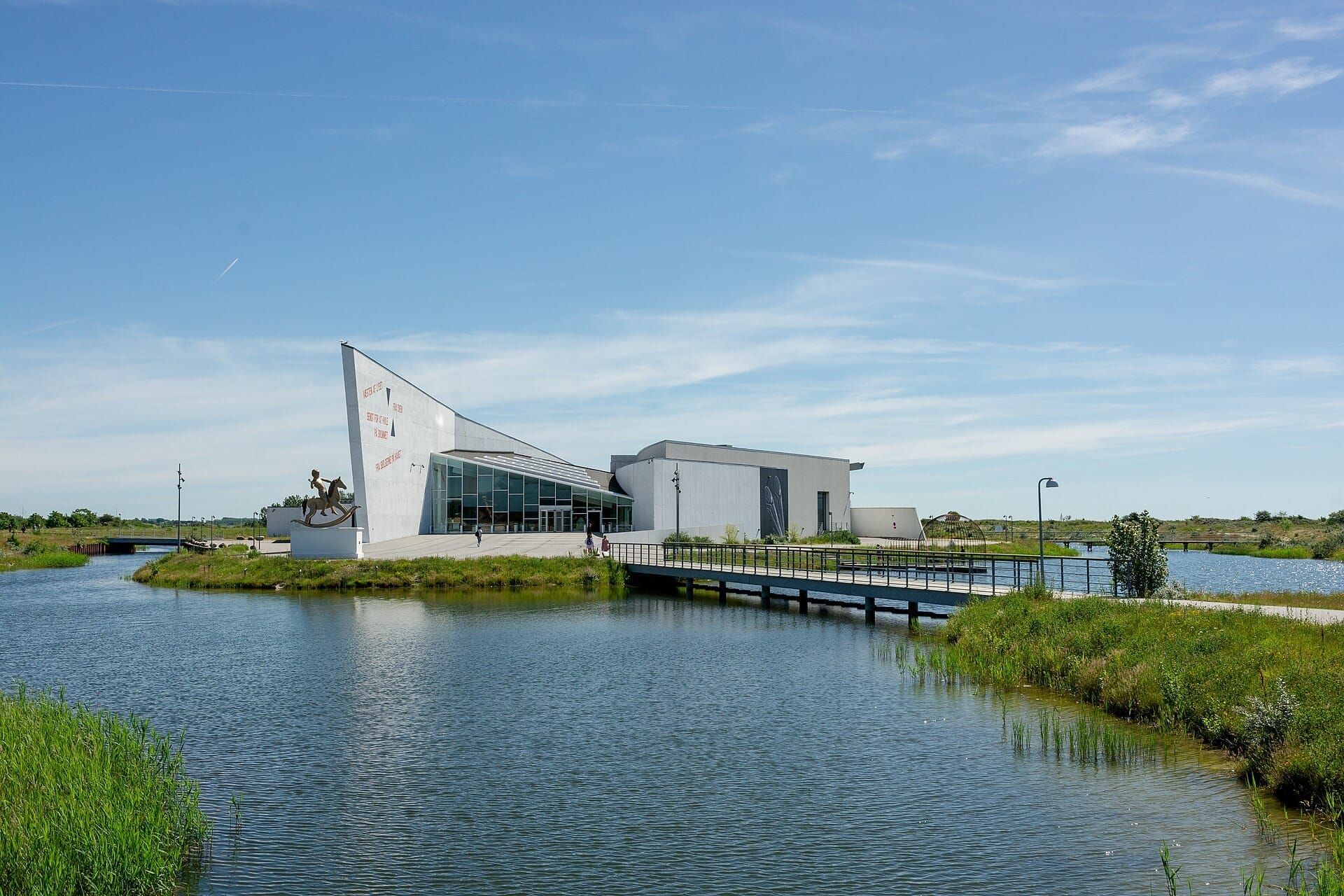
Located on the Ishøj coastline south of Copenhagen, ARKEN Museum of Modern Art combines a dramatically sculptural building with a serious contemporary art program. The journey out of the city is part of the experience, and the landscape setting changes everything about how you engage with the art.
Quick Facts
- Location
- Skovvej 100, 2635 Ishøj, Denmark (south of Copenhagen)
- Getting There
- S-train to Ishøj station, then bus or a 20-minute walk along the coast
- Time Needed
- 2.5 to 4 hours, including the coastal walk
- Cost
- 150 DKK adults; children under 18 free. Verify current prices at arken.dk
- Best for
- Contemporary art, architecture fans, families, solo travelers, quiet half-days
- Official website
- www.arken.dk/en
What ARKEN Actually Is
ARKEN Museum of Contemporary Art is a major contemporary art institution located in Ishøj, roughly 25 kilometers south of central Copenhagen. It opened in 1996, following a national competition won by architect Søren Robert Lund.
The museum holds a substantial permanent collection with a strong emphasis on Danish and international art from 1990 onward, including significant works by Damien Hirst and Anish Kapoor alongside leading Scandinavian artists. Temporary exhibitions rotate throughout the year and often anchor the museum's programming calendar, so what you see on any given visit may be substantially different from what another traveler encountered six months earlier.
ℹ️ Good to know
Children under 18 enter free. If you are traveling with kids, ARKEN is one of the most cost-effective full-day cultural experiences near Copenhagen.
The Building: Architecture as the First Exhibit
Before you see a single painting, the building itself demands attention. Søren Robert Lund designed ARKEN to resemble a ship run aground on the shoreline, its long concrete spine angled into the landscape as if it arrived by force rather than by plan. The exterior is weathered and grey, intentionally rough against the flat Ishøj coastline, with a massive steel-and-concrete 'Art Axis' corridor Before you see a single painting, the building itself demands attention. Søren Robert Lund designed ARKEN to resemble a ship run aground on the shoreline, its long concrete spine angled into the landscape as if it arrived by force rather than by plan. The exterior is weathered and grey, intentionally rough against the flat Ishøj coastline, with a massive steel-and-concrete 'Art Axis' corridor running through the core of the building.
Inside, the spatial logic is deliberately disorienting. Corridors angle unexpectedly, natural light enters at angles that shift with the time of day, and the relationship between the exhibition spaces and the surrounding dunes and water is never entirely out of mind. On overcast winter days, the interior takes on a cool, grey quality that feels entirely appropriate for the Northern European work the museum frequently champions. On bright summer mornings, light floods the Art Axis corridor in a way that photographers will recognize immediately.
The building alone makes ARKEN worth visiting for anyone serious about Copenhagen's architecture and design scene. It holds up as a work of design even three decades after opening.
Tickets & tours
Hand-picked options from our booking partner. Prices are indicative; availability and final rates are confirmed when you complete your booking.
Jewish Quarter private tour with Danish Jewish Museum in Copenhagen
From 221 €Instant confirmationFree cancellationDiscover Copenhagen's art quarter with a local
From 87 €Instant confirmationFree cancellation1-hour boat harbour tour in Copenhagen
From 26 €Instant confirmationFree cancellationSmall group 3-hour walking tour in Copenhagen
From 45 €Instant confirmationFree cancellation
Getting There: The Journey Is Part of the Experience
ARKEN sits at the edge of Ishøj Strand, a flat coastal landscape of dunes, beach grass, and open water. The most straightforward route from central Copenhagen is the S-train (line A or E toward Hundige or Ishøj) to Ishøj station. From there, a local bus connects to the museum, or you can walk the coastal path in roughly 25 minutes. That walk, across flat marshland with the building gradually revealing itself ahead, is worth doing at least one direction.
The trip is a viable half-day rather than a full-day commitment. If you hold a Copenhagen Card, check its current terms, as ARKEN has appeared in its attraction listing. The museum's address is Skovvej 100, 2635 Ishøj. If you hold a Copenhagen Card, check its current terms, as ARKEN has appeared in its attraction listing. The museum's address is Skovvej 100, 2635 Ishøj.
💡 Local tip
Take the coastal walk from Ishøj station to the museum on your way in, when you are fresh. Return by bus when your feet are done.
What to Expect Inside
The permanent collection occupies the upper galleries, while the ground floor and the Art Axis corridor typically host temporary exhibitions. The Art Axis is the visual centerpiece: a raw, tunnel-like space running through the building's core, open to the elements at one end, often used for large-scale installation work that would be impossible to display in conventional gallery rooms.
Gallery spaces are quiet even on weekends, with good ventilation and clear sight lines. Crowds are light by the standards of central Copenhagen museums, which means you can spend extended time in front of individual works without the background noise and shoulder-to-shoulder circulation of, say, the SMK on a Saturday.
If you are building a broader museum itinerary, ARKEN pairs logically with a visit to the Louisiana Museum of Modern Art north of Copenhagen. The two institutions have distinct identities: Louisiana is warmer, more pastoral, and more internationally famous; ARKEN is rawer, quieter, and less visited by tourists, which makes it feel more like a local discovery.
The museum has a shop with a good selection of architecture and design monographs, and a cafe that serves light meals. Neither is exceptional, but both are functional. Allow 2.5 to 4 hours total if you plan to engage with both the permanent collection and any temporary exhibition.
How Time of Day Changes the Visit
Morning visits, particularly on weekdays, offer the museum at its quietest. The Art Axis corridor catches the best natural light from mid-morning onward depending on the season, and the galleries feel almost private before noon. Arriving when the museum opens means you will often have entire rooms to yourself, which is the right way to experience large-scale contemporary work.
Afternoons are slightly busier, especially on weekends when families arrive after lunch. ARKEN handles children well: the scale of the building is genuinely exciting for kids, the free entry policy removes financial friction for parents, and there are usually family-oriented programming elements running on weekends. The museum's coastal setting also means that after the visit, the beach at Ishøj Strand is a short walk away, which makes for a natural end to the day in warmer months.
⚠️ What to skip
Hours vary by season and some public holidays see closures or reduced hours. Always check the live calendar at arken.dk before making the trip, as the journey from central Copenhagen takes real time.
Who This Is For, and Who Should Pass
ARKEN rewards visitors who are genuinely interested in contemporary art, architecture, or both. The collection is not a greatest-hits survey of art history: it leans heavily into post-1990 work, conceptual and installation-based practices, and the kind of art that requires some engagement to yield anything back. If you prefer traditional painting and decorative arts, the National Museum or the Glyptotek will serve you better.
For travelers who want to understand Copenhagen's cultural landscape beyond the obvious, ARKEN is worth the 40-minute train ride. It sits outside the standard tourist circuit, draws a local audience, and operates at a scale and seriousness that the city's more central institutions sometimes sacrifice in favor of accessibility. Consider combining it with a broader look at Copenhagen's best museums when planning your itinerary.
Visitors with very limited time in Copenhagen, say one or two days, may reasonably skip ARKEN in favor of attractions within the city center. The travel time is real, and if contemporary art is not a priority, that time is probably better spent elsewhere. But for anyone staying three days or more with genuine cultural interests, the museum earns its place on the list.
Photography and Practical Notes
The exterior of ARKEN photographs well in flat, overcast light, which is also the most common weather condition in this part of Denmark. The rough concrete textures, the angular rooflines, and the flat coastal landscape behind the building all resolve more clearly when there is no harsh shadow. If you arrive on a rare bright day, shoot from the west side in the morning before the sun reaches full height.
Interior photography policies vary by exhibition, particularly for temporary shows with works under copyright restrictions. The permanent collection galleries and the Art Axis corridor are generally photographable without flash. Confirm current policy at the desk when you arrive.
The museum is listed as wheelchair accessible. The flat coastal terrain around the building is manageable, and the interior, despite its angular design, maintains accessible circulation paths. If specific accessibility requirements apply to your group, contacting the museum in advance is sensible.
ARKEN is included in some versions of the Copenhagen Card offering, which may affect your calculation of whether the card pays off on a trip that includes a museum day south of the city. Check current terms directly.
Insider Tips
- Walk the coastal path from Ishøj station to the museum rather than taking the bus both ways. The approach across the flat shoreline landscape with the building ahead is genuinely atmospheric and takes about 20 minutes.
- Weekday mornings offer the museum at its most peaceful. Arrive close to opening and you may have the Art Axis corridor entirely to yourself for the first hour.
- Check what temporary exhibition is running before you go: the major temporary shows at ARKEN are often the strongest reason to make the trip on any specific date, and the permanent collection alone may feel thin if nothing significant is installed.
- The beach at Ishøj Strand is a short walk from the museum and makes a natural next stop in summer months, particularly if you are visiting with children. Pair the two and the day feels complete.
- If you are a serious architecture follower, read about Søren Robert Lund's competition brief before visiting. Understanding that the design emerged from a student competition in the early 1990s reframes how you read the building's ambition.
Who Is Arken Museum of Modern Art For?
- Contemporary art enthusiasts looking for serious programming beyond the tourist circuit
- Architecture travelers interested in late-20th-century Scandinavian design
- Families with children, who enter free and benefit from the coastal setting nearby
- Travelers on extended stays wanting to move beyond central Copenhagen
- Photographers looking for an architecturally unusual exterior in a coastal landscape
Nearby Attractions
Combine your visit with:
- Amager Strandpark
Amager Strandpark (Amager Beach Park) is Copenhagen's largest beach, offering a total of 4.6 km of sandy shoreline along the city's southeastern coast. Free to enter and easily reached by metro, it combines a natural shoreline with a 2 km artificial island and sheltered lagoon opened in 2005, making it a genuine summer destination for locals and a quiet surprise for visitors expecting a landlocked Scandinavian capital.
- Bakken
Dyrehavsbakken, known simply as Bakken, has been drawing visitors to the forests north of Copenhagen since 1583, making it the oldest operating amusement park on earth. Unlike polished theme parks, it mixes rickety roller coasters, carnival stalls, and open-air restaurants inside a UNESCO-recognized deer park, with free entry to the grounds.
- The Blue Planet – National Aquarium Denmark
The Blue Planet, Denmark's National Aquarium, sits in Kastrup on the Øresund coast with 7 million liters of water, 450 species, and a striking spiral building that's worth examining before you even step inside. This guide covers what to expect from the exhibits, the best times to visit, and how to get there without confusion.
- Dragør Old Town
Twelve kilometres south of Copenhagen, Dragør Old Town preserves Denmark's most concentrated cluster of protected historic buildings. Ochre-yellow houses with red-tiled roofs line narrow cobbled lanes beside a working harbour, offering a genuinely unhurried contrast to the capital's pace. Entry is free and the streets are open at all hours.