Bakken (Dyrehavsbakken): The World's Oldest Amusement Park
Dyrehavsbakken, known simply as Bakken, has been drawing visitors to the forests north of Copenhagen since 1583, making it the oldest operating amusement park on earth. Unlike polished theme parks, it mixes rickety roller coasters, carnival stalls, and open-air restaurants inside a UNESCO-recognized deer park, with free entry to the grounds.
Quick Facts
- Location
- Dyrehavsbakken 207, 2930 Klampenborg, Denmark — approx. 15 km north of central Copenhagen
- Getting There
- S-train line C to Klampenborg Station, then about a 10-minute walk through Dyrehaven
- Time Needed
- 2–4 hours for a casual visit; a full day if combining with Dyrehaven walks
- Cost
- Free park entry; multi-ride wristbands from approx. 329 DKK (verify current prices at bakken.dk)
- Best for
- Families, history lovers, budget-conscious visitors, anyone curious about an un-Disneyfied fairground experience
- Official website
- www.bakken.dk
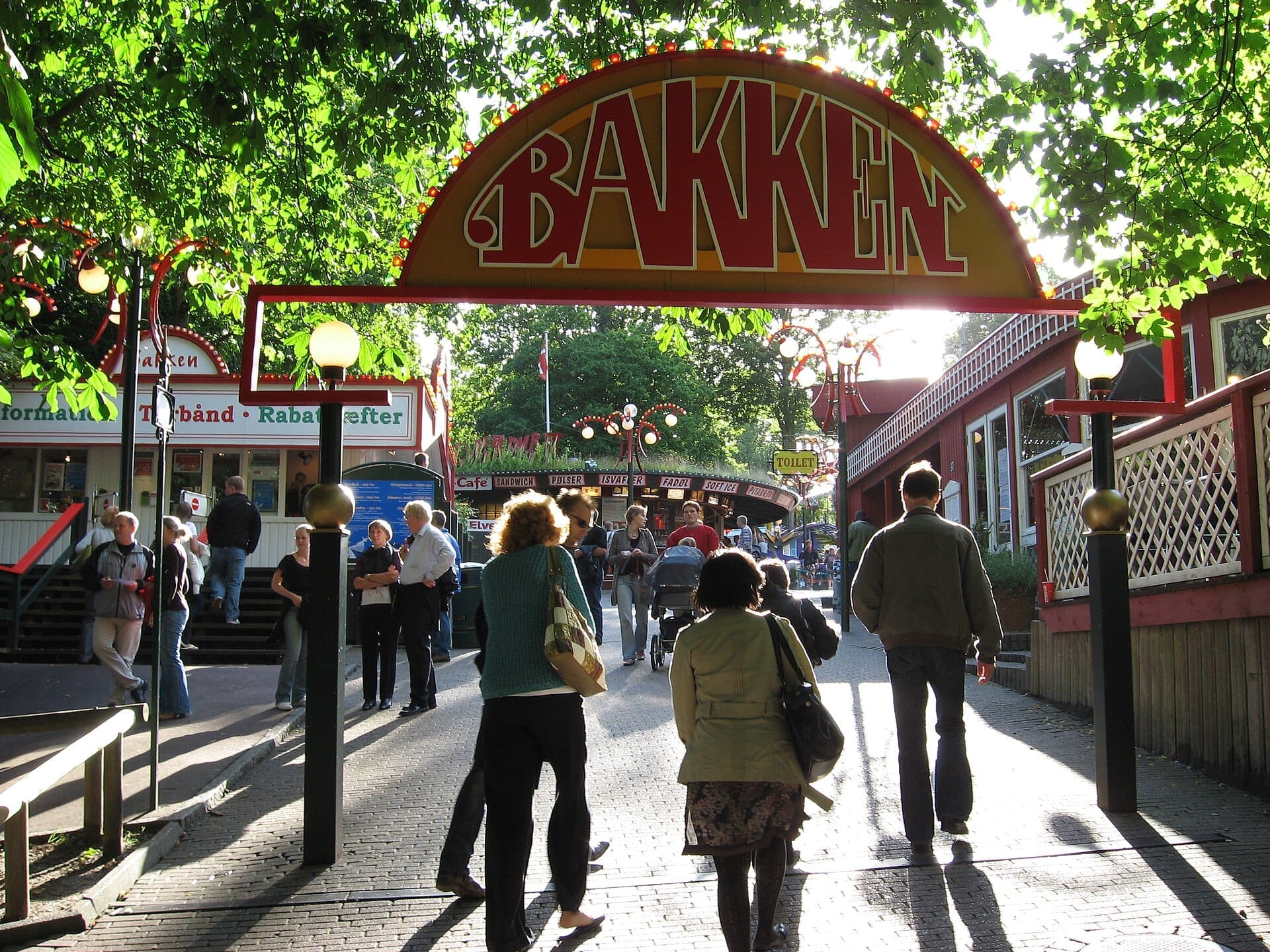
What Is Bakken, and Why Does It Matter?
Dyrehavsbakken, universally shortened to Bakken, is not just Denmark's most-visited amusement park. It is the oldest operating amusement park in the world, continuously drawing crowds since 1583, when street performers and merchants began gathering around a natural spring in the royal hunting grounds north of Copenhagen. That detail alone separates Bakken from every other fairground on the planet.
Four centuries later, the essentials are surprisingly unchanged. There are still food stalls, game booths, live performers, and rides crammed into roughly 75,000 square metres of woodland clearings. What makes the experience distinctive is everything surrounding the park: tall beech trees, wandering deer, and the low hum of the S-train fading into birdsong. You arrive through forest, not a car park, and today there are 33 rides in total.
Bakken sits inside Jægersborg Dyrehave, a royal deer park established in 1670 and today protected as a UNESCO World Heritage Site. The park is also worth visiting independently; for a full picture of the area, see the Jægersborg Dyrehave attraction guide.
ℹ️ Good to know
Entry to Bakken's grounds is free. You pay only for individual rides or buy a wristband for unlimited ride access. This makes Bakken one of the most accessible amusement parks in northern Europe for families on a budget.
The Atmosphere: What It Actually Feels Like
On a summer afternoon, the smell hits you first: fried food, sugared almonds, and something faintly smoky from the open-air grills. The paths are wide but informal, without the choreographed flow of a major theme park. Families push strollers over packed gravel while teenagers cluster around game booths. The sounds layer: a mechanical clank from the roller coaster, accordion music drifting from a beer hall, children shouting.
The rides themselves are a mixed bag. There are 33 in total, ranging from a historic wooden roller coaster to spinning teacups and family-friendly ghost trains. Nothing here competes technically with Copenhagen's Tivoli Gardens, and that is precisely the point. Bakken has a worn-in quality that feels earned rather than neglected. The paint is bright but not new. The staff are relaxed. The queues move at a human pace.
If you are deciding between Bakken and Tivoli Gardens, consider the trade-off: Tivoli is more polished, more central, and more expensive. Bakken is looser, greener, and free to enter. They serve genuinely different moods.
Evenings shift the atmosphere considerably. By 7pm on a Friday or Saturday in summer, Bakken tilts toward adults: beer halls fill up, live music gets louder, and the deer park walk back to the station takes on a different character in the long Nordic dusk. It is still family-safe, but the energy belongs to an older crowd.
Tickets & tours
Hand-picked options from our booking partner. Prices are indicative; availability and final rates are confirmed when you complete your booking.
1-hour boat harbour tour in Copenhagen
From 26 €Instant confirmationFree cancellationSmall group 3-hour walking tour in Copenhagen
From 45 €Instant confirmationFree cancellationCopenhagen to Malmo one-day tour
From 56 €Instant confirmationFree cancellationFull-day tour to Forest Tower and Forgotten Giants from Copenhagen
From 110 €Instant confirmationFree cancellation
History: 440 Years in a Forest
The story begins in 1583 with the discovery of a freshwater spring believed to have medicinal properties. Vendors, acrobats, and fortune-tellers followed the crowds, and an informal fairground took root in the royal forest of Dyrehave. The Danish crown tolerated and eventually formalized the gathering, which has operated continuously ever since, surviving wars, political upheaval, and the rise of modern entertainment.
Bakken therefore predates Tivoli by more than 250 years, and every other named amusement park in the world. The original wooden roller coaster, Rutschebanen, dates to 1932 and is still in operation, making it among the oldest functioning roller coasters in Europe. A visit here is as much a walk through the history of popular entertainment as it is a fairground trip.
The Pierrot clown character, a theatrical figure who has performed at Bakken for generations, remains a cultural symbol of the park. Performances still happen on the open-air stage, connecting modern visitors to a tradition of commedia-style entertainment that predates cinema.
Getting There: The Walk Through Dyrehaven Is Part of the Experience
Take S-train line C from central Copenhagen stations such as Nørreport or Østerport to the terminus at Klampenborg. The journey takes around 20 minutes. From Klampenborg Station, follow the path through the gate into Dyrehaven and walk roughly 10 minutes through open parkland and beech forest to the park entrance. Deer are frequently visible along this stretch, particularly in the early morning and early evening.
This approach is important: the walk is not an inconvenient transfer, it is a genuine transition from city to countryside that sets Bakken apart from any urban amusement park. Arriving by car is possible, with paid parking near the park entrance, but you will miss the best part of the journey and the atmosphere it creates.
💡 Local tip
The S-train to Klampenborg is covered by standard Copenhagen zone tickets. If you are using the Copenhagen Card, the journey is included. Check current zone pricing at rejseplanen.dk before travel.
When to Visit: Season, Time of Day, and Weather
Bakken is a seasonal park, typically open from late March through early September, with limited openings during the autumn school holiday and selected Christmas weekends. The core summer period, June through August, offers the fullest program of rides, entertainment, and food stalls. Summer hours in July often run 11:00 to 21:00, but hours shift throughout the season. Always check bakken.dk for the current schedule before making the trip.
Weekday mornings in June or early September are the calmest times to visit. Rides have shorter queues, the beer halls are quieter, and the surrounding deer park is serene. Weekend afternoons in July are the busiest, with families arriving from across the Copenhagen area and beyond. The park handles crowds without feeling dangerous, but the experience is qualitatively different.
Weather matters more at Bakken than at an indoor attraction. The paths are outdoor, partially shaded by trees. Light rain is manageable and actually thins the crowds. Heavy rain turns unpaved areas muddy and closes some rides. Wear comfortable walking shoes regardless of forecast; the woodland terrain means heels and thin-soled sandals are a poor choice.
⚠️ What to skip
Bakken is closed in winter for most of the season. If you are visiting Copenhagen outside of late March to early September, confirm specific opening dates at bakken.dk before making the trip north to Klampenborg.
Practical Walkthrough: Making the Most of a Visit
If rides are the priority, a multi-ride wristband (from approximately 329 DKK at time of writing, verify current pricing) gives unlimited access for the day and removes the decision-making of pay-per-ride. For visitors who want the atmosphere without intense ride use, free entry makes it easy to spend two hours browsing food stalls, watching open-air performances, and walking the grounds without spending much at all.
Food options are plentiful and lean toward traditional Danish fairground fare: hot dogs, fried fish, ice cream, and beer. Prices are what you would expect from an amusement park, not a street market. Bringing snacks from Copenhagen is allowed and practical if you are on a tight budget.
Photography works best in the morning when light filters through the trees at low angles and the park has the clean, unhurried look of a place just waking up. The wooden roller coaster is photogenic from several angles. Evening shots of the illuminated park against darkening beech canopy are worth staying for.
Bakken pairs naturally with a longer day out. The deer park itself rewards a slow walk, and the coastal town of Klampenborg has waterfront cafes. If you want more context for Copenhagen's parks and outdoor culture, the Copenhagen with kids guide covers several green-space options across the city.
Who Should Reconsider
Travelers seeking cutting-edge thrill rides or a sleek, contemporary theme park experience will be underwhelmed. Bakken's ride inventory is modest in scale and age. If you have limited time in Copenhagen, a single afternoon probably serves you better at Tivoli, which offers a more concentrated experience closer to the city center.
Visitors with significant mobility limitations should note that Bakken is set on outdoor paths in a woodland park, with uneven surfaces and no fully flat, paved circuit. Specific accessibility details should be confirmed directly with the park before visiting.
If your Copenhagen trip is focused on design and architecture rather than green space and nostalgia, the city's indoor cultural attractions may be a better use of your time. The best museums in Copenhagen guide is a useful alternative starting point.
Insider Tips
- Walk through Dyrehaven slowly on the way in and out. Red deer are resident year-round and frequently visible near the path between Klampenborg Station and the park, especially in morning and evening hours.
- The Rutschebanen wooden roller coaster from 1932 still uses a brakeman who rides the coaster and physically controls speed on the descent. It is among the last operating examples of this mechanism in the world. Ride it for the history, not the adrenaline.
- Weekday late afternoon, around 15:00–17:00, tends to hit a quiet window between families with young children (who leave for dinner) and the evening adult crowd. Ride queues drop noticeably.
- The park's beer halls are genuine social institutions, not tourist traps. Sitting down with a beer and watching the crowd for an hour is a completely acceptable way to spend time at Bakken, and cheaper than most Copenhagen bars.
- If you plan to visit both Bakken and Jægersborg Dyrehave on the same day, pack a picnic. There are no cafes inside the deer park, only at Bakken itself, and the open grassland areas are ideal for an outdoor lunch among the deer.
Who Is Bakken For?
- Families with children of mixed ages, thanks to free entry and a range of ride intensities
- History-minded travelers who want context beyond museums — Bakken is a living piece of European popular culture
- Budget travelers: free entry and an S-train ride from the city make it an inexpensive half-day
- Visitors who want to combine an amusement park visit with a genuine nature experience in Dyrehaven
- Adults looking for a relaxed, unpretentious evening out with beer, live music, and fresh air
Nearby Attractions
Combine your visit with:
- Amager Strandpark
Amager Strandpark (Amager Beach Park) is Copenhagen's largest beach, offering a total of 4.6 km of sandy shoreline along the city's southeastern coast. Free to enter and easily reached by metro, it combines a natural shoreline with a 2 km artificial island and sheltered lagoon opened in 2005, making it a genuine summer destination for locals and a quiet surprise for visitors expecting a landlocked Scandinavian capital.
- Arken Museum of Modern Art
Located on the Ishøj coastline south of Copenhagen, ARKEN Museum of Modern Art combines a dramatically sculptural building with a serious contemporary art program. The journey out of the city is part of the experience, and the landscape setting changes everything about how you engage with the art.
- The Blue Planet – National Aquarium Denmark
The Blue Planet, Denmark's National Aquarium, sits in Kastrup on the Øresund coast with 7 million liters of water, 450 species, and a striking spiral building that's worth examining before you even step inside. This guide covers what to expect from the exhibits, the best times to visit, and how to get there without confusion.
- Dragør Old Town
Twelve kilometres south of Copenhagen, Dragør Old Town preserves Denmark's most concentrated cluster of protected historic buildings. Ochre-yellow houses with red-tiled roofs line narrow cobbled lanes beside a working harbour, offering a genuinely unhurried contrast to the capital's pace. Entry is free and the streets are open at all hours.