Dragør Old Town: The Ochre-Yellow Village That Time Left Behind
Twelve kilometres south of Copenhagen, Dragør Old Town preserves Denmark's most concentrated cluster of protected historic buildings. Ochre-yellow houses with red-tiled roofs line narrow cobbled lanes beside a working harbour, offering a genuinely unhurried contrast to the capital's pace. Entry is free and the streets are open at all hours.
Quick Facts
- Location
- Dragør, 2791 Dragør — southeast coast of Amager, approx. 12 km south of Copenhagen
- Getting There
- Bus 150S or 350S from Copenhagen city centre; approx. 40–45 minutes travel time
- Time Needed
- 2–4 hours for a relaxed walk; longer if you visit Dragør Museum or linger at the harbour
- Cost
- Free to enter and walk; individual museums and guided tours charge separately
- Best for
- Architecture enthusiasts, photographers, slow-travel days, families wanting a quiet half-day escape
- Official website
- www.visitdragor.com/local-life-food/dragor-old-town
What Dragør Old Town Actually Is
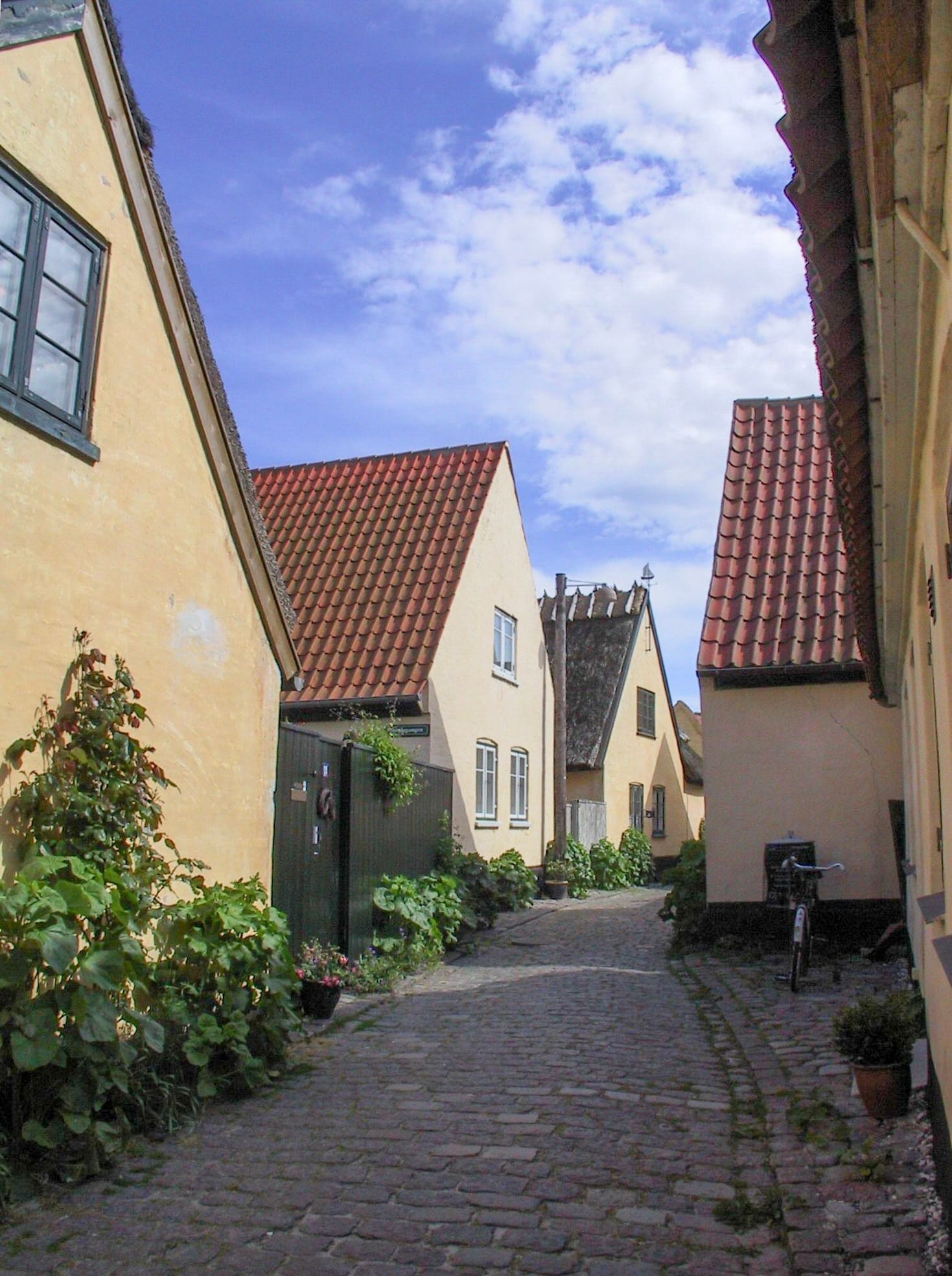
Dragør Old Town, known in Danish as Dragør gamle by or Dragørs historiske bymidte, is not a reconstructed heritage site or an open-air museum. It is a living neighbourhood where people hang laundry above doorways built in the 1780s and park bicycles against walls that have stood for two and a half centuries. That distinction matters. The atmosphere here is not performed; it is simply what the place looks like.
The old town holds 76 listed buildings, giving it one of the highest concentrations of protected historic structures of any small town in Denmark. Most were built during Dragør's golden age as a maritime skipper town in the 18th and 19th centuries, when the harbour handled herring fishing fleets and seafaring trade. The characteristic ochre-yellow facades with dark-red tiled roofs are not a design choice made for tourism; they reflect the building materials and conventions of that era. Walking through these lanes, you are looking at the physical remains of a specific economic moment in Danish coastal history.
ℹ️ Good to know
Access to Dragør Old Town's streets and public squares is free at all hours. There are no gates, tickets, or formal entry points. Individual attractions such as Dragør Museum have their own opening hours and separate admission fees.
The Harbour and the Streets: What You Will Actually See
Most visitors arrive near Dragør Havn, the harbour, which sits directly adjacent to the old town around Vestgrønningen. The harbour is still functional rather than purely decorative: small fishing boats and leisure craft occupy the same berths, and there is a faint smell of salt and rope that you do not find at Copenhagen's more polished waterfront attractions. On calm days, the water reflects the yellow facades on the harbour edge with near-photographic clarity.
From the harbour, the streets fan inward through a tight grid of lanes, some barely wide enough for two people to pass comfortably. The alleyways between houses are paved with uneven cobblestones and flanked by low garden walls topped with climbing plants in summer. Gates open onto small private courtyards. The scale of everything is compressed: doorways are lower, windows sit closer to the ground, rooflines press in from both sides. After an hour here, the standard Copenhagen street feels unexpectedly wide.
The town is compact enough that you cannot get meaningfully lost. A thorough walk of the historic core takes roughly 45 minutes at a slow pace, but most visitors spend considerably longer because the pleasure is in noticing details: a painted date above a doorway, a model ship visible through a ground-floor window, a cat asleep on a window ledge. For those interested in Danish architectural history, this pairs naturally with a visit to Designmuseum Danmark in Copenhagen, which provides wider context for the design traditions visible in these buildings.
Tickets & tours
Hand-picked options from our booking partner. Prices are indicative; availability and final rates are confirmed when you complete your booking.
1-hour boat harbour tour in Copenhagen
From 26 €Instant confirmationFree cancellationSmall group 3-hour walking tour in Copenhagen
From 45 €Instant confirmationFree cancellationCopenhagen to Malmo one-day tour
From 56 €Instant confirmationFree cancellationFull-day tour to Forest Tower and Forgotten Giants from Copenhagen
From 110 €Instant confirmationFree cancellation
How the Experience Changes by Time of Day
Morning, particularly before 10:00, is when Dragør Old Town is at its most photogenic and least crowded. The low northern light catches the ochre walls at an angle that makes the colour glow, and the streets are quiet enough that you can hear seagulls over the harbour without competing noise. Residents are out walking dogs or cycling, and the neighbourhood feels genuinely inhabited rather than on display.
Midday on weekends from May through August brings the largest crowds, primarily Danish day-trippers and some international visitors who have read about the town in travel guides. The harbour-front fills up, and the better café tables fill quickly. It remains manageable compared to central Copenhagen attractions, but the solitary quality of an early-morning visit is gone. If you are primarily interested in photography, plan around a weekday morning.
Late afternoon brings warm light on the west-facing facades and a gradual quietening as day visitors head back toward the bus stop. In summer, the harbour takes on a golden-hour quality that makes the whole scene look slightly idealised. In autumn and winter, the town empties considerably, which has its own appeal: the colours of the houses are more saturated against grey skies, and the lack of foot traffic makes the historic character easier to absorb.
💡 Local tip
Weekday mornings in May, September, or October offer the best combination of good light, low crowds, and pleasant temperatures for walking. Summer weekends are the busiest period, though Dragør never becomes uncomfortably packed by Copenhagen-centre standards.
Historical Context: Why This Place Looks the Way It Does
Dragør's visual coherence is the result of a specific historical window. The town flourished between roughly the mid-18th century and the late 19th century as a harbour for shipping and herring fishing. During that period, enough wealth accumulated to build solidly and consistently, and the building conventions of the era produced the yellow-plastered, red-roofed houses that now define the streetscape.
When that economic moment passed and Dragør ceased to be a major maritime hub, there was neither the money nor the impetus to redevelop on any significant scale. The town did not grow into something else. That stasis, which in another context might have been unfortunate, preserved the urban fabric almost intact. It is now listed at the national level, and "The Maritime Heritage of Dragør Old Town and Harbour" appears on Denmark's Tentative List for UNESCO World Heritage consideration, recognising it as a well-preserved cultural environment of exceptional density.
This preservation-through-economic-pause pattern is not unique to Dragør, but few examples are as visually complete. For travelers who want to understand how Denmark's relationship with its maritime past is interpreted across different settings, the Viking Ship Museum in Roskilde offers a deeper dive into the pre-industrial seafaring era that preceded Dragør's specific golden age.
Getting There and Practical Walkthrough
Dragør is reached by bus from central Copenhagen. Bus lines 150S and 350S serve the route, with a journey time of approximately 40 to 45 minutes from the city centre. The fare is a standard zoned public transport ticket; verify the current zone requirements and fare before travel, as these details change. There is no metro or S-train connection to Dragør itself.
If you are planning a broader day of exploration, Dragør can be combined with nearby Amager Strandpark, the long beach park on the northern part of Amager, which is served by the metro. The two do not share a direct transit link, so combining them usually involves returning briefly toward Copenhagen and re-routing, but on a long summer day it is practical.
Wear comfortable shoes with some grip. The cobblestones in Dragør's historic lanes are attractive but uneven, and some of the narrower alleys have surfaces that become slippery when wet. This is not a place to navigate in smooth-soled shoes after rain. There are benches at the harbour edge and at several points in the old town if you need to rest.
⚠️ What to skip
Dragør Old Town is not well-suited to wheelchairs or pushchairs. The cobbled streets and narrow alleys present genuine access challenges throughout the historic core. The harbour-front area offers some flatter, more even surfaces, but access to the interior lanes is largely impractical for mobility aids.
Photography, Cafés, and What Else Is Here
The town is a rewarding subject for photography at almost any hour, but the quality of images depends heavily on the light and the absence of other visitors in frame. Wide-angle lenses or standard primes work better than zooms in the narrow lanes; there is rarely enough distance from a subject to use long focal lengths effectively. The harbour reflections in calm weather are the single most reliably striking shot, best captured from the western end of the harbour looking back toward the old town.
A handful of cafés and small restaurants operate in and around the old town, with the harbour-front locations offering the best setting if outdoor seating is available. The range of options is limited compared to Copenhagen proper, and several establishments operate reduced hours or close entirely outside the main season. Check before visiting if eating here is part of your plan.
Dragør Museum, located within the old town, covers the maritime and local history of the area and is worth an hour if you want more context than the streets themselves provide. It operates its own opening hours and admission fees, which should be checked directly with the museum before visiting. Travelers with a broader interest in Copenhagen's museum landscape may also want to consult the guide to Copenhagen's best museums for context on how Dragør Museum fits into the wider picture.
Is Dragør Worth the Trip from Copenhagen?
The honest answer depends on what you are looking for. Dragør Old Town is not a destination with a single headline attraction. There is no famous artwork, no dramatic viewpoint, no performance or event that anchors a visit. What it offers is an experience of physical environment: a coherent historic streetscape that has been maintained rather than restored, in a setting that is genuinely calm by the standards of a major European capital's day-trip options.
For travelers on a short itinerary who need to optimize every hour, Dragør is a harder sell. The 40-plus minute bus ride each way is a significant time commitment for a place that takes under two hours to walk thoroughly. But for those who have already seen Copenhagen's central landmarks and want something that feels less curated, or who simply value unhurried walking over sightseeing checkboxes, the trip is well-justified.
It is worth noting that Dragør is just one option for an escape from Copenhagen's centre. The day trips from Copenhagen guide covers a range of alternatives, from the dramatic coastal cliffs of Møns Klint to the castle environments of Helsingør, which may suit different traveler priorities.
Insider Tips
- The bus stop closest to the old town centre drops you near the harbour. Walk toward the water first rather than into the streets immediately, and orient yourself from the harbour edge before heading inland — it prevents the disorientation that comes from entering the lane network without a sense of the town's shape.
- Dragør's most photographed alley is Strandgade, which runs parallel to the harbour with particularly well-preserved facades. Most visitors do not know its name and wander into it by chance; look for it deliberately and you will have a cleaner composition with fewer people.
- The town is significantly quieter on weekday afternoons in spring and autumn. If you are flexible on timing, a Tuesday or Wednesday visit in May or September will feel close to having the streets to yourself.
- Several of the historic houses display the year of construction above the doorway — some dating to the 1760s and 1770s. It takes no special knowledge to read them, and it gives the walk a small cumulative satisfaction as you spot increasingly early dates.
- If rain is forecast, go anyway. The cobblestones reflect the yellow facades when wet, and the lack of other visitors on rainy days can make the town feel more authentically inhabited than on a busy summer afternoon.
Who Is Dragør Old Town For?
- Architecture and urban history enthusiasts who want context beyond Copenhagen's city centre
- Photographers seeking a coherent historic streetscape with natural light and manageable crowds
- Travelers on a second or third Copenhagen trip who have already covered the main central attractions
- Families or couples looking for a slow, low-cost half-day that feels genuinely different from the capital's pace
- Anyone interested in Denmark's maritime heritage seen through a lived-in, working neighbourhood rather than a museum setting
Nearby Attractions
Combine your visit with:
- Amager Strandpark
Amager Strandpark (Amager Beach Park) is Copenhagen's largest beach, offering a total of 4.6 km of sandy shoreline along the city's southeastern coast. Free to enter and easily reached by metro, it combines a natural shoreline with a 2 km artificial island and sheltered lagoon opened in 2005, making it a genuine summer destination for locals and a quiet surprise for visitors expecting a landlocked Scandinavian capital.
- Arken Museum of Modern Art
Located on the Ishøj coastline south of Copenhagen, ARKEN Museum of Modern Art combines a dramatically sculptural building with a serious contemporary art program. The journey out of the city is part of the experience, and the landscape setting changes everything about how you engage with the art.
- Bakken
Dyrehavsbakken, known simply as Bakken, has been drawing visitors to the forests north of Copenhagen since 1583, making it the oldest operating amusement park on earth. Unlike polished theme parks, it mixes rickety roller coasters, carnival stalls, and open-air restaurants inside a UNESCO-recognized deer park, with free entry to the grounds.
- The Blue Planet – National Aquarium Denmark
The Blue Planet, Denmark's National Aquarium, sits in Kastrup on the Øresund coast with 7 million liters of water, 450 species, and a striking spiral building that's worth examining before you even step inside. This guide covers what to expect from the exhibits, the best times to visit, and how to get there without confusion.