Amager Strandpark: Copenhagen's Urban Beach Escape
Amager Strandpark (Amager Beach Park) is Copenhagen's largest beach, offering a total of 4.6 km of sandy shoreline along the city's southeastern coast. Free to enter and easily reached by metro, it combines a natural shoreline with a 2 km artificial island and sheltered lagoon opened in 2005, making it a genuine summer destination for locals and a quiet surprise for visitors expecting a landlocked Scandinavian capital.
Quick Facts
- Location
- Amager Strandvej 110, 2300 København S, Denmark. Approx. 5 km southeast of the city centre.
- Getting There
- Metro line M2: Øresund (north end), Amager Strand (central), or Femøren (south end) stations.
- Time Needed
- 1.5 to 3 hours for a walk and swim; a full afternoon if you plan to linger.
- Cost
- Free entry. No general admission fee. Individual facilities may charge separately.
- Best for
- Locals' beach days, cycling detours, families, summer sunsets over the Øresund strait.
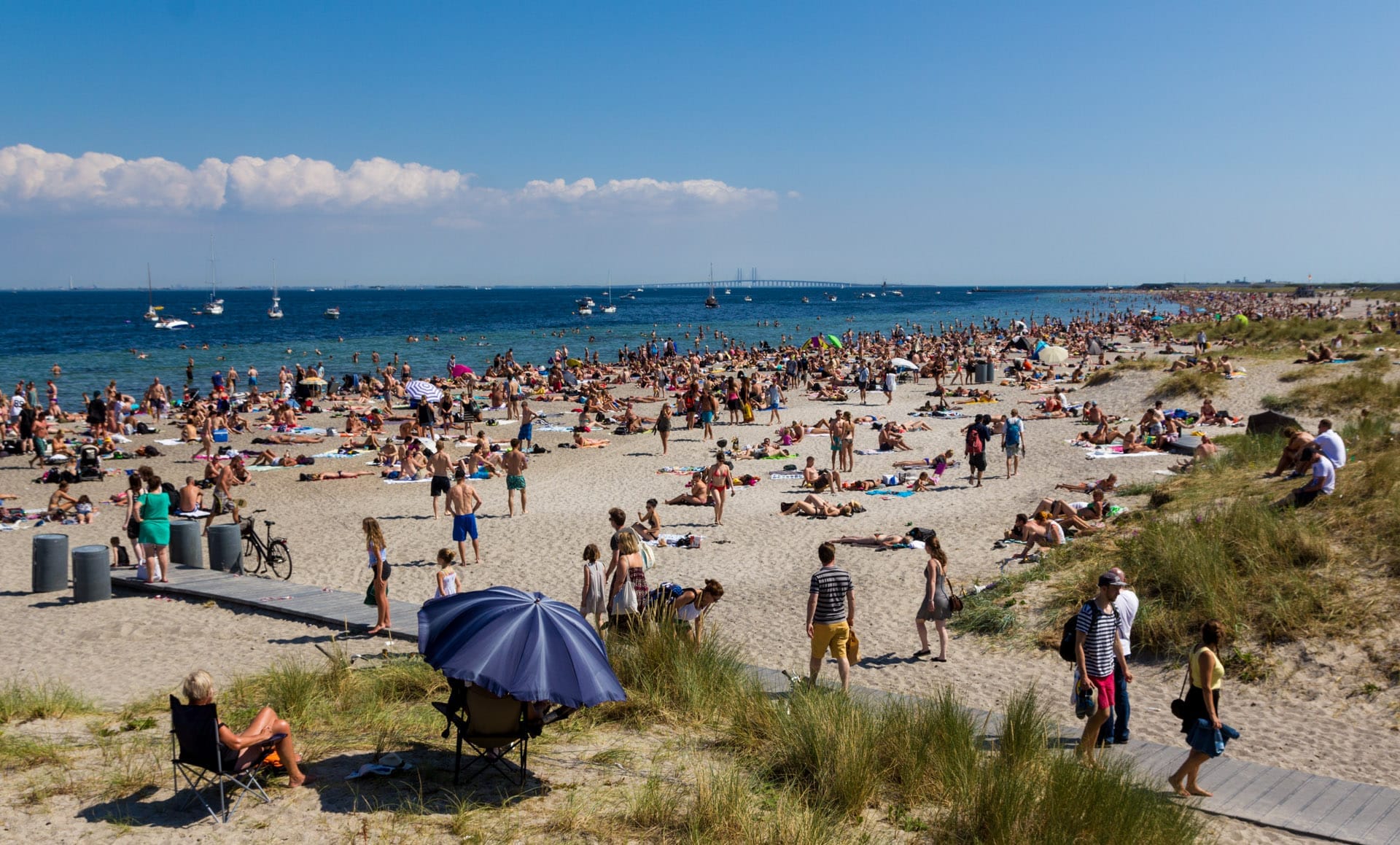
What Amager Strandpark Actually Is
Most visitors to Copenhagen are surprised to discover that the city has a proper beach at all. Amager Strandpark, known in English as Amager Beach Park, is a 4.6 km stretch of sandy shoreline on the island of Amager, about 5 km from the city centre. It covers about 60 hectares and is entirely free to access, drawing a steady stream of cyclists, swimmers, families, and after-work sunbathers from spring through early autumn.
The park has two distinct zones, and understanding the difference shapes your visit. The original mainland beach, established in 1934, runs along the natural coastline and is broader and more exposed. Then, in 2005, a 2 km artificial island was constructed just offshore, creating a sheltered lagoon between the island and the mainland. The lagoon water is calmer and shallower than the open strait, which makes it popular with families and less confident swimmers. The island itself has its own narrower beach facing the Øresund strait, where the wind picks up and the views stretch toward Sweden on clear days.
💡 Local tip
If you're visiting with young children or want calmer water, aim for the lagoon side between the mainland and the artificial island. The open-sea side of the island is better for wind, kite flying, and stronger swimmers.
How It Changes Through the Day
Early mornings at Amager Strandpark are almost meditative. Joggers and cyclists move along the promenade without the crush of summer crowds, and the light over the Øresund can be remarkably clear before the heat builds. The smell of saltwater is distinct here in a way you don't get in the city's harbours. By mid-morning on any warm weekday, locals begin to claim their spots on the grass and sand. On summer weekends, particularly from late June through August, popular sections fill quickly and the promenade becomes genuinely busy by noon.
Late afternoon is arguably the best time to arrive. The crowds thin slightly as families with young children head home for dinner, but the light turns golden and the atmosphere relaxes into something more social. Groups gather with portable speakers, beach volleyball picks up on the designated courts, and the pace slows. Sunsets facing west across the lagoon toward the city are worth timing your visit around if the sky cooperates.
Outside summer, the beach is quiet in a way that has its own value. On mild spring or autumn days you may find yourself almost alone on the promenade, with the wind loud in your ears and the Swedish coast clearly visible across the water. It is not a dramatic experience in the way that, say, Mons Klint is dramatic, but it is a genuinely peaceful one.
Tickets & tours
Hand-picked options from our booking partner. Prices are indicative; availability and final rates are confirmed when you complete your booking.
1-hour boat harbour tour in Copenhagen
From 26 €Instant confirmationFree cancellationSmall group 3-hour walking tour in Copenhagen
From 45 €Instant confirmationFree cancellationCopenhagen to Malmo one-day tour
From 56 €Instant confirmationFree cancellationFull-day tour to Forest Tower and Forgotten Giants from Copenhagen
From 110 €Instant confirmationFree cancellation
Getting Here: Metro Is the Obvious Choice
Three stations on the Metro M2 line serve Amager Strandpark directly: Øresund at the northern end, Amager Strand in the middle, and Femøren at the southern end. Each station is within a short walk of the beach. The metro runs frequently, including through most of the night on weekends, so there is rarely a need to worry about catching a last train after a summer evening visit. Standard metro fares apply based on zone, and the Copenhagen Card covers this route if you have one.
The beach is also well within cycling distance from most of central Copenhagen, and the route along the waterfront is straightforward and flat. Copenhagen's cycling infrastructure makes this a natural option for anyone already exploring the city on two wheels. For those using the cycling network in Copenhagen, Amager Strandpark is a logical destination on any coastal route south of the centre.
ℹ️ Good to know
The park is listed as generally open 08:00–22:00 on some visitor platforms, though as a public outdoor space it is effectively accessible at all hours. Specific facilities within the park, such as kiosks or changing rooms, have their own seasonal hours and may not operate outside peak summer months.
What the 2005 Expansion Actually Changed
The construction of the artificial island in 2005 was not just a practical upgrade; it fundamentally changed what Amager Strandpark could offer. Before the island, the beach was a straightforward strip of sand exposed to the Øresund strait. The introduction of the lagoon created a more varied landscape, one that works for a much wider range of visitors. Engineers moved significant quantities of sand to create both the island and the broadened beach, increasing the park's usable area considerably.
The project also reflected a broader shift in how Copenhagen was thinking about its relationship to the water. Around the same period, initiatives like Islands Brygge Harbour Bath were turning harbour swimming from a fringe activity into a mainstream urban amenity. Amager Strandpark fits squarely into that story, turning a working-class beach that had existed since 1934 into one of the largest urban beach parks in Scandinavia.
What to Bring and What to Expect
The park has changing facilities, toilets, and food kiosks in season, though the density of services varies along the length of the beach. The central section near Amager Strand metro station is the most developed. Bring water and sunscreen regardless, as shade is limited on the beach itself. The promenade is paved and level, making it accessible for pushchairs and reasonably navigable for wheelchair users, though the sand itself presents typical beach-surface challenges. Visitors with specific mobility requirements should check with the municipality for current information on accessible facilities.
Water quality at the beach is monitored and is generally considered good for swimming during the season, but conditions vary and it is worth checking current bathing water quality reports before your visit, particularly after heavy rainfall. The lagoon side is almost always calmer than the open strait side of the island.
Photography is straightforward here: the light over the water is best in the early morning and late afternoon. The artificial island provides elevated dune sections that give a slightly different vantage point across the lagoon toward the city skyline. If you are building a Copenhagen itinerary around the outdoors, combining Amager Strandpark with a walk or cycle through the broader summer Copenhagen landscape makes excellent sense.
Honest Limitations: When to Temper Expectations
Amager Strandpark is not a postcard beach. The sand is not white and the water is not turquoise. It is a clean, well-managed northern European urban beach: grey-brown sand, green-grey water, and an industrial skyline visible to the north on certain sightlines. On overcast days, which are common in Copenhagen even in summer, the beach can feel flat and unremarkable. If Mediterranean-standard beach aesthetics are your benchmark, this will not meet them.
The park also has little in the way of shade, so on particularly hot days the exposed areas can become uncomfortable for young children or anyone sensitive to sun. Weekends in July are genuinely crowded near the main entrances. If crowds bother you, walk further north or south along the promenade to find quieter stretches.
Visitors looking for more structured cultural activities nearby might consider pairing the beach with a stop at the Danish Architecture Center or spending time at Reffen, the large outdoor street food market on the nearby Refshaleøen waterfront, which adds a social and culinary dimension to a day on this side of the city.
Practical Summary
- Free entry, open year-round as a public park. Facility hours vary seasonally.
- Three M2 metro stations serve the park: Øresund, Amager Strand, and Femøren.
- The lagoon (between mainland and island) is calmer; the island's east side faces open water.
- Busiest in July and August on weekends; mornings and late afternoons are quieter.
- Bring sunscreen, water, and a towel. Food kiosks operate in season near central areas.
- Check local bathing water quality reports before swimming, especially after rainfall.
- Cycling from central Copenhagen takes roughly 15–25 minutes on flat terrain.
Insider Tips
- The northern stretch near Øresund metro station is consistently less crowded than the central section, even on busy summer weekends. Walk 10 minutes north from Amager Strand station and you will find noticeably more space.
- The dune ridge on the artificial island's lagoon-facing slope is one of the better spots in Copenhagen to watch the sunset without a building blocking your view. Bring something to sit on.
- Rent a city bike rather than taking the metro if the weather is good. The coastal cycling path that leads to Amager Strandpark passes the harbour bath at Islands Brygge and gives you a much better sense of how Copenhagen relates to its waterfront.
- Water temperature in the Øresund typically peaks in late July and early August, reaching around 18–20°C in warm summers. Before June and after September, expect noticeably colder conditions that make swimming less appealing for most people.
- The park is one of the few places in Copenhagen where you can watch cargo ships and ferries crossing the Øresund strait at close range, with the Swedish coast clearly visible on clear days. The island's east-facing beach gives the best unobstructed views across the water.
Who Is Amager Strandpark For?
- Copenhagen locals and long-stay visitors wanting a genuine beach day without leaving the city
- Families with children who prefer the calm, shallow lagoon over open sea swimming
- Cyclists exploring Copenhagen's coastal routes looking for a natural destination
- Visitors curious about Copenhagen's relationship with its waterfront and the Øresund strait
- Travelers on a tight budget who want outdoor space and summer atmosphere without any entry cost
Nearby Attractions
Combine your visit with:
- Arken Museum of Modern Art
Located on the Ishøj coastline south of Copenhagen, ARKEN Museum of Modern Art combines a dramatically sculptural building with a serious contemporary art program. The journey out of the city is part of the experience, and the landscape setting changes everything about how you engage with the art.
- Bakken
Dyrehavsbakken, known simply as Bakken, has been drawing visitors to the forests north of Copenhagen since 1583, making it the oldest operating amusement park on earth. Unlike polished theme parks, it mixes rickety roller coasters, carnival stalls, and open-air restaurants inside a UNESCO-recognized deer park, with free entry to the grounds.
- The Blue Planet – National Aquarium Denmark
The Blue Planet, Denmark's National Aquarium, sits in Kastrup on the Øresund coast with 7 million liters of water, 450 species, and a striking spiral building that's worth examining before you even step inside. This guide covers what to expect from the exhibits, the best times to visit, and how to get there without confusion.
- Dragør Old Town
Twelve kilometres south of Copenhagen, Dragør Old Town preserves Denmark's most concentrated cluster of protected historic buildings. Ochre-yellow houses with red-tiled roofs line narrow cobbled lanes beside a working harbour, offering a genuinely unhurried contrast to the capital's pace. Entry is free and the streets are open at all hours.