Islands Brygge Harbour Bath: Copenhagen's Favourite Free Swim
Islands Brygge Harbour Bath (Havnebadet Islands Brygge) is Copenhagen's most popular outdoor swimming facility, set directly in the harbour with four pools, including children's pools, and free entry. It draws locals of all ages and offers one of the most authentic warm-weather experiences the city has to offer.
Quick Facts
- Location
- Islands Brygge 14, 2300 Copenhagen S, Denmark
- Getting There
- Islands Brygge Metro Station (~9-min walk)
- Time Needed
- 1–3 hours
- Cost
- Free
- Best for
- Locals, families, summer visitors, budget travelers
What Is Islands Brygge Harbour Bath?
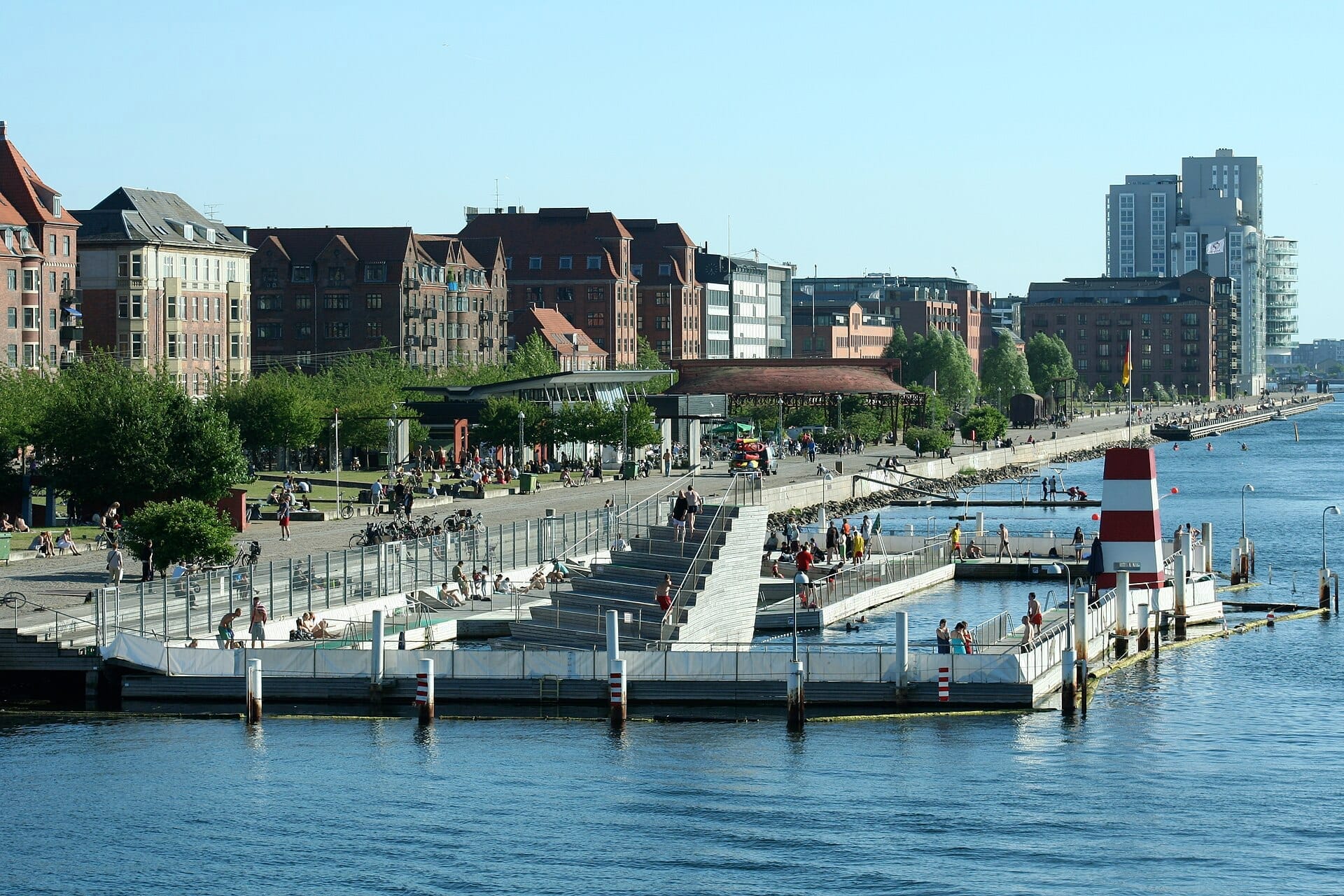
Havnebadet Islands Brygge, commonly known in English as Islands Brygge Harbour Bath, is a floating open-air swimming complex built directly into Copenhagen's inner harbour. It sits along the Islands Brygge waterfront on the south side of the harbour canal, and on a warm July afternoon it is one of the most genuinely local scenes in the entire city. This is not a tourist attraction in the conventional sense. There is no queue for tickets, no entrance fee, and no gift shop. You show up, find a patch of wooden decking, and swim in the same harbour water that cargo ships navigated a few decades ago.
The complex includes four pools in total: two children's pools, a main swimming pool, and a diving pool, with a deepest depth of 5 metres. Together the facility can accommodate around 600 people at peak capacity, though in practice it rarely feels orderly or counted. On hot days the wooden walkways fill quickly and the atmosphere shifts from calm to celebratory.
ℹ️ Good to know
Bathing season runs year-round, 06:00–22:00. Lifeguards are on duty June 1 to August 31, 10:00–18:00. Outside of lifeguard hours, swimming is still permitted but entirely at your own risk.
How It Feels to Be There
Arriving in the morning, roughly an hour after the lifeguards take their posts, you get the best version of this place. The decking is still cool underfoot, the water is clear enough to see the platform structure below, and the harbour smells faintly of salt and wood. By midday in June or July, the scene changes entirely: towels cover every flat surface, children are shrieking in the shallow pools, teenagers queue for the high platforms, and the smell of sunscreen mixes with the breeze off the water.
What strikes most first-time visitors is how unselfconscious the whole thing is. Coppenhagen residents treat this as a utility, the same way they treat a public park bench or a bike lane. Grandparents read newspapers in the sun while toddlers wade in the 30 cm pool. Teenagers run jumps off the platforms. Office workers on lunch breaks eat sandwiches on the railings. Nobody is performing for a camera. That quality, the complete absence of theatrics, is precisely what makes it worth visiting.
In the evening, after the lifeguards leave at 18:00, the harbour bath takes on a different character. The crowds thin, the light turns amber across the water, and the noise drops to conversation level. Swimming after hours is permitted but unsupervised, so this window suits confident swimmers who want a quieter experience.
Tickets & tours
Hand-picked options from our booking partner. Prices are indicative; availability and final rates are confirmed when you complete your booking.
Two-hour boat rental in Copenhagen and Islands Brygge
From 118 €Instant confirmationFree cancellationThree-hour boat rental in Copenhagen and Islands Brygge
From 154 €Instant confirmationFree cancellationOne-hour boat rental in Copenhagen and Islands Brygge
From 60 €Instant confirmationFree cancellation1-hour boat harbour tour in Copenhagen
From 26 €Instant confirmationFree cancellation
History and Context: Why Copenhagen Swims in Its Harbour
For much of the twentieth century, the inner harbour was too polluted to swim in. Industrial activity, combined with poor wastewater infrastructure, made the water genuinely hazardous. The clean-up of Copenhagen Harbour, completed through significant municipal investment over several decades, transformed the waterway into one of the cleanest urban harbour environments in Europe. The first harbour bath opened at Islands Brygge in 2002 as a direct result of this effort, and it became a symbol of the city's environmental turnaround.
The facility was designed by Bjarke Ingels Group (BIG), which later expanded the concept through subsequent harbour-bath projects. It received international design awards and established the model that other cities have since tried to replicate. For more on how architecture shapes public life in Copenhagen, the provides useful background on the broader context. It received international design awards and established the model that other cities have since tried to replicate. For more on how architecture shapes public life in Copenhagen, the Copenhagen design and architecture guide provides useful background on the broader context.
Islands Brygge remains the most well-known of several harbour baths now distributed across the city, and it consistently draws the largest crowds. The waterfront promenade along Islands Brygge extends in both directions from the bath, making it part of a broader cycling and walking corridor that runs along the harbour edge.
Getting There and Practical Logistics
The harbour bath is located at Islands Brygge 14, on the south side of the harbour, in the Copenhagen S district. The nearest Metro station is Islands Brygge on the M1/M2 line, and the walk from the station to the water is approximately 9 minutes through a residential street grid. The nearest Metro station is Islands Brygge on the M1/M2 line, and the walk from the station to the water is approximately 9 minutes through a residential street grid. The route is flat and straightforward. Buses also serve the area, and the waterfront itself is a well-used cycling route, so arriving by bike is entirely practical.
If you are combining the harbour bath with other sights on the opposite side of the water, the Church of Our Saviour in nearby Christianshavn is roughly a 15-minute walk across the harbour bridge and worth pairing on the same afternoon. For a broader overview of how to move around the city, see the guide to getting around Copenhagen.
💡 Local tip
There are changing rooms and showers on site, but they fill quickly on peak summer days. Arriving before 11:00 or after 16:00 significantly reduces wait times for facilities.
What to Bring, What to Wear, Photography
Standard swimwear is fine. There are no dress codes, no lockers on site (bring as little as possible or accept the risk of leaving belongings unattended on the deck), and no food vendors directly at the bath itself. The surrounding neighbourhood has cafes and small supermarkets within a few minutes' walk, so packing your own snacks and a water bottle is the practical approach.
The wooden decking gets hot in direct sun and rough on bare feet after a few hours, so sandals or flip-flops are worth bringing. A towel is obvious, but the size matters: on crowded days, floor space is genuinely limited and a smaller towel is less of a liability. Sunscreen is essential from May onward, as there is almost no shade on the main platforms.
Photography is straightforward from the harbour edge and the wooden walkways. The strongest light for wide shots of the bath structure comes in the morning when the sun is behind you from the north bank. Be considerate about photographing children in the shallow pools, as this is a public family space.
Weather and Seasonal Reality
Copenhagen summers are pleasant but not guaranteed. Average July temperatures sit between 15°C and 22°C, which means a grey, windy day can make open-water swimming unappealing even in peak season. The harbour bath is open year-round, but outside of June through August the water is cold and the decks are mostly empty. September can still produce warm days, but the water temperature drops noticeably and the lifeguards are no longer on duty.
For timing your trip around weather and events, the best time to visit Copenhagen guide covers seasonal patterns in useful detail. For a warm-weather itinerary that includes the harbour bath alongside other waterfront spots, the Copenhagen in summer guide offers good planning context.
⚠️ What to skip
Water quality is monitored regularly by the municipality, but swimming may be temporarily suspended after heavy rainfall due to overflow from the storm drain system. Check current conditions before your visit on warm days following rain.
Who Should Think Twice
Anyone expecting a beach experience with sun loungers, staff, or hospitality services will be disappointed. This is municipal infrastructure, well-maintained but spartan. The facility has no food vendors, no rental equipment, and limited shade. On the most popular summer days, every horizontal surface is covered in towels, the noise level is high, and personal space is almost non-existent.
Travelers with limited mobility should note that access involves some steps and uneven wooden decking. The pools themselves are accessed via ladders. The children's pools are the most accessible section, but the overall facility is not fully adapted for wheelchair users. Verify current accessibility arrangements directly with the municipality before planning a visit around this attraction.
Insider Tips
- Weekday mornings between 09:00 and 11:00 are significantly quieter than weekend afternoons. If you want the experience without the crowd, Tuesday or Wednesday before noon is a reliable window.
- The 5-metre diving pool is the one used for jump dives, and it generates the longest queues. If you want to swim laps without interruption, the main swimming pool on the far side of the structure is less congested.
- The supermarket on Islands Brygge promenade is a 5-minute walk from the bath and stocks everything from cold drinks to disposable sunscreen. It is far cheaper than anything near the tourist-heavy harbour areas.
- If the bath is overcrowded, the harbour promenade extends north and connects to the Langebro bridge area, where you can often find quieter spots to sit by the water even if you cannot swim.
- The harbour bath is listed under the broader Copenhagen Harbour Baths system. If Islands Brygge is packed, Sluseholmen Harbour Bath to the southwest is a less-visited alternative that follows the same free-entry model.
Who Is Islands Brygge Harbour Bath For?
- Travelers visiting in June, July, or August who want an authentic local summer experience
- Families with young children who need a shallow, supervised pool in a free, open-air setting
- Budget travelers looking for a full afternoon of activity at no cost
- Architecture and design enthusiasts interested in award-winning public infrastructure
- Anyone who wants to understand Copenhagen's relationship with its harbour beyond the postcard views
Nearby Attractions
Combine your visit with:
- Amager Strandpark
Amager Strandpark (Amager Beach Park) is Copenhagen's largest beach, offering a total of 4.6 km of sandy shoreline along the city's southeastern coast. Free to enter and easily reached by metro, it combines a natural shoreline with a 2 km artificial island and sheltered lagoon opened in 2005, making it a genuine summer destination for locals and a quiet surprise for visitors expecting a landlocked Scandinavian capital.
- Arken Museum of Modern Art
Located on the Ishøj coastline south of Copenhagen, ARKEN Museum of Modern Art combines a dramatically sculptural building with a serious contemporary art program. The journey out of the city is part of the experience, and the landscape setting changes everything about how you engage with the art.
- Bakken
Dyrehavsbakken, known simply as Bakken, has been drawing visitors to the forests north of Copenhagen since 1583, making it the oldest operating amusement park on earth. Unlike polished theme parks, it mixes rickety roller coasters, carnival stalls, and open-air restaurants inside a UNESCO-recognized deer park, with free entry to the grounds.
- The Blue Planet – National Aquarium Denmark
The Blue Planet, Denmark's National Aquarium, sits in Kastrup on the Øresund coast with 7 million liters of water, 450 species, and a striking spiral building that's worth examining before you even step inside. This guide covers what to expect from the exhibits, the best times to visit, and how to get there without confusion.