Danish Architecture Center (DAC): Where Copenhagen's Design Culture Comes Into Focus
Housed in OMA's landmark BLOX building on Copenhagen's waterfront, the Danish Architecture Center is Denmark's national institution for architecture and urban design. With rotating exhibitions, a curated shop, and a position at the intersection of the city's historic core and its harbor, DAC rewards anyone curious about how cities are built, imagined, and changed.
Quick Facts
- Location
- Bryghuspladsen 10, 1473 Copenhagen K (Indre By / waterfront)
- Getting There
- Short walk from City Hall Square and central metro/bus stops; check current route planner for exact bus lines
- Time Needed
- 1.5 to 2.5 hours for exhibitions; longer if you browse the shop or rooftop terrace
- Cost
- 135 DKK adults; free for children under 18 with a paying adult; free with Copenhagen Card
- Best for
- Design and architecture enthusiasts, curious urban observers, families with older children
- Official website
- dac.dk/en
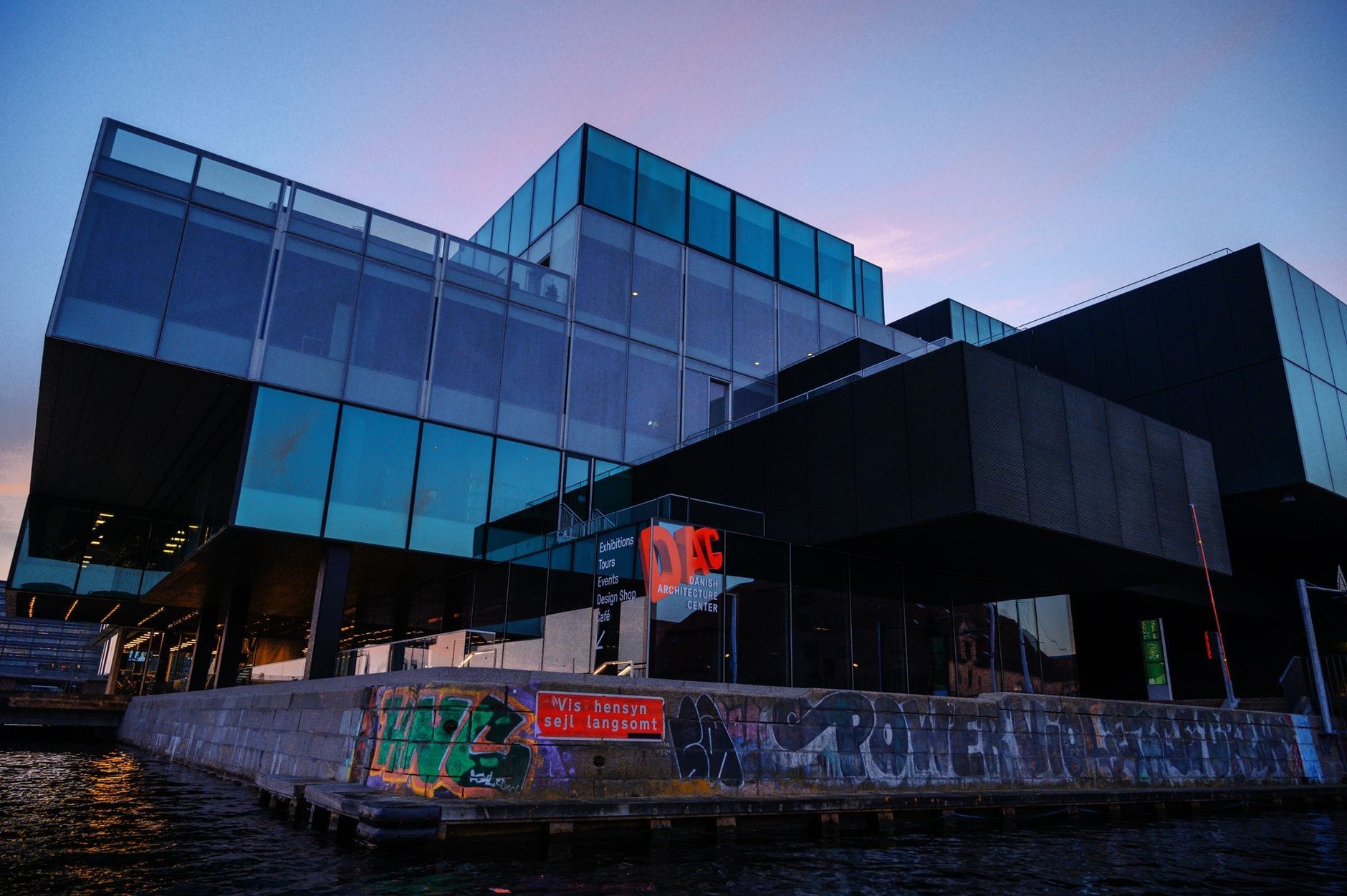
What the Danish Architecture Center Actually Is
The Danish Architecture Center, known locally as Dansk Arkitektur Center or simply DAC, is Denmark's national institution dedicated to architecture, urban design, and the built environment. Founded in 1986, it spent years operating in smaller premises before relocating to the BLOX building, a striking mixed-use complex designed by Dutch architecture firm OMA, led by Rem Koolhaas. That move transformed DAC from a specialist venue into one of Copenhagen's most visually arresting cultural destinations.
BLOX sits at Bryghuspladsen, right at the point where the historic canal district of Slotsholmen meets the harbor. The building itself is the first argument for visiting: its stacked volumes, seemingly cantilevered over a public square, make it immediately recognizable from the water and from the bridges nearby. Before you buy a ticket, the architecture has already started making its case.
ℹ️ Good to know
DAC is free for all visitors under 18 and covered by the Copenhagen Card. Adults pay 135 DKK. Extended hours run on Mondays, Thursdays, and Fridays until 21:00, making those the best days for an after-dinner visit.
The Building: Rem Koolhaas's BLOX as Context
It is worth spending a few minutes outside before entering. BLOX was completed in 2018 and immediately sparked debate in Copenhagen, which is exactly what OMA buildings tend to do. The structure sits above a public passage that connects the city to the waterfront, meaning pedestrians and cyclists flow through it rather than around it. This integration of movement into architecture is, fittingly, a living demonstration of the urban design thinking DAC promotes in its exhibitions.
The building houses not just DAC but also offices, apartments, a restaurant, and public spaces, making it a kind of vertical neighborhood. On warmer days, people sit along the harbor edge just outside, and the waterfront cycling network continues south toward Cykelslangen in Vesterbro, adding to the sense that this stretch of waterfront is one of Copenhagen's more thoughtfully designed public zones.
If architecture and urban infrastructure interest you, this area pairs well with a broader look at how the city has evolved. The Copenhagen design and architecture guide covers the wider network of significant buildings and neighborhoods worth exploring on foot or by bike.
Tickets & tours
Hand-picked options from our booking partner. Prices are indicative; availability and final rates are confirmed when you complete your booking.
Discover Copenhagen's amazing architecture private walking tour
From 449 €Instant confirmationFree cancellationPrivate bike tour of Copenhagen architecture
From 401 €Instant confirmationFree cancellationCopenhagen architecture and sustainability bike tour
From 60 €Instant confirmation2-hour private Copenhagen architecture walking tour with local guide
From 325 €Instant confirmationFree cancellation
Inside the Exhibitions: What You Will Find
DAC's permanent and temporary exhibitions focus on architecture, city planning, sustainability, and the social dimensions of design. The approach is deliberately accessible rather than academic: physical models, large-format photography, interactive elements, and clear explanatory text make the content approachable even if you have no background in architecture. That said, the depth is there for those who want it.
Exhibitions rotate across the year and tend to address both Danish examples and international themes. Past shows have examined climate-resilient cities, housing innovation, and the relationship between public space and social behavior. The quality of curation is high, and the physical presentation makes good use of the building's generous ceiling heights and natural light.
One area that consistently draws visitors is the architectural model collection. Scale models of city districts, landmark buildings, and speculative urban proposals are displayed in ways that reward slow inspection. Children often find these surprisingly engaging, which makes DAC a reasonable option for families with older kids who have some patience for ideas-driven content.
💡 Local tip
Check DAC's exhibition calendar on dac.dk before visiting. If you arrive between major shows, the experience can feel thinner. Picking a visit around a strong temporary exhibition significantly improves the return on your time.
How the Experience Changes by Time of Day
Arriving in the morning, particularly on weekdays, means relatively few visitors inside. The light inside BLOX shifts noticeably as the day progresses: the building's geometry creates patches of direct light in the late morning that move across the gallery floors by early afternoon. Architecturally minded visitors who want to photograph the interior should note that midday light on sunny days can be dramatic but also harsh in certain spots.
The extended evening hours on Mondays, Thursdays, and Fridays, when the center stays open until 21:00, offer a noticeably different atmosphere. Visitor numbers are lower, the pace is slower, and the waterfront outside takes on a different character as the light fades and the harbor lights come on. For those who want to combine DAC with dinner nearby, an evening visit followed by a meal at one of the restaurants in or around BLOX is a practical and unhurried combination.
Weekend afternoons are busiest, particularly during popular temporary exhibitions. The building handles crowds reasonably well given its scale, but the model areas and interactive zones can feel compressed when school groups are present.
Getting There and Moving Around the Area
DAC's address is Bryghuspladsen 10, 1473 København K. The location is central enough that most visitors staying in the inner city or along the waterfront will find it an easy walk. City Hall Square, one of Copenhagen's main orientation points, is roughly a ten-minute walk away. The nearest metro and bus stops vary by line, so checking the current Rejseplanen (Denmark's public transit planner) for your exact starting point is the most reliable approach.
Cyclists will find the area well connected. The harbor cycle routes pass close by, and the waterfront path links DAC naturally to other parts of the city. If you plan to spend a full day in the center, pairing DAC with City Hall Square and the nearby canal area is a logical route that keeps most of the walking along pleasant waterside paths.
The building is wheelchair accessible, with lifts and step-free access throughout. Prams are manageable inside, though the ground-level public passage through BLOX has some cobbled sections on approach from certain directions.
The Shop and Other Practical Details
DAC's shop is worth a deliberate stop rather than a quick glance. The selection is curated toward architecture, design, and urbanism: books on Danish modernism, international architecture monographs, design objects, and a range of quality prints and models. It is one of the better specialist design bookshops in Copenhagen and can be browsed without purchasing a museum ticket, which makes it accessible to those on tighter budgets.
Speaking of budgets, DAC's children's free entry policy and Copenhagen Card inclusion make it one of the more cost-effective cultural venues in the city. For broader strategies on stretching your spending, the Copenhagen on a budget guide covers admission deals and free alternatives across the city.
There is cafe and restaurant space within BLOX, though the options are managed separately from DAC itself. Quality and hours can vary, so checking current reviews before planning a meal around your visit is sensible.
Who This Works for and Who Might Leave Underwhelmed
DAC works best for visitors who have a genuine interest in design, cities, or ideas about the built environment. It is not a history museum with artifacts, not a gallery with paintings, and not an attraction built around spectacle. The experience is cerebral and visual in equal measure, and it asks you to think about the spaces people inhabit rather than simply to admire objects.
Travelers looking for a broad overview of Danish culture or history will find more immediate payoff at the National Museum or Rosenborg Castle. Young children without interest in architectural models or urban planning are likely to run out of engagement within thirty minutes. And visitors who arrive between major temporary exhibitions should set expectations accordingly: the building alone is worth seeing, but the permanent offering is modest in scale.
For those building a broader cultural itinerary, DAC pairs logically with Designmuseum Danmark, which covers applied design and decorative arts with a different but complementary focus. Together, they give a rounded picture of how Denmark thinks about the designed world.
Insider Tips
- Visit on a Monday, Thursday, or Friday evening for the best combination of low crowds and extended hours until 21:00. The waterfront view from outside BLOX at dusk adds something the daytime visit lacks.
- The shop can be browsed without a museum ticket. If you are short on time or budget, a browse through the architecture book selection is worthwhile on its own.
- Stand at the public passage running through the ground floor of BLOX before or after your visit. The way the building frames views of the harbor and historic canal district illustrates the exhibition themes in a way no display board can.
- Check the DAC website for evening lecture and event programming. DAC regularly hosts talks and panel discussions on architecture and urban design, many of which are open to the public and reasonably priced.
- If visiting with teenagers interested in design or cities, DAC's scale models and interactive planning exhibits tend to hold attention in a way that more passive exhibition formats do not. Factor in extra time for those sections.
Who Is Danish Architecture Center (DAC) For?
- Architecture and design enthusiasts wanting a focused, well-curated national institution
- Urban planners, students, and professionals with interest in Danish and Scandinavian approaches to cities
- Travelers on a Copenhagen Card looking to fill an afternoon with something intellectually engaging
- Families with older children who have some interest in how cities and buildings are designed
- Anyone wanting to understand the physical and conceptual context behind Copenhagen's reputation as a livable, well-designed city
Nearby Attractions
Other things to see while in Indre By (Old Town):
- Amalienborg Palace
Amalienborg is the official home of the Danish royal family and one of Copenhagen's most architecturally coherent ensembles. Four near-identical Rococo palaces frame a grand octagonal square, with the Amalienborg Museum open to visitors inside Christian VIII's Palace. The daily changing of the guard at noon is a punctual, unhurried ceremony worth timing your visit around.
- The Black Diamond
The Black Diamond is the modern extension of the Royal Danish Library, clad in polished black granite and angled toward the harbour on Slotsholmen. Entry is free, the atrium is genuinely impressive, and the building rewards visitors who take time to understand what they are looking at.
- Botanical Garden of the University of Copenhagen
Tucked behind Nørreport Station in the heart of the city, the Copenhagen University Botanical Garden is a 10-hectare green sanctuary with a Victorian glasshouse complex, a tranquil lake, and around 8,000 plant species. Entry to the grounds is free, making it one of the most rewarding stops in central Copenhagen for any pace of traveler.
- Christiansborg Palace
Christiansborg Palace sits on the Slotsholmen islet in central Copenhagen, serving simultaneously as the home of the Danish Parliament, the Supreme Court, the Prime Minister's Office, and the Royal Reception Rooms. It is widely described as uniquely housing all three branches of Denmark’s national government under one roof, and its 106-metre tower offers one of the best free panoramic views in the city.