Copenhagen Botanical Garden (Botanisk Have): What to Expect Before You Visit
Tucked behind Nørreport Station in the heart of the city, the Copenhagen University Botanical Garden is a 10-hectare green sanctuary with a Victorian glasshouse complex, a tranquil lake, and around 8,000 plant species. Entry to the grounds is free, making it one of the most rewarding stops in central Copenhagen for any pace of traveler.
Quick Facts
- Location
- Gothersgade 128, 1353 København K
- Getting There
- Nørreport Station (Metro & S-train, 5-min walk)
- Time Needed
- 1 to 2.5 hours depending on pace and glasshouse visits
- Cost
- Outdoor garden: free. Palm House and glasshouses: ticketed — check snm.dk for current DKK prices
- Best for
- Quiet walks, botany enthusiasts, families, photography
- Official website
- snm.dk/en/botanical-garden
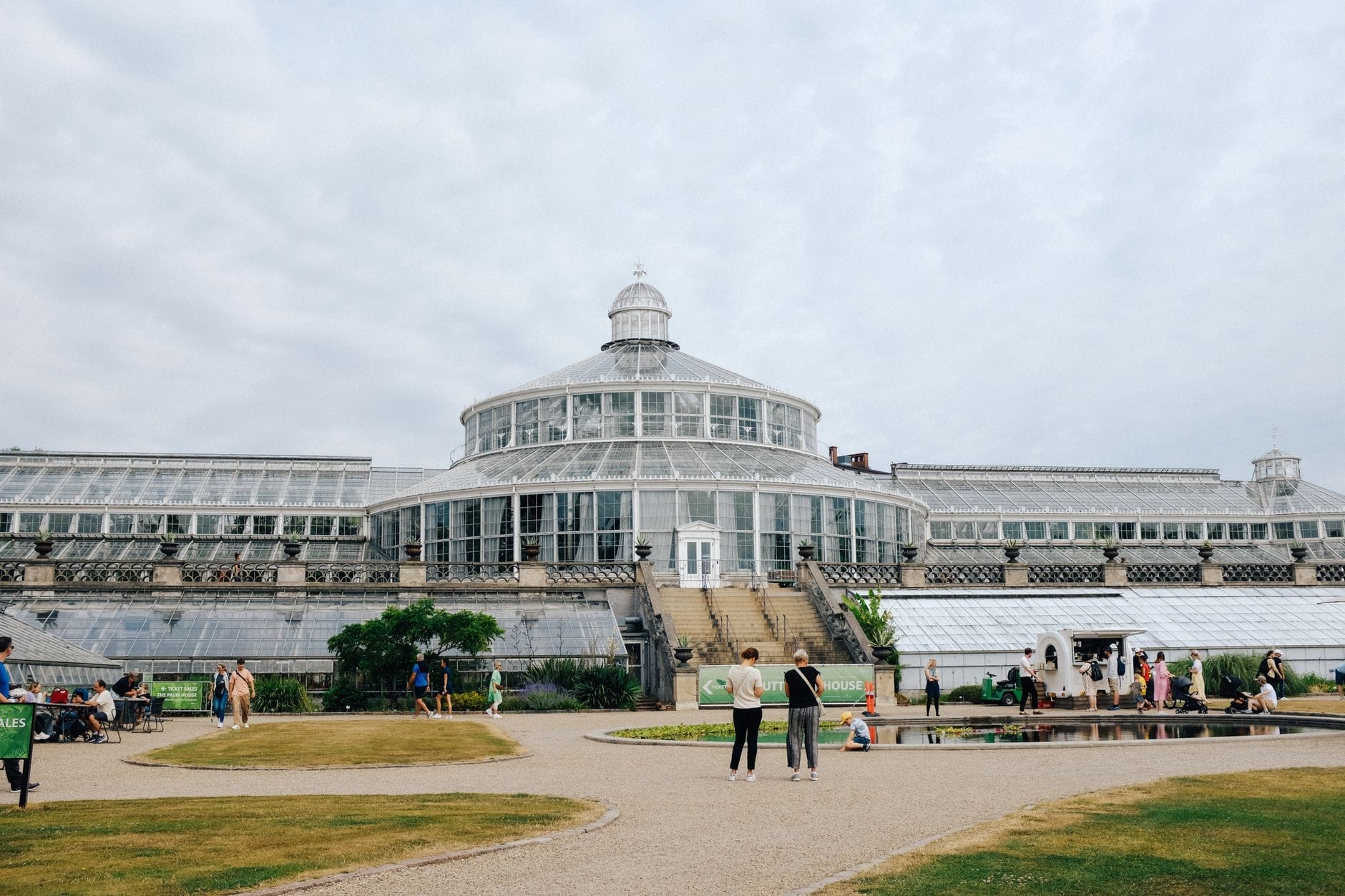
What the Botanical Garden Actually Is
The Botanical Garden of the University of Copenhagen, known in Danish as Botanisk Have, is one of the oldest scientific gardens in Scandinavia. It sits on more than 10 hectares (roughly 25 acres) of former city fortification land in Indre By, Copenhagen's historic city centre, and is administered by the Natural History Museum of Denmark, which is part of the University of Copenhagen. The garden holds living collections of around 8,000 plant species from across the world, organized across open lawns, a rock garden built on what were once the city's old earthwork ramparts, a still lake, and an extraordinary greenhouse complex covering approximately 3,000 square metres.
The site has roots stretching back to 1600, when early medicinal gardens were established for the university. The garden was formally re-founded in 1759 on part of Copenhagen's ancient fortifications, and moved to its current location in 1870. The historical glasshouses, including the iconic Palm House, date from 1874 and remain structurally intact today. That makes this a working scientific institution with a living collection that has been continuously maintained for centuries, not a modern park dressed up as a garden.
ℹ️ Good to know
The outdoor garden grounds are free to enter. The Palm House and other glasshouses are ticketed. Seasonal hours vary — check snm.dk before you go to confirm times for the indoor areas.
The Palm House: Copenhagen's Victorian Greenhouse
The centerpiece of the Botanical Garden is the Palm House, a soaring cast-iron and glass structure built in the late 1870s that draws an immediate comparison to Kew Gardens' Temperate House or the botanical glasshouses of Brussels. Inside, the air is warm and heavy with humidity even on the coldest Copenhagen morning. Towering palms push toward the glass ceiling, and the light that filters through on a grey Danish afternoon gives the interior a diffuse, almost amber quality that photographers tend to respond to instinctively.
A cast-iron spiral staircase winds up to a narrow upper gallery that runs around the perimeter of the structure, giving a rare vantage point level with the upper canopy. It is tight, and the stairs are steep. Visitors with limited mobility should be aware that this section is not step-free, and the official Botanical Garden page at snm.dk is the most reliable source for current accessibility information. That said, the ground-floor experience of the Palm House is compelling on its own.
The wider glasshouse complex, spanning roughly 3,000 square metres in total, also houses collections of orchids, begonias, ferns, and other tropical and subtropical species. Each glasshouse has its own microclimate, so moving between them in sequence offers a surprisingly varied sensory experience for a relatively small footprint.
Tickets & tours
Hand-picked options from our booking partner. Prices are indicative; availability and final rates are confirmed when you complete your booking.
Copenhagen Classic Pass 1-Day comprehensive ticket
From 89 €Instant confirmationCopenhagen card-HOP with 40+ attractions and hop-on hop-ff bus
From 78 €Instant confirmationFree cancellationEscape Tour self-guided, interactive city challenge in Copenhagen
From 30 €Instant confirmationEscape Tour self-guided, interactive city challenge in Copenhagen
From 30 €Instant confirmation
The Outdoor Garden: Rock Mounds, the Lake, and Open Lawns
Beyond the glasshouses, the outdoor grounds reward slow exploration. The rock garden is built on the remains of Copenhagen's 17th-century earthwork fortifications, and its undulating stone mounds give the garden an unusual topography for a flat coastal city. Alpine and hardy plants colonize the rock crevices throughout the growing season, and the raised viewpoints are worth the gentle climb for orientation across the whole garden.
The central lake sits calmly through most seasons. On weekday mornings it is common to find the benches along its edge almost entirely empty, with the only sounds being water birds and the low background noise of the city beyond the garden walls. In summer, the lawns around the lake become a popular spot for university students and local families on lunch breaks, and the mood shifts considerably. Neither version of the garden is better, just different.
The garden is also a serious working collection, so the planting is systematic rather than purely decorative. Plants are labelled with their scientific names throughout, which adds a layer of information for anyone with even a passing interest in botany, horticulture, or ecology. The layout itself follows broadly taxonomic principles, meaning you can observe how plant families relate to each other spatially as you walk.
💡 Local tip
Visit in May or early June for the rock garden at peak flowering. Late autumn and winter are quietest, and the glasshouses become especially appealing when the temperature drops outside.
How the Garden Changes Through the Day and Across Seasons
Early mornings, particularly on weekdays, offer the Botanical Garden at its most peaceful. The gates open before the city properly wakes up, and for the first hour or two the garden has an almost private quality. The light is low and directional, which works well for photography of both the glasshouse structures and the outdoor plantings.
Midday in summer brings the busiest crowds, primarily families with children and tourists walking between Nørreport and Rosenborg Castle, which sits just to the east. The garden never reaches the kind of overcrowding that affects Nyhavn or Tivoli, but the lakeside benches and sunny lawn areas do fill up. If you are visiting primarily for photography or quiet reflection, a morning or late-afternoon slot on a weekday is worth planning for.
Seasonally, the garden has a genuine character in every month. Spring brings the rock garden to life and the first warmth draws large numbers of Copenhageners outdoors. Summer is the most photogenic period for the outdoor collection. Autumn brings colour changes and the transition is often striking around the lake. In winter, the outdoor garden is stripped back but the glasshouses take on added significance as warm, green escapes from the grey Copenhagen cold.
Getting There and Getting Around
The garden's address is Gothersgade 128, 1353 København K, and Nørreport Station is the obvious transit hub. It is served by both the Metro and S-train networks, and is one of the most connected stations in the city. From Nørreport, the main garden entrance is around a five-minute walk. Nørreport also connects with multiple bus lines. For anyone using the Copenhagen Card, transit to the garden is covered within the card's zone inclusions, and the card also provides free entry to a large number of museums across the city.
Cycling to the garden is straightforward. Copenhagen's cycling infrastructure is dense in this part of Indre By, and there is secure bike parking available near the entrance. For a broader look at getting around the city, the cycling in Copenhagen guide covers routes and rental options in useful detail.
Within the garden itself, paths are wide enough for pushchairs and wheelchairs in the outdoor sections. The main exception is the upper gallery of the Palm House, which involves the spiral staircase described above. Flat, paved routes connect most key areas of the outdoor garden.
Honest Assessment: Is It Worth Your Time?
For travelers on a tight itinerary, the Botanical Garden is most rewarding for those who genuinely enjoy plants, Victorian architecture, or quiet green spaces. It is not a spectacle in the way that Tivoli or Rosenborg Castle is, and first-time visitors to Copenhagen who only have a day or two may find that the nearby King's Garden and Rosenborg give a more concentrated hit of both greenery and history.
That said, for anyone staying more than two days, or for those who have already covered the major landmarks, the Botanical Garden offers something most central Copenhagen attractions do not: genuine calm, free entry, and a sense of continuity with the city's intellectual history. It sits naturally within a walk that might also take in Rosenborg Castle and the King's Garden immediately to the east, or the Round Tower a short walk to the southwest.
Families with young children typically find the garden works well as part of a half-day loop. The open lawns give children room to move, and the glasshouses offer genuine novelty. For a fuller picture of what to pair with the garden, the Copenhagen with kids guide covers age-appropriate itinerary planning across the city.
⚠️ What to skip
The Palm House and glasshouses have their own opening hours that differ from the outdoor garden, and they are closed for parts of the year for maintenance. Always check snm.dk before planning your visit around the indoor collections specifically.
Insider Tips
- The garden's rock garden section, built on the old city ramparts, gives you the best elevated overview of the whole site. Head there first to get your bearings before exploring the glasshouses.
- Weekday mornings before 10am are when the garden is at its quietest. The glasshouses in particular feel completely different without a crowd inside the humid, enclosed space.
- The scientific plant labels throughout the outdoor garden include both Latin and Danish names. Even if botany is not your interest, they give the walk a layer of information that a plain park cannot.
- The Palm House's upper spiral staircase gallery puts you at canopy level among the palms. It is narrow and steep, but the perspective from up there is worth the climb if you are comfortable on tight spiral stairs.
- If you are combining this with Rosenborg Castle, enter the Botanical Garden from the Øster Voldgade side to walk straight through and exit toward Rosenborg without backtracking.
Who Is Botanical Garden of the University of Copenhagen For?
- Travelers who want a genuine break from landmark-hopping and need somewhere calm and free
- Photography enthusiasts interested in Victorian glass architecture and botanical subjects
- Families looking for open green space within easy walking distance of central sights
- Botany, horticulture, or ecology enthusiasts who will appreciate the scientific depth of the living collection
- Visitors in winter or early spring who want a warm, green indoor experience at the glasshouses
Nearby Attractions
Other things to see while in Indre By (Old Town):
- Amalienborg Palace
Amalienborg is the official home of the Danish royal family and one of Copenhagen's most architecturally coherent ensembles. Four near-identical Rococo palaces frame a grand octagonal square, with the Amalienborg Museum open to visitors inside Christian VIII's Palace. The daily changing of the guard at noon is a punctual, unhurried ceremony worth timing your visit around.
- The Black Diamond
The Black Diamond is the modern extension of the Royal Danish Library, clad in polished black granite and angled toward the harbour on Slotsholmen. Entry is free, the atrium is genuinely impressive, and the building rewards visitors who take time to understand what they are looking at.
- Christiansborg Palace
Christiansborg Palace sits on the Slotsholmen islet in central Copenhagen, serving simultaneously as the home of the Danish Parliament, the Supreme Court, the Prime Minister's Office, and the Royal Reception Rooms. It is widely described as uniquely housing all three branches of Denmark’s national government under one roof, and its 106-metre tower offers one of the best free panoramic views in the city.
- City Hall Square (Rådhuspladsen)
Rådhuspladsen is the great open plaza at the centre of Copenhagen — free, open at all hours, and framed by one of Scandinavia's most photogenic town halls. Whether you arrive at rush hour or midnight, the square reads the mood of the city back to you.