The Black Diamond: Copenhagen's Waterfront Library Worth Stepping Inside
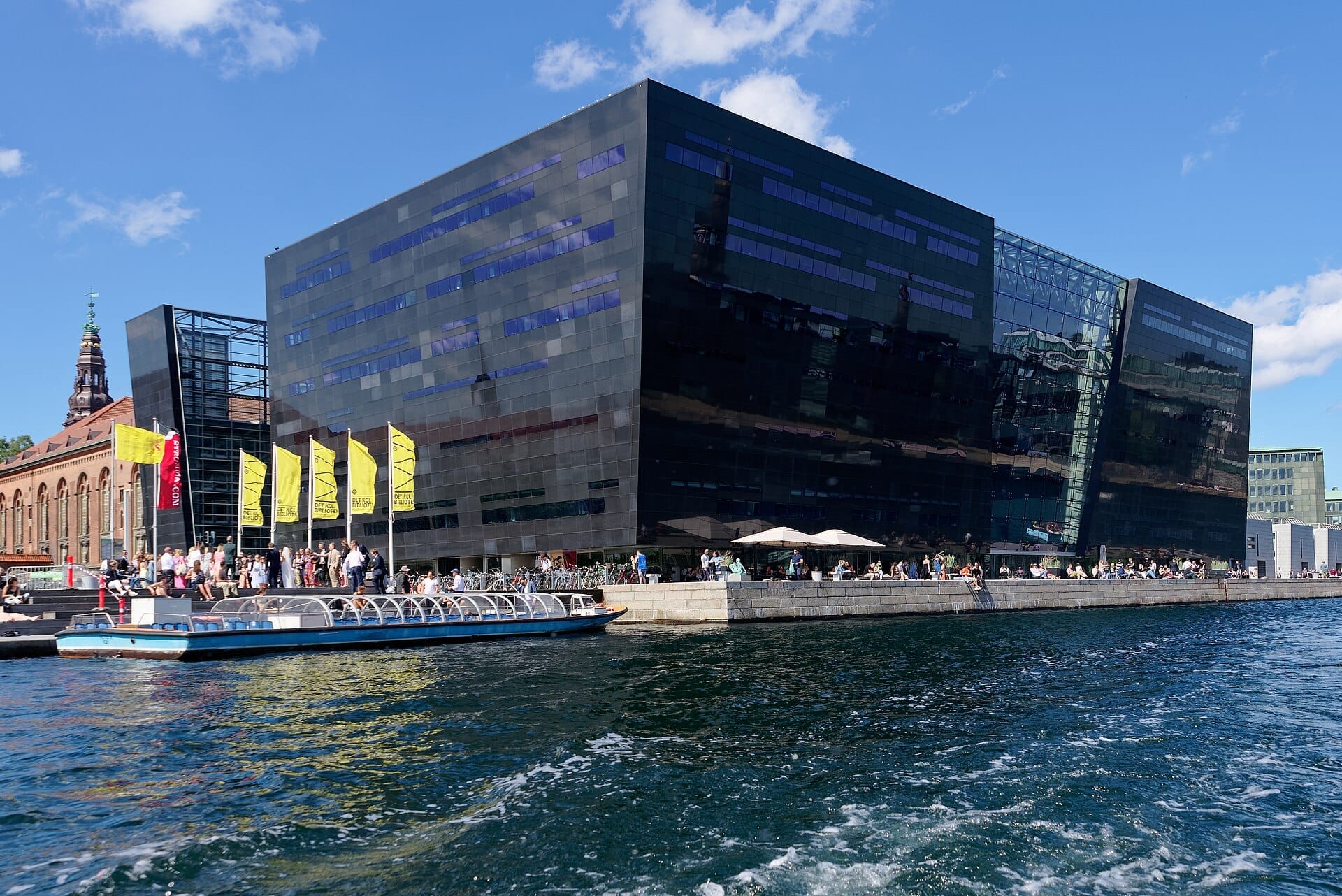
The Black Diamond is the modern extension of the Royal Danish Library, clad in polished black granite and angled toward the harbour on Slotsholmen. Entry is free, the atrium is genuinely impressive, and the building rewards visitors who take time to understand what they are looking at.
Quick Facts
- Location
- Søren Kierkegaards Plads 1, 1221 Copenhagen K — Slotsholmen waterfront, Indre By
- Getting There
- Harbour buses 991 and 992 stop directly outside
- Time Needed
- 45 minutes to 2 hours depending on exhibitions
- Cost
- Free general entry; exhibitions and guided tours charged separately
- Best for
- Architecture lovers, design curious travellers, rainy-day escapes
- Official website
- www.kb.dk/en/visit-us/black-diamond-copenhagen
What the Black Diamond Actually Is
The Black Diamond, known in Danish as Den Sorte Diamant, is the contemporary extension of the Royal Danish Library (Det Kgl. Bibliotek), which was originally built in 1906 on the Slotsholmen island in central Copenhagen. The extension opened in 1999, designed by the Copenhagen firm Schmidt Hammer Lassen. It sits directly on the harbour, its polished black granite facade tilted at sharp angles toward the water, which is where the nickname comes from: the faceted surfaces catch and fragment light the way a cut stone would.
The building covers approximately 28,000 square metres and includes reading rooms, a large public atrium, temporary exhibition galleries, a bookshop, a café, a restaurant with harbour views, and a 600-seat concert hall used for cultural events. The old 1906 library and the 1999 extension are connected internally, so you can move between the two as part of a single visit.
ℹ️ Good to know
Entry to the Black Diamond and its public areas is free of charge. You do not need to register or book in advance to walk in and explore the atrium, reading rooms, and current free exhibitions. Guided tours and special events carry separate charges.
The Experience at Different Times of Day
Arriving in the morning on a weekday, the Black Diamond has the quiet purposefulness of a working institution. Researchers and students are already at the reading tables before 9am. The atrium catches the low northern light and throws long geometric reflections across the pale floor. There is almost no noise beyond soft footsteps and the occasional creak of a chair. The granite of the exterior, viewed from the quay at this hour, shifts between near-black and a dark greenish-grey depending on cloud cover.
By midday, the café fills up with a mix of library regulars and visitors who have wandered in from the harbour walk. The atrium becomes the social centre of the building: people take photos looking upward through the layered glass ceiling, and others eat lunch on the steps that form an informal seating area near the ground floor. The outdoor terrace on the harbour side is worth using in warmer months, with a direct line of sight across the water toward Christianshavn.
Late afternoon on a Saturday is the busiest single window. The Saturday public tour at 3pm draws a steady group, and the light hitting the western face of the building from across the harbour is at its most photogenic around 4pm in summer. If you want the atrium to yourself, weekday mornings before 10am or a Sunday before noon are your best options.
💡 Local tip
For photographs of the exterior, cross to the opposite bank of the harbour canal near Christianshavn. From there you get the full facade unobstructed, with the water in the foreground. The granite reflects differently at every hour, so early morning and late afternoon give you noticeably different results.
Tickets & tours
Hand-picked options from our booking partner. Prices are indicative; availability and final rates are confirmed when you complete your booking.
1-hour boat harbour tour in Copenhagen
From 26 €Instant confirmationFree cancellationSmall group 3-hour walking tour in Copenhagen
From 45 €Instant confirmationFree cancellationCopenhagen to Malmo one-day tour
From 56 €Instant confirmationFree cancellationFull-day tour to Forest Tower and Forgotten Giants from Copenhagen
From 110 €Instant confirmationFree cancellation
Architecture and Context: Why This Building Matters
Schmidt Hammer Lassen completed the Black Diamond at a moment when Copenhagen was actively rebuilding its waterfront identity. The harbour areas that now draw visitors had been industrial zones for most of the 20th century. The library extension was one of the first significant cultural buildings to claim the waterfront deliberately, before the Opera House, before the playhouse, before the harbour baths. In that sense, it did not follow a trend; it helped start one.
The building's angles are not arbitrary. The facade leans over the water at a calculated tilt, and the internal atrium cuts diagonally through the building mass to bring natural light into the centre of the floor plan. This kind of section-based daylight strategy was a signature concern of Scandinavian architecture in the 1990s, and the Black Diamond is one of its cleaner executed examples. For a broader look at how Copenhagen has developed its architectural character, the Copenhagen design and architecture guide gives useful context about the buildings and movements that shaped the city.
The connection to the 1906 building is worth exploring on foot. The older structure uses red brick and classical proportions, and the contrast when you walk through the internal bridge between the two is deliberate and slightly jarring in a way that works. Neither building pretends to match the other.
Inside the Building: What to See and Do
The ground floor atrium is the first thing that registers, and it is genuinely large. The space rises through multiple levels with open balconies, glass railings, and the slanted ceiling that caps the whole interior. There is public art installed at various points, and the scale tends to surprise visitors who expected a conventional library reading room.
The exhibition spaces on the lower floors rotate through the year. Some are free, some carry an admission charge. The library's permanent collections include maps, photographs, manuscripts, and historical documents, though most of these are accessible to researchers rather than casual visitors. What the general public gets is a well-designed building with thoughtful temporary shows and a bookshop that stocks a good range of Danish design and art titles.
The restaurant on the upper level has harbour views and operates independently from the library, so it keeps its own hours. The café on the ground floor is more practical for a quick stop. If you are planning a longer day in the area, the Christiansborg Palace is a short walk along the same island, and combining both in a half-day is straightforward.
💡 Local tip
The bookshop near the entrance stocks Danish architecture monographs, design books, and Royal Danish Library publications that you will not easily find in airport shops or general bookstores. Worth a look even if you buy nothing.
Getting There and Getting In
Harbour buses 991 and 992 stop directly at the Royal Danish Library, making the Black Diamond one of the more straightforward harbour destinations to reach by public transit. The harbour bus is also a scenic way to approach the building from the water, and you will see the facade from the correct angle as you dock.
If you are coming from the city centre on foot, the walk from Rådhuspladsen (City Hall Square) takes around 15 to 20 minutes through the historic core of Indre By. You can also approach from Strøget by cutting south through the old city. The Slotsholmen island is compact and easy to navigate on foot, with the Black Diamond sitting on its southern, harbour-facing edge.
Wheelchair access is provided throughout the building. Wheelchair users who need to arrange guided tours or meeting rooms in advance should contact the library directly, as the official site provides specific contact details for this.
Opening Hours and Practical Details
During the published opening period (26 May 2026 to 23 December 2026), the building is open Monday to Friday from 08:00 to 20:00, Saturday from 10:00 to 18:00, and Sunday from 10:00 to 16:00. Hours can shift for public holidays and library events, so confirming on the official Royal Danish Library website before visiting is sensible. Entry to the public areas is free, no booking required.
Guided public tours run on a schedule, commonly on Saturdays, and carry a separate charge. Current tour prices and booking are handled through the official site. Photography inside the public areas is generally permitted, though flash and tripods in reading rooms would be disruptive and are best avoided. The building is not heavy on signage for casual visitors, so allowing a few minutes to orient yourself in the atrium before heading further in is useful.
⚠️ What to skip
The Black Diamond is a working research library, not purely a visitor attraction. Some areas are restricted to registered library users. The public galleries, atrium, café, bookshop, and harbour terrace are open to everyone, but expect an atmosphere of quiet use rather than the interactive engagement of a museum.
Who Will Get the Most Out of This Visit
Architecture and design travellers get the clearest reward here. There is genuine craft in the building, and it holds up to attentive looking. Visitors interested in Scandinavian modernism, library design, or waterfront urbanism will find plenty to engage with. The Danish Architecture Center is worth pairing with a Black Diamond visit if architecture is your primary interest in Copenhagen.
Travellers looking for shelter on a rainy afternoon will find the Black Diamond a genuinely good option. It is free, the interior is comfortable, and there is enough to look at for an hour without any pressure to spend money. Families with young children may find the atrium engaging at first, but the building's working-library character means it is not set up to hold children's attention for long. It is not a bad stop, but it is not a destination for a family with kids who have been walking all day.
Anyone following a broader Copenhagen cultural circuit should note that the Black Diamond sits close to several other significant sites. The Thorvaldsens Museum is a short walk north on Slotsholmen, and the Ny Carlsberg Glyptotek is roughly 10 minutes on foot toward the train station. If you are working through Copenhagen's cultural institutions in a day or two, the best museums in Copenhagen guide can help you sequence things efficiently.
Insider Tips
- The harbour terrace on the south side of the building is one of the quieter waterfront spots in central Copenhagen. Most visitors who come inside do not find their way out to it. In summer it is a decent place to sit for twenty minutes without being surrounded by other tourists.
- Saturday at 3pm is when the official guided tour typically runs. If you want an explanation of the architecture and the library's history, book this in advance on the official site. If you want the building to yourself, avoid that window entirely.
- The upper floors of the atrium are accessible by elevator and give a very different reading of the space than the ground floor. Looking down through the glass layers from the top balcony is one of the better interior views in the building.
- The annual Copenhagen Jazz Festival sometimes programmes events inside the 600-seat concert hall. If your visit coincides with the festival period, check the library's event calendar because tickets can be very reasonably priced.
- The granite facade changes appearance significantly in rain. Wet black granite takes on a depth that the dry surface does not have. If you are visiting on a grey day, the exterior is worth a longer look than you might otherwise give it.
Who Is The Black Diamond For?
- Architecture and design travellers who want to see a significant example of late-1990s Scandinavian public building
- Travellers on a tight budget who want a free, high-quality cultural stop in the city centre
- Rainy-day visitors looking for an atmospheric interior to escape wet weather
- Anyone building a Slotsholmen half-day that includes Christiansborg and the historic waterfront
- Photography-oriented visitors interested in how light and reflective surfaces behave across different times of day
Nearby Attractions
Other things to see while in Indre By (Old Town):
- Amalienborg Palace
Amalienborg is the official home of the Danish royal family and one of Copenhagen's most architecturally coherent ensembles. Four near-identical Rococo palaces frame a grand octagonal square, with the Amalienborg Museum open to visitors inside Christian VIII's Palace. The daily changing of the guard at noon is a punctual, unhurried ceremony worth timing your visit around.
- Botanical Garden of the University of Copenhagen
Tucked behind Nørreport Station in the heart of the city, the Copenhagen University Botanical Garden is a 10-hectare green sanctuary with a Victorian glasshouse complex, a tranquil lake, and around 8,000 plant species. Entry to the grounds is free, making it one of the most rewarding stops in central Copenhagen for any pace of traveler.
- Christiansborg Palace
Christiansborg Palace sits on the Slotsholmen islet in central Copenhagen, serving simultaneously as the home of the Danish Parliament, the Supreme Court, the Prime Minister's Office, and the Royal Reception Rooms. It is widely described as uniquely housing all three branches of Denmark’s national government under one roof, and its 106-metre tower offers one of the best free panoramic views in the city.
- City Hall Square (Rådhuspladsen)
Rådhuspladsen is the great open plaza at the centre of Copenhagen — free, open at all hours, and framed by one of Scandinavia's most photogenic town halls. Whether you arrive at rush hour or midnight, the square reads the mood of the city back to you.