Strøget: Copenhagen's Grand Pedestrian Street
Strøget is Copenhagen's main pedestrian artery, stretching 1.1 km from Rådhuspladsen to Kongens Nytorv through the historic city centre. Free to walk at any hour, it layers global flagship stores beside century-old Danish shops, busy squares, and street performers, making it the city's most-used social corridor as much as its busiest shopping street.
Quick Facts
- Location
- Frederiksberggade to Østergade, Indre By, Copenhagen
- Getting There
- Rådhuspladsen Metro (west end) or Kongens Nytorv Metro (east end); about 10–15 min walk from Copenhagen Central Station
- Time Needed
- 45 min to walk end-to-end; 2–4 hours if you browse shops and squares
- Cost
- Free to enter; shopping and dining at your own pace
- Best for
- Shoppers, first-time visitors, people-watching, connecting districts on foot
- Official website
- www.visitcopenhagen.com/copenhagen/planning/stroget-gdk414471
What Strøget Actually Is
Strøget is not a single street. It is a linked chain of five streets, Frederiksberggade, Nygade, Vimmelskaftet, Amagertorv, and Østergade, that together form a 1.1 km car-free corridor through the heart of Copenhagen's historic centre, Indre By. Count the connected pedestrian side streets and the car-free zone expands to nearly 3.2 km in total. What you experience on the ground is less like a shopping mall and more like a city within the city: open to the sky, paved in stone, and at almost any hour of day alive with movement.
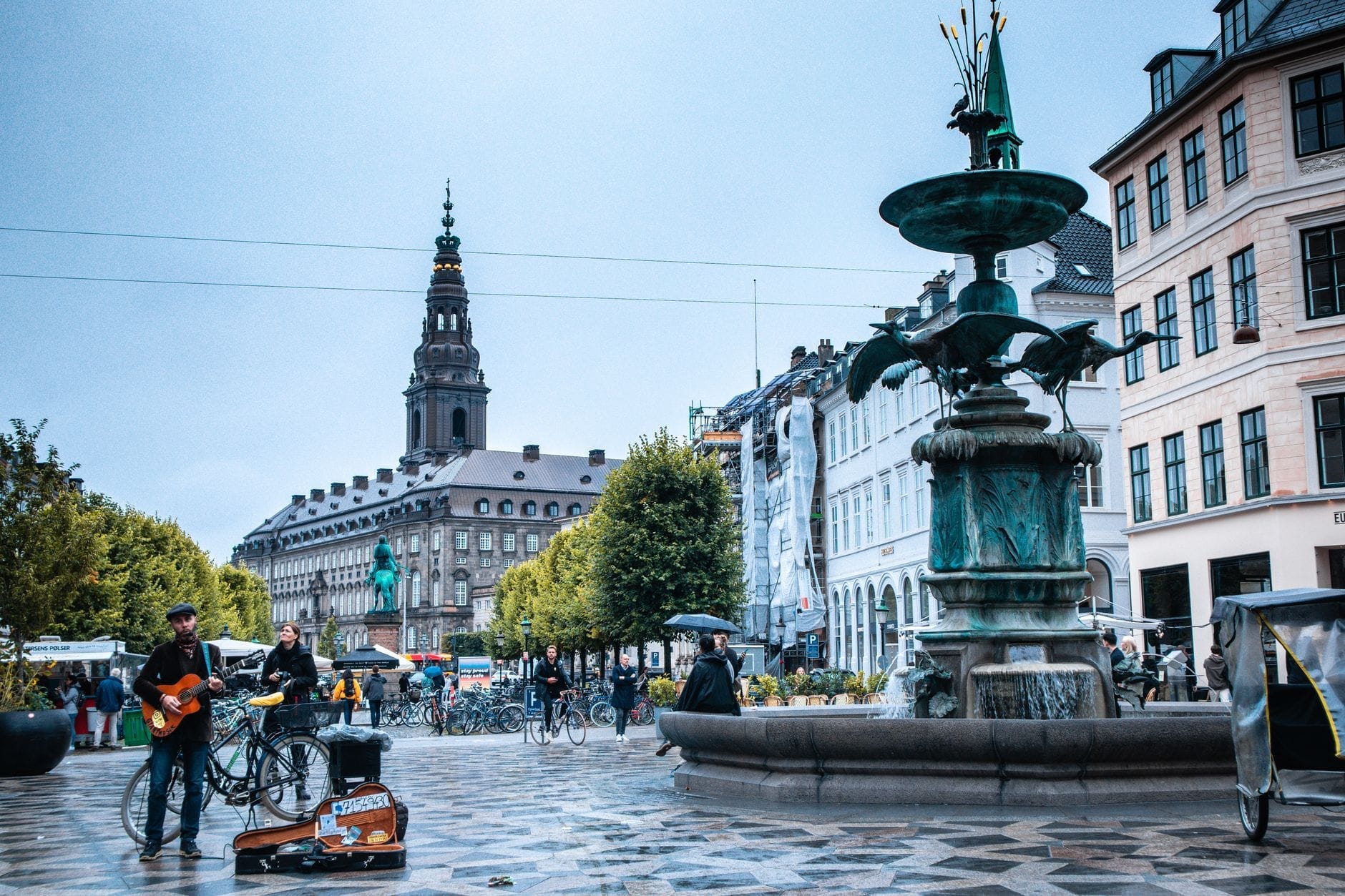
The street runs east to west, starting at City Hall Square (Rådhuspladsen) on the western end and finishing at Kongens Nytorv, one of Copenhagen's grandest squares, on the eastern end. Along the way it passes through several open squares, including Gammeltorv and Nytorv (the old and new market squares), and the wide, fountain-centred Amagertorv, which functions as a natural gathering point midway along the route.
ℹ️ Good to know
Strøget itself is always open and free. There are no gates, no entry fees, and no closing time. Individual shops keep their own hours, typically opening late morning and closing in the early evening, varying by day and season.
A Street Born in 1962
Before 1962, Strøget carried vehicle traffic like any other city-centre street. That year, Copenhagen's City Council made the decision to pedestrianize the corridor from Town Hall Square to Kongens Nytorv. The move was controversial at the time: critics argued that removing cars would kill trade. Within months, it became clear that foot traffic increased dramatically, and the commercial case for pedestrianization was proven. The model went on to influence urban planners across Europe.
Today Strøget is consistently cited as one of Europe's longest pedestrian shopping streets. The designation matters less as a bragging point than as an explanation of scale: it is long enough that walking it end-to-end takes a different pace than a typical shopping arcade, and the variety of what lines it changes noticeably from one end to the other.
The western stretch, near Rådhuspladsen, tends toward fast fashion chains and souvenir shops, with heavier foot traffic and a more tourist-oriented character. By the time you reach Amagertorv in the middle, the architecture becomes more distinguished and the shops more design-oriented. The eastern end, approaching Kongens Nytorv, shifts toward upscale retail and heritage-brand flagships. That graduation from west to east is one of the things first-time visitors rarely know to expect.
Tickets & tours
Hand-picked options from our booking partner. Prices are indicative; availability and final rates are confirmed when you complete your booking.
1-hour boat harbour tour in Copenhagen
From 26 €Instant confirmationFree cancellationSmall group 3-hour walking tour in Copenhagen
From 45 €Instant confirmationFree cancellationCopenhagen to Malmo one-day tour
From 56 €Instant confirmationFree cancellationFull-day tour to Forest Tower and Forgotten Giants from Copenhagen
From 110 €Instant confirmationFree cancellation
What the Walk Feels and Sounds Like
Early in the morning, before 9:00, Strøget belongs almost entirely to locals: delivery workers unloading stock, café staff arranging chairs on cobblestones, a few joggers passing through. The stone surface, a mix of granite and older cobble in some sections, amplifies the sounds of footsteps and wheels in ways that feel almost medieval in the absence of engine noise. Light reaches the narrower sections at angles that shift by the hour, worth noting if photography is part of your visit.
By mid-morning, particularly on weekends and in summer, the crowd density grows significantly. The stretch around Amagertorv becomes genuinely congested in peak season, with street performers working the fountain area and tourist groups pausing mid-street. If you find shoulder-to-shoulder crowds draining, aim to walk Strøget before 10:00 or after 18:00 in summer. On winter weekdays, even mid-afternoon feels manageable.
The sensory experience shifts seasonally in ways that affect the visit meaningfully. In summer, the outdoor café tables that spill from the side streets create pockets of shade and clinking cups. In winter, particularly around December, the street lights up with market stalls and seasonal installations that transform the atmosphere. The smell of roasting almonds from street vendors becomes one of the defining scents of a Copenhagen December.
💡 Local tip
For photography: the early-morning light on Amagertorv, particularly in the golden hour after sunrise, gives you clear sightlines and nearly empty cobblestones. The Royal Copenhagen flagship store nearby provides a photogenic backdrop without the midday crowds.
What Lines the Route
The retail mix on Strøget covers an unusually wide range. Global brands including Zara, H&M, and Lego's flagship store share the street with heritage Danish names like Royal Copenhagen (porcelain), Georg Jensen (silverware and jewellery), and Illum, a multi-floor department store with strong Danish design sections. For visitors specifically interested in design objects, homeware, and quality Danish craft, the stretch between Amagertorv and Østergade is the most productive part of the walk.
Strøget also functions as a route connector between other parts of the city. Heading north off Amagertorv along Købmagergade takes you quickly to the Round Tower and then to Torvehallerne, Copenhagen's best food market. Heading south off Strøget from Nytorv brings you toward the canal district.
The squares along the route merit attention in their own right. Gammeltorv and Nytorv (literally Old Square and New Square) sit side by side and are among the oldest public spaces in the city. The Caritas Fountain in Gammeltorv dates to 1608. Amagertorv, further east, is the social centre of the street: wider, open, and lined with café seating. It is where most people instinctively stop.
Getting There and Getting Around
The easiest approach from most of central Copenhagen is to walk. From Copenhagen Central Station, it is about 10–15 minutes on foot west to Rådhuspladsen and the start of Strøget. The Rådhuspladsen Metro station (M3/M4 lines) deposits you at the western entrance. Kongens Nytorv Metro station (M1/M2) puts you at the eastern end. Nørreport Station, served by both Metro and S-train, is a short walk north via Købmagergade to Amagertorv at the midpoint.
If you are using the Copenhagen Card, all Metro and S-train travel is included, and the card covers many of the museums you might visit before or after walking Strøget. See the Copenhagen Card guide for full details on whether it makes financial sense for your trip.
The street itself is paved predominantly with stone, and the surface is largely level. However, the cobbled sections in some of the older squares and connecting streets can be uneven, and this is worth considering for wheelchair users or anyone with significant mobility limitations. Smooth stone paths run alongside many of the bumpier sections, and the main Strøget corridor is generally manageable, but a perfectly smooth path throughout the full route should not be assumed.
⚠️ What to skip
Wear comfortable, flat-soled shoes. The stone and cobble surface looks manageable in photos but becomes fatiguing after 2 hours of walking, particularly in sandals or heeled shoes. This is practical advice, not aesthetic suggestion.
Strøget at Night and in Winter
After shops close, usually by 19:00 or 20:00, Strøget stays open and takes on a different character. Foot traffic thins. The stone corridors echo more. It becomes a pleasant through-route rather than a destination, connecting Nyhavn and the eastern waterfront to the theatres and bars near Rådhuspladsen. In summer, the light lingers until very late in the evening given Copenhagen's northern latitude, and the street feels inhabited until well past 21:00.
December brings the most atmospheric night-time version of Strøget. The street lights, market stalls near Amagertorv, and the scent of warm food from vendors make it one of the better places in the city to feel the season. This fits into a wider Copenhagen Christmas experience worth planning around. The Copenhagen Christmas guide covers the full seasonal context.
Who Should Reconsider
Strøget is not the right place for visitors whose primary interest is experiencing Copenhagen away from tourist concentration. At peak hours in summer, it can feel indistinguishable from the central shopping streets of any large European city. If you are specifically seeking local neighbourhood life, independent shops, and lower-key urban texture, the streets of Nørrebro or the Vesterbro end of town offer a different kind of walking experience.
Visitors who have been to Copenhagen before and already know the street well may find diminishing returns in a second extended visit unless there is a specific shop or seasonal event drawing them back. As a route between places it remains useful regardless; as a destination in itself, it is primarily valuable on a first visit or during special events.
Insider Tips
- Walk west to east (Rådhuspladsen toward Kongens Nytorv) in the morning when the sun is at your back and crowds are still thin. The light hits the upper facades of the older buildings along Østergade at a useful angle for photography before 10:00.
- Amagertorv is the natural midpoint and the best square to pause. The stork fountain (Storkespringvandet) at its centre has been a Copenhagen meeting point since 1894, and sitting near it for 20 minutes gives a useful sense of who actually uses the street across different demographics.
- The side streets off Strøget, particularly Læderstræde and Kompagnistræde heading south, carry a noticeably different retail character with antique dealers, smaller bookshops, and independent design stores. These streets are almost always less crowded and more locally oriented.
- If shopping is your main purpose, visit on a Tuesday or Wednesday afternoon. Weekend crowds on Strøget in summer are dense enough to make browsing in some of the smaller shops uncomfortable.
- The Lego flagship store near the Vimmelskaftet section is worth entering even if you have no children with you. The interior installations are architecturally considered and the store itself is a useful case study in how Danish brands use physical retail space.
Who Is Strøget For?
- First-time Copenhagen visitors wanting to orient themselves in the city centre
- Shoppers looking for Danish design, porcelain, and silverware alongside international brands
- Families with children, given the pedestrian safety, Lego store, and open squares
- Travellers using Strøget as a walking connector between Rådhuspladsen and Nyhavn
- Visitors in December who want to experience Copenhagen's winter street atmosphere
Nearby Attractions
Other things to see while in Indre By (Old Town):
- Amalienborg Palace
Amalienborg is the official home of the Danish royal family and one of Copenhagen's most architecturally coherent ensembles. Four near-identical Rococo palaces frame a grand octagonal square, with the Amalienborg Museum open to visitors inside Christian VIII's Palace. The daily changing of the guard at noon is a punctual, unhurried ceremony worth timing your visit around.
- The Black Diamond
The Black Diamond is the modern extension of the Royal Danish Library, clad in polished black granite and angled toward the harbour on Slotsholmen. Entry is free, the atrium is genuinely impressive, and the building rewards visitors who take time to understand what they are looking at.
- Botanical Garden of the University of Copenhagen
Tucked behind Nørreport Station in the heart of the city, the Copenhagen University Botanical Garden is a 10-hectare green sanctuary with a Victorian glasshouse complex, a tranquil lake, and around 8,000 plant species. Entry to the grounds is free, making it one of the most rewarding stops in central Copenhagen for any pace of traveler.
- Christiansborg Palace
Christiansborg Palace sits on the Slotsholmen islet in central Copenhagen, serving simultaneously as the home of the Danish Parliament, the Supreme Court, the Prime Minister's Office, and the Royal Reception Rooms. It is widely described as uniquely housing all three branches of Denmark’s national government under one roof, and its 106-metre tower offers one of the best free panoramic views in the city.