Kongens Nytorv (King's New Square): Copenhagen's Grand Baroque Heart
Kongens Nytorv is Copenhagen's largest and most historically significant square, laid out in 1670 under King Christian V. Flanked by palaces, theatres, and the entrance to Nyhavn, it serves as both a major transit hub and a living piece of Danish urban history — free to enter at any hour.
Quick Facts
- Location
- Kongens Nytorv, 1050 København K — eastern end of Strøget, between the city centre and Nyhavn
- Getting There
- Kongens Nytorv Metro Station (lines M1, M2, M3 Cityringen, and M4 Orientkaj) — directly on the square
- Time Needed
- 20–45 minutes to explore the square; longer if combining with Nyhavn or nearby museums
- Cost
- Free — the square is a public space accessible 24 hours a day, year-round
- Best for
- Architecture lovers, history walkers, photography, winter ice skating, transit connections
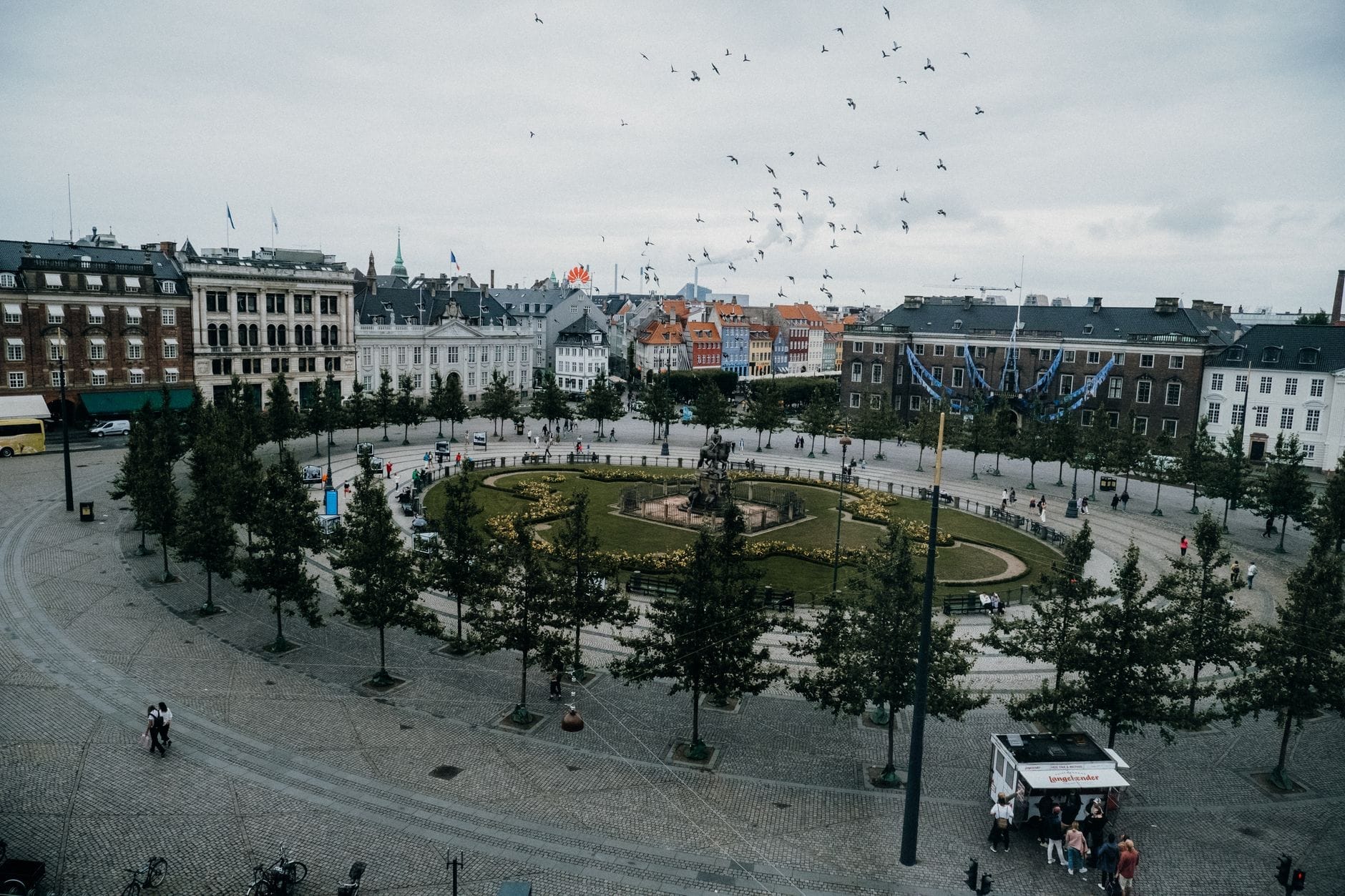
What Is Kongens Nytorv?
Kongens Nytorv — literally "The King's New Square" — is Copenhagen's largest public square and one of the most architecturally coherent spaces in Scandinavia. Laid out in 1670 under King Christian V as part of a major expansion of the fortified city, it functions today as a genuine crossroads: the point where the pedestrian shopping street Strøget meets the waterfront neighbourhood of Nyhavn, and where four metro lines converge beneath your feet.
Unlike many European city squares that have been hollowed out by traffic or redeveloped beyond recognition, Kongens Nytorv retains a remarkable degree of its original baroque character. The buildings ringing the square date largely from the 17th to 19th centuries, the garden layout at its centre is almost unchanged from 1688, and the equestrian statue of Christian V still dominates the space as intended. It is one of those places that rewards slowing down and actually looking up.
💡 Local tip
The Kongens Nytorv Metro Station has lifts and step-free access throughout, making this one of the most accessible starting points for a walking tour of central Copenhagen.
The Architecture Around the Square
Standing at the centre of Kongens Nytorv and rotating slowly is one of the more quietly impressive architectural exercises Copenhagen offers. Each section of the perimeter tells a different chapter of Danish history, and yet the ensemble hangs together with unusual coherence.
Charlottenborg Palace, completed in 1683 on the square's southeastern edge, is the oldest building on the ring and today houses the Royal Danish Academy of Fine Arts. Its heavy Dutch Baroque stonework and formal proportions set the tone that the square's later buildings largely respected. Thott Palace (1683), now the French Embassy, occupies the northern side with a similar gravity. The Royal Danish Theatre, added in 1874 in the neoclassical style, gives the western edge a more monumental, civic quality.
Hotel d'Angleterre, Copenhagen's most famous luxury hotel, occupies a corner position and has anchored the square's social life since the mid-18th century. Magasin du Nord, the large department store occupying another section of the perimeter, dates from the 1890s and represents the commercial confidence of Copenhagen's late-19th-century boom years. The juxtaposition of royal palaces, civic theatres, elite hotels, and working department stores in a single coherent space is what makes Kongens Nytorv genuinely unusual.
Tickets & tours
Hand-picked options from our booking partner. Prices are indicative; availability and final rates are confirmed when you complete your booking.
1-hour boat harbour tour in Copenhagen
From 26 €Instant confirmationFree cancellationSmall group 3-hour walking tour in Copenhagen
From 45 €Instant confirmationFree cancellationCopenhagen to Malmo one-day tour
From 56 €Instant confirmationFree cancellationFull-day tour to Forest Tower and Forgotten Giants from Copenhagen
From 110 €Instant confirmationFree cancellation
The Statue and the Garden: Krinsen
At the centre of the square stands the equestrian statue of King Christian V, first unveiled in 1688 and recognised as Scandinavia's oldest equestrian statue. The original was cast in lead, which eventually deteriorated; the current statue was re-cast in bronze in 1946. Christian V is depicted in Roman armour, a convention typical of the era's royal iconography, mounted on a confident horse with his gaze directed broadly westward down Strøget.
Surrounding the statue is the baroque parterre garden known as Krinsen ("the circle"). Laid out in 1688, the garden's basic geometry — low hedgerows arranged in a circular pattern with gravel paths — has remained almost unchanged for over three centuries. It is a formal garden in miniature, the kind designed to be read from above as much as walked through. In summer, the hedges are clipped and the paths are busy with people cutting across the square. In winter, the geometry disappears under an ice surface.
How the Square Changes by Time of Day
Kongens Nytorv has a distinctly different character at different hours, and understanding this helps you decide when to visit. Early morning, before 8am, the square belongs almost entirely to commuters emerging from the metro and cyclists crossing on their way to work. The light at this hour falls flat and clear across the paving stones, and the facades of Charlottenborg and the Theatre are unobstructed by crowds. This is the best time for photography that requires clean sightlines.
From mid-morning onward, the square fills steadily. Tour groups arrive and gather near the statue for orientation talks. Shoppers pour in and out of Magasin du Nord. The pavement around the metro entrance becomes one of Copenhagen's busier pedestrian confluences. By midday in summer, Kongens Nytorv is a genuinely busy place — not unpleasant, but no longer quiet.
Late afternoon is often the most atmospheric. The low northern light that Copenhagen gets in autumn and spring rakes across the palace facades at an angle that highlights every cornice and pilaster. Locals sit on benches in the garden. Students from the Fine Arts Academy cross the square with portfolios. The Nyhavn canal is a five-minute walk east, and many visitors use the late afternoon light there before returning through the square on their way back into the city.
ℹ️ Good to know
In winter, the central Krinsen garden is often converted into a public ice skating rink. The rink operates with its own seasonal hours managed by the city — check current schedules before planning a visit around it.
Winter: The Ice Rink and the Christmas Atmosphere
Kongens Nytorv in winter is a meaningfully different experience from any other season. When the Krinsen garden becomes an ice rink, the square develops an unlikely warmth: the smell of mulled wine drifts over from nearby stalls, families gather at the rink's edge, and the baroque facades behind are often strung with lights from the adjacent Christmas markets. The combination of 17th-century palace architecture and ice skating is one of those distinctly Copenhagen winter images.
If you are planning a visit during the colder months, the Copenhagen Christmas guide covers seasonal markets and events around the city, including what to expect in the Kongens Nytorv area.
Using Kongens Nytorv as a Base for Exploring
One of the square's most practical qualities is its position. From Kongens Nytorv, you can walk to Nyhavn canal in under five minutes along Nyhavn street. Strøget, Copenhagen's main pedestrian shopping corridor, begins at the square's western edge and runs all the way to City Hall Square. The Designmuseum Danmark is a short walk north, and the Rosenborg Castle is reachable on foot in about 15 minutes.
For those travelling by metro, Kongens Nytorv is the city's main interchange station, where the M1 and M2 lines meet the M3 Cityringen and M4 Orientkaj lines. Almost any metro journey in Copenhagen passes through or near this station, making it an almost unavoidable reference point during your stay.
Who might not enjoy spending time here? Travellers looking for a quiet, off-the-beaten-track experience will find Kongens Nytorv too central and too frequented during peak hours. The square itself has no single headline attraction in the way a museum or palace does — it rewards an architectural sensibility and a willingness to simply observe. Those wanting interior experiences should treat the square as a transit point and move quickly to the venues around it.
Photography and Practical Notes
The square is large enough that wide-angle lenses are more useful than telephoto here. The best single composition is from the centre of the square looking northwest, with the Royal Danish Theatre facade in the background and the statue in the foreground — though you will need to time this to avoid a surge of pedestrians crossing the frame. Early morning on a weekday is the most reliable window.
The paving throughout the square is flat and broad, and the metro station below provides lifts on all sides. There are benches near the garden, and several cafes and restaurants within the surrounding buildings offer indoor seating if the weather is poor. Copenhagen's climate runs cool and unpredictable for much of the year; a waterproof layer is worth carrying regardless of the season.
⚠️ What to skip
Cycling is common across Copenhagen, and cyclists move quickly through the lanes bordering Kongens Nytorv. When crossing roads around the square, check for cycle lanes before stepping off the pavement — they are not always obviously marked at first glance.
Insider Tips
- The rooftop bar of a hotel on the square's edge, and the upper floors of Magasin du Nord, offer elevated views across the square's geometry that you cannot get from street level. Magasin's upper floors are accessible during shopping hours without any purchase.
- If you want to photograph the equestrian statue without tourists in the frame, arrive before 7:30am on a weekday. The metro commuters move fast and rarely pause near the statue.
- The facade of Charlottenborg Palace faces south, which means it catches the best light in the afternoon rather than the morning — plan your walk around the square accordingly.
- Kongens Nytorv is a key stop on the M2 metro line coming from the airport, so many travellers arriving directly from CPH airport will pass through or can choose to get off here. If you are staying near Nyhavn, you can walk to your accommodation from this station in under 10 minutes.
- In winter, the ice rink entry and skate rental fees are modest by Copenhagen standards — check the city's current seasonal pricing before you go, as it changes year to year.
Who Is Kongens Nytorv For?
- Architecture and history enthusiasts who appreciate baroque urban planning and want to read the layers of Danish history in a single space
- First-time visitors to Copenhagen using the square as a geographic anchor to orient themselves before exploring Strøget, Nyhavn, and the museum quarter
- Winter visitors looking for an atmospheric ice skating experience set against 17th-century palace facades
- Photographers seeking wide, coherent urban compositions with good historical architecture
- Transit users who need the metro interchange and want to understand what they are passing through
Nearby Attractions
Other things to see while in Nyhavn:
- Nyhavn Canal
Nyhavn is the 450-metre canal that has defined Copenhagen's waterfront since 1673. Lined with brightly painted townhouses, outdoor restaurants, and historic wooden ships, it draws more visitors than almost anywhere else in the city. Free to walk, easy to reach, and worth understanding properly before you arrive.