National Museum of Denmark (Nationalmuseet): The Complete Visitor Guide
The National Museum of Denmark, known in Danish as Nationalmuseet, is the country's largest museum of cultural history, housed in an 18th-century royal mansion in central Copenhagen. From Stone Age burial finds to Viking-age treasures and medieval church art, it holds one of Scandinavia's most significant collections under a single roof. Entry is free for visitors under 18, and the building alone is worth the trip.
Quick Facts
- Location
- Ny Vestergade 10, Indre By, Copenhagen
- Getting There
- Metro to Gammel Strand or Rådhuspladsen, then a short walk
- Time Needed
- 2 to 4 hours depending on depth of interest
- Cost
- 150 DKK adult (135 DKK online, 10% discount); free for under 18s
- Best for
- History enthusiasts, families, first-time visitors to Denmark
- Official website
- nationalmuseet.dk/en
What the National Museum of Denmark Actually Is
The National Museum of Denmark, Nationalmuseet in Danish, is the largest museum of cultural history in the country. Its collection spans roughly 9,000 years of human activity on Danish soil and beyond, covering prehistory, the Viking Age, the Middle Ages, Danish folk culture, and non-European civilisations. It is not a fine arts museum and not a natural history museum. It is, specifically, a museum of how people lived, traded, believed, fought, and died across millennia.
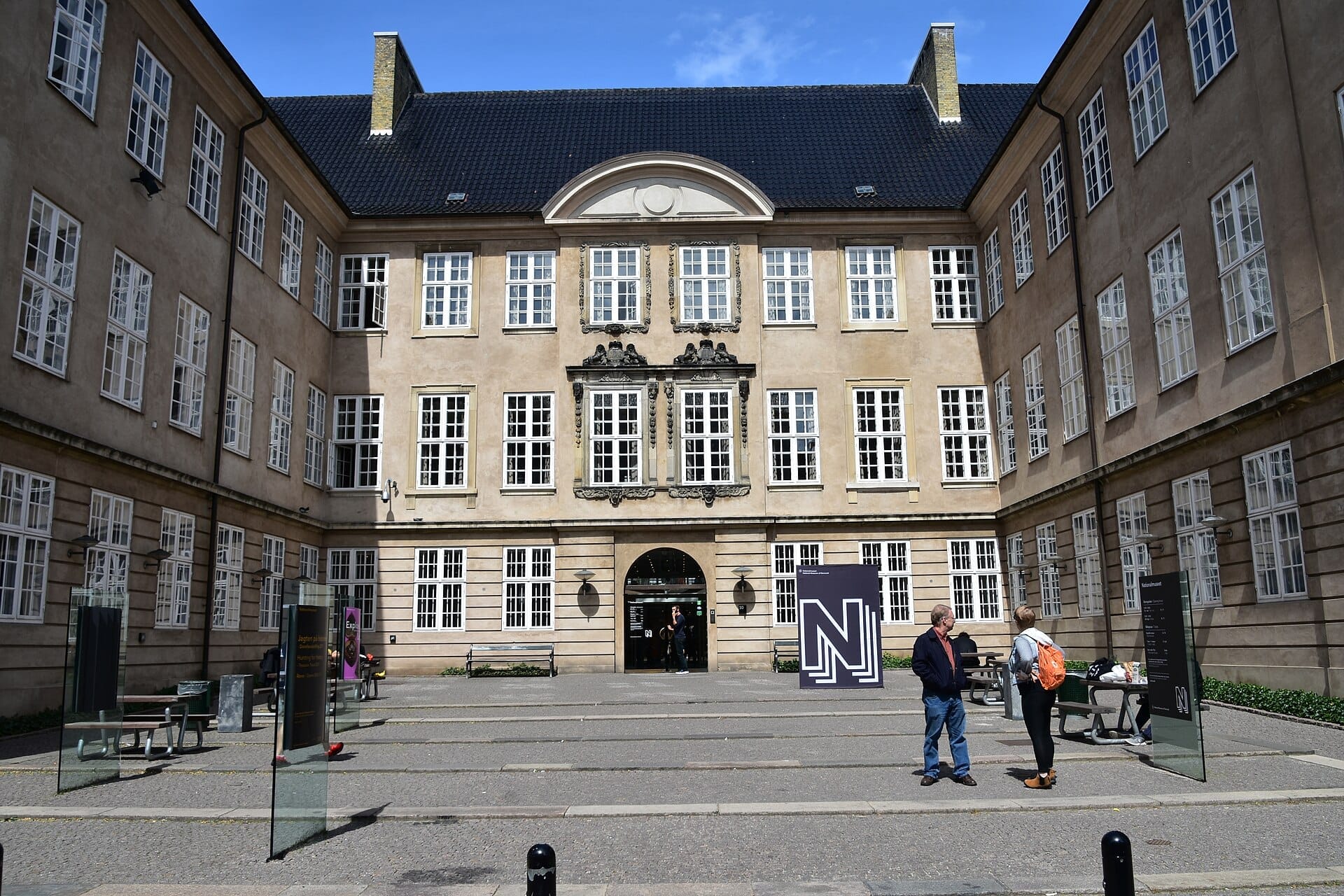
The building that houses the main collection is the Prinsens Palæ, or Prince's Mansion, a former royal residence in the heart of Copenhagen's Indre By. The palace dates to the early 18th century and became the permanent home of the national collections in the 19th century. Walking through its corridors, you move between richly detailed historic interiors and modern glass display cases, a combination that makes the building itself part of the experience.
The museum sits a few minutes' walk from Strøget and the City Hall Square, which means it fits naturally into a full day of exploration in the city centre without requiring any special detour.
The Collections: What You Will Actually See
The Danish Prehistory section is the most celebrated part of the museum, and rightly so. It contains original artefacts from Denmark's Bronze Age and Iron Age that rank among the finest in northern Europe. The Trundholm Sun Chariot, cast in bronze around 1400 BCE, is one of the defining objects in Scandinavian archaeology. It stands in a purpose-lit case, and even visitors with no prior interest in prehistory tend to stop in front of it. The gilt disc, the bronze horse, the delicacy of the casting at that age: it is genuinely striking in person.
The Viking Age galleries follow chronologically and include weapons, jewellery, tools, and runestones. These are authentic objects, not reproductions, which matters more than it sounds. There are also silver hoards of the kind that were buried in the ground and rediscovered centuries later, the accumulated wealth of families in a time when banks did not exist.
The Middle Ages and Renaissance section covers church art, religious objects looted or collected during the Reformation, and the daily material culture of medieval Danes. The collection of altarpieces and gilded reliquaries from dissolved monasteries is one of the more sobering parts of the museum, a reminder of how violently the Reformation reshaped Scandinavian culture in the 16th century.
Beyond Danish history, the museum holds substantial collections from the ancient Mediterranean, Egypt, and the Near East, as well as ethnographic collections from indigenous cultures across the Americas, Africa, and Asia. These are older acquisitions, some with the complex colonial provenance typical of European museums of this era, and the museum acknowledges this context in parts of its display.
💡 Local tip
Children under 18 enter free, and the museum maintains a dedicated Children's Museum on-site with hands-on historical play areas. This makes Nationalmuseet one of the better-value family stops in the city centre.
Tickets & tours
Hand-picked options from our booking partner. Prices are indicative; availability and final rates are confirmed when you complete your booking.
Entrance ticket to the National Museum of Denmark
From 18 €Instant confirmationFree cancellation1-hour boat harbour tour in Copenhagen
From 26 €Instant confirmationFree cancellationSmall group 3-hour walking tour in Copenhagen
From 45 €Instant confirmationFree cancellationCopenhagen to Malmo one-day tour
From 56 €Instant confirmationFree cancellation
The Building and Its Atmosphere
The Prinsens Palæ is a substantial Baroque-influenced structure with a central courtyard and a sequence of interconnected wings. Arriving from Ny Vestergade, you approach through a gateway into the courtyard, which is calm even when the museum is busy inside. Stone underfoot, pale facade, a fountain at the centre: it is one of those urban spaces that feels genuinely insulated from the street.
Inside, the scale of the building rewards slow movement. Ceilings in some of the older sections are high and ornate. The stone staircases have a worn quality that no restoration can fully replicate. The contrast between these historic spaces and the modern display infrastructure, good lighting, clear labelling in both Danish and English, contemporary cases, is managed thoughtfully. You do not feel like you are in a decaying house pretending to be a museum. But you do feel the weight of the building's age.
Morning light enters some of the upper-floor galleries from north-facing windows and creates a cool, even illumination that suits collections of metal and stone particularly well. By mid-afternoon, the ground floor can feel more crowded, especially near the prehistory and Viking sections which draw the most foot traffic.
When to Visit and How Long to Allow
The museum is generally open daily from 10:00 to 17:00, with possible variations on some public holidays. Arriving at opening gives you the clearest run through the most popular galleries before school groups and tour parties arrive, typically between 10:30 and 11:30. If a weekday morning is not possible, late afternoon on a Tuesday or Wednesday tends to be noticeably quieter than weekend afternoons.
Two hours is the minimum for a meaningful visit covering the Danish prehistory and Viking collections. Three to four hours allows you to also explore the medieval section, parts of the ethnographic collection, and the Children's Museum if you have young visitors with you. Attempting to see everything in a single visit is unrealistic: the collection is too large, and the fatigue of sustained museum-going is real.
⚠️ What to skip
Hours and prices can change on public holidays and during special exhibition periods. Confirm on the official website at nationalmuseet.dk before your visit, particularly around Christmas and Easter.
If you are planning a broader museum day in Copenhagen, the National Museum pairs well with the Ny Carlsberg Glyptotek, which is a ten-minute walk south and covers ancient Mediterranean civilisations in greater depth. Together, they make a full and substantive day for anyone seriously interested in history and material culture.
Getting There and Practical Logistics
The museum's address is Ny Vestergade 10. From the Metro, Gammel Strand station on the M3 Cityringen line puts you about a five-minute walk away. Rådhuspladsen is slightly further but still walkable. Multiple bus lines serve the area around City Hall, and the museum is well-signposted from the main tourist thoroughfares.
If you are staying near Indre By or Nyhavn, the museum is reachable on foot in under fifteen minutes from most central hotels. Cycling is also straightforward, and the museum has bicycle parking outside.
Tickets cost 150 DKK for adults, or 135 DKK if purchased online in advance. Visitors under 18 enter free, with no booking required. Groups of ten or more pay the same reduced rate of 135 DKK as the online ticket. The Copenhagen Card, which covers public transport and a wide range of museum admissions, includes entry to the National Museum. If you plan to visit several institutions over two or three days, the card can represent reasonable value.
For full details on the Copenhagen Card and whether it suits your itinerary, see our Copenhagen Card guide.
The museum has a cloakroom for large bags, a shop near the entrance, and a cafe on-site. Packed lunches are permitted, which is practical for families or visitors on tighter budgets. Accessibility information, including details on lift access and mobility provisions within the historic building, is available on the museum's official website.
Photography and Who Should Adjust Their Expectations
Photography without flash is generally permitted throughout the permanent collection. The lighting in the prehistoric galleries is dramatic and low in places, suited to close-up detail shots of metal objects. The Viking jewellery cases are well-lit and photograph cleanly. Some ethnographic and temporary exhibition areas may have restrictions, so check signage as you enter each room.
The museum is not for everyone. Visitors primarily interested in contemporary art, Danish design, or architecture may find the collections less immediately engaging. The displays are scholarly in orientation: there is real depth here, and the English labelling is good, but this is not a light or especially playful experience outside of the Children's Museum section. If you are travelling with adults who have low tolerance for extended museum visits, it is worth being selective rather than attempting a full circuit.
For visitors more drawn to modern and contemporary work, the SMK National Gallery of Denmark and the Designmuseum Danmark both offer a different kind of cultural experience and may be better fits.
Insider Tips
- Buy your ticket online at nationalmuseet.dk for a 10% discount and to avoid any queue at the admissions desk, especially on weekends.
- The Trundholm Sun Chariot is on the ground floor of the Danish Prehistory section. Go there first before larger groups arrive, particularly if you want to photograph it without other visitors in frame.
- The museum's courtyard cafe seating is quieter than the interior cafe during warmer months and a good place to take a break between collections.
- The Children's Museum is genuinely well-designed and not just a token afterthought. Children can dress in period clothes and handle replica objects. It tends to extend family visits significantly, so factor that into your timing.
- If you are interested in the building's history as the Prinsens Palæ, look for the preserved ceiling paintings and original architectural details in some of the upper-floor rooms, most visitors walk past them without looking up.
Who Is National Museum of Denmark For?
- First-time visitors to Denmark wanting historical context for everything else they see in the city
- Families with children aged 5 and up, given the free entry for under-18s and the dedicated Children's Museum
- History enthusiasts with specific interest in the Bronze Age, Iron Age, or Viking period
- Rainy-day visitors needing a full half-day of indoor activity in the city centre
- Travellers using the Copenhagen Card who want to make the most of included admissions
Nearby Attractions
Other things to see while in Indre By (Old Town):
- Amalienborg Palace
Amalienborg is the official home of the Danish royal family and one of Copenhagen's most architecturally coherent ensembles. Four near-identical Rococo palaces frame a grand octagonal square, with the Amalienborg Museum open to visitors inside Christian VIII's Palace. The daily changing of the guard at noon is a punctual, unhurried ceremony worth timing your visit around.
- The Black Diamond
The Black Diamond is the modern extension of the Royal Danish Library, clad in polished black granite and angled toward the harbour on Slotsholmen. Entry is free, the atrium is genuinely impressive, and the building rewards visitors who take time to understand what they are looking at.
- Botanical Garden of the University of Copenhagen
Tucked behind Nørreport Station in the heart of the city, the Copenhagen University Botanical Garden is a 10-hectare green sanctuary with a Victorian glasshouse complex, a tranquil lake, and around 8,000 plant species. Entry to the grounds is free, making it one of the most rewarding stops in central Copenhagen for any pace of traveler.
- Christiansborg Palace
Christiansborg Palace sits on the Slotsholmen islet in central Copenhagen, serving simultaneously as the home of the Danish Parliament, the Supreme Court, the Prime Minister's Office, and the Royal Reception Rooms. It is widely described as uniquely housing all three branches of Denmark’s national government under one roof, and its 106-metre tower offers one of the best free panoramic views in the city.