Christianshavn is a canal district built on artificial islands just east of Copenhagen's inner city, founded by King Christian IV in the early 17th century and modeled on Amsterdam's waterways. Today it balances preserved maritime architecture and houseboat culture with the presence of Freetown Christiania, one of Europe's most unusual urban communities. It is one of the most photogenic and historically layered neighborhoods in the Danish capital.
Christianshavn sits on a cluster of artificial islands separated from the inner city by water and connected by bridges, giving it the feel of a city within the city. Founded in 1618 as a fortified merchant district, it retains its Dutch-inspired canal structure, colored warehouse facades, and a pace of life that runs noticeably slower than the rest of central Copenhagen. It is also home to Freetown Christiania, a self-declared autonomous community that has been part of the neighborhood's identity for over fifty years.
Orientation
Christianshavn occupies a series of artificial islands on Copenhagen's Inner Harbour between the island of Zealand, where most of central Copenhagen sits, and the larger island of Amager to the south. The neighborhood is east of Indre By (the inner city) and is reached primarily via Knippelsbro, the bridge that arcs across the harbor from the area near Christiansborg Palace. A second connection links the southern tip of the district to Amager via a low causeway.
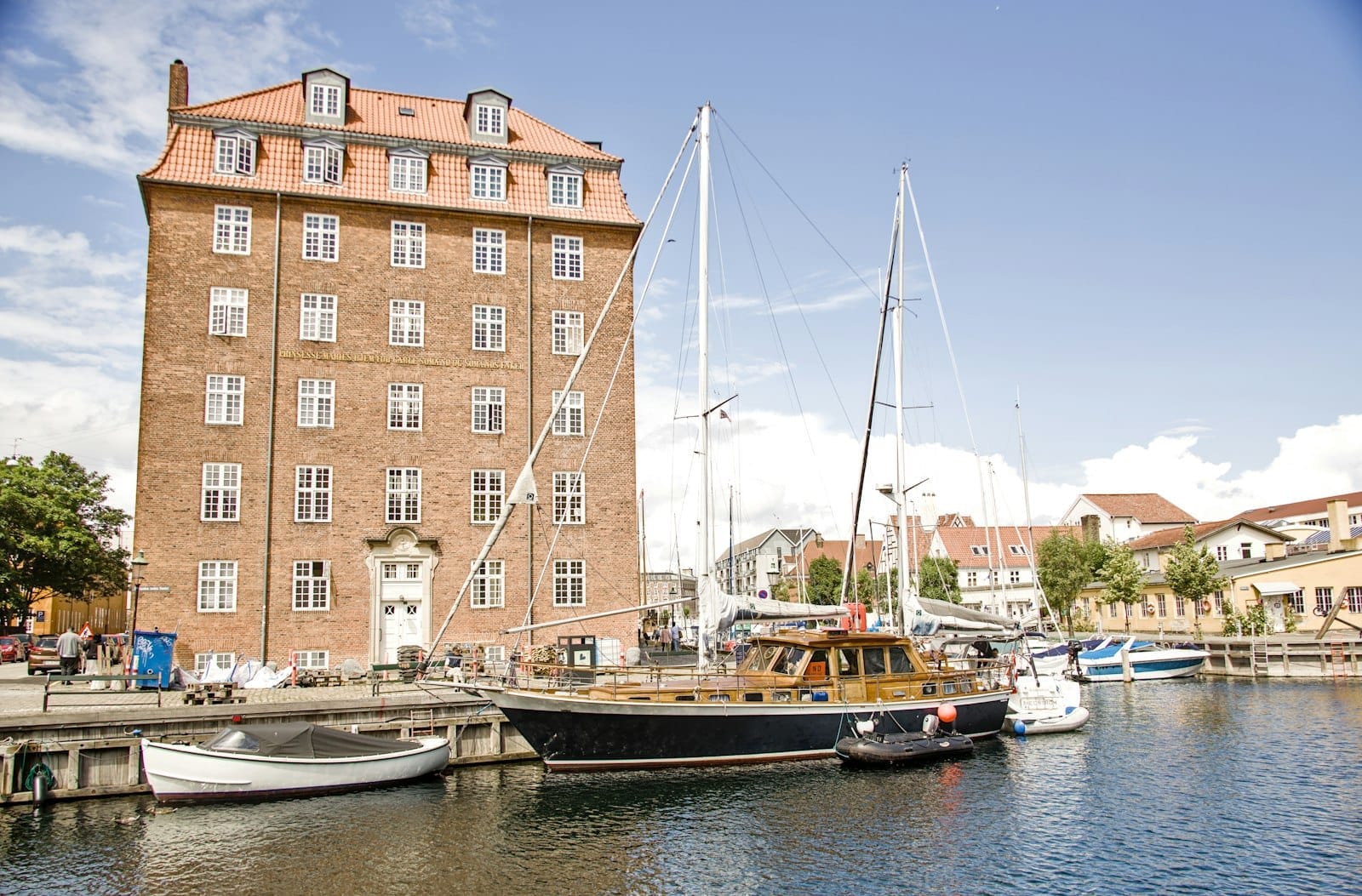
The spine of the neighborhood is its main canal, flanked on both sides by two of Copenhagen's most evocative streets: Overgaden Oven Vandet on the northern bank and Overgaden Neden Vandet on the southern. These are the streets you picture when you think of Amsterdam-style Copenhagen, lined with old warehouse conversions, moored houseboats, and the occasional waterfront café. The canal runs roughly east to west before opening out toward the harbor.
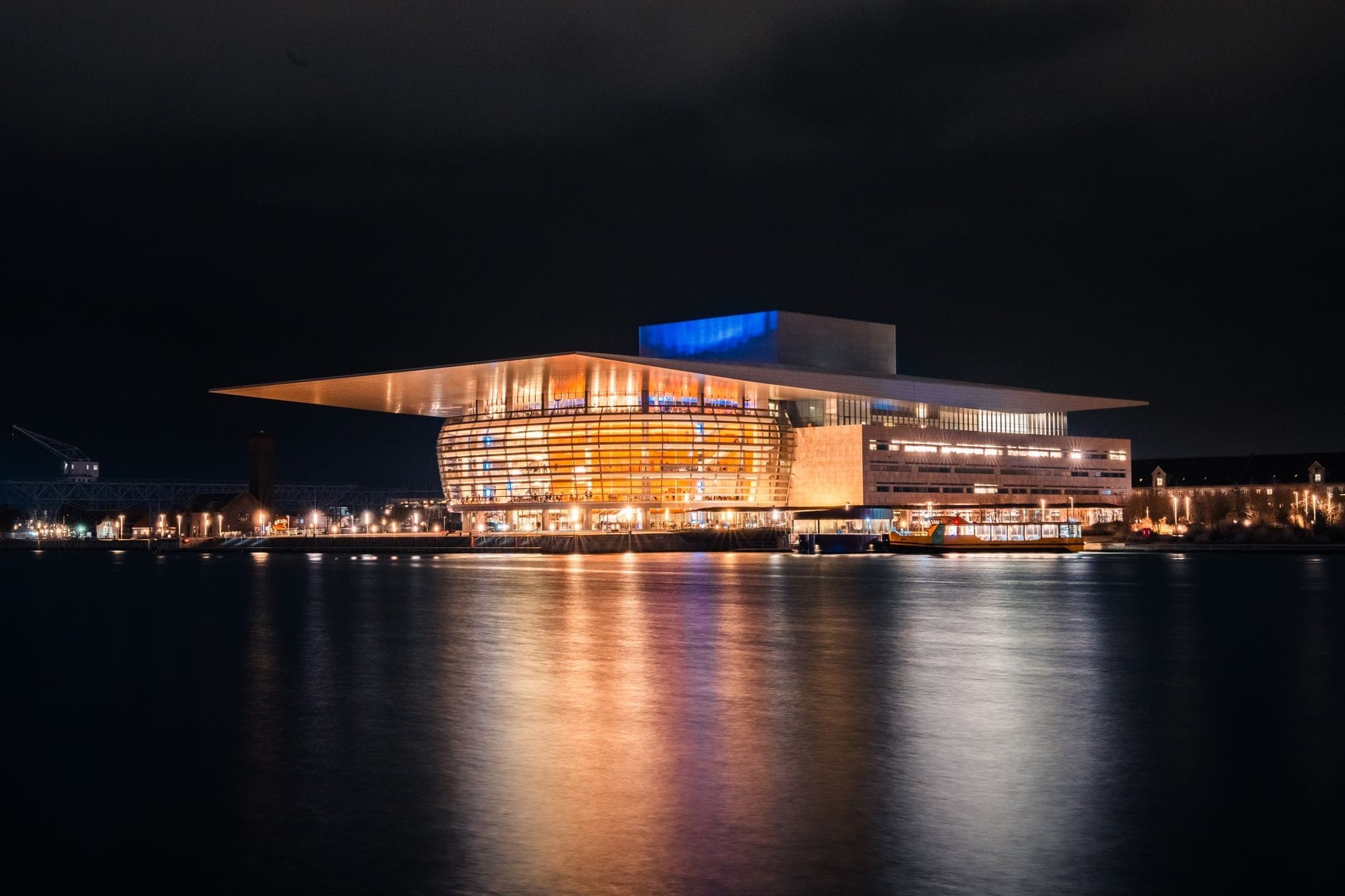
North of central Christianshavn lies Holmen, the former naval base that was gradually released to civilian use from the 1990s onward. Today it hosts architecture schools, cultural institutions, and Copenhagen Opera House, which sits on its own small island just off Holmen's northern shore. To the south, Freetown Christiania occupies roughly 19 hectares of former military land bordered by the ramparts, giving the district a very different texture from the canal streets just a few minutes' walk away.
ℹ️ Good to know
Christianshavn is entirely within Zone 1 of Copenhagen's public transport fare system, so a standard city ticket covers all metro, bus, and train travel within the neighborhood.
Character & Atmosphere
Christianshavn has the rare quality of feeling genuinely local despite being one of the most visited districts in Copenhagen. Mornings along the canal are quiet. The light comes in low off the water, illuminating the brick warehouse fronts in shades of ochre and rust. Cyclists outnumber pedestrians on most streets, and the bakeries near Torvegade, the neighborhood's main commercial street, draw residents rather than tourist groups.
Torvegade runs east from Christianshavn Square and serves as the neighborhood's high street, modest in scale but practical: a supermarket, a pharmacy, a few independent shops, and cafés that still feel like they serve the people who actually live here. Walking south from Torvegade along the canal streets, the pace drops further. In summer, people sit on the stone embankments with food from nearby takeaway spots, legs dangling over the water. In winter, the same spots are eerily still, the houseboats locked up, the canal reflecting a flat grey sky.
After dark, Christianshavn splits into two distinct zones. The canal-side streets and the area around Overgaden stay calm, with low-key bars drawing an older, residential crowd. Inside Christiania, a different atmosphere takes over: live music from venues like Månefiskeren and Loppen, fire pits in the common areas, and the particular social energy of a community that has been doing things its own way for decades. The transition between the two is literal, a matter of stepping through a gate in a wooden fence.
What to See & Do
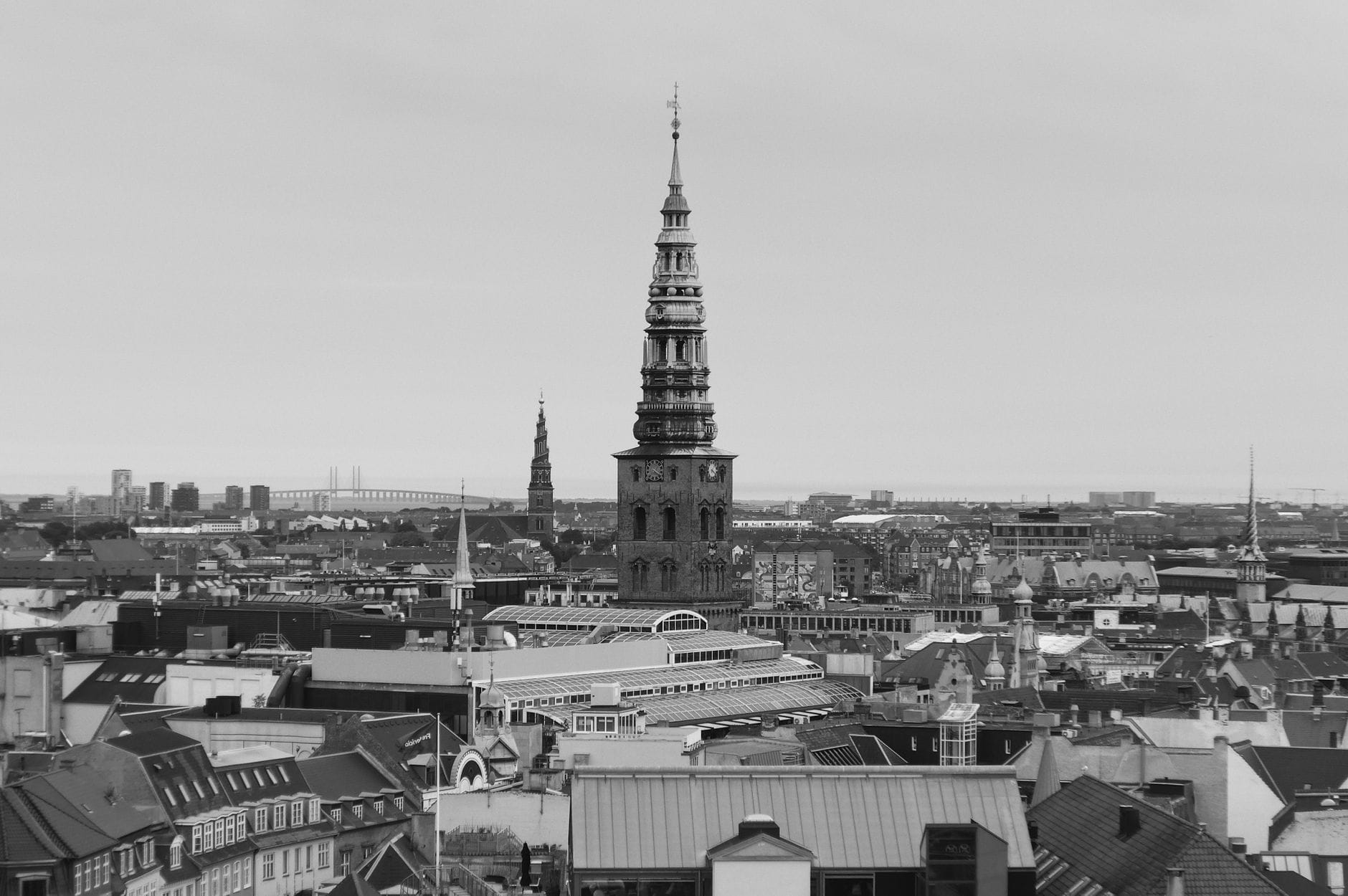
The single most visible landmark in Christianshavn is the Church of Our Saviour (Vor Frelsers Kirke), whose external spiral staircase winds around a gold-tipped spire 90 meters above street level. The climb is not for those with a fear of heights: the final section is exposed and narrow. But the views from the top, across the rooftops of Christianshavn toward the spires of the inner city and the harbor, are among the best in all of Copenhagen. The church sits near Prinsessegade, about five minutes' walk south from Torvegade.
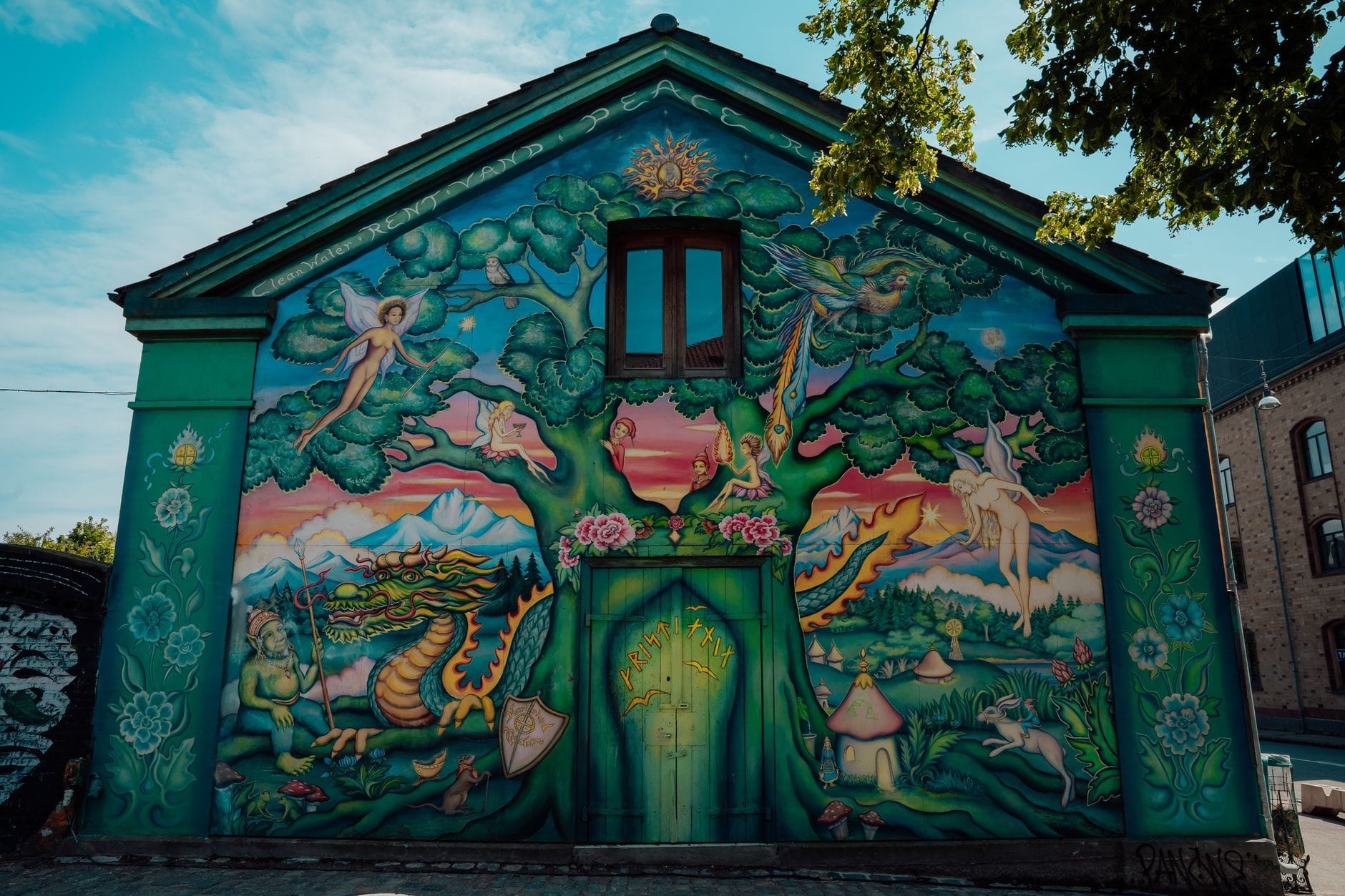
Freetown Christiania is harder to categorize. Founded in 1971 when a group of activists occupied abandoned military barracks, it has operated as a self-governing community ever since, with its own rules, institutions, and social contract. Visitors are welcome in most parts: the main entrance off Prinsessegade leads into Pusher Street, then opens out into a network of workshops, galleries, communal kitchens, concert venues, and gardens. The architecture is improvised and organic, a deliberate contrast to the rest of Copenhagen. It rewards slow exploration.
Along the harbor waterfront, the Circle Bridge (Cirkelbroen), designed by Olafur Eliasson and completed in 2015, serves as both a pedestrian crossing and a piece of public sculpture. Its five circular platforms, each with a central mast, reference the sailing ships that once docked here. Walking across it connects Christianshavn's canal district to Applebys Plads and the harbor promenade that extends north toward the inner city and south toward Islands Brygge.
Climb the external spiral staircase of Church of Our Saviour for harbor views
Walk the full length of Overgaden Oven Vandet and Overgaden Neden Vandet along the main canal
Cross the Circle Bridge (Cirkelbroen) and continue along the harbor promenade
Explore Freetown Christiania at a slow pace, starting from the main Prinsessegade entrance
Walk north to Holmen to see the Opera House from the waterfront and the former naval architecture
Visit Krøyers Plads, the waterfront square with converted warehouse apartments and harbor benches
⚠️ What to skip
Photography is strictly prohibited in the Pusher Street area of Christiania. This rule is enforced by residents and applies to cameras and phones. Follow all posted signs and respect the community's stated rules when visiting.
Eating & Drinking
Christianshavn's food scene reflects the neighborhood's dual character: a working residential district that also draws visitors specifically for its canal-side atmosphere. The canal streets have a handful of restaurants that lean into the setting, with outdoor seating facing the water in summer. These places range from well-regarded to unremarkable; the quality varies more than the view does. Torvegade and its side streets tend to offer better value and fewer tourists.
The neighborhood has a genuine café culture rooted in local patronage. Several cafés near Christianshavn Square and along Torvegade operate as neighborhood institutions, the kind of places where the same faces appear on weekday mornings. For a broader and more varied food experience, Torvehallerne is only a short metro ride away in the inner city, though Christianshavn itself has enough options for a full day without leaving.
Inside Christiania, the food options are informal and inexpensive. Several communal food stalls and small kitchens operate within the main area, serving organic and vegetarian-leaning food at prices that undercut the rest of the neighborhood significantly. The atmosphere is outdoor, communal, and entirely without formality. This is not the place to come for a structured dining experience, but it is a reasonable spot for a cheap lunch eaten at a wooden table in the sun.
For drinks, the sailor bars along Overgaden Neden Vandet have been serving the neighborhood for generations and have the interiors to prove it. They are unpretentious, occasionally dark, and reliably cheaper than most of central Copenhagen. The summer bar scene along the harbor promenade, near Circle Bridge and Krøyers Plads, draws a younger crowd and operates with more seasonal intensity.
Getting There & Around
The M1 and M2 metro lines both stop at Christianshavn Station, located directly at Christianshavn Square in the center of the district. Journey time from Kongens Nytorv, the main interchange station in the inner city, is one stop and about two minutes. From Copenhagen Central Station, you can reach Christianshavn by bus or by taking the metro from a connecting station. The metro runs 24 hours a day, seven days a week, which makes late-night returns from Christiania straightforward.
On foot from the inner city, Christianshavn is walkable across Knippelsbro from the area near Christiansborg Palace. The bridge crossing takes roughly five minutes and offers a good view of the harbor. From Nyhavn, a pleasant waterfront walk along the harbor promenade leads south to Circle Bridge and into Christianshavn in about 15-20 minutes.
Cycling is the natural mode of transport within Christianshavn. The streets are flat, the distances are small, and the neighborhood is well-integrated into Copenhagen's wider cycling network. Christiania itself has its own internal pedestrian and cycling paths. Bike-share docking stations are available near Christianshavn Square. Within the neighborhood, most points of interest are within a 10-15 minute walk of the metro station.
💡 Local tip
If you arrive by metro, walk south from Christianshavn Station along Torvegade to get oriented, then turn off toward the canal streets. The canal, church spire, and entrance to Christiania are all within a 10-minute walk from the station in roughly the same direction.
Where to Stay
Christianshavn is not a major hotel district, and that is partly its appeal for those who do choose to stay here. Accommodation options are more limited than in the inner city or Vesterbro, but what exists tends to place you in a genuinely residential context rather than a tourist corridor. Small boutique hotels and apartment rentals are scattered through the neighborhood.
The area around Christianshavn Square and along Torvegade is the most practical base, close to the metro and within easy walking distance of the canal streets and Christiania. For travelers who want to be in the inner city during the day, Christianshavn functions well as a quieter place to return to: one metro stop from the main shopping and cultural attractions. For a full overview of where to stay across the city, the where to stay in Copenhagen guide covers all major neighborhoods with honest comparisons.
Christianshavn suits travelers who want to feel embedded in the city rather than adjacent to it. It is less convenient for families with young children who need easy access to strollers and large amounts of luggage, given the cobblestone streets and bridge crossings. It is a strong choice for independent travelers, couples, and anyone with a specific interest in the neighborhood's history or in spending time at Christiania.
History & Context
Christianshavn was founded in 1618 on the orders of King Christian IV, who wanted to extend Copenhagen's harbor capacity and create a fortified merchant district to the south. The design was directly inspired by Amsterdam, and the influence is still legible today in the canal layout, the scale of the streets, and the style of the oldest surviving buildings. The name means, literally, Christian's harbor.
For most of its history, the district was a working-class area, home to sailors, dock workers, and small craftsmen. The warehouses along the canal were functional rather than decorative, built for storage and trade. As Copenhagen's industrial economy shifted through the 20th century, the neighborhood's economic base eroded and property values dropped, which created the conditions for the 1971 occupation of the former military barracks that became Christiania.
Since the 1990s, Christianshavn has followed the trajectory of similar post-industrial canal districts in other European cities, with rising property values, warehouse conversions, and an influx of architects, designers, and other creative professionals. The tension between the neighborhood's gritty past, its current desirability, and the continued presence of Christiania gives the district a complexity that most Copenhagen neighborhoods lack. For more on the city's architectural evolution, the Copenhagen design and architecture guide provides useful context on how the city's built environment has developed.
TL;DR
Christianshavn is a canal district on artificial islands, founded in 1618 and modeled on Amsterdam, sitting one metro stop east of Copenhagen's inner city.
Key draws include the Church of Our Saviour with its climbable spiral spire, Freetown Christiania, the Circle Bridge by Olafur Eliasson, and some of the city's best canal-side streetscapes.
The M1 and M2 metro lines serve Christianshavn Station directly; the neighborhood is also walkable across Knippelsbro from Christiansborg Palace.
Best suited to independent travelers, couples, and anyone interested in Copenhagen's architectural history or in visiting Christiania without staying in a generic tourist hotel zone.
Drawbacks: limited hotel options, cobblestone streets that complicate luggage, and the Pusher Street area of Christiania has visible cannabis trade and strict rules on photography that visitors must respect.
Two days in København is genuinely enough to cover the city's royal palaces, canal district, world-class food markets, and Freetown Christiania without feeling rushed. This itinerary sequences the sights logically, cuts the walking time, and flags what is actually worth your limited hours.
Copenhagen has an unusually strong museum scene for a city its size, with world-class collections spanning ancient history, modern art, design, and Nordic heritage. This guide covers the best museums in Copenhagen, from the grand institutions in Indre By to extraordinary day-trip destinations just outside the city.
Copenhagen rewards visitors year-round, but the right month depends entirely on what you want from the trip. This guide breaks down weather, crowds, pricing, and seasonal events so you can match your travel style to the right window.
Copenhagen Airport (CPH) sits just 8 km from the city centre, and your airport transfer takes as little as 13 minutes by metro or train. This guide breaks down every option — public transport, taxi, and private transfer — with real fares, journey times, and honest advice on what to skip.
The Copenhagen Card promises free entry to 80+ attractions and unlimited public transport across the Danish capital. But is it actually worth the price? This guide breaks down the numbers, the fine print, and who genuinely benefits.
Copenhagen transforms in winter. From the ticketed spectacle of Tivoli Gardens to free canal-side markets and steaming mugs of gløgg, this guide covers everything you need to plan a Christmas visit to København with confidence.
Copenhagen is one of the world's most architecturally ambitious cities, named UNESCO/UIA World Capital of Architecture in 2023. This guide covers the essential museums, landmark buildings, contemporary projects, and practical routes for anyone serious about design and architecture in København.
Copenhagen food culture runs deeper than Noma's legacy. This guide covers the essential dishes, best markets, smartest restaurant picks, and seasonal foods that define eating in the Danish capital — across every budget.
October in Copenhagen (København) is one of the most underrated times to visit. Tivoli transforms into a Halloween wonderland with over 20,000 pumpkins, the crowds thin out compared to summer, and the city's museums and food scene hit their stride. This guide covers the weather, the best events, what to prioritize, and what to skip.
Summer is Copenhagen's peak season, with up to 17 hours of daylight, open-air festivals, free harbour swimming, and parks packed with locals. This guide covers the weather, major events, best activities, and practical tips for visiting in June, July, and August.
The Copenhagen Jazz Festival runs for 10 days every July, filling the Danish capital with around 1,200 concerts across 120 venues. This guide covers dates, tickets, free events, the best neighborhoods to explore, and everything you need to plan your visit.
Copenhagen's after-dark scene is disproportionately strong for a city its size. From precision cocktail bars in the Latin Quarter to techno clubs in the Meatpacking District, this guide cuts through the noise and tells you exactly where to go, when to arrive, and what to expect — including what costs more than it should.
Copenhagen (København) has a reputation as one of Europe's priciest capitals, and that reputation is not entirely unfair. But with the right passes, free attractions, and a few local habits, you can experience the city fully without a sky-high bill. This guide breaks down exactly where your money goes and where you can save it.
Copenhagen rewards shoppers at every level, from international flagships on Strøget to vintage finds on Jægersborggade. This guide breaks down where to shop by neighborhood, what to buy, how much to spend, and which spots to skip.
Smørrebrød is Denmark's defining lunch tradition, and Copenhagen is the best place in the world to eat it. This guide covers the top restaurants, what to order, how much to pay, and the customs first-timers always get wrong.
Copenhagen (København) is one of Europe's most walkable capitals. This guide covers the classic self-guided walking tour route from Tivoli Gardens to Nyhavn and beyond, with practical details on distances, free stops, seasonal timing, and digital tools to make your day on foot count.
Copenhagen is one of Europe's most genuinely child-friendly capitals, with discounted museum entry, excellent playgrounds, and a compact city center that makes logistics manageable. This guide covers the best family activities in Copenhagen, from Tivoli Gardens to canal cruises, plus honest advice on passes, costs, and seasonal planning.
Copenhagen has roughly 350 km of segregated cycle tracks, and Copenhagen has roughly 350 km of segregated cycle tracks, and nearly half of all people who work or study in the city bike to work or school every day. This guide covers everything a visitor needs to cycle the city confidently: where to rent, which routes to ride, what the unwritten rules are, and when to go.
Copenhagen sits at the centre of an extraordinary region. Within two hours, you can reach UNESCO-listed castles, world-class art museums on clifftops, a remarkably preserved fishing village, and an entirely different country. These are the best day trips from Copenhagen, whether you have a full day or just an afternoon.
Copenhagen is one of Europe's most rewarding cities to explore on a tight budget. From free museum days and royal palaces to harbour swims and world-class parks, here are 20 genuinely free experiences that capture the best of the Danish capital.
Copenhagen's integrated transport network is one of Europe's most efficient. This guide covers the metro, S-trains, buses, cycling, taxis, and airport connections — with 2026 fares, zone logic, and practical advice on what's worth the money.
Copenhagen holds the key to understanding Hans Christian Andersen's life and work. From his former apartments along Nyhavn canal to his grave in Nørrebro, this guide maps every significant stop on the city's literary trail, with practical logistics for each.
Copenhagen rewards curious travellers who look beyond Nyhavn and Tivoli. This guide uncovers the city's overlooked neighbourhoods, underrated museums, and unexpected green spaces that locals actually love.
Copenhagen didn't accidentally become one of Europe's great food cities. The New Nordic movement, formalized in 2004, rewired how chefs here think about ingredients, technique, and season. This guide covers the key restaurants, price realities, seasonal logic, and how to experience the movement beyond fine dining.
Copenhagen rewards visitors with a rare combination of world-class history, cutting-edge design, and outdoor culture. This guide covers the best things to do in Copenhagen across every interest and budget, with honest assessments and practical logistics to help you plan confidently.
Choosing where to stay in Copenhagen shapes your entire trip. This guide breaks down every major neighborhood by budget, transport links, atmosphere, and traveler type — so you can book with confidence, not guesswork.